
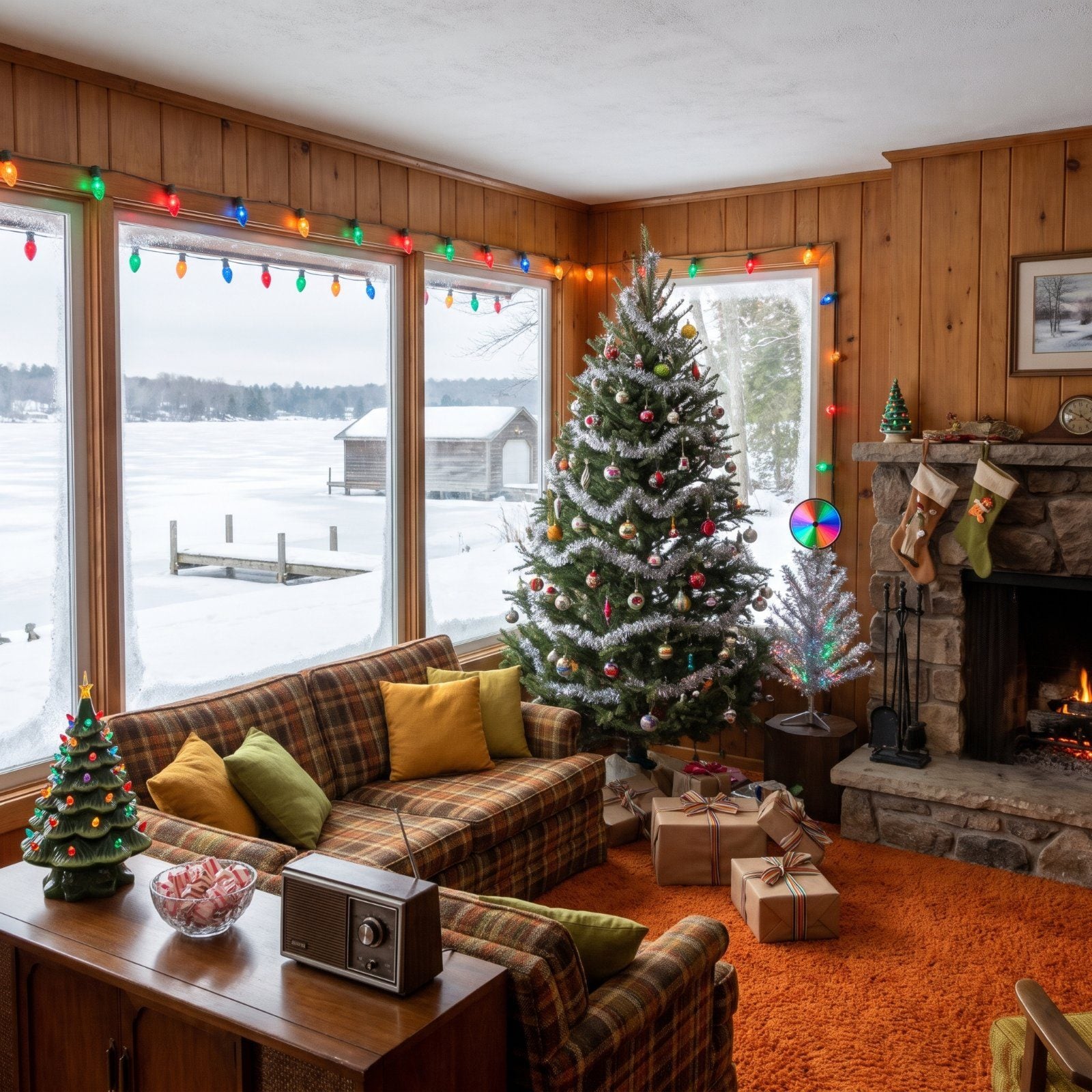
The furnace kicked on with a smell you’d recognize anywhere — hot dust and old pine. Outside, the lake had locked up solid sometime in early December, the dock frozen into it like a forgotten thing. Inside, the tree was up, the color wheel clicked through its blues and reds, and somebody was burning their fingers on a strand of tinsel. Christmas at a lake cabin in the 1970s had a texture you could touch. Shag underfoot, felt stockings over the fieldstone, popcorn thread on the kitchen table. Here’s the stuff that made those winters feel the way they did.
Please note that some of the imagery in this article may have been enhanced with the assistance of AI.
44. Multicolored C9 Bulbs Glowing Along the Cabin Eaves and Across Shoreline Ice
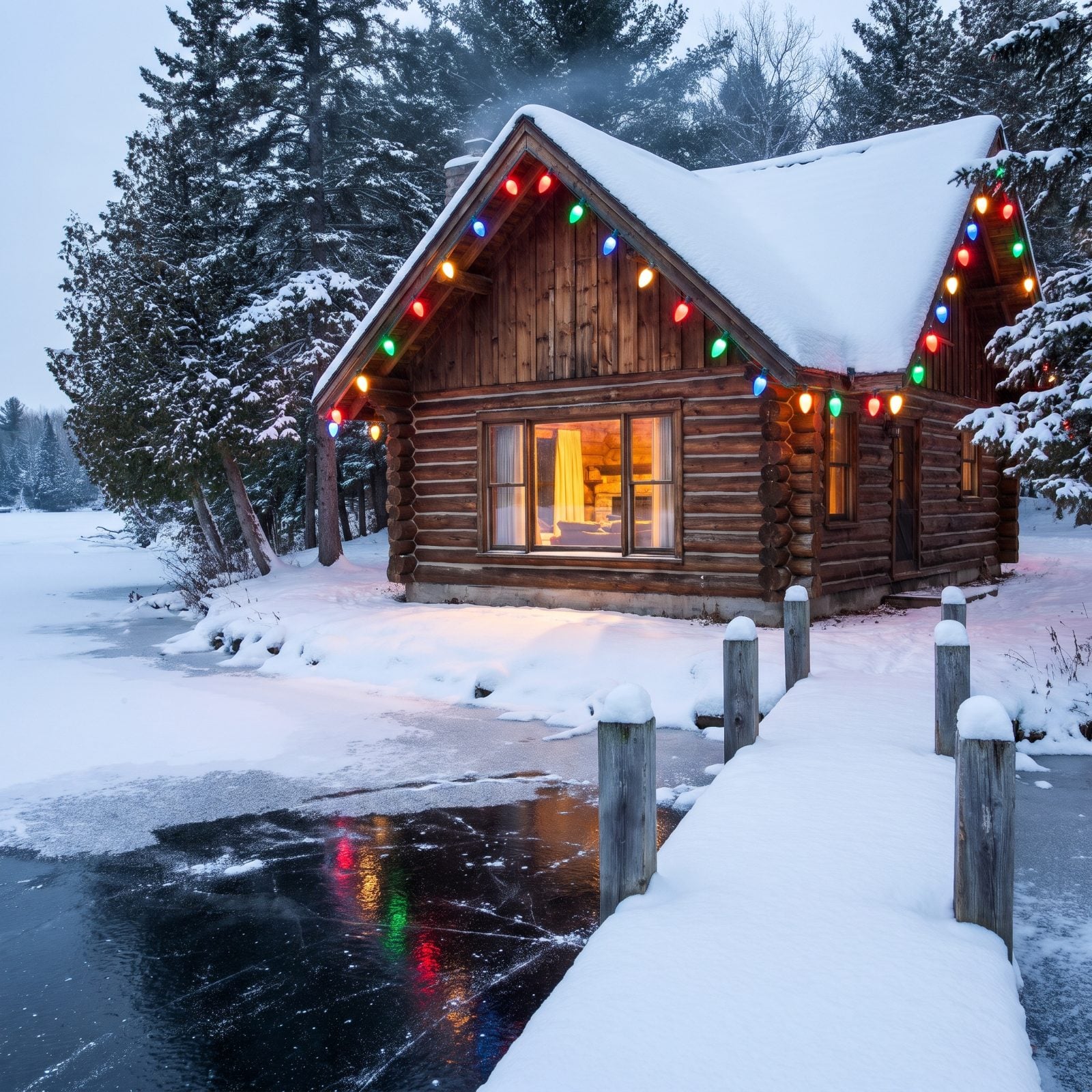
These were real glass bulbs — the size of a small pear, hot enough to melt snow right off the roofline, and they pulled enough power to make your dad grumble about the January electric bill. You screwed each one in by hand. Bulbs burned out all season long, so there was always a guy on a ladder in the cold, squinting at sockets.
Across the frozen lake, though, they did something the little modern lights never manage. The colored glow bled onto the ice around the dock, red and blue smeared across black glass. You could spot a cabin’s lights from clear across the bay.
43. An Aluminum Christmas Tree Turning Beneath a Color Wheel
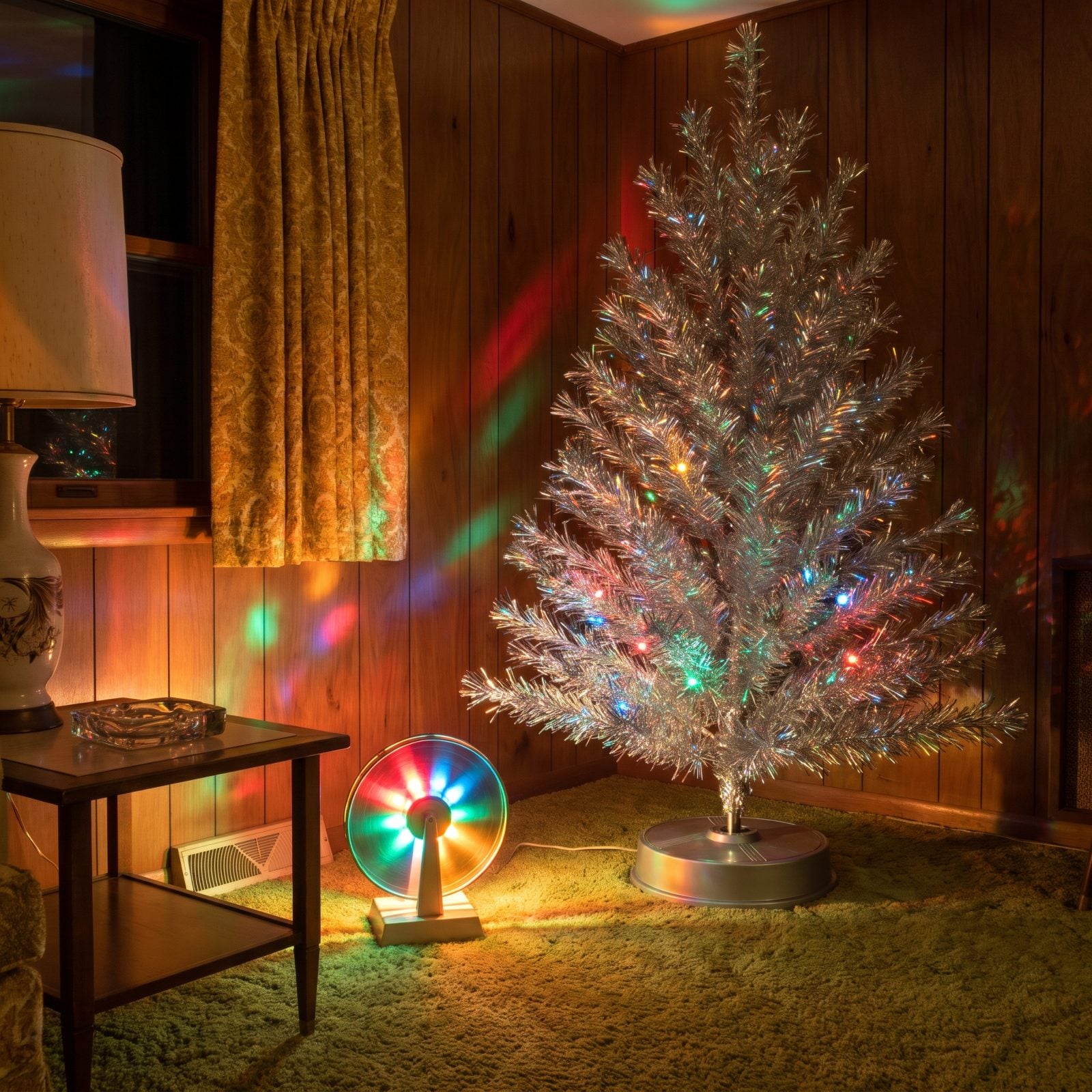
You weren’t supposed to put lights on an aluminum tree, and the foil was meant to do the glittering on its own. Stringing electric bulbs through all that foil was a genuine shock hazard, so manufacturers sold rotating color wheels instead; the wheel sat on the floor beside the tree, aimed up into the branches.
The wheel clicked as it turned — red, then gold, then green, then blue — and its glow shifted color across the paneling and carpet. Set one beside a frosted window with the lake going dark outside, and it looked like something out of a future that never quite showed up.
42. A Fresh-Cut Pine Covered in Mismatched Family Ornaments
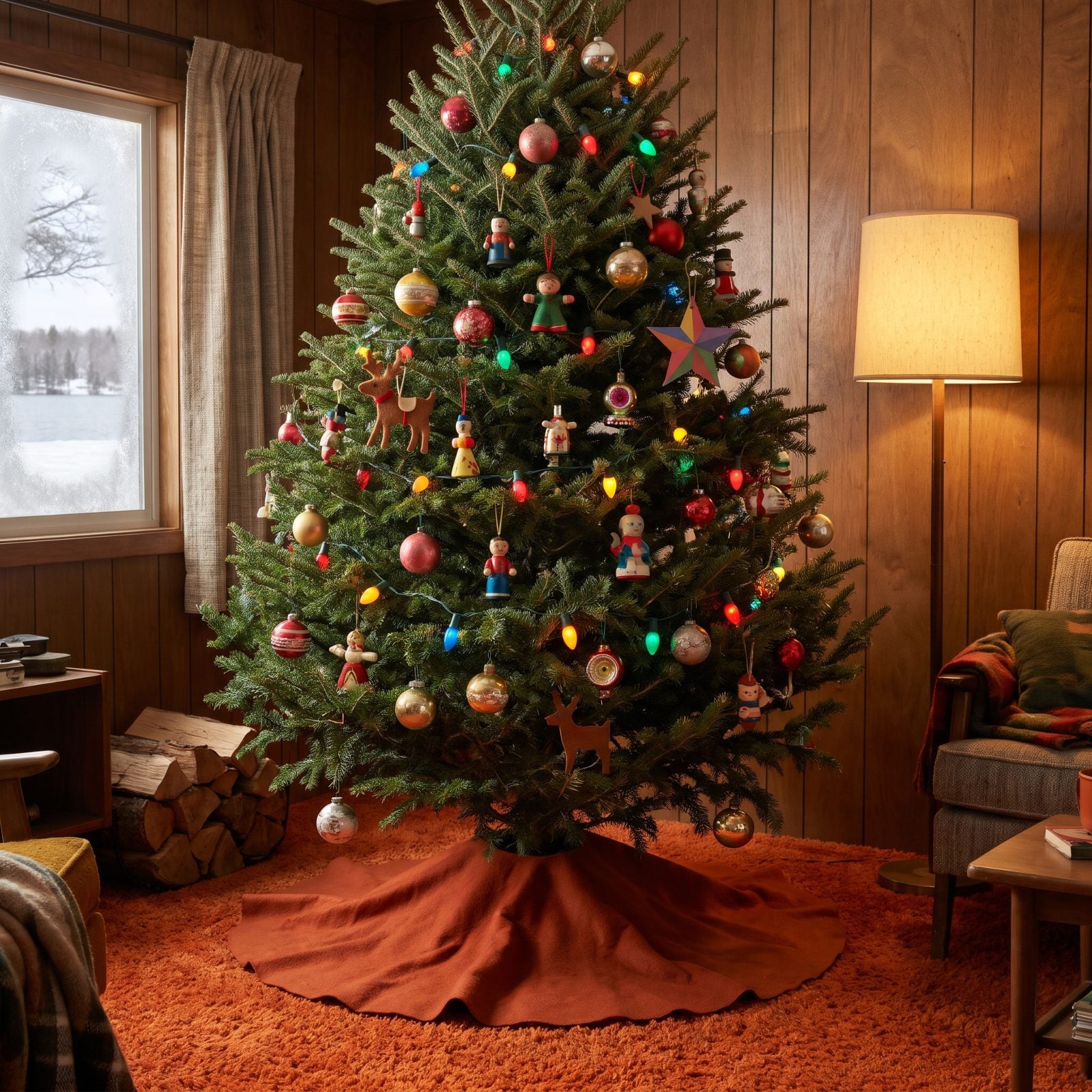
No theme. No matching palette. That’s the whole charm of it.
A tree like this told you everything about who lived there. A glass ball from a grandmother who was gone now, a lopsided clothespin reindeer somebody made in second grade that nobody had the heart to retire, a couple of Shiny Brites with the silver flaking off the inside. Every year it got heavier with history.
41. Long Strands of Silver Tinsel Draped One Piece at a Time
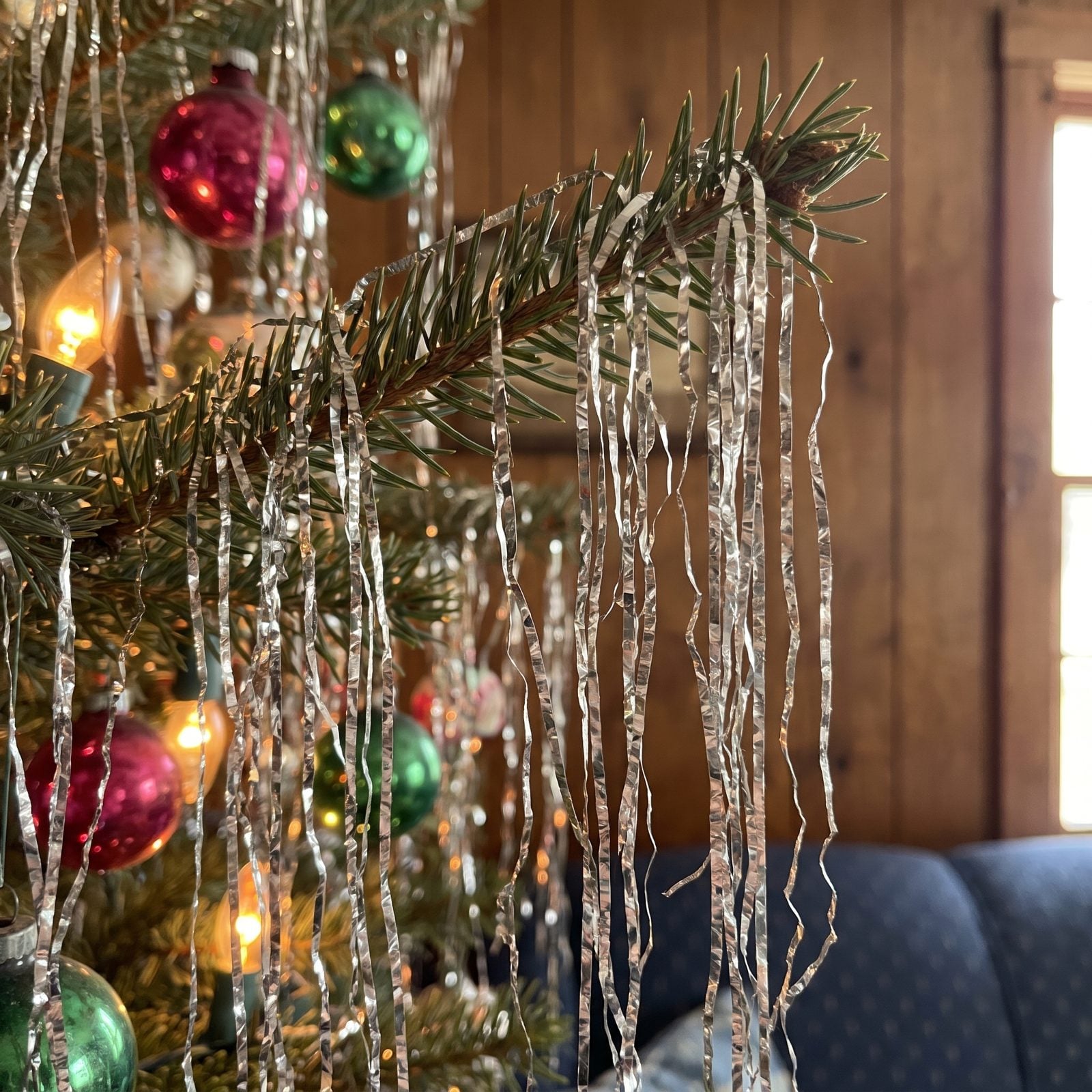
There were two kinds of people. The ones who threw tinsel at the tree in clumps, and the ones who draped it strand by strand until their arm ached. The second kind were insufferable about it. They were also right.
Done one piece at a time, the old lead-foil tinsel hung dead straight and threw light back like running water. The cat ate it. You’d find a strand in a corner in July. Worth it.
40. A Popcorn-and-Cranberry Garland Made at the Kitchen Table
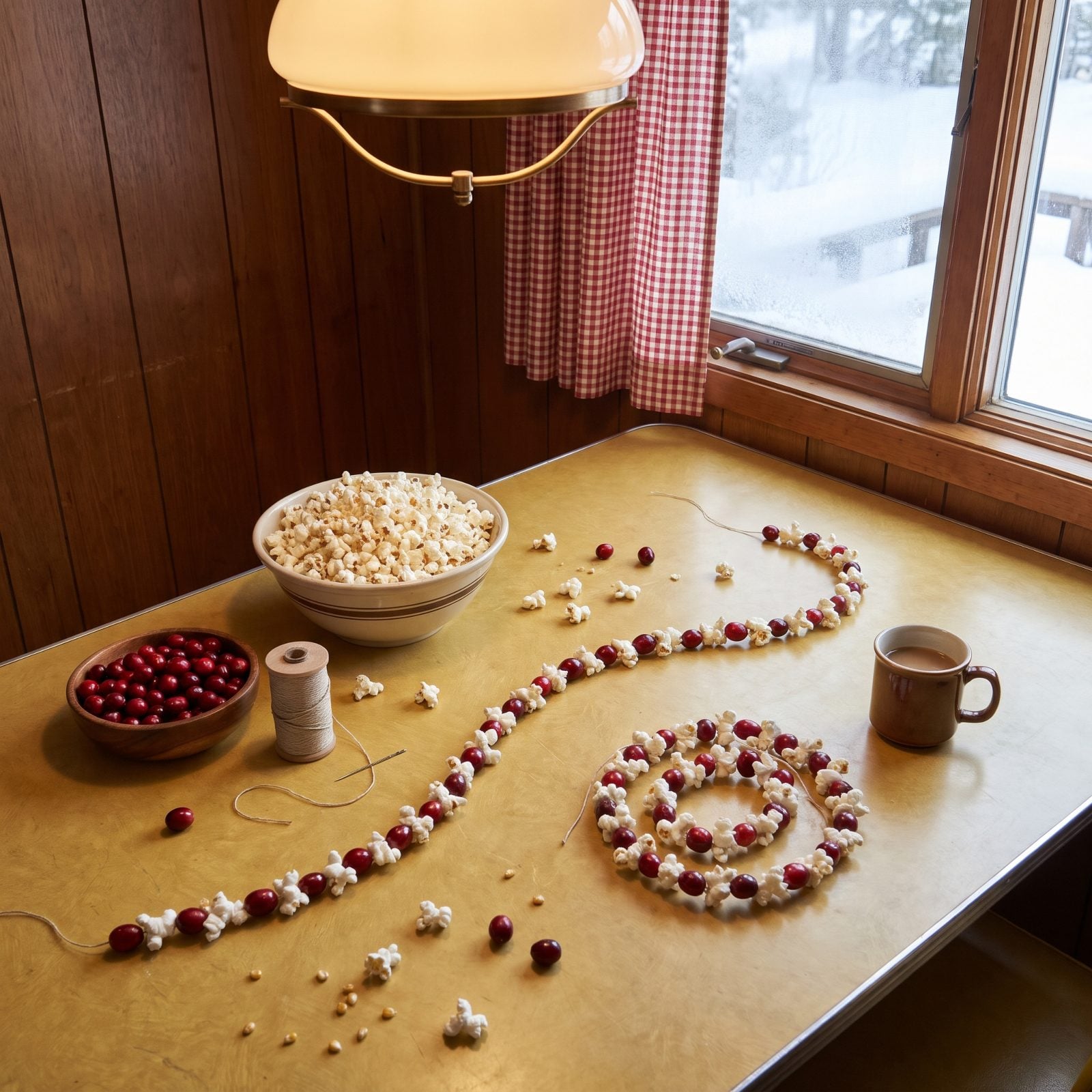
This was the job they gave the kids. A needle, a spool of thread, a bowl of popcorn and a bowl of cranberries, and a whole evening to kill.
Half the popcorn cracked and never made it onto the string, you pricked your finger, and the cranberries left little red smears on everything. But by the end of the night you had yards of it, and it went on the tree or along the mantel. By New Year’s it had gone a little stale, and the birds got it when you tossed it out back.
39. Spray-Snow Stencils Frosting the Cabin Windows
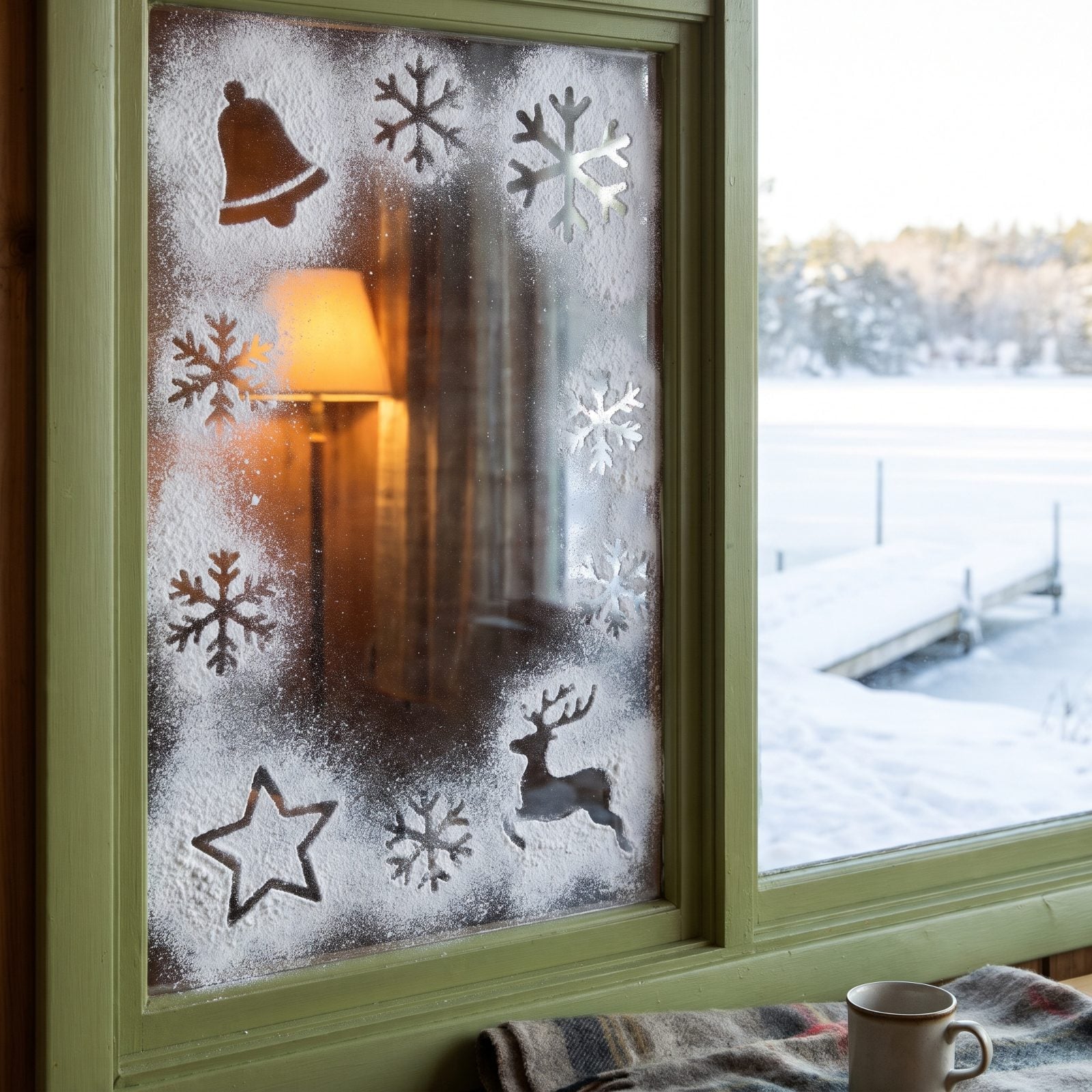
The can hissed and the whole room smelled like a chemistry set. You held the cardboard stencil flat against the glass and sprayed, and pull it away too fast and you dragged white fuzz across the window, ruining the edge.
Snowflakes, bells, a lopsided Santa. The frost built up in the corners, and come January you scraped it off with a razor blade, cursing. But on a winter morning, with the real snow stacked on the dock outside and the fake snow stenciled on the glass, the two kind of blurred together.
38. A Glowing Ceramic Christmas Tree on the Sideboard
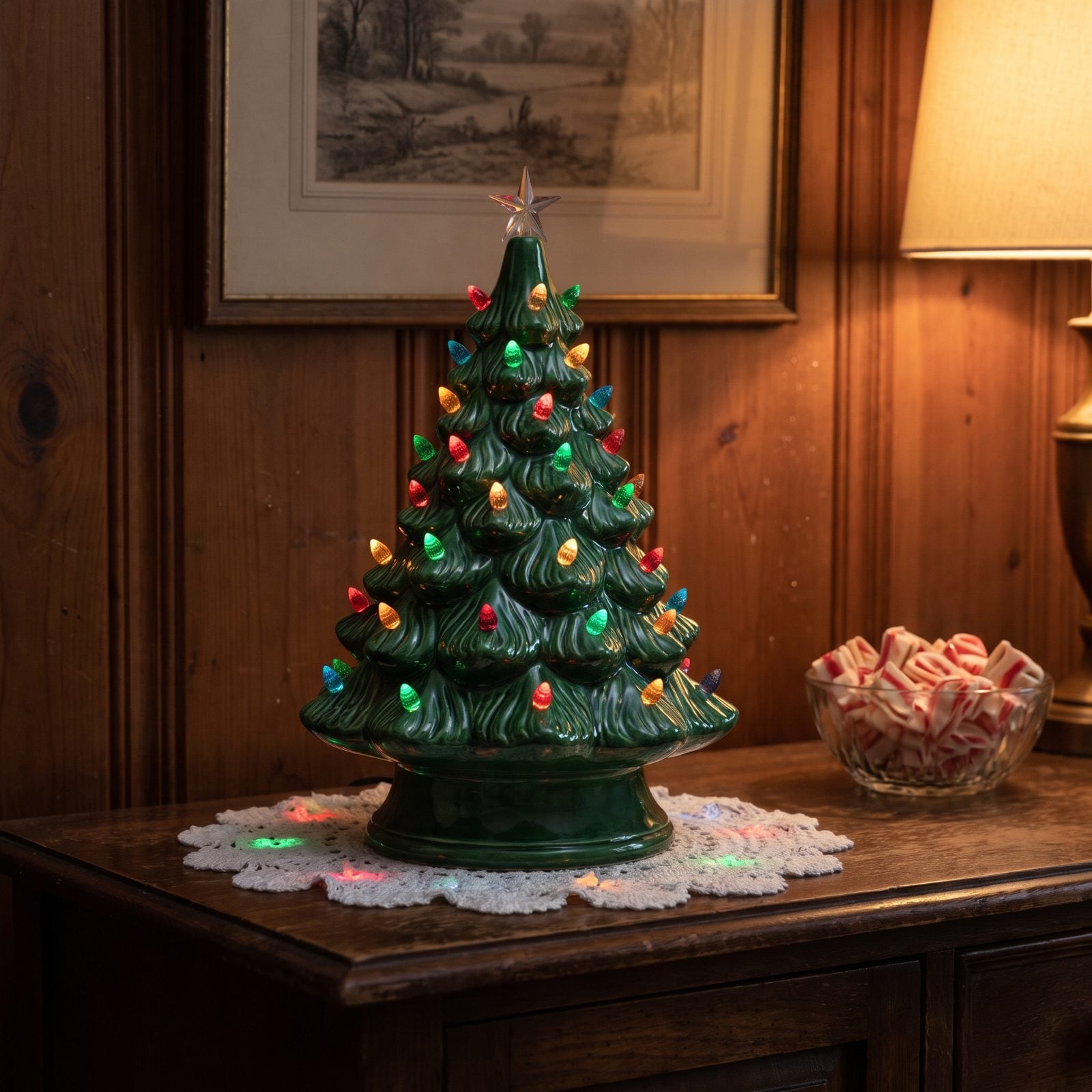
Somebody’s aunt made it in a ceramics class, and now it had a permanent spot on the sideboard.
One small bulb inside, a scatter of colored plastic pegs pressed into the glaze, and a faint warmth you could feel if you put your hand near it. It wasn’t trying to steal the spotlight. It just sat there glowing next to the ribbon candy, quietly outlasting every fancier decoration in the house. People pay real money for the originals now.
37. A Plastic Santa Standing Beside the Snowy Dock
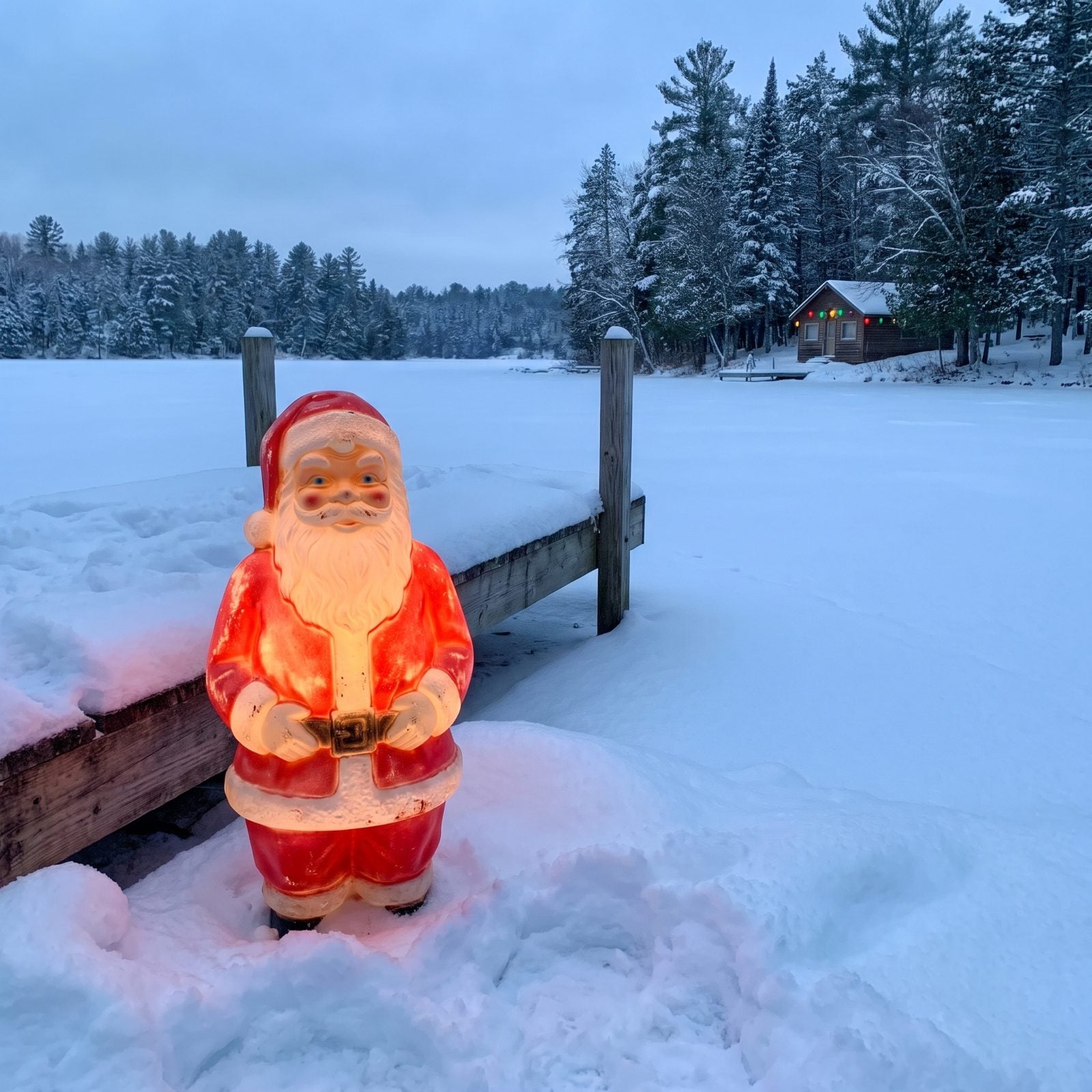
A light-up blow-mold Santa — three feet of glossy plastic, planted in a snowbank at the top of the dock where the lake used to lap in July.
He glowed from a single bulb somebody fed through a hole in the base. Every summer the sun faded him a little more, every winter the wind leaned him a little further over. Snowmobilers coming off the ice at night used him to find the right dock. Not elegant. Completely beloved.
36. Handmade Felt Stockings Above a Roaring Fieldstone Fireplace
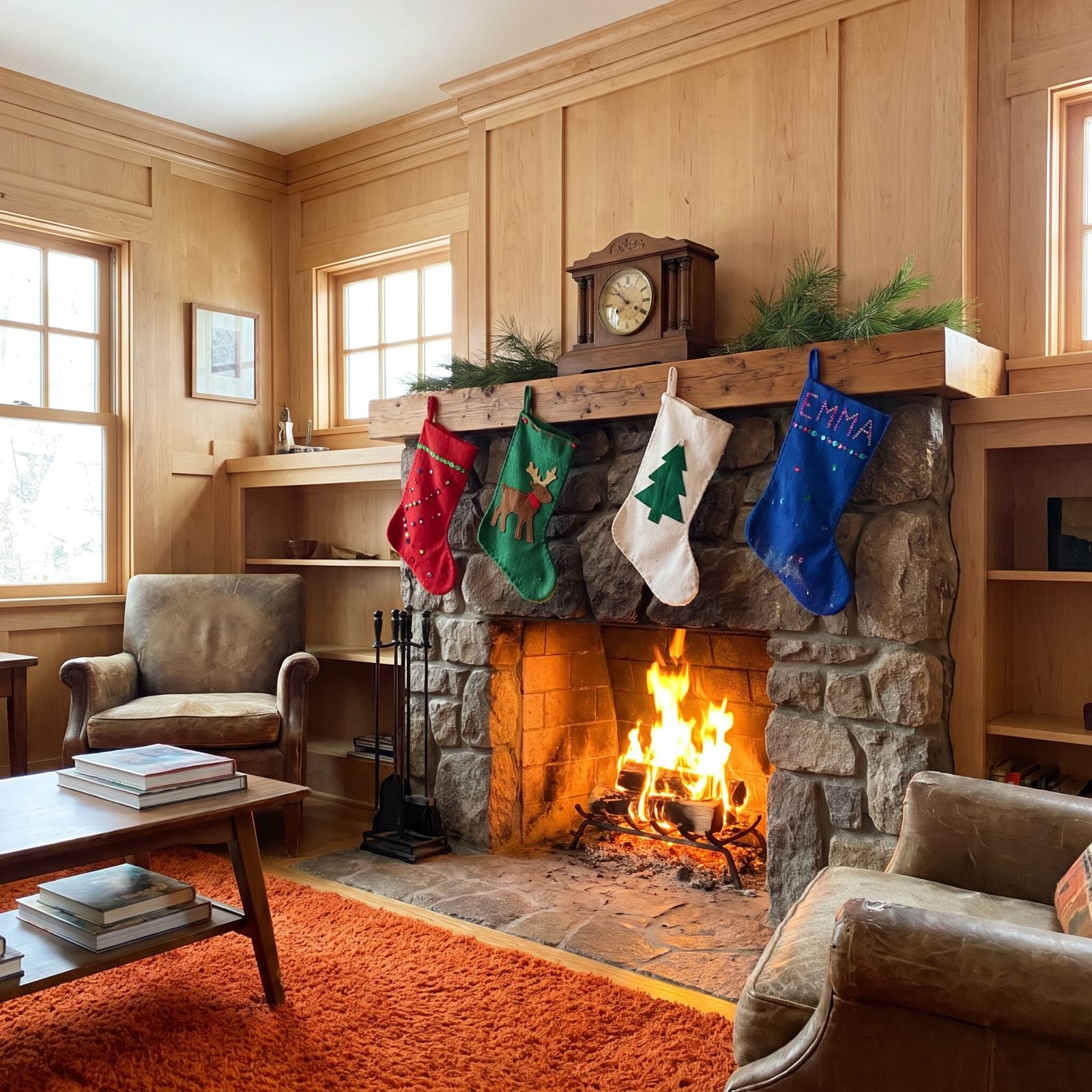
No two matched, and that was the point. Somebody cut these from craft felt at the kitchen table — probably the same table where the popcorn garland happened.
Red felt with sequins. Green felt with a reindeer whose antlers were still perfectly intact. Names spelled in glitter glue that still sparkled, crisp as the day they were written. They hung from the fieldstone mantel over a fire that actually threw heat, the kind you had to feed logs into, and by the end of the night they’d get warm to the touch.
A store-bought stocking tells you nothing. A felt one your grandmother cut by hand tells you everything.
35. Orange Shag Carpet Beneath the Christmas Tree
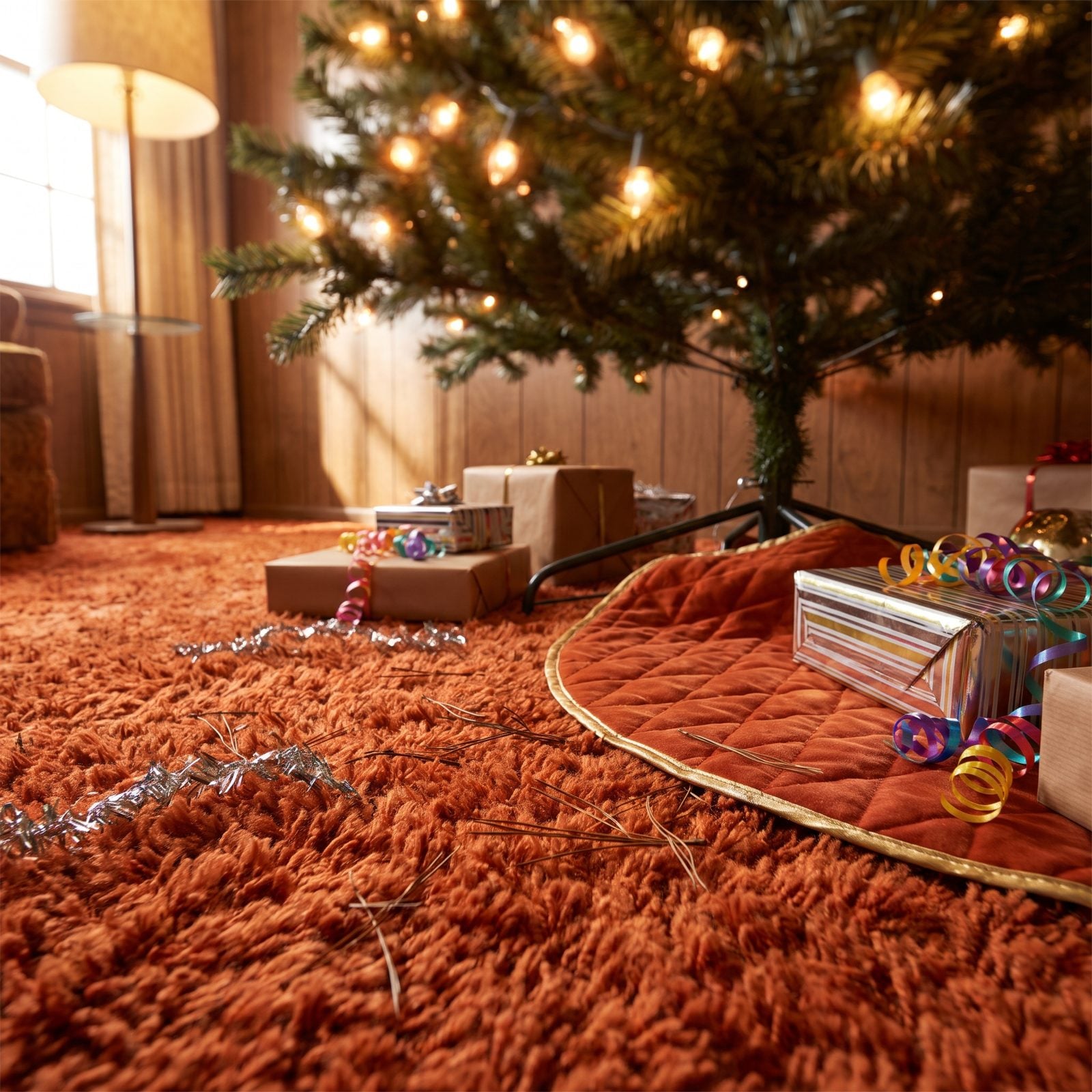
Burnt orange, deep enough to lose a dropped ornament hook in for the rest of the decade. Shag was the floor of the 70s, and it swallowed everything — pine needles, tinsel, the little wire thing off the top of a bulb.
But on Christmas morning, with the kids sprawled across it tearing into wrapping paper and the tree lights going, it was the warmest floor in America. You raked it with a special rake to stand the fibers back up. I’m not making that up. The rake was real, and it lived in the closet all year for exactly this.
34. A Harvest-Gold Rotary Phone Mounted on the Cabin Wall
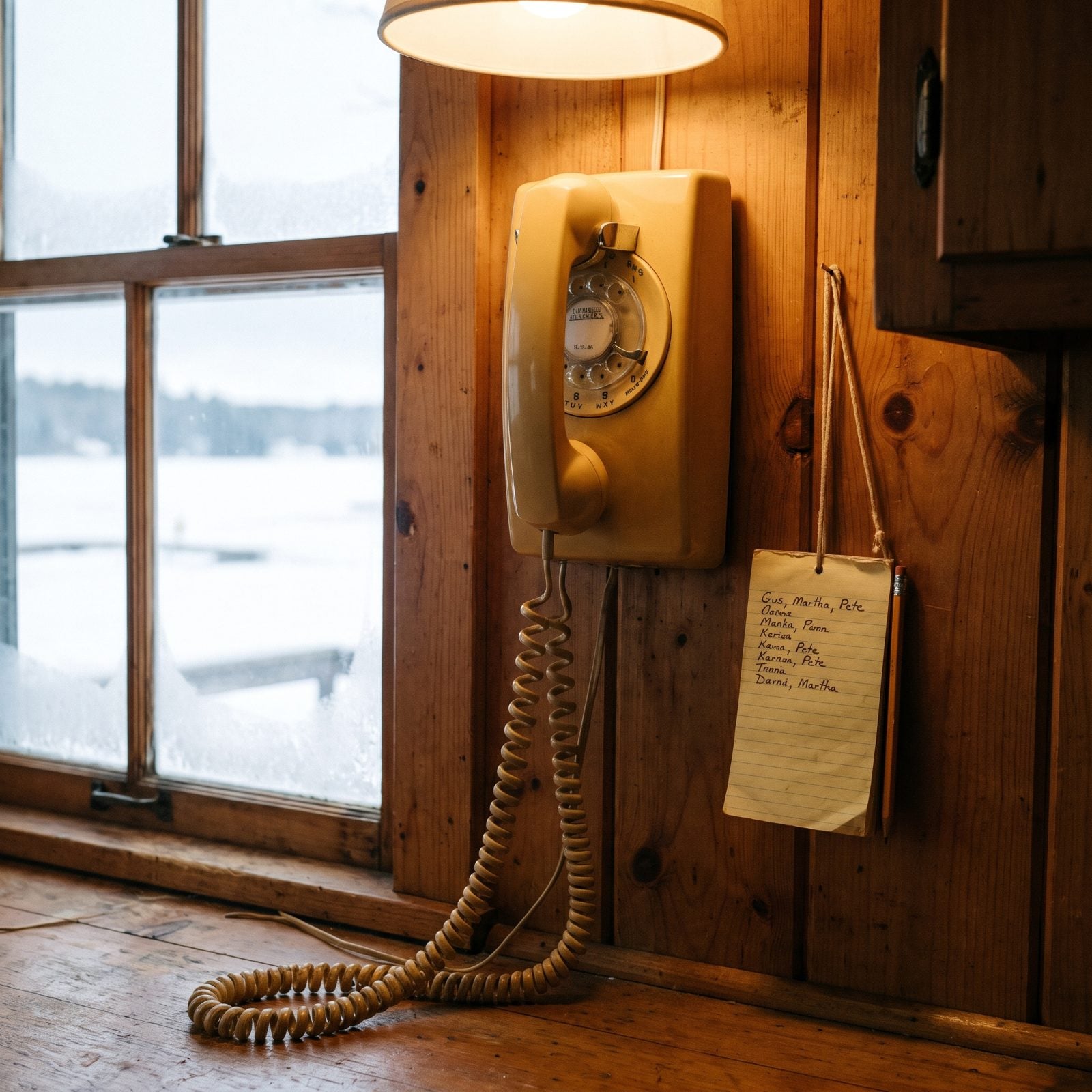
The cord was the thing. Long enough to reach the pantry, the back door, the top of the basement stairs, tangled into knots nobody ever bothered to undo. You dialed slow because you had no choice, and one wrong digit near the end meant starting the whole thing over.
Calling the grandparents on Christmas morning meant everyone crowded the kitchen waiting their turn. No speakerphone. You pressed the receiver hard against your ear and shouted, as if long distance should cost more when you spoke louder.
33. Christmas Specials Flickering on a Rabbit-Ear Console TV
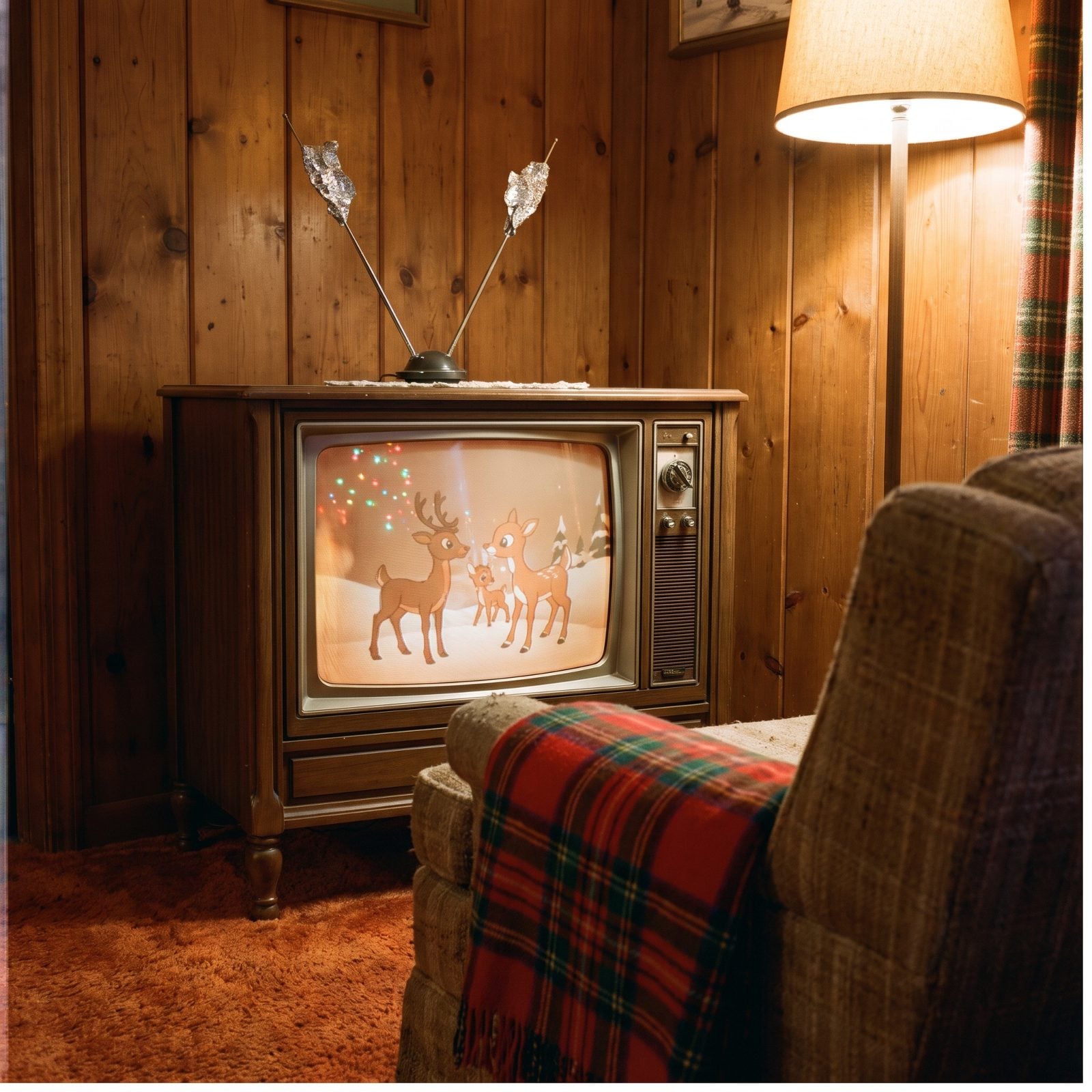
You didn’t choose when the specials aired. The specials chose you. Miss Rudolph on its one night and you waited a whole year for the next shot, which is why the whole family parked on the floor the second the TV guide said it was time.
That console was furniture, a slab of wood as heavy as a boat motor. When the picture rolled or went snowy, somebody got sent to twist the rabbit ears, usually with foil crammed on the tips, and whoever held the antenna got the clearest picture only while they stood perfectly still.
32. An Eight-Track Player Loaded With Christmas Songs
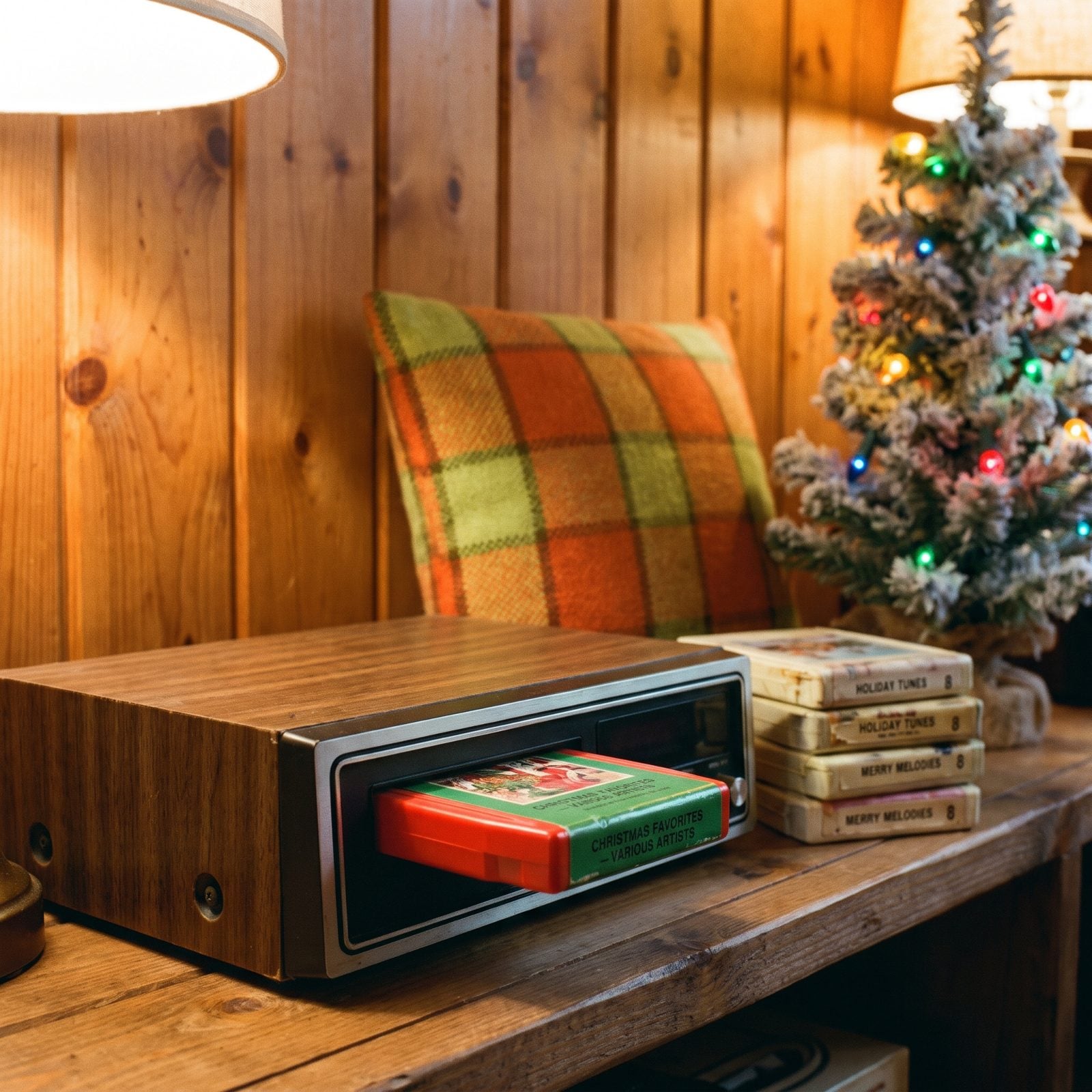
Eight-tracks had one flaw everyone made peace with. A song faded out mid-verse, there’d be a loud ka-chunk as the track switched, and the song picked back up wherever it felt like. Christmas carols got sliced clean in half this way, and nobody minded.
The cartridge was fat and solid in your hand, a little brick of music you slid in with a satisfying push. Skipping back wasn’t really an option. You just let it play, and the same four programs looped all afternoon while the ham was in the oven.
31. A Polaroid Camera Capturing Christmas Morning
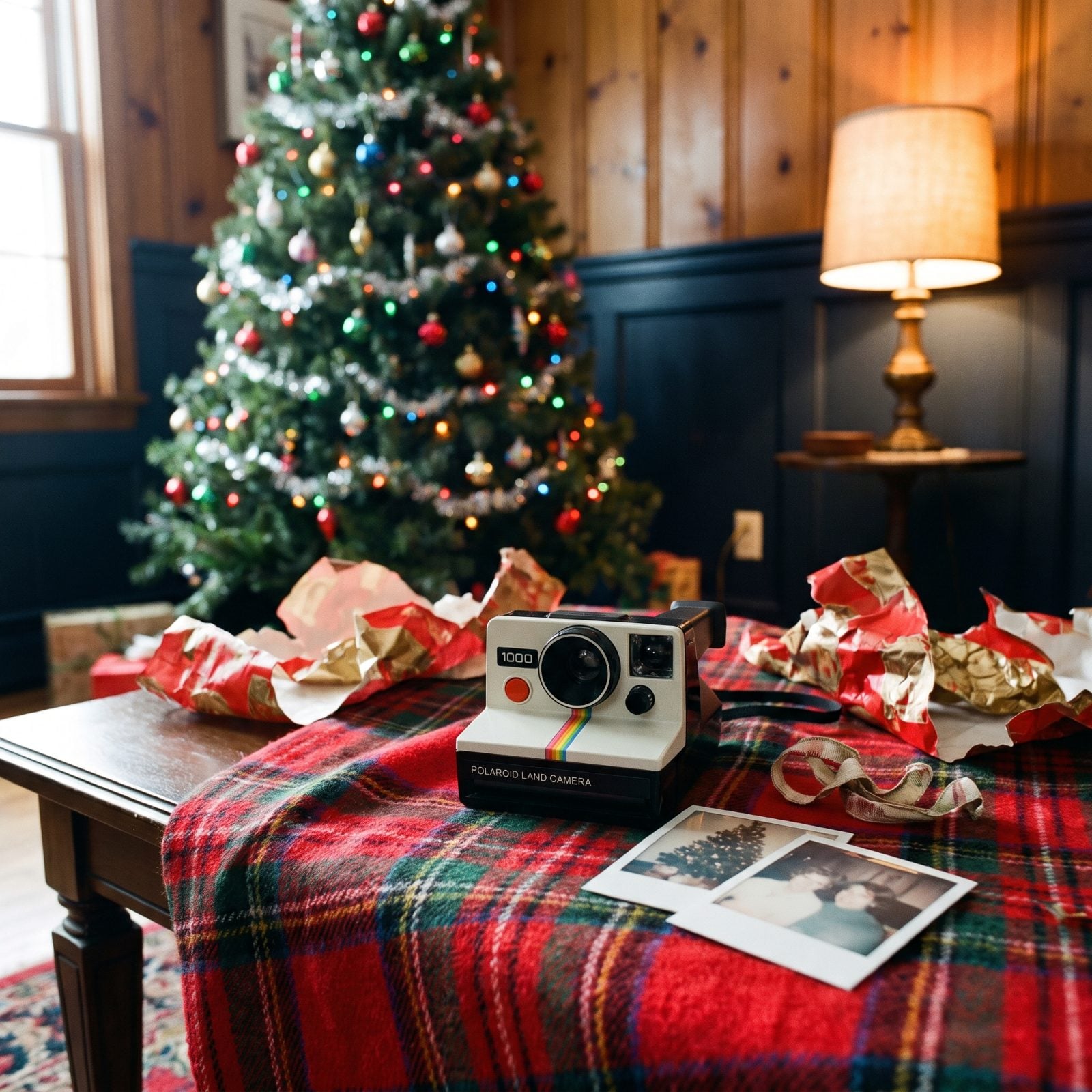
You’d aim, press the button, and the camera spat out a square with a whir. Then the waiting. Everyone huddled over the gray rectangle, shaking it like that did anything, watching the image swim up out of nowhere.
One shot cost real money, so you didn’t fire away. You framed it, you meant it, and whatever you got was what you kept. Those thick-bordered squares ended up taped to the fridge or tucked in a shoebox, faded orange now, and still the truest record of a Christmas morning there is.
30. A Super 8 Camera Filming the Family on the Frozen Shore
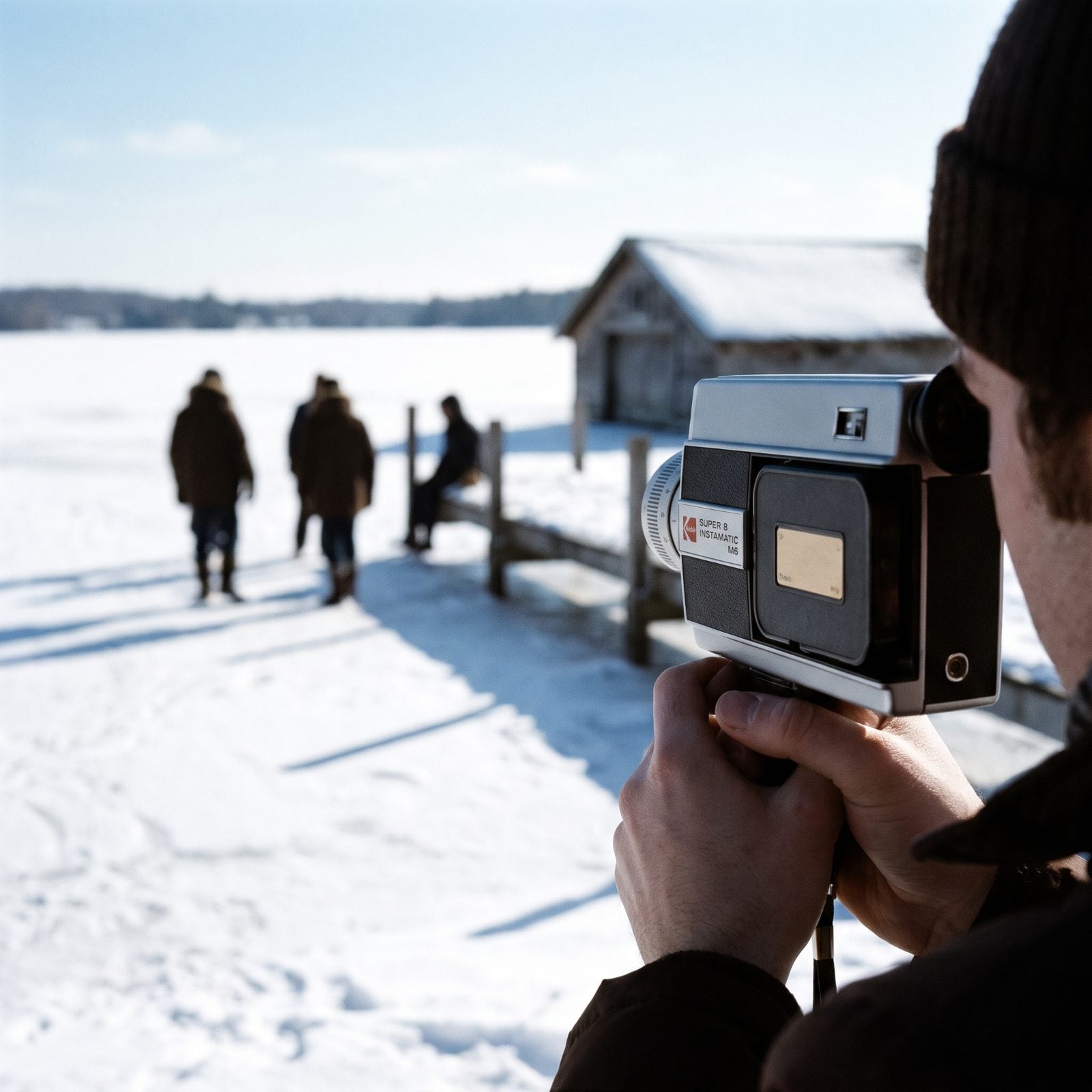
No sound, no replay on the spot, about three minutes a cartridge. You filmed your family trudging across the snowy shore and the boathouse buried to its knees in snow, then waited weeks for the lab to send the reel back before you knew if any of it came out.
Half of it was overexposed. Half was shaky. People waved too much at the camera because waving was what you did. Watching those films later, everything moves just a touch too fast and a little jerky, and somehow that stutter is exactly how those cold bright mornings felt.
29. A Slide Projector Showing Summers at the Lake
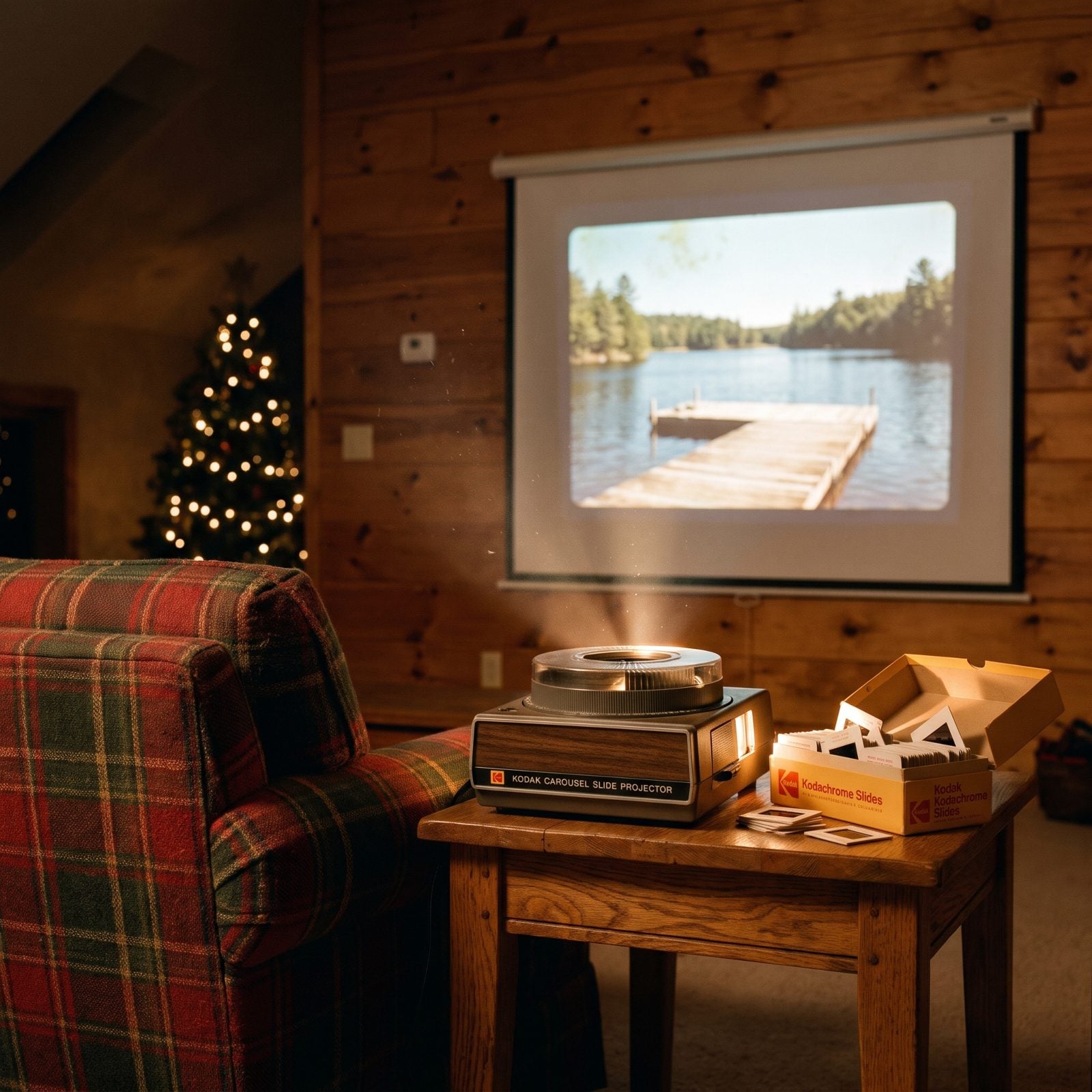
The lights went off and the old projector advanced with that heavy mechanical thunk. Suddenly, in the dead of a frozen December, there was the dock in July, the kids brown as acorns, somebody squinting at the camera from a canoe.
Dust floated in the beam and the fan hummed. Every third slide came up upside down or sideways, which earned a groan and a laugh every single time. Looking at summer in winter is a particular kind of sweet, and that machine delivered it one hot bright click at a time.
28. A Sears Wish Book Covered With Circled Christmas Toys
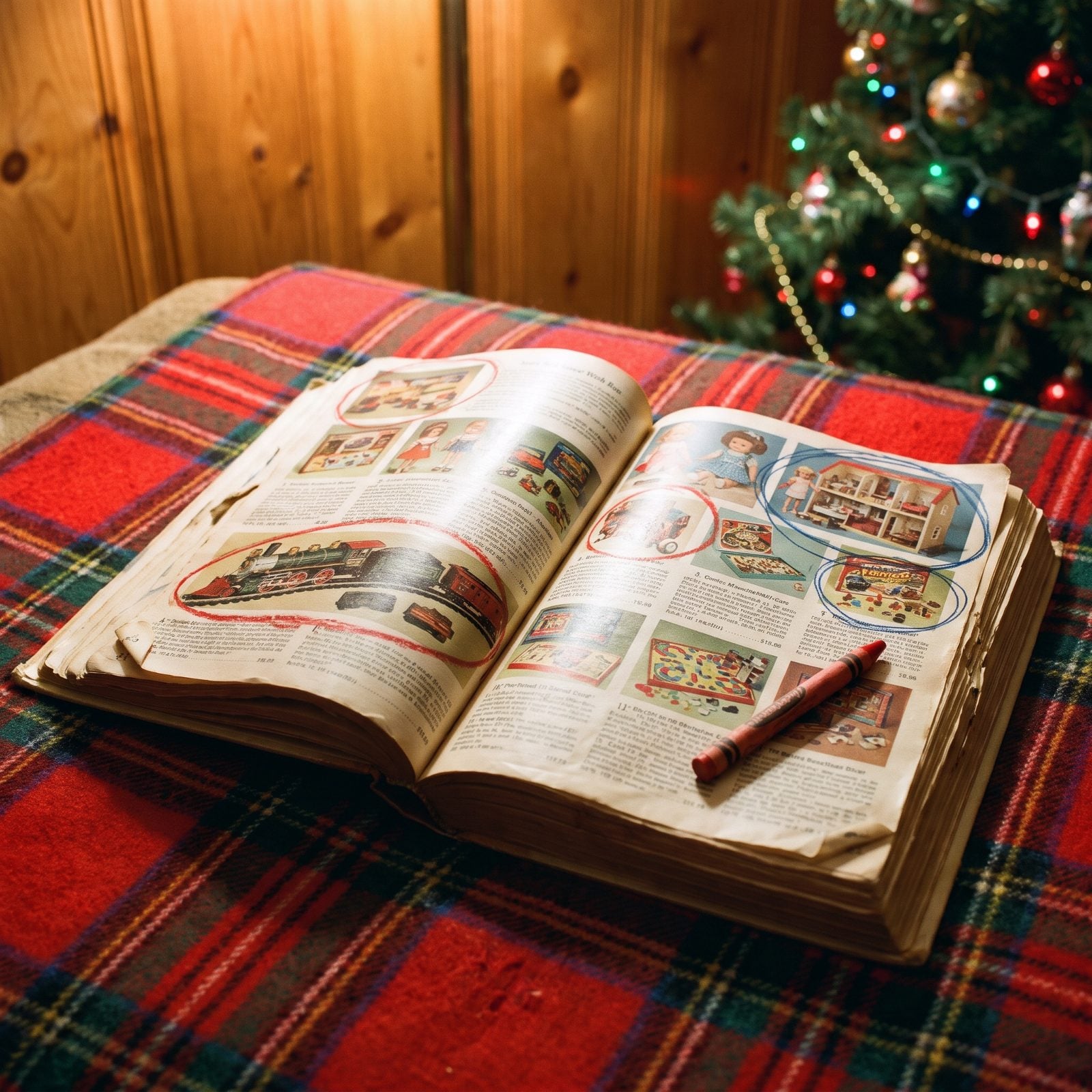
It landed in the mail in fall and weighed about as much as a cinder block. The toy section was the back half, and by December those pages had gone soft as cloth from handling, corners folded down, favorites circled hard enough to dent the page.
Picture the whole internet of its day, stuffed into one book. You circled, you negotiated, you lobbied. Half of what you wanted you’d never get. But the wanting was half the fun.
27. Life Savers Storybooks Peeking From the Stockings
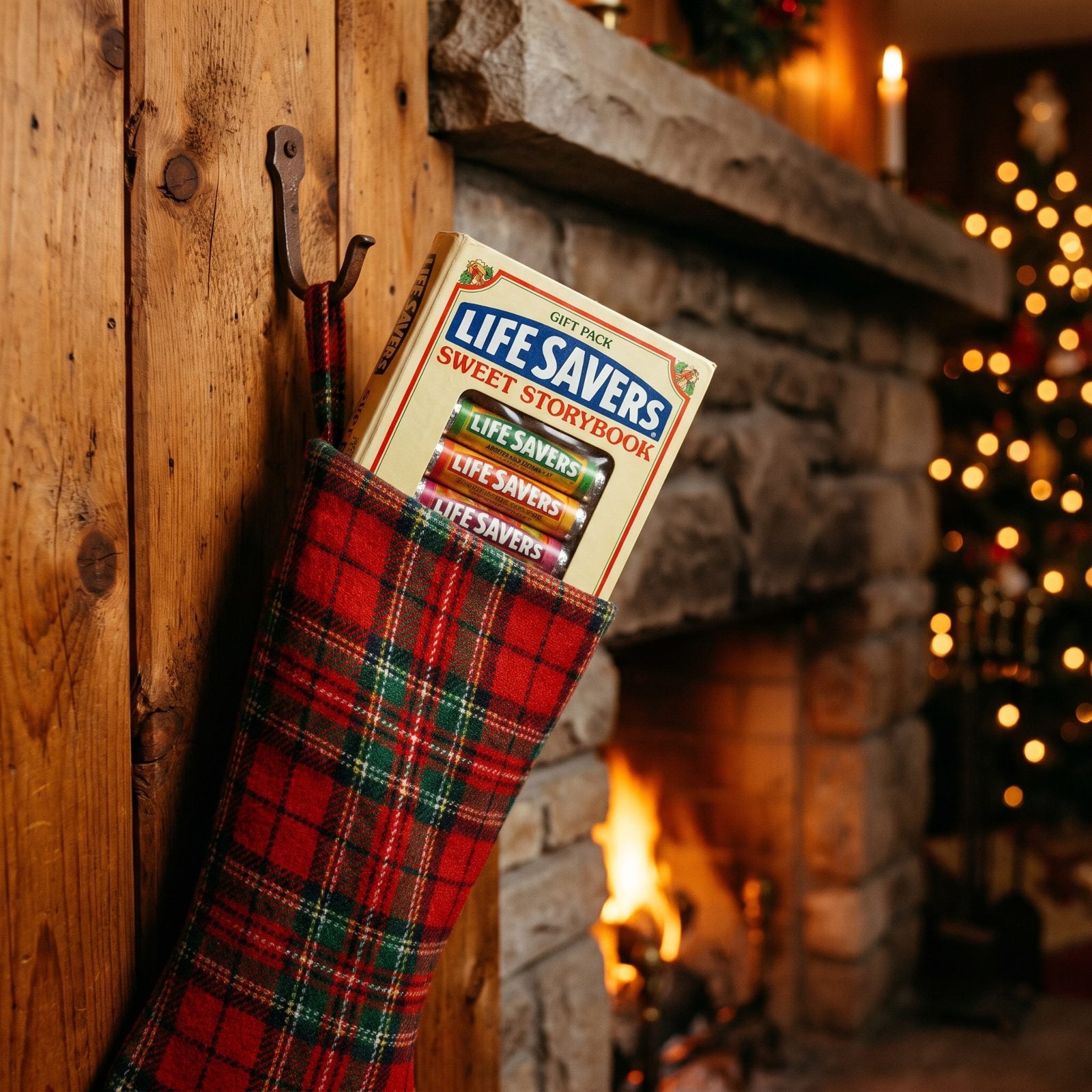
Shaped like a storybook, hinged like one too, ten rolls of candy slotted inside like pages. It showed up in the top of the stocking every year, same spot, same little thrill.
You rationed the Wild Cherry and the Butter Rum. Somebody always got stuck with the Pep O Mint nobody fought over. A small thing, cheap even, yet it drops you straight back into a cabin morning the second you picture it.
26. A Slot-Car Track Winding Around the Christmas Presents
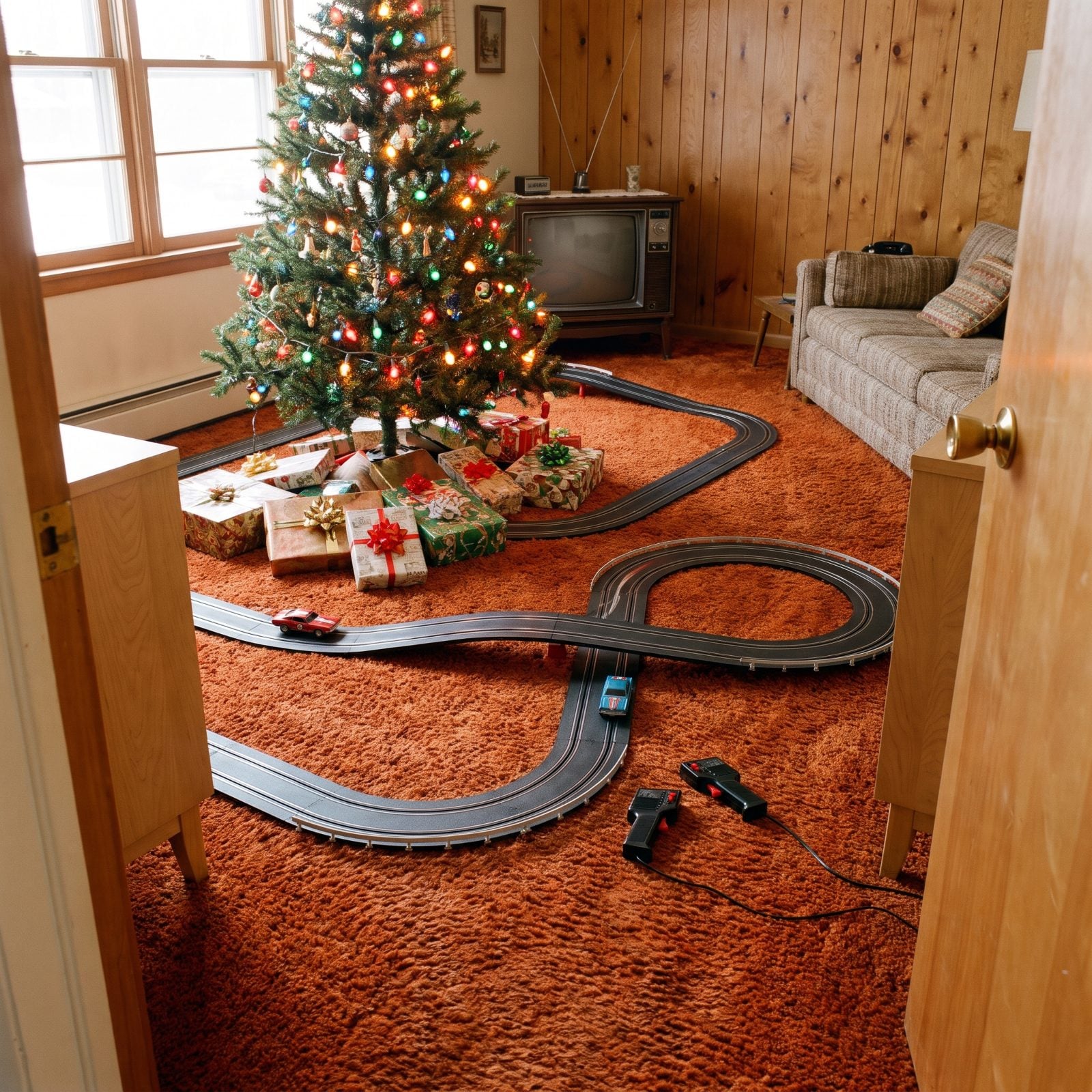
Boxing Day afternoon, the track sprawled all over the shag carpet in loops that ran under the tree and around the presents nobody had put away yet. You squeezed the trigger, the car whined up to speed, and you took the big turn a hair too fast every single time and sent it flying off into the paneling.
Then the ritual: picking it up, brushing shag fuzz off the little guide pin, setting it back on the rail. The track ran hot. The copper strips gave off a burnt smell. Hours went by and nobody noticed the short December day had already gone dark outside.
25. A Fondue Pot Bubbling on Christmas Eve
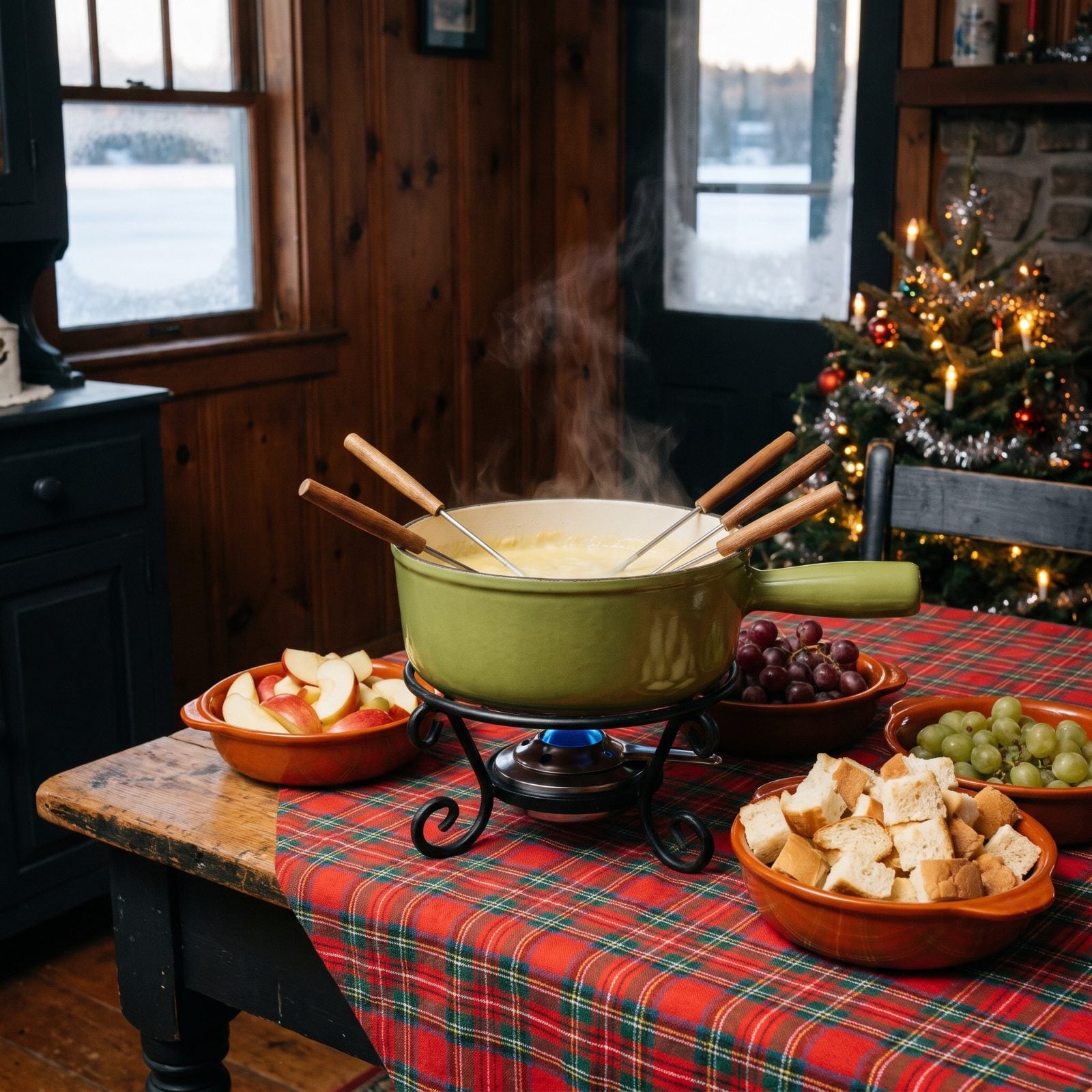
The fondue pot came out exactly twice a year, and Christmas Eve was one of them. Avocado or harvest gold, naturally, with the little burner underneath throwing a blue flame you weren’t allowed to touch.
Everyone got a long fork with a color-coded tip so you knew which bite was yours, and the one unbreakable rule was that you did not double-dip. You speared bread, swirled it through the cheese, and burned the roof of your mouth because you never waited long enough. Later the same pot got rinsed and refilled with melted chocolate, the strawberries came out, and that was Christmas Eve at the lake. Slow, communal, bubbling over an open flame while the snow came down past the window.
24. An Electric Percolator Brewing Coffee Before Sunrise
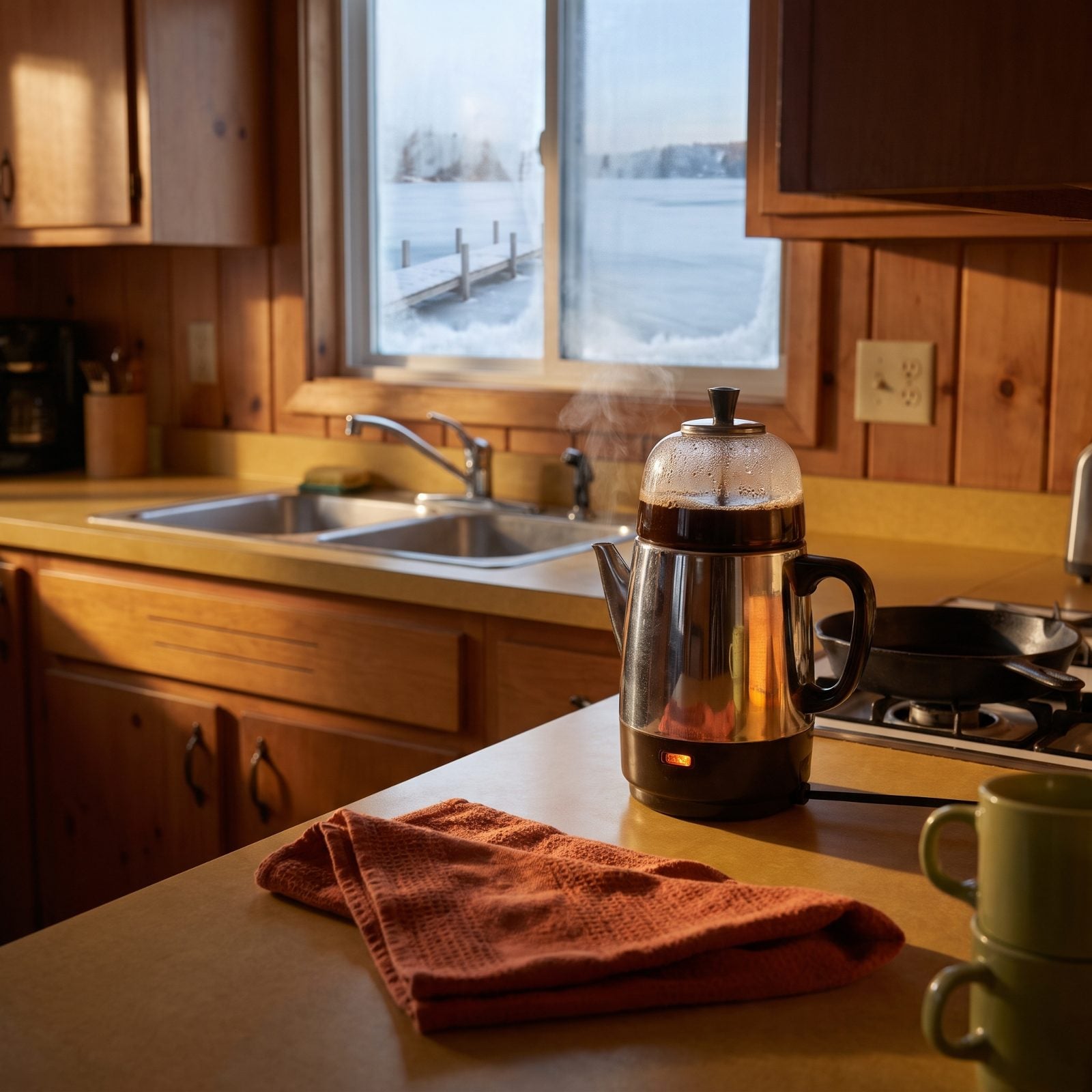
The percolator was the first thing awake in the cabin. Somebody plugged it in before anyone else stirred, and the sound carried down the hall — that low gurgle, then the pop against the glass dome, then the smell.
It wasn’t good coffee, and I won’t pretend otherwise. Percolators boil the grounds, and boiling coffee makes it bitter. Nobody cared. You poured it into a heavy mug, wrapped both hands around it, and stood at the window watching the lake sit there frozen and blue-white under the morning sun.
23. A Red-and-Green Gelatin Mold on the Buffet
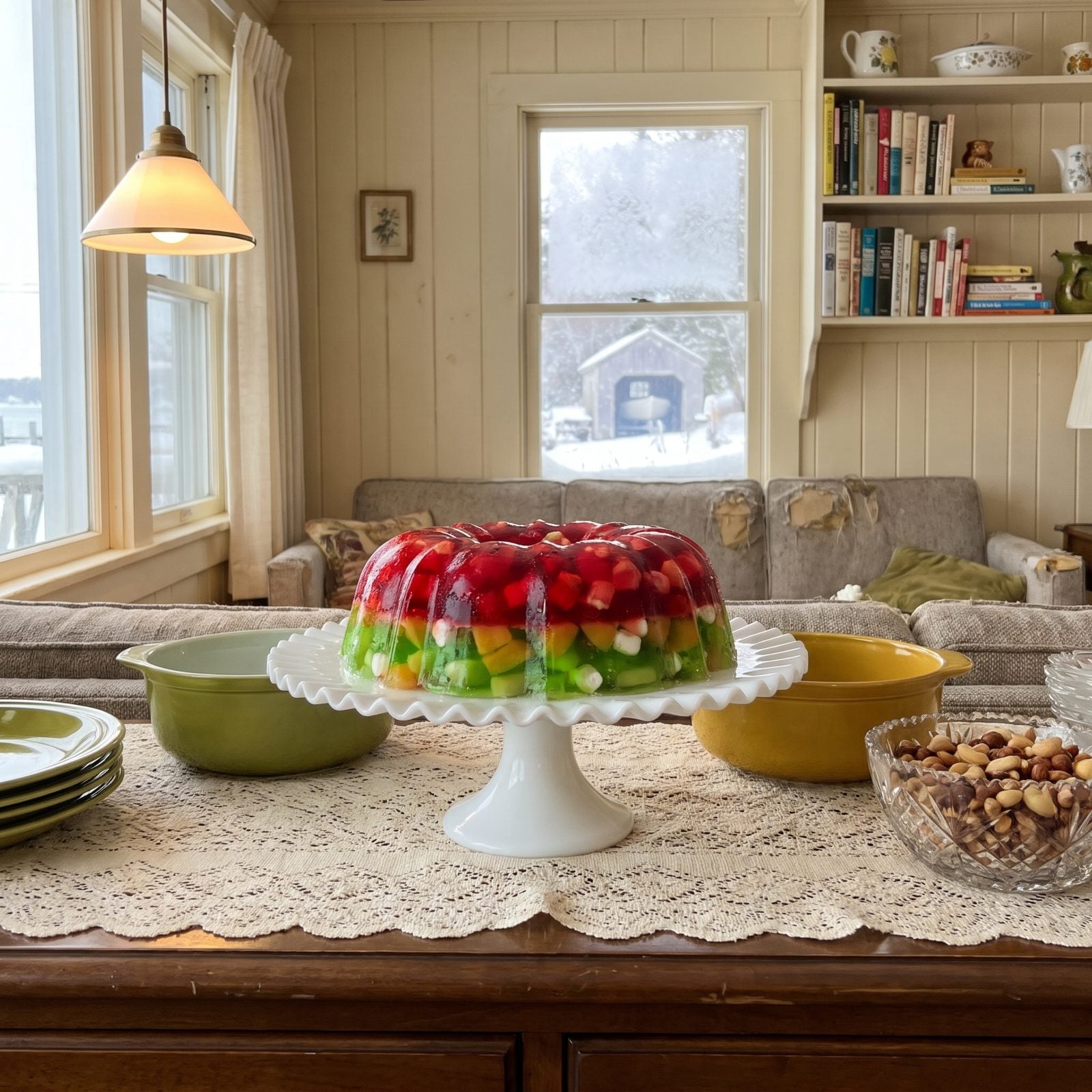
Every cabin buffet had one. A ring of gelatin standing proud on a plate, usually two colors, usually with fruit cocktail trapped inside like insects in amber. The marshmallow version floated a pale layer on top that nobody could quite identify.
The trick was the unmolding, and plenty of cooks learned it the hard way. Too little warm water on the outside and the thing wouldn’t budge; too much and it slumped onto the plate in a sad red puddle. A quick dip in the sink, a sharp tap, and if you got it right it slid out whole with that satisfying sucking sound.
22. A Pecan-Covered Cheese Ball With Ritz Crackers
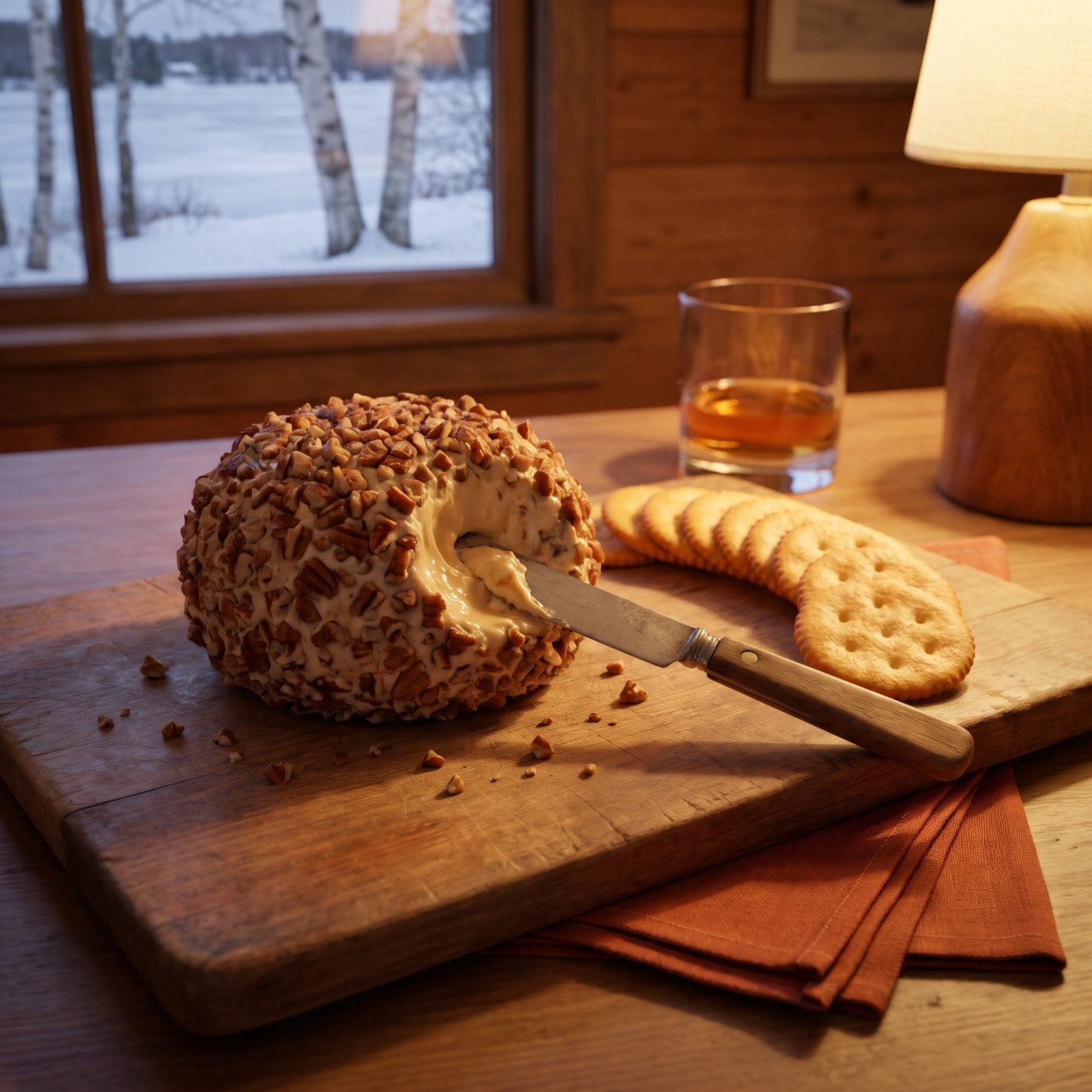
The cheese ball was always made the night before and left to firm up in the fridge. Cream cheese, sharp cheddar, a shot of Worcestershire, maybe some grated onion, shaped by hand into a lumpy sphere and rolled in chopped pecans.
Nobody admits this, but the first knife through it was a disaster. The outside firmed up, the inside stayed soft, and the Ritz cracker snapped under any real pressure. You learned to scoop gently or you ate the broken ones yourself. I ate a lot of broken ones.
21. A Cut-Glass Dish Filled With Ribbon Candy
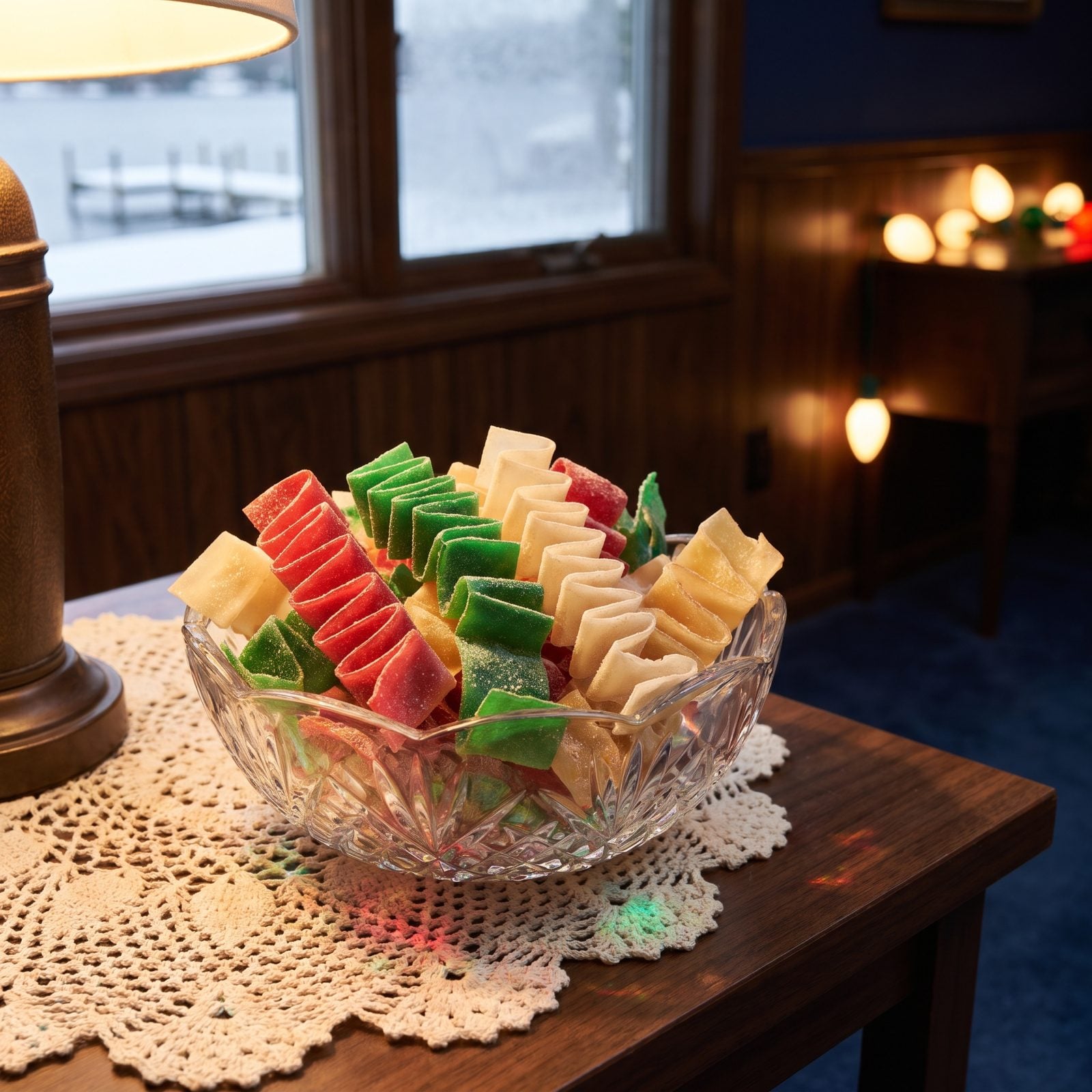
Ribbon candy was for looking at more than eating. Thin, glassy, folded into those looping ribbon curls, it sat in a cut-glass dish catching the tree lights and daring anyone to actually take a piece.
And when you did, it shattered into sharp little shards too hard for a kid’s teeth and too sweet for an adult’s. By New Year’s the whole dish had fused into one solid colored brick. Nobody threw it out. It just reappeared next December.
20. Metal Cookie Tins Packed With Spritz Cookies
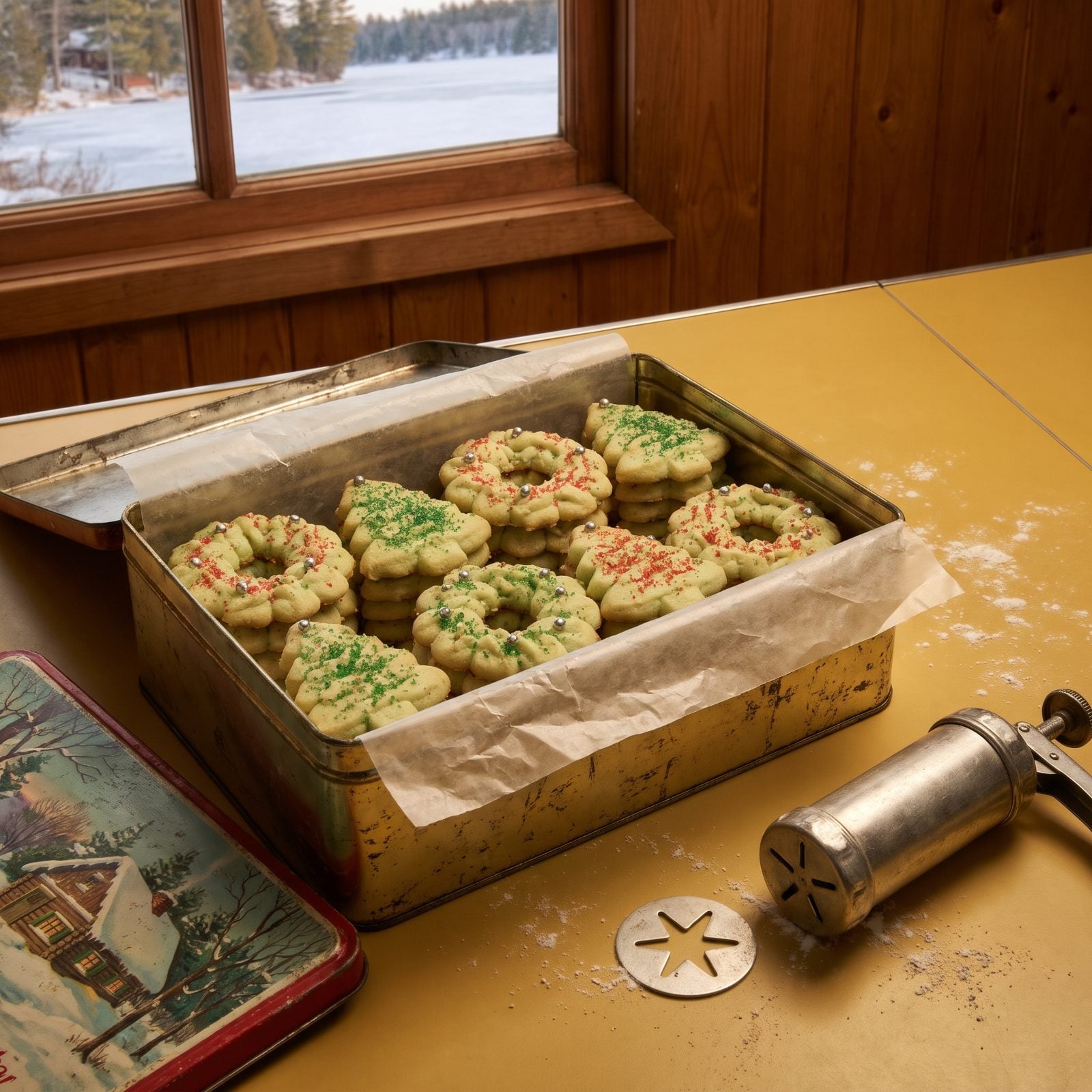
The cookie press was a point of pride and a point of frustration. You loaded the buttery dough into that aluminum cylinder, screwed in a shaped disc, and pressed cookies straight onto an ungreased sheet. Half of them stuck to the press and came out as blobs. The other half were little works of art.
The spritz went into a metal tin lined with wax paper, layer after layer. And the tin was never bought for spritz to begin with — it once held Danish butter cookies, or popcorn, or hard candy, and it would outlive everyone in the room.
19. A Glazed Canned Ham at the Center of Christmas Dinner
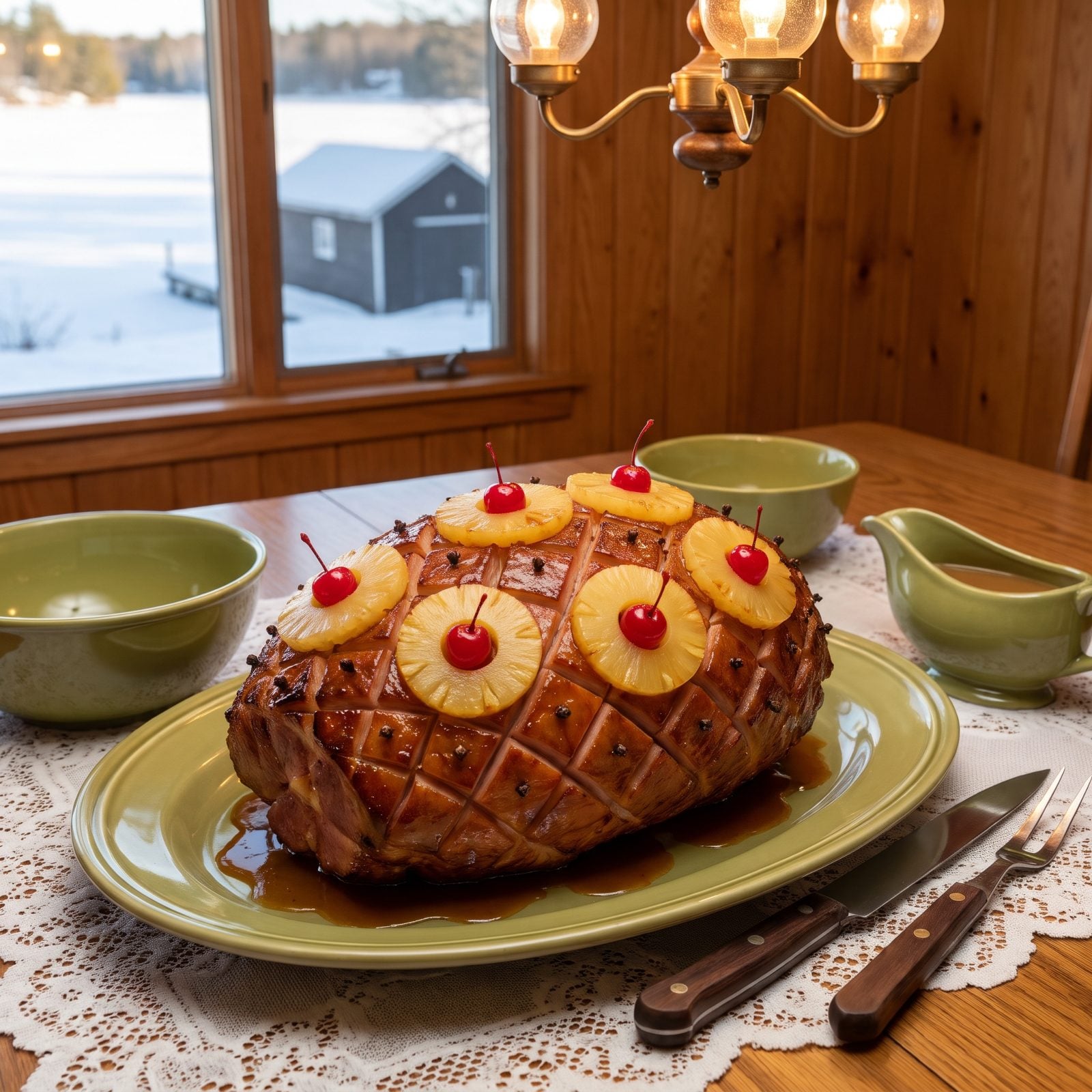
The ham came out of a can shaped like the can, and everybody knew it, and everybody ate it anyway. You scored the top in diamonds, pushed a clove into each corner, pinned on pineapple rings with toothpicks, dropped a maraschino cherry in each ring, and painted the whole thing with brown sugar and whatever juice was left in the pineapple can.
It fed a houseful and then fed them again for days. A canned ham never pretended to be fancy. It showed up, held the center of the table, and did its job.
18. A Cut-Glass Punch Bowl Filled With Holiday Sherbet Punch
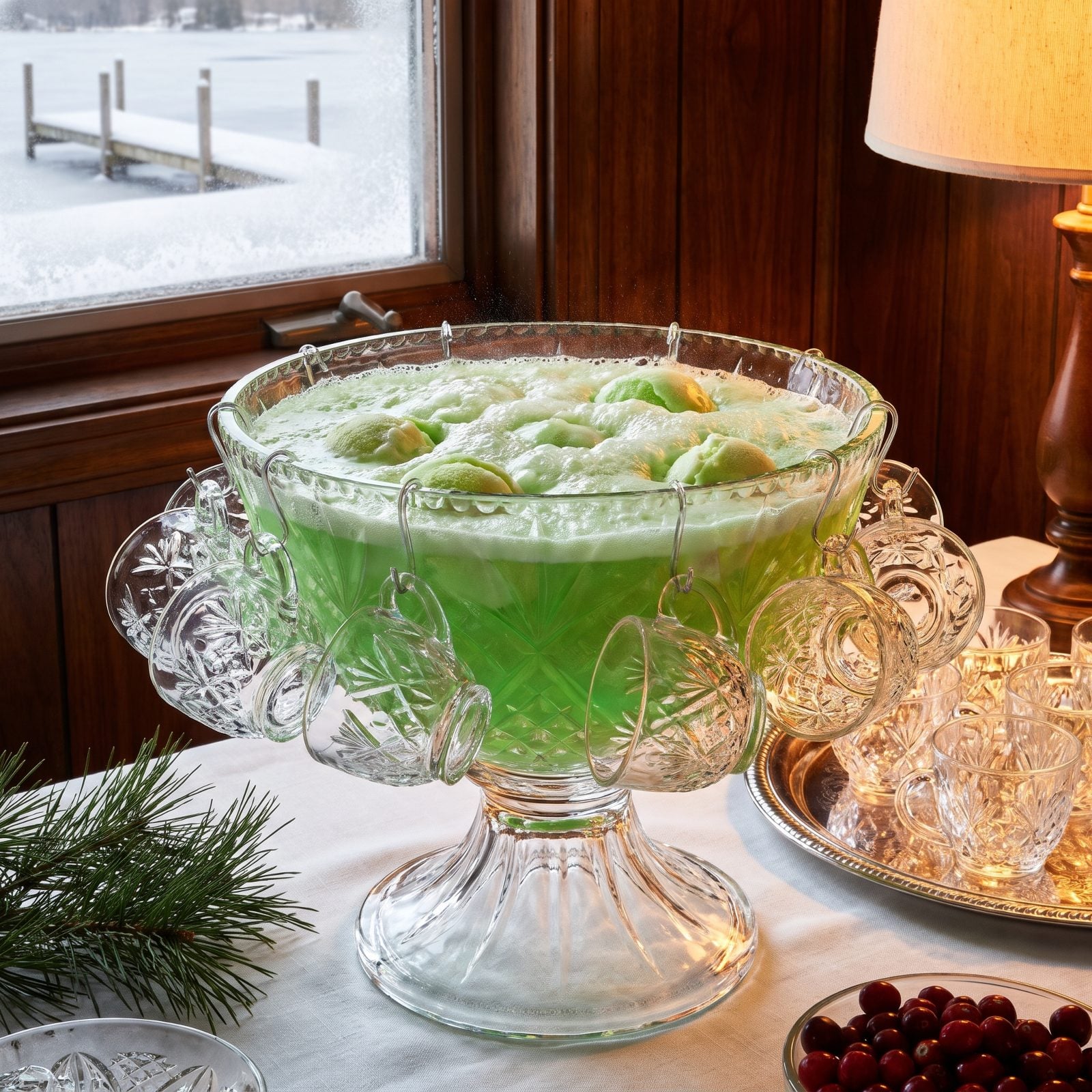
The punch glowed green. Lime sherbet dropped into ginger ale, maybe some pineapple juice, foaming up at the top into a froth that nobody could explain and everybody drank. It lived in the good cut-glass bowl, the one that spent the other 364 days of the year in a high cabinet.
Kids loved it because it fizzed and came in a fancy cup with a handle too small for a finger. The sherbet melted as the night wore on until the whole bowl turned a cloudy pale green. Still good. Honestly, better.
17. Green-Floral Corelle Plates Set for Christmas Dinner
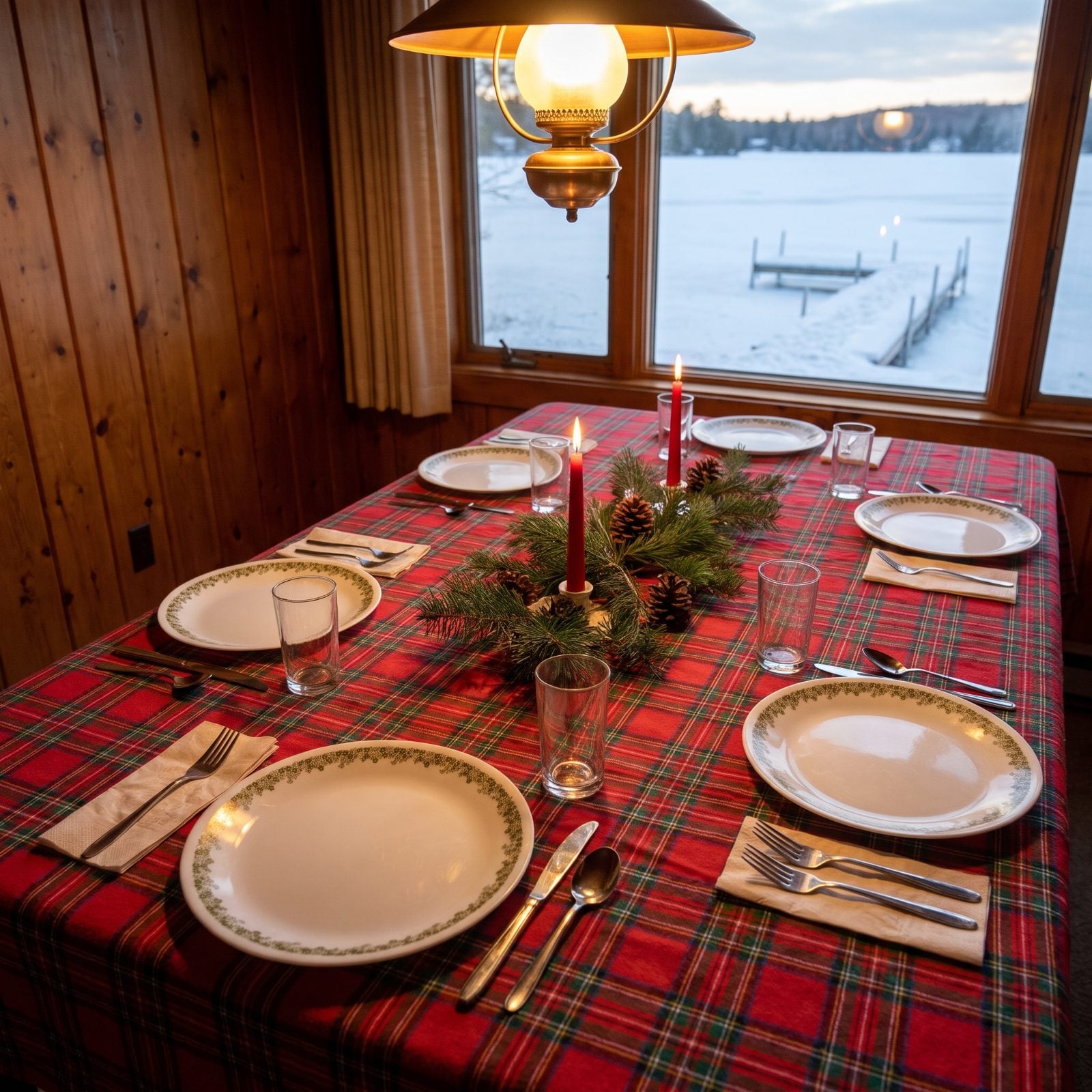
Corelle was the smartest dish ever to reach a cabin. Thin, light, nearly unbreakable, that green floral band around the rim showed up on more tables than you can count. The pattern had a name, Spring Blossom, though nobody at the table ever called it that.
You could drop one on the pine floor and it would bounce. Usually. The ones that did break went with a loud flat crack and a spray of sharp little pieces — the one thing nobody warns you about with Corelle.
16. Orange Tupperware Holding Every Christmas Leftover
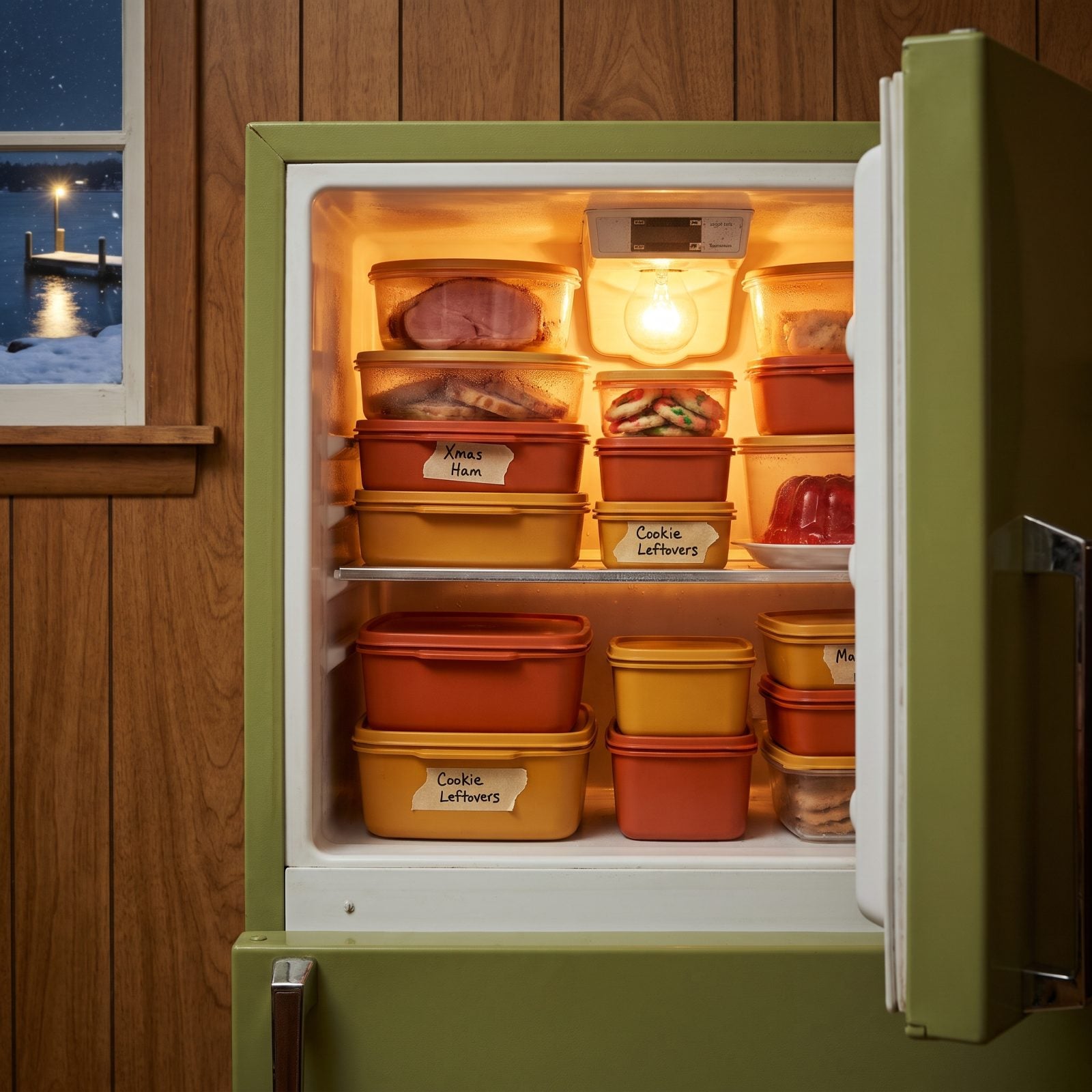
By December 26th the fridge was a wall of orange. Burnt orange, harvest gold, that whole earthy Tupperware palette, stacked three deep with ham, cookies, the gelatin that wouldn’t die, and a container of pure mystery nobody would open.
The lids had to be burped. You pressed down, lifted a corner, let the air out, and if you did it right you got the seal and the tiny satisfying sound. Tupperware ladies sold these at parties in people’s living rooms, which is a whole piece of history on its own. At the lake they just held leftovers, and they held them well.
15. Snowmobiles Parked in a Row Outside the Cabin
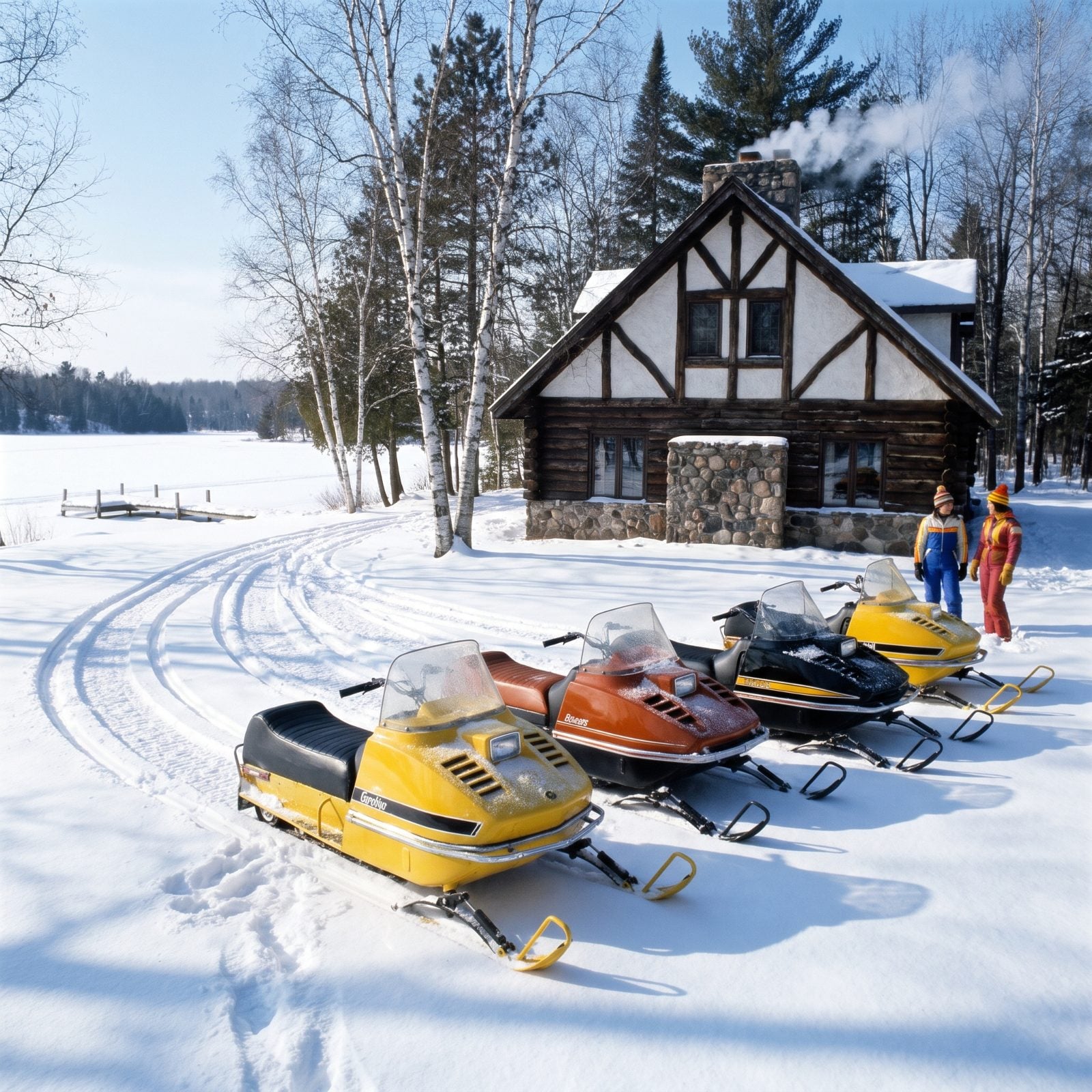
The lake didn’t close in winter — it just changed what you drove on it. Snowmobiles lined up outside the cabin like horses tied to a rail, in those loud 1970s colors, yellow and orange and black, sleds you started with a pull cord and a prayer.
They were cold, they were loud, and they could throw you into a drift without warning. They were also why anybody bothered with a lake cabin in December. You’d ride out across the frozen surface, cut the engine somewhere far from shore, and listen to nothing at all. Then ride home for the ham.
14. A Wooden Toboggan Racing Down the Boat Launch
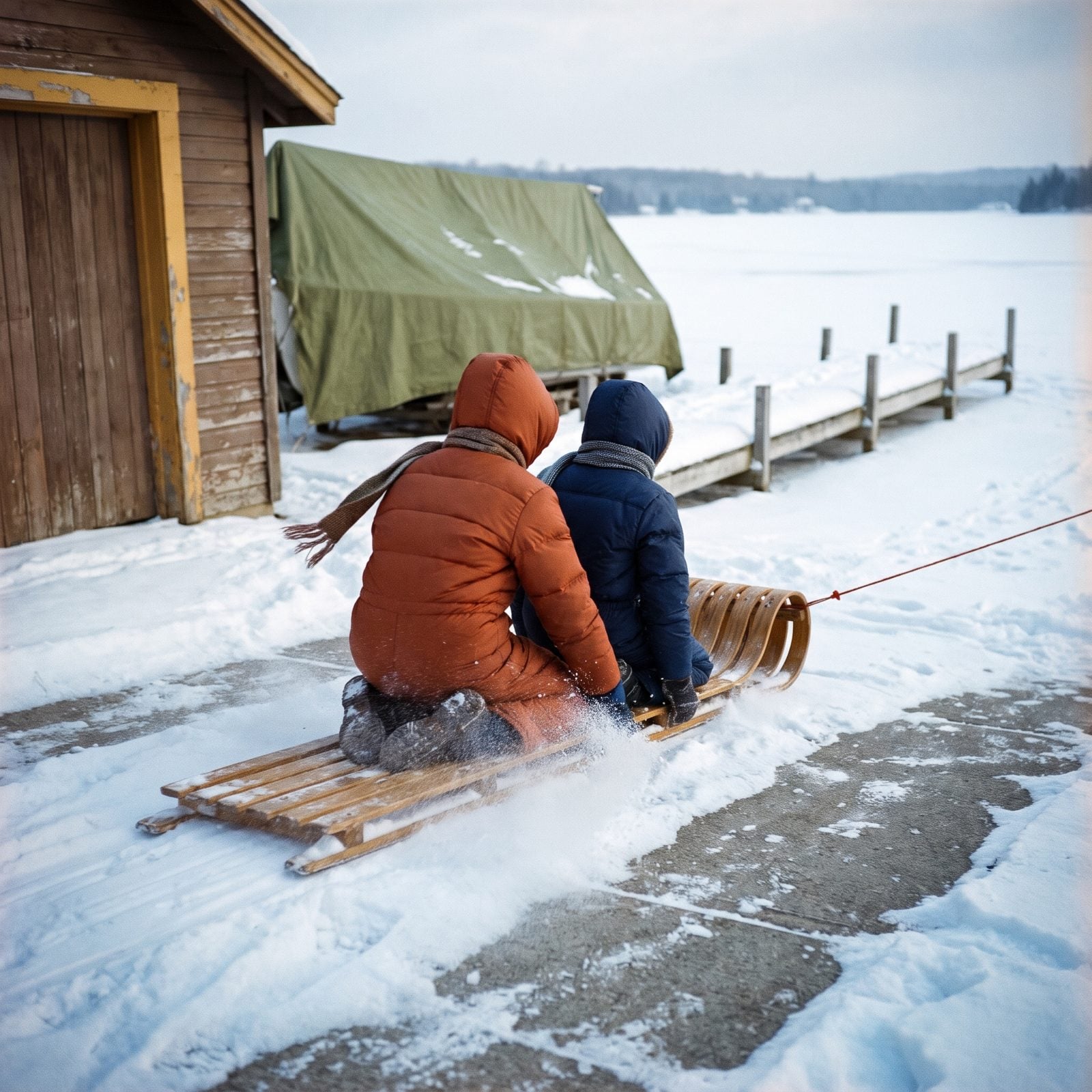
The boat launch had one job in summer and a better one in winter. That smooth concrete ramp, packed with snow, became the fastest hill on the property — no lift ticket, no waiting.
The wooden toboggan mattered here. Six or seven feet of curved hardwood with a rope you held more for comfort than control. It didn’t steer so much as commit. You pointed it at the frozen lake and prayed the pile-up at the bottom was soft.
13. An Ice-Fishing Shack Decorated With a Tiny Wreath
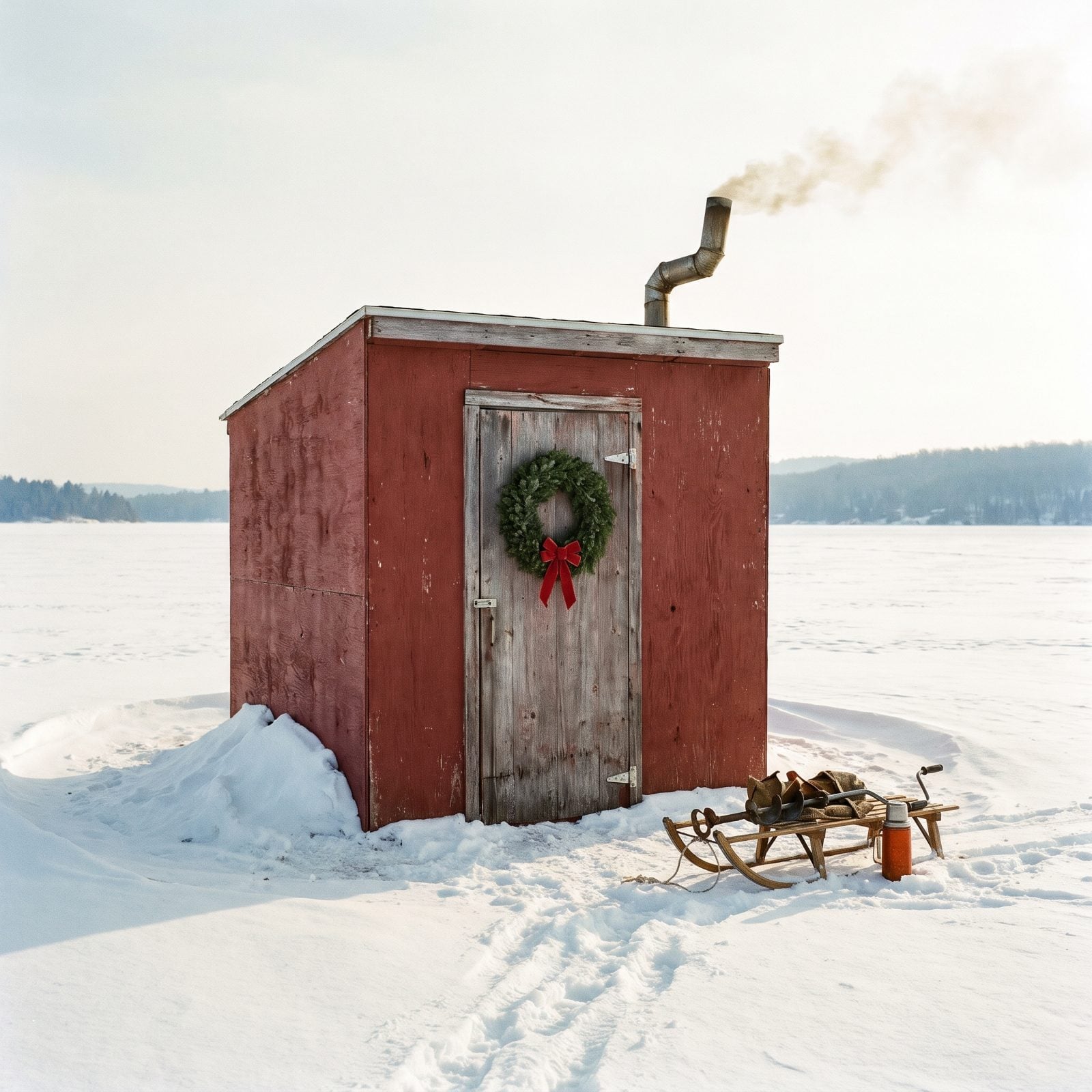
Someone always decorated the shack. A wreath, on the door of an eight-by-eight plywood box, parked in the middle of a frozen lake miles from anyone who’d ever see it.
That’s the part I love. It wasn’t for show. It was for the two or three guys who’d haul out there at dawn, light the little stove, and drill holes in the dark. The wreath said this cold, miserable, wonderful ritual counts as Christmas too.
12. A Hand Auger Testing the Ice Near the Dock
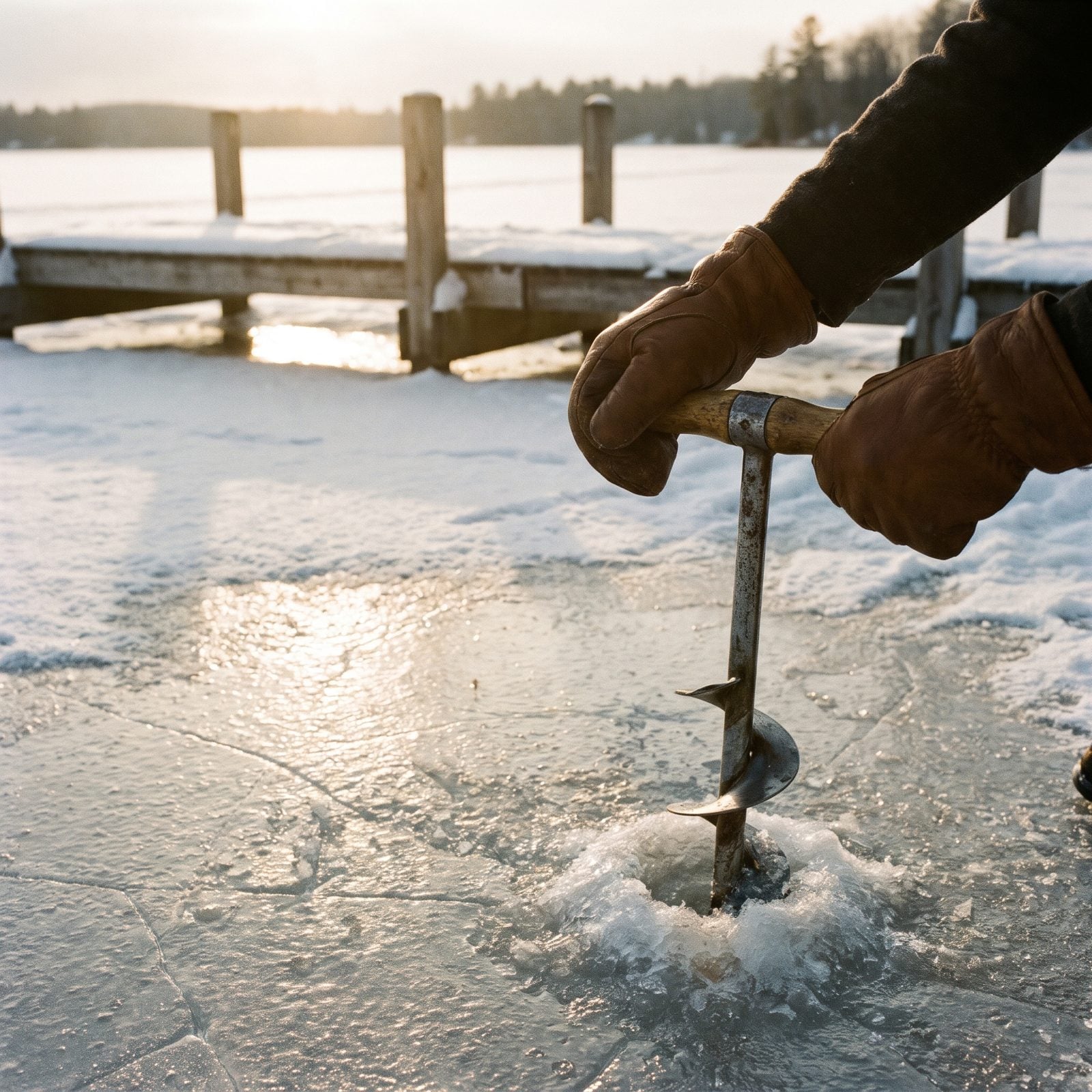
Nobody walked onto that ice until the auger said so. You drilled a test hole near the dock, measured by the wet mark left on the bit, and only then decided whether anybody was skating.
Clear, solid ice a few inches thick will hold a person — that’s the old rule, and it still holds. White, cloudy ice is weaker than clear, and ice near inlets or docks can stay thin while the middle looks safe. The hand auger was slow and it made you sweat clean through your coat, which was exactly the point. It forced you to go check.
11. A Shoreline Bonfire Surrounded by Folding Lawn Chairs
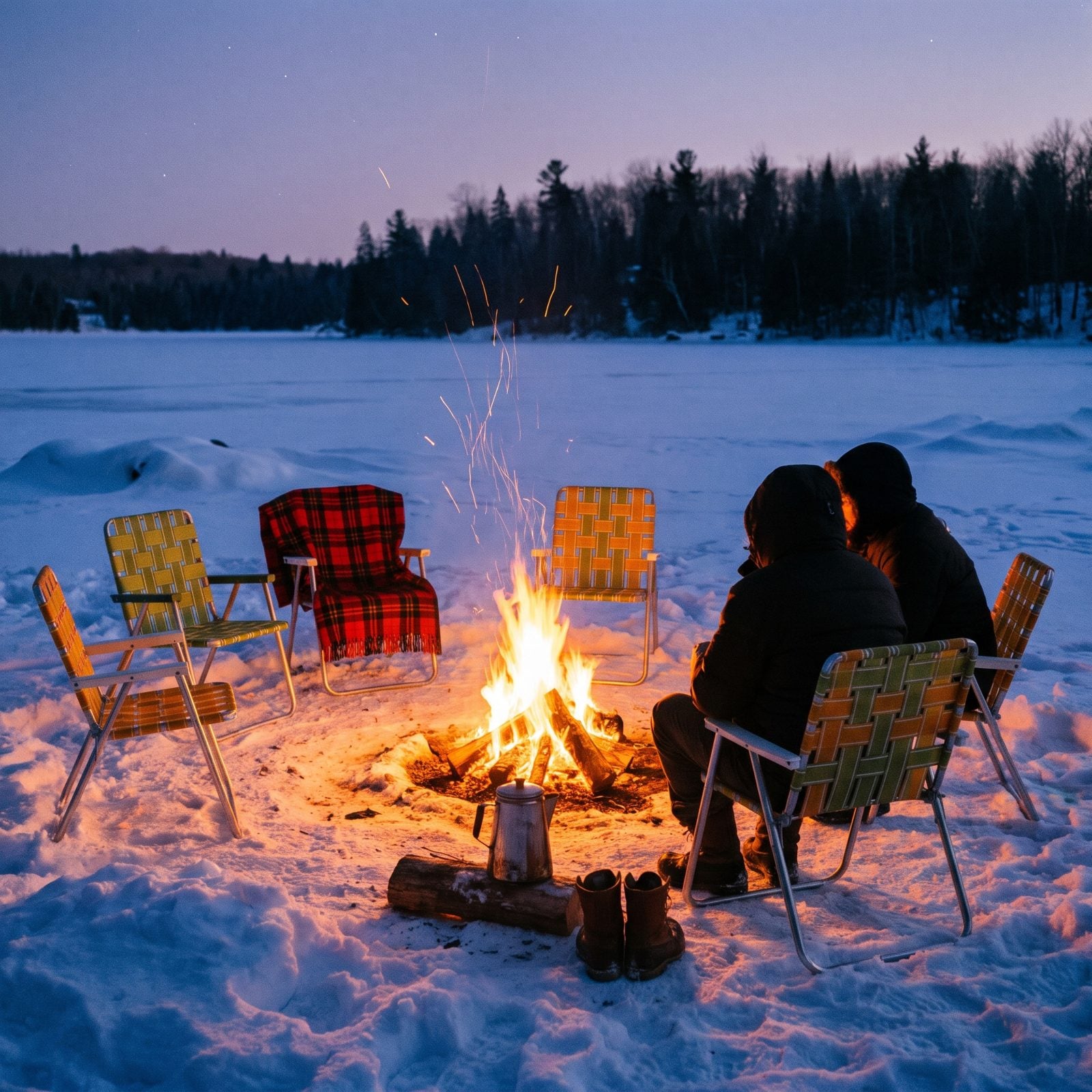
Lawn chairs don’t know it’s winter. You hauled the same webbed aluminum folders out of the boathouse — the ones that held you up all summer — set them in a ring on the frozen beach, and lit a fire big enough to feel from six feet back.
The front of you roasted. The back of you froze. That’s the deal with a December bonfire by the water, and nobody complains, because the alternative is going inside.
10. The Family Boat Sleeping Under a Snow-Covered Canvas
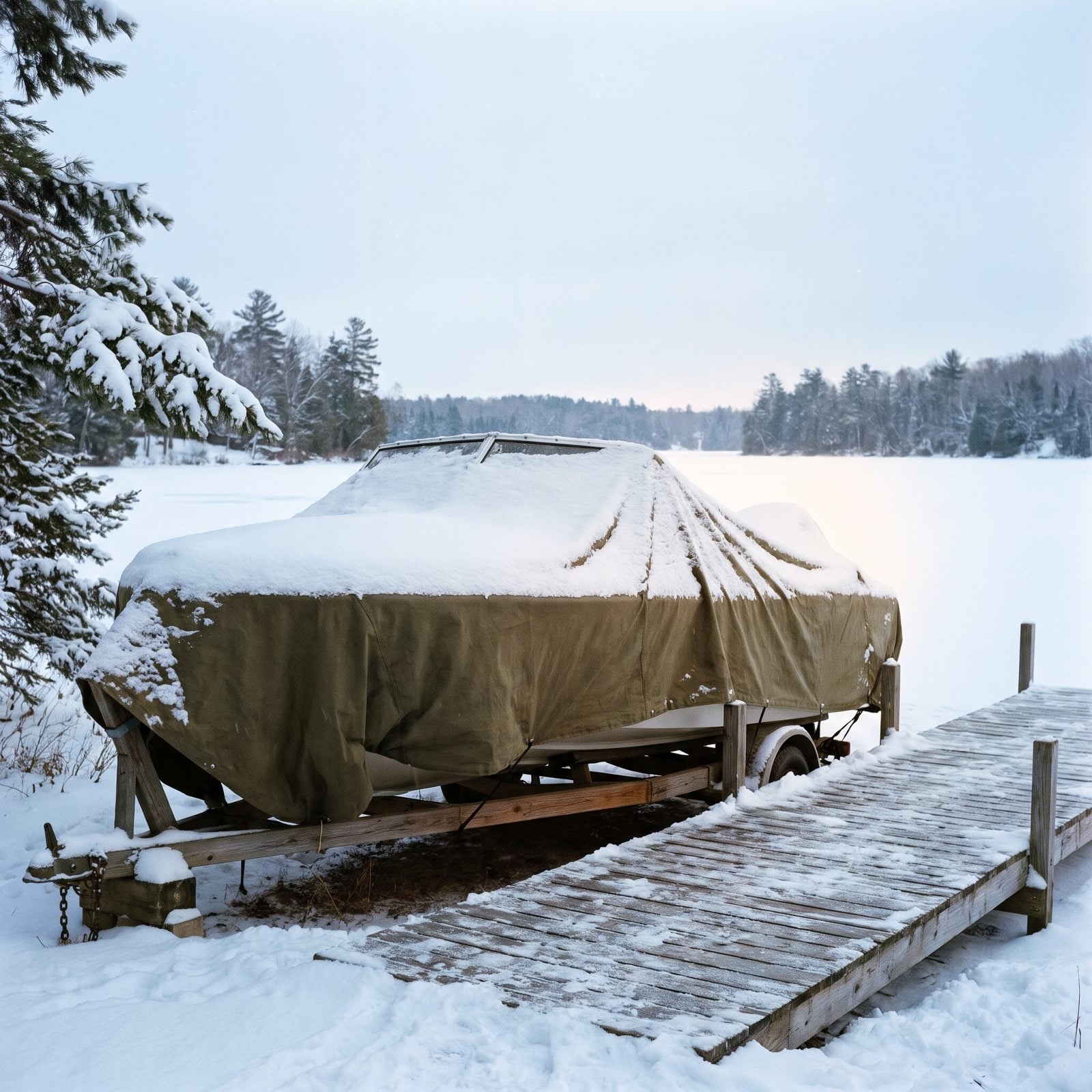
There’s a specific sadness to seeing the boat put away. The thing that meant July is now a lump under olive canvas, collecting snow, waiting out the dark.
Canvas was what you had before plastic shrink-wrap took over — heavy, breathable, and a magnet for every inch of snow that fell, which is why someone always had to go knock it off before the weight pooled water and stretched the fabric. A good tarp let air move so mildew didn’t set in over five months of nothing. A bad one trapped the moisture, and you’d find out in May.
9. A Wood-Paneled Station Wagon Arriving on the Snowy Road
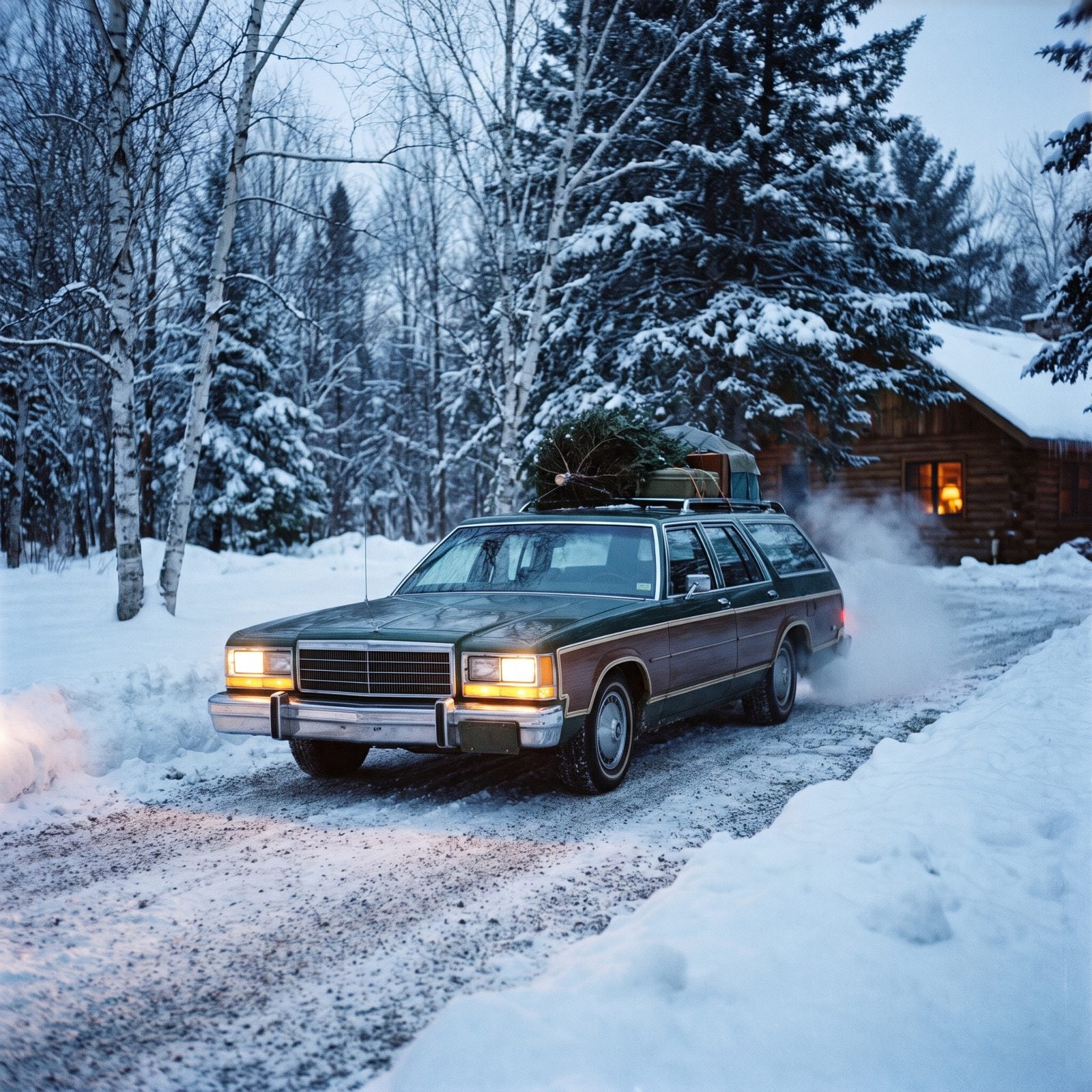
You heard it before you saw it. Tires crunching the frozen gravel, the engine working a little against the grade, and then those headlights swinging around the last bend.
The station wagon did everything. Kids, luggage, dog, a tree strapped to the roof under enough rope to secure a small ship. Faux-wood paneling on the doors, bench seats front and back, a tailgate that folded down for the cargo. It wasn’t fast and it wasn’t pretty. It got six people and Christmas to the lake, and that was the whole assignment.
8. A Folded Paper Road Map Marking the Winter Drive
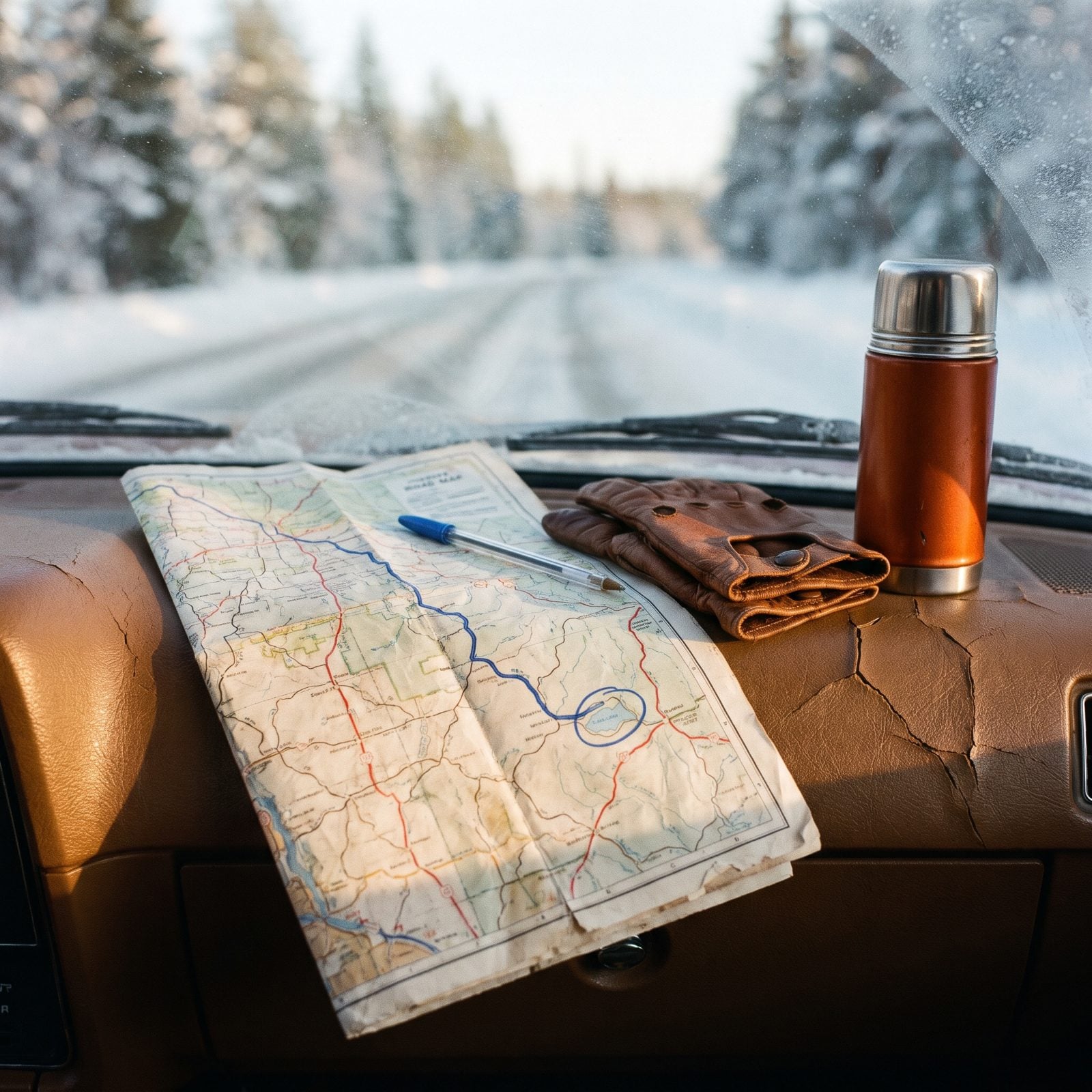
No recalculating. No blue dot. Just a creased paper map and whoever rode shotgun with the job of knowing where you were.
Somebody always traced the route in pen the night before — the circle around the lake, the blue line snaking along the back roads, the gas-station halfway point everyone agreed on. Fold it wrong and you fought the thing for twenty minutes. Lose the navigator’s attention at the critical turnoff and you added an hour you didn’t have.
7. Bulky Moon Boots Lined Up Beside the Front Door
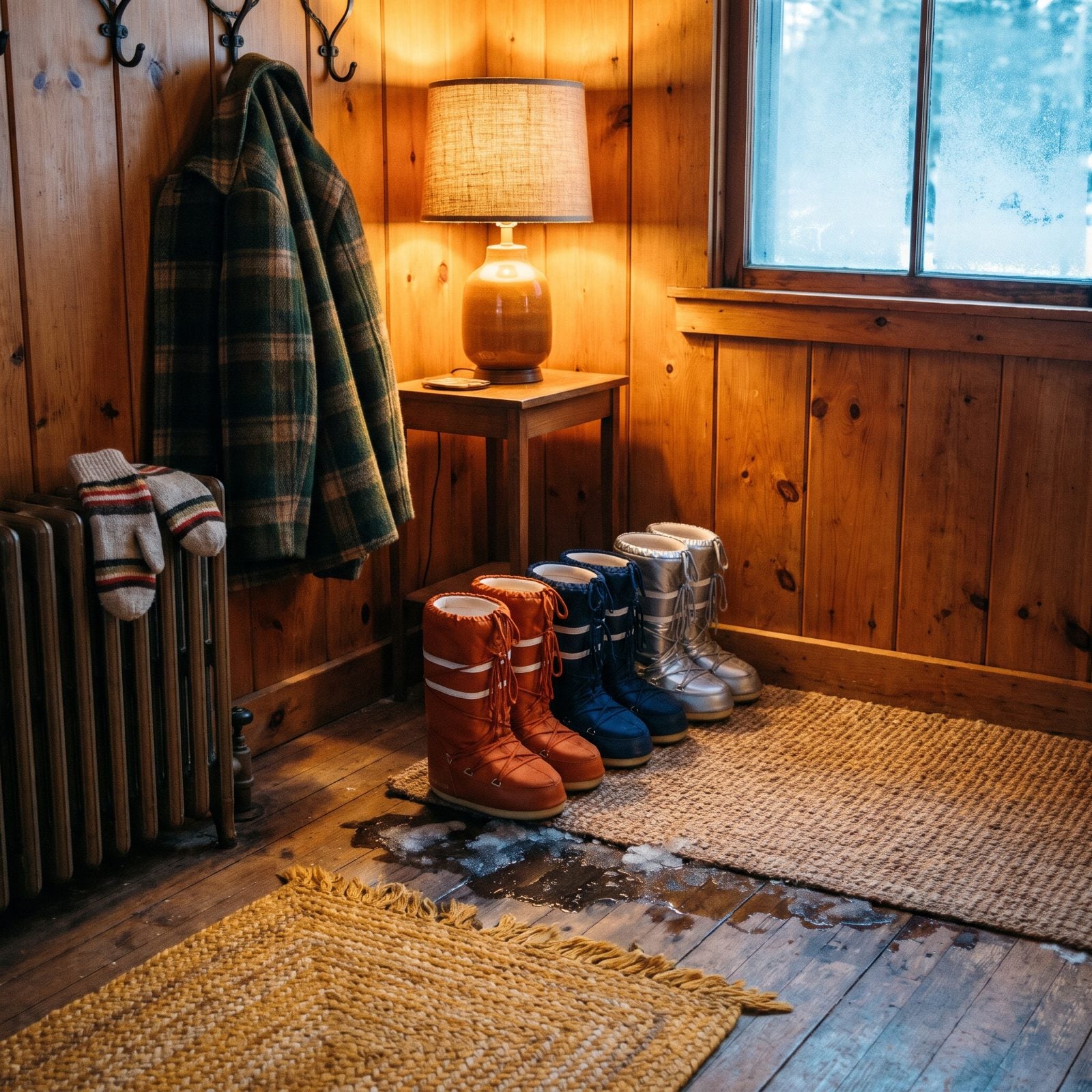
They were ridiculous and everyone loved them. Fat, puffy, nylon-shelled moon boots that made your legs look like two marshmallows, lined up by the door in a row of orange and navy and silver.
Warm, though. Genuinely warm, and light enough that kids could stomp through drifts all afternoon in them. The look borrowed straight from the Apollo space program, which is exactly the sort of thing that sold a mountain of winter boots in the 70s. Function second, moon-landing cool first.
6. Matching Homemade Pajamas on Christmas Morning
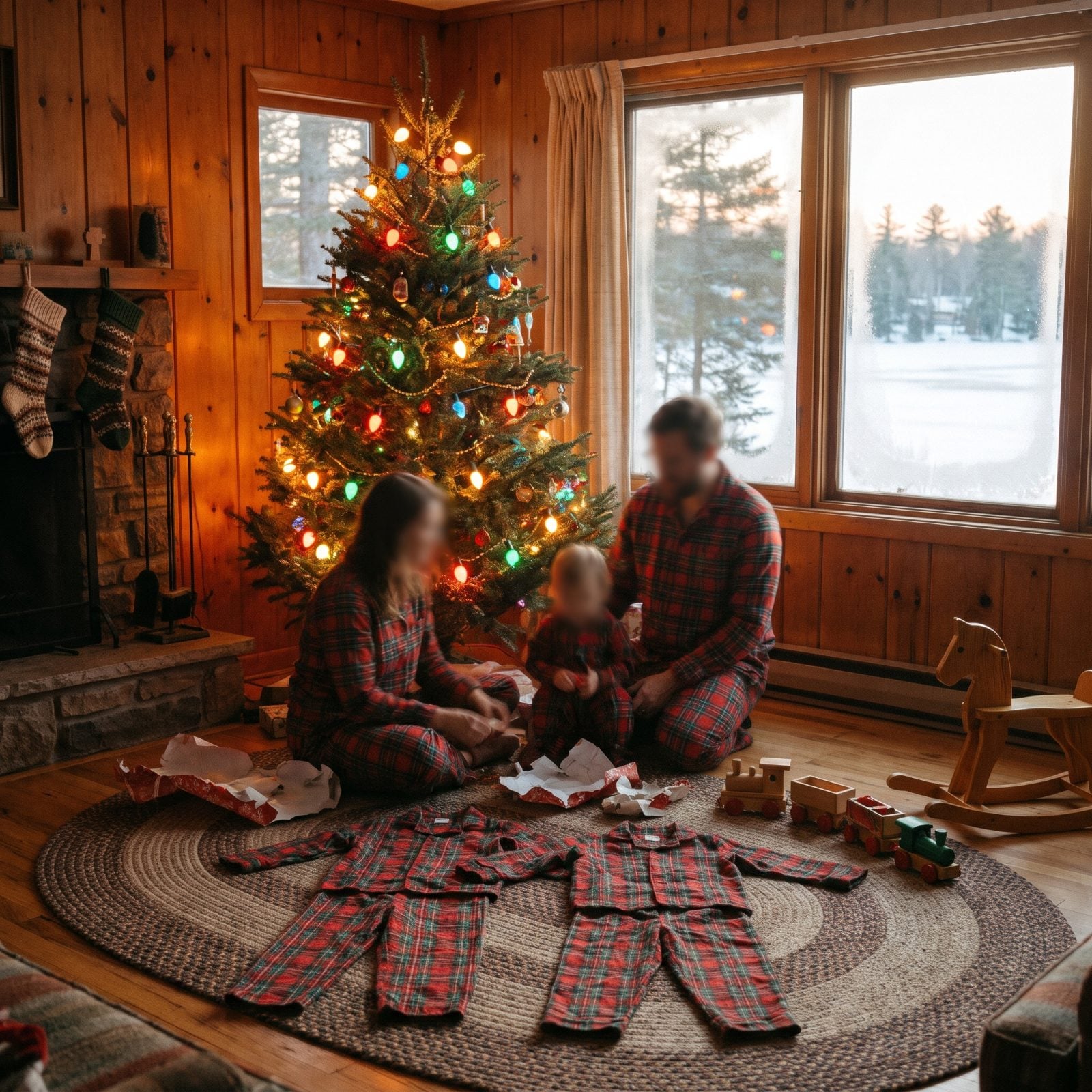
Somebody sat at a sewing machine back in November and ran up the same pair of plaid flannel pajamas for every last person in the family — different sizes, identical fabric, all cut off one bolt from the fabric store downtown.
The sewing wasn’t the point. The photo was. Four or five people in matching red-and-green flannel on Christmas morning, a tradition built so the picture would look like a family that belonged together. And it worked. Pull out those photos now and the pajamas are the first thing anyone points at.
5. A Kerosene Lantern Lighting Christmas During an Outage
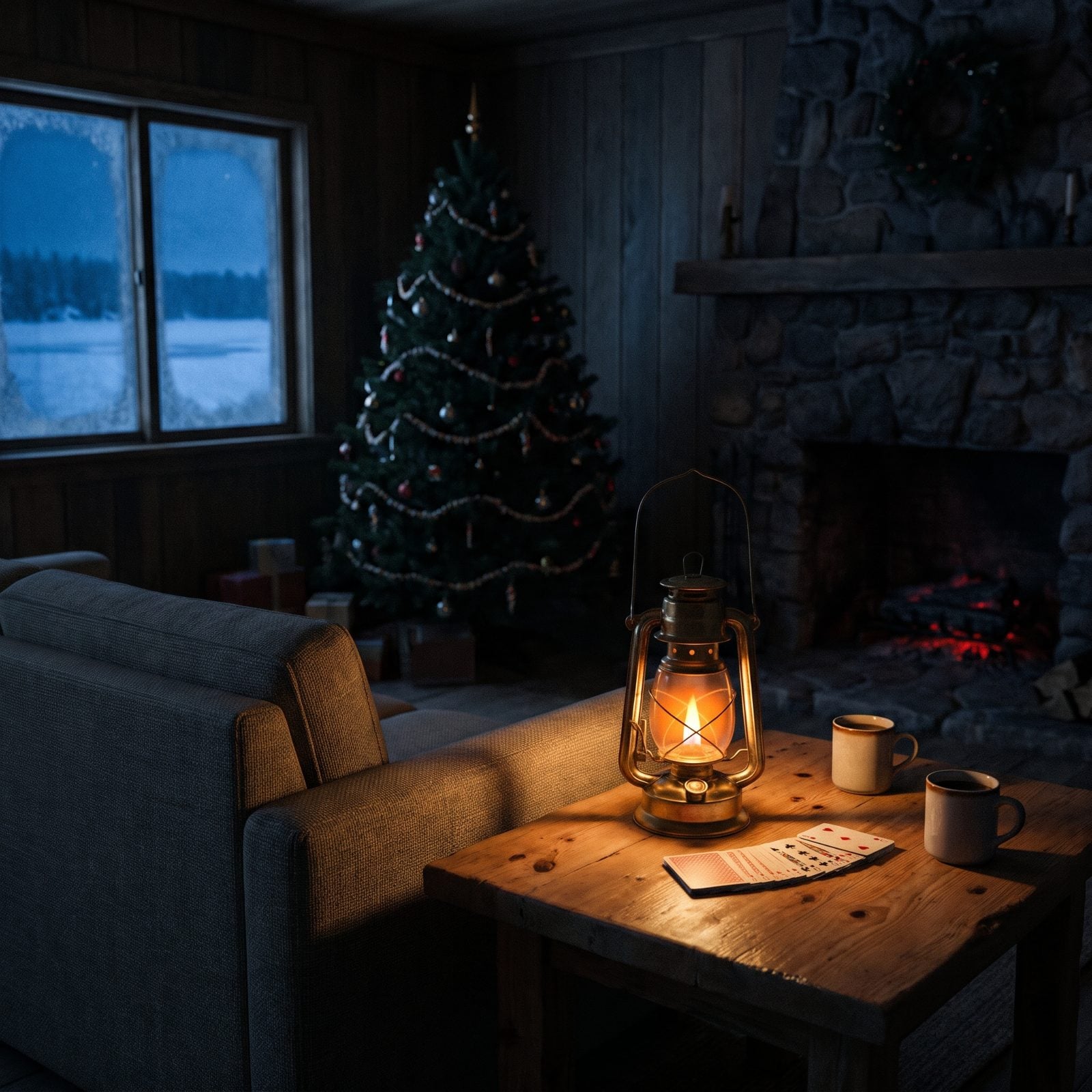
The power went out at the lake and nobody panicked. You knew it would. Ice on the lines, wind off the water, and the cabin dropped into dark while the tree lights died mid-blink.
Out came the kerosene lantern from under the sink. One brass lamp throws a surprising amount of light — enough for cards at the table and finding your way to bed. Keep it burning and you get a little heat too, plus that unmistakable oily, warm smell.
Honestly, some of the best Christmas nights happened on the ones when the power quit. No TV humming. Just the flame, the cards, and the wind doing its work on the frozen lake outside.
4. Neighbors Arriving by Snowmobile With Wrapped Gifts
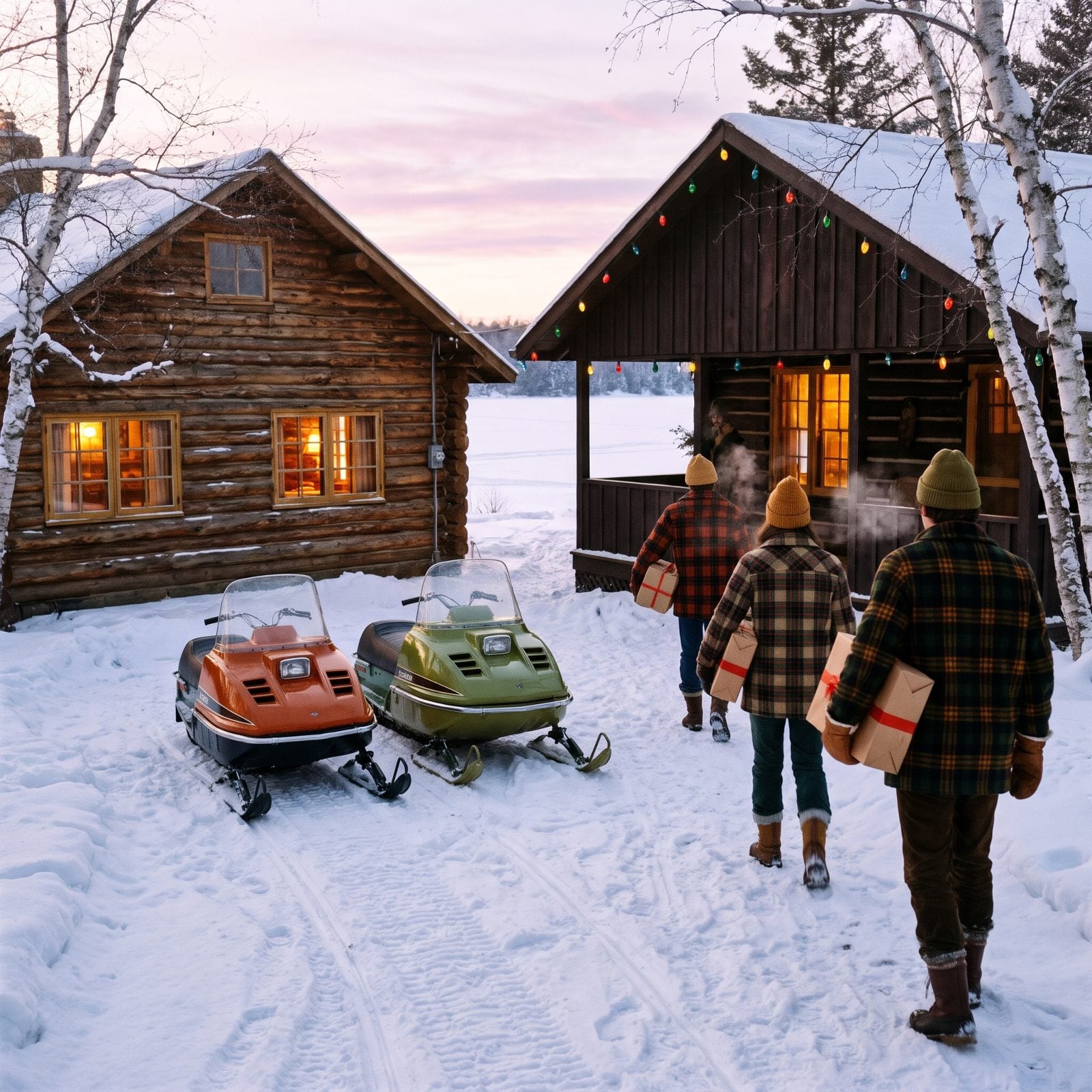
The sound came before the headlights — a two-stroke engine whining across the ice, then cutting out somewhere near the woodpile. You knew company had arrived the way you knew it was snowing: by feel, before you looked.
By late December the back road was a suggestion under two feet of snow, so the neighbors came the only way that made sense, bundled in plaid wool with gifts bungee-corded to the back of the sled, stamping their boots on the porch and tracking cold into a kitchen that smelled like cloves.
3. Lantern-Lit Caroling Along the Frozen Shore
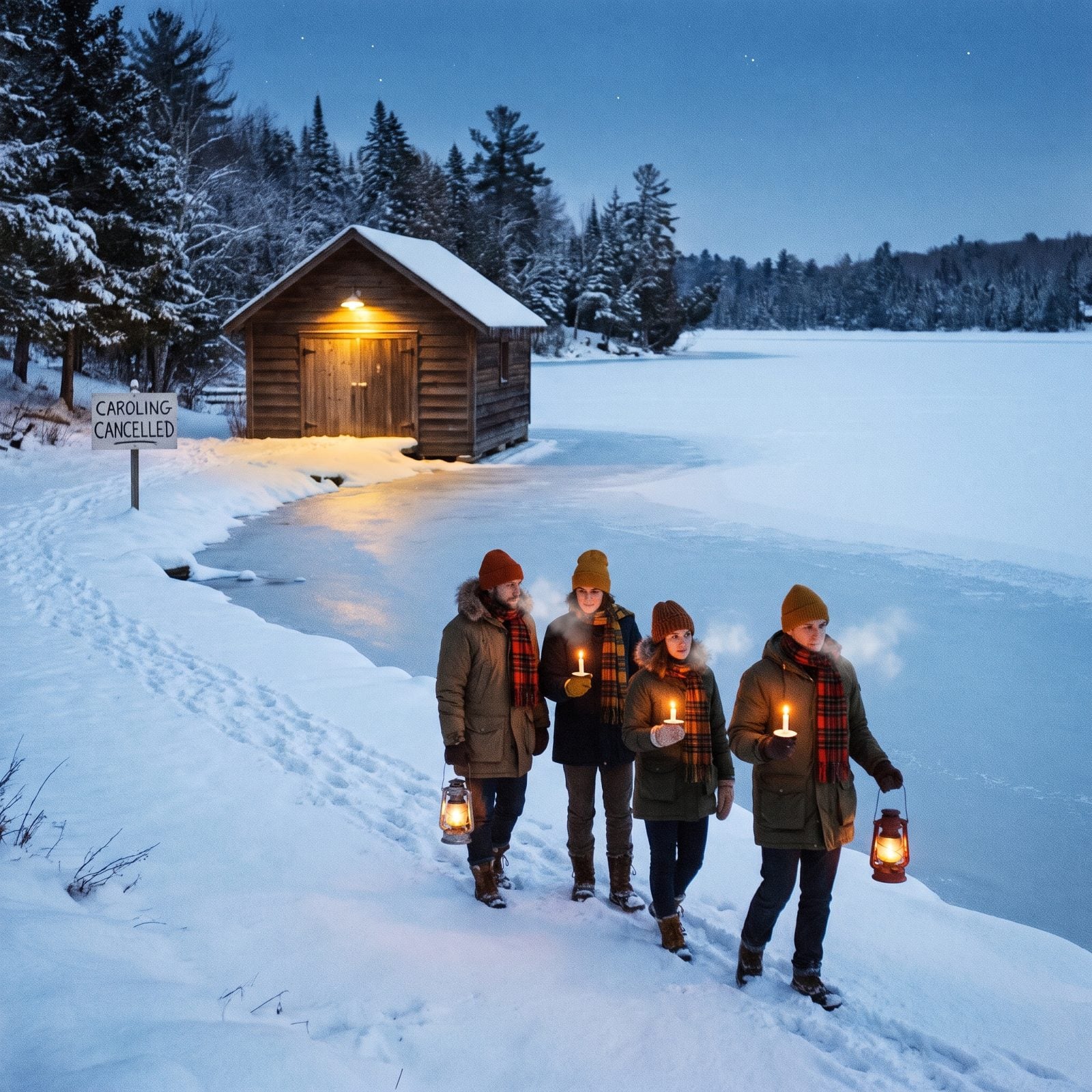
Caroling on dry land is one thing. Caroling on the edge of a frozen lake, with the ice popping and groaning somewhere out in the dark, is another experience entirely.
The lanterns pulled double duty: light to see the shoreline, and a bit of warmth you could cup your hands around between verses. Voices carried strange across the ice, flat and far, the way sound behaves over frozen water. Somebody always sang off-key and nobody minded.
Sound travels differently over ice. A dozen voices on the shore could reach a cabin half a mile around the bay, thin and clear.
You didn’t do it for the performance. You did it because walking the shore in the cold, singing badly, is one of those things that feels silly right up until the moment it doesn’t.
2. Christmas Eve at a Tiny Lakeside Chapel
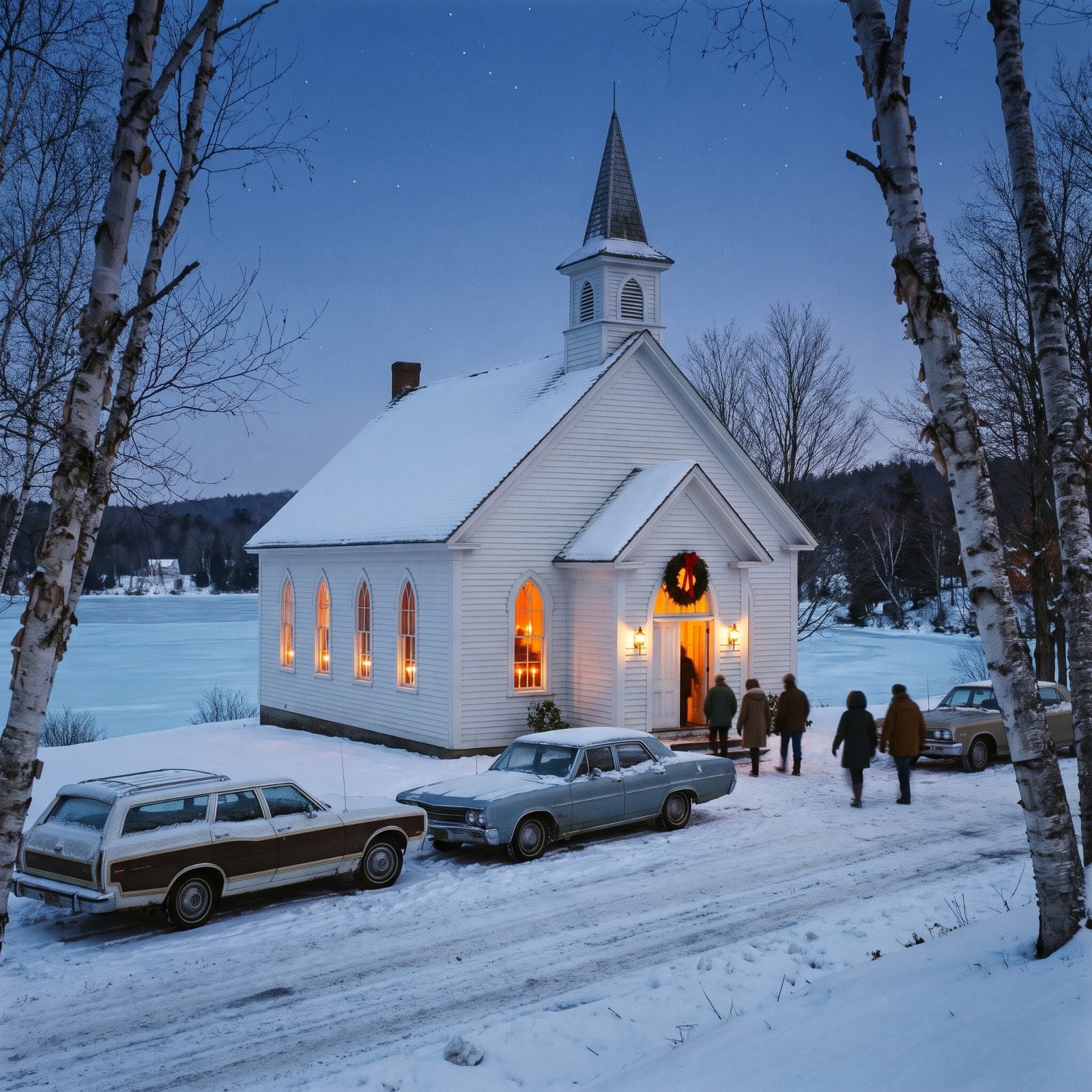
The chapel held maybe forty people if everyone breathed in. On Christmas Eve it held sixty — coats steaming, kids half-asleep against shoulders, the whole room smelling of candle wax and wet wool.
Lake chapels were small by design, built for summer congregations and kept open the rest of the year on faith and a space heater. No stained glass. Just old wavy panes that threw the candlelight back as a wobble of gold, and you could see them lit up from clear across the bay — the one bright thing on a dark shore.
1. A Cabin Guestbook Filled With Holiday Entries From 1976
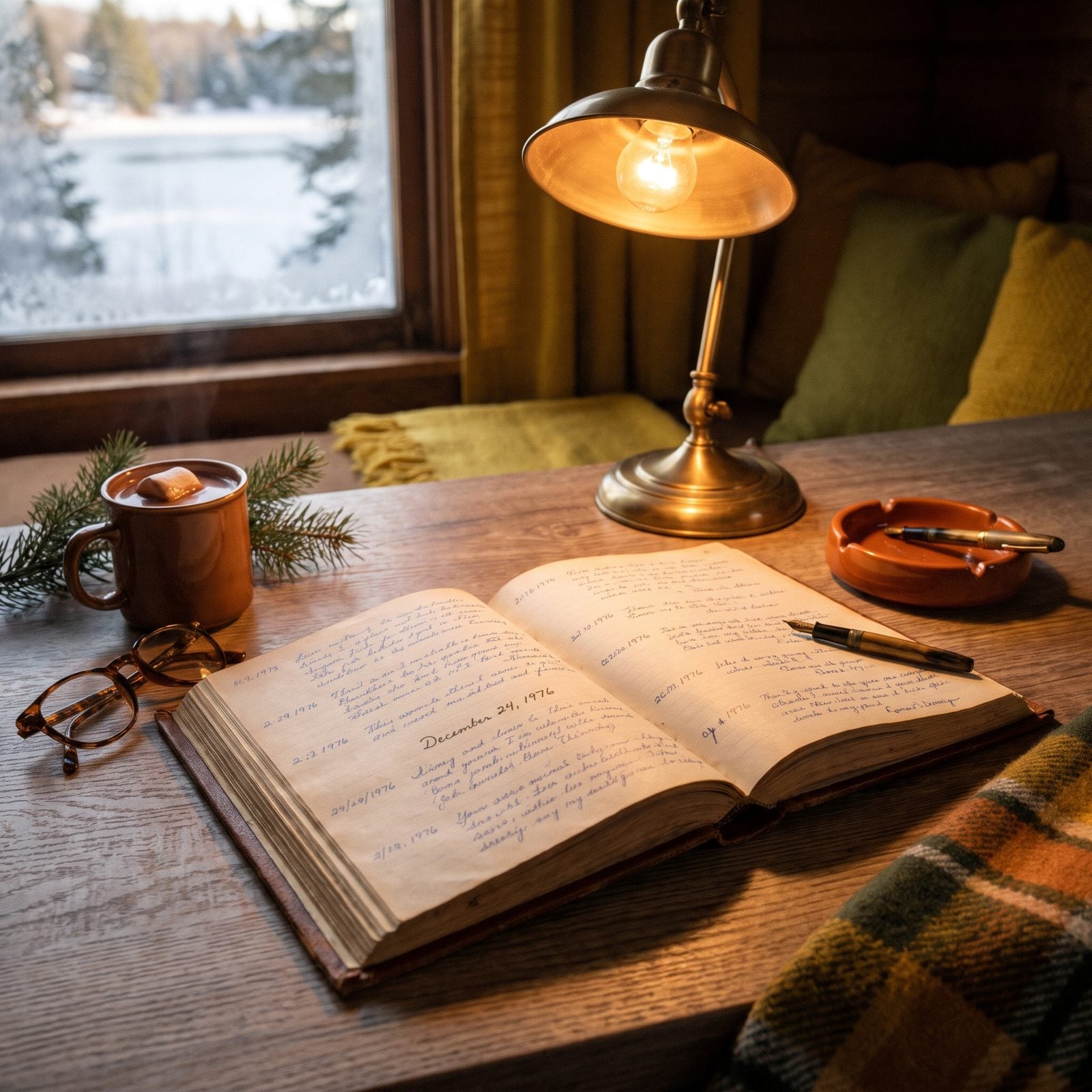
Every cabin worth its salt had one. A guestbook on the hall table, pen attached by a string somebody tied in 1971 and never replaced.
The December entries read different from the summer ones. Summer guests wrote about the fishing and the sunburns. The Christmas crowd wrote about the cold, the drive, who brought what pie, which kid lost a mitten on the ice and found it in April.
Flip to 1976 and it’s all there in the handwriting — the dates in the margin scrawled so loosely most are barely legible, but one heading stands out clearly: December 24, 1976. Someone sketched the frozen lake in the margin. Someone else just wrote “snowed in, best Christmas yet” and signed it.