
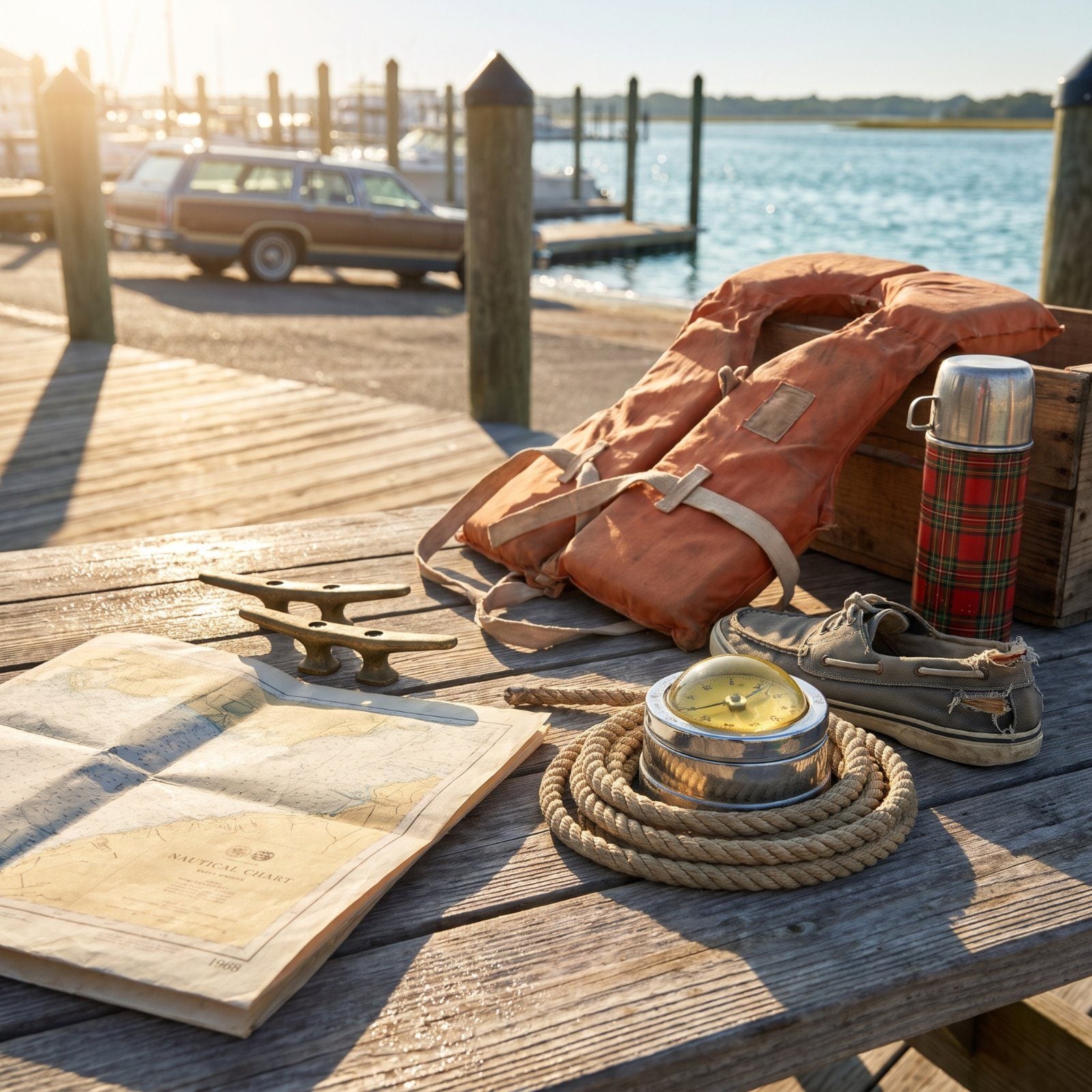
The smell gives it away first. Gelcoat warming in the sun, a whiff of two-stroke exhaust, lake water baking on hot vinyl. Grow up near a dock anytime in those two decades and that smell is a time machine. These were the years fiberglass went from novelty to gospel, when outboards finally got powerful and reliable at the same time, and when a middle-class family could actually own a boat and burn a whole Saturday going nowhere in particular. Some of these hulls still turn up at marinas, lovingly restored or quietly rotting under a blue tarp. Every one of them changed what people expected the water to feel like. Here are the ones that mattered.
Please note that some of the imagery in this article may have been enhanced with the assistance of AI.
39. Boston Whaler 13, The Unsinkable Little Runabout
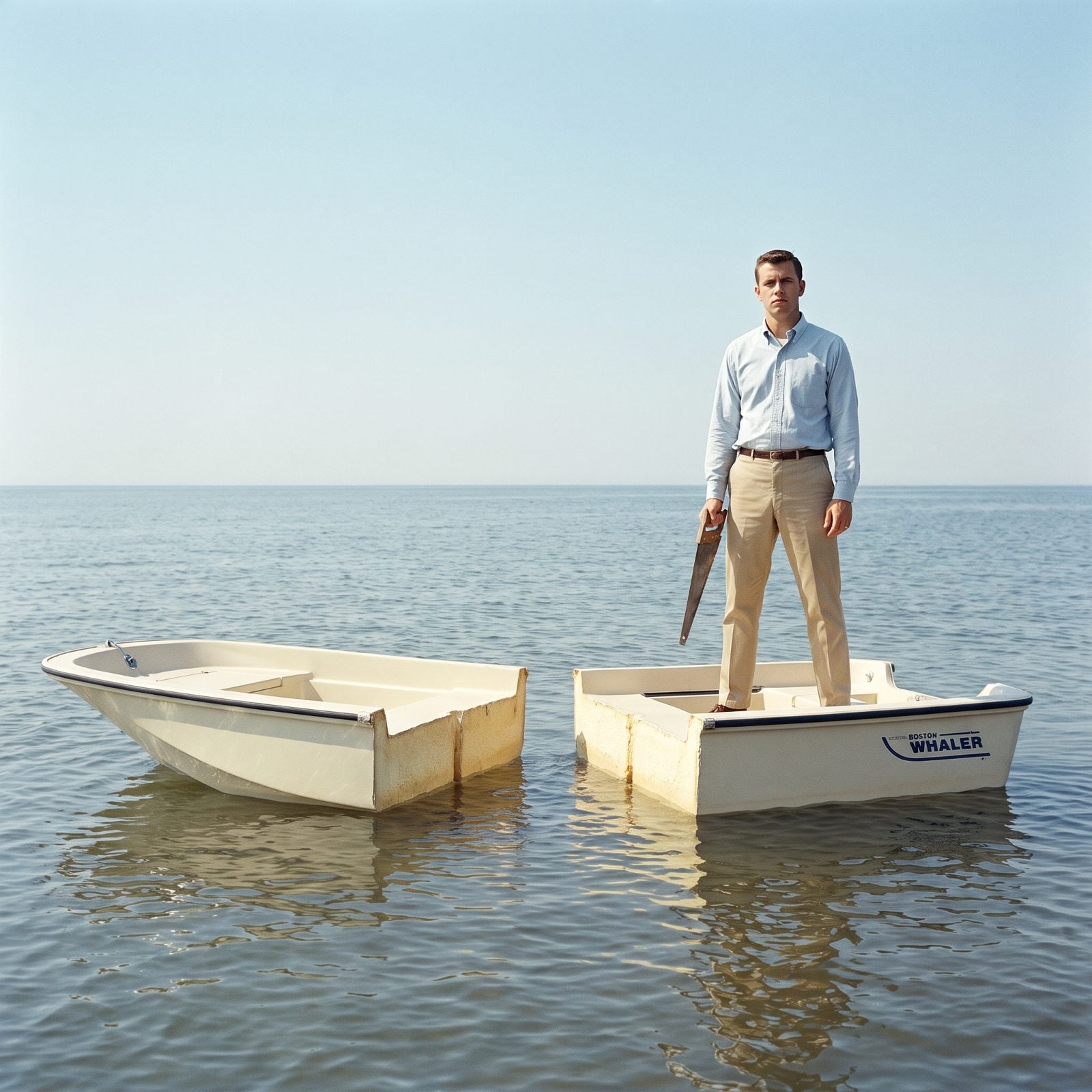
The famous ad shows a Whaler 13 sawn clean in half, both halves floating with a man calmly standing on one. That single stunt sold a whole generation on the idea that a boat simply couldn’t sink, and the foam sandwiched between the fiberglass skins made the promise real.
Built first in 1958 and running strong through both decades, the 13 was the boat that got kids hooked. Light. Forgiving. Stable enough to stand on the gunwale without a second thought. Plenty of folks learned to drive one of these before they ever touched a car.
38. Boston Whaler 17 Montauk, The Center-Console Classic
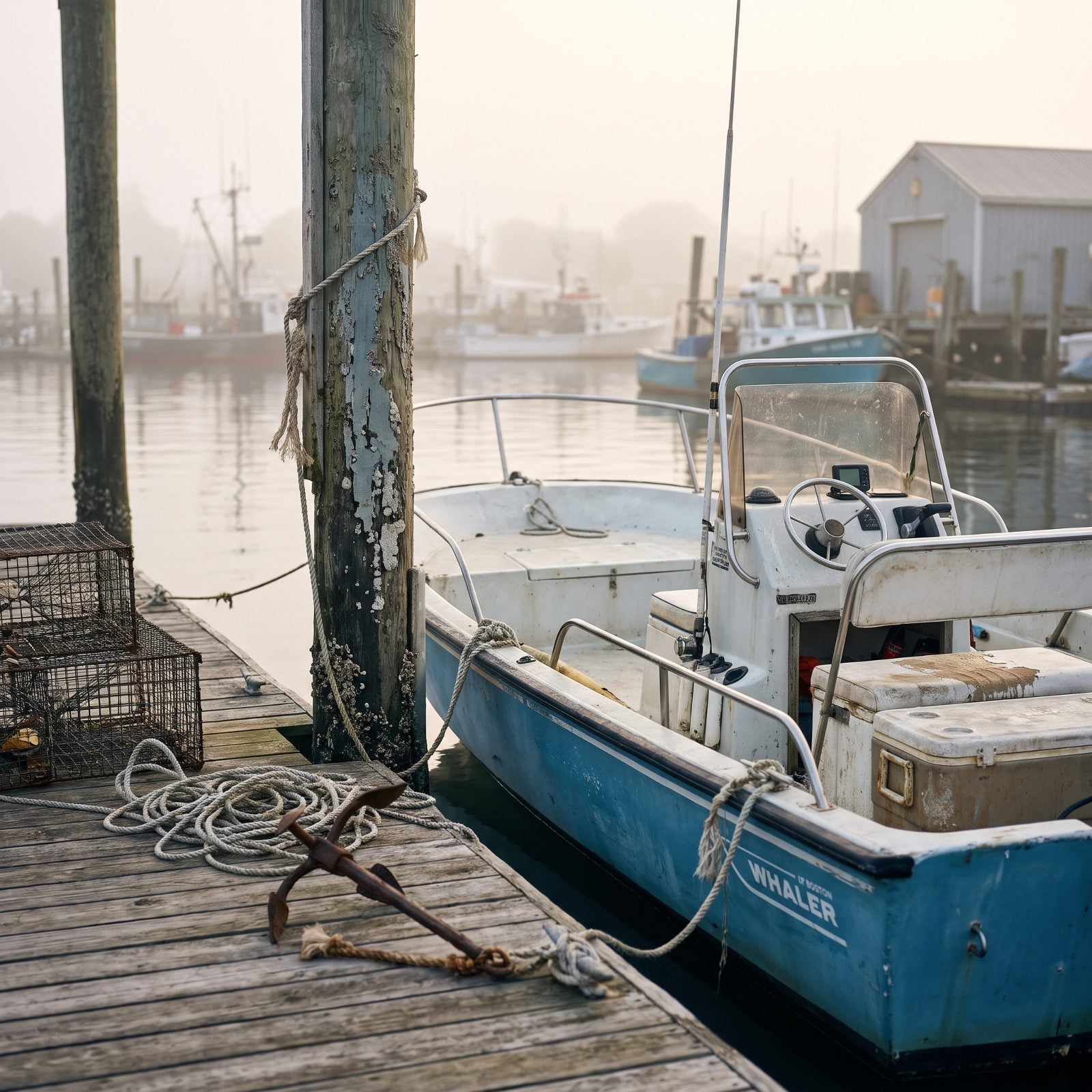
Ask anyone who fishes the flats or runs a harbor what a workboat should look like, and they’ll describe the Montauk without realizing it. Center console, open deck, nothing in the way. Rinse it out with a bucket and go home.
It arrived in the mid-1960s and became the template every center-console since has quietly copied. Simple, dry, close to indestructible. Sure, the teak needed oiling and the ride could pound your fillings loose in real chop, but the thing fished four people without anybody tripping over anybody else. Still does.
37. Bertram 31, The Deep-V Sportfishing Legend
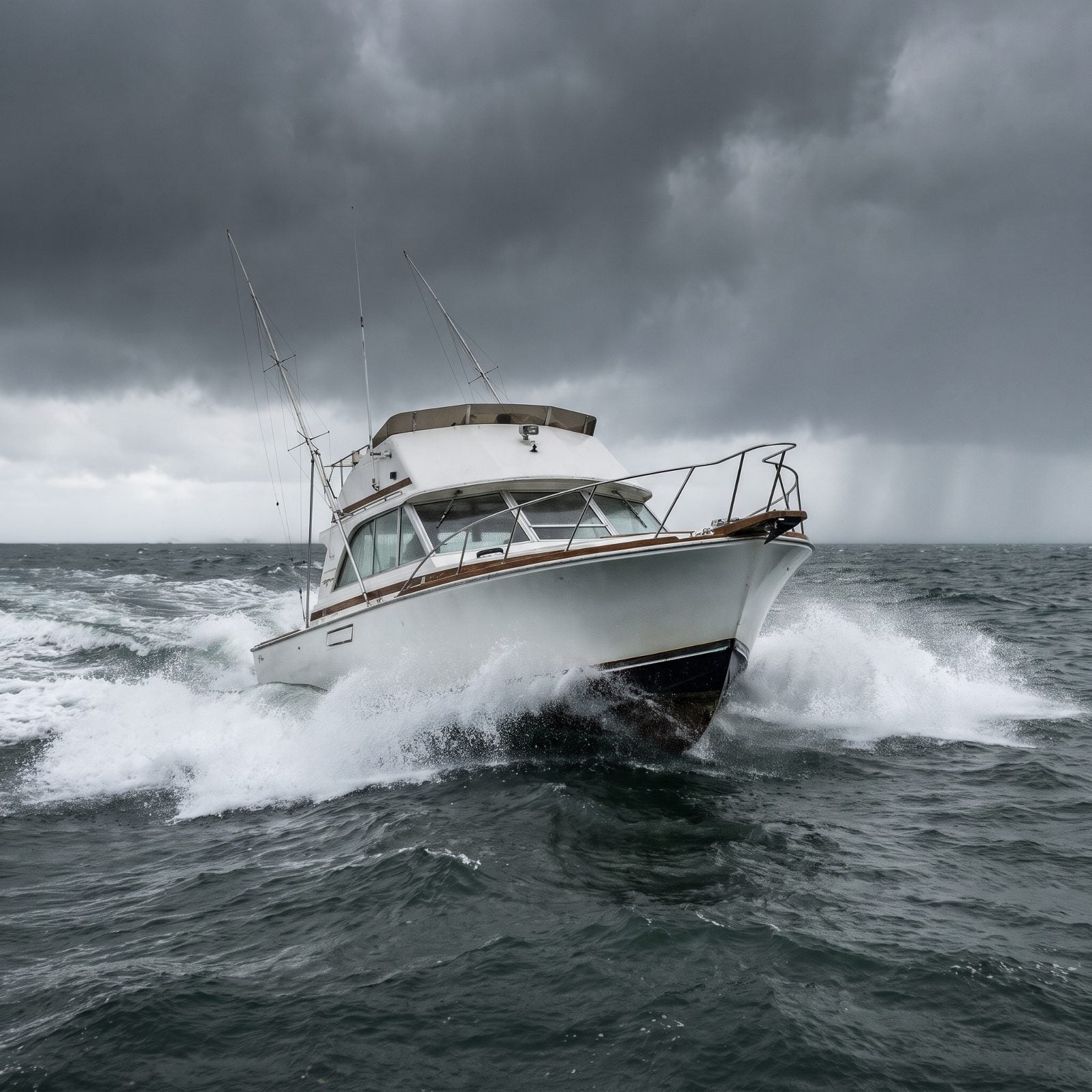
In 1960 a wild little race from Miami to Nassau got clobbered by a nasty sea, and one boat handled it like the water owed it money. That boat became the Bertram 31.
Ray Hunt’s deep-V hull was the breakthrough. Instead of pounding over waves, the sharp V sliced through them, and suddenly offshore boating stopped being a form of punishment. Serious anglers started chasing marlin and tuna in weather that would have beaten the stuffing out of anything else afloat.
The 31 didn’t just win races. It rewrote what a small boat could do in a big ocean.
Good examples still command real money. People restore them with the devotion usually reserved for muscle cars.
36. Hatteras 53 Motor Yacht, The Floating Vacation Home
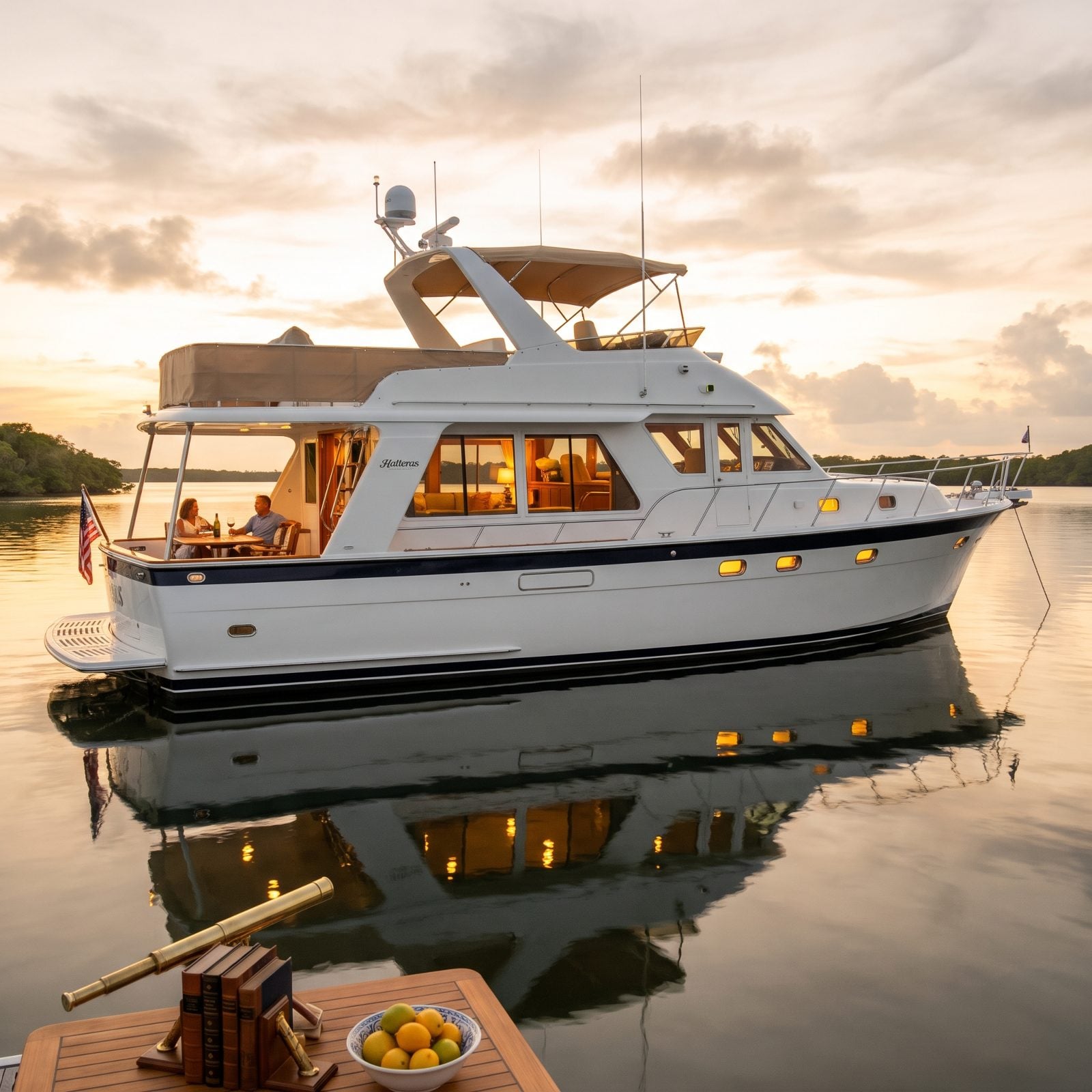
You didn’t take a Hatteras 53 out for an afternoon. You moved aboard for a week and let it become your address.
Hatteras helped prove fiberglass could build boats this big and build them to last. Full galley, real staterooms, a salon you could genuinely live in without feeling cramped. Call it a lake house that came untied and went looking for better scenery.
35. Grand Banks 36, The Trawler Everyone Recognized
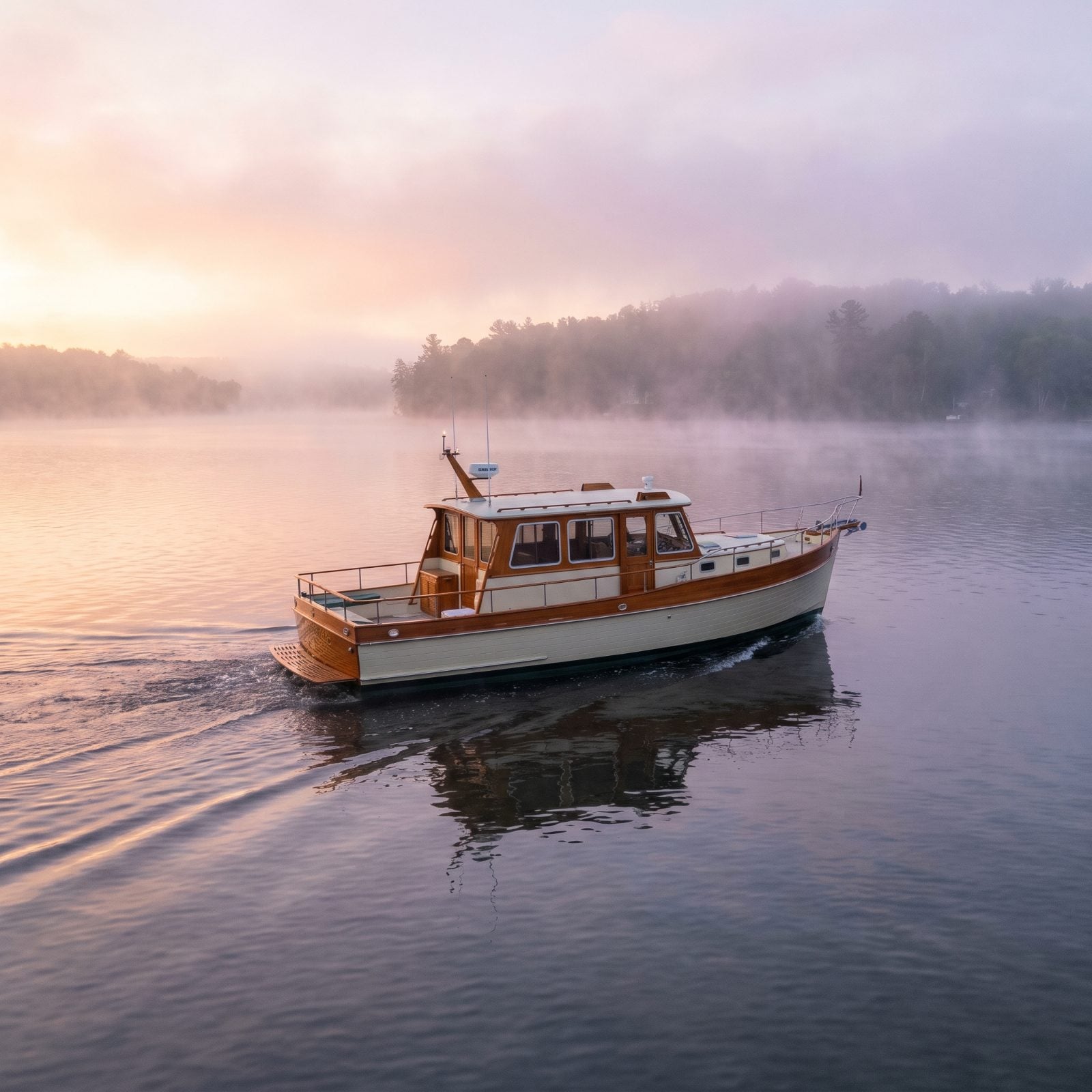
Slow is the whole personality. The Grand Banks 36 never once pretended to be fast, and that’s precisely why people fell for it.
With that displacement hull, a GB cruised at a walking jog, sipped diesel, and could cross real distances without ever making a fuss. The teak decks, round portholes and salty profile made it look like it had been hauling cod off the Grand Banks for fifty years, even fresh off the line.
So it became the retirement dream. The boat you pointed at from the restaurant deck and said, someday. A lot of people got to someday.
34. Trojan F-32, The Ubiquitous Family Flybridge
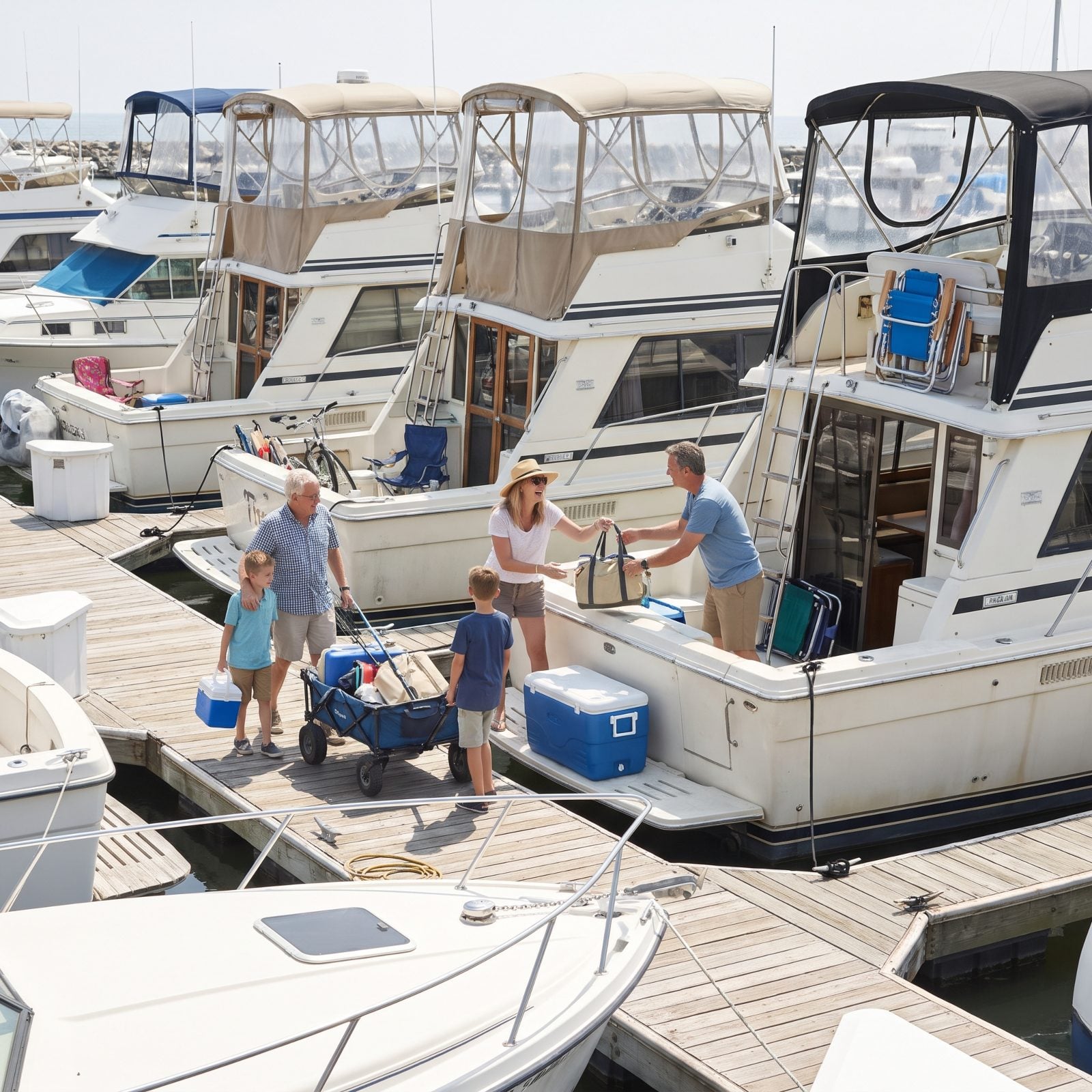
Every marina had one. Usually three. The Trojan F-32 was the boat regular families actually bought, and that’s its whole legacy.
It was never the fastest or the fanciest, and those gas inboards drank their fair share. But it slept the family, gave Dad a flybridge to lord over, tucked a galley below, and left enough cockpit for folding chairs and a cooler. Weekend cruiser, overnight at the hook, back by Sunday dinner.
33. Chris-Craft Commander 38, The Fiberglass Chris-Craft Flagship
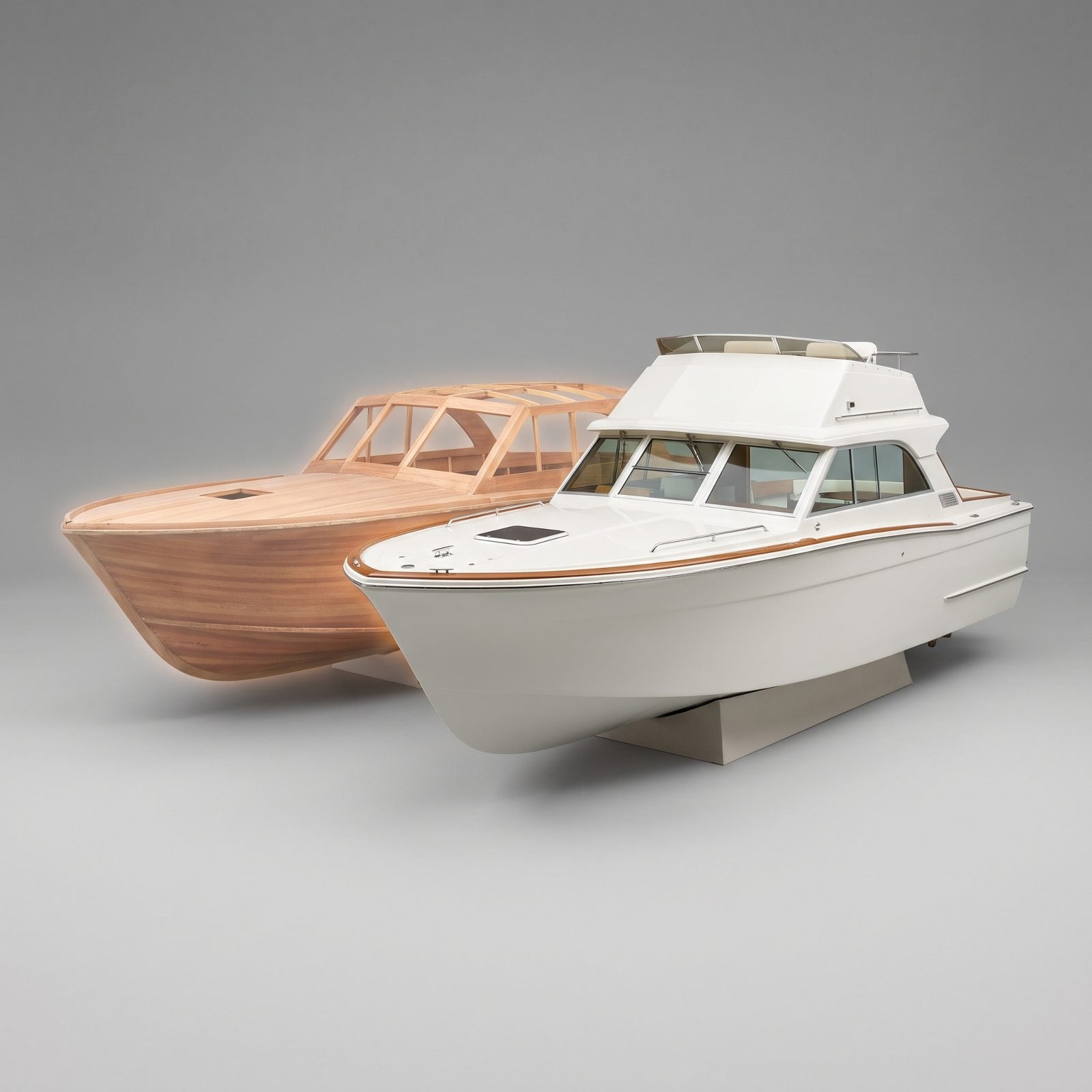
Chris-Craft built its name in mahogany, turning out gorgeous wooden runabouts that basically needed a carpenter on retainer. Then fiberglass arrived, and the company had to decide whether to fight it or lead it.
The Commander line was the answer. The 38 was the handsome flagship, a white fiberglass hull that didn’t rot, didn’t swell, and didn’t demand refastening every single spring.
Purists grumbled about plastic boats. They always do. But the Commander proved a glass boat could still have soul, and it carried a legendary name right into the modern era.
32. Sea Ray 240 Sundancer, The Weekender That Launched a Dynasty
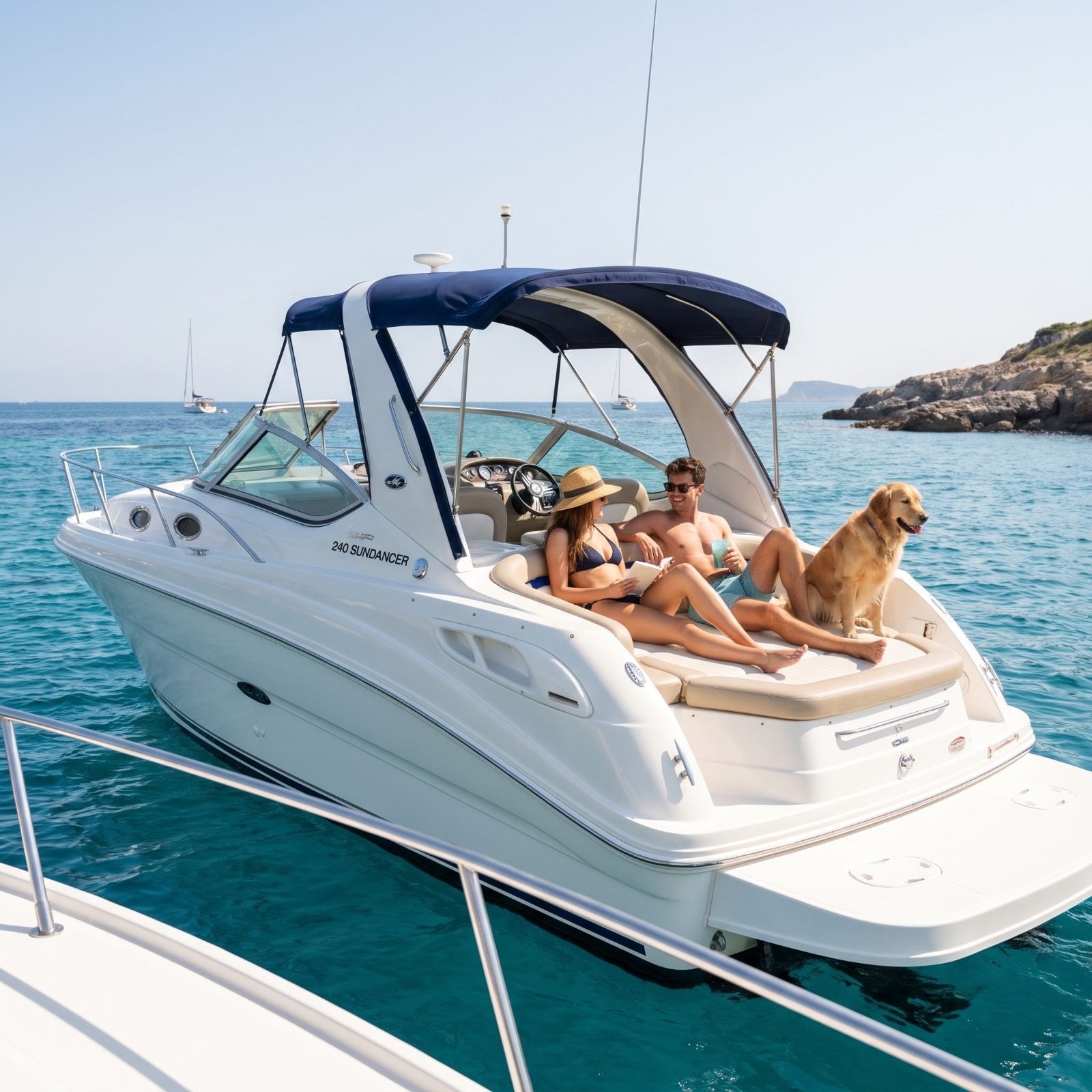
The Sundancer name is everywhere now. It started with one sharp, simple notion: an express cruiser small enough to tow behind the family truck and big enough to sleep aboard.
You got the open cockpit for a day of cruising, a little cabin below for a weekend away, and stern-drive power that didn’t demand a whole engine room. For couples who wanted the overnight experience without signing up for liveaboard life, it landed right in the sweet spot.
31. Wellcraft Scarab 38, The Offshore Star of the Late 1970s
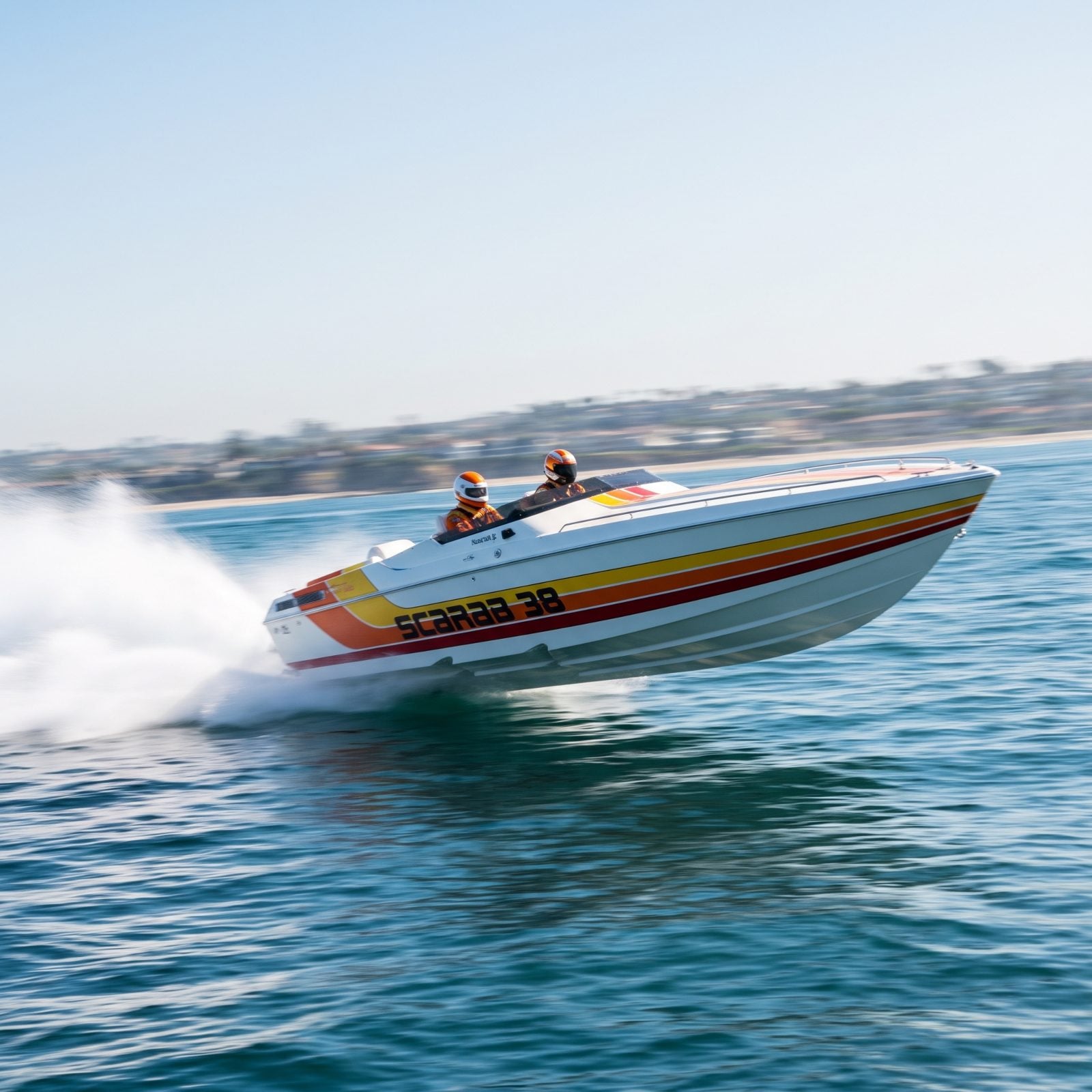
By the late ’70s, offshore racing had grown its own swagger, and the Scarab was its billboard.
Wellcraft dragged the go-fast formula straight onto the showroom floor. Long, low, loud graphics, a hull built to run hard across open water at speeds that pinned your hat to your skull. It looked fast sitting dead still at the dock, which was honestly half the appeal.
Later the name got famous on a certain Miami cop show. But the reputation came off the water first, with a hull that could take an offshore pounding and keep its foot buried.
30. Cigarette 36, The Narrow-Beamed Offshore Icon
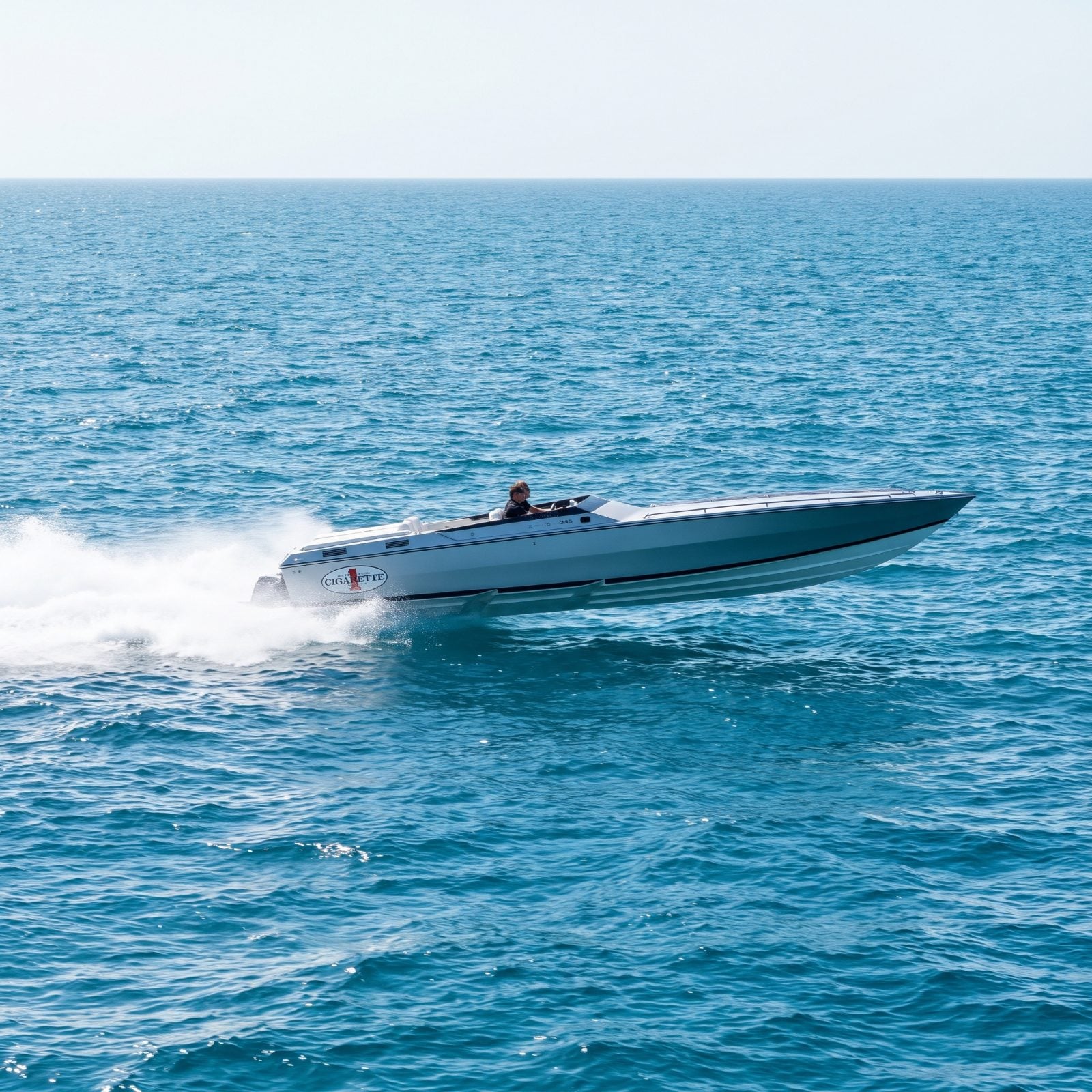
Don Aronow built boats to win races, and win them he did, over and over. The Cigarette was his signature, and the 36 is the shape burned into everyone’s head the second they picture a fast boat.
Long and thin as a thrown spear, the narrow beam let it knife through offshore swells rather than slam across them. It was loud, thirsty, and not remotely practical, which was the entire idea. Nobody ever bought one to go fishing.
29. Magnum 27, The Muscle Boat With Italian Style
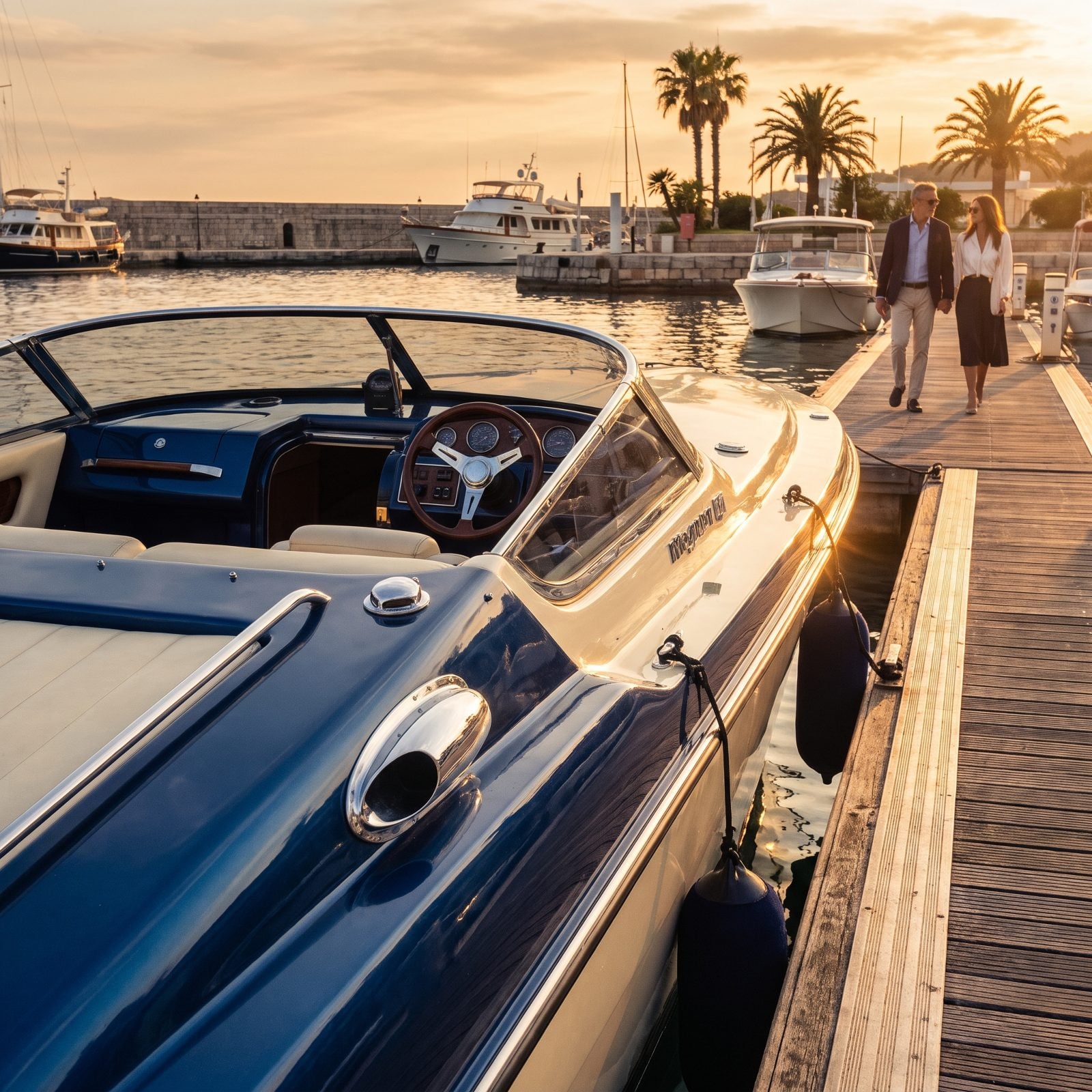
Don Aronow built boats that won offshore races, then sold the idea to anyone who wanted to look like they could. The Magnum 27 was the civilized cousin, same deep-V bones but dressed with Italian sense after the brand moved to Milan ownership. That’s where the teak and the clean lines came from.
It was never cheap and never pretended to be. You bought one because you wanted the thing that ran hard in a chop and still looked like money at the dock.
28. Donzi 16 Ski Sporter, The Tiny Rocket With a Rounded Deck
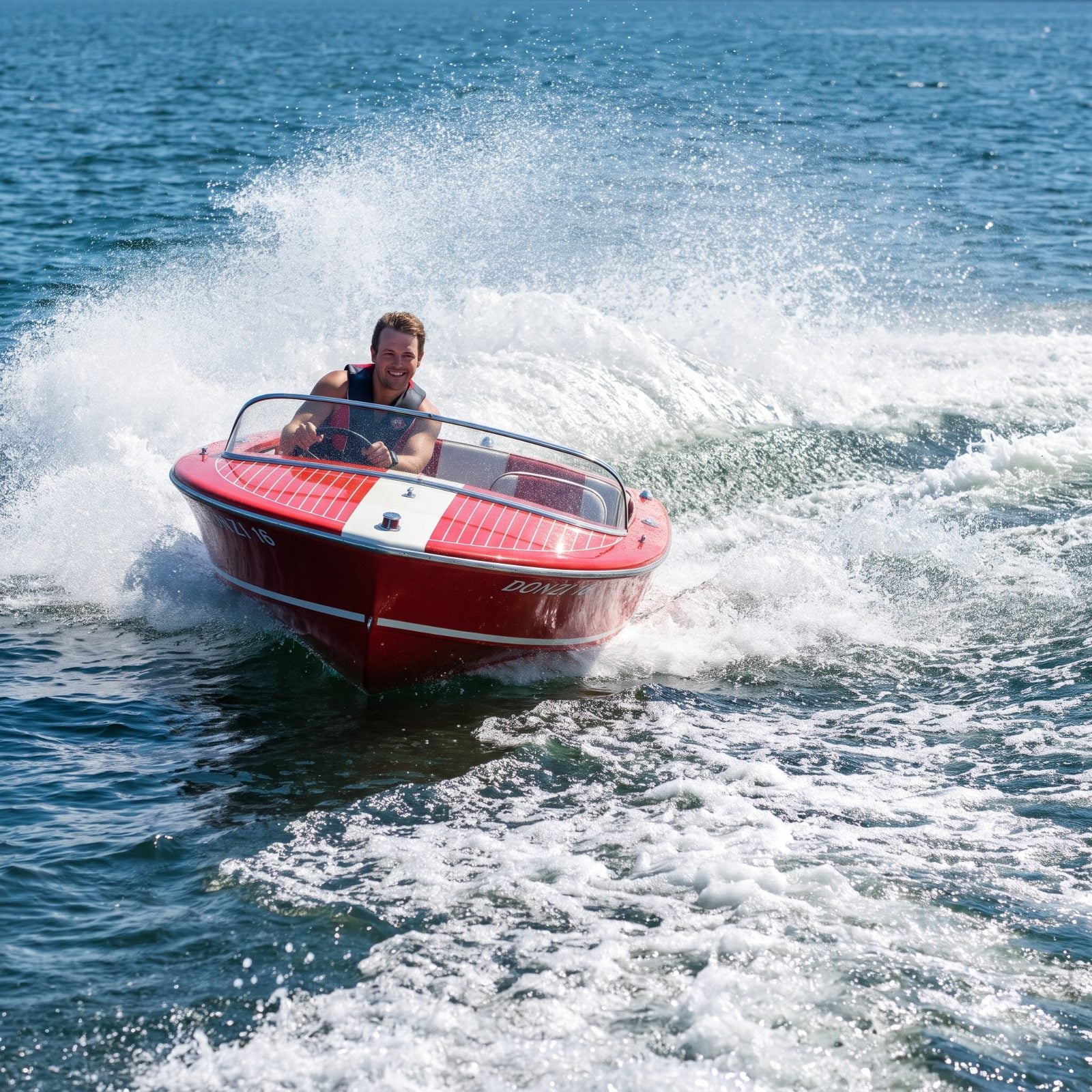
Sixteen feet of attitude. The Donzi 16 was Aronow’s small-boat answer to a question nobody had asked yet: what if a runabout handled like a race boat and looked like a carved sculpture?
That rounded deck is the giveaway, and you can spot one from across the lake before you can read the name. It skied beautifully, cornered flat, and made a ridiculous amount of noise for its size. People still restore these in garages all winter long, and they fetch real money when they come back out shining.
27. Formula 233, The Deep-V That Influenced a Generation
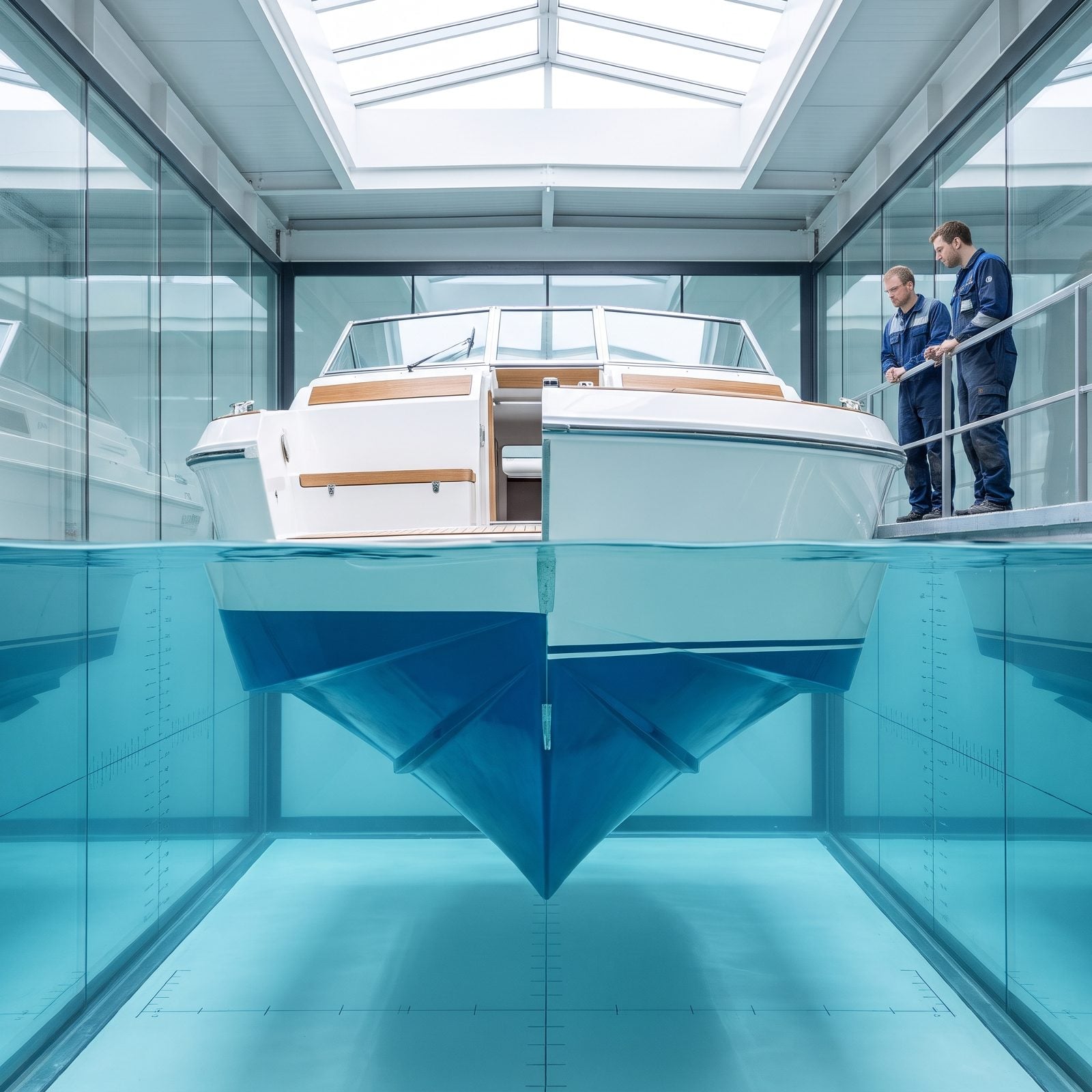
The hull came first. Jim Wynne’s deep-V design is the quiet ancestor behind a staggering number of boats you see today, and Formula built its name running that hull hard through water that beat up everything else.
The 233 took that offshore pedigree and turned it into a family boat you could actually own. Rough-water manners, a cockpit big enough for a weekend, and a ride that held up when the lake turned mean after lunch.
26. Glastron GT-150, The Runabout Made Famous by a Movie Jump
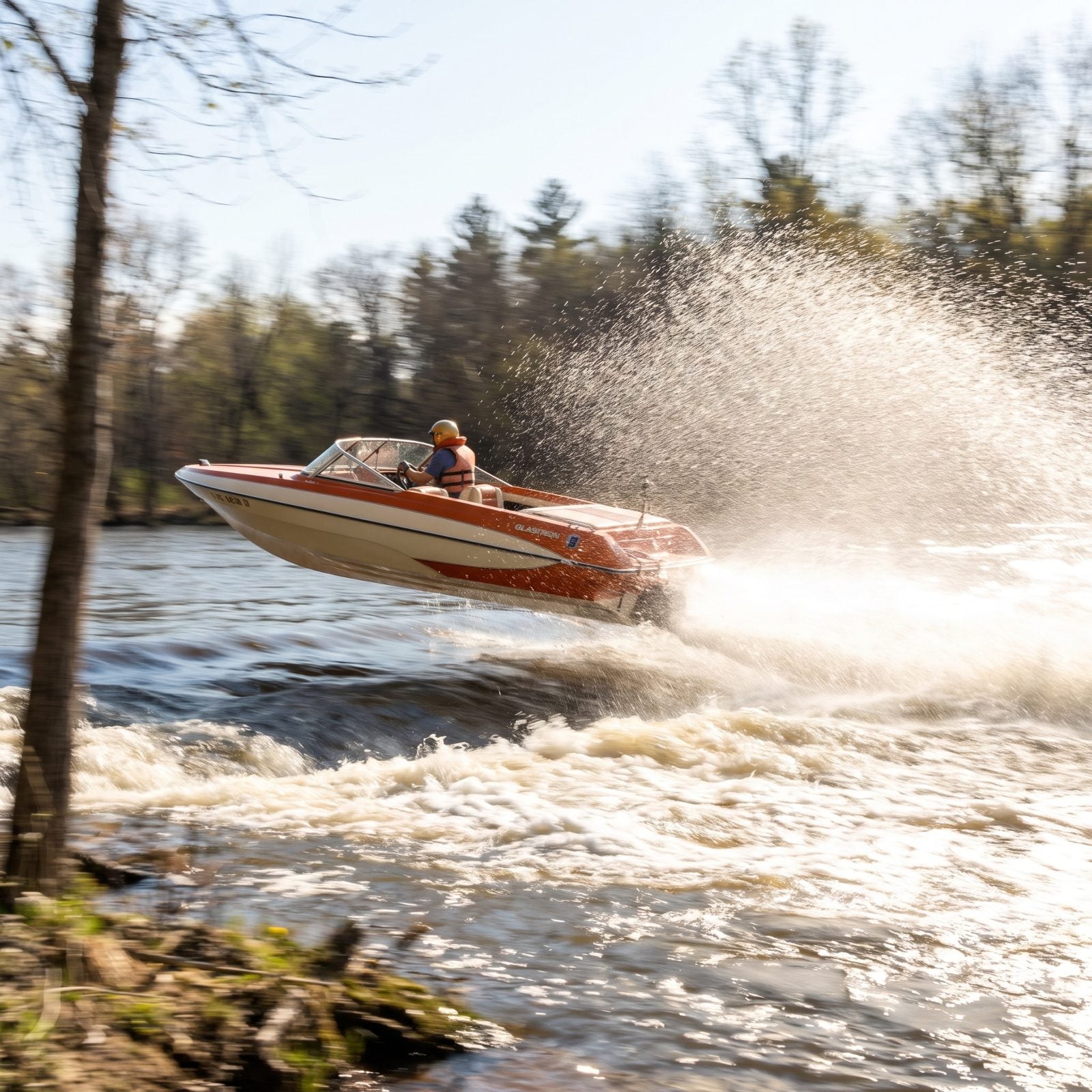
You know this boat even if you think you don’t. A Glastron made the river jump in a 1973 James Bond film, launching clean over a Louisiana road and landing in open water, and the company sold a lot of fiberglass on the back of that stunt.
The GT-150 was the accessible end of the family, light and zippy and cheap enough that a first-time owner could trailer it behind a sedan and run it all summer. Aerospace-styled bow, that forward rake, a shape that looked fast just sitting in the driveway.
25. Century Resorter 19, The Varnished Inboard Ski Boat
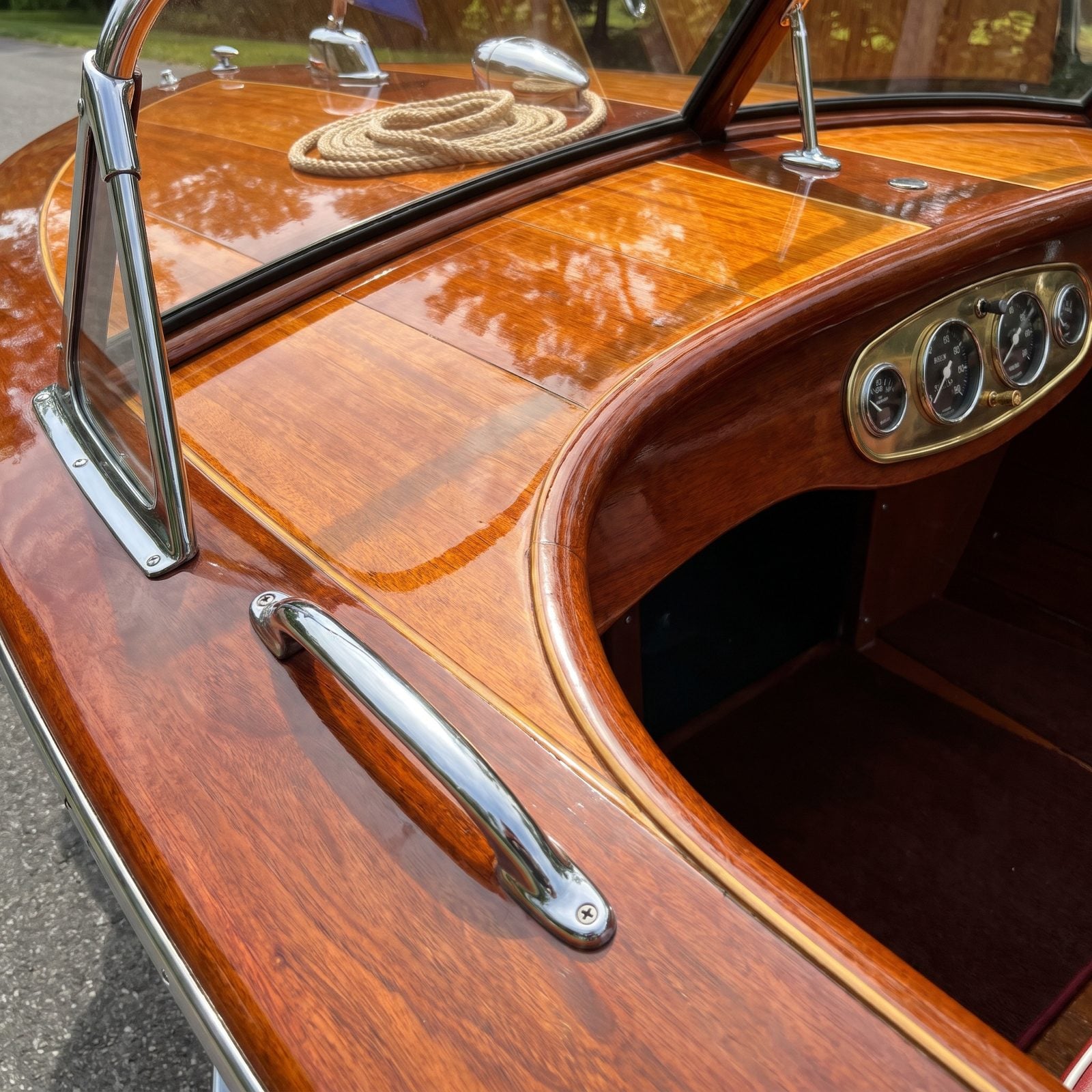
Before fiberglass took over everything, this is what a nice ski boat looked like. Varnished mahogany that took a whole weekend and a careful hand to keep right, a torquey inboard sitting amidships, and a wake soft enough to slalom behind.
Century built the Resorter as the civilized classic runabout, the one at the yacht club dock that made everyone else’s aluminum look like a lunch pail. Owning one now is less a hobby than a relationship. The wood needs you, every single spring.
24. Correct Craft Ski Nautique, The Tournament-Skiing Standard
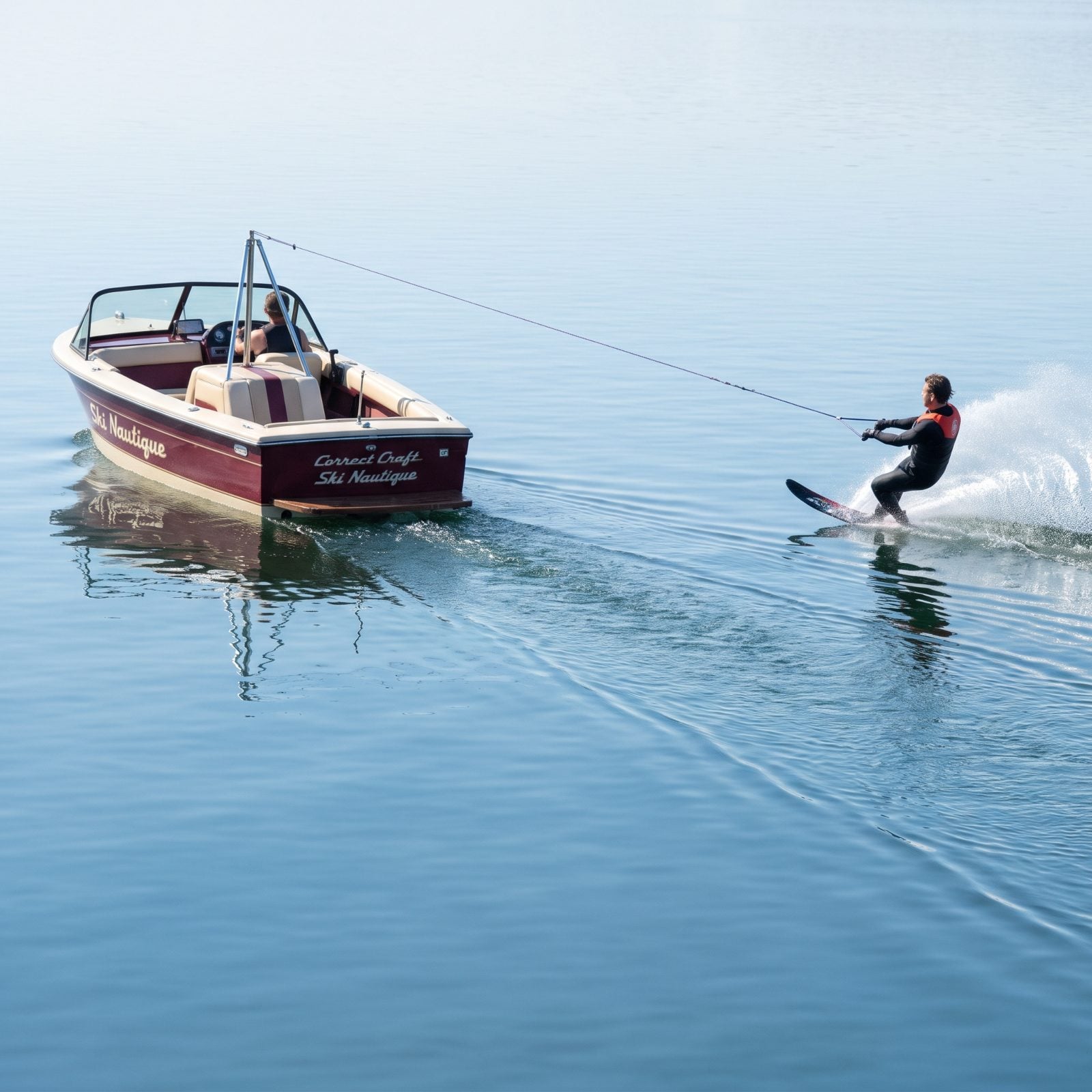
When competitive skiers argued about boats, the Ski Nautique was the one they trusted to be fair. Flat wake, straight pull, consistent speed. That reputation didn’t come from marketing. It came from course records set behind it.
Correct Craft built the thing to a standard rather than a price, and tournament organizers kept choosing it year after year. Learn to slalom in the right crowd and this was the pylon you got up beside.
23. Ranger 500 Series, The Sparkling Bass-Boat Classic
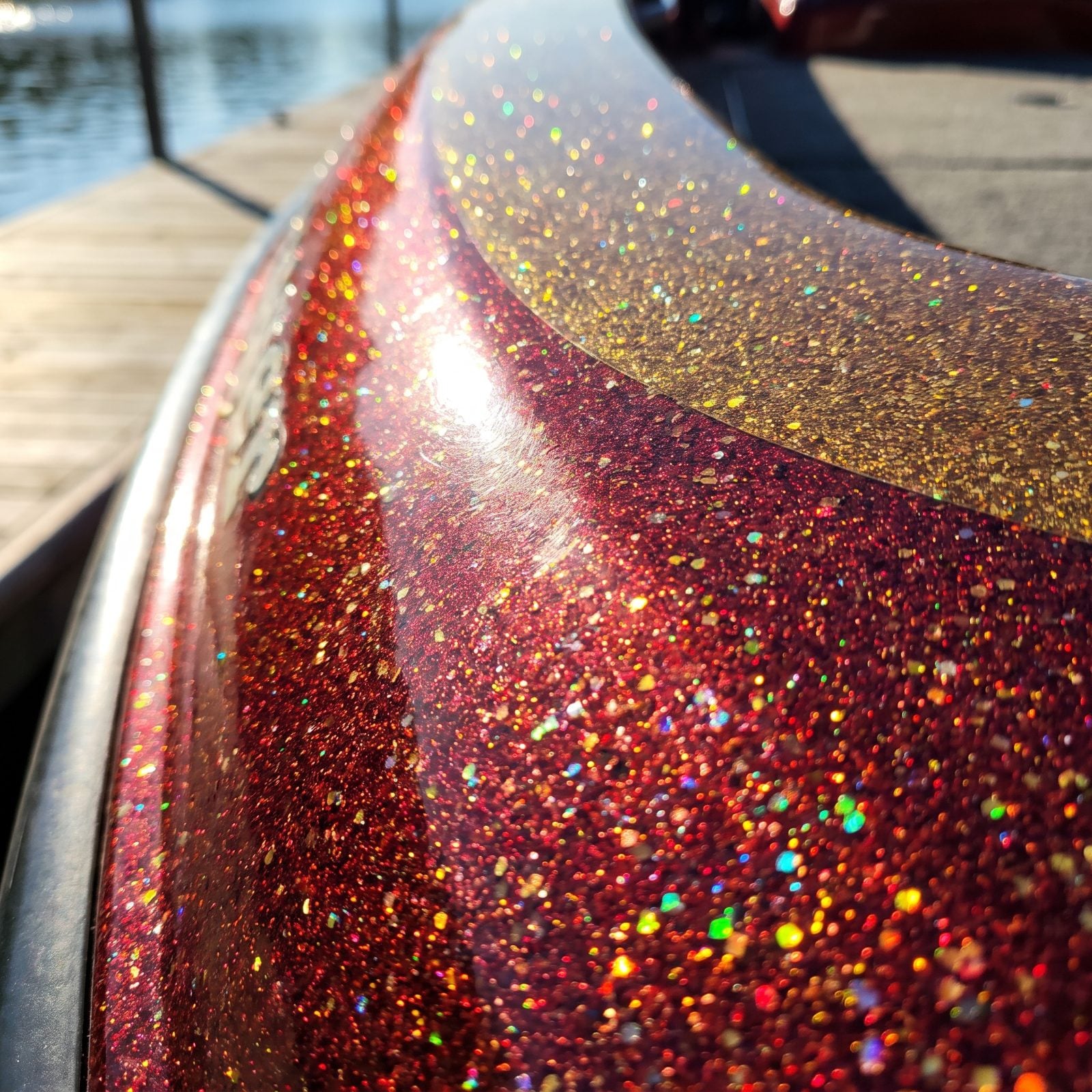
Metalflake gelcoat that threw sparks in the morning sun. Ranger came out of Flippin, Arkansas and built a fiberglass bass boat that fishermen in the growing tournament scene actually wanted, fast enough to beat the field to the good water and stable enough to stand and cast all day long.
The 500 series became the boat you parked in the church lot on Sunday to let everyone know. Founder Forrest Wood tied the brand to the sport so tightly the two grew up together.
22. Bass Tracker, The Aluminum Bass Boat That Changed the Market
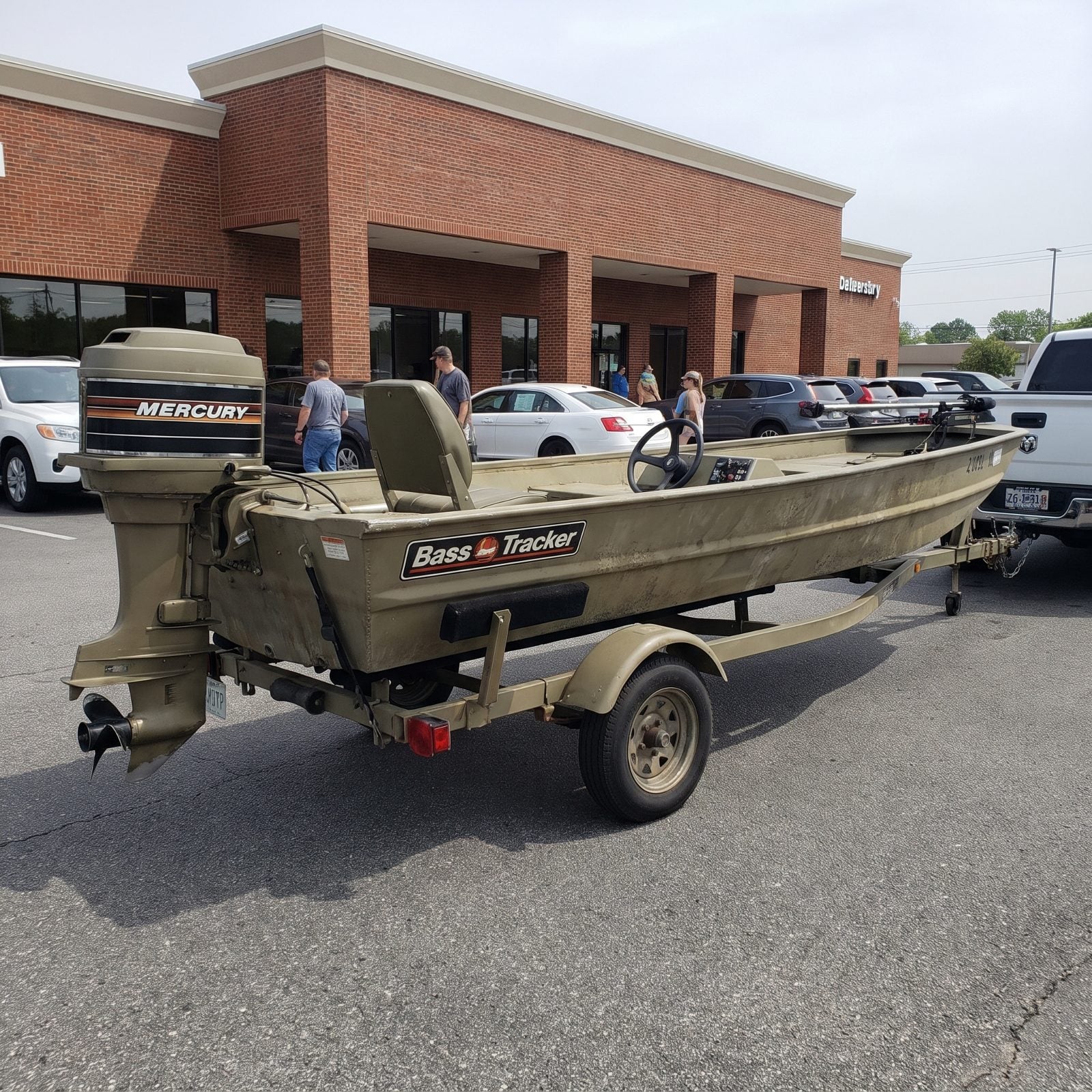
What changed everything was the price. In 1978 someone decided to sell the boat, motor, and trailer as one package, ready to fish, at a number a working guy could actually swing. That package deal is the whole story.
Aluminum instead of flashy fiberglass meant lighter, cheaper, tougher. It wouldn’t win a beauty contest against a metalflake Ranger and it didn’t try to. What it did was open bass fishing to people who’d been priced right out of it, and that beats sparkle any day of the week.
21. Mako 23, The Tough Open-Fisherman Favorite
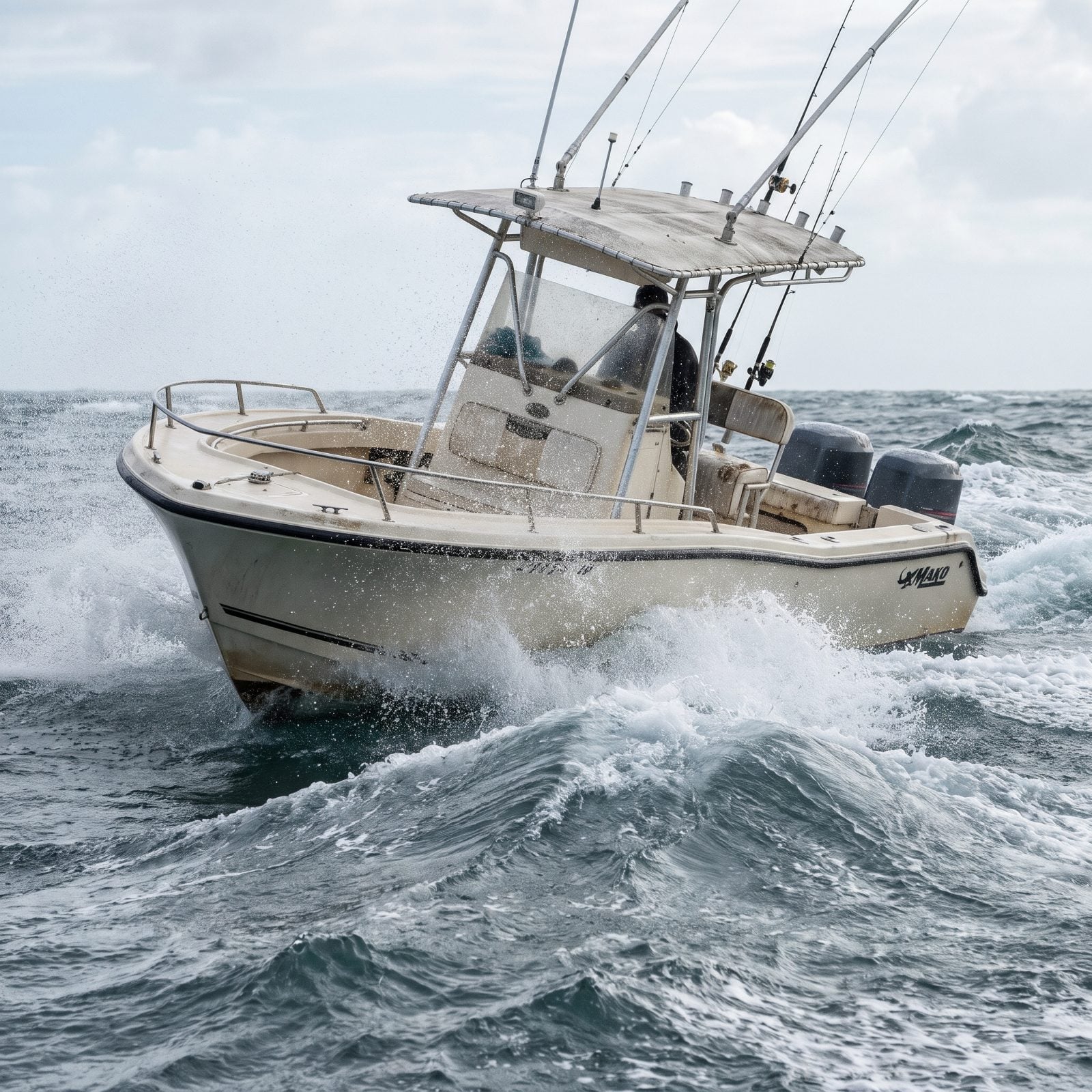
Flat-out built to be beaten up. The Mako 23 earned a cult following among saltwater guys who ran offshore and wanted a center console that wouldn’t quit when the inlet got nasty.
Open deck, fishable from any angle, deep enough to handle a swell, no frills whatsoever. That was the point. Charter captains ran them hard for years and old ones still turn up working today, a boat that spends its whole life getting salt in its seams and just keeps going.
20. Grady-White 204C Hatteras, The Cuddy-Cabin Fishing Classic
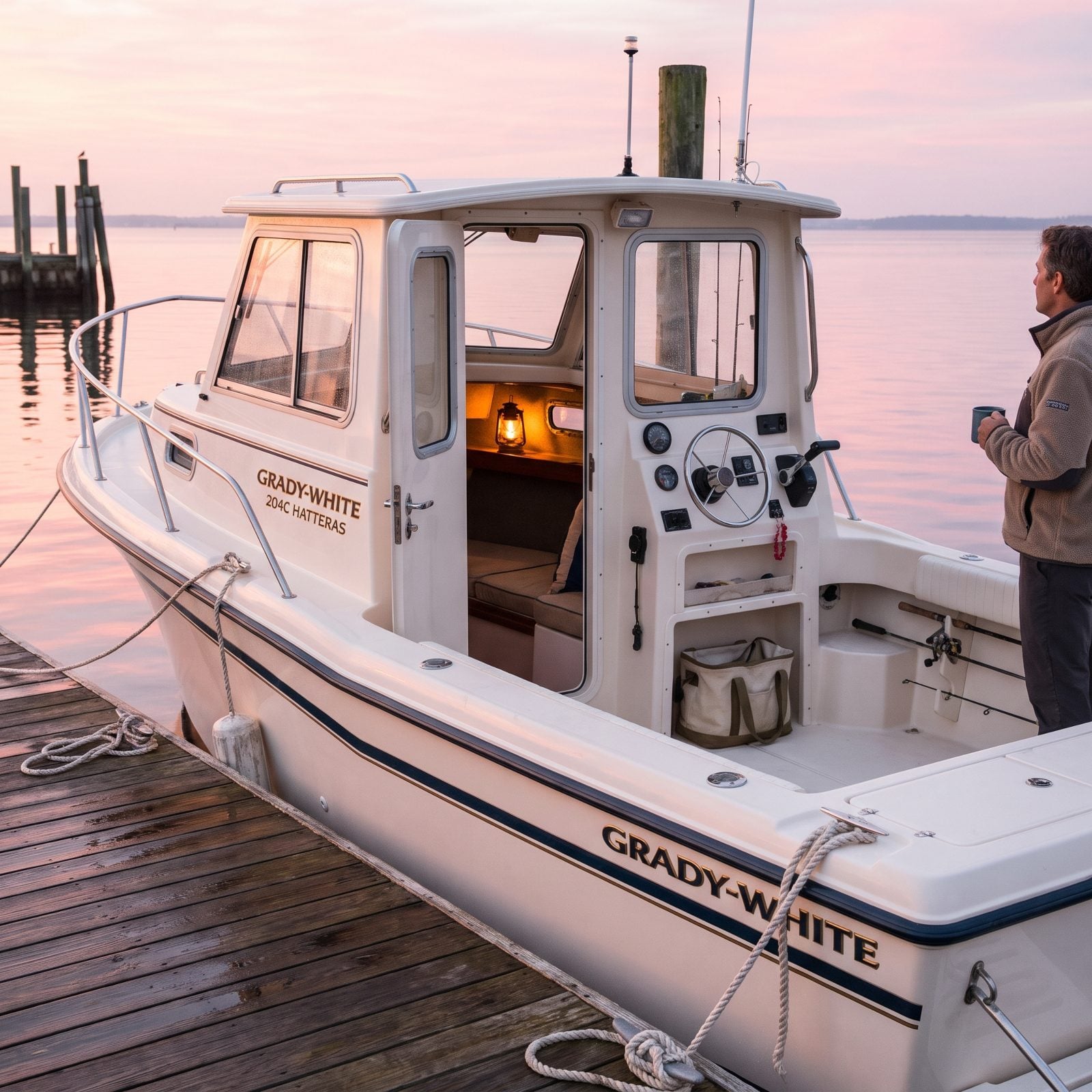
The cuddy is the trick. A small cabin forward turns a day fishing boat into something you can crawl into out of the rain, nap in on a slow bite, or let the kids hide in when the chop gets old. The 204C handed you all that without giving up the open cockpit aft.
Grady-White built its name in coastal North Carolina on exactly this kind of sensible, well-made hull, the sort passed down in families rather than flipped for a quick dollar. People trust the name now because boats like this earned it decades back.
19. Starcraft Holiday 18, The Aluminum Family Runabout
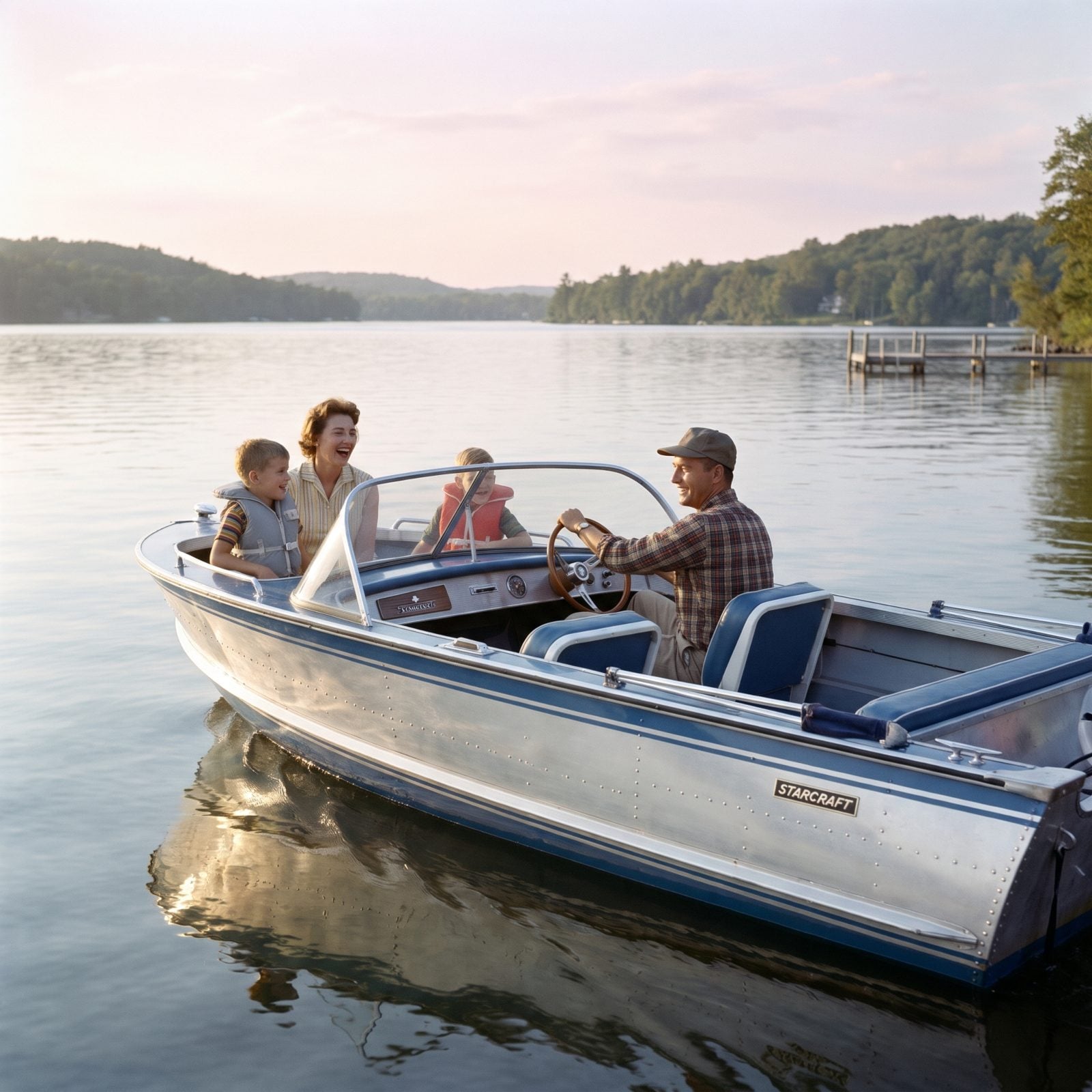
Riveted aluminum was the whole pitch here: lighter than wood, cheaper than the fancy inboards, and it didn’t rot in the slip while you ignored it all winter. The Holiday 18 put a family of four or five on the water without anyone needing a trust fund.
You’d see these behind every wagon on a Friday afternoon — the turquoise-and-white paint, the blue-and-white vinyl bench that got hot enough to brand your thighs, the outboard clamped to the transom. Nothing about it was precious, and that was the point. You beached it, you dragged it, you bailed the rainwater out Saturday morning and went anyway.
18. Lund Pike 16, The Northern-Lake Fishing Staple
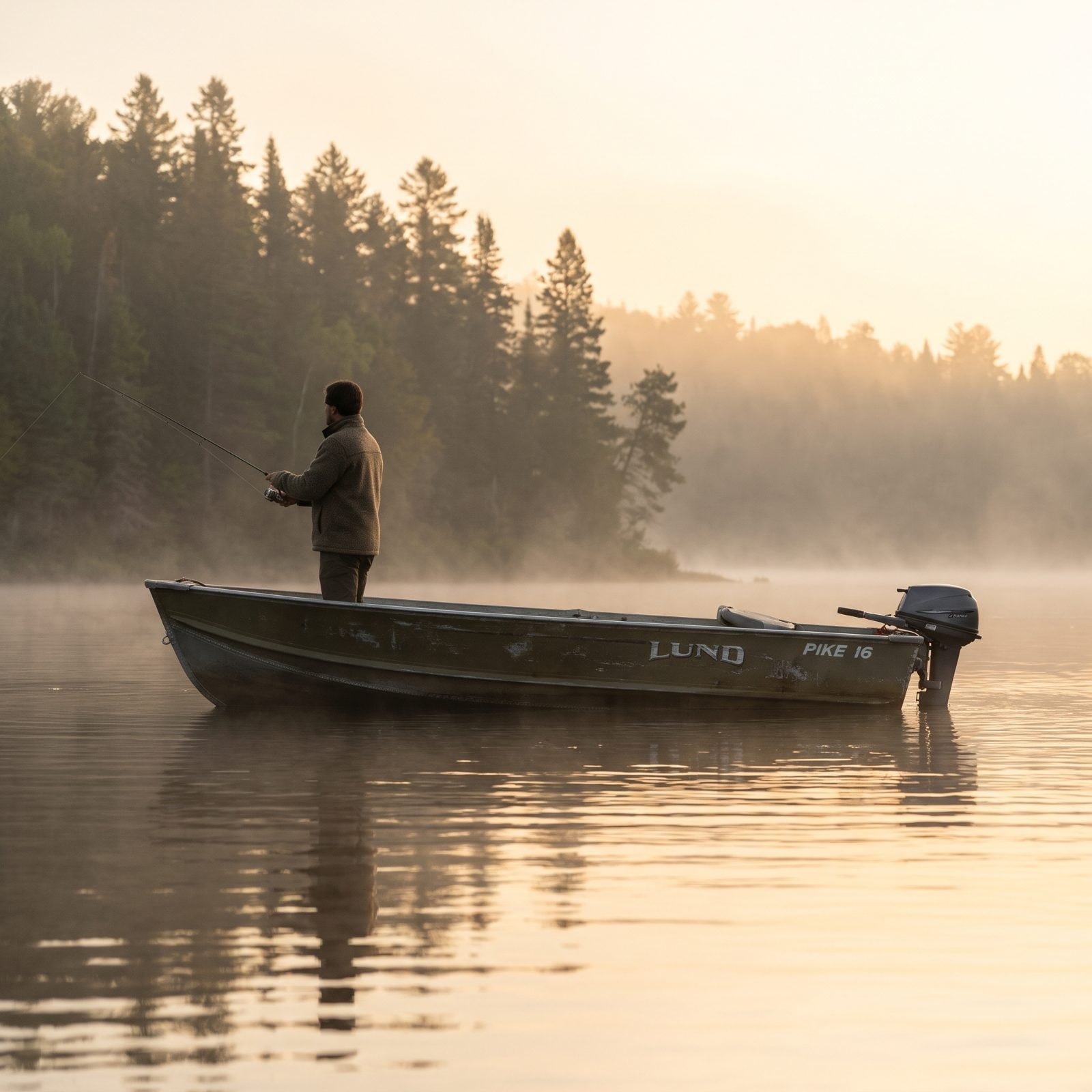
Ask anyone who fished Minnesota or Wisconsin in those years what they ran, and odds are they’ll say a Lund.
The Pike 16 was dead simple — flat, stable, light enough for one person to wrestle onto a trailer, and tough enough to shrug off a rock you didn’t see coming. It wasn’t fast and it wasn’t pretty. It caught fish, which is the only review that ever mattered to the people who bought it.
I’ve got a soft spot for boats that don’t try to be more than they are, and this is the patron saint of that idea. A tiller outboard, two seats, and a thermos wedged where it won’t roll. You don’t need the rest.
17. Harris FloteBote Pontoon, The Aluminum Party Platform
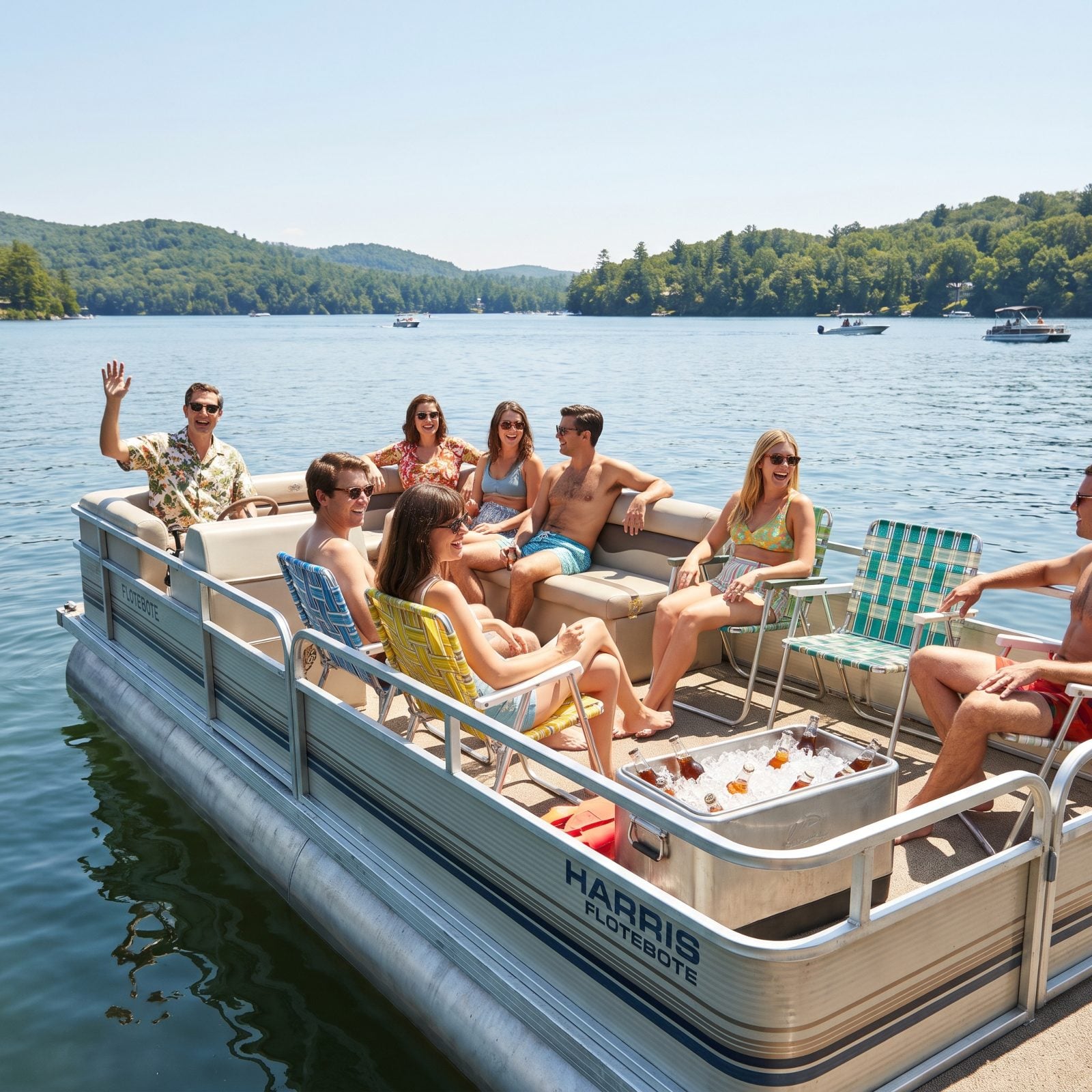
The pontoon never pretended to be a boat in the romantic sense. It was a floating patio, and once you accept that, you understand why they sold like crazy.
Harris put furniture and a railing on two aluminum tubes and gave families a way to pile fourteen people aboard without anyone falling off. Grandma could sit in a real chair. The cooler had its own corner. Folks dragged camp chairs around a table of chips, cracked another cold one, and stayed out until somebody called them in for dinner.
Speed was never the game — shade, cold drinks, and room to spread out were. That beige vinyl is burned into a whole generation’s summer memory.
16. Gibson 36 Houseboat, The Boxy Fiberglass Vacation Home
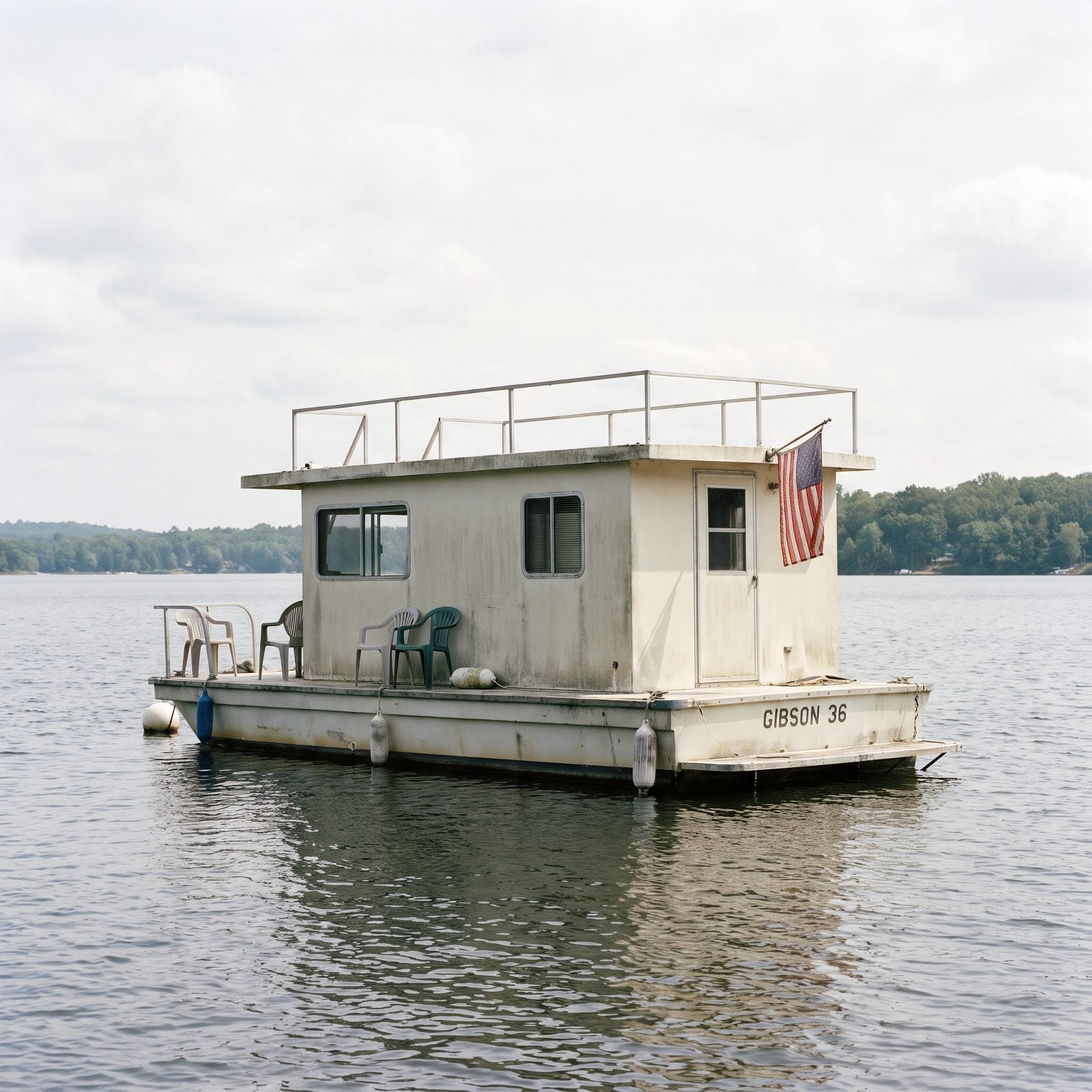
Someone looked at a lake and thought, what if the cabin came with us. That’s the whole Gibson concept.
These were rectangular on purpose. All that boxy volume meant a galley, a head, berths, and a flat roof you could put chairs on. You didn’t go fast and you didn’t go far. You found a quiet cove on the Cumberland or the Ohio, tied off, and stayed the weekend without checking out of anything.
15. Zodiac Mark II, The Inflatable Adventure Boat
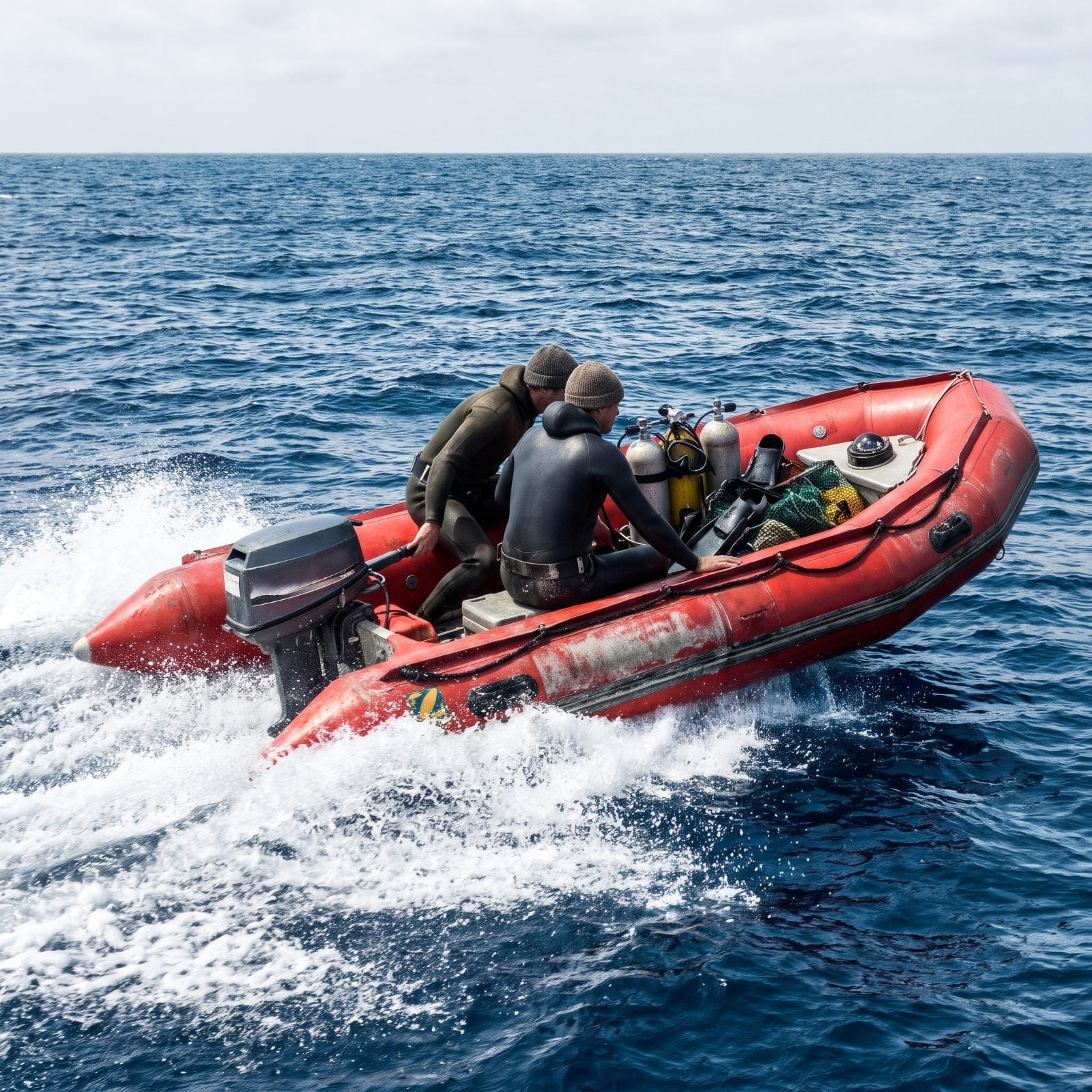
The French built it, Cousteau made it famous, and divers and tinkerers dragged it over to America.
The Mark II folded into a car trunk and inflated into a boat that laughed at rocks and surf that would hole a fiberglass hull. You could run it up a beach at speed. You could drop it off a bigger boat as a tender. It had no business being as capable as it was.
Nobody bought one to look elegant at the yacht club. You bought a Zodiac because you wanted to go somewhere a normal boat couldn’t follow, and that specific stubbornness is still exactly why people love them.
14. Cal 40, The Fiberglass Ocean-Racing Breakthrough
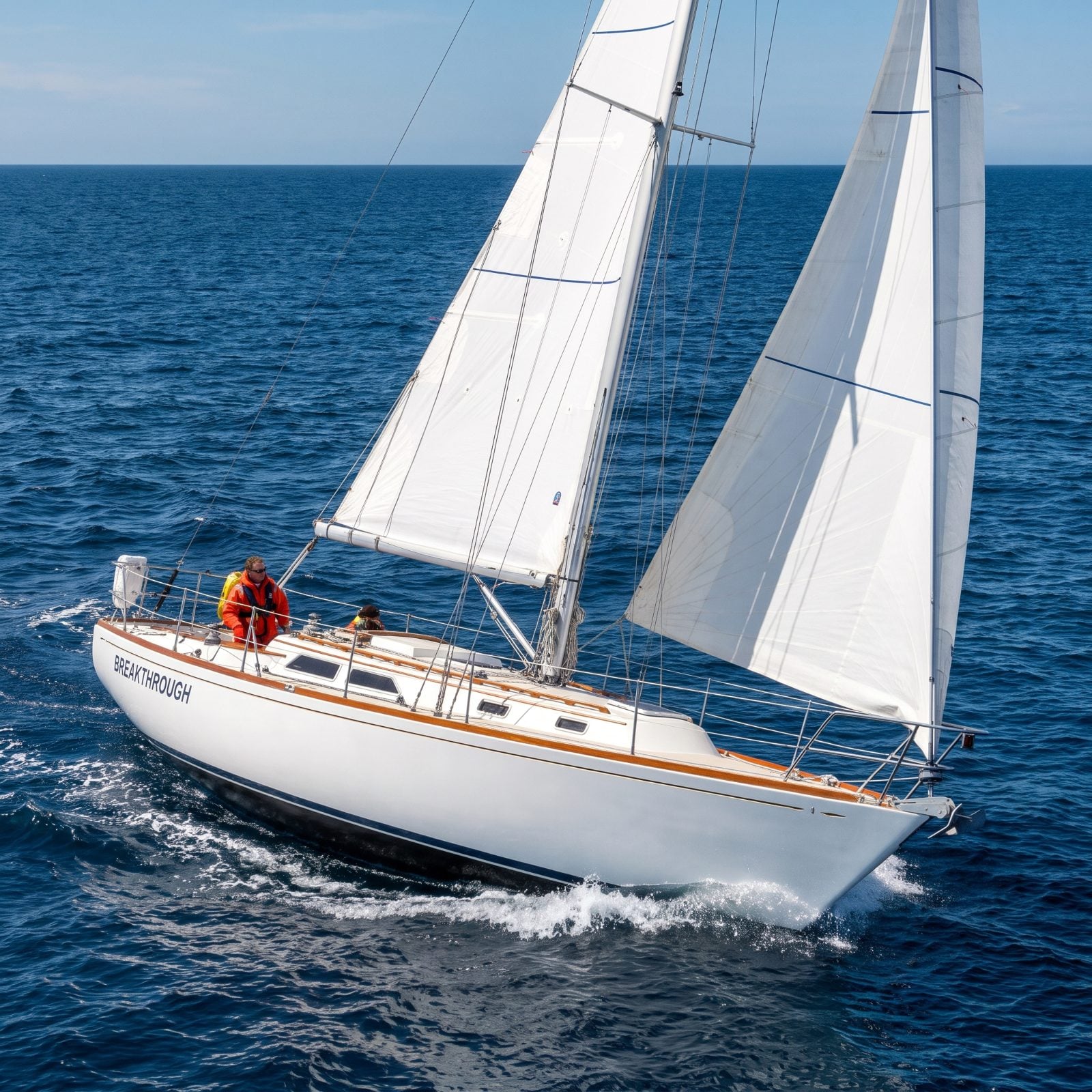
This is the boat that rewired ocean racing.
Bill Lapworth drew a light fiberglass hull with a fin keel and a separate spade rudder back when the establishment still swore real ocean boats needed long, heavy, full keels. Then the Cal 40 went out and won the Transpac races to Hawaii, again and again, surfing down Pacific swells in a way the old guard said couldn’t be done safely.
It settled the argument. Light and fast could also be tough. Nearly every performance cruiser that came after owes something to this design.
13. Catalina 22, The Trailer-Sailer That Brought Families Afloat
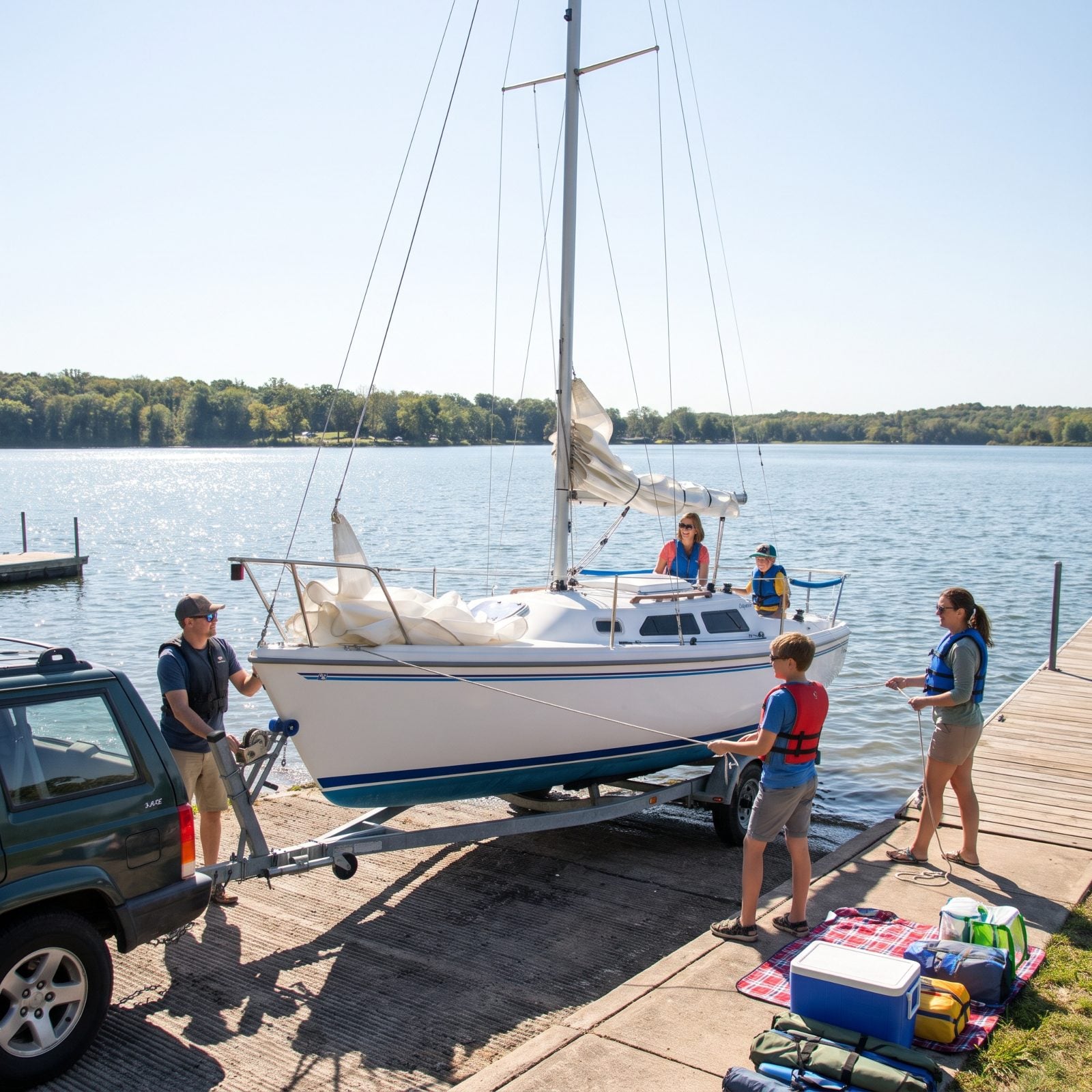
Frank Butler built the Catalina 22 to be the boat a regular family could actually own, and the numbers prove he nailed it. They made thousands upon thousands of them.
The trick was that swing keel. It let you tow the boat home on a trailer, rig it at the ramp in under an hour, and sail a lake that had no marina at all. You didn’t need a slip. You needed a driveway and a Saturday.
Small cabin, a little galley, a V-berth two people could squeeze into. For a first sailboat a whole family could learn on together, nothing else came close on value.
12. Pearson Triton, The Early Fiberglass Cruising Sailboat
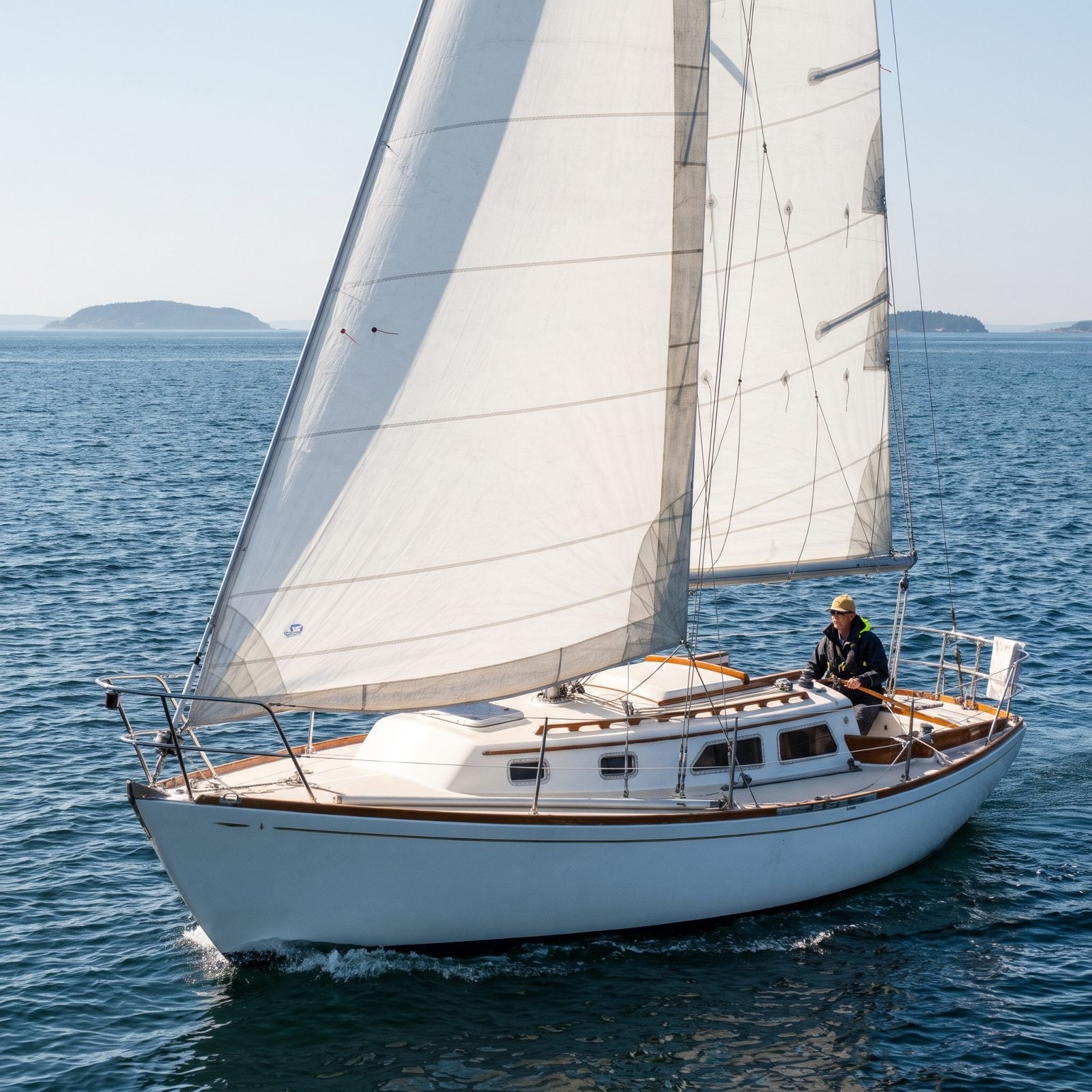
Before the Triton, a cruising sailboat you’d actually take offshore was almost always wood — which meant constant upkeep and real money.
Carl Alberg drew a traditional full-keel hull and Pearson built it in fiberglass, and that combination quietly changed everything. Here was a proper little cruiser, around 28 feet, that held its value, sailed well in a blow, and didn’t need a shipwright every spring. People crossed oceans in these.
It looked like a classic wooden yacht and behaved like one, but you could leave it in the water and not panic.
A lot of folks fell for sailing because this boat made ownership survivable.
11. O’Day Day Sailer, The Open-Cockpit Family Sailboat
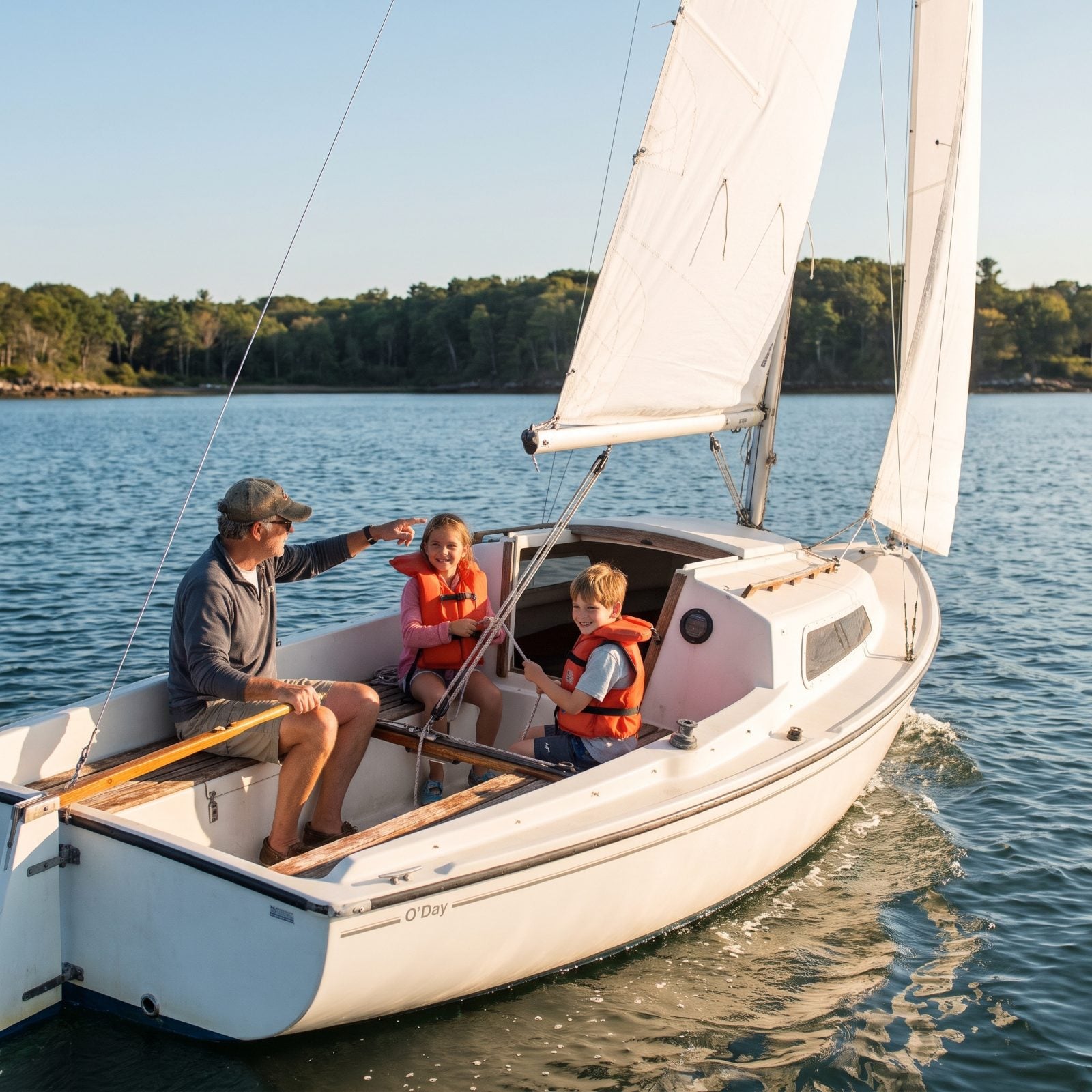
Uffa Fox designed it, O’Day built it, and the result taught a whole lot of Americans to sail without scaring them off.
That big open cockpit was the genius move. Four people could sit in it comfortably, nobody got clobbered by the boom if they paid attention, and the little cuddy up front kept lunches and life jackets dry. It planed in a breeze and puttered along happily when the wind died.
10. Sunfish, The Bright-Sailed Beach Boat
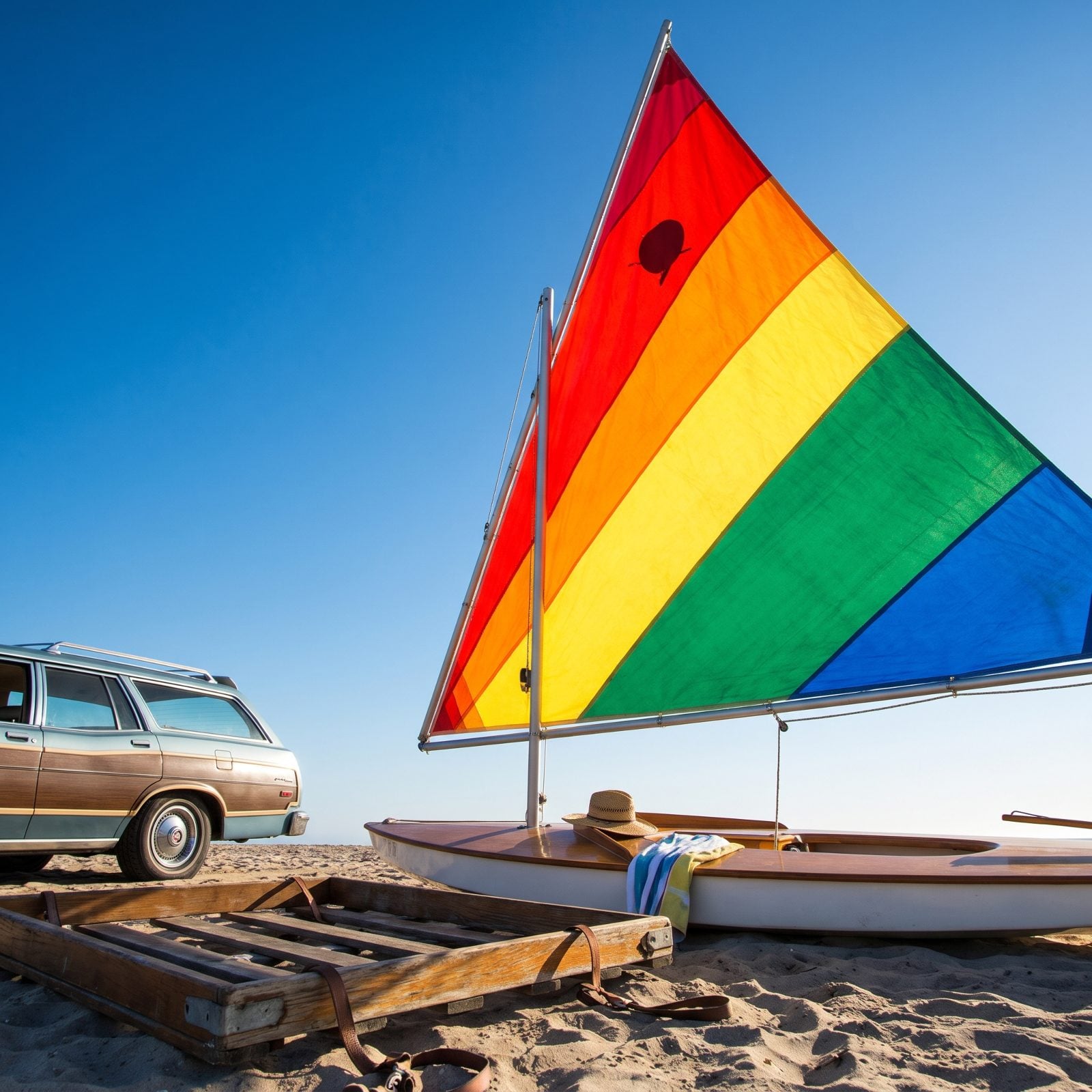
You could carry it on your car roof, rig it in five minutes, and nobody had to teach you much before you were out there figuring it out yourself.
The Sunfish is the most-produced sailboat in history, and the reason is that it took all the mystery out of sailing. One sail, one board, one line to pull. Those rainbow-striped lateen sails are a core memory for anyone who spent summers near the water back then.
Capsize it? You just stand on the board, haul it back up, and climb on. For a buck’s worth of fun on a windy afternoon, nothing has ever beaten it, and I’ll stand by that.
9. Laser, The One-Design Dinghy That Took Over the 1970s
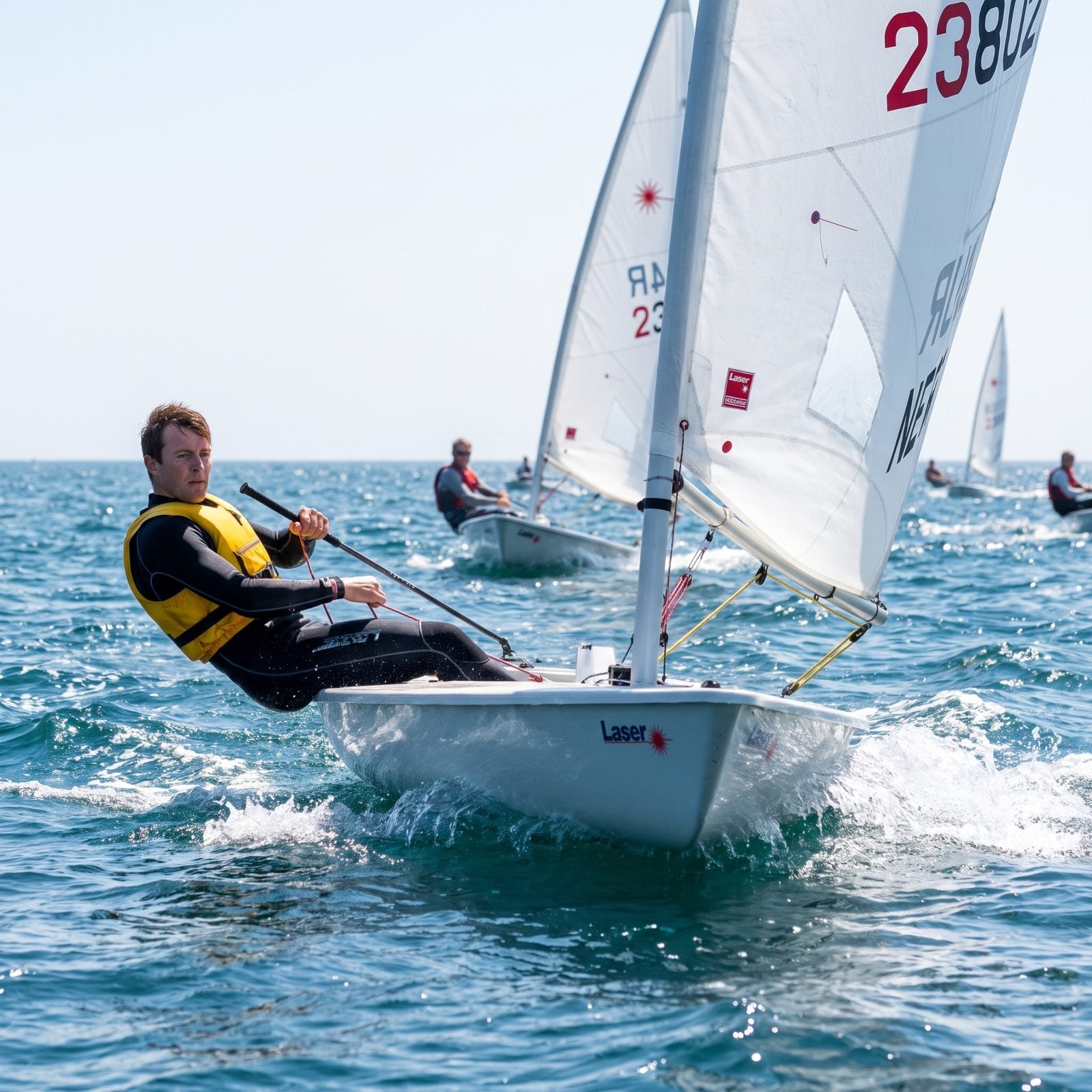
Fourteen feet, one sail, no excuses. The Laser showed up in 1971 and did something radical: it made racing fair. Same hull, same rig, same everything, so the fast guy was fast because he was better, not richer.
You could throw it on a car roof and sail it solo off any beach, and that portability built a cult. Thousands upon thousands of hulls followed, and the thing earned its spot in the Olympics.
The catch nobody warns you about? It demands fitness. Hiking a Laser in a stiff breeze is a core workout disguised as a hobby, and your abs file a complaint by sundown.
8. Hobie 16, The Colorful Catamaran Seen on Every Beach
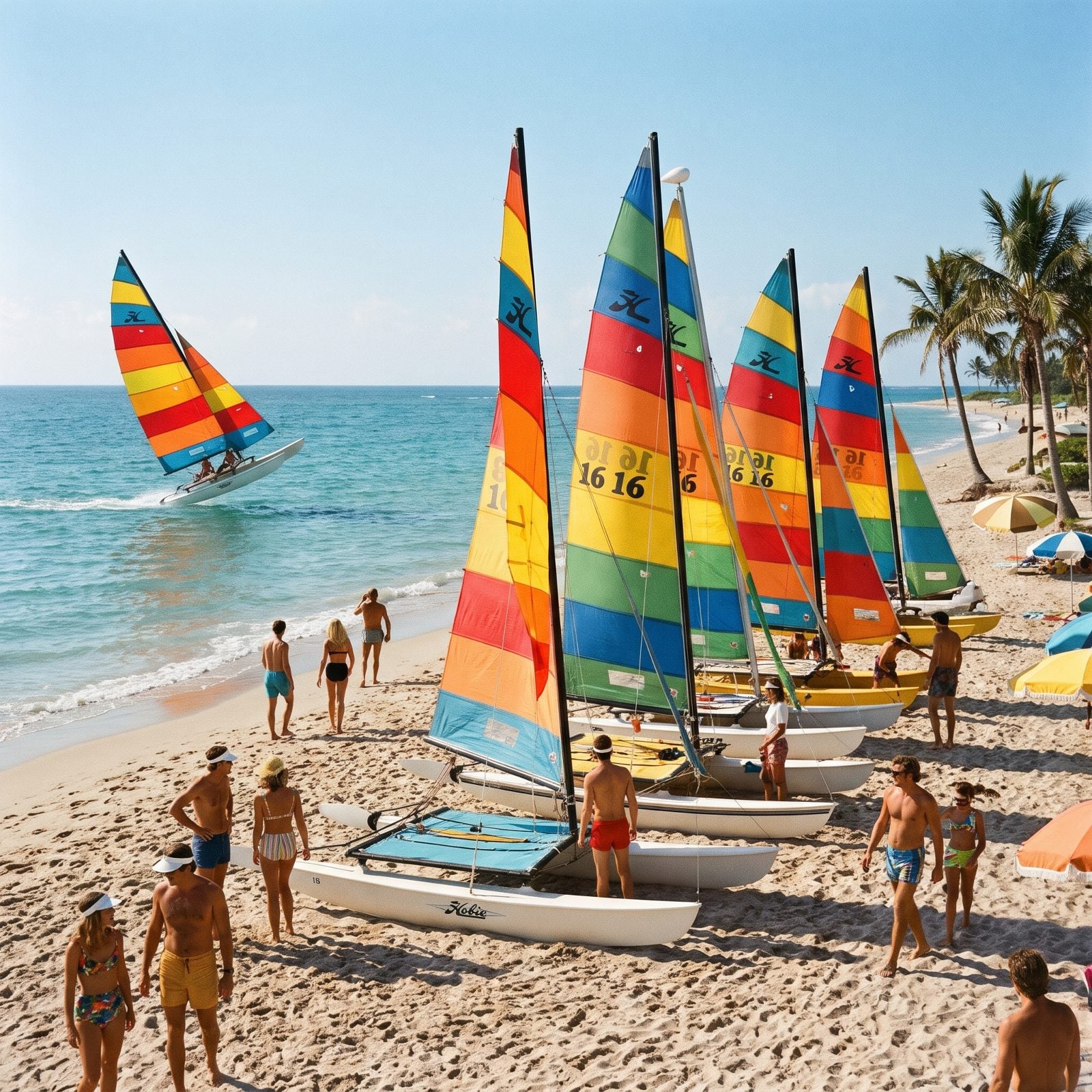
You know the beach it belongs to. Dozens of them lined up on the sand, candy-striped sails flapping, a teenager flying a hull with more confidence than sense. The Hobie 16 arrived in 1970 and basically invented beach catamaran culture.
No daggerboards. You sail it right onto the sand and walk away. That simplicity, plus genuine speed, made it the people’s rocket, and the fleets that still race today run deep.
Flying a hull feels like you’re about to die and you’re actually fine. The boat wants to go fast and will forgive a lot. Still the most fun you can have for the money.
7. MacGregor Venture 25, The Pop-Top Family Sailboat
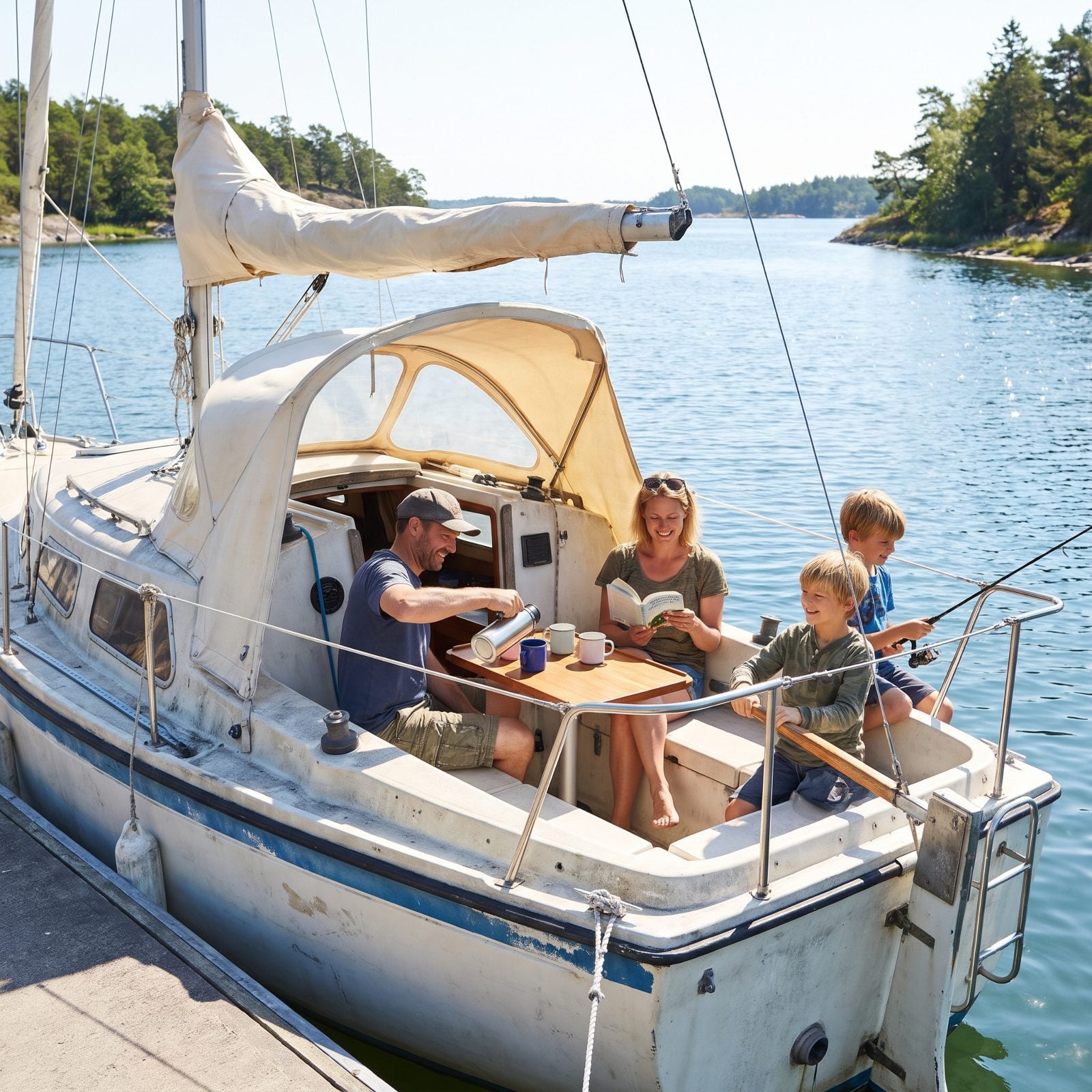
This is the boat that put families on the water for pocket money. The Venture 25 wasn’t elegant. It was cheap, light enough to tow behind the family car, and had a swing keel so you could launch off any ramp and still sit upright in two feet of water.
The pop-top was the trick. Crank the cabin roof up at anchor and suddenly a cramped 25-footer had standing headroom and somewhere to cook. Drop it to tow, and nobody at the gas station gave you a second look.
Purists sniffed at the thin hulls. The purists missed the point. Roger MacGregor’s whole idea was more people sailing, and a lot of weekend crews got their start on one of these.
6. J/24, The Late-1970s One-Design Sensation
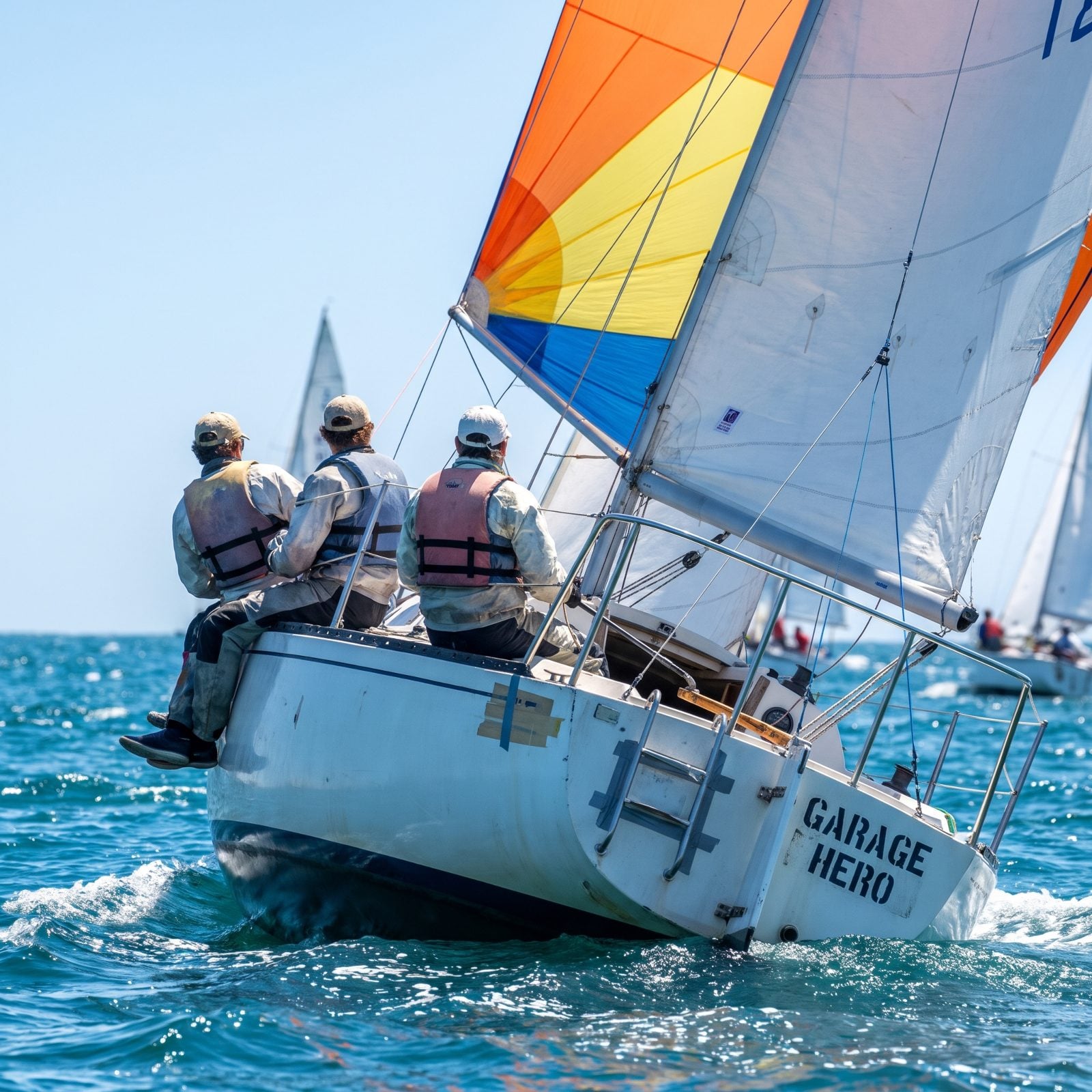
Rod Johnstone built the first one in his garage. That garage boat, launched in 1977, became one of the best-selling keelboats of its kind anywhere. Thousands followed.
The J/24 hit a sweet spot: small enough for four or five friends and a cooler, fast enough to feel like real racing, cheap enough that a working crew could own one. Weeknight beer-can racing owes this boat a debt.
It turned backyard sailors into serious racers without asking them to mortgage the house.
Crew on one in a breeze and you’ll understand. The boat responds in a way that makes an average sailor feel sharp, which is exactly why fleets never died.
5. Hinckley Bermuda 40, The Elegant American Cruising Yacht
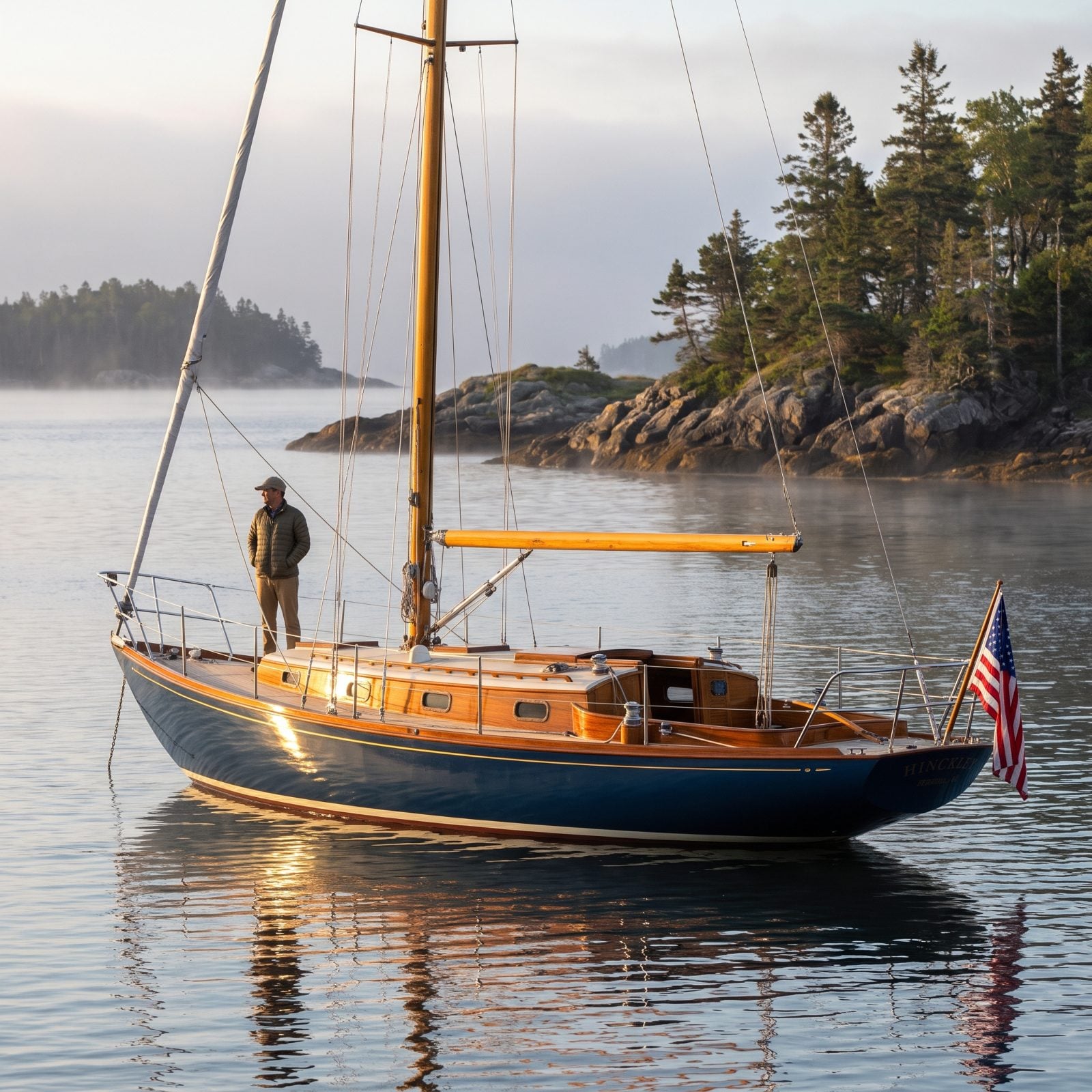
Some boats whisper money. The Bermuda 40 does it with a sheerline so graceful it almost hurts to look at. Hinckley built these in Maine starting in 1959 and kept at it for decades because nobody wanted the design to change.
One of the first fine fiberglass yachts, and they laid the hulls up like they still didn’t trust the material. Thick. Overbuilt. That’s why so many are still cruising.
A centerboard let it gunkhole into thin water yet hold its own offshore. The varnished teak alone represents a lifetime of a certain kind of person’s Saturday mornings.
4. Morgan Out Island 41, The Roomy Caribbean Cruising Ketch
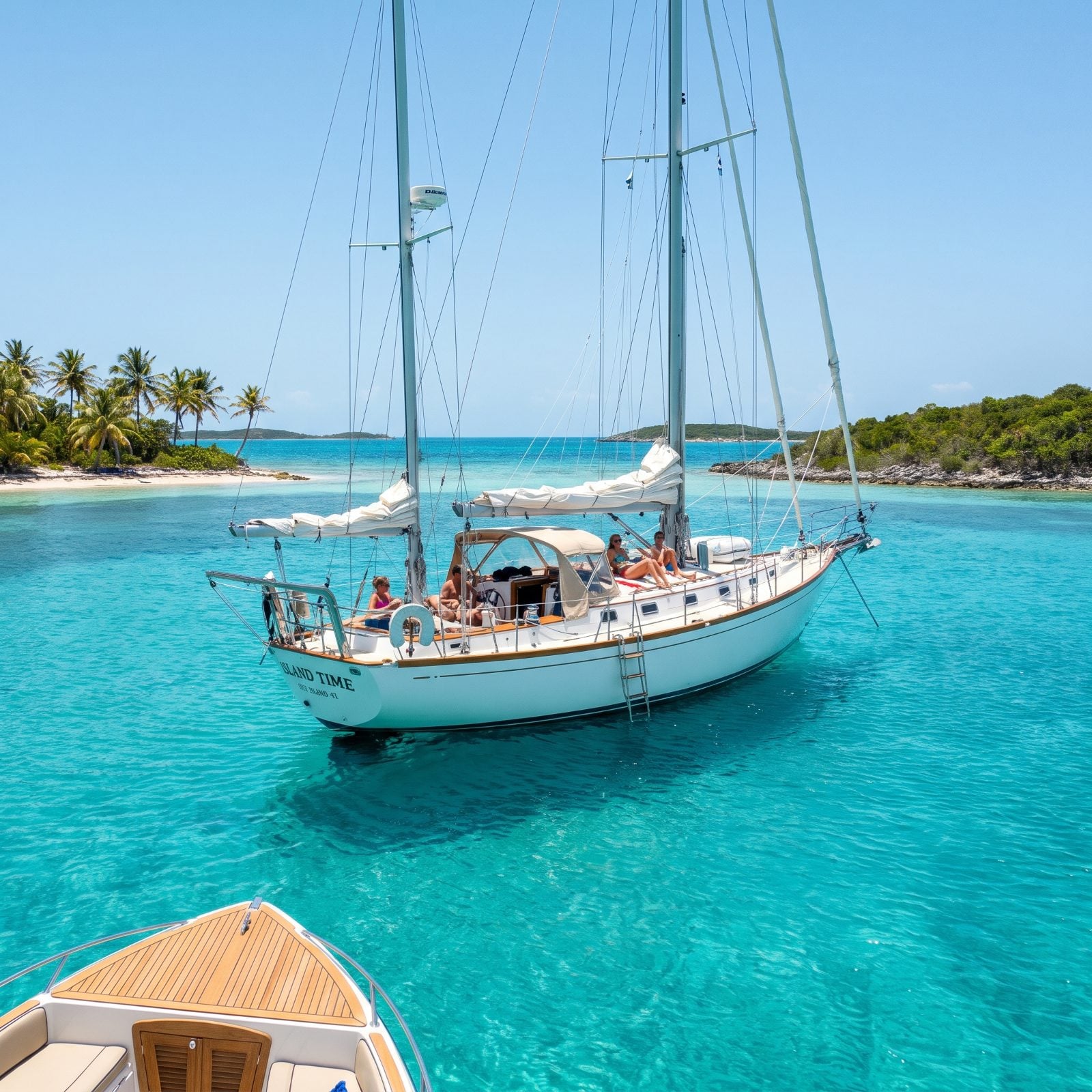
Charter companies loved this boat, and that tells you most of what you need to know. The Out Island 41 was wide, shallow, and arranged below like a small apartment, with two cabins, real headroom, and a galley you could actually cook in.
Shallow draft meant it tucked into Bahamian and Caribbean anchorages that kept deeper boats offshore. For a couple planning to live aboard in the tropics, that was the whole game.
It won’t point into the wind like a race boat. Nobody bought one for that. They bought it because a week at anchor felt like a vacation instead of camping, and because the charter fleets proved it could take abuse and keep floating.
3. Westsail 32, The Heavy Double-Ended Ocean Cruiser
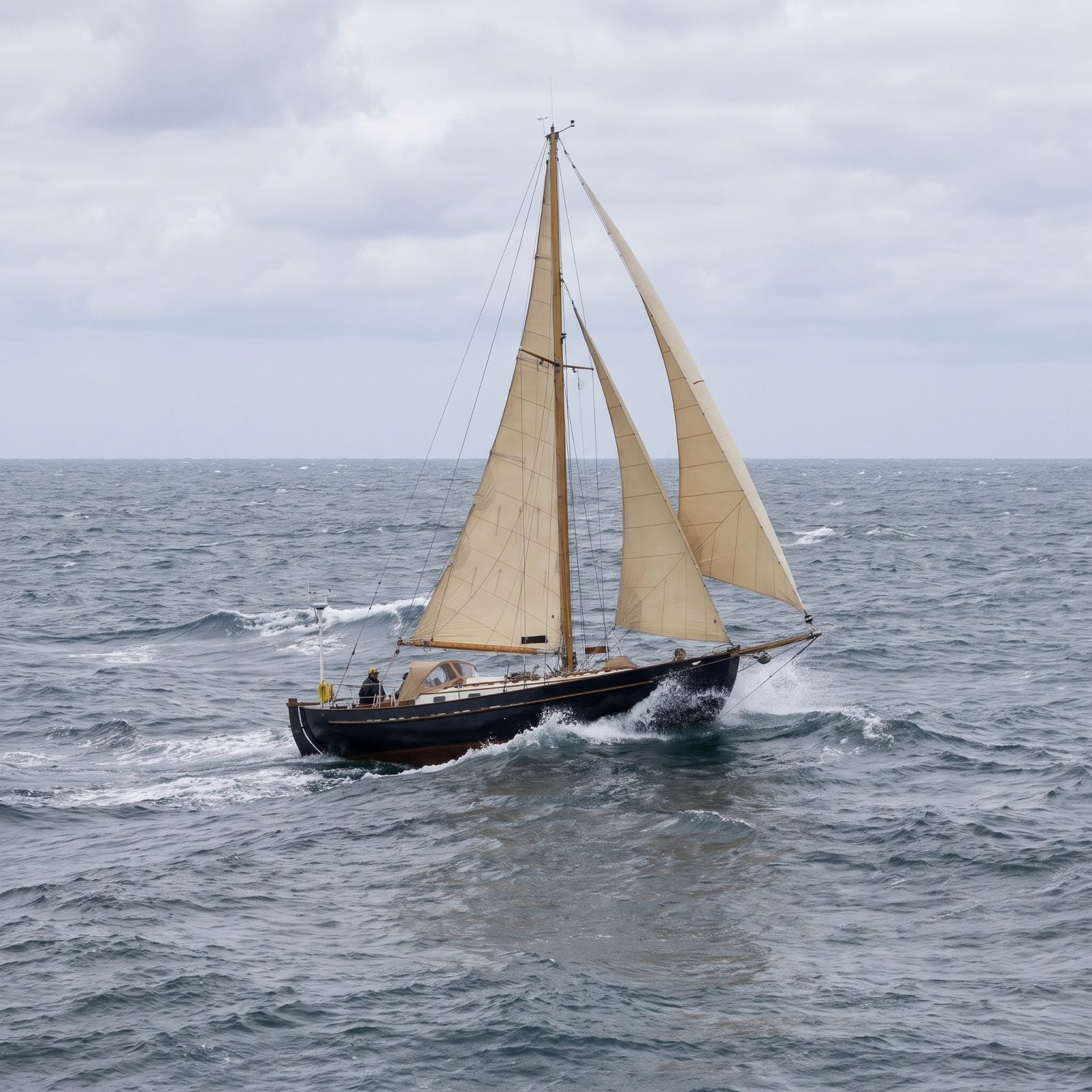
Heavy, slow, and completely unbothered. The Westsail 32 was the boat that convinced regular people they could cross oceans. A 1973 magazine feature set off a wave of dreamers, and the factory couldn’t build them fast enough.
Built as a full-keel double-ender, it was a serious lump of boat. It won’t win a race to the horizon, but it’ll shrug off weather that sends lighter boats running for cover.
Its plodding pace earned it the nickname “Wet Snail,” and plenty of owners never left the dock. The ones who did go found a boat that forgave their inexperience. There’s a reason you still see them anchored in far corners of the world fifty years on.
2. Swan 65, The Maxi Yacht That Defined Offshore Glamour
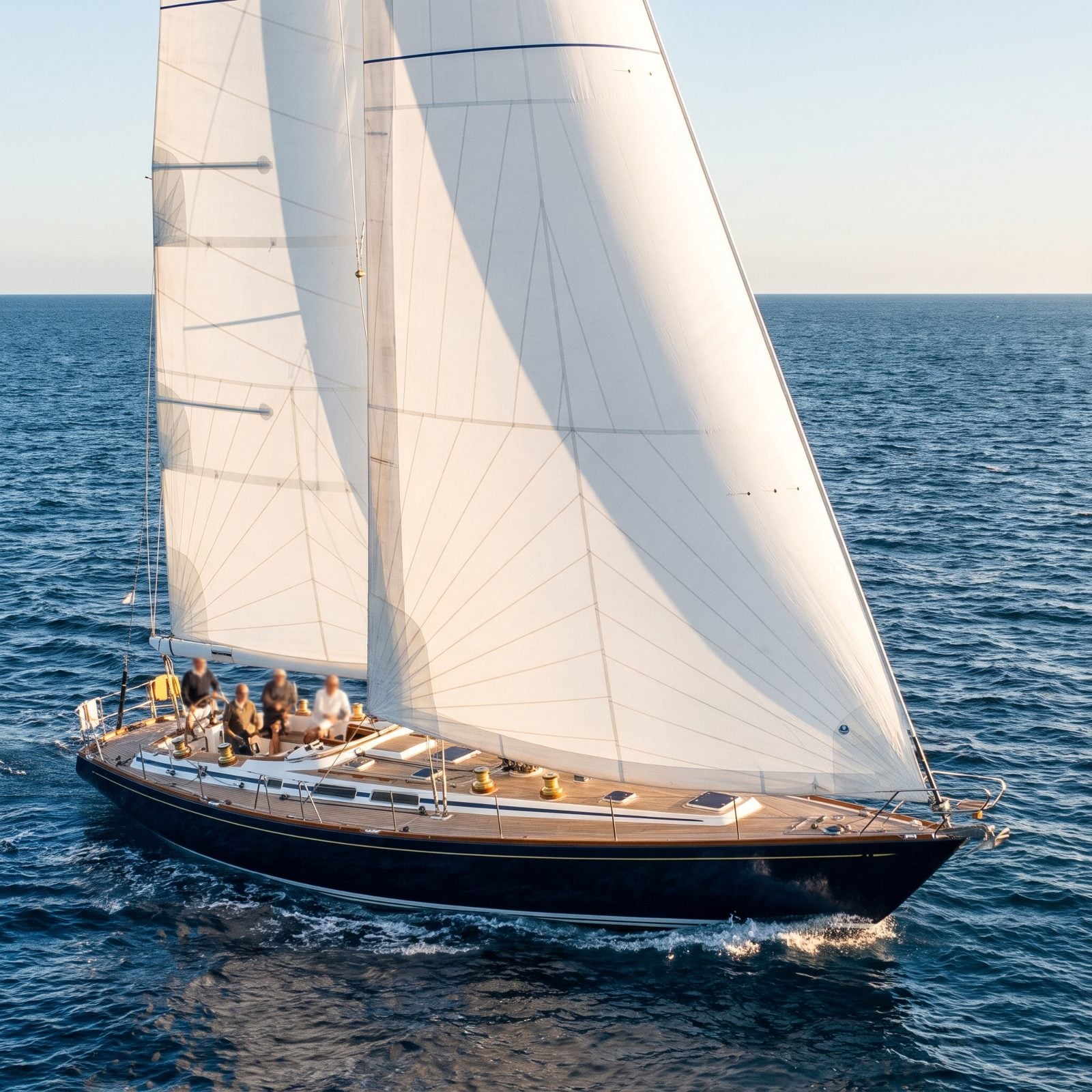
Finnish-built, ocean-tested, and unapologetically expensive. The Swan 65 came out of Nautor’s yard in 1972 and immediately looked like serious money afloat. Teak decks, a hull you could trust around the world, and lines that aged beautifully.
Then one won the first Whitbread Round the World Race in 1973 and sealed the legend. A Swan wasn’t just a gentleman’s yacht anymore. It was proof the boat could do what the brochure promised.
These things hold value like few others, and a well-kept Swan from the ’70s still commands real respect at any yacht club. You don’t buy one to flip it. You buy one because the standard it set has barely moved since.
1. Riva Aquarama, The Mahogany Mediterranean Dream Boat
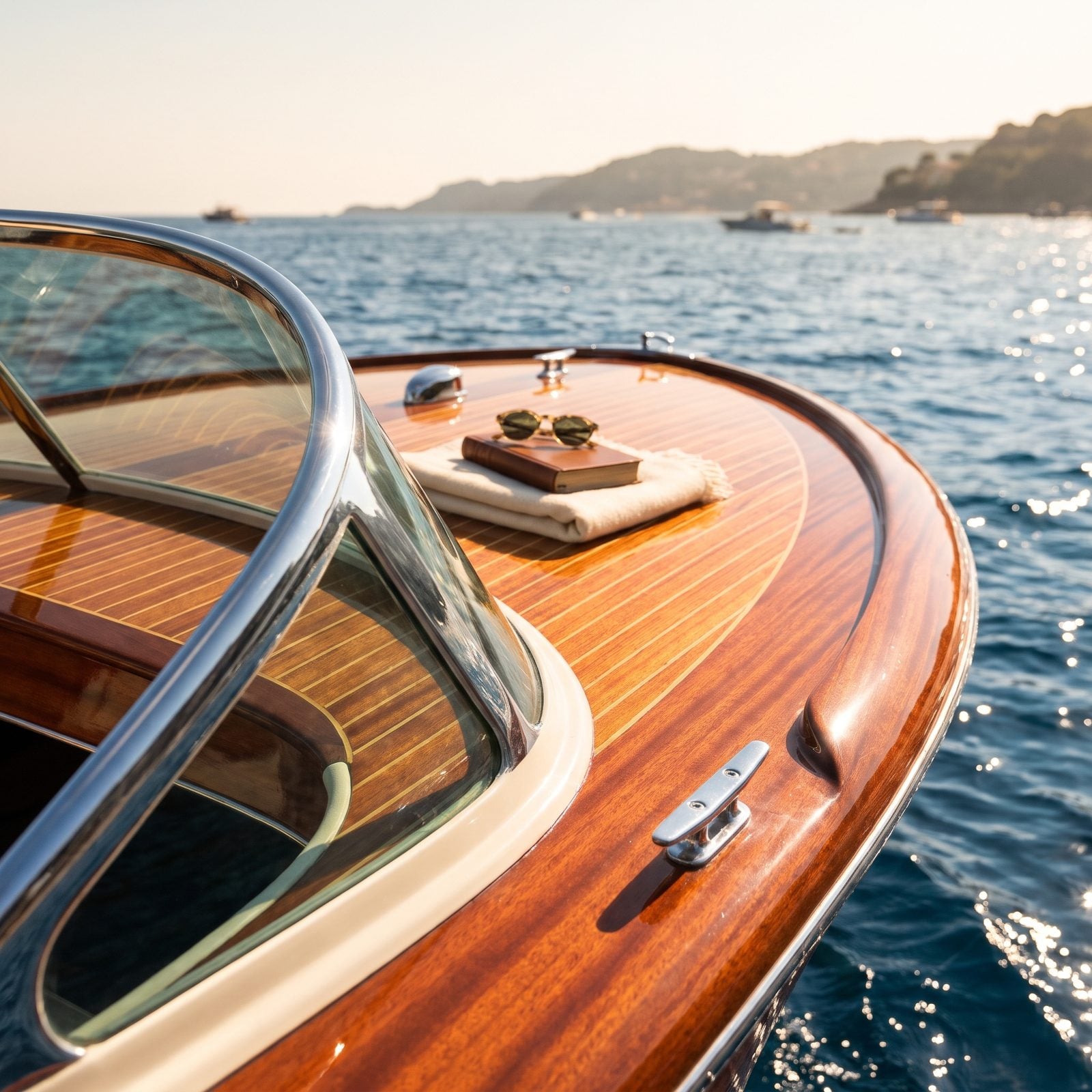
Forget sailing for a second. The Aquarama is pure want. Italy’s Riva yard built these mahogany runabouts from 1962 onward, and every one looks like it was designed to make a sunset jealous.
The hull is layered mahogany, varnished to a mirror, built by hand in a way almost nobody bothers with now. Movie stars bought them. So did royalty. It was the boat you parked in front of a harbor-side café to say something without saying it.
Restored examples now sell for the price of a house, and not because they’re fast, though they do move. People pay because the thing stands for a lost idea: that a motorboat could be furniture worth polishing for forty years.