
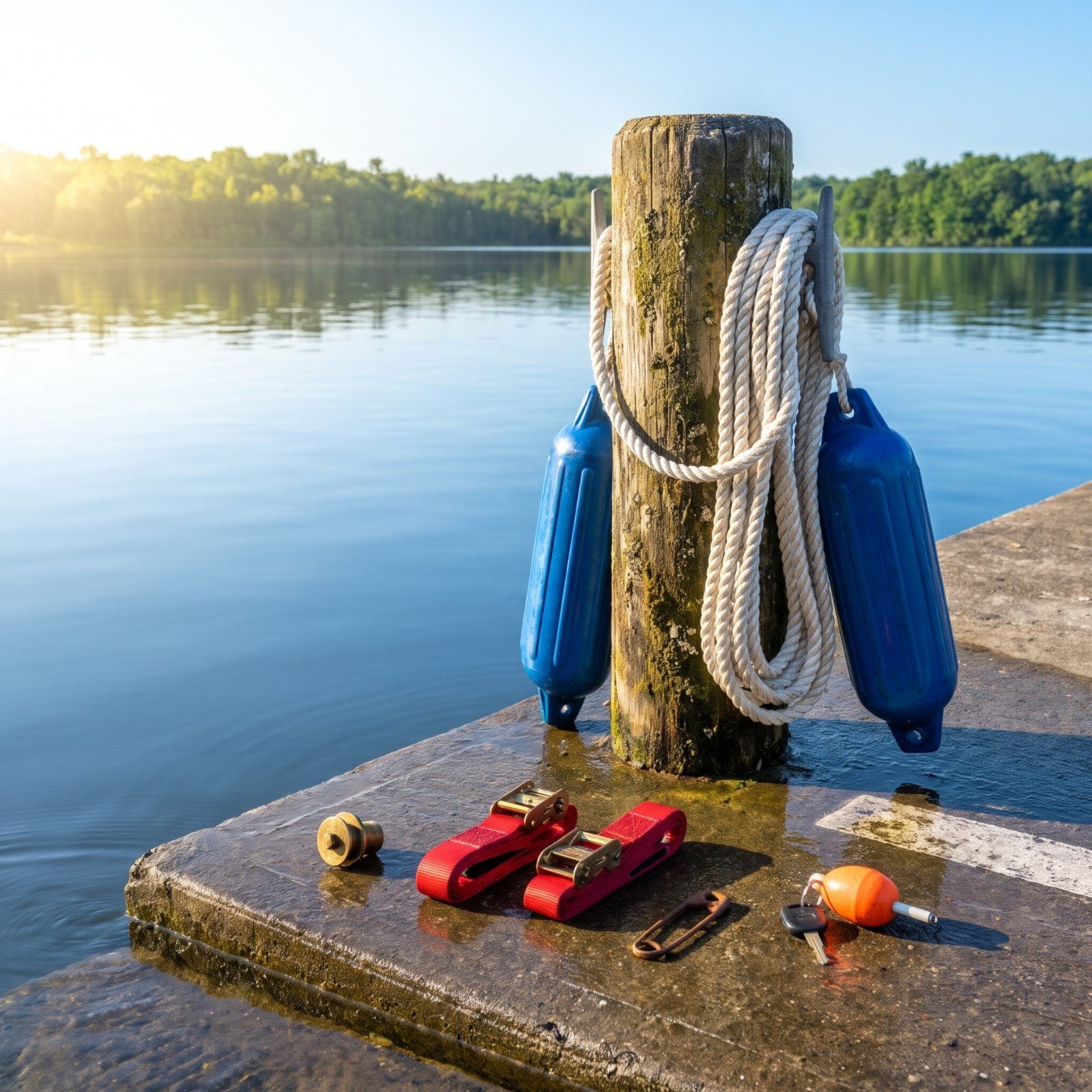
Nothing turns a calm Saturday morning into a parking-lot standoff faster than one rig fumbling on the ramp while six trailers idle behind it. The ramp is the one place on the water where everybody watches everybody, and the guy who forgets the drain plug becomes the morning’s cautionary tale. Most of it comes down to doing the right things in the right order, in the right spot, before you ever back a wheel toward the water. Get the sequence down and you glide in, glide out, and leave the dock crowd wondering how you made it look so easy.
Please note that some of the imagery in this article may have been enhanced with the assistance of AI.
42. Do All Your Launch Prep in the Staging Area, Not on the Ramp
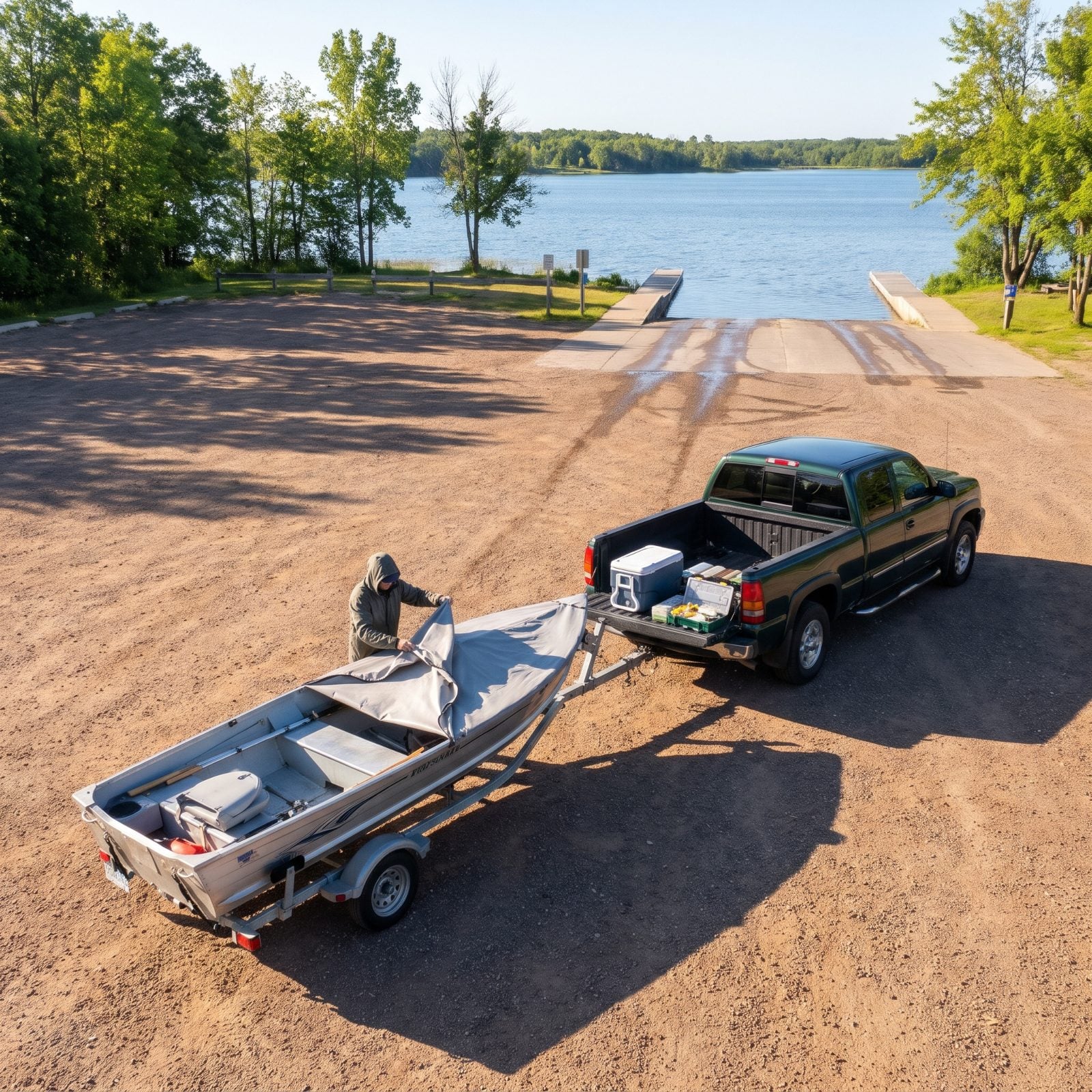
The ramp is a doorway, not a workspace. Everything you can do away from the water, you should have already done: cover off, cooler loaded, straps dealt with, rods stowed, fenders out. Pull into the staging area first, knock it all out there, then take your lane with a boat that’s ready to touch water in under two minutes.
The rig that backs down and then starts rummaging for life jackets is why the line grows. One holiday weekend we watched a fellow spend eleven full minutes loading groceries at the bottom of a packed ramp. Don’t be that morning’s story.
41. Put the Drain Plug In Before the Trailer Touches Water
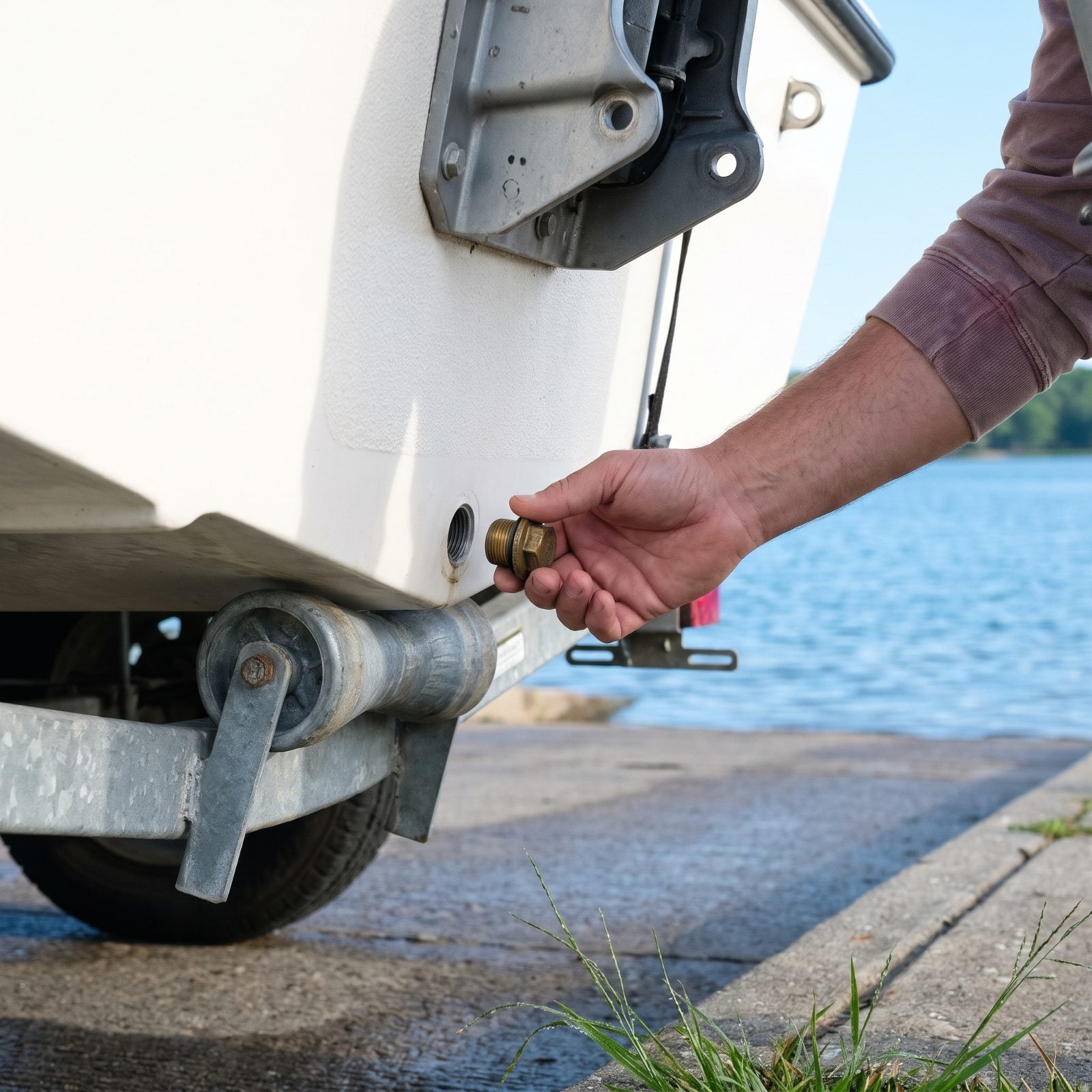
Every boater has a drain-plug story, and most of them end with somebody bailing frantically in the parking lot. That little plug is all that stands between a dry boat and a bilge filling from the bottom up.
Thread it in while you’re still in the staging area, where you can see it, reach it, and double-check it. Trust me on this one. The person who swears they’ll never forget is usually the person who forgot last July.
40. Confirm Fuel and Battery Power Before You Claim a Lane
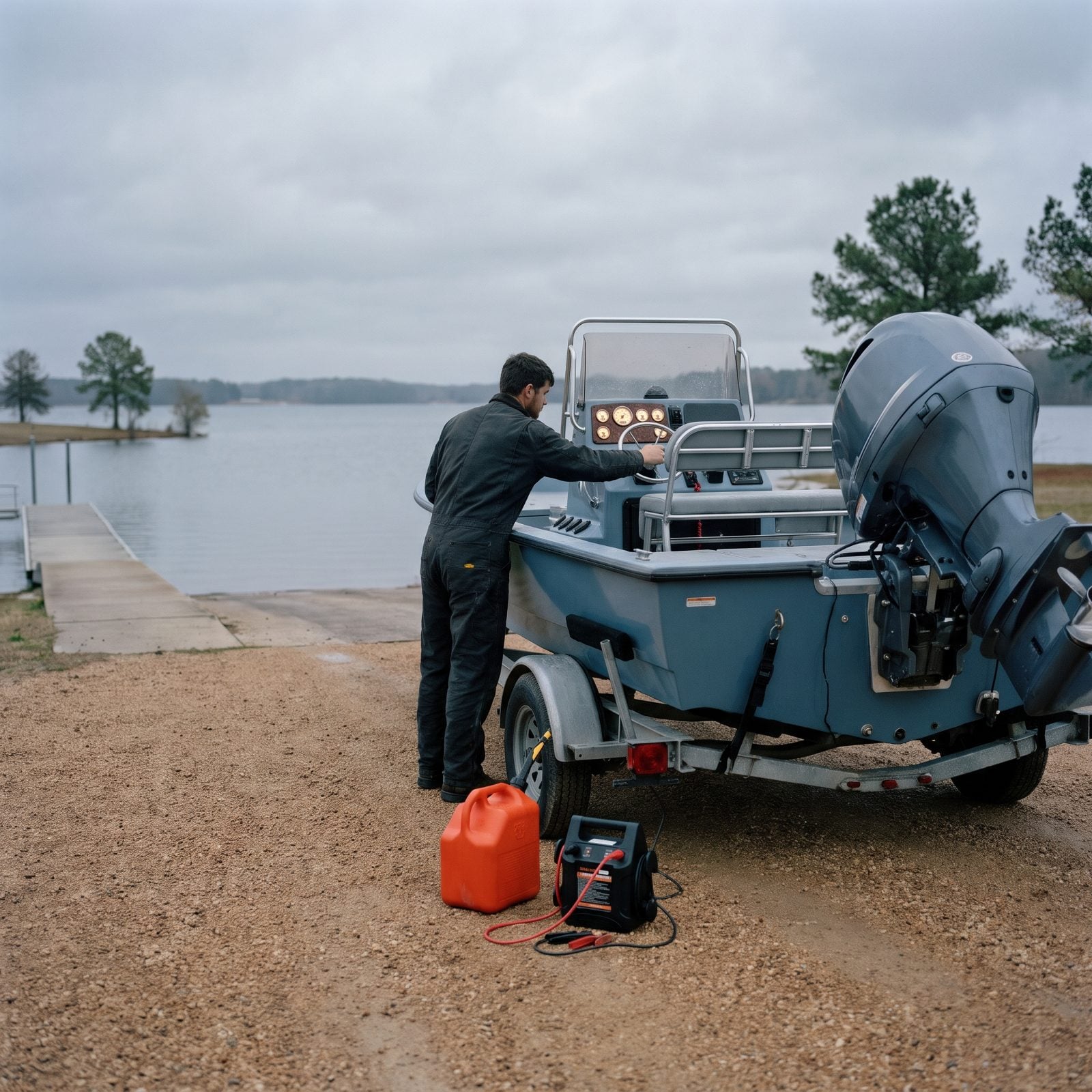
A boat that won’t start is only a nuisance in the staging area. At the bottom of the ramp, half in the water, blocking the only lane on a Sunday afternoon? That’s a disaster everyone behind you remembers.
So turn the key up in staging. Watch the gauges wake up, confirm you’ve got fuel for the day and a battery with the muscle to crank. A trickle-dead battery or a near-empty tank you discover after you back down turns a two-minute launch into a tow-truck afternoon.
39. Scout an Unfamiliar Ramp Before You Back Down the First Time
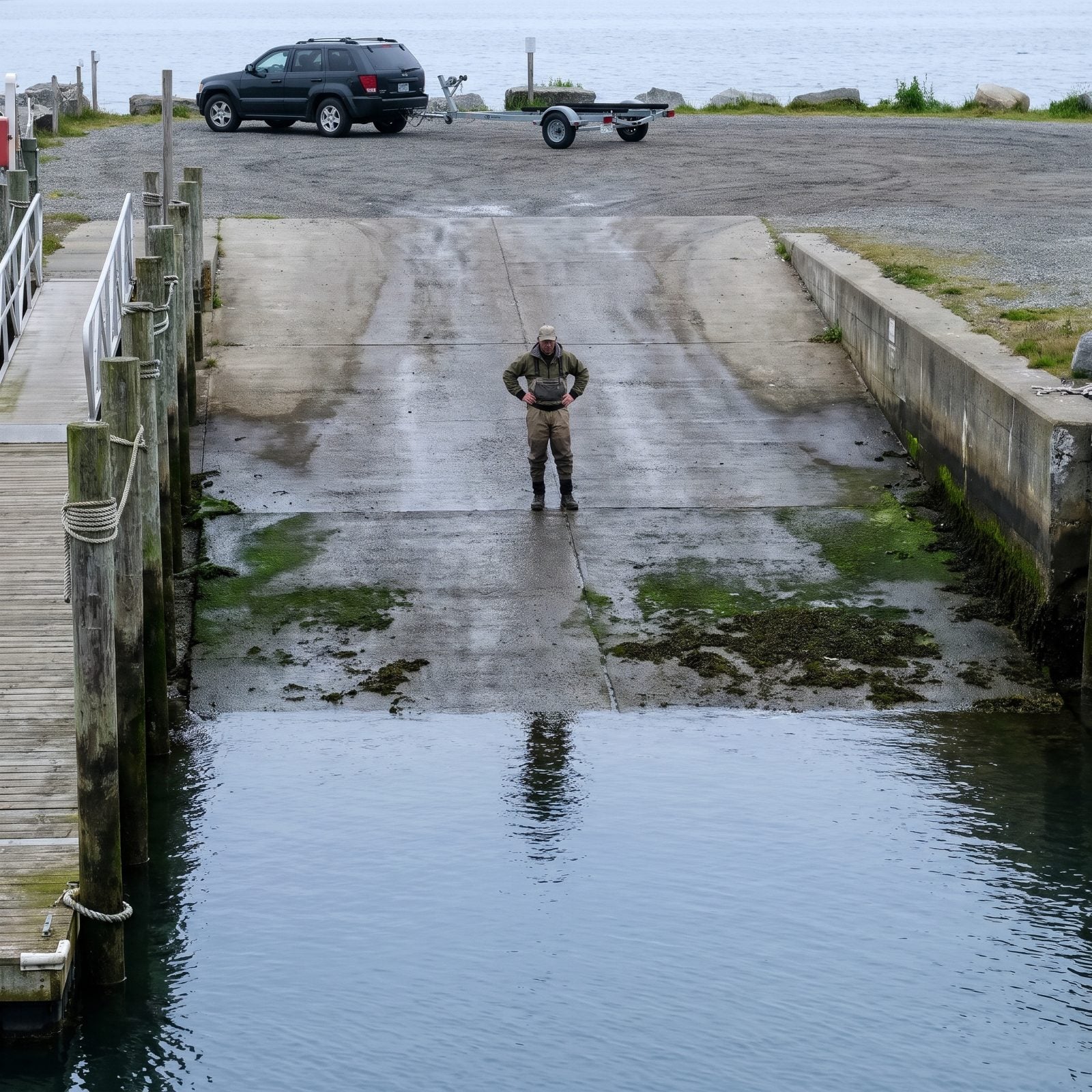
Walk it before you back it. Ramps are not standardized. Some drop off sharply right past the waterline, some have an algae-slick strip that’ll send a tire skating, and some run far shorter than they look from up in the parking lot.
Step out and look at where the concrete ends. Check the slope, spot where the water gets deep. Thirty seconds of scouting beats discovering the drop-off with your rear axle. On a steep or weed-grown ramp especially, knowing where the grip quits is the difference between a clean launch and a bad afternoon.
38. Pull the Transom Tie-Downs Before You Reverse Into the Water
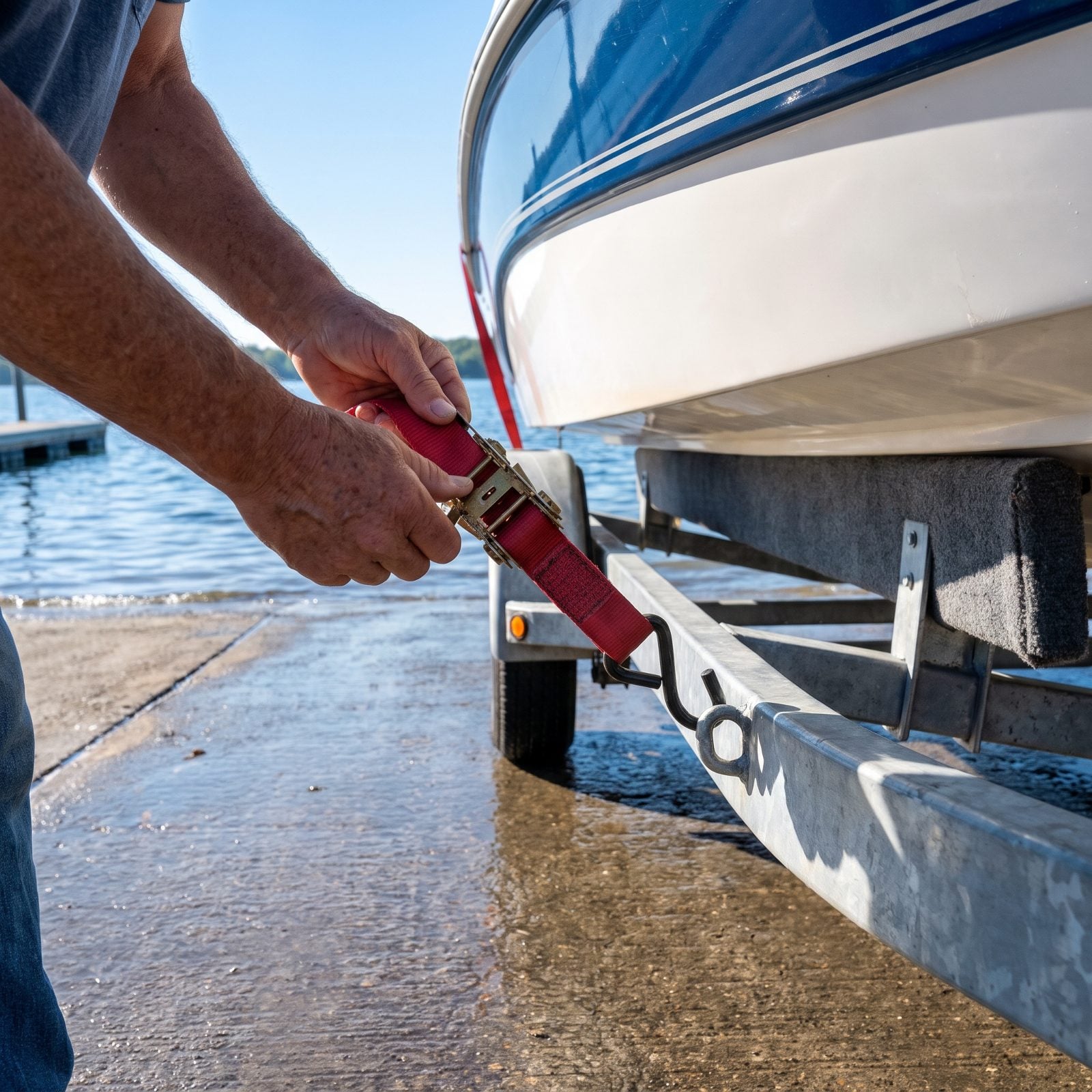
Transom straps hold the back of the boat snug to the trailer on the highway. At the ramp they do nothing useful except keep your boat stuck to the trailer right when you want it to float free.
Release them at the water’s edge, before the trailer goes in any deeper, bow strap still firmly attached. The classic rookie move? Backing all the way down, then standing knee-deep trying to unclip a strap under tension while the line behind you grows. Handle it at the edge of the shallows, before you back in any farther.
37. Keep the Bow Winch Strap Hooked Until the Boat Floats
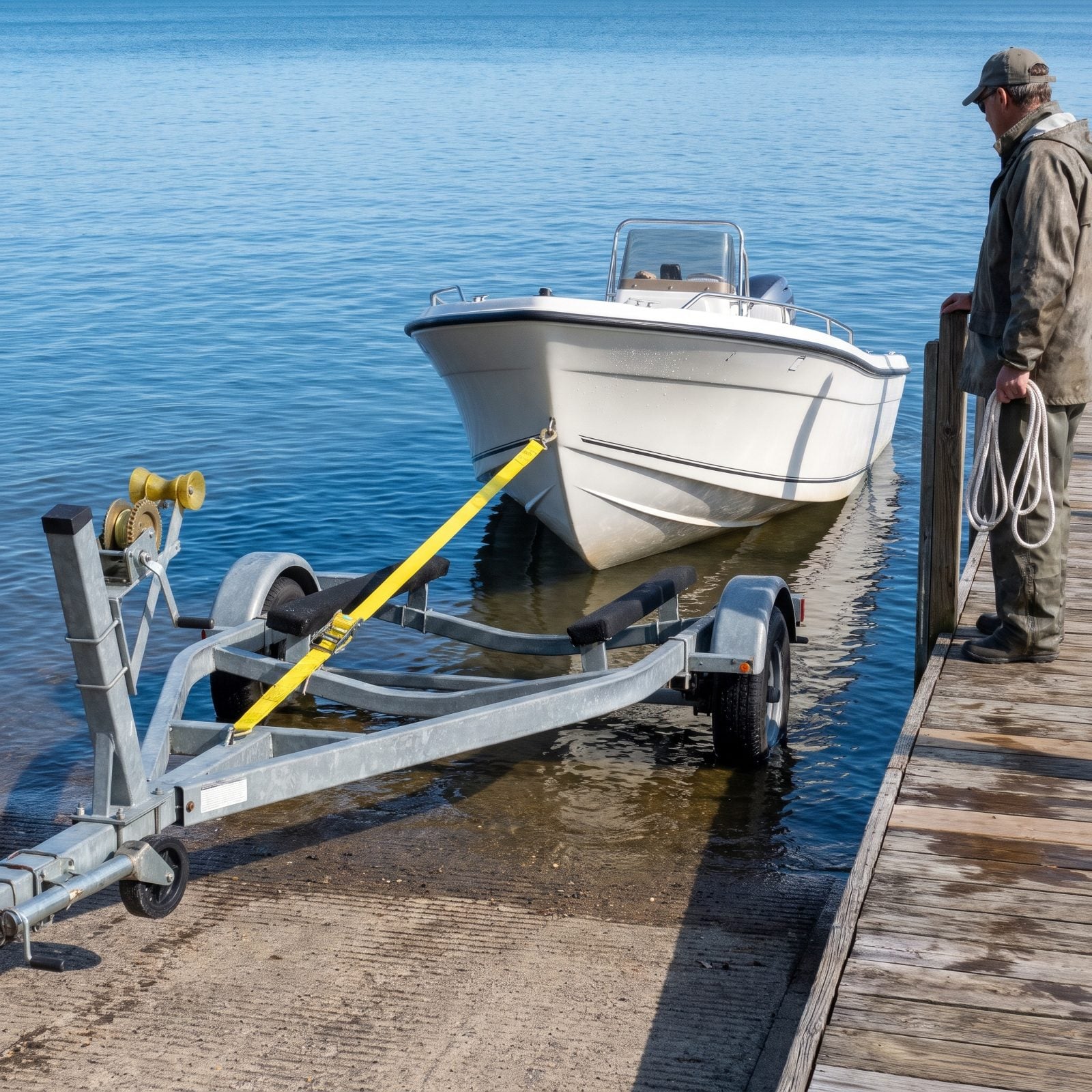
The bow winch strap is the last thing you release, never the first. It’s the one tether keeping your boat connected to the trailer until it floats free.
Unhook it too early on a sloped ramp and a wave or a careless shove can send the boat sliding off before it’s floating, grinding the hull or launching it sideways. Wait until the water carries the full weight, control the bow with a dock line, then free the strap with one hand.
36. Rig Your Dock Lines and Fenders Before You Reverse
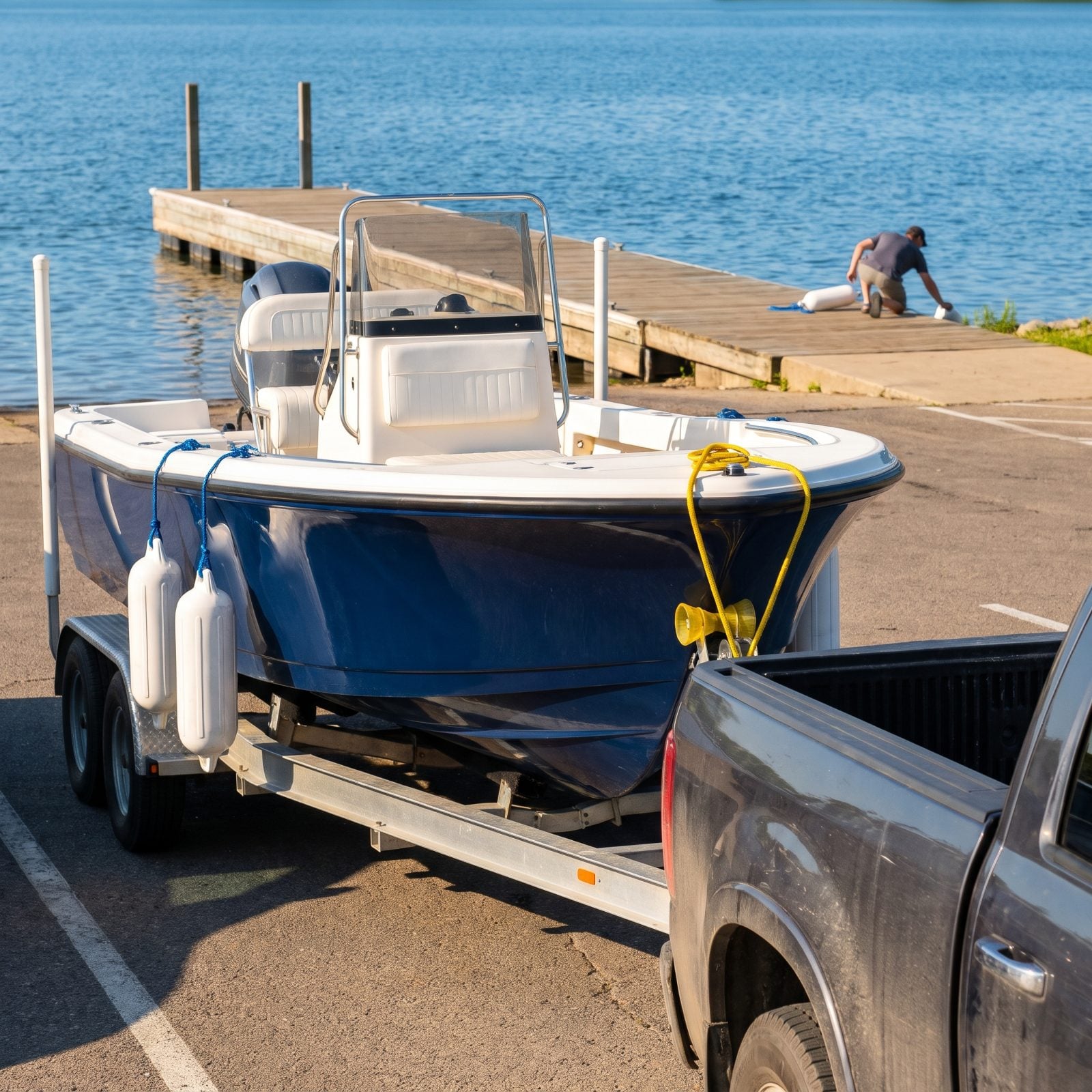
The second your boat floats free, it needs somewhere to go and something to hold it there. That somewhere is the courtesy dock, and a boat with no lines rigged and no fenders out is a boat drifting into the next guy’s hull while you scramble.
Hang the fenders and cleat your lines in staging, before any of it gets wet. Then launch, walk the boat over to the dock, tie off in seconds, and go park the trailer without leaving your boat banging against the pilings.
35. Trim the Outboard So the Skeg Can’t Scrape the Ramp
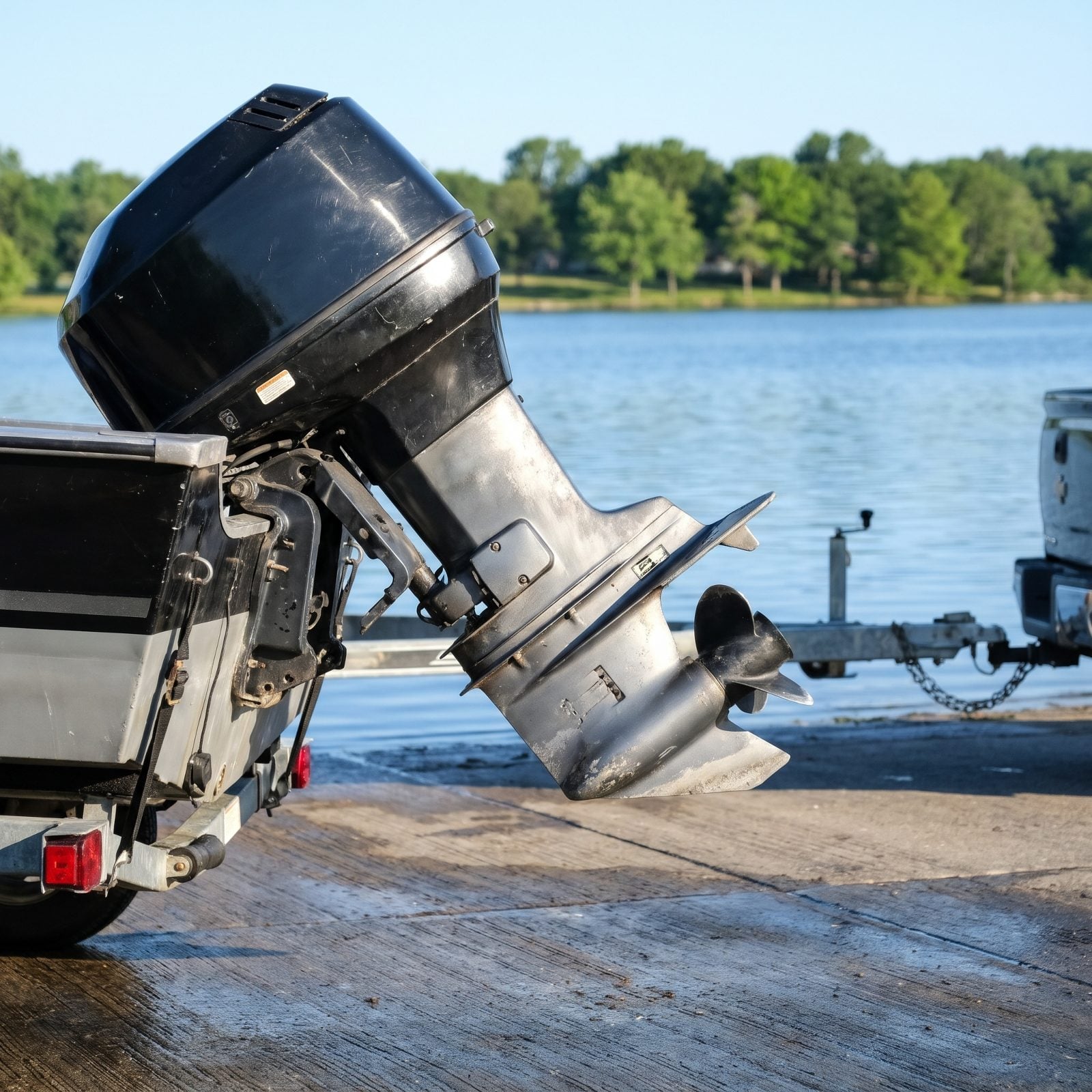
The skeg is that little fin at the bottom of your lower unit, and it’s the first thing to catch concrete on a shallow or long ramp. Drag it across the ramp and you can bend it, crack the gearcase housing, or worse.
Trim the motor up before you back down, far enough that the lower unit clears the ramp but not so far it flops over. A flat ramp may need the trailer deeper to float off cleanly, which makes that skeg clearance matter even more.
34. Wait Your Turn and Never Cut the Launch Queue
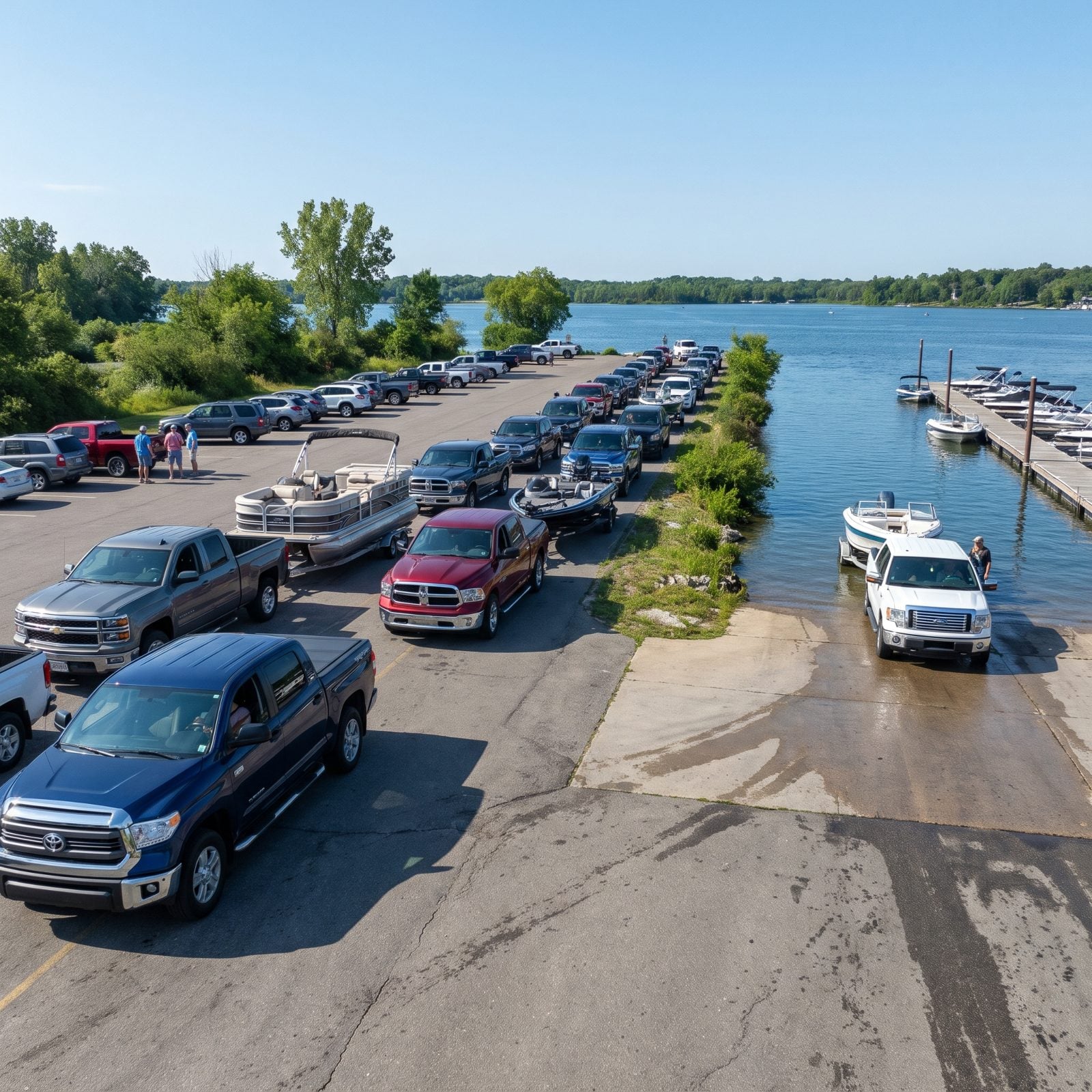
Ramp lines run on an honor system, and it works beautifully until one person decides their day matters more than everyone else’s. Form up behind the last rig, keep an eye on who arrived when, and take your lane in order.
Nothing sours a marina crowd faster than someone swinging around the queue to grab an open lane that wasn’t theirs. People remember faces at their home ramp. Be the boater folks are glad to see, not the one they warn each other about.
33. Use One Launch Lane per Rig, Not Two
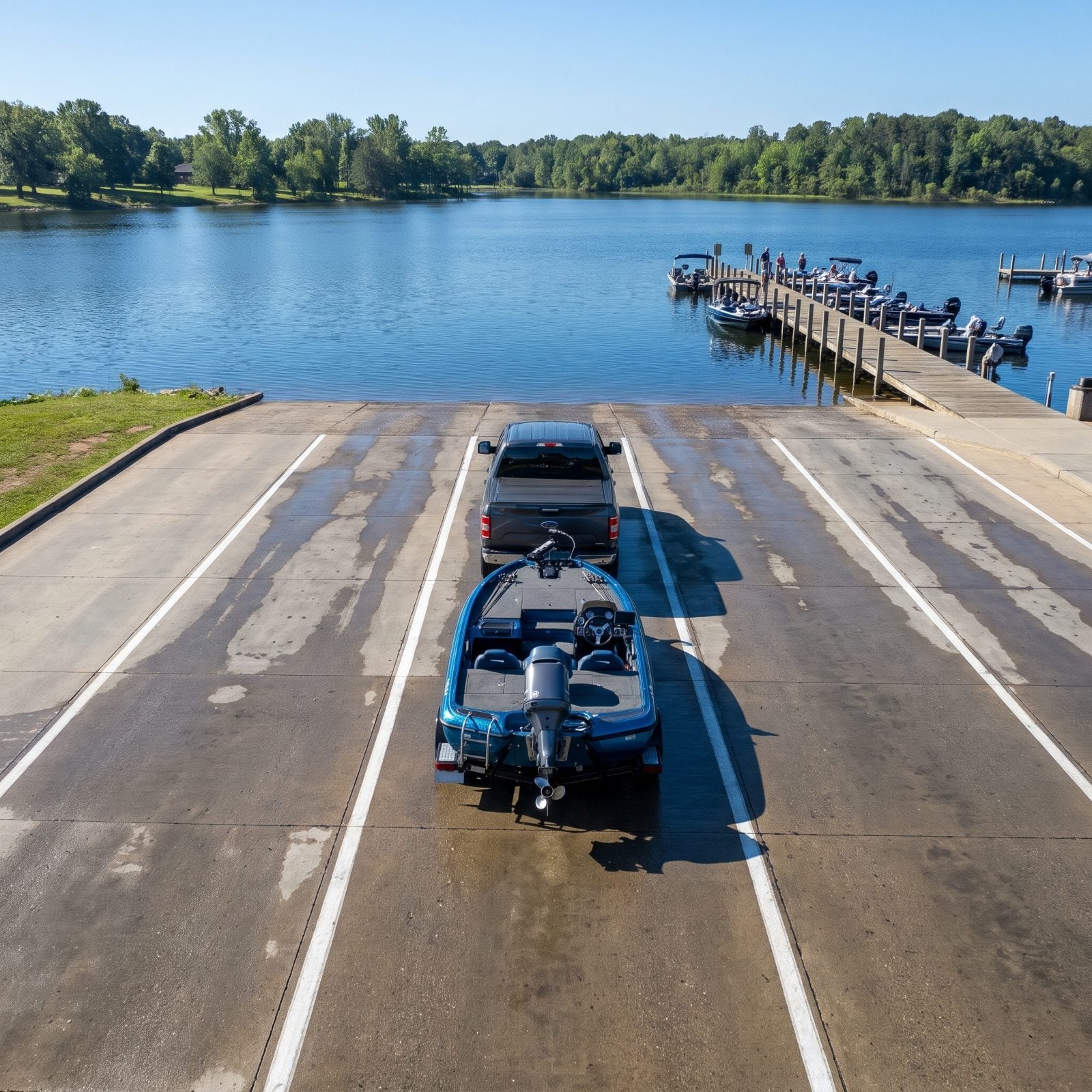
Ramps with multiple lanes exist so multiple boats can launch at once. Straddle two lanes with a sloppy back-down and you’ve just halved the ramp’s capacity for everyone waiting behind you.
Line up with the painted markings, keep your rig square in the center of your lane, and keep your trailer tight inside its lines. A clean, square approach loads and unloads faster too. Leave that neighboring lane open and the person in it will return the favor next time.
32. Use a Spotter When Visibility Is Limited
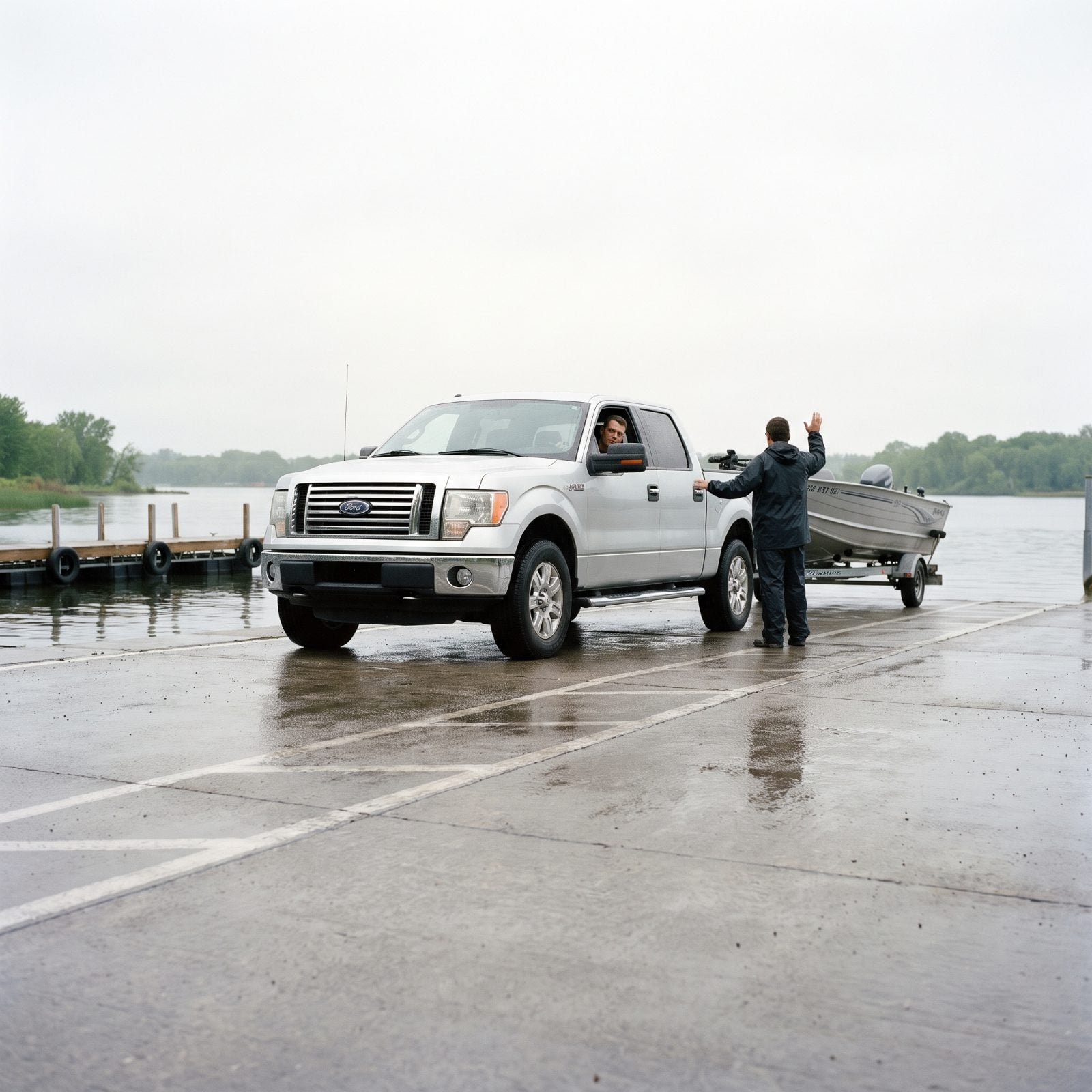
A trailer blocks more than you think. Backing an 18-foot boat means a long slab of fiberglass and galvanized steel parked exactly where your mirrors give up.
A spotter fixes that in two seconds. One person up by the driver’s window, tossing simple hand signals, catches the stray dock cleat, the kid on a bike, the pickup creeping up the next lane over. Agree on the signals first. Fist means stop, flat palm means keep coming — and don’t shout over the engine and hope for the best.
31. Never Stand Between the Trailer and Tow Vehicle
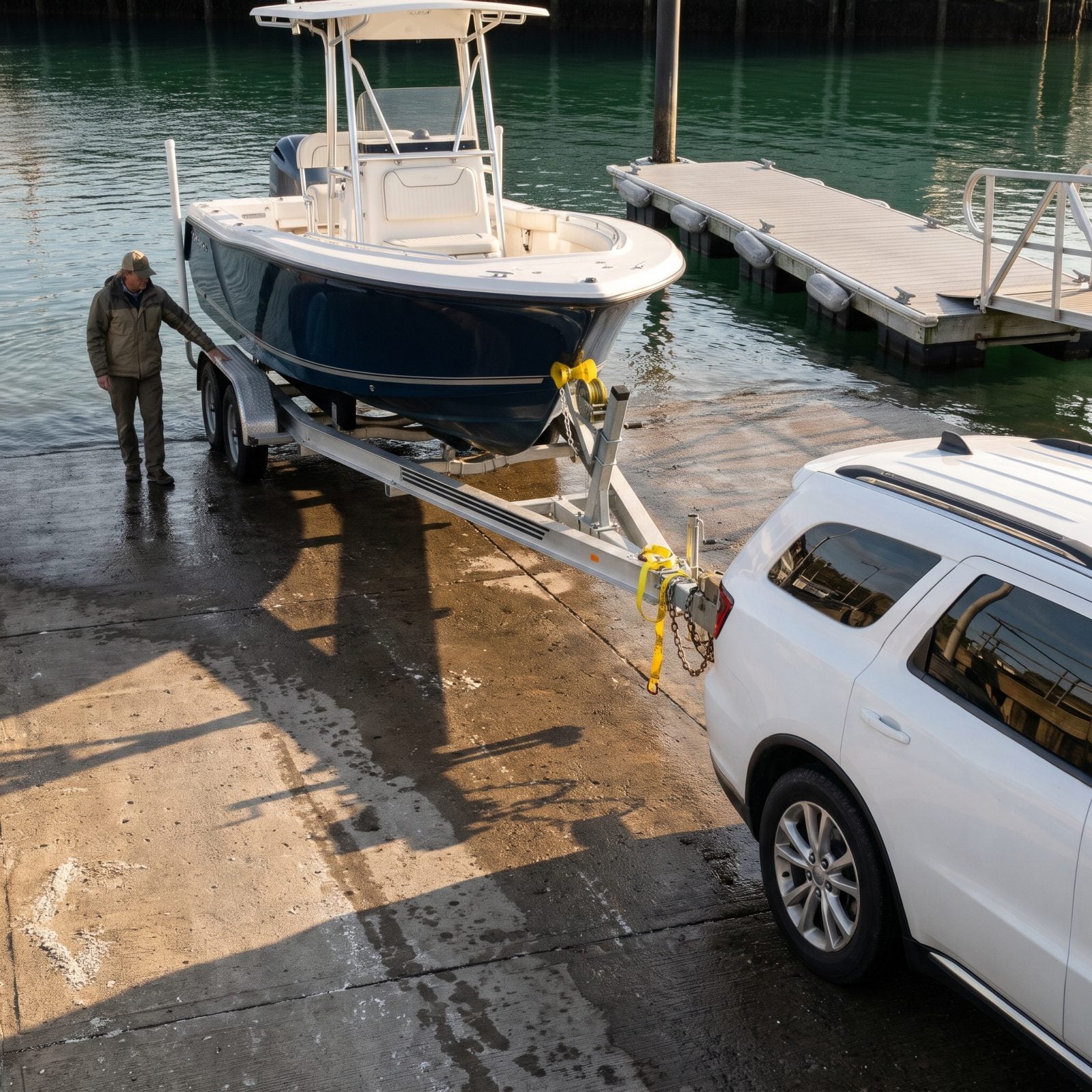
That gap between your bumper and the trailer tongue is a trap. Tow vehicles roll on wet ramps, brakes slip on algae, and a boat that shifts on its bunks moves fast — a couple thousand pounds of it.
So do your coupling and uncoupling from the side, hands on the fender, feet well clear of the pinch zone. Hook the winch strap standing beside the tongue, never straddling it. The job takes the same amount of time either way. One way just doesn’t end with your leg under a trailer.
30. Keep Children and Pets Out of Ramp Traffic
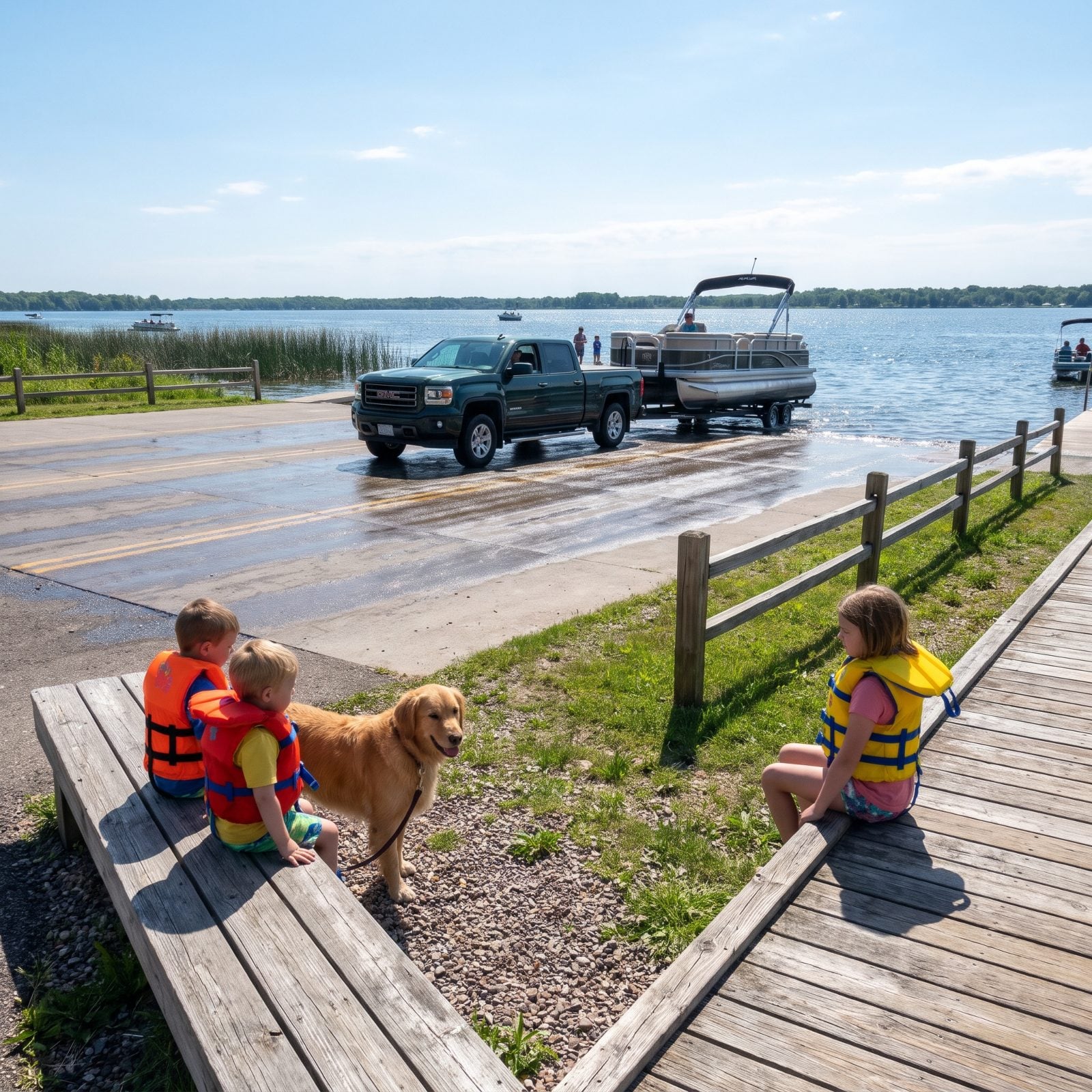
A boat ramp is a loading dock with water at the bottom. Trucks reverse with blind spots, trailers swing, and nobody is scanning the pavement for a toddler.
Give the kids and dogs a job somewhere else. A bench on the dock, a patch of grass up the hill, inside the cab with a window cracked — anywhere but the lane.
We’ve watched a perfectly careful backing stop cold because a spaniel decided the ramp looked fun. The driver did everything right. The dog nearly didn’t.
29. Use Parking Lights Instead of Blinding Headlights at Night
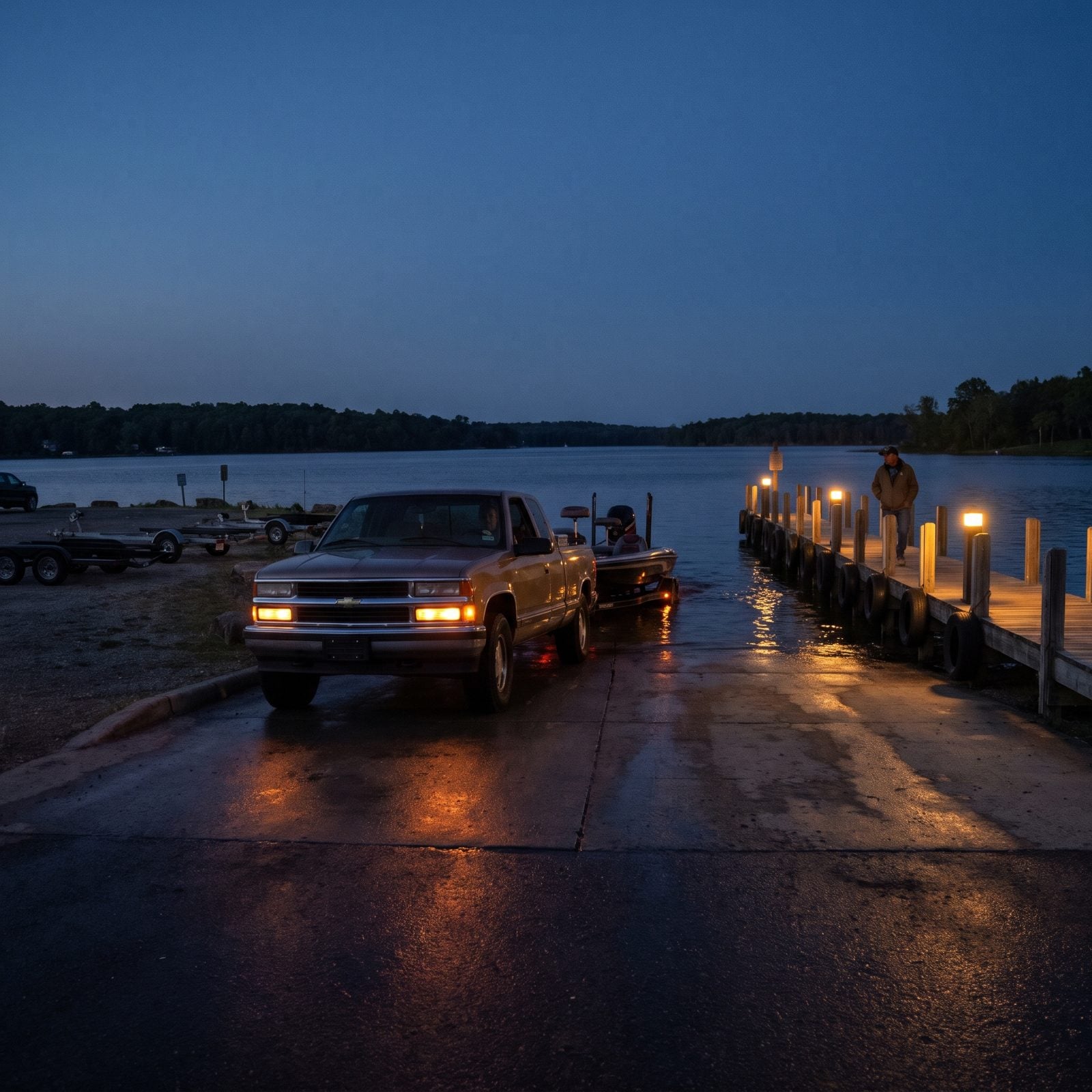
Full headlights at a night ramp wreck everyone’s vision. Aim them at the water and you’ve blinded the person trying to dock a boat they can barely see already. Aim them up the lanes and you’ve done the same to the guy backing in beside you.
Switch to parking lights once you’re lined up. Add running lights or a low dock light if you need to eyeball the coupler. Your dark-adapted eyes are the whole game out here, and one blast of high beams resets everyone’s for a full minute. That’s a long time with a boat drifting loose.
28. Reverse Slowly and Predictably
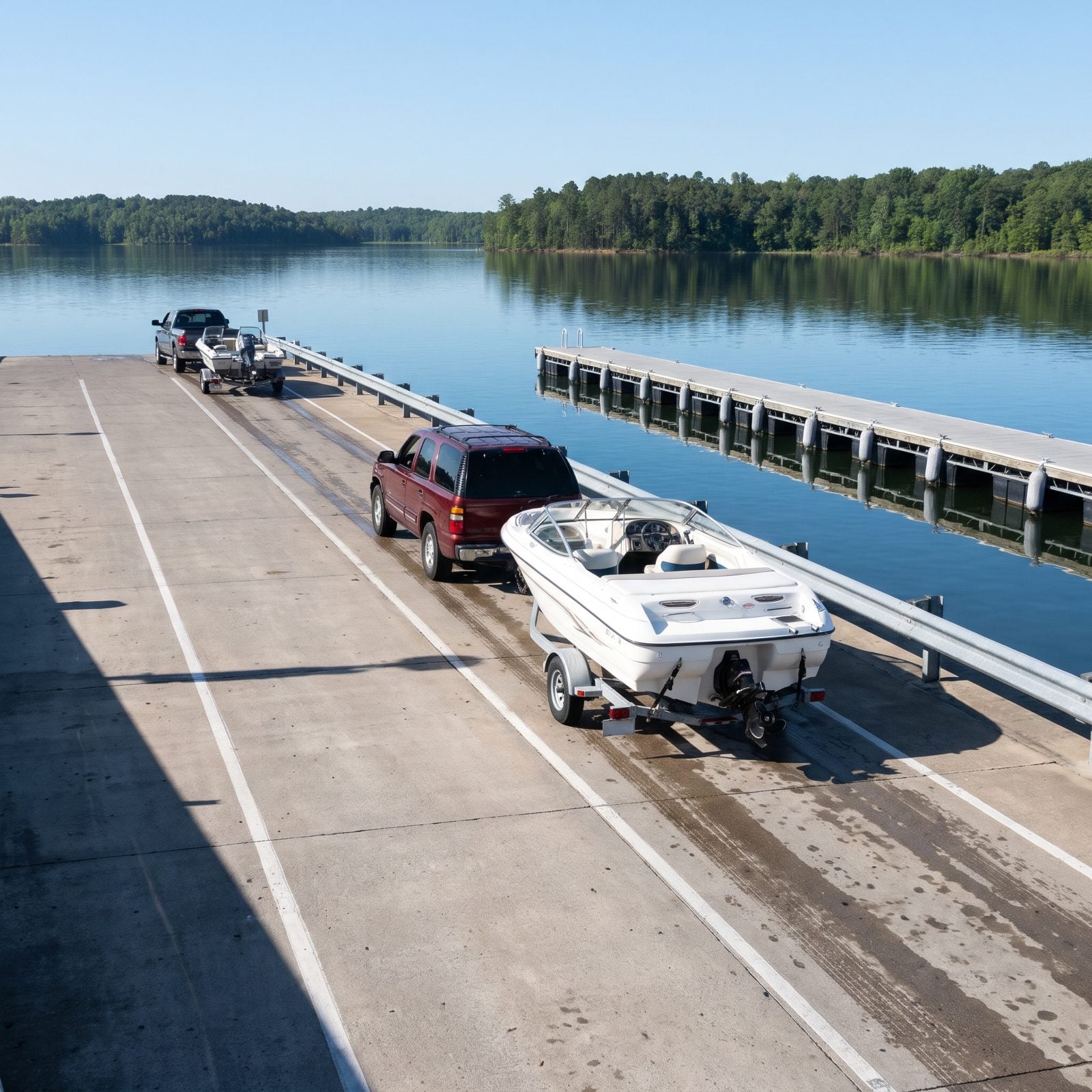
Speed doesn’t help you back a trailer. It just makes your mistakes arrive sooner. Jackknife at a crawl and it’s a quick correction; jackknife it fast and it’s a story people tell in the parking lot.
Small steering inputs, slow roll, and if the trailer starts walking sideways, pull forward and reset. No shame in that. Everyone at the ramp has done it. The driver who tries to muscle a bad angle is the one holding up four boats behind him.
27. Do Not Back the Tow Vehicle Deeper Than Necessary
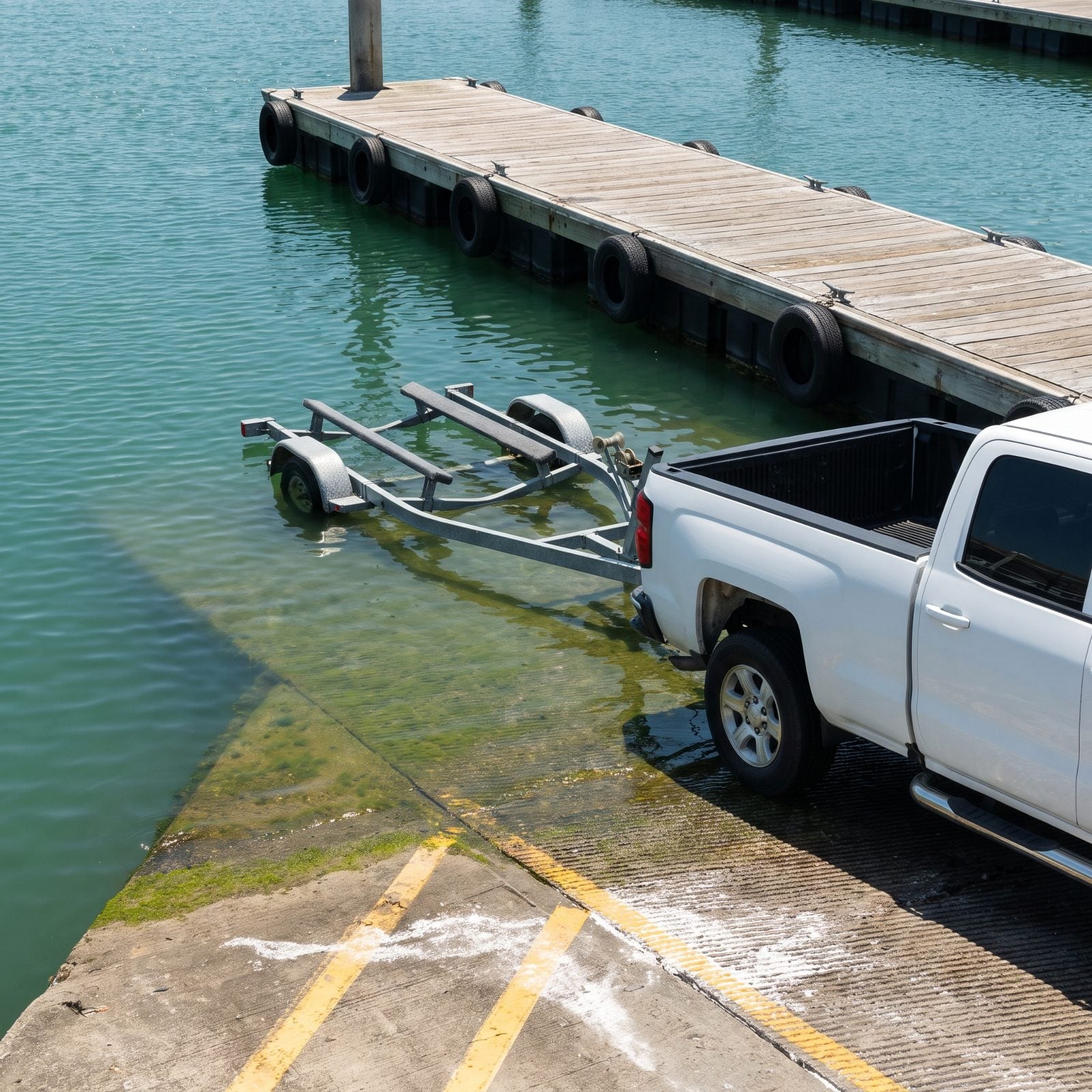
You want the trailer bunks in the water, not your rear axle. Back too deep and three things go wrong at once.
- Your exhaust and brakes take a saltwater bath they’ll remember for years.
- The ramp drops off at the end and your rear tires lose grip on slick concrete.
- The boat can float off before you’re ready for it to.
Watch where the water meets the wet concrete. Stop when the fenders are under and the bunks are wet. Deeper isn’t easier — deeper is how a truck ends up getting winched out by a kind stranger with a chain.
26. Put the Vehicle in Park and Set the Parking Brake
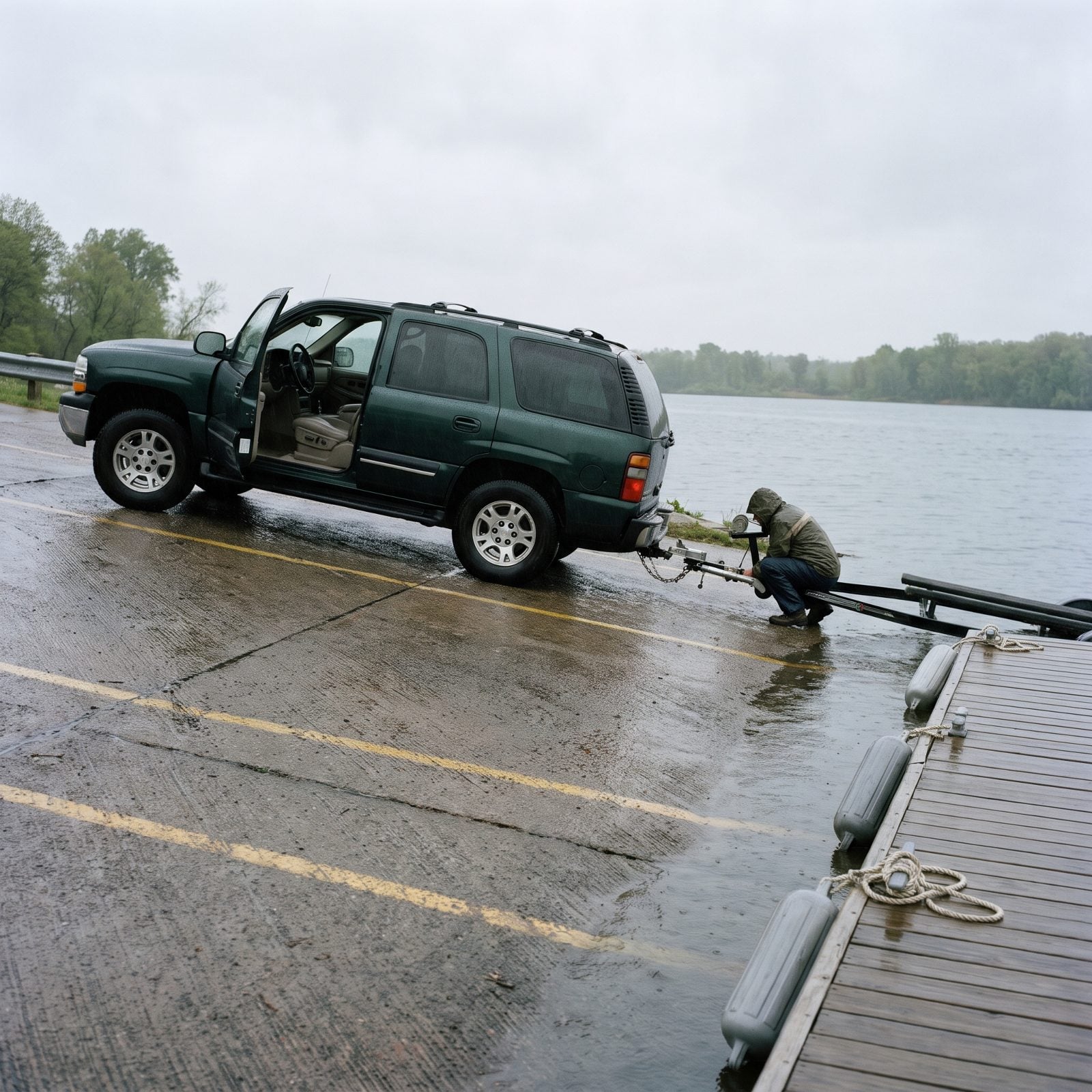
A ramp is a slope by definition. Gravity is always on, and it is very patient.
Before you step out, drop it in Park and set the parking brake. Every time. The one time you skip it is the time the automatic creeps backward while you’re at the stern wrestling a strap, and a truck going for a swim ruins your day and blocks the ramp for everyone behind you.
25. Attach a Control Line Before the Boat Floats Free
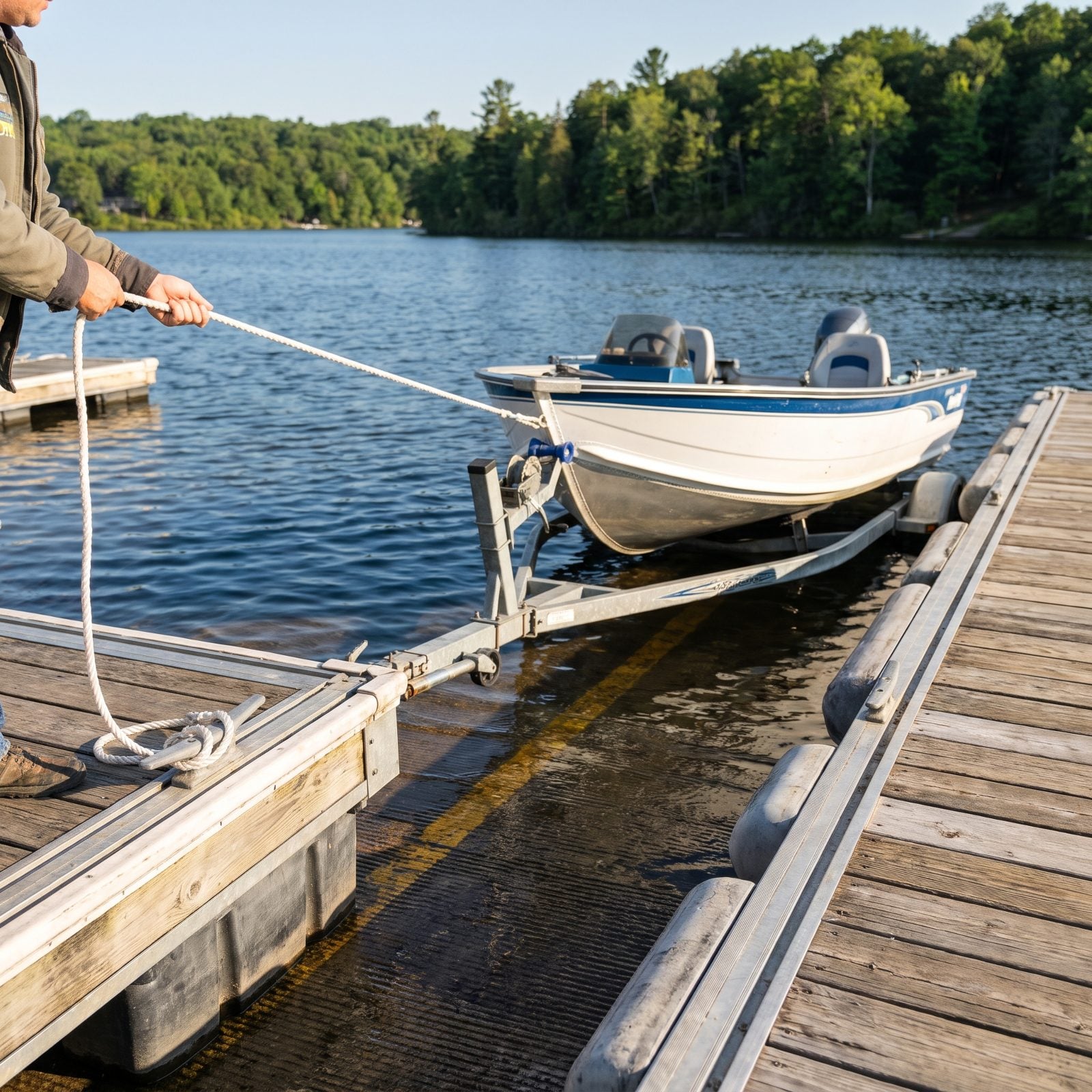
A boat off its trailer has a mind of its own. Wind catches it, current walks it sideways, and in ten seconds it’s twenty feet from the dock while you stand there watching it go.
Clip or cleat a bow line before the hull floats free. Hand it to your spotter, or loop it around a dock cleat. Now the boat goes where you want. We’ve seen a solo launcher sprint down a dock chasing a drifting boat in flip-flops, and nobody wants to be remembered that way.
24. Confirm the Engine Runs Before Releasing the Bow
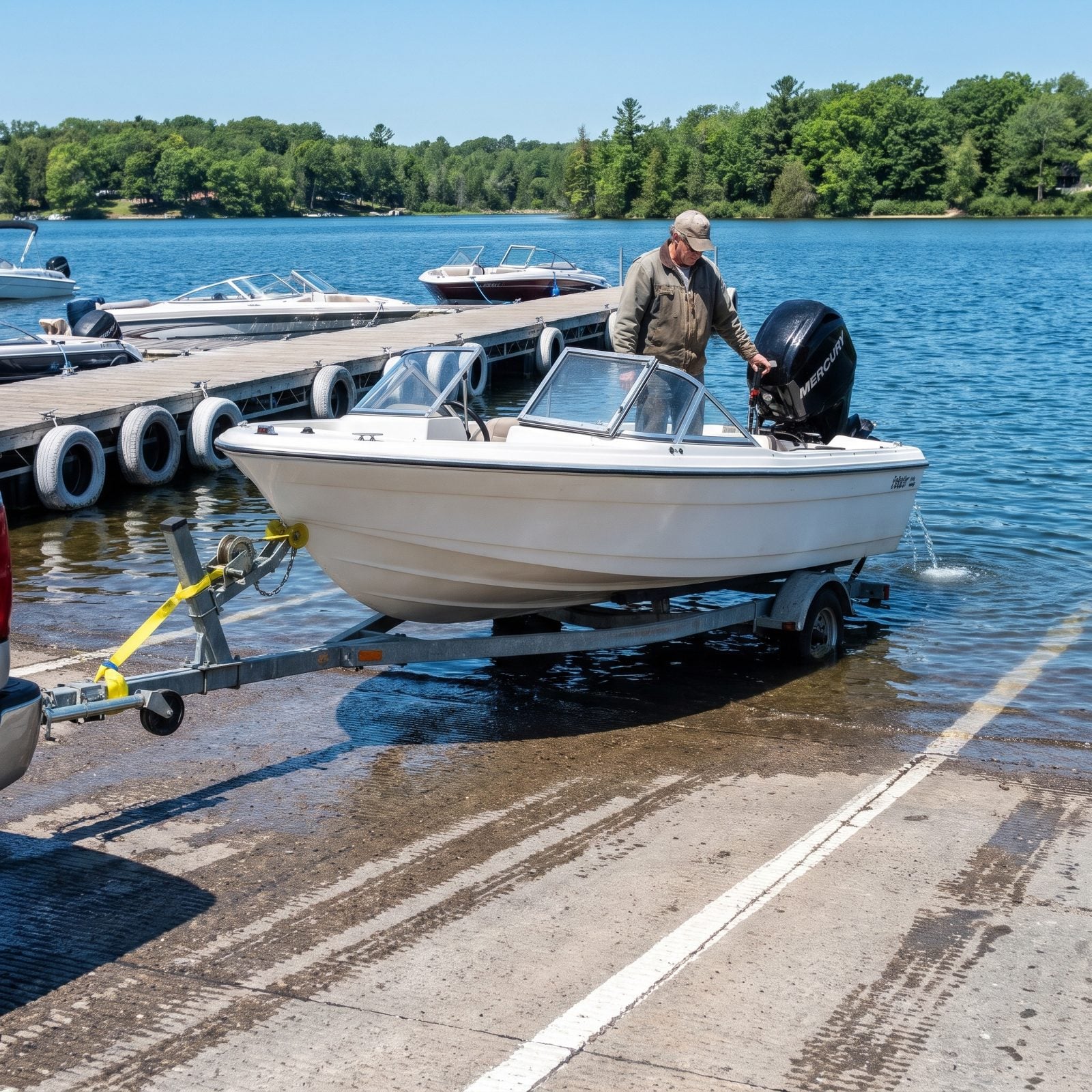
Here’s the order that saves you. Start the engine while the boat is still tied to the trailer, watch for the telltale stream of cooling water, let it idle a few seconds, then release the bow.
Do it backwards and you’ll learn the hard way that your engine won’t catch — with the boat already drifting toward the rocks or the next lane. A boat with a dead motor and no line is just a very expensive raft. Confirm it runs, then set it loose.
23. Never Power-Launch a Boat Off Its Trailer
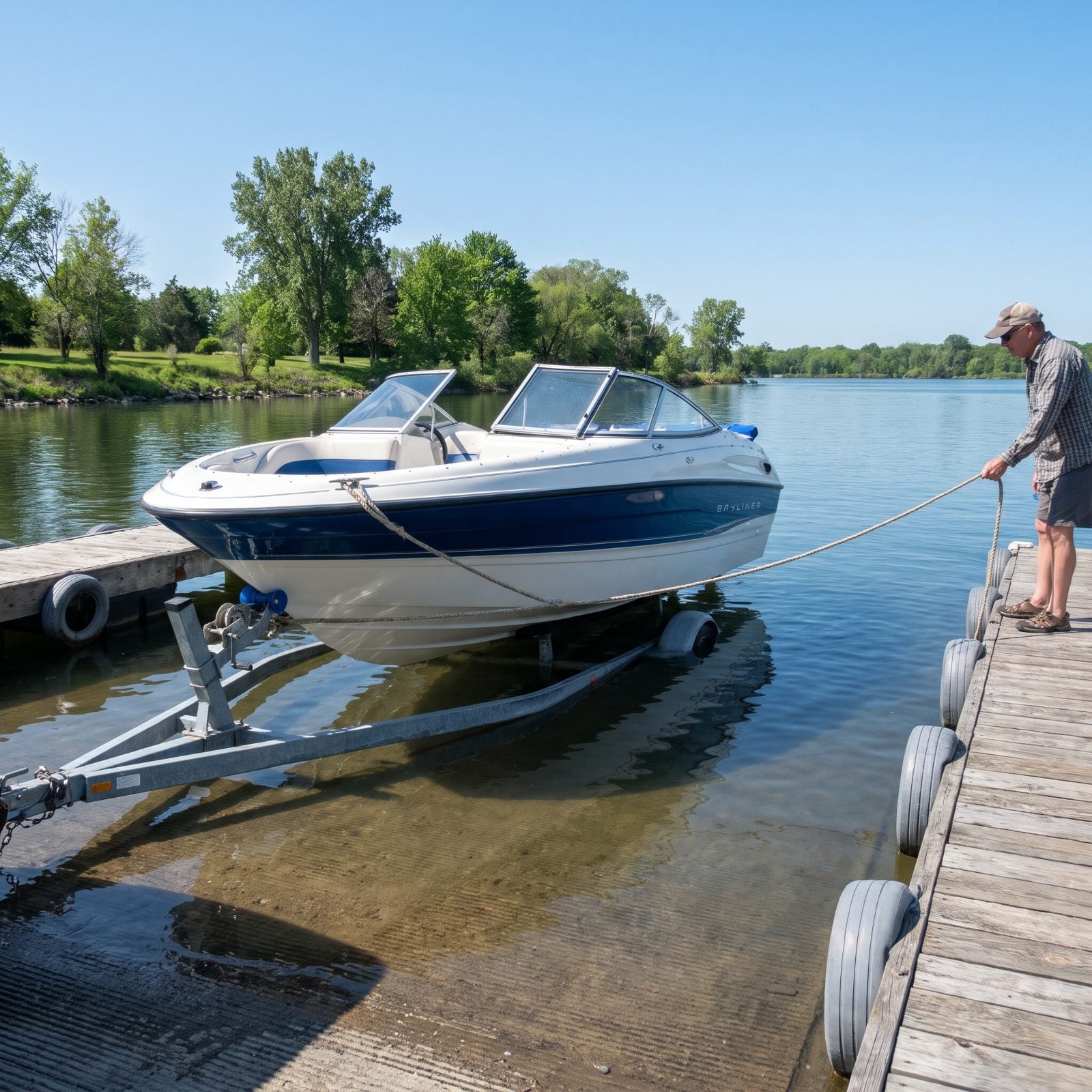
Power-launching means gunning the throttle in reverse to blast the boat off its bunks. It looks fast. It wrecks the ramp.
That prop wash digs a hole at the end of the ramp, and over a season it carves a drop-off deep enough to swallow the next trailer’s wheels. The gouged concrete shortens the usable ramp for everybody, and it throws your hull backward with no line and no control.
Back down to the right depth, give the boat a nudge, and let the water do the work. Some ramps ban the practice outright and will fine you for it. The quiet way is the right way — and your fellow boaters will thank you by not glaring at you from the dock.
22. Observe Idle Speed Around the Ramp
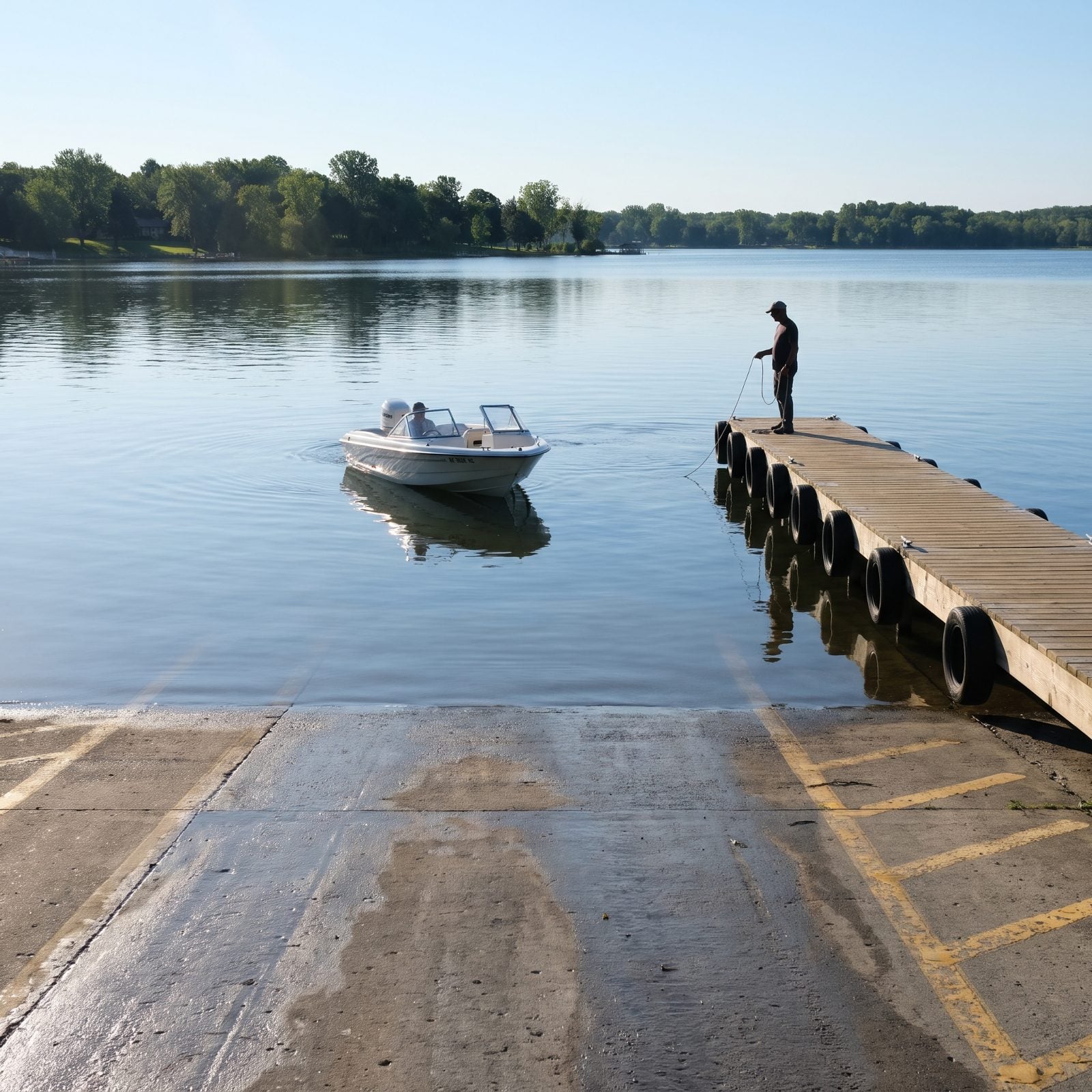
The water right at the ramp is where every mistake gets expensive, so slow it down. A wake you barely feel at the helm turns into a boat slamming its fenders against the dock twenty feet away, and the person loading groceries off a swim platform does not appreciate the ride.
Idle speed means no wake, no throttle surges, no showing off the holeshot in a crowded cove. You’re sharing a confined space with loaded trailers, kids on the dock and other skippers trying to line up on a bunk. Treat the whole ramp area like a parking lot, not a racetrack.
21. Keep the Propeller Clear of People and Loose Lines
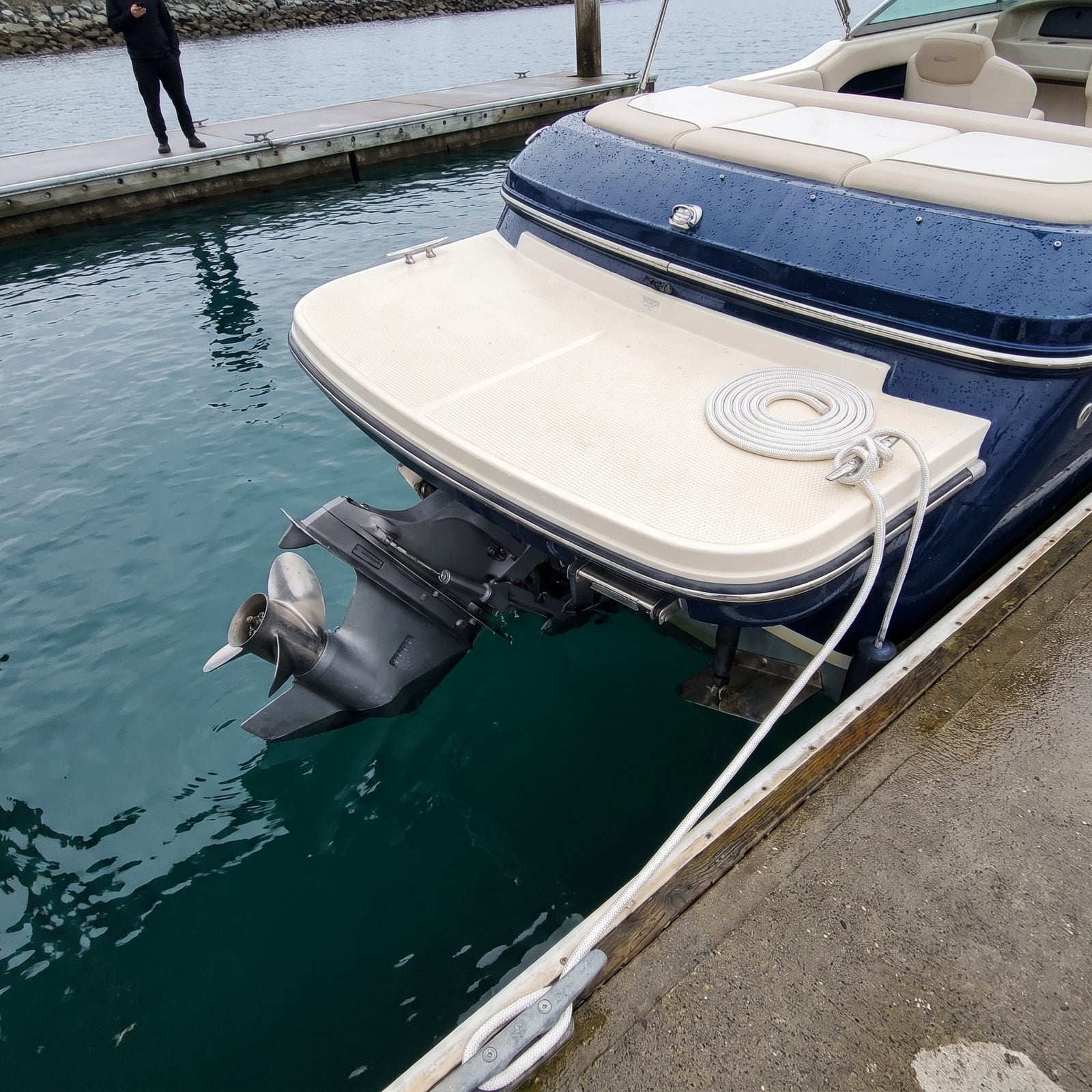
A spinning propeller near a dock is the quietest danger on the ramp, and the one people forget fastest. Before anyone steps back to the stern, kill the engine. Not neutral. Off.
Loose lines are the sneaky part. A dock line trailing in the water finds its way to the prop the second you bump into gear, and now you’ve got a wrapped line, a stalled engine and a boat drifting sideways into the dock. Coil your lines and keep them on deck until you actually need them. Fingers and feet stay clear of the lower unit, always.
20. Keep Prop Wash Off Nearby Boats and Shorelines
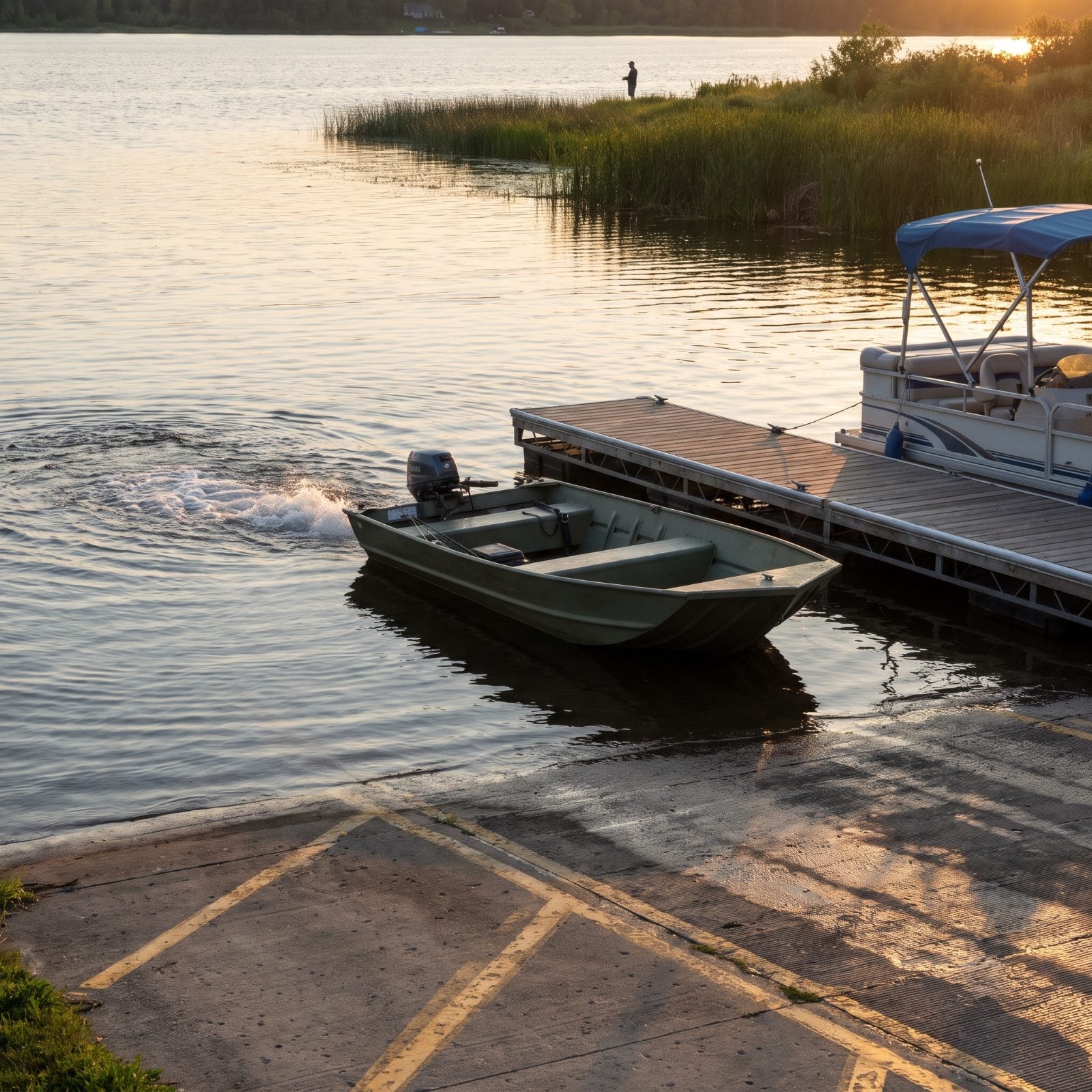
Prop wash does damage you never see coming. Gun the throttle to pull off the dock and you blast silt off the bottom, stir up muck, and rock the boats tied around you like a bath toy.
Shorelines take the hit too. Hit the throttle hard near a bank over and over and it erodes, churning up sediment that smothers the plants fish need to live. Ease off the dock gently, let the boat gather way on its own, and point your wash toward open water instead of the pontoon somebody just finished loading. The slow exit costs you ten seconds and saves everyone else a headache.
19. Move to the Courtesy Dock and Clear the Launch Dock Before Parking
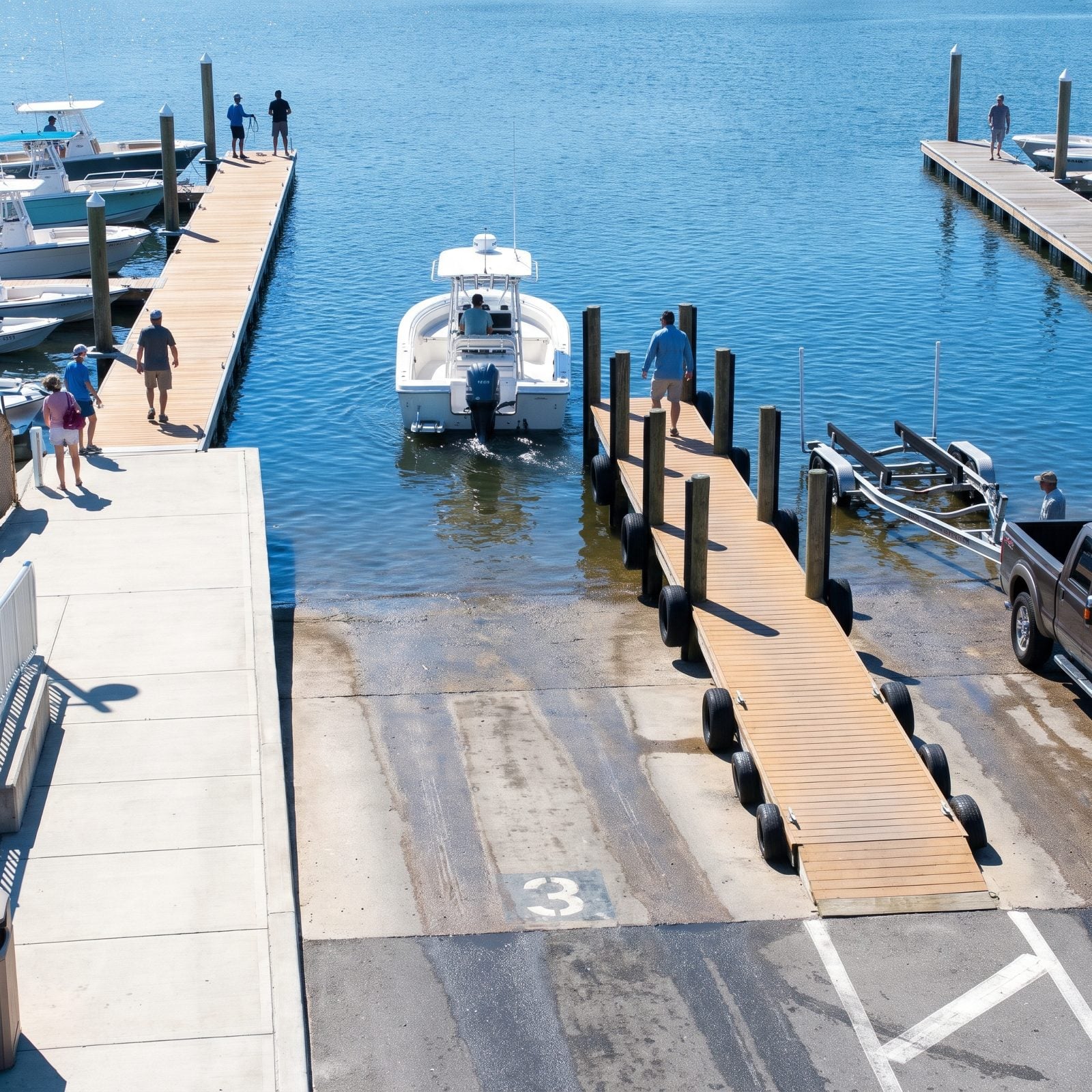
The launch dock is a conveyor belt, not a parking lot. That spot right next to the ramp exists so one boat can unload passengers and gear, then get out of the way for the next rig backing down.
Once your boat is in the water and running, walk it over to the courtesy dock, the longer tie-up area meant for staging. That frees the launch dock immediately, and the driver who just parked the truck and trailer can hop aboard there instead of hovering offshore watching you reorganize cooler bags. Launch, clear, then relax. In that order.
18. Clear the Ramp Before Organizing Gear or Passengers
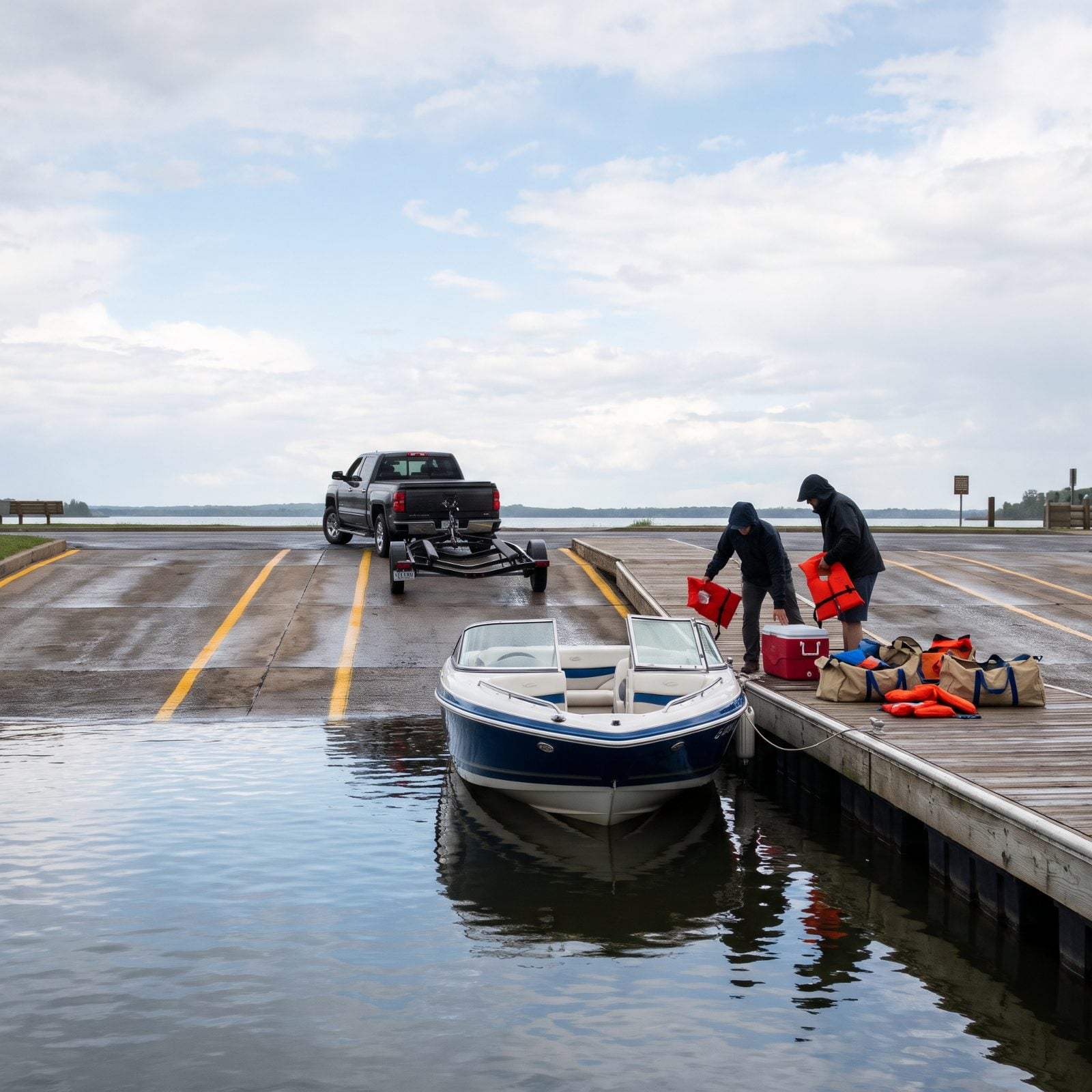
Nobody should be rigging a fishing setup on the ramp. Yet it happens every weekend: boat in the water, driver nowhere near the truck, and the whole family standing on the launch dock sorting sunscreen while three trailers idle in line behind them.
Get the boat off the ramp first. Then load the cooler, buckle the kids into life jackets and dig for the sunglasses over at the courtesy dock, where you’re out of the flow. A ramp is a chokepoint. Every minute you camp on it is a minute somebody else can’t launch, and a holiday morning line builds fast.
17. Keep the Entire Rig Within One Designated Trailer Space
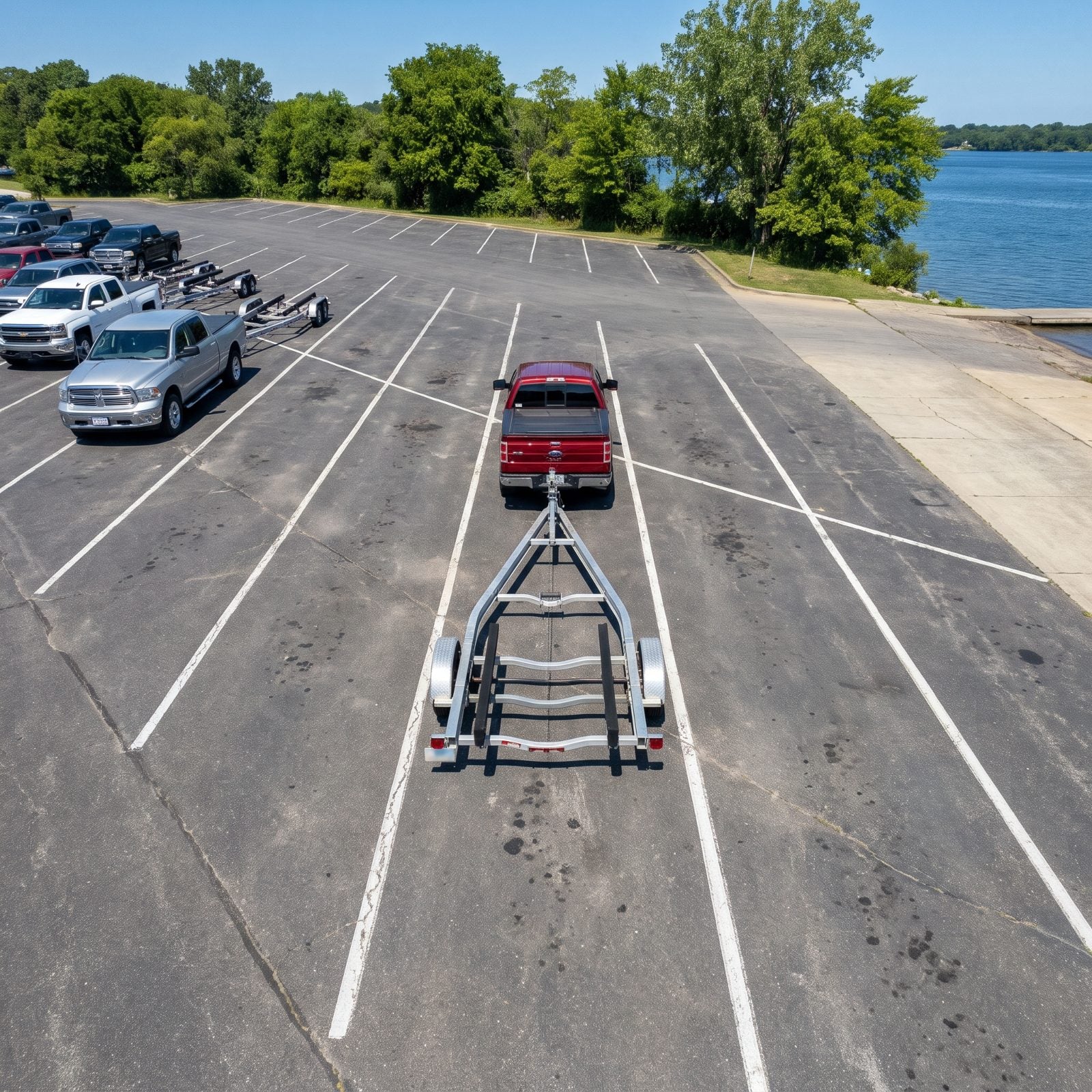
Boat trailer spots are long for a reason. They’re sized to swallow a full-size truck plus a twenty-foot rig, drawn as pull-throughs so you never have to reverse a trailer in a packed lot.
Park inside the lines. One rig, one space. Straddle two spots because you couldn’t be bothered to straighten out, and somebody else circles the lot or parks a quarter mile away with a cooler on each shoulder. Pull all the way forward so the truck nose and trailer tail both sit inside the stripes, and leave the car spots for cars.
16. Do Not Block the Turnaround or Traffic Aisle
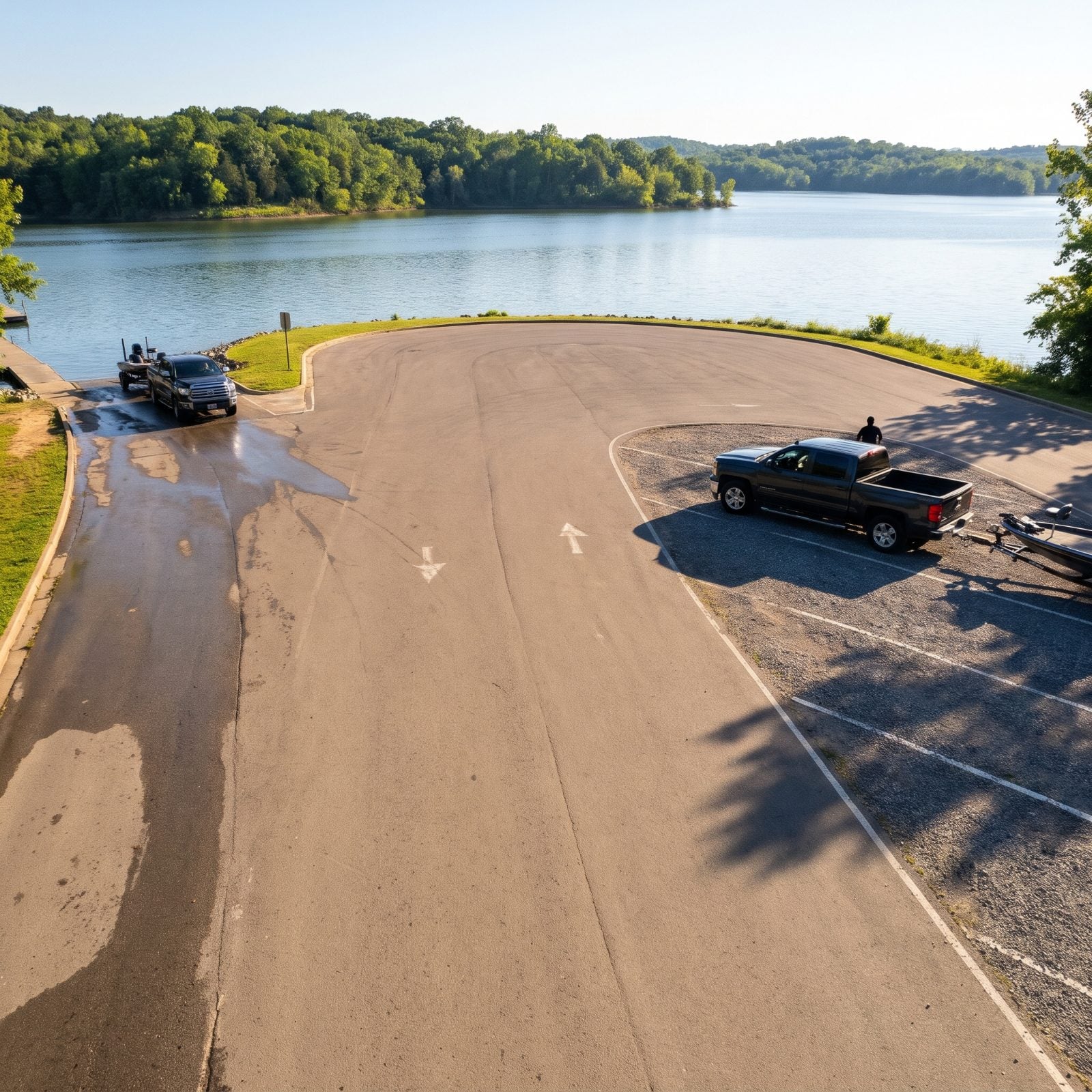
The aisle behind the ramp is where rigs line up, turn around and back down. Park your truck across it and you’ve jammed the whole operation. Now the guy trying to swing his trailer around has nowhere to go, and the line stacks up into the road.
Pull into a staging spot or off to the shoulder, out of the turning path. If you’re not actively backing down or pulling out, your rig belongs anywhere but the aisle. It’s a fire lane at the grocery store, basically. Only works if everyone keeps it clear.
15. Never Leave an Empty Trailer in the Staging Area
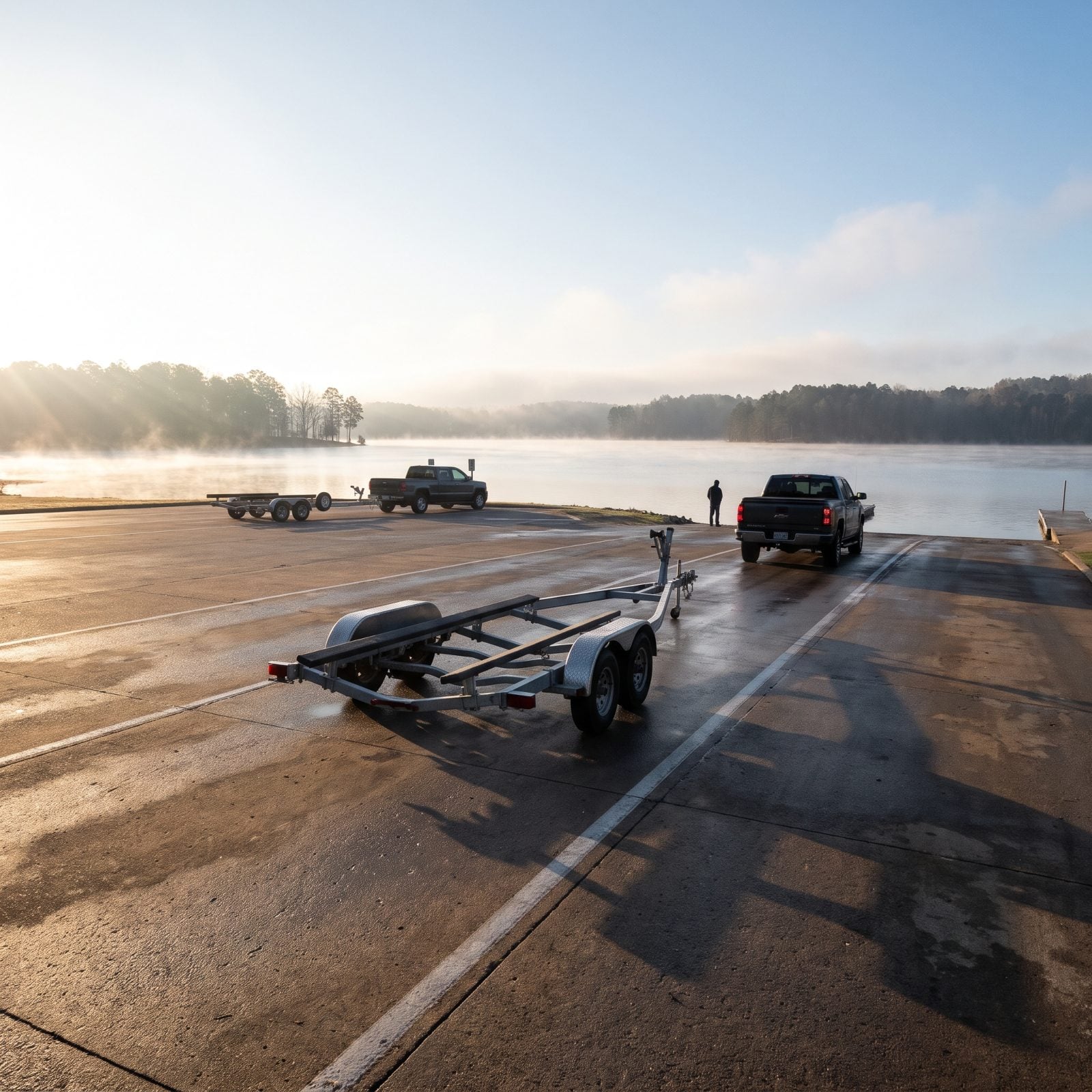
An empty trailer parked in the staging lane is a parking brake on the whole ramp. That ground is for rigs actively prepping to launch or waiting their turn, not for storage while you’re out on the water.
Drop your boat, then take the empty trailer straight to the parking lot. Leave it in staging and you eat a prep spot all afternoon, forcing the next boater to rig somewhere awkward. Same as leaving your cart in the middle of the aisle. Easy to do, easy not to.
14. Prepare for Retrieval Away From the Active Ramp
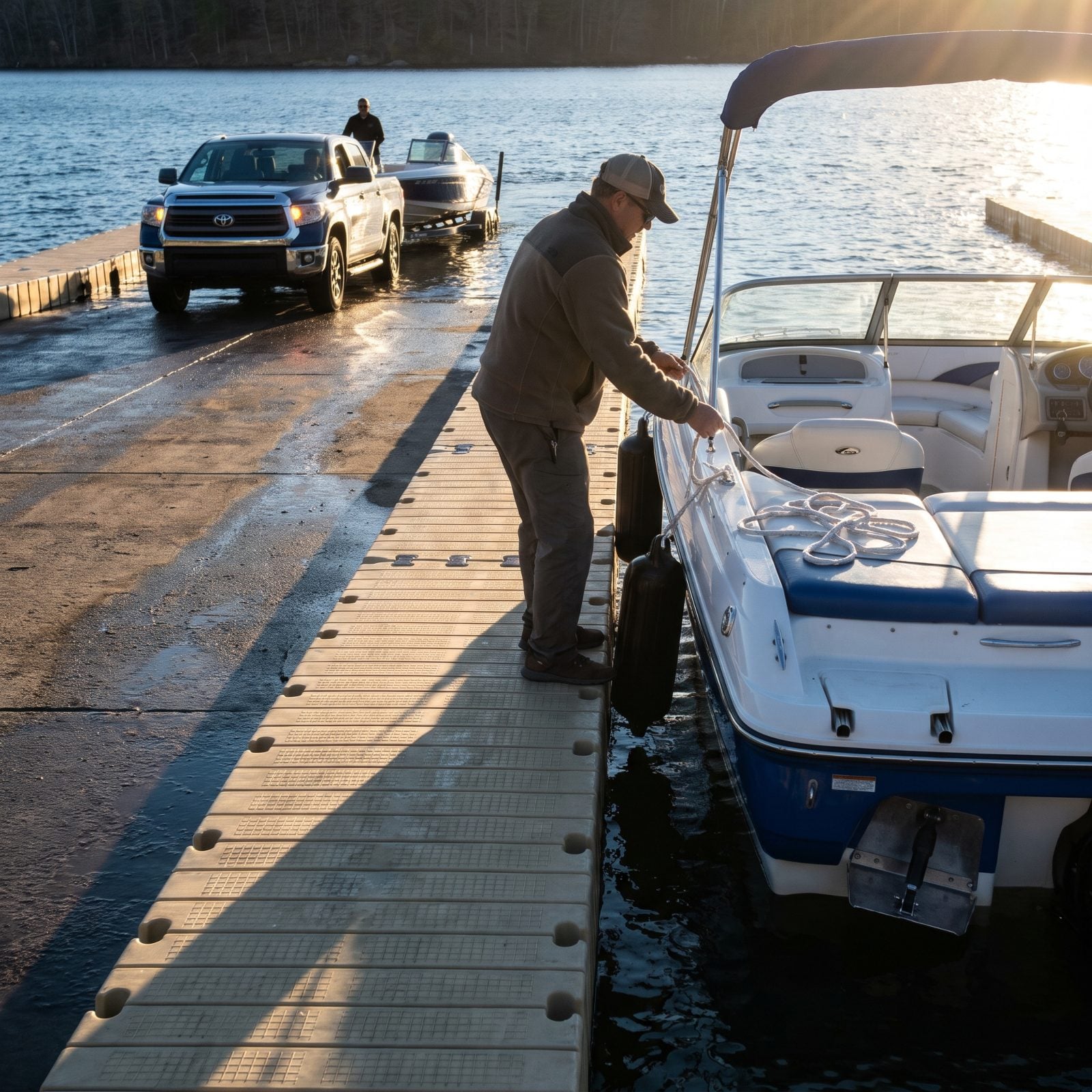
Coming in is where the traffic jams happen, because people treat retrieval like they just remembered it was a thing. Don’t. Do your prep before you’re anywhere near the ramp.
Tie up at the courtesy dock, rig your lines, unload what you can and pull on a life jacket for the driver who’s about to wade. Send one person up to get the truck and trailer while the boat waits out of the way. By the time the trailer is in the water, you’re lined up and ready to float on in one clean pass instead of fumbling with straps while a line builds behind you.
13. Bring the Tow Vehicle Forward Only When the Boat Is Ready
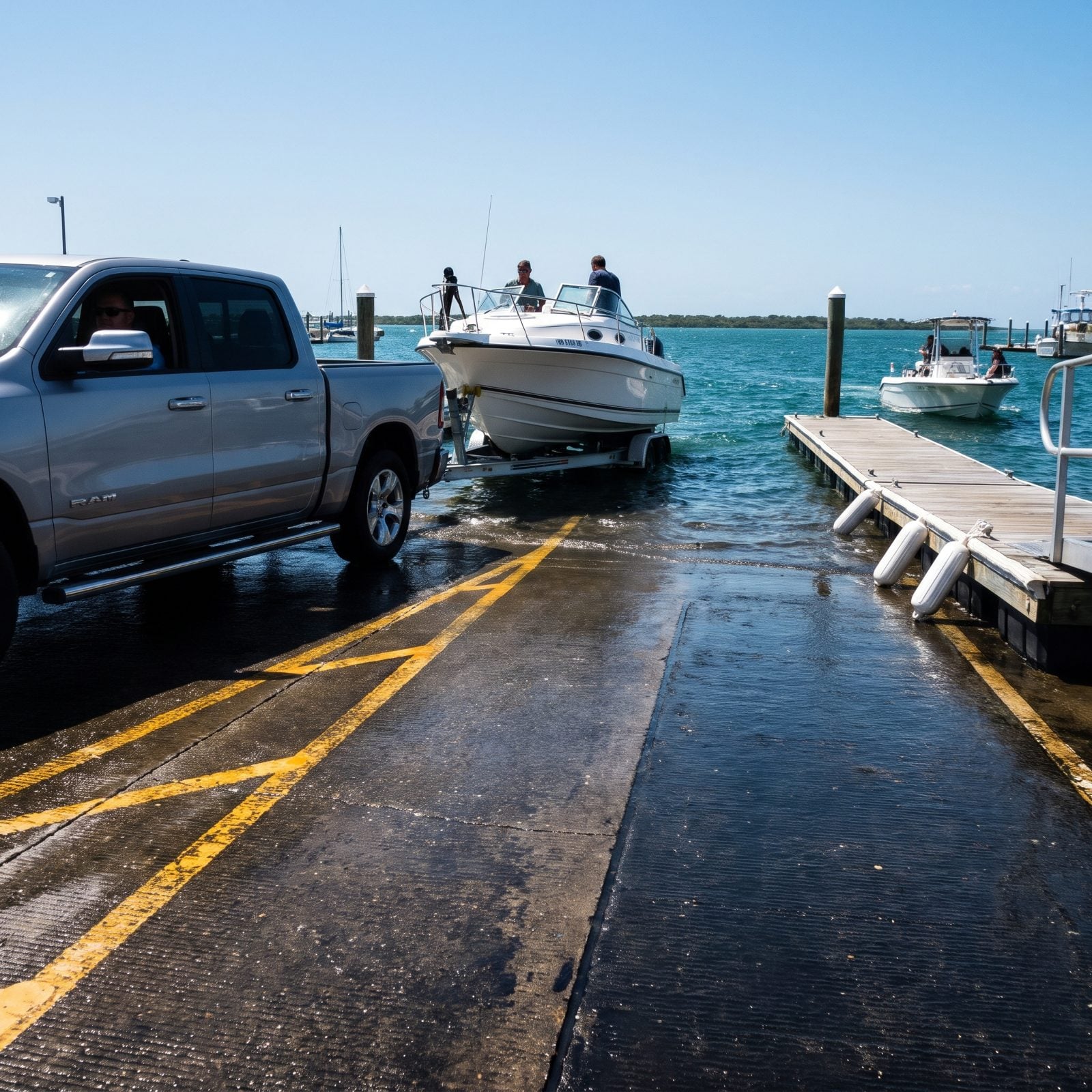
Timing is the whole game on retrieval. The trailer only belongs on the ramp when the boat is right there ready to drive onto it, not five minutes early while you’re still coiling lines offshore.
Hold the boat at the courtesy dock until your driver backs down. The moment the bunks are submerged, bring the boat onto them, clip the winch and pull up the ramp fast. Back the trailer too soon and it just sits there dripping, blocking a lane while everybody waits on you. A ramp runs smooth when the truck and the boat arrive at the water in the same breath.
A good ramp exit looks almost boring. Nobody shouting, nobody waiting, the boat on the trailer and gone before the next skipper finished tying off.
12. Keep Hands Clear of Winches, Rollers and Bow Stops
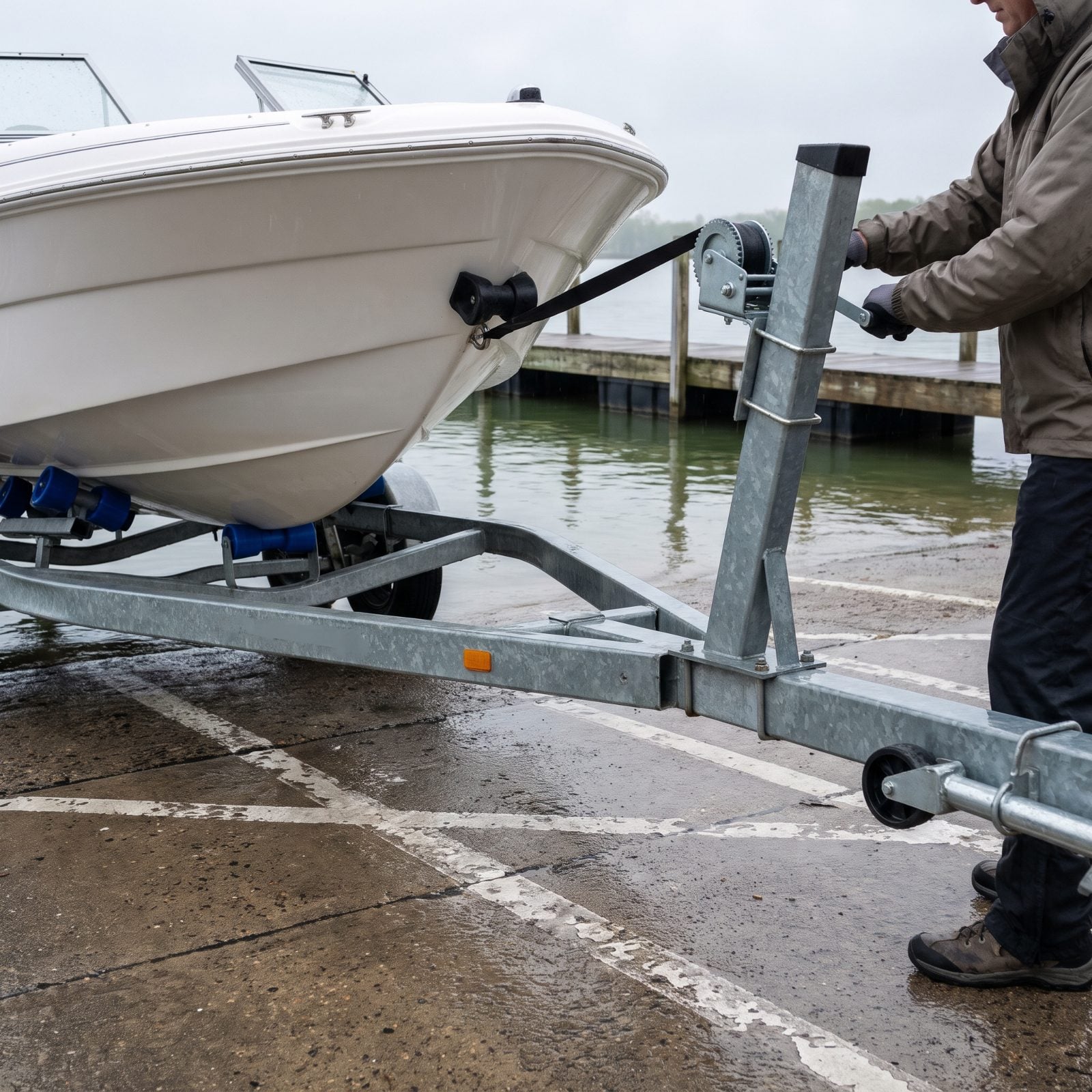
A loaded winch strap under tension stores real force. Let the hook slip or the strap snap, and it comes back fast, and it comes back at face height. Every season somebody loses a tooth or an eye standing in the wrong spot.
Stand beside the winch, never directly behind the strap or the bow. Keep your fingers off the rollers and out from under the bow stop while cranking. The boat weighs what it weighs, and your hand will lose that argument every time.
11. Connect Both the Bow Strap and Safety Chain
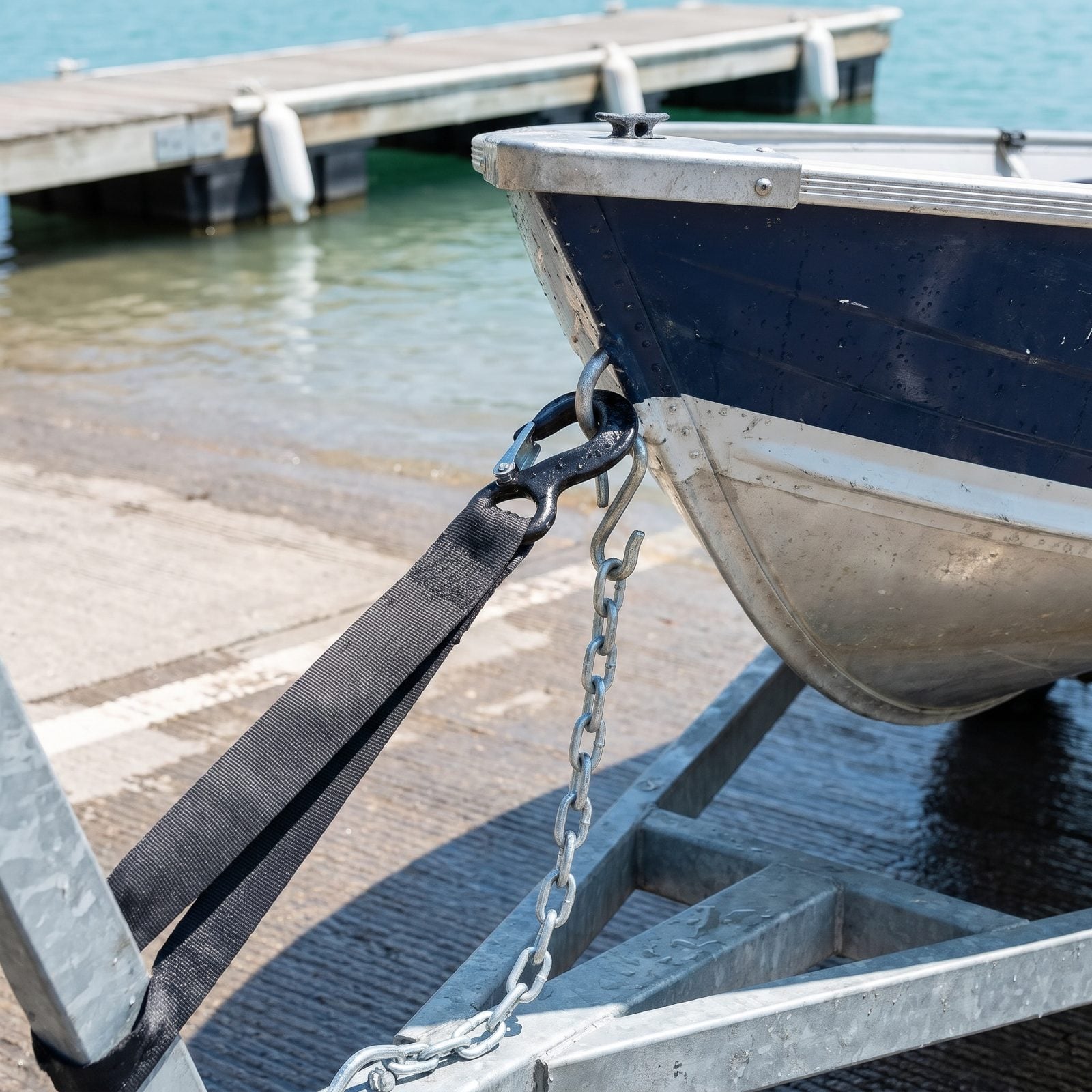
The winch strap is not the whole system. It’s the primary line, and the safety chain is your backup for the moment the strap frays, the hook rusts open, or you hit a pothole on the climb out. Two independent connections mean one failure doesn’t dump your boat on the pavement.
People skip the chain because it takes an extra fifteen seconds and nothing has ever gone wrong before. That’s exactly the logic that precedes a boat sliding off a trailer in a parking lot. Clip both, every time, before the trailer tips upward.
10. Raise the Outboard Before Pulling Up the Ramp
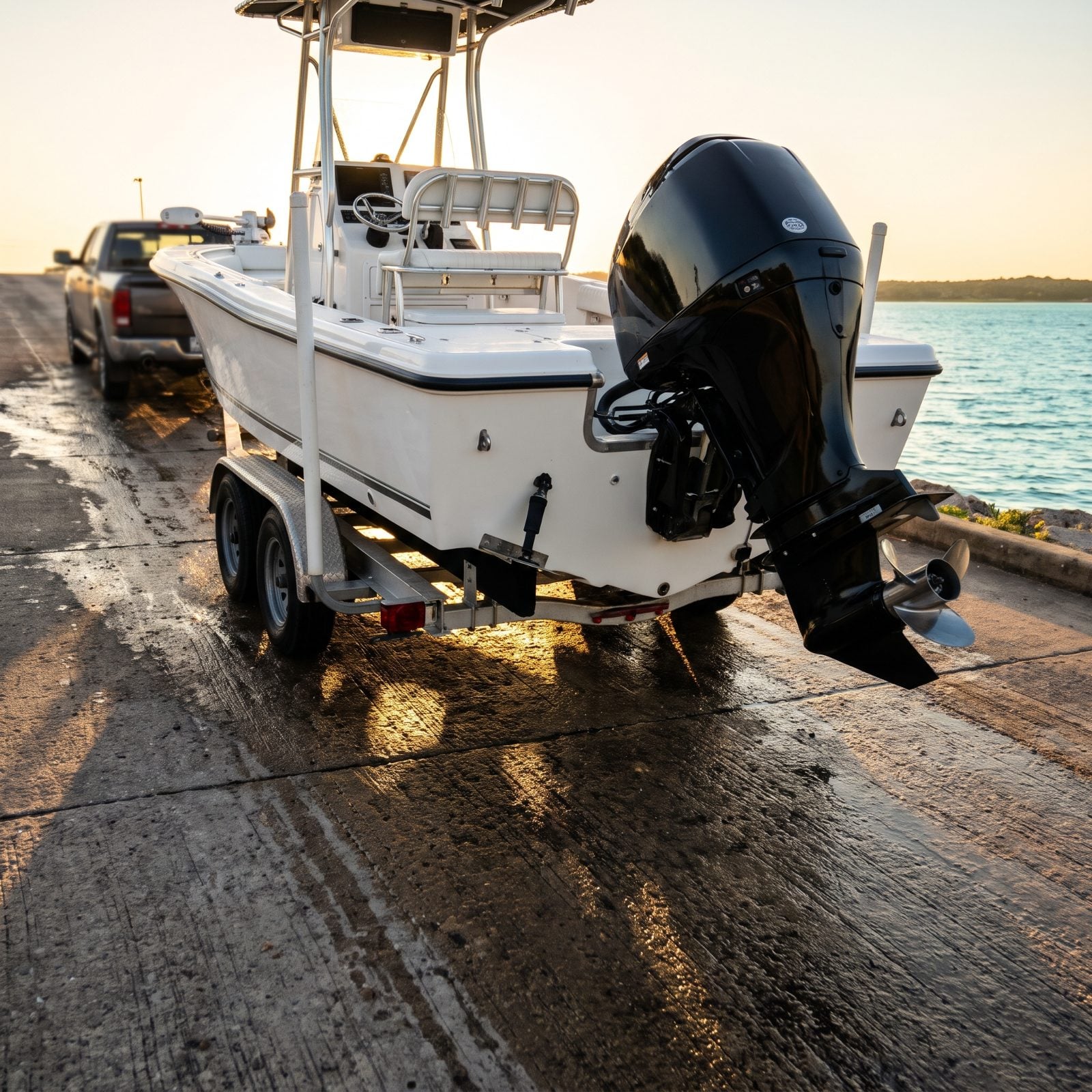
The skeg is the first thing to hit concrete, and it’s the most expensive thing to replace. Pull up with the motor trimmed down and you’ll grind the lower unit, bend the prop, or crack the skeg right on a seam or lip in the concrete.
Tilt the outboard up once the boat’s on the bunks and before you start rolling. Give it enough clearance for every joint and dip in the slab, especially the wet stretch along the water’s edge where it’s slickest.
9. Pull Completely Clear Before Installing Road Tie-Downs
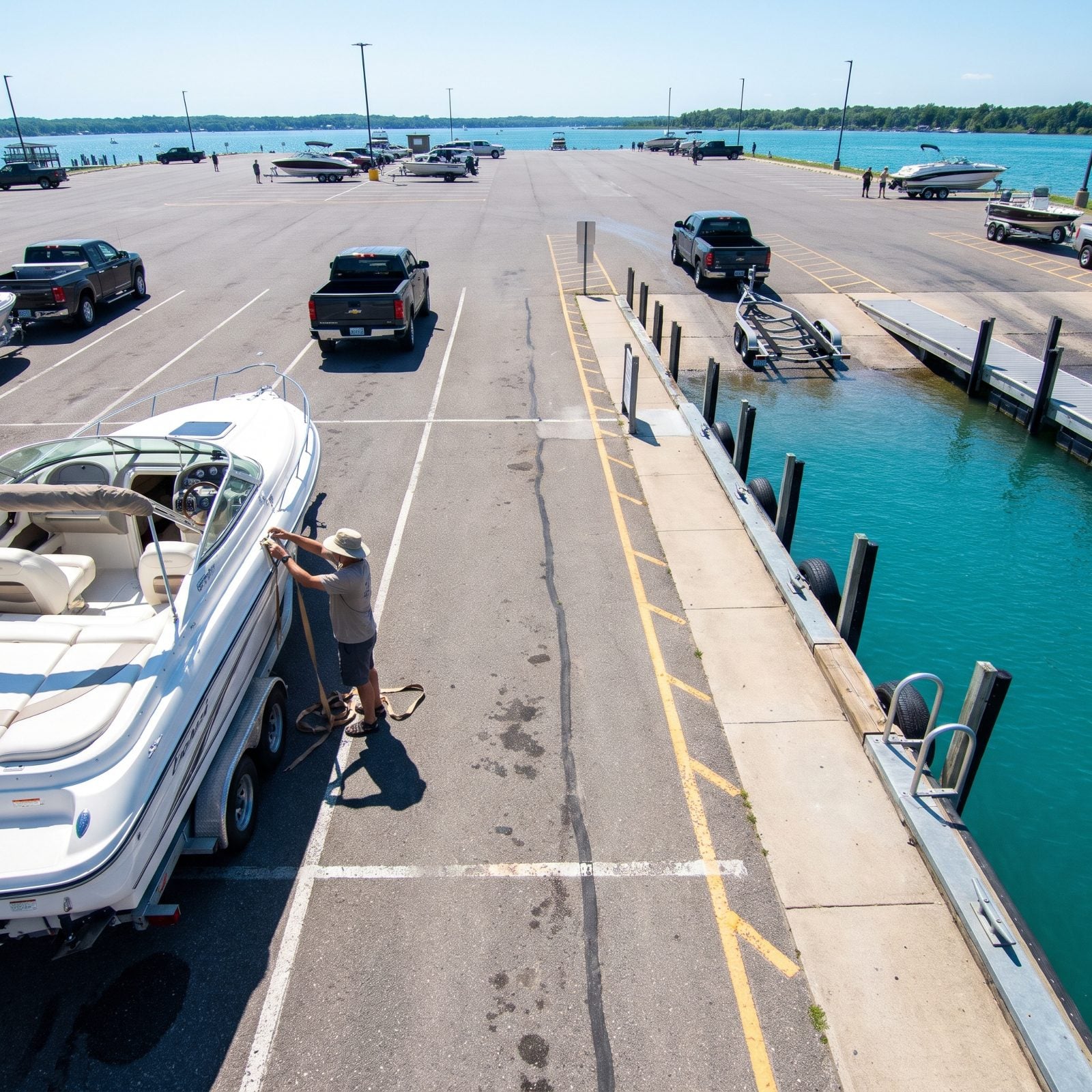
You’ve seen the person who retrieves their boat and then stops dead at the top of the ramp to strap everything down while a line of trucks waits behind them. Don’t be that person. The ramp is a loading dock, not a parking spot.
Drive to the staging lane or a corner of the lot before you touch a single tie-down, pull the plug, or stow gear. Clearing the ramp fast is the single biggest courtesy you can offer a crowded launch, and it costs you nothing but moving your truck forty feet.
8. Reattach Transom Straps Before Entering the Road
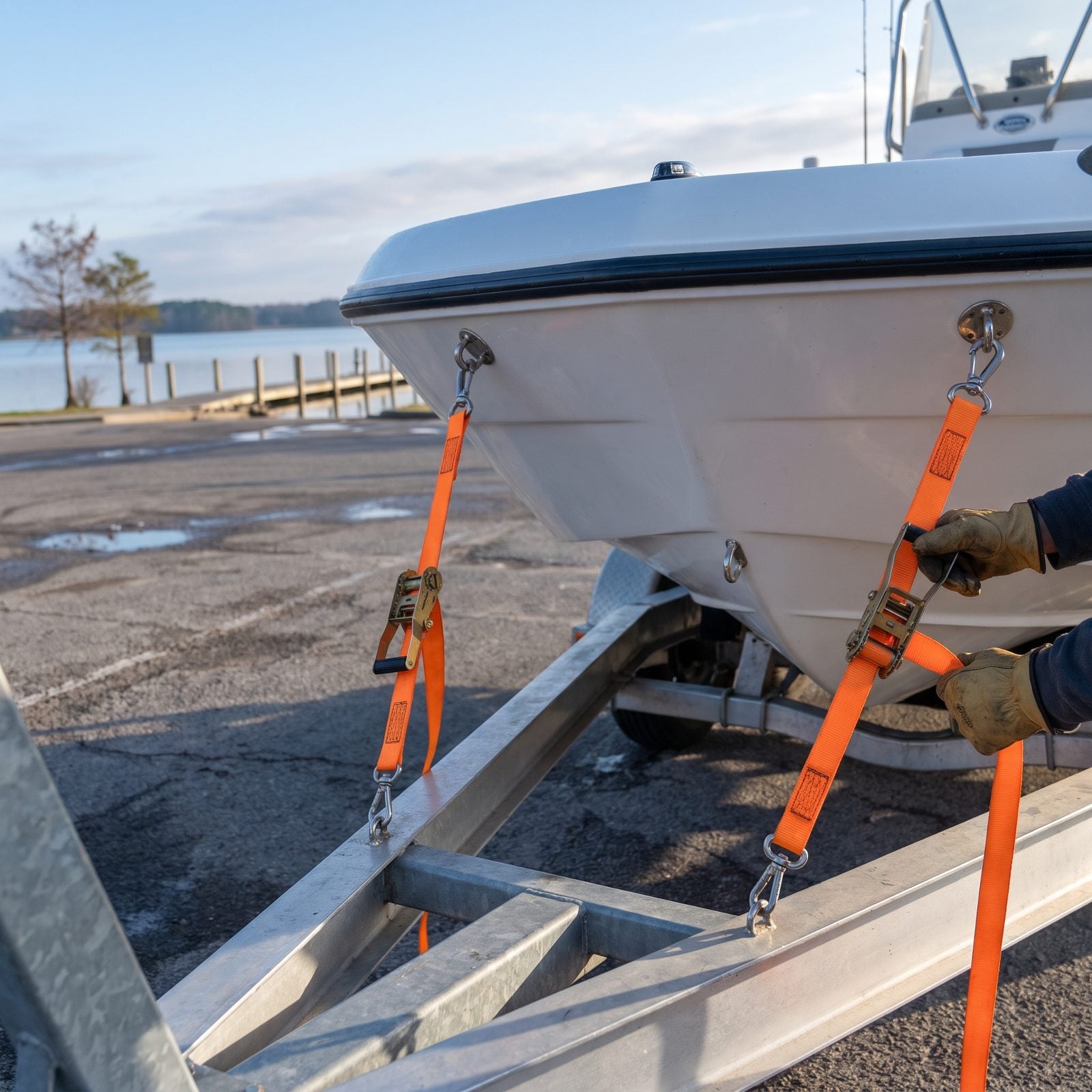
The winch strap holds the bow and does nothing for the stern. On the highway, every bump wants to walk the back of your boat off the bunks, and a single winch connection won’t stop it.
Ratchet both transom straps tight before you leave the lot, not after you remember at the first stoplight. Snug them so the hull sits firm on the bunks with no bounce. A boat that shifts at sixty-five miles an hour is a lot of trouble arriving all at once.
7. Remove the Drain Plug Before Leaving the Launch Site
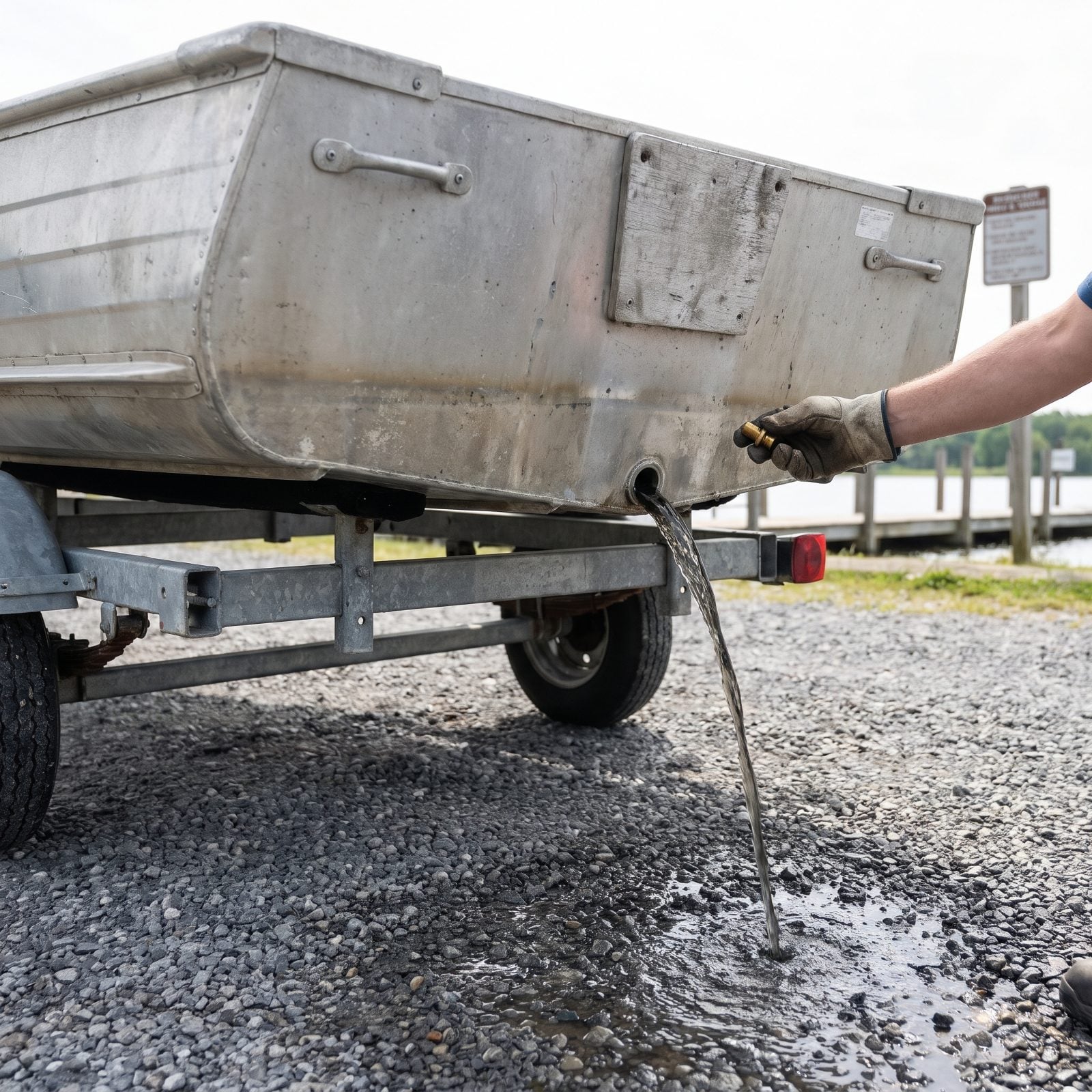
Pull the plug the moment you’re off the ramp and let the bilge drain in the staging area. This does two jobs. It dumps any lake water that could carry invasive hitchhikers, and it empties the bilge before the drive home so you’re not hauling extra sloshing water the whole way.
In a growing number of states, draining before you leave is the law under aquatic-invasive-species rules, not a friendly suggestion. The exact requirements vary by state and water body, so check the posted signs.
6. Remove Visible Weeds From the Boat and Trailer
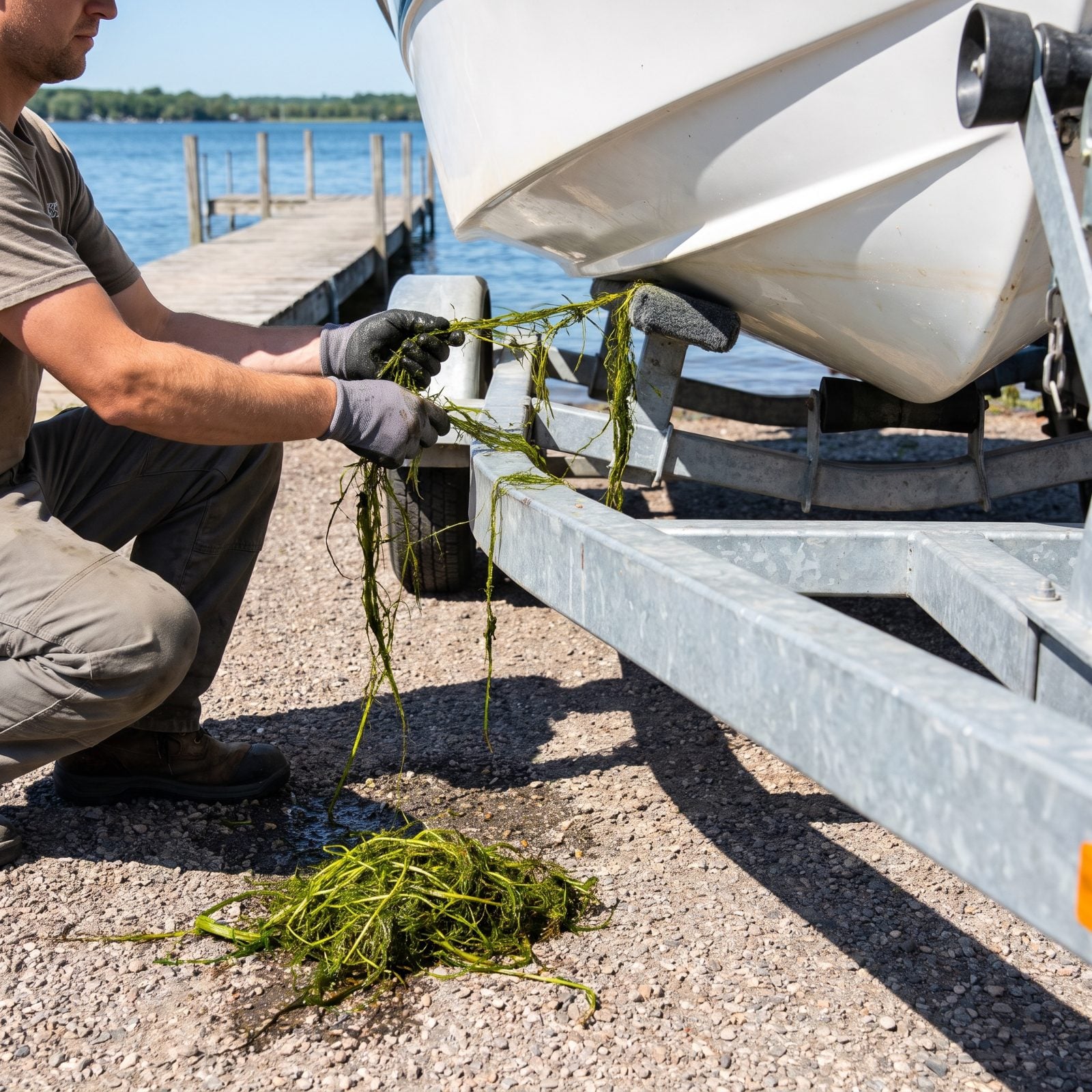
A clump of weed hanging off your trailer bunk is a hitchhiking plant looking for its next lake. Milfoil, hydrilla and other invasives travel from water to water on exactly that clump, and once they take hold, they choke a fishery and clog props for decades.
Walk the whole rig before you pull out: bunks, rollers, prop, lower unit, anchor and lines. Pull off every visible strand and leave it in a trash bin or on dry land well away from the water. Never toss it back in. Clean, drain, dry. A two-minute scan protects the next lake down the road.
5. Drain Livewells and Ballast Tanks Where Required
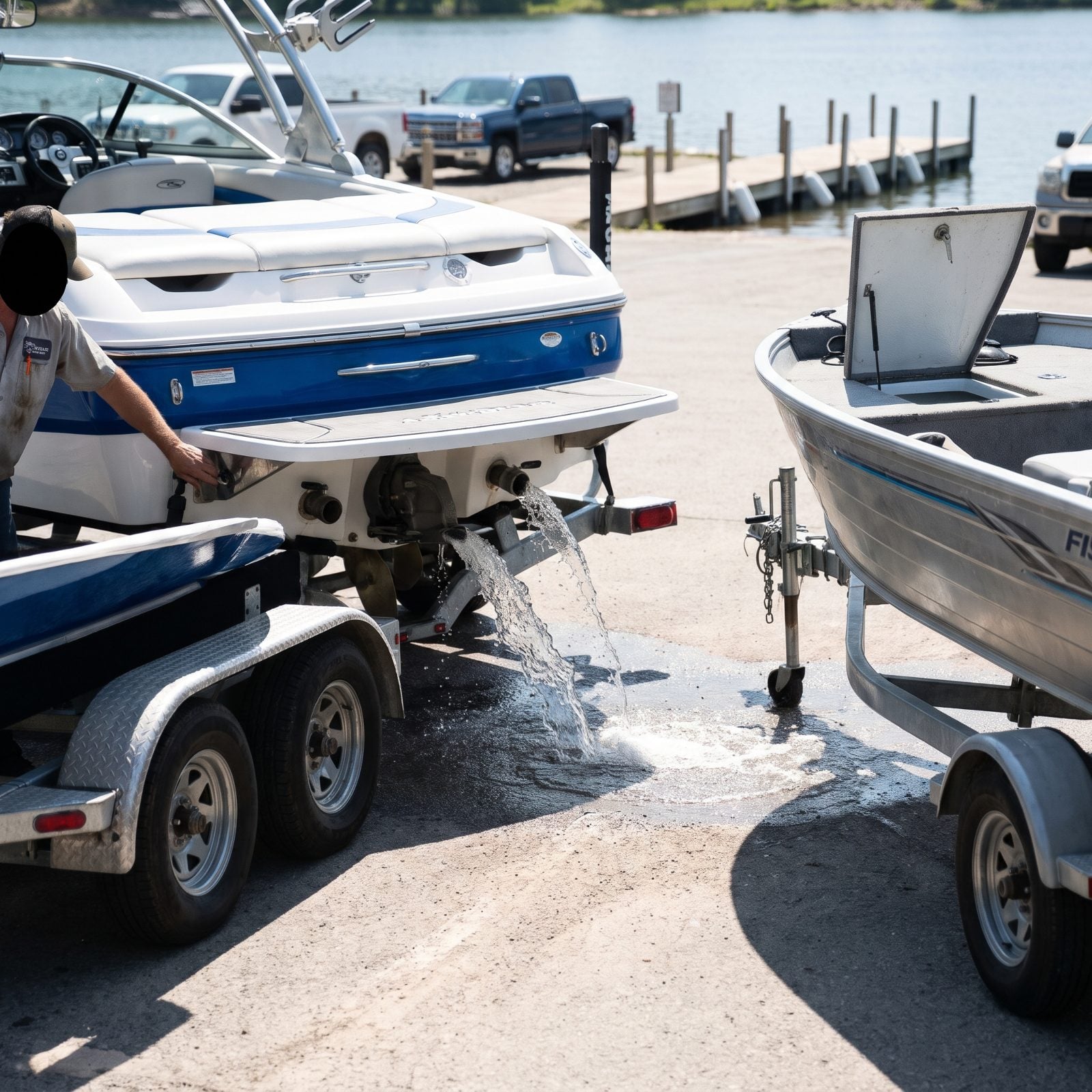
Livewells and ballast bags hold the sneakiest water on your boat, because you can’t see it and it’s easy to forget. That water carries microscopic invasive larvae and tiny mussels no inspection will catch by eye.
Open the livewell drains and empty the ballast tanks on land before you leave, where it’s required and frankly everywhere it’s smart. Wakeboard and surf boats hold a lot of ballast water that most owners never think about. Running it dry on the ramp side protects the next body of water and lightens the tow.
4. Dispose of Unused Bait Without Releasing It
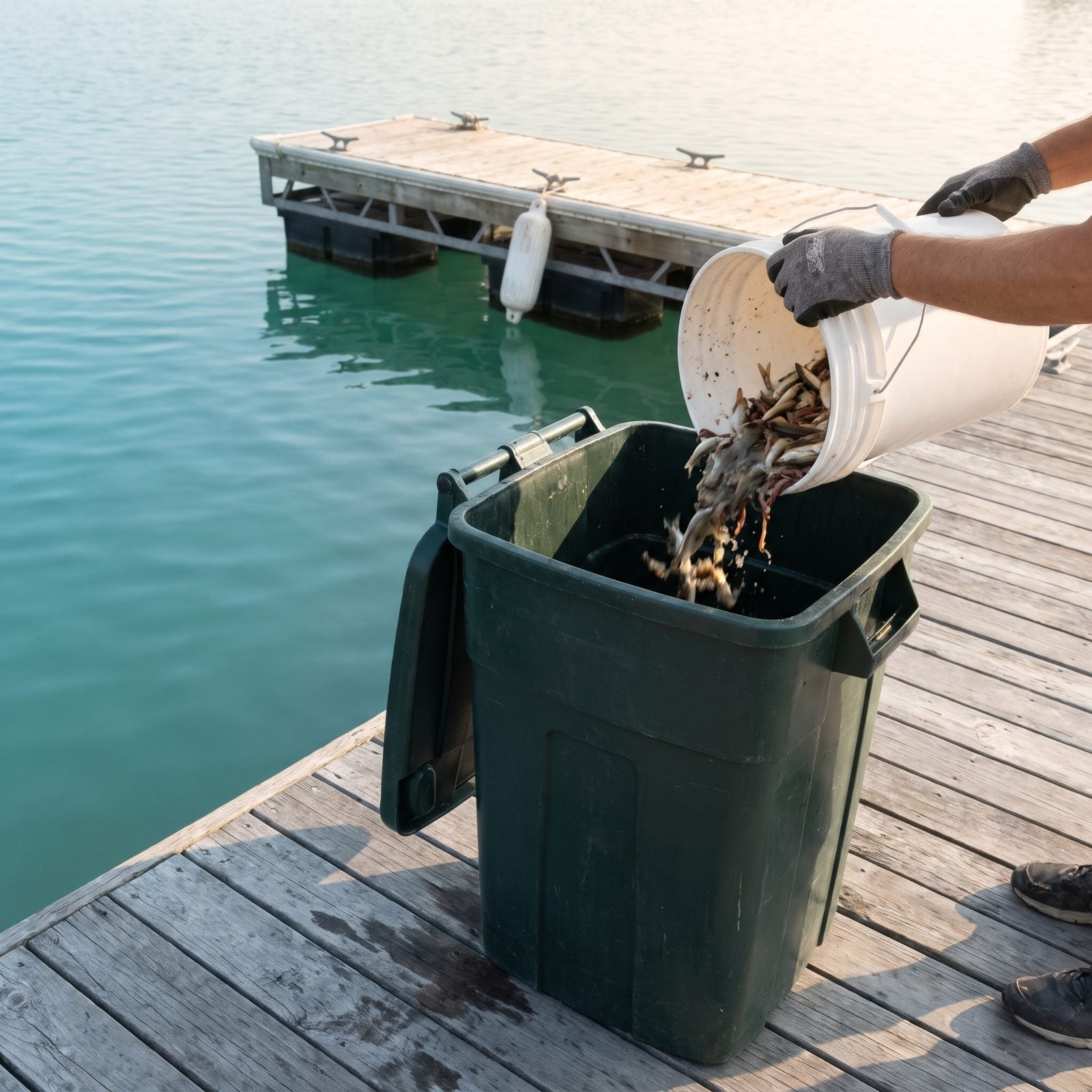
Dumping leftover minnows over the side feels harmless and generous. It isn’t. Baitfish and the water they swim in can introduce non-native species and diseases that wreck a lake’s natural balance, and in many states releasing live bait is flat-out illegal.
Put unused bait in the trash, hand it to another angler, or take it home. Never pour the bait bucket or its water into the lake you’re leaving. The fish you think you’re setting free can become the invader the next generation of anglers curses.
3. Never Discharge Oily Bilge Water at the Ramp
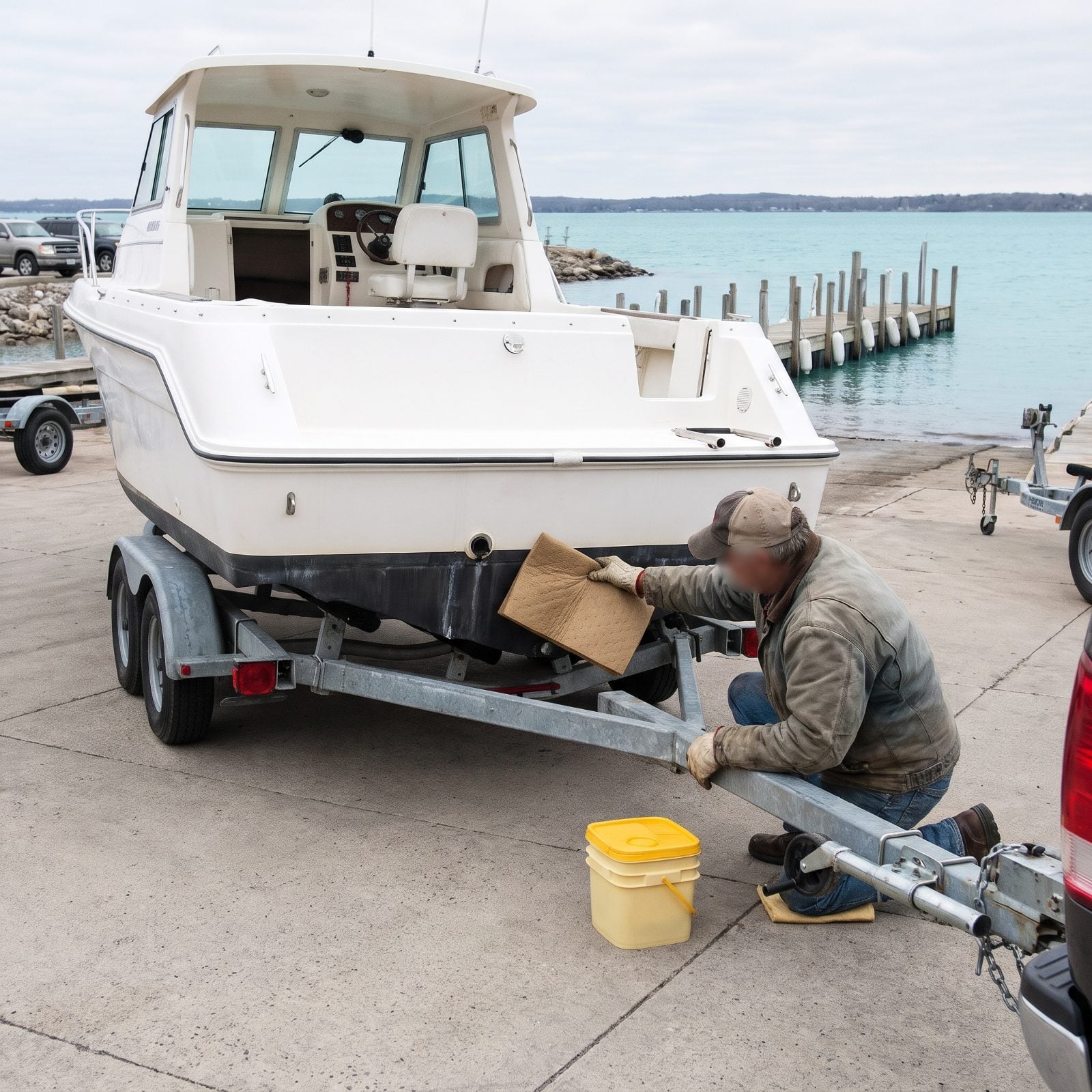
A bilge with a sheen on it should never get pumped near the ramp. Even a thin film of oil or fuel spreads into a rainbow slick across the surface, and discharging it into public water is a violation you really don’t want to explain to a warden.
Catch the problem before it reaches the water. While the boat sits on the trailer, hold an oil-absorbent pad against the hull under the thru-hull outlet to catch any oily drips before they hit the ramp, then dispose of it properly on land. And fix the leak that’s putting oil in the bilge in the first place. A clean bilge is a small thing that keeps the whole cove clean for everyone who launches after you.
The lake remembers how you treat it. Launch clean, leave it cleaner, and the water you love stays worth coming back to.
2. Keep the Gas Dock and the Boat Ramp Separate
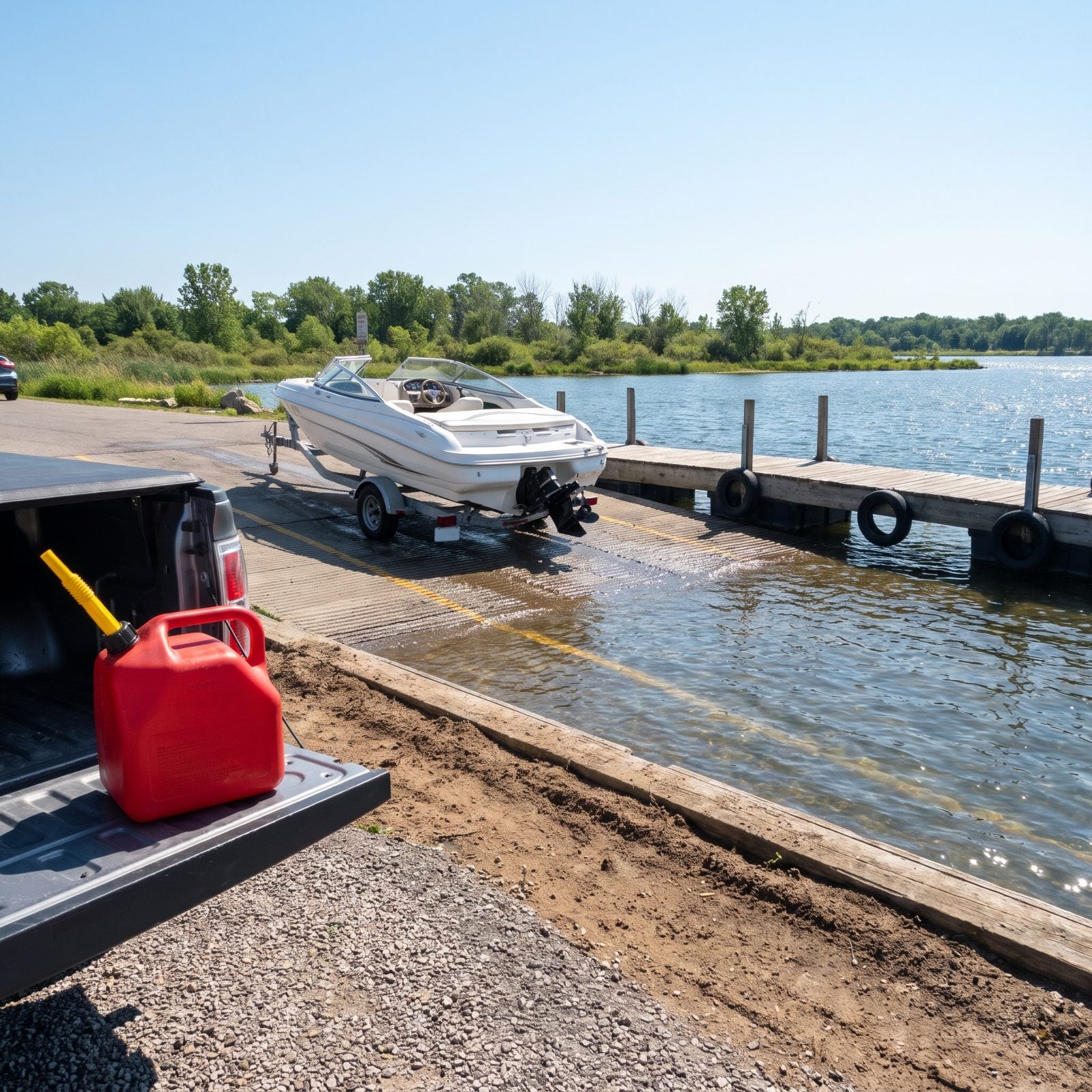
Gasoline and launch ramps make a lousy pairing, and most ramps post signs saying exactly that. Spill a cup of fuel and it sits there as a rainbow sheen, drifting straight into swim zones and fish habitat. One careless top-off at the ramp and you’ve broken state water-pollution rules across half the country.
So fuel up at the gas dock, or on the trailer back in the staging lot, well clear of the concrete and before you ever touch the water. Keep a spill pad in the bilge locker and wipe up drips there, not at the ramp.
1. Treat the Launch Lane as a No-Swim Zone
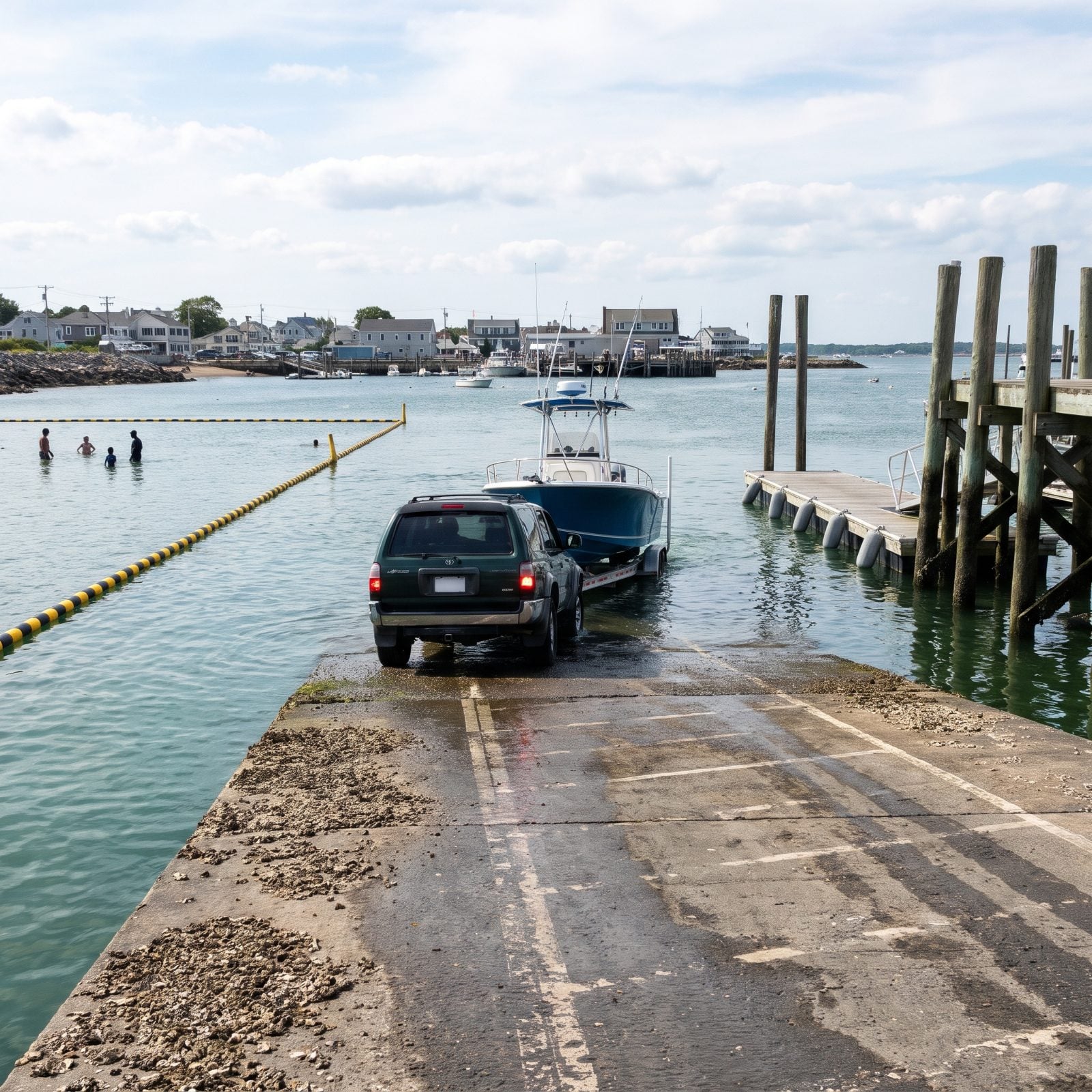
Nobody expects a kid under the swim ladder when they ease a rig backward down the ramp, and that’s exactly the problem. Props turn below the waterline, exhaust gathers at the surface, and a driver squinting over the hood at the waterline has no way to see a small head bobbing near the concrete.
Launch ramps are working areas. Keep the whole family out of the water inside the lanes and anywhere near a moving trailer, and send swimmers off to the roped beach or a marked swim area instead — those get set well clear of the ramp for this very reason.
A boat ramp is a loading dock that happens to be wet. You would not let a toddler play behind a backing truck. Same rule, more water.
And if the kids are antsy while you wait your turn? Park them on the courtesy dock with a cooler and a line to watch. Feet dry, well back from the edge.