

There’s a particular lie the camera tells about water. You see a photo of some lake, the kind of blue that belongs on a postcard from Bora Bora, and you figure somebody dragged the saturation slider all the way right. Then you find out the place sits in a Finnish forest or a Namibian sinkhole and the color is just what noon does to it. These are the lakes that fool people. Rarely tropical, never filtered, mostly cold, often nowhere near a coast. The clarity comes down to geology, not luck. Here are the ones worth chasing.
Please note that some of the imagery in this article may have been enhanced with the assistance of AI.
44. Labuan Cermin, Indonesia: Freshwater Floating on Top of Saltwater
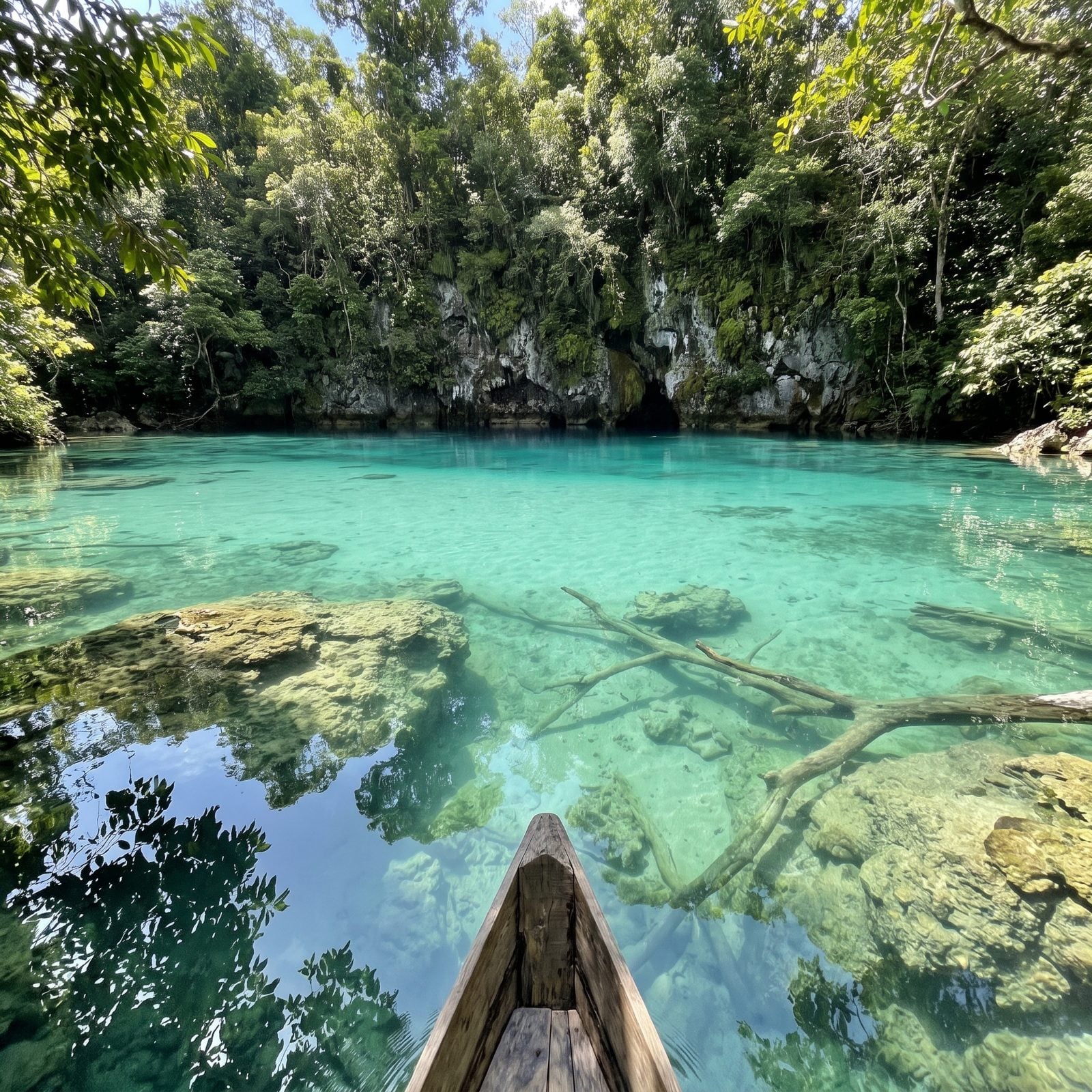
The name translates roughly to “mirror lake,” and that undersells it. Labuan Cermin sits on the east coast of Borneo and pulls a genuinely strange trick: a layer of freshwater floats on top of saltwater, and the two refuse to mix. Swimmers hover right at the seam where temperature and salinity flip, and from above the whole thing reads like one unbroken pane of glass.
The bottom looks inches away when it’s actually several meters down. One thing to sort out before you go: it’s remote, a long drive from Berau, and that remoteness is exactly why the water stays this clean.
43. Lake Guinas, Namibia: Cobalt Water in the Middle of the Desert
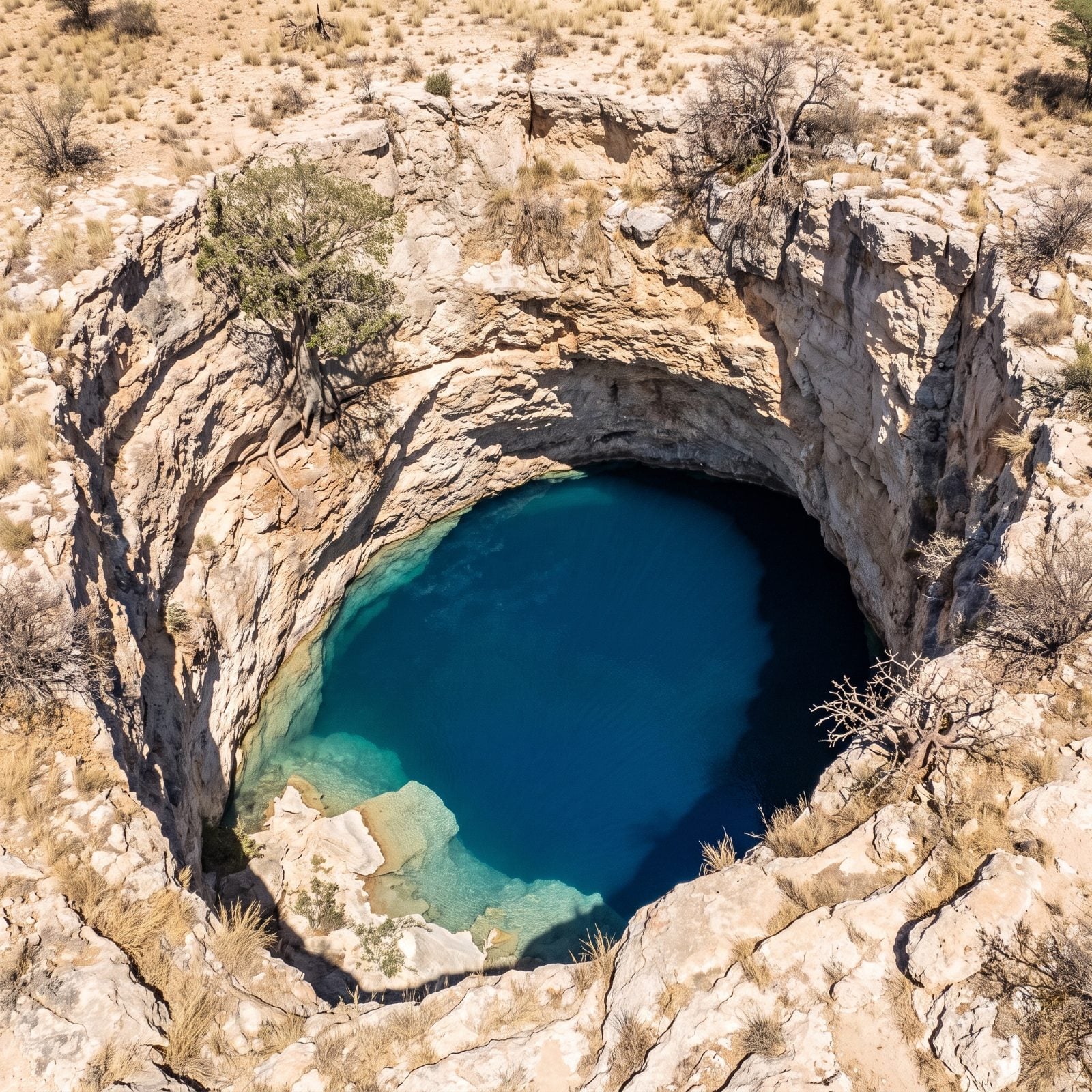
Namibia isn’t where you’d expect a lake like this. The country is mostly desert, and then there’s Guinas: a sinkhole where the limestone roof of an underground cavern caved in and groundwater filled the gap. What’s left is a pool of almost unreal cobalt, ringed by dry cream-colored rock.
Deep, cold, and the color comes from mineral content and sheer depth rather than any tropical trick. It also holds an endemic cichlid fish found nowhere else on Earth, which tells you how walled-off this little water world really is.
42. Lake Matano, Indonesia: One of the Deepest, Clearest Lakes on the Planet
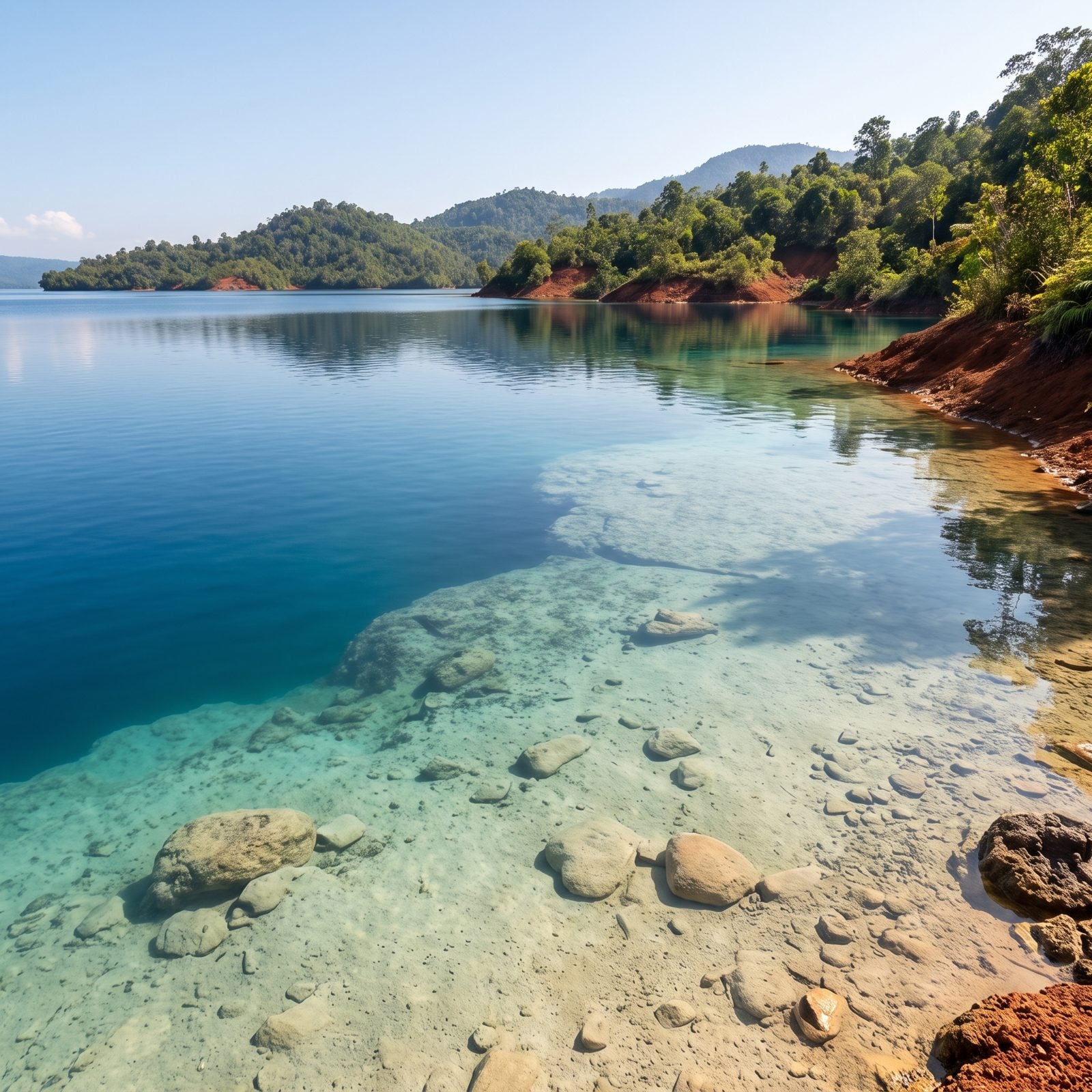
This one is old. Lake Matano formed in a tectonic rift and ranks among the deepest lakes anywhere, dropping past 500 meters. That kind of depth, paired with very low nutrient levels, gives it visibility that stretches far down.
Stand at the edge and the shallows look like you could wade forever before they drop. It’s also an evolutionary oddity, home to flocks of endemic snails and fish that exist only here. Scientists study it the way they study Lake Baikal, which puts it in rare company for a place most travelers have never heard of.
41. Lake Puruvesi, Finland: Pale Sand Reading Caribbean Through Nordic Water
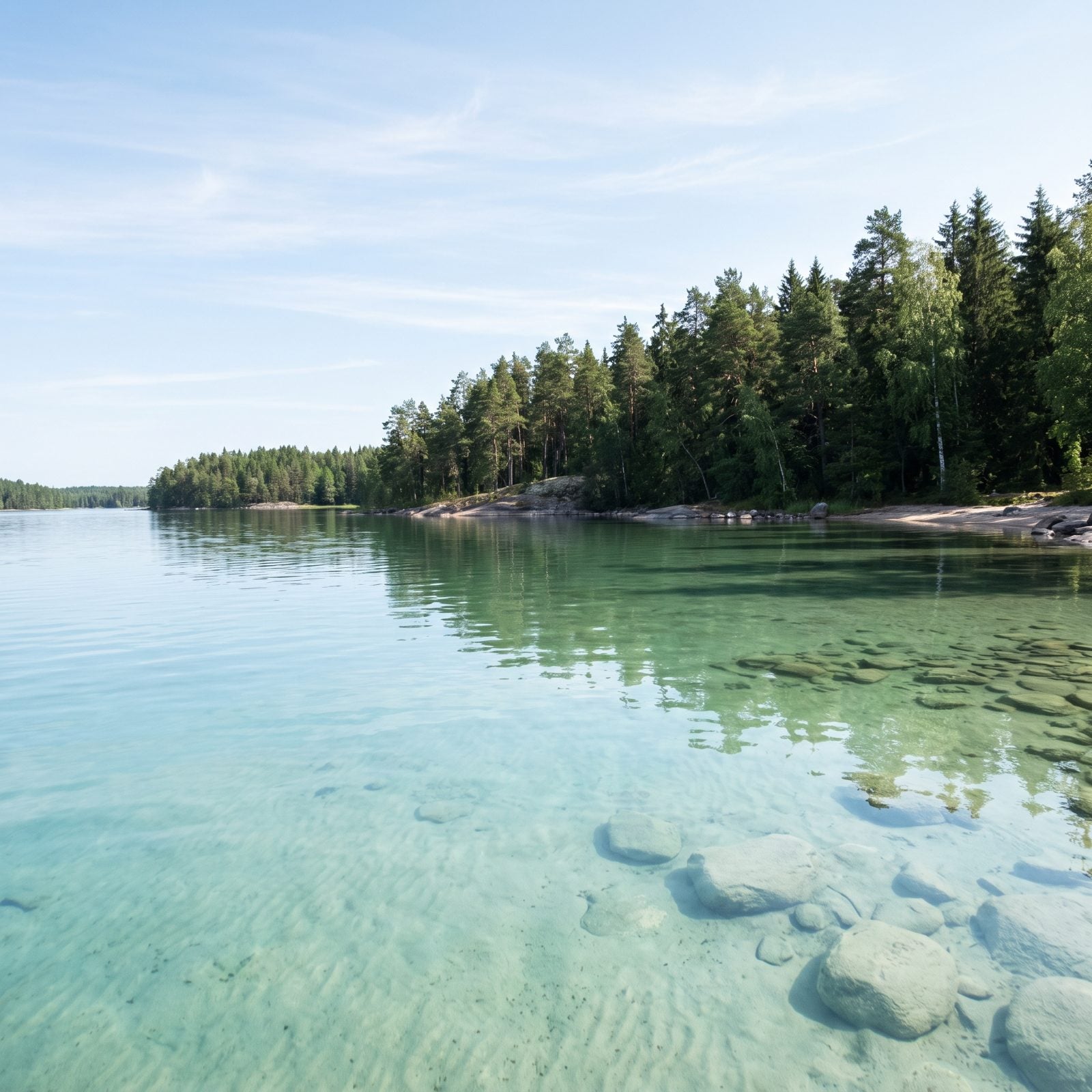
Finland has thousands of lakes and most of them are tea-colored, stained brown by peat and the decaying leaves that wash in from the forests. Puruvesi breaks the pattern. Its water carries almost none of that organic gunk, so instead of brown you get this pale, borderline-Caribbean turquoise over the sandy shallows. First time you see a photo you’ll swear someone mislabeled a Greek island.
It’s the sand underneath doing the work, lit through water clean enough to pass for glass.
40. Blue Lake, New Zealand: The Clearest Freshwater Ever Measured
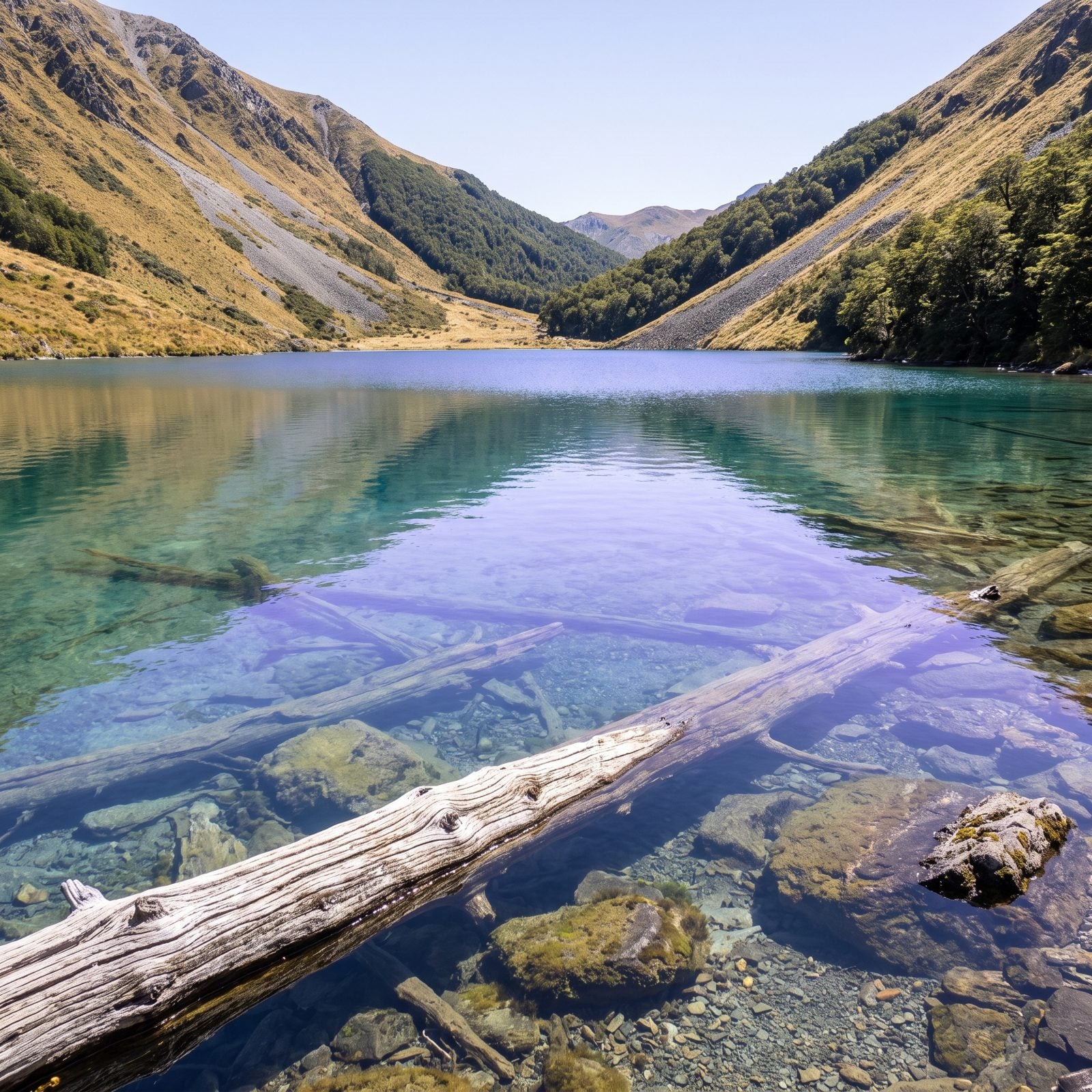
Researchers have clocked the underwater visibility here at something close to distilled water, which makes Blue Lake, or Rotomairewhenua, about as transparent as freshwater gets anywhere on Earth.
It’s a long valley lake stretching kilometres between steep mountain slopes, fed by meltwater that’s already been filtered through a neighboring lake sitting above it, so almost nothing is suspended by the time it arrives. It’s also sacred to local Māori, and swimming is off limits. You look, you take the photo, you leave it alone.
Fed by water so filtered that you can see 80 meters down, Blue Lake looks less like a lake and more like a window.
39. Lake Salda, Türkiye: White Mineral Beaches and Turquoise Shallows
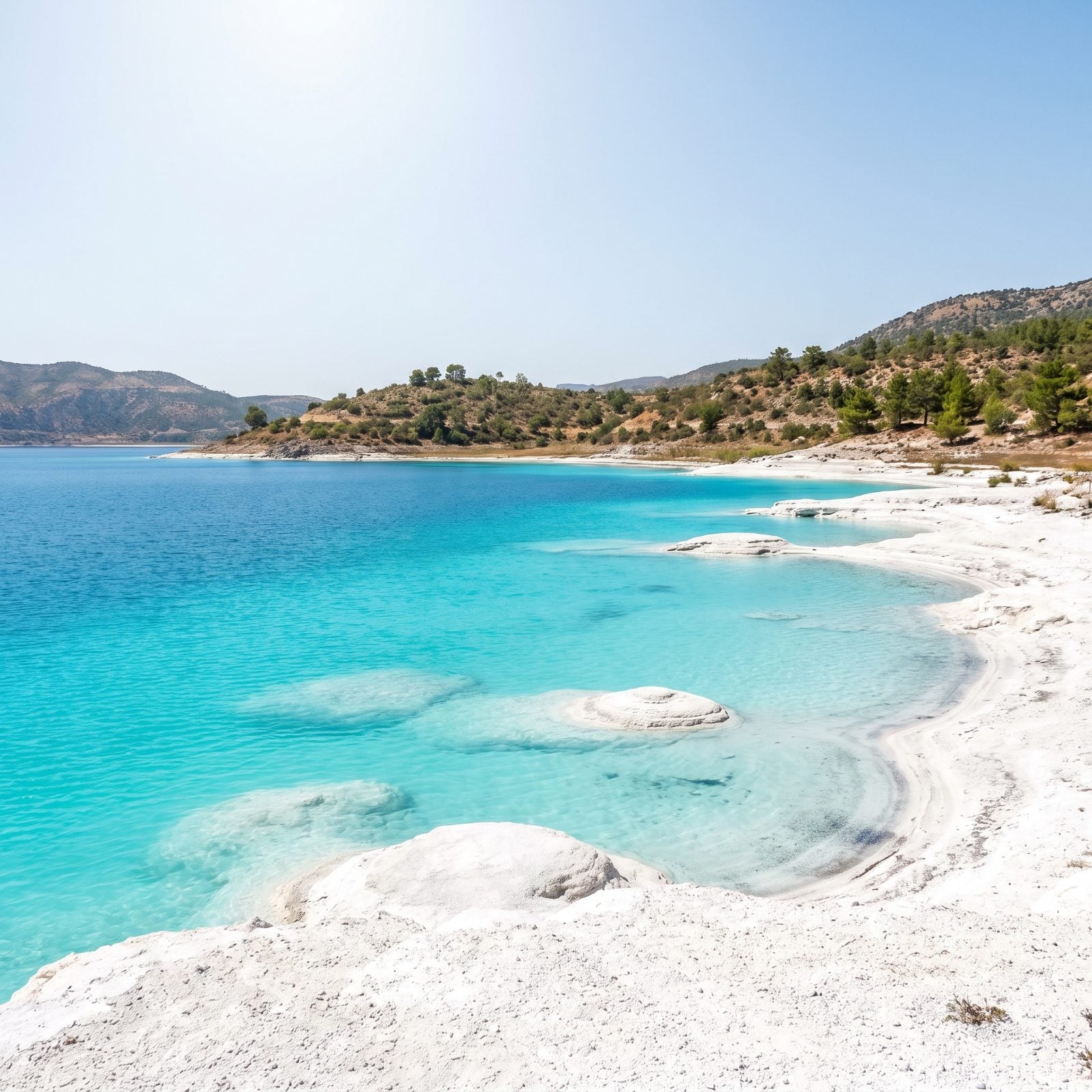
NASA uses this place as a Mars stand-in. The white deposits ringing Lake Salda are hydromagnesite, a mineral kin to carbonate structures found in Jezero Crater, so the lake gets studied as an analog for the kind of environment Perseverance is poking at on Mars.
For a traveler, that translates to white beaches that photograph like the Maldives and shallow water the exact color of a swimming pool. The brilliant turquoise is the white mineral bottom throwing light straight back up. Türkiye now limits access to protect it, which it badly needed, because for a while there it was getting loved to death.
38. Lagunas de Montebello, Mexico: Dozens of Lakes, Dozens of Colors
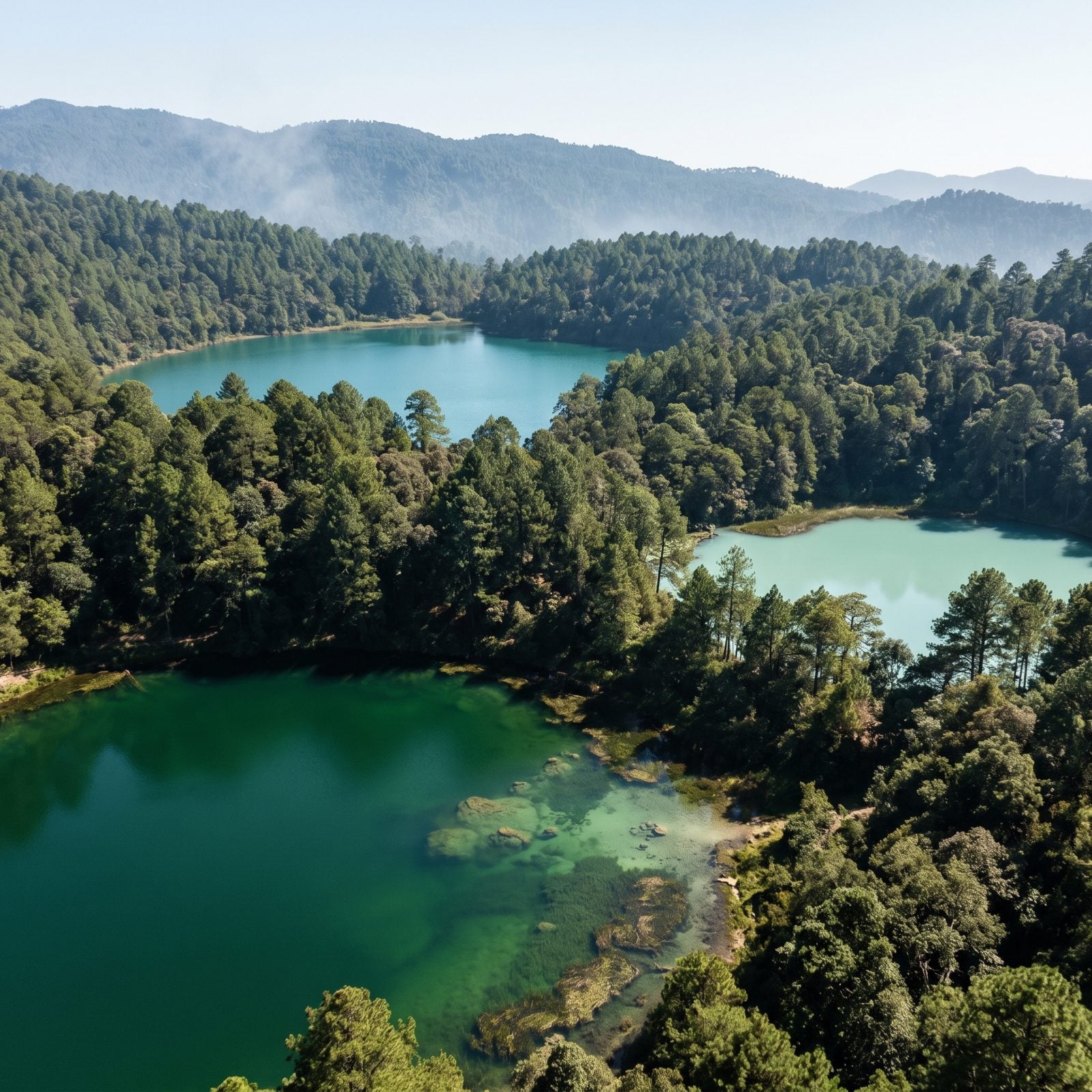
The trick of Montebello is that it isn’t one lake. It’s dozens, scattered through a pine forest near the Guatemalan border, and they’re all different colors. One reads deep emerald, the next one over the ridge is pale cyan, a third tips almost violet.
Same rain, same limestone, same forest. The differences come from depth, dissolved minerals, and whatever’s growing on each lakebed. Walking between them feels like someone shuffled a deck of paint chips and dropped them in the woods. One of the more underrated spots in southern Mexico, mostly because it’s a long haul from anywhere familiar.
37. Five Flower Lake, China: Sunken Trees Glowing Through Jewel Water
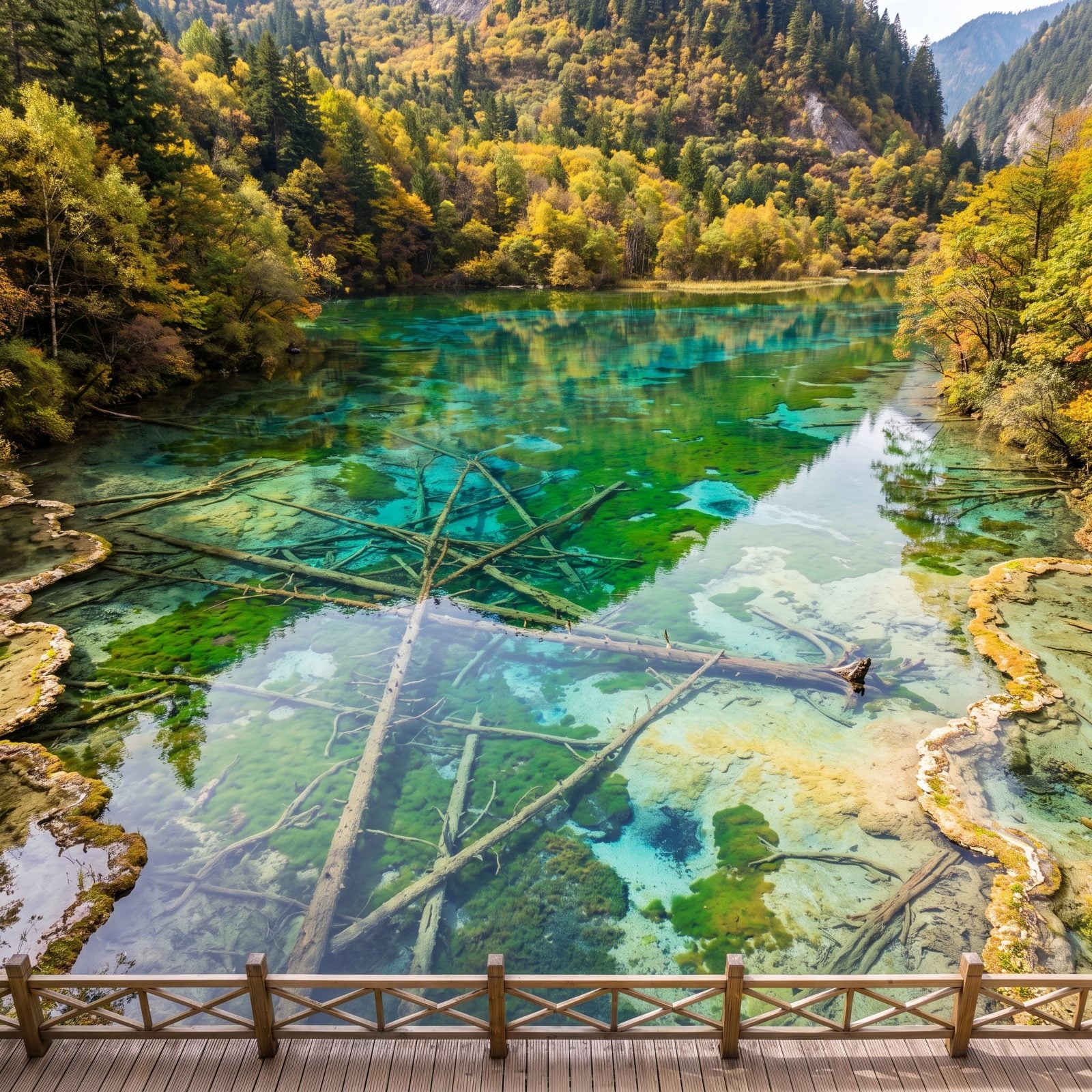
Jiuzhaigou’s lakes look computer-generated, and Five Flower is the one that pushes it furthest. The water runs shallow and clear enough that you can see ancient fallen trunks lying on the bottom like dropped matchsticks, while the lakebed itself shifts between turquoise, gold, emerald, and deep blue.
Those color patches come from mineral deposits and different algae settling in bands across the floor. Nothing floats in the water to blur it, so every log and every color stays sharp. Protected now as a national park and a World Heritage site. That’s the only reason it still looks like this.
36. Lake Shikotsu, Japan: A Caldera So Deep It Never Freezes
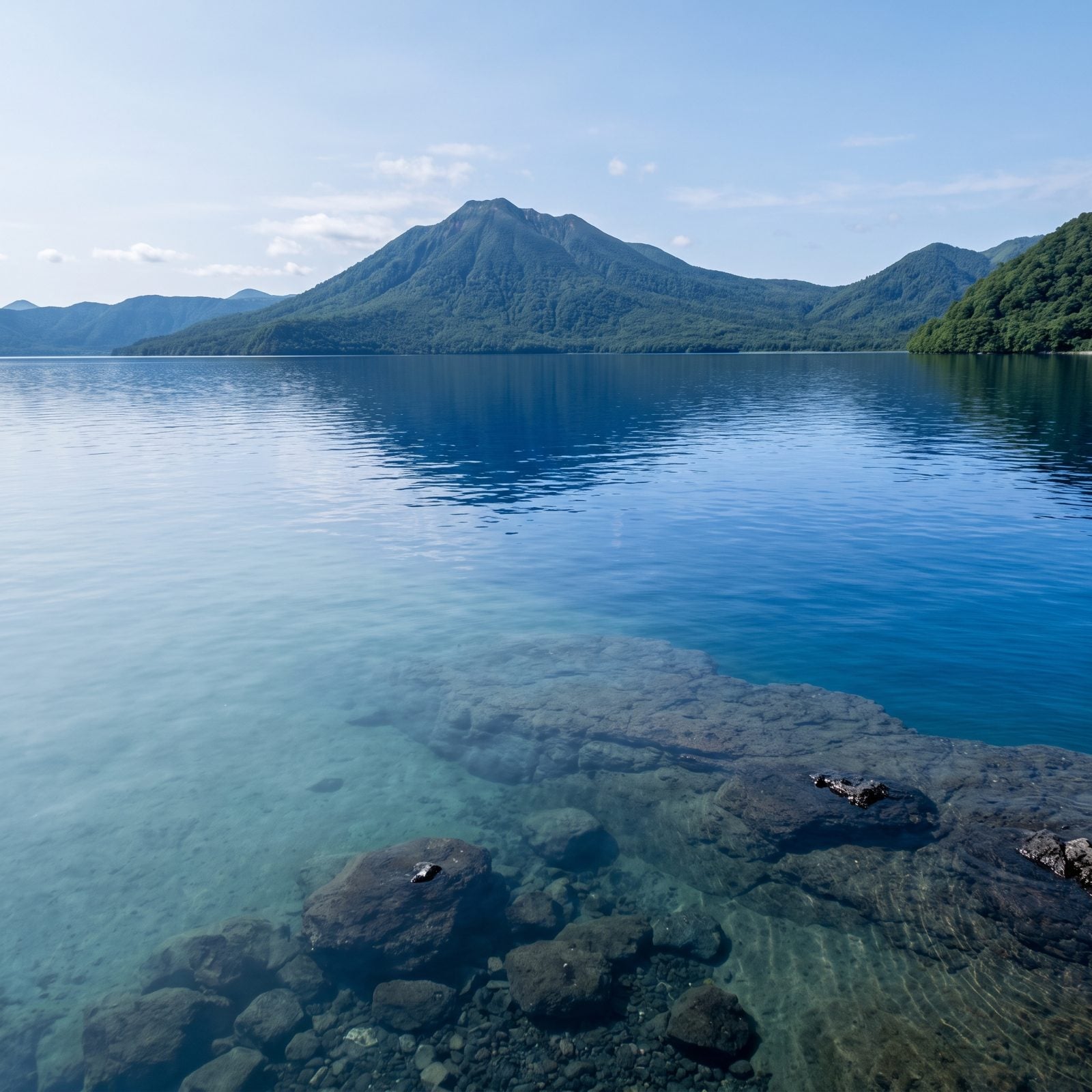
It’s deep enough that it almost never freezes. Lake Shikotsu sits in a volcanic caldera in Hokkaido and keeps ranking among the clearest lakes in Japan, year after year, in the national water quality surveys.
Depth is the whole story. A body of water that deep holds its temperature and resists the sediment stirring that clouds shallower lakes. From a kayak the bottom near shore looks close enough to touch, then drops away into a blue so dark it’s nearly black. The surrounding volcanoes finish the picture, and come winter the shoreline hosts an ice festival built from the lake’s own water.
35. Lake Mashu, Japan: Sapphire Water Walled Off Behind a Steep Caldera
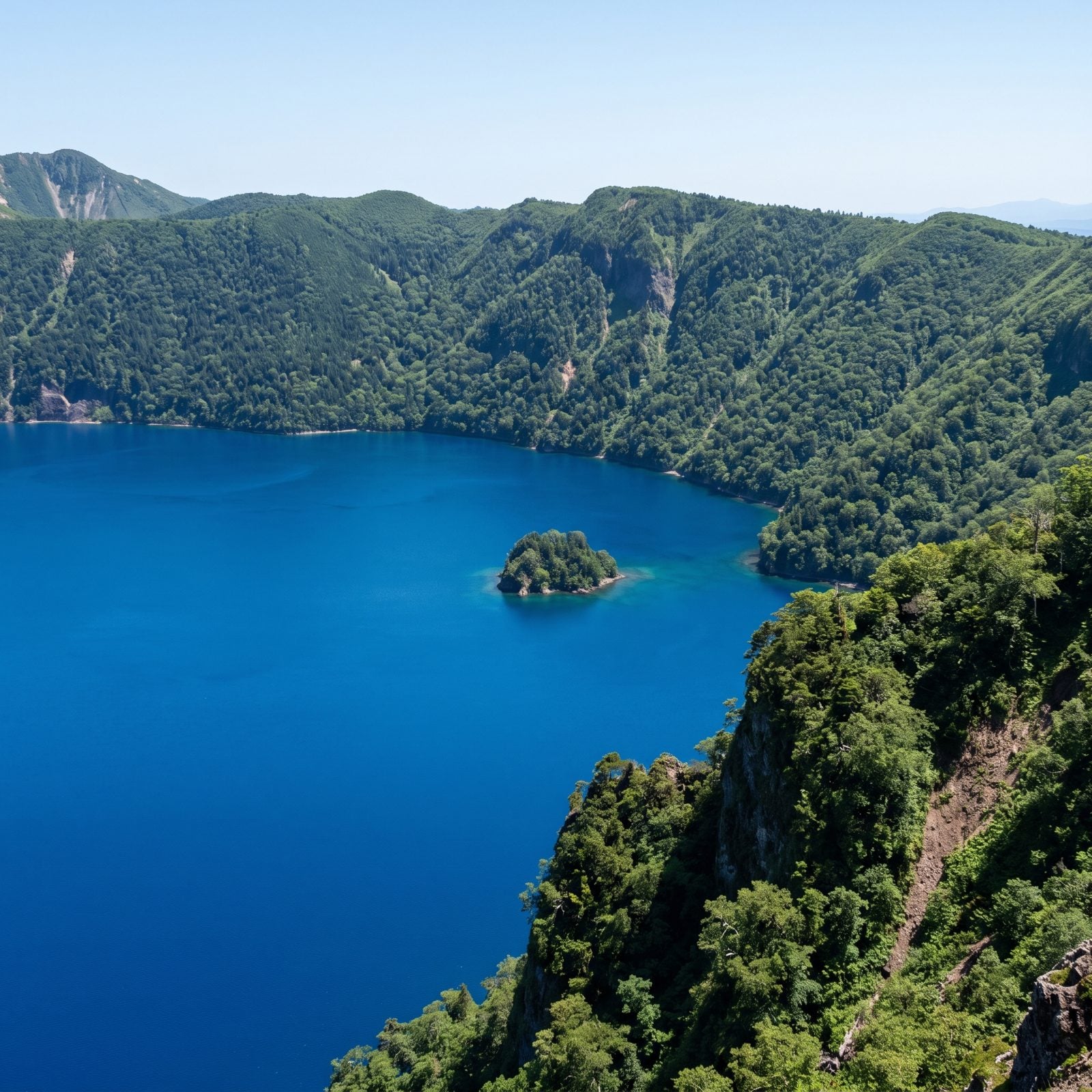
You can’t actually touch Lake Mashu. The caldera walls plunge so steeply into the water that there’s no real shoreline to stand on, so you take it in from the rim, staring down at a sapphire disk ringed by forest.
It has essentially no rivers feeding it, so very little sediment gets in, and historically it posted some of the highest clarity readings ever recorded. Here’s the part the brochures skip: the lake stays fogged in much of the time, and locals half-joke that a clear view of it is bad luck. When the fog does lift, the blue is the kind you don’t forget.
34. Apoyo Lagoon, Nicaragua, Clear Blue Water Inside a Forested Volcanic Crater
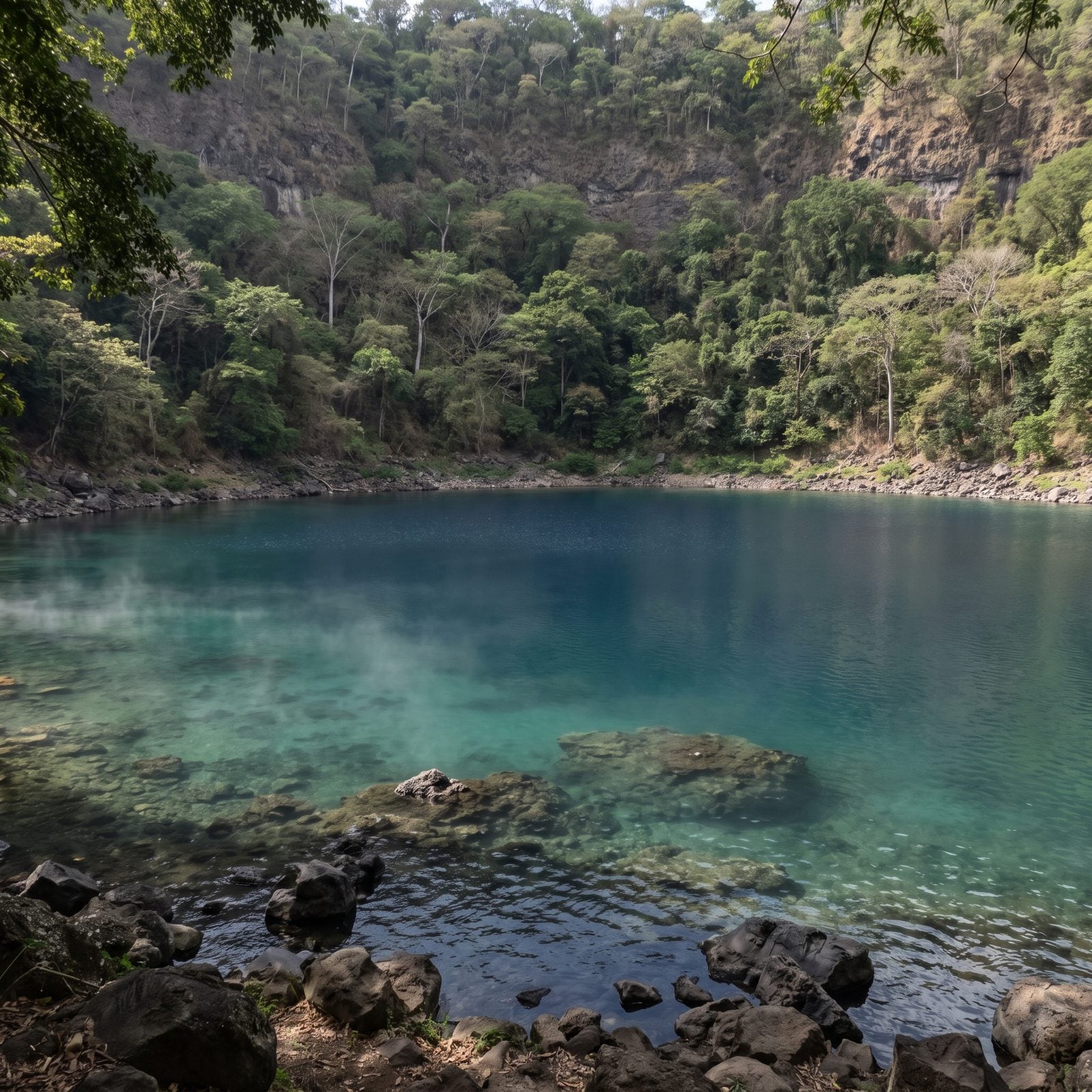
A crater that stopped exploding tens of thousands of years ago and filled with some of the clearest water in Central America. Apoyo sits in a near-perfect circle, ringed by forest so steep the only way to the shore is down.
The trick here is geothermal warmth. Mineral springs feed the bottom, so the water hovers warm year-round and stays strikingly clear because almost nothing drains in from farmland. You float in a blue that reads tropical in photos because it basically is.
33. Blue Lake, Mount Gambier, The Crater Lake That Switches Color Every Summer
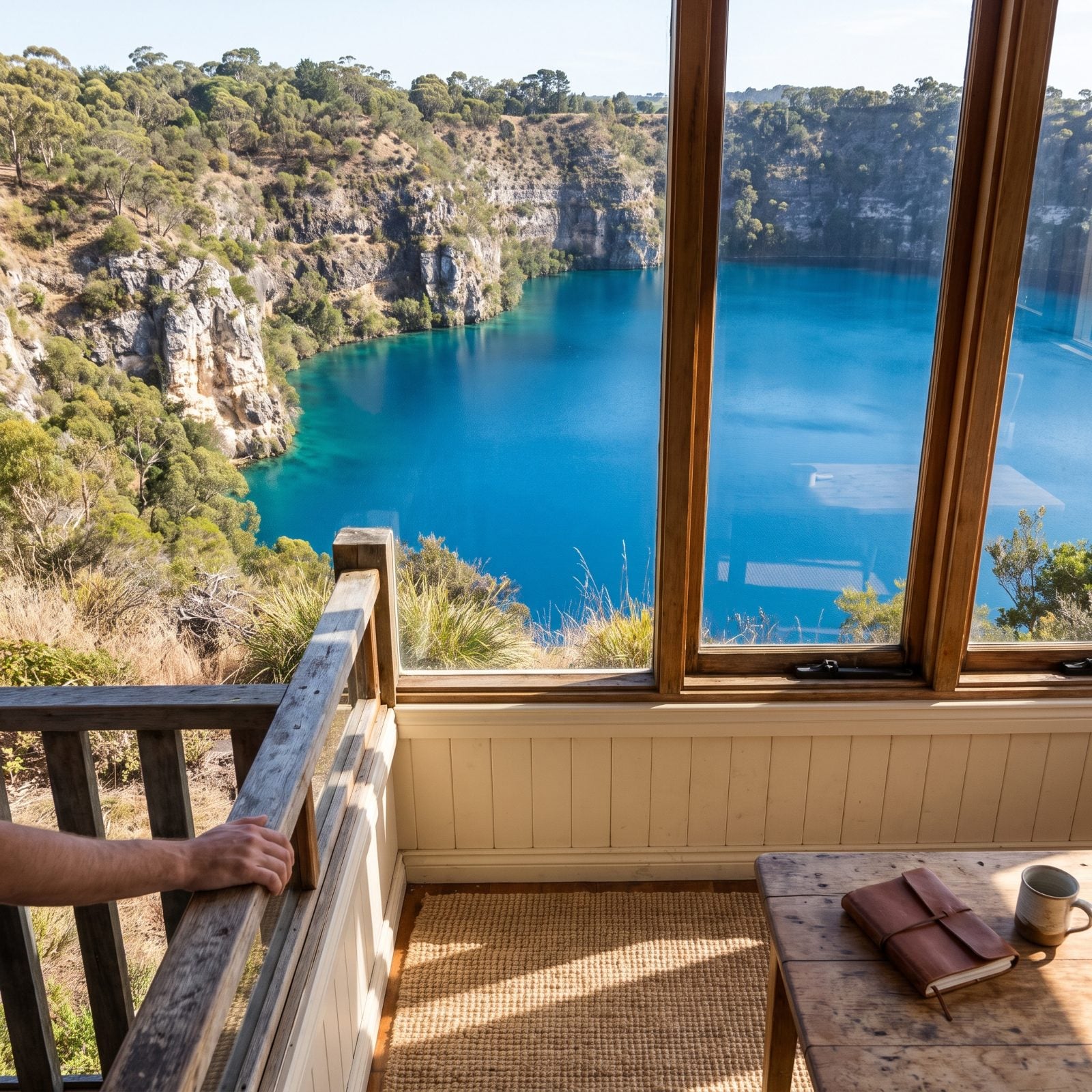
Here is the odd part. For most of the year this lake is a grey, steely blue — then around November it flips to a vivid cobalt and holds that color until autumn, when it fades back.
Scientists link the switch to warming water changing how calcium carbonate behaves near the surface, scattering light differently. The town built its drinking supply around this lake, which tells you how clean it runs. No swimming allowed, so you admire it from the rim and move on.
32. Þingvallavatn, Iceland, Rift-Lake Clarity Beside the Silfra Fissure
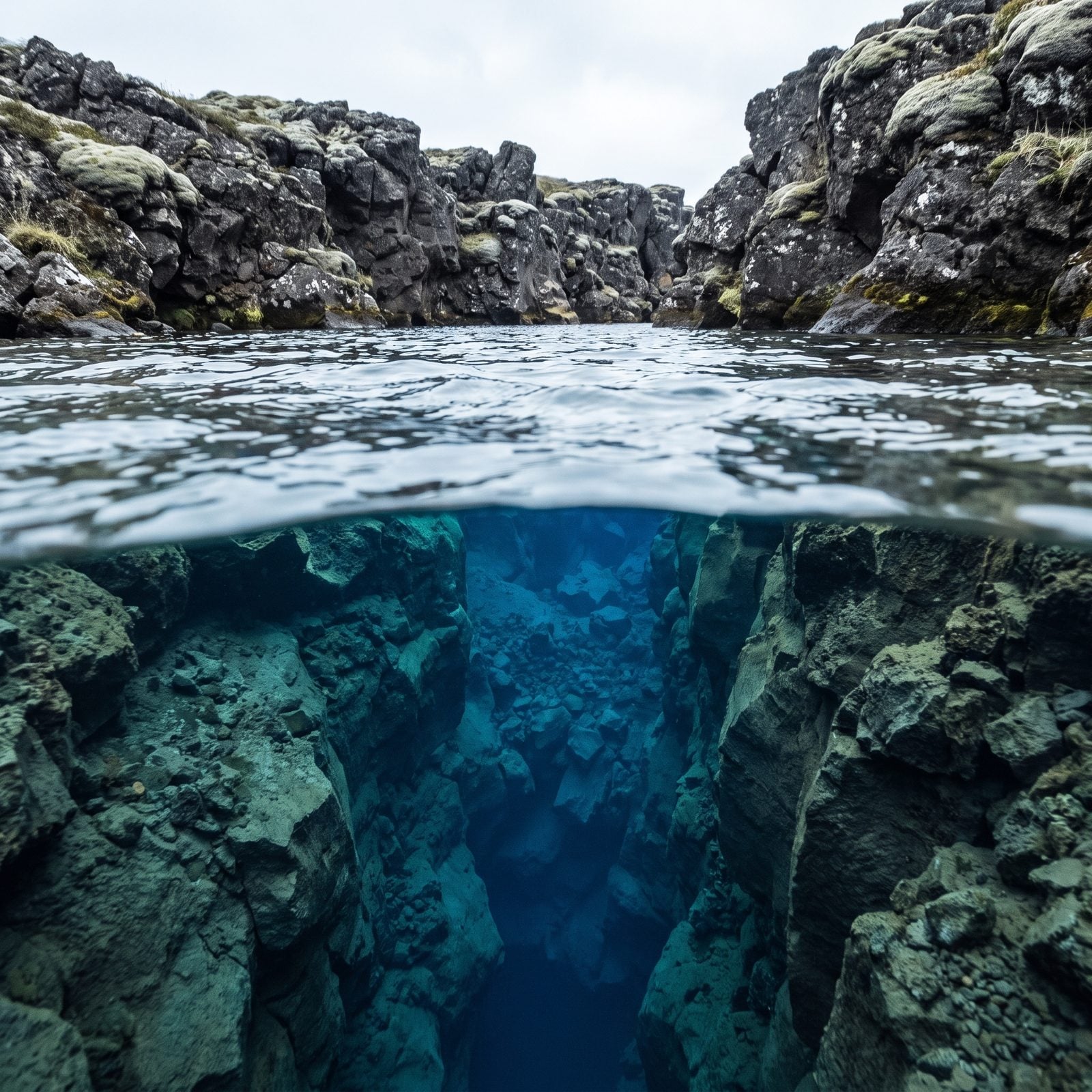
The water in the Silfra fissure is glacial meltwater that has spent decades filtering through porous lava rock before it ever reaches the lake. By the time it arrives it is cold, mineral-free, and clear enough to see astonishingly far down on a good day.
That is why divers pay to drop between two tectonic plates here. North America on one hand, Eurasia on the other. The color is less tropical turquoise and more a cold, glassy blue, but in photos it looks unreal because you can take in the whole rift wall at once.
31. Weissensee, Austria, Blue-Green Water With Hardly a Building in Sight
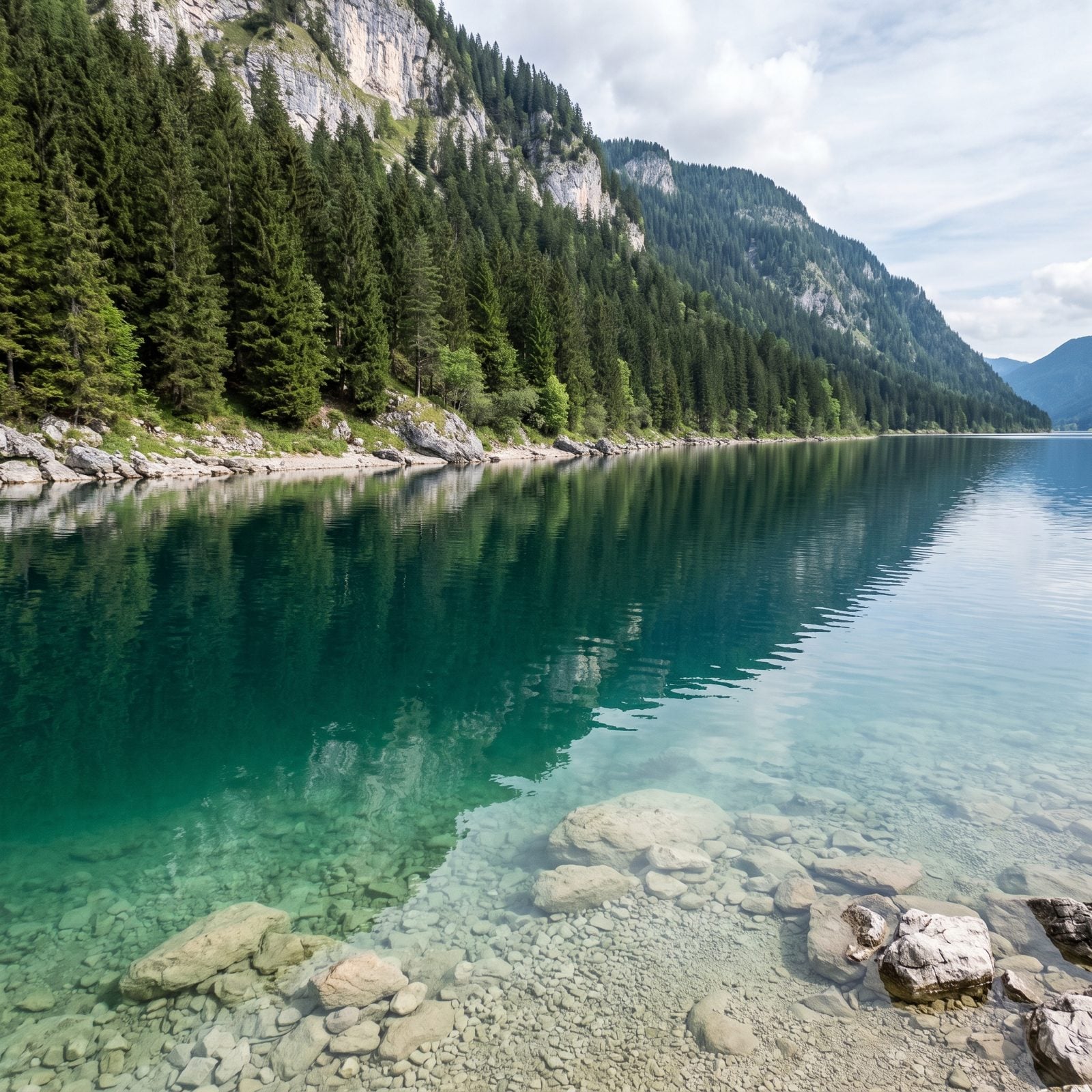
Most of Weissensee’s shoreline has never been built on, and that is no accident — the region capped development hard, so you get a big alpine lake with forest running right down to the stones and very little else.
No runoff, strict rules, water clean enough to drink straight from the lake. The blue-green comes from limestone minerals and that undeveloped bottom. Come winter, the whole thing freezes into one of Europe’s largest natural ice-skating surfaces. A different kind of beautiful.
30. Walchensee, Germany, Caribbean Color Under the Bavarian Alps
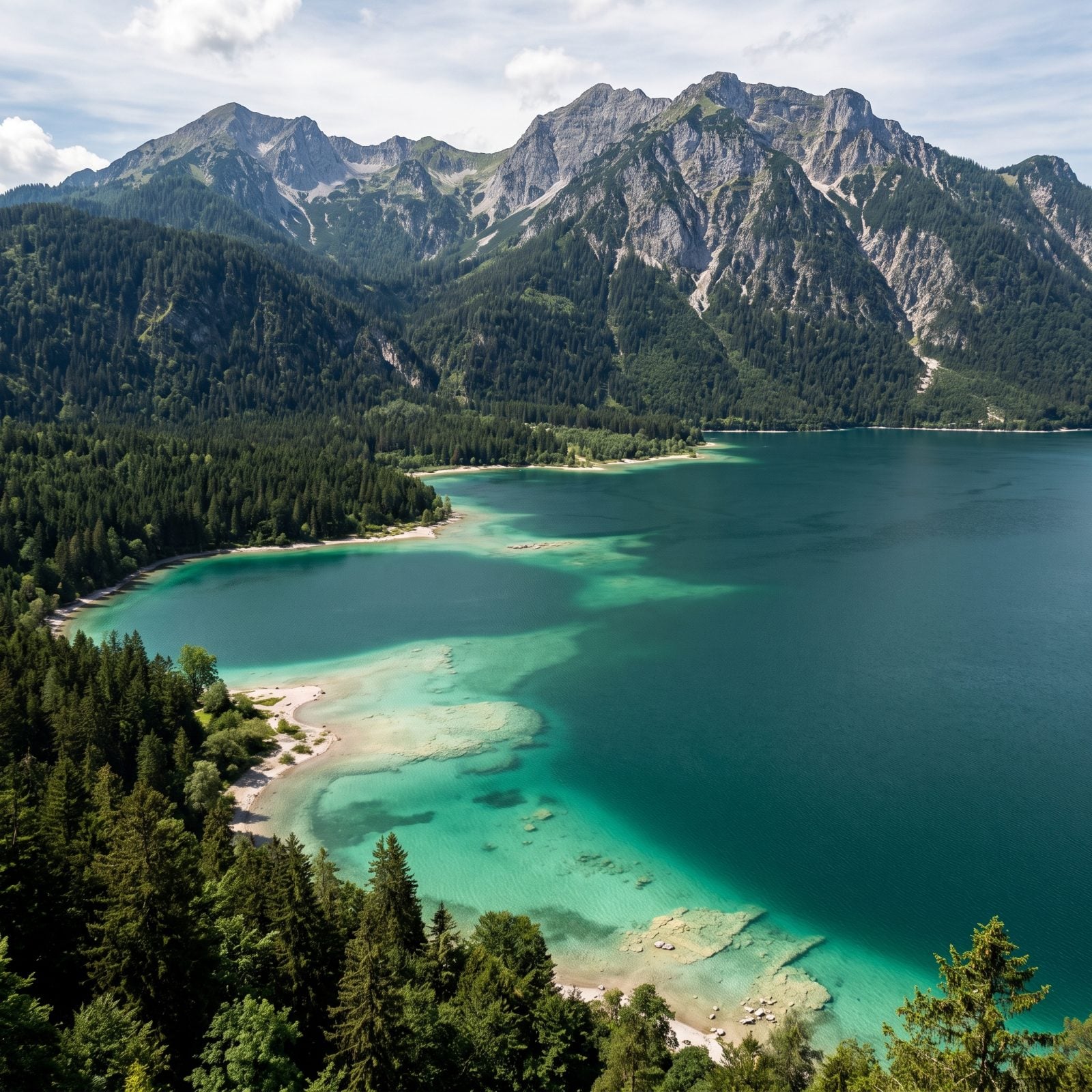
You will see Walchensee tagged as the lake that looks like the Caribbean, and the photos do not lie much.
It is one of the deepest alpine lakes in Germany, fed by mountain water, with pale stone shelves near the shore that throw back that improbable turquoise. The depth matters. Deep clean water scatters blue, shallow stony water glows green, and where the two meet you get that postcard gradient. Windsurfers love it too, a little at odds with the calm you might expect, but the color holds up either way.
29. Lake Tenno, Italy, The Pocket-Sized Turquoise Basin Above Lake Garda
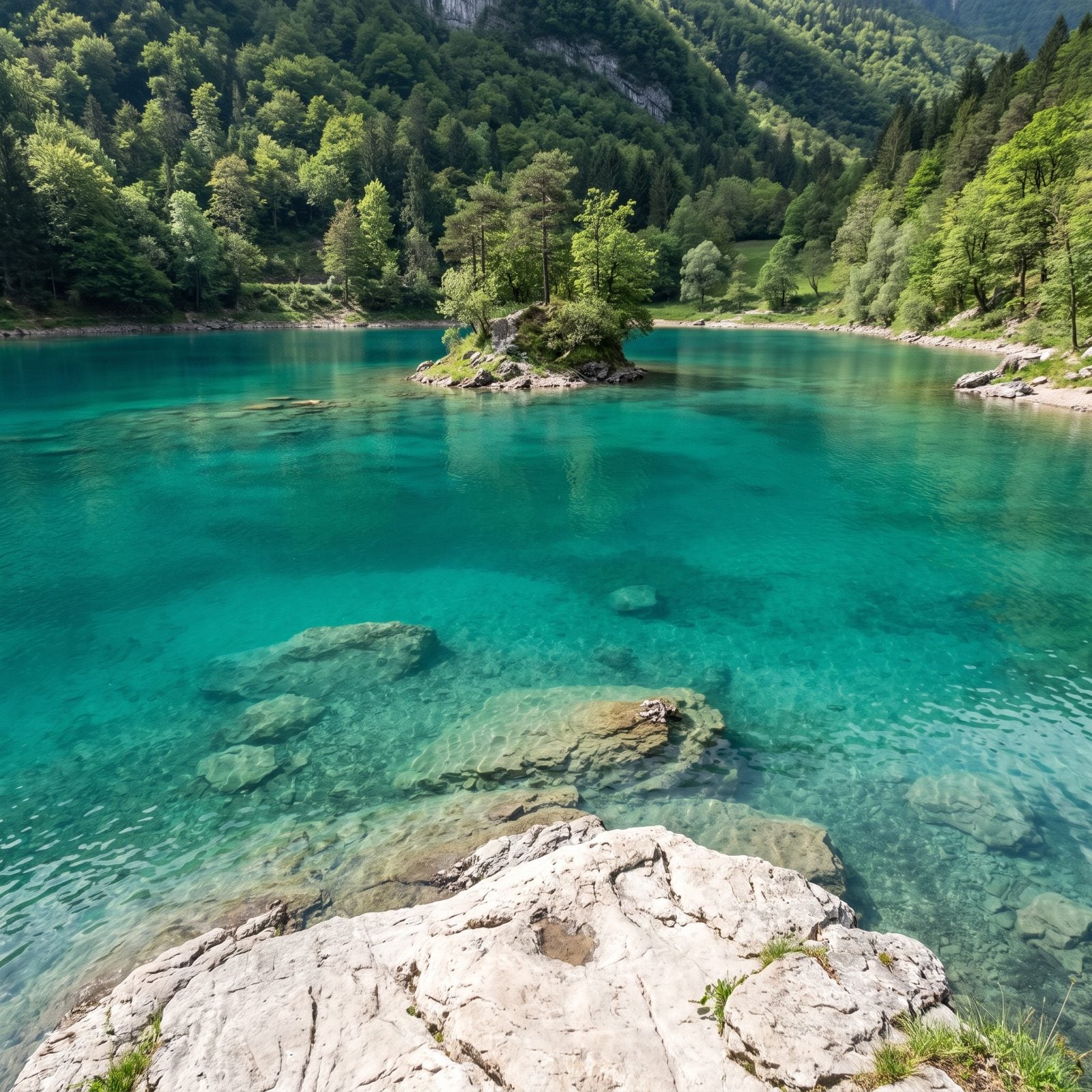
Small lake, big impression. Tenno sits above the north end of Lake Garda and holds an almost artificial-looking turquoise that shifts shade through the season.
The color comes from fine glacial-fed minerals and a shallow limestone bottom. There is even a tiny island that appears and disappears as the water level rises and drops. Cold, compact, and it photographs like someone cranked the saturation — except nobody did.
28. Lake Cauma, Switzerland, Turquoise Ringed by Alpine Forest
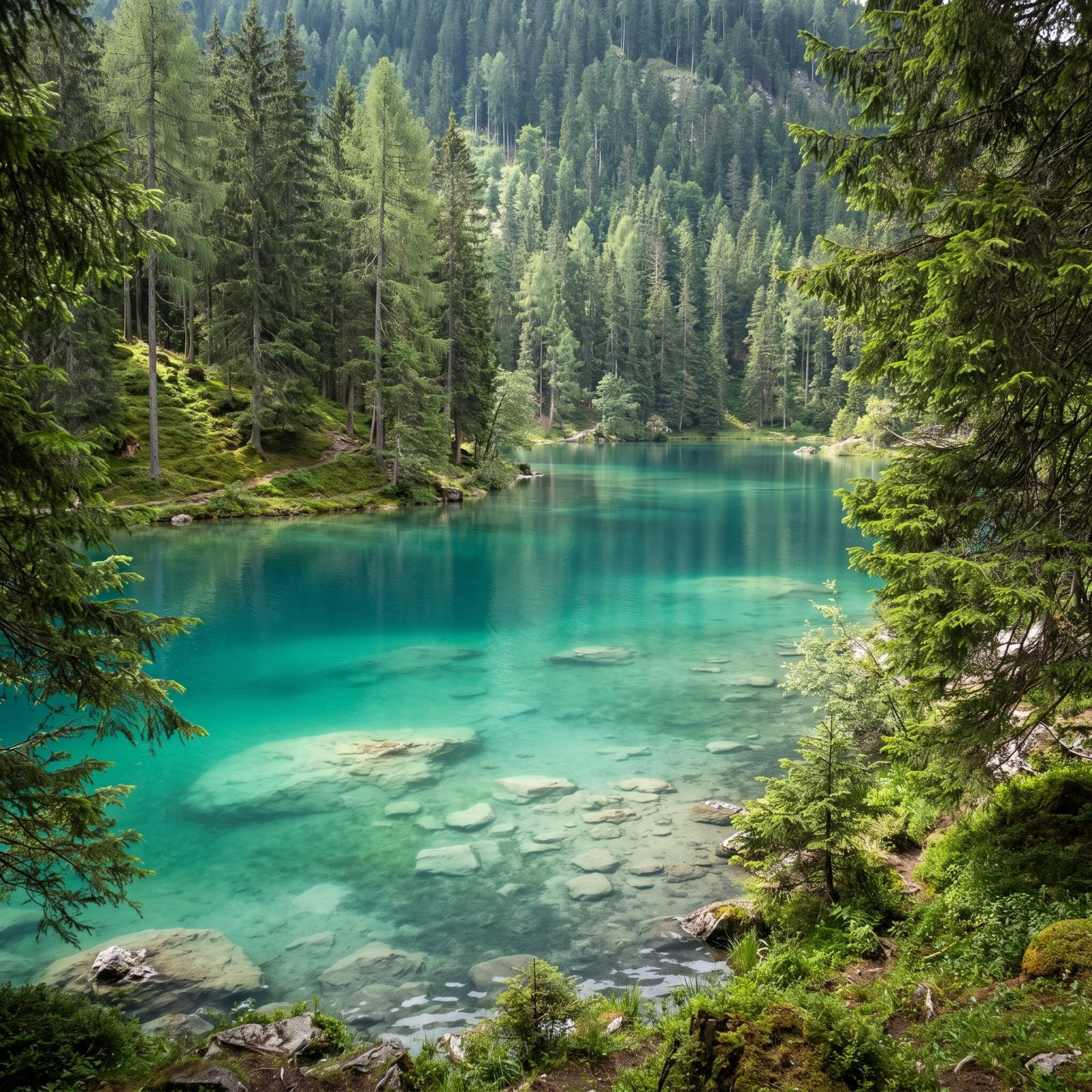
Cauma is fed largely by underground springs, which is part of why the water runs so clear and why it warms up more than you would expect from a mountain lake.
Spruce and larch wrap the shore so completely that from the water you see almost nothing but trees and turquoise. Getting there means a walk or a funicular — no road to the edge — and that bit of effort keeps the place calm. The green-blue shifts with the light all day. Worth timing a visit for late morning, when the sun finally hits the shallows.
27. Blausee, Switzerland, Fallen Logs Glowing Through Electric-Blue Water
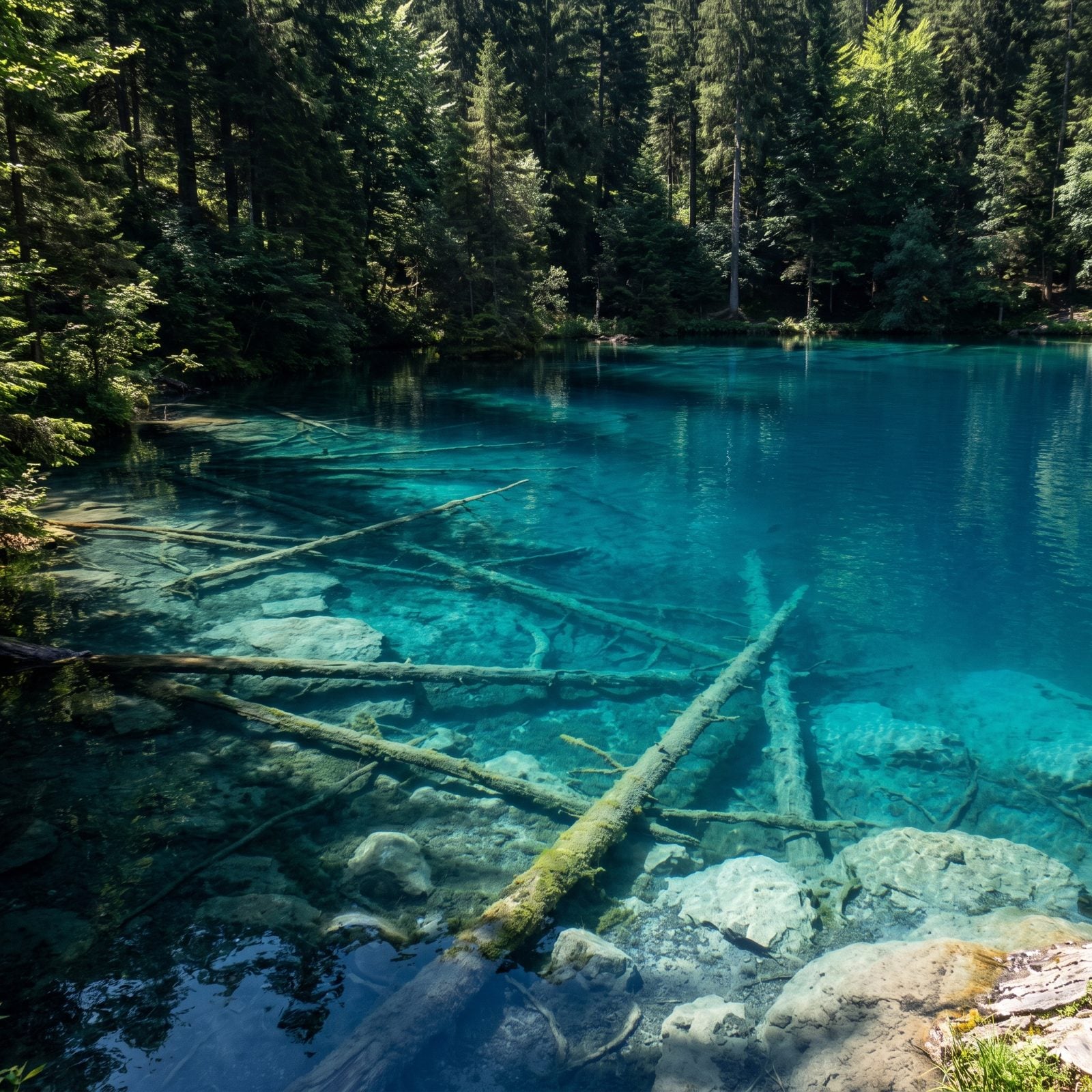
Tiny, spring-fed, and almost disturbingly clear. Blausee’s claim to fame is that you can see fallen tree trunks resting on the bottom as if they were floating in air.
The water comes from mountain springs filtered through rock, so it carries almost no sediment, and fine mineral particles scatter the light into that electric blue the lake is named for. It is a managed nature park with an entry fee, which some people grumble about. The clarity is genuine, though, and those submerged logs really do look suspended in blue nothing.
26. Lake Malawi, Tropical Clarity Over Reefs of Colorful Cichlids
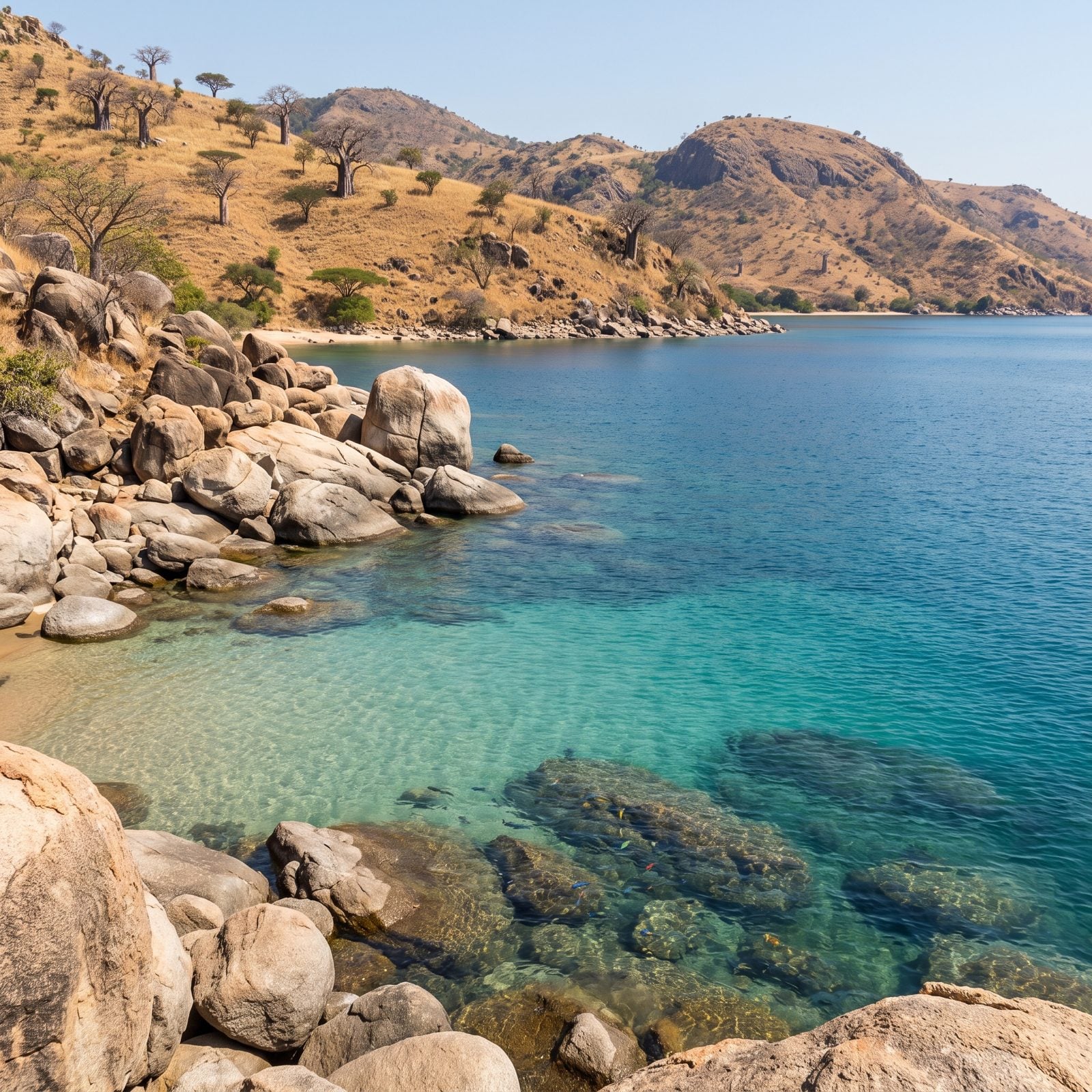
This is the one that genuinely looks tropical because, biologically, it is. Lake Malawi runs warm, clear, and packed with more fish species than any other lake on the planet.
The rocky shoreline reefs host hundreds of cichlids in colors you would expect on a coral reef — yellows, electric blues, oranges. Snorkel the granite boulders and the visibility over the rocks is remarkable for freshwater. Turquoise over the sandbars, deep blue over the drop-offs, and the whole thing gives you that ocean-lagoon look with no salt required.
25. Lake Ohrid, Ancient Water With Pockets of Bright Turquoise
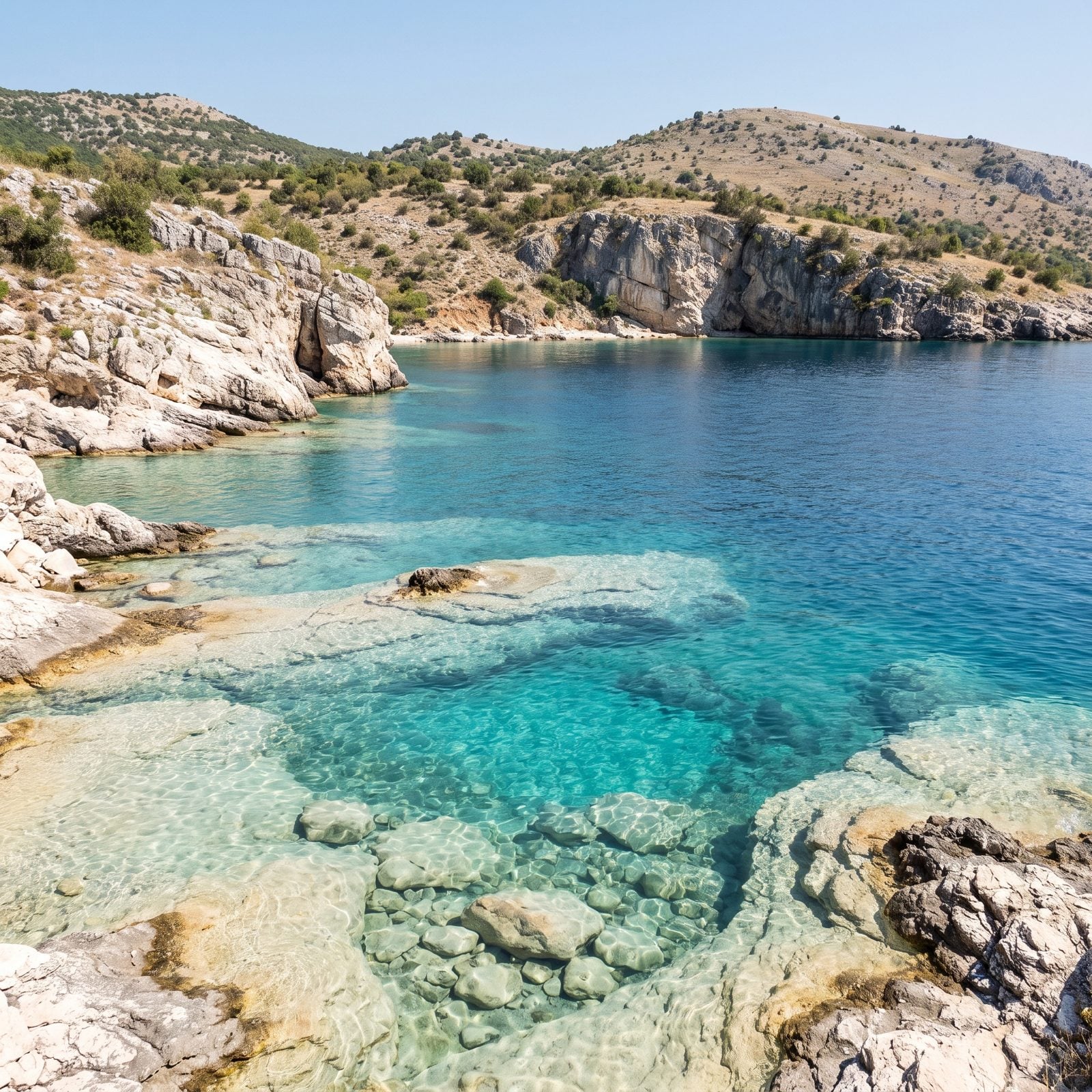
One of the oldest lakes on Earth — millions of years old — and still astonishingly clear. Ohrid is fed by underground springs flowing through karst limestone, which filters the water and keeps the coves glowing turquoise over pale stone.
The age is what makes it strange. All that time in near-isolation produced creatures that live nowhere else, which is why the lake carries a conservation designation. The deep center reads a serious blue, and the sheltered coves near the limestone shore turn that bright Mediterranean turquoise that pulls people in for a swim before they have thought it through.
24. Kayangan Lake, Philippines, Limestone Cliffs Around a Glass-Clear Lagoon
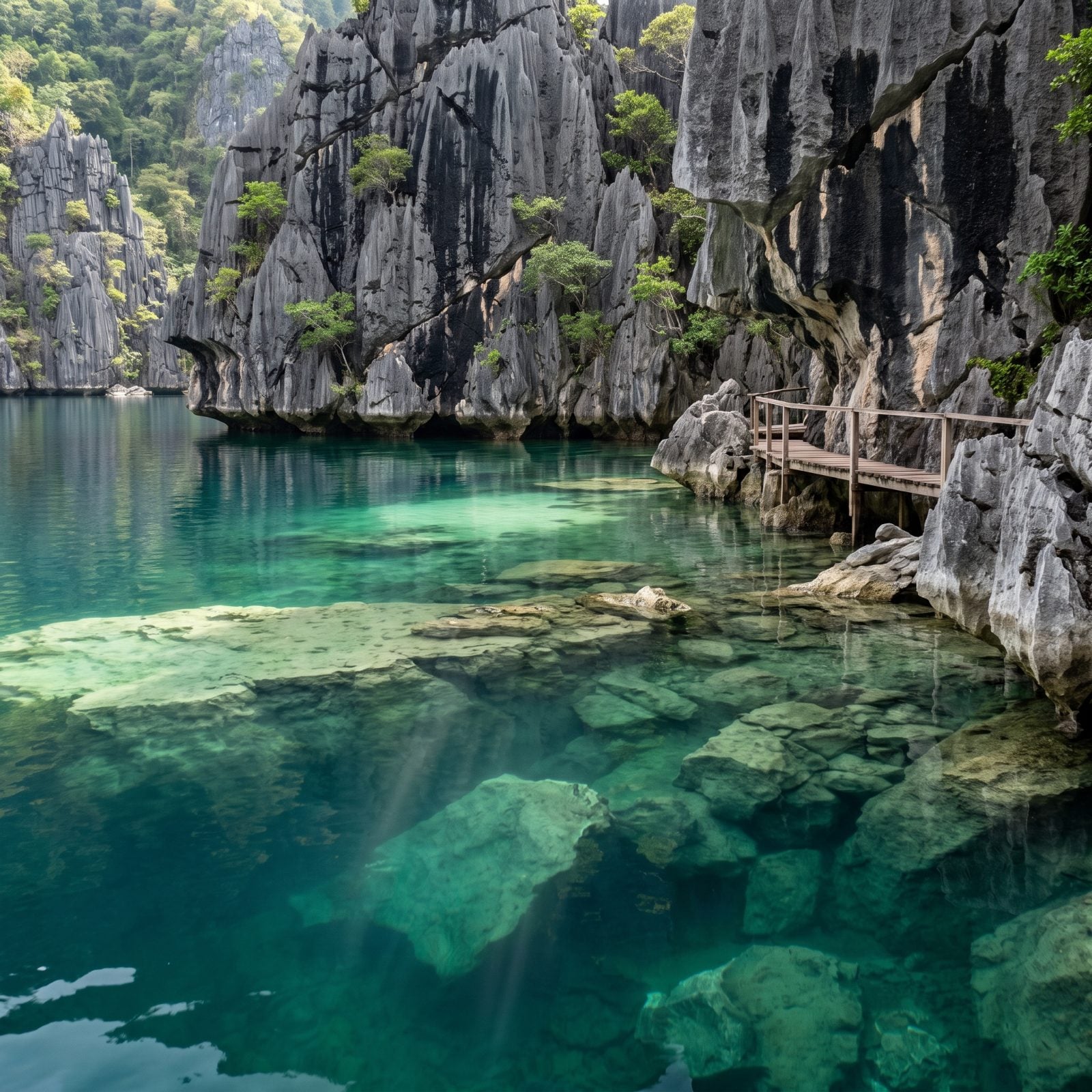
Kayangan is the one that fooled you first. That photo of impossibly clear water ringed by gray limestone spikes near Coron? Real, and somehow underwhelming compared to standing there.
The clarity comes from a strange mix. This is a brackish lake, part freshwater fed by springs, part seawater seeping through the porous karst, and the limestone filters almost everything, so you can count individual rocks eight or ten meters down like they’re sitting in air.
Getting there means a short, steep climb over a saddle, which thins the crowds a little and rewards you with the postcard viewpoint before you even touch the water.
23. Bacalar Lagoon, Mexico, White Limestone Creating Bands of Tropical Blue
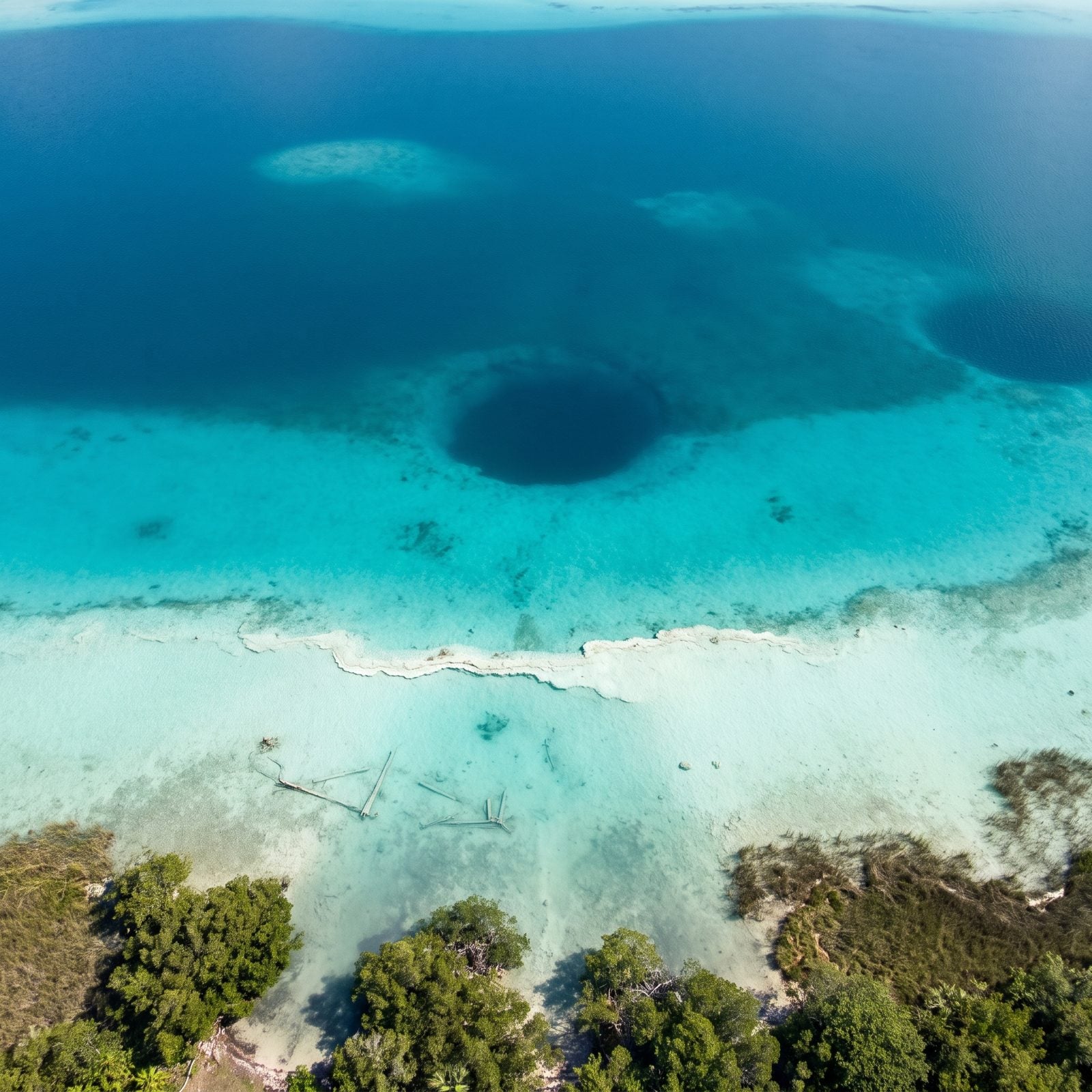
They call it the Lagoon of Seven Colors, which sounds like marketing until you see it stripe itself across your whole field of view.
The trick is the bottom. Bacalar sits on white limestone and soft marl, and the shallow water over that pale floor throws back the lightest aqua you’ll find outside a swimming pool. Then the lagoon drops into cenotes, deep sinkholes that read as sudden slabs of dark blue, and those color borders stay sharp because the water barely moves.
And here’s the uncomfortable part nobody puts on the brochure. That pale floor is partly built by living microbial structures called stromatolites. Step on them, scrape them with an anchor, slather on the wrong sunscreen, and you’re damaging something that took centuries to form. Reef-safe sunscreen isn’t a suggestion here.
22. Lake McKenzie, Australia, Rainwater Over Brilliant White Silica Sand
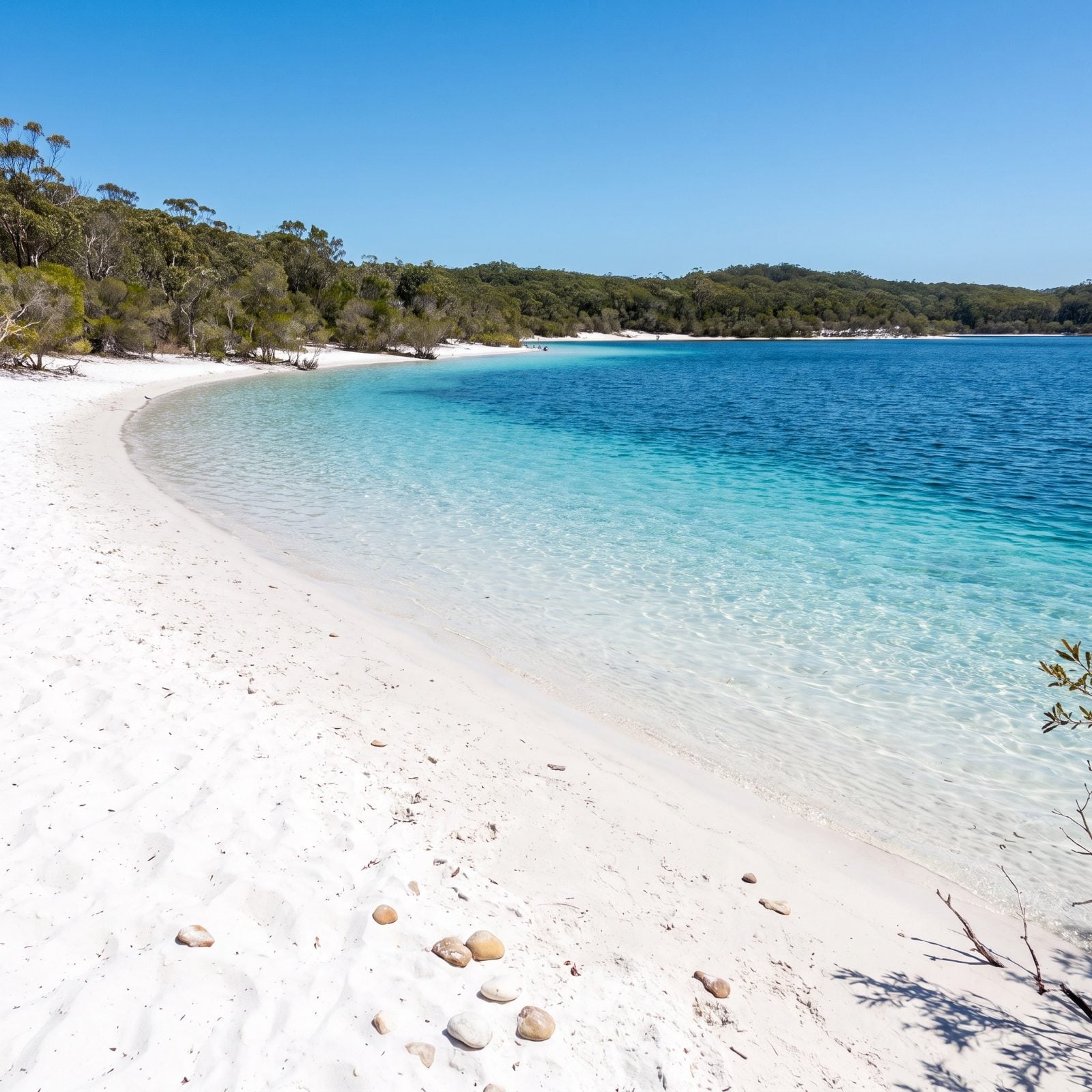
This lake has no inlet and no outlet. It’s a perched dune lake, sitting in a hollow of sand high above the water table, filled entirely by rainwater. Nothing muddy ever runs into it.
The floor is almost pure white silica, so clean it squeaks underfoot. People used to rub it on their jewelry to polish it, and that white base under rain-clear water is why McKenzie photographs like the Caribbean dropped into an Australian forest.
Faintly acidic, nutrient-poor, which keeps it sterile and glassy. Just leave the sunscreen and the bug spray off before you swim, because there’s nothing flowing through to flush them out.
21. Lake Bohinj, Slovenia, Transparent Alpine Water Inside Triglav National Park
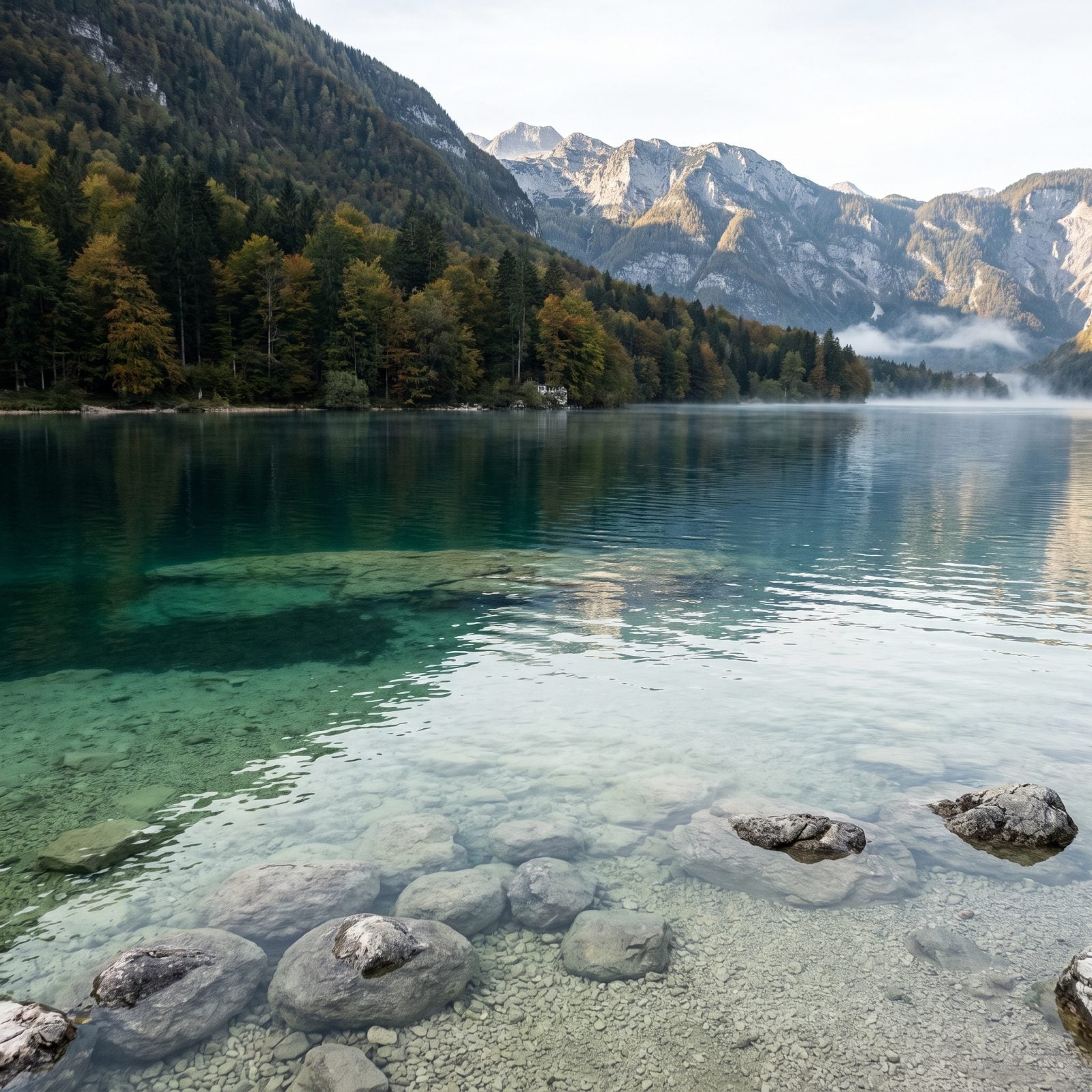
Bohinj gets overlooked because its famous little sister, Lake Bled, has the island and the church and the Instagram queue. Bohinj just has clearer water, more of it, and almost nobody fighting you for the view.
Sitting inside Triglav National Park, it’s fed by cold mountain streams running over limestone, so the water stays transparent down to the stones. On a still morning the Julian Alps print themselves across the surface so cleanly you lose track of where rock ends and reflection begins.
The water is cold enough to steal your breath in July, and somehow that’s part of the appeal.
20. Eibsee, Germany, Transparent Water Around Forested Islets
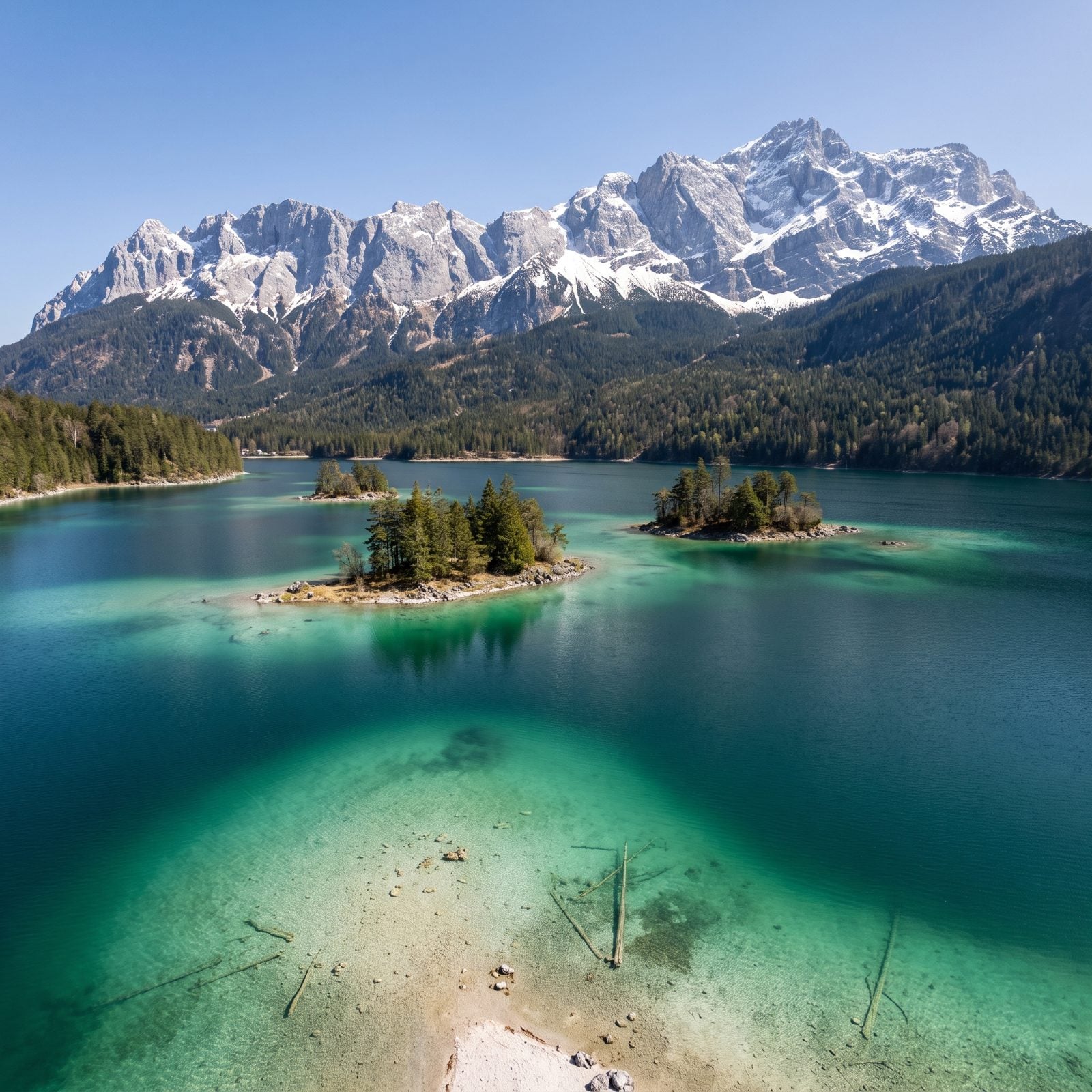
Eibsee sits at the foot of the Zugspitze, Germany’s highest mountain, and the contrast does half the work: turquoise water, dark spruce islets, raw gray rock towering over all of it.
The color is pure geology. Finely ground limestone, often called rock flour, hangs suspended in the glacier-and-spring-fed water and scatters light toward turquoise. Over the pale gravel shallows between the little islands, it glows almost tropical.
19. Achensee, Austria, Aquamarine Water Framed by the Karwendel Alps
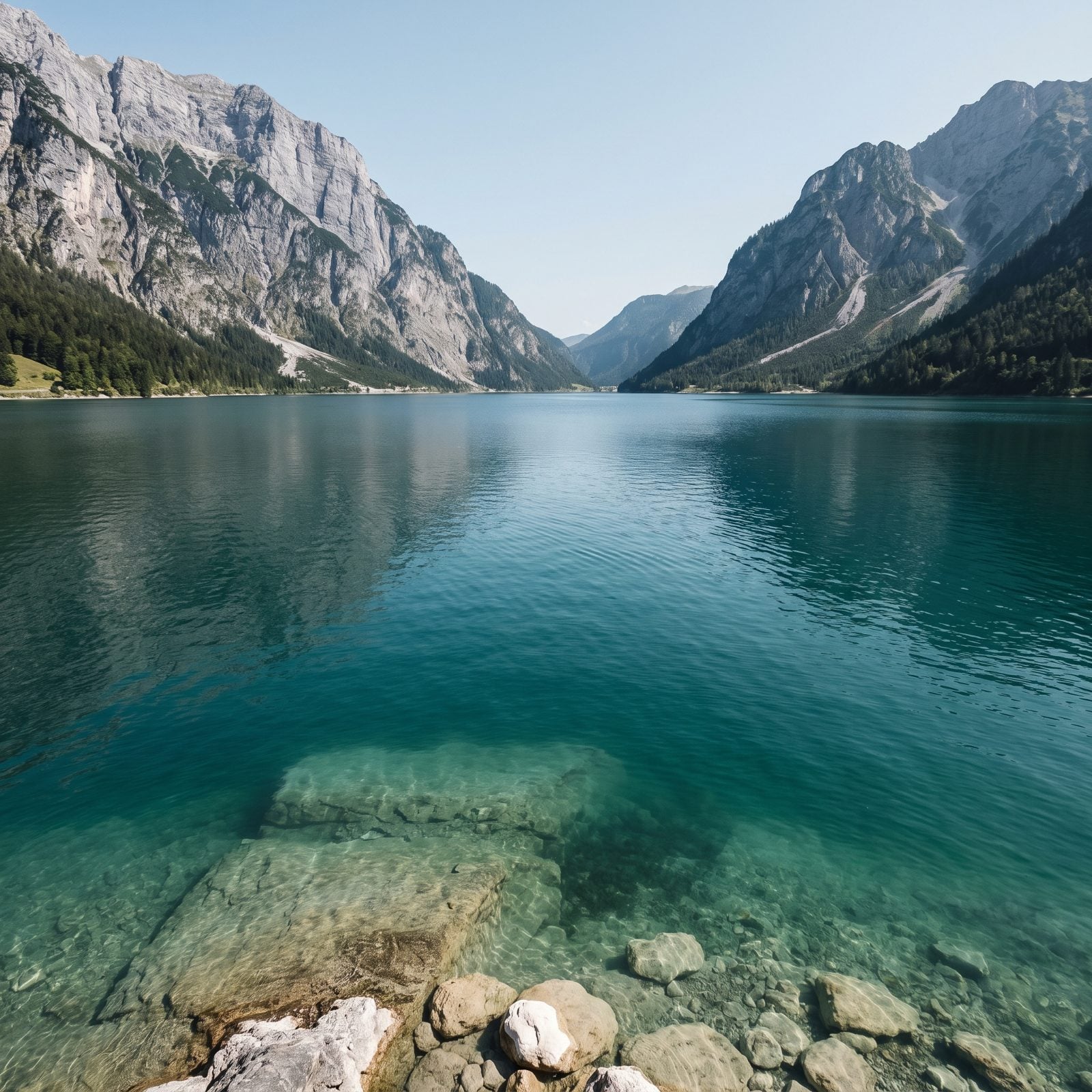
Austria’s largest lake in Tyrol gets nicknamed the Fjord of the Alps, and standing at its edge you understand why.
Achensee stretches nearly nine kilometers between two mountain ranges, the Karwendel on one side, the Rofan on the other, and the water holds a deep aquamarine that looks dyed. It isn’t. Spring-fed, cold, drinking-water quality, with very little sediment to cloud it.
The color shifts with the hour. Flat and milky-turquoise under morning light, it turns a saturated inky teal by afternoon when the wind picks up, which it reliably does here. Sailors love that wind. Swimmers wade in slowly.
18. Königssee, Germany, Emerald Water Between Sheer Alpine Walls
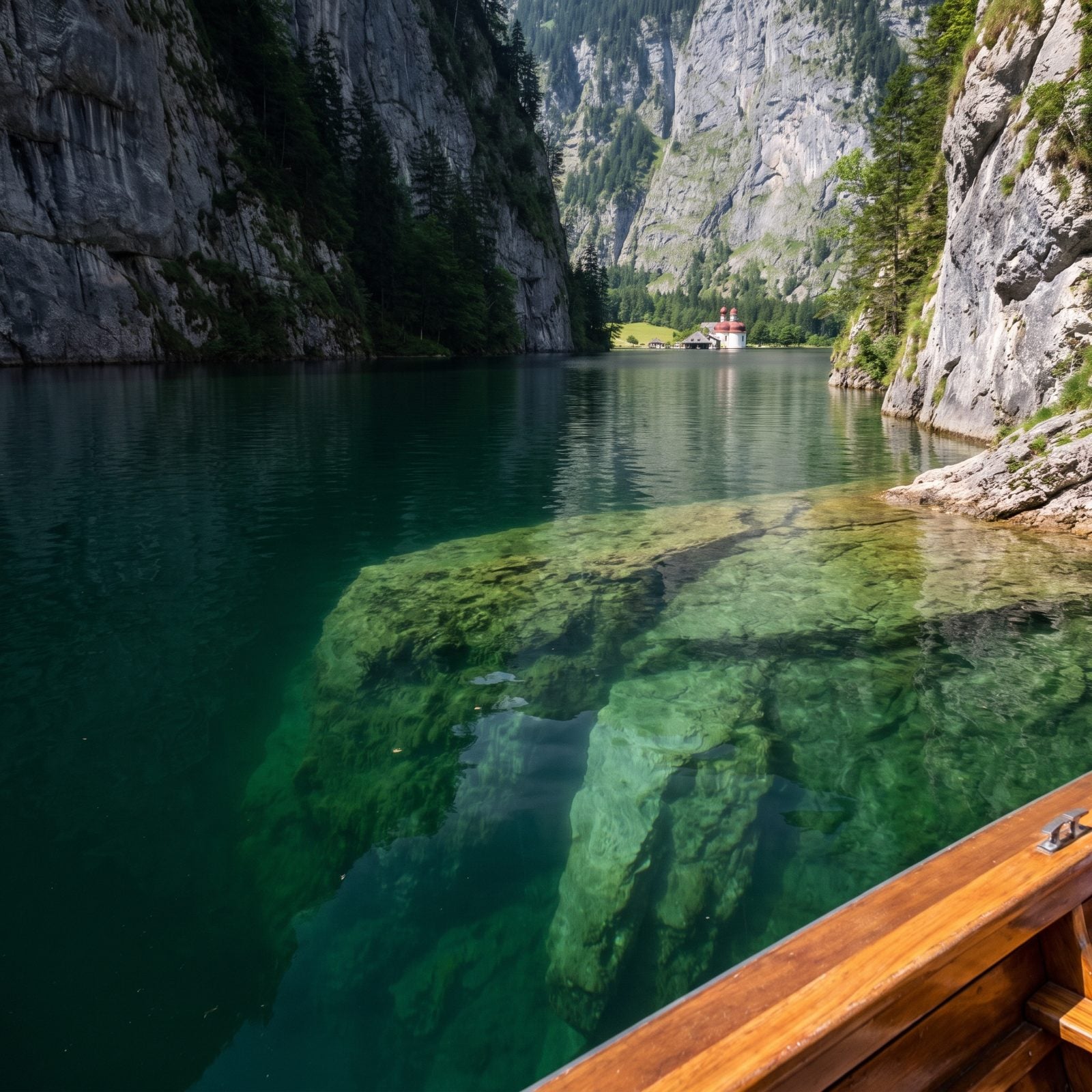
Königssee doesn’t do turquoise. It does a deep, almost gemstone emerald that looks lit from inside.
Hemmed in by near-vertical cliffs in Berchtesgaden National Park, this is one of the cleanest lakes in Germany, clear enough that the water is considered drinkable. The green comes from the way the deep, cold, mineral-rich water absorbs and scatters light against those steep rock walls.
To protect it, only electric and human-powered boats have been allowed here for over a century. No gasoline fumes, no oil film, no roar. The quiet is so complete that boat operators stop mid-lake to play a flugelhorn and let the cliffs echo it back.
17. Lake Annecy, France, Spring-Fed Blue Water Below Limestone Peaks
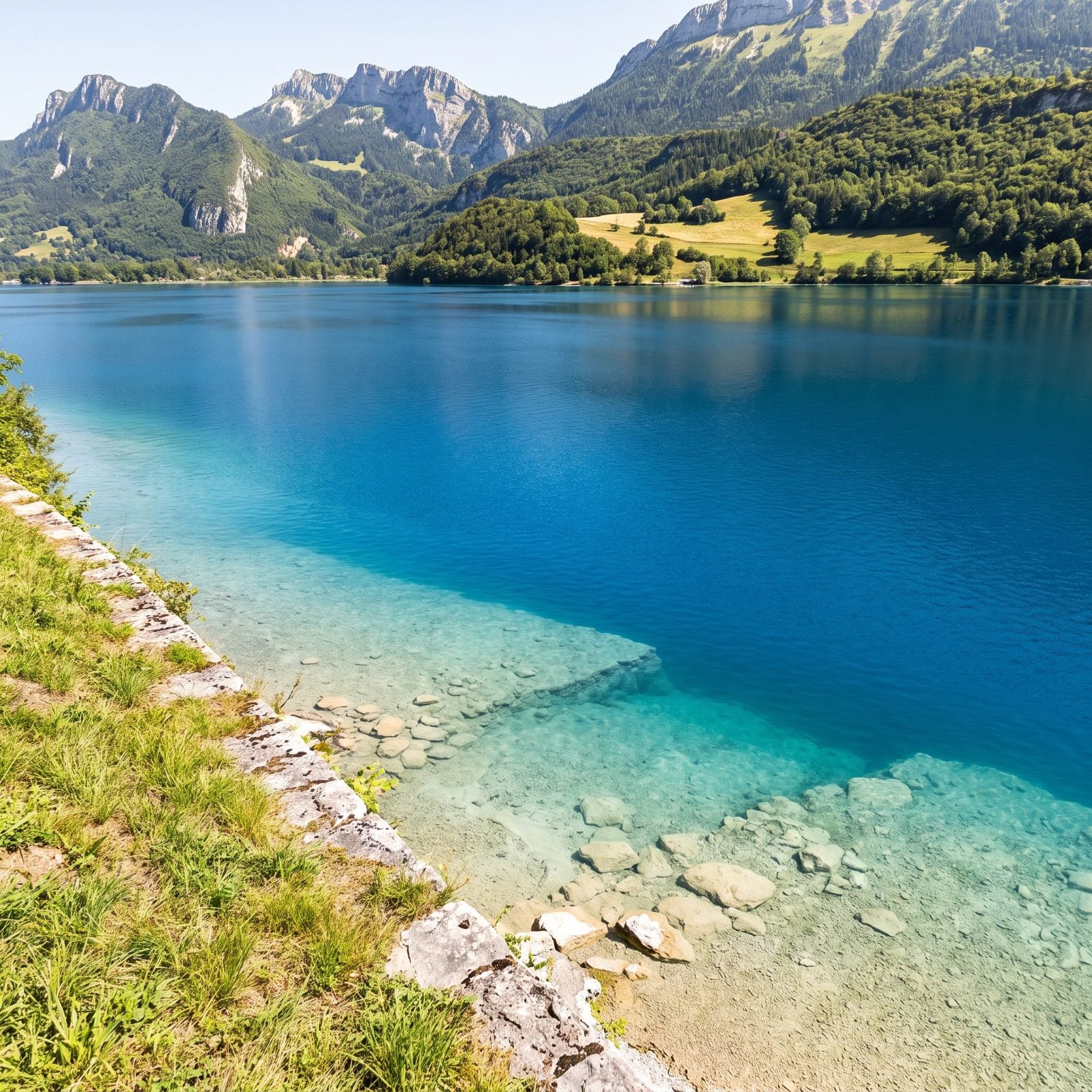
Annecy earns its reputation as one of Europe’s cleanest lakes, and the water pays you back with a blue that borders on indecent.
Fed by mountain springs and a handful of streams, with the strictest anti-pollution rules enforced since the 1960s, the lake has clarity that locals are frankly smug about. And they should be. Over the shallow gravel near shore it goes pale turquoise; a few strokes out, it drops into royal blue.
The old town threaded with canals gets all the attention, but the real move is a loop of the cycle path around the water, stopping to swim wherever the color looks best. Which is everywhere.
16. Lake Garda, Italy, Pale Turquoise Bays Along the Mountainous North Shore
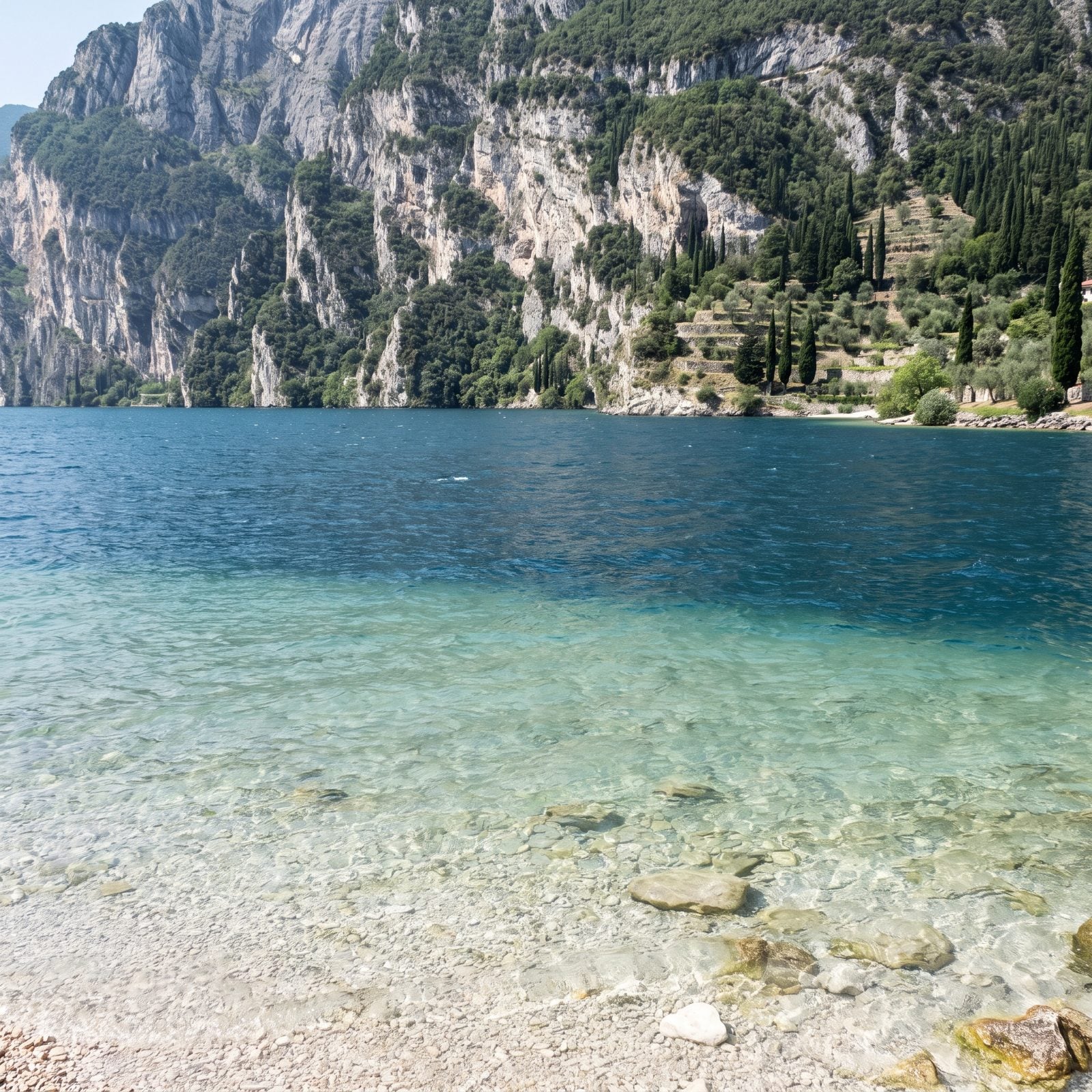
Most people picture Garda as a wide blue Italian holiday lake, and the southern end delivers exactly that. Go north and it changes character entirely.
Up where the mountains close in around Riva del Garda and Limone, the lake narrows into something more fjord-like, and the sheltered bays over pale gravel turn a clean turquoise you don’t expect this far from a coastline. The pale limestone floor does the color work, same as Bacalar half a world away.
15. Plitvice Lakes, Croatia, Travertine Basins Linked by Turquoise Waterfalls
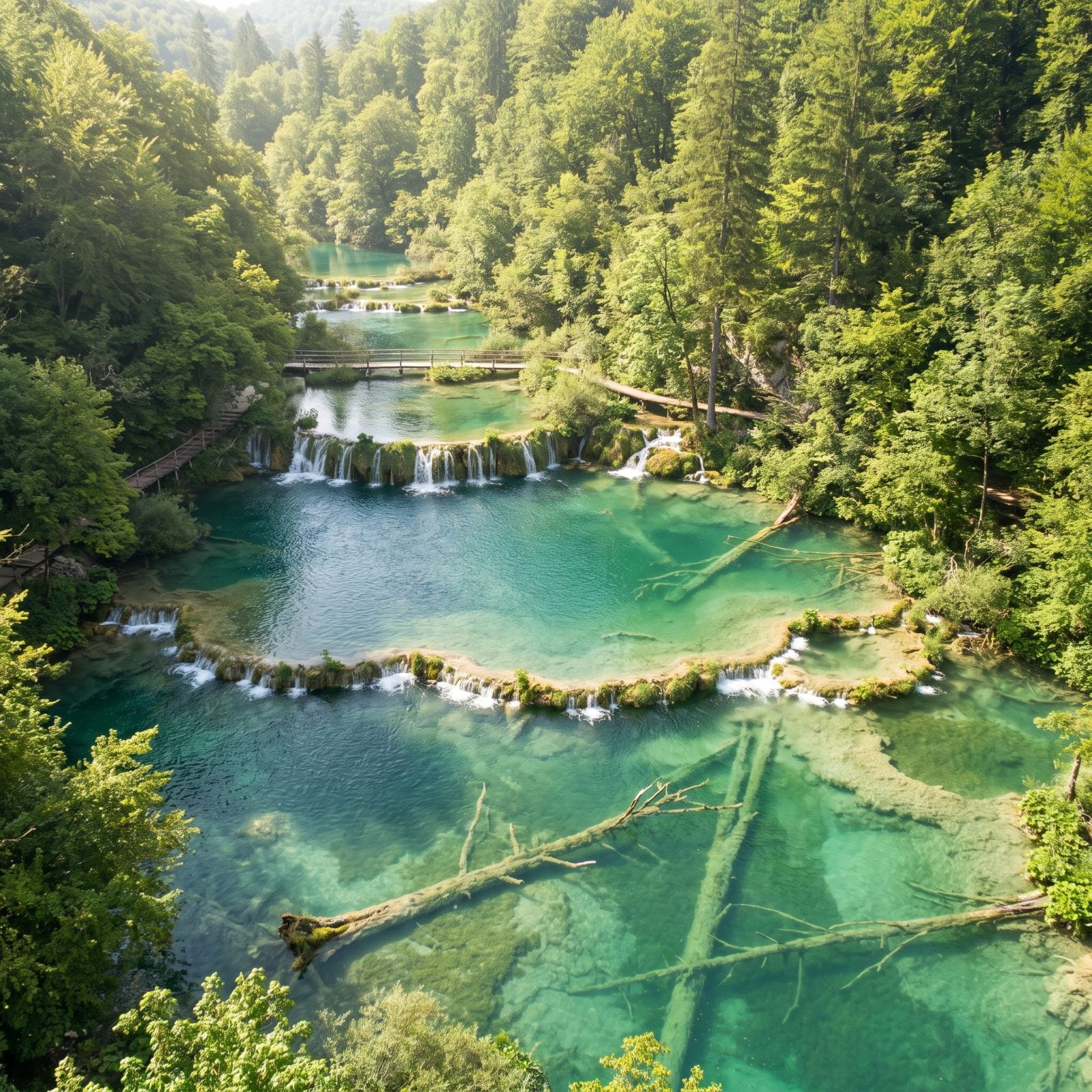
Plitvice isn’t one clear lake. It’s sixteen of them, stacked down a wooded valley like a staircase, each one tipping into the next over natural stone dams.
The turquoise here is almost cartoonish in photos, and the explanation is genuinely strange. The water is thick with dissolved minerals, mostly calcium carbonate, that precipitate out and build travertine barriers a little higher every year. Those same minerals, plus the sunlight hitting the pale deposits, throw back that electric blue-green. The color literally shifts depending on the light and the mineral load.
One hard rule the park enforces without apology: no swimming, anywhere, ever. The travertine is alive and growing, and a single careless foot can undo years of it. You look, you walk the boardwalks, you leave it alone. Fair trade for water that looks like this.
14. Lake Oeschinen, Switzerland, Bright Blue Water Below Glacial Cliffs
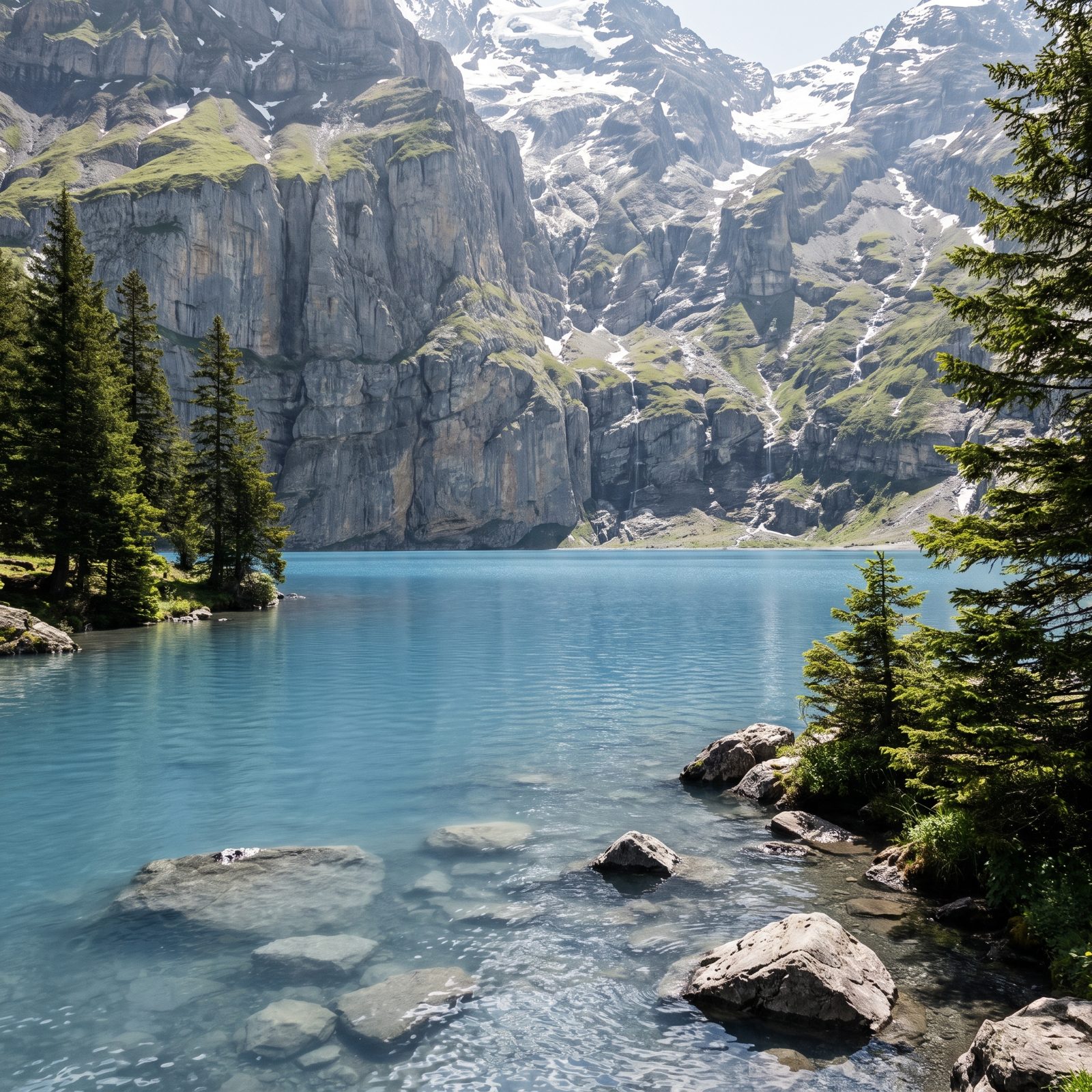
This is the one most people reach by cable car and still gasp at. Oeschinensee sits in a bowl under the Blüemlisalp, and the blue is almost cartoonish, like someone spilled dye above Kandersteg.
That color is rock flour. Glaciers grind stone into powder so fine it hangs in the water and scatters light back as electric blue, and the lake stays bitterly cold because it’s fed by meltwater straight off the ice.
13. General Carrera Lake, Chile and Argentina, Turquoise Water Around the Marble Caves
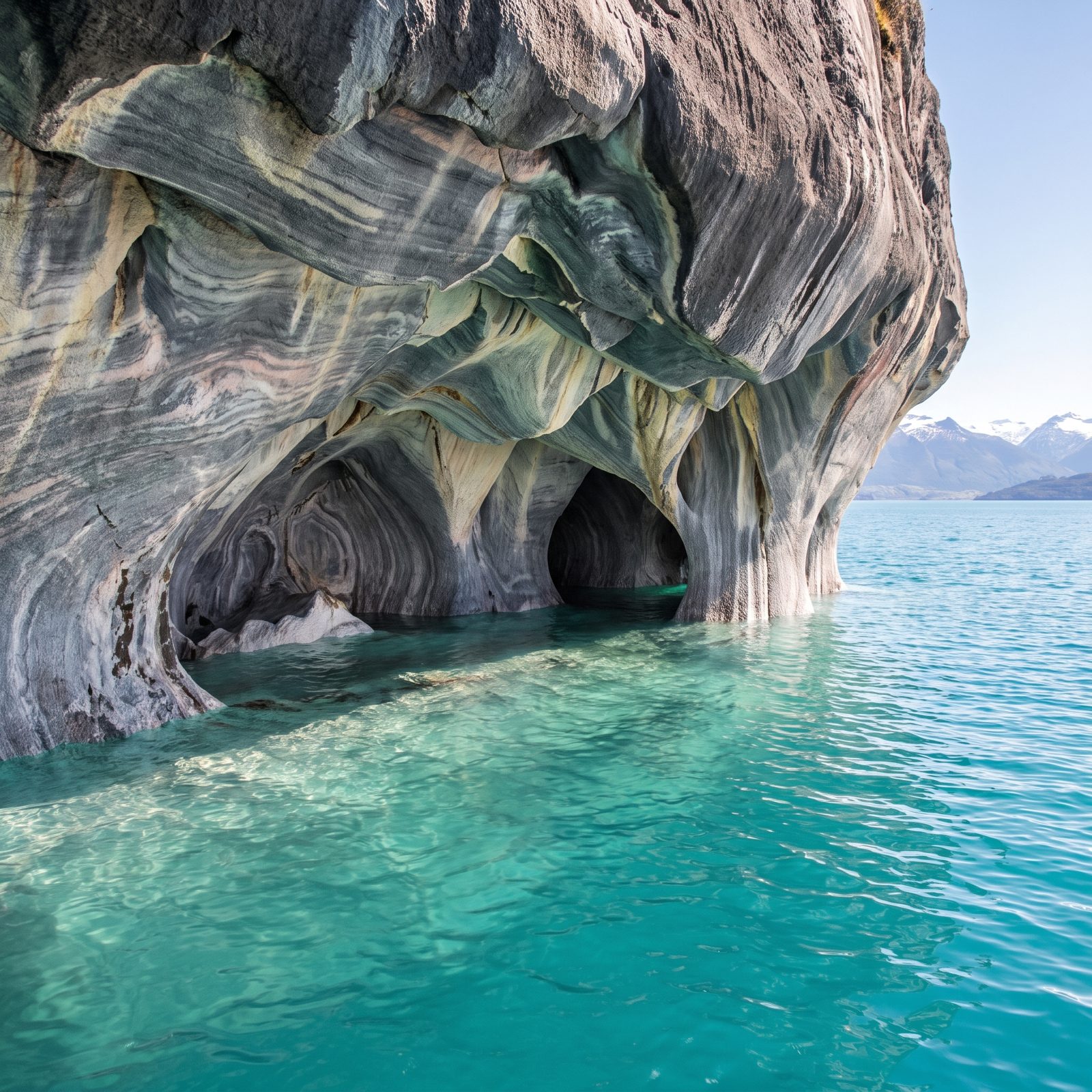
Patagonia’s biggest lake hides a trick along its shore: caverns carved from solid marble, with turquoise water sloshing through them. Boats nose right inside the arches.
The glow isn’t paint or an app. Sunlight hits the turquoise surface and bounces up onto the pale marble ceilings, and suddenly the whole cave pulses with color. The rock is streaked grey, cream and faint pink, polished over thousands of years of wave action. Few places let the stone and the water perform together like this one does.
12. Lake Puelo, Argentina, Glacial Turquoise Water Near the Chilean Border
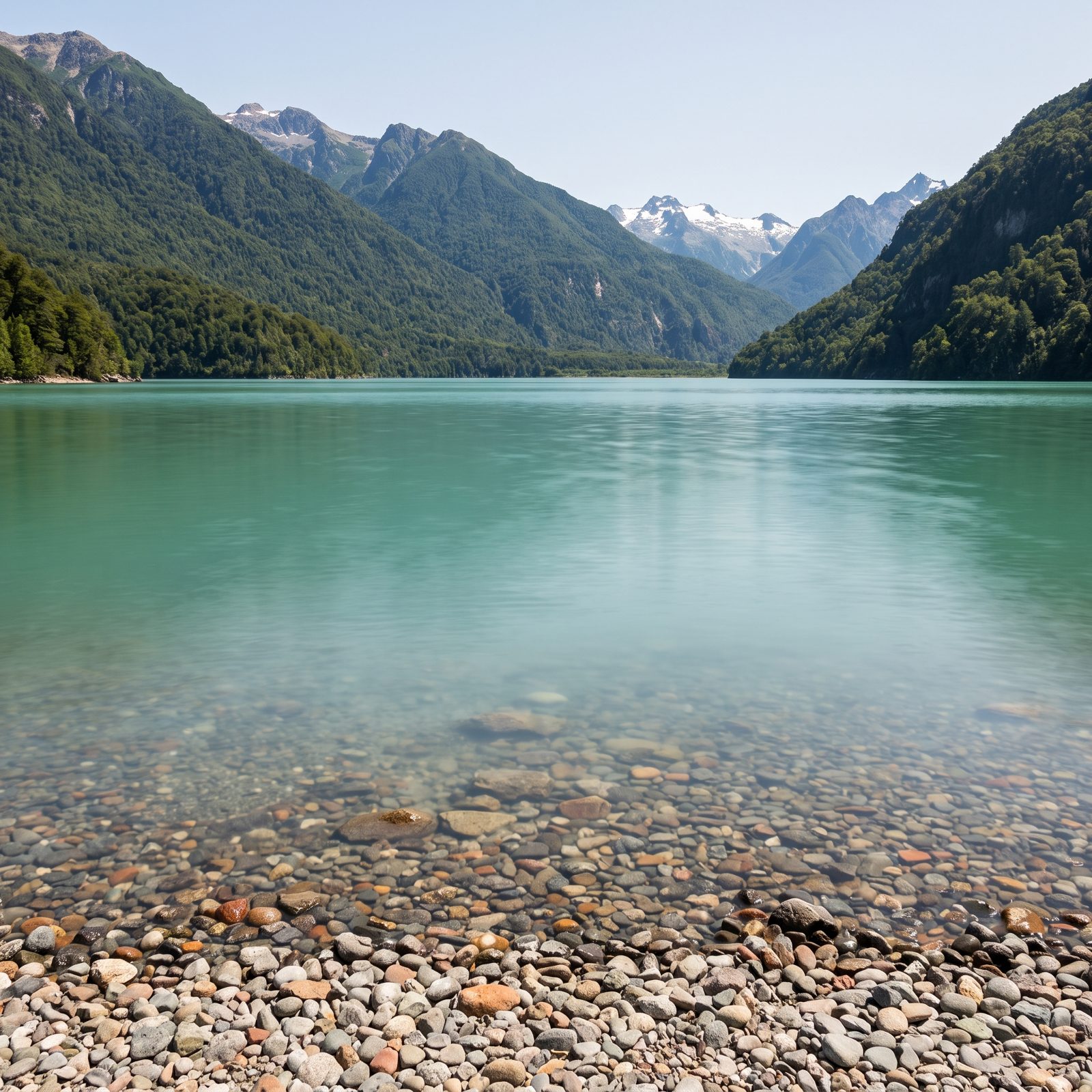
Puelo leans greener than its famous neighbors, a soft jade turquoise that shifts with the light and the cloud cover.
What makes it worth the drive is the quiet. One of Argentina’s smaller national parks, tucked where the Andes dip low enough to let warmer air slip through, so the forest grows denser than you’d expect this far south. The beaches are rounded river stone, not sand, and the water stays glass-clear over them until the bottom drops away into deep green.
11. Todos los Santos Lake, Chile, Emerald-Blue Water Beneath Volcanic Peaks
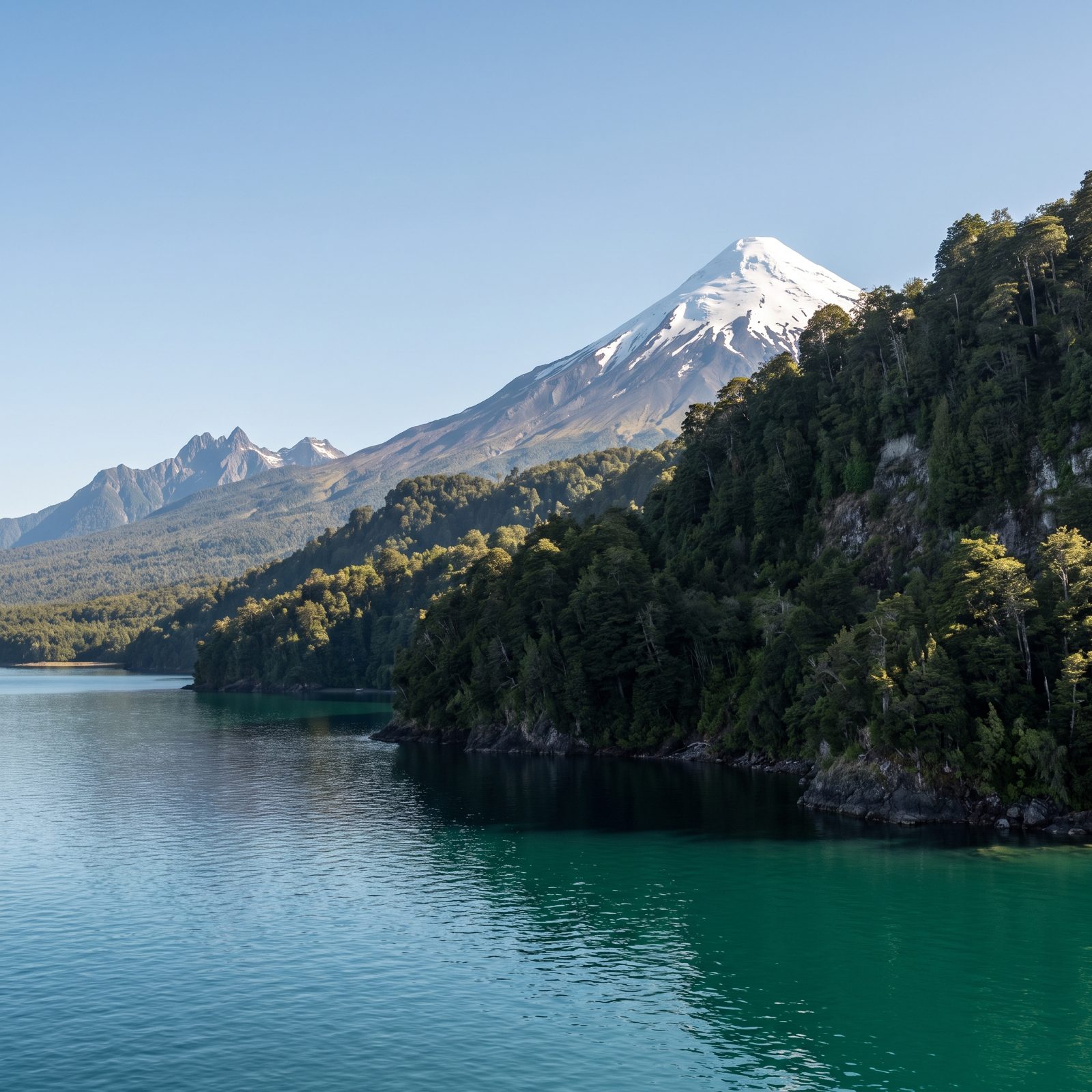
The green is the giveaway here. Todos los Santos runs a deep emerald-blue that comes from volcanic ash and mineral sediment washed down off the peaks around it.
And what peaks. The cone of Osorno sits over the far end like something a child drew, perfectly symmetrical and capped with snow. No road circles the lake, which is unusual. Early explorers crossed it by boat because the forest was too thick to walk, and that’s still mostly how you see it today.
10. Bear Lake, Utah and Idaho, Limestone Particles Producing Caribbean Blue
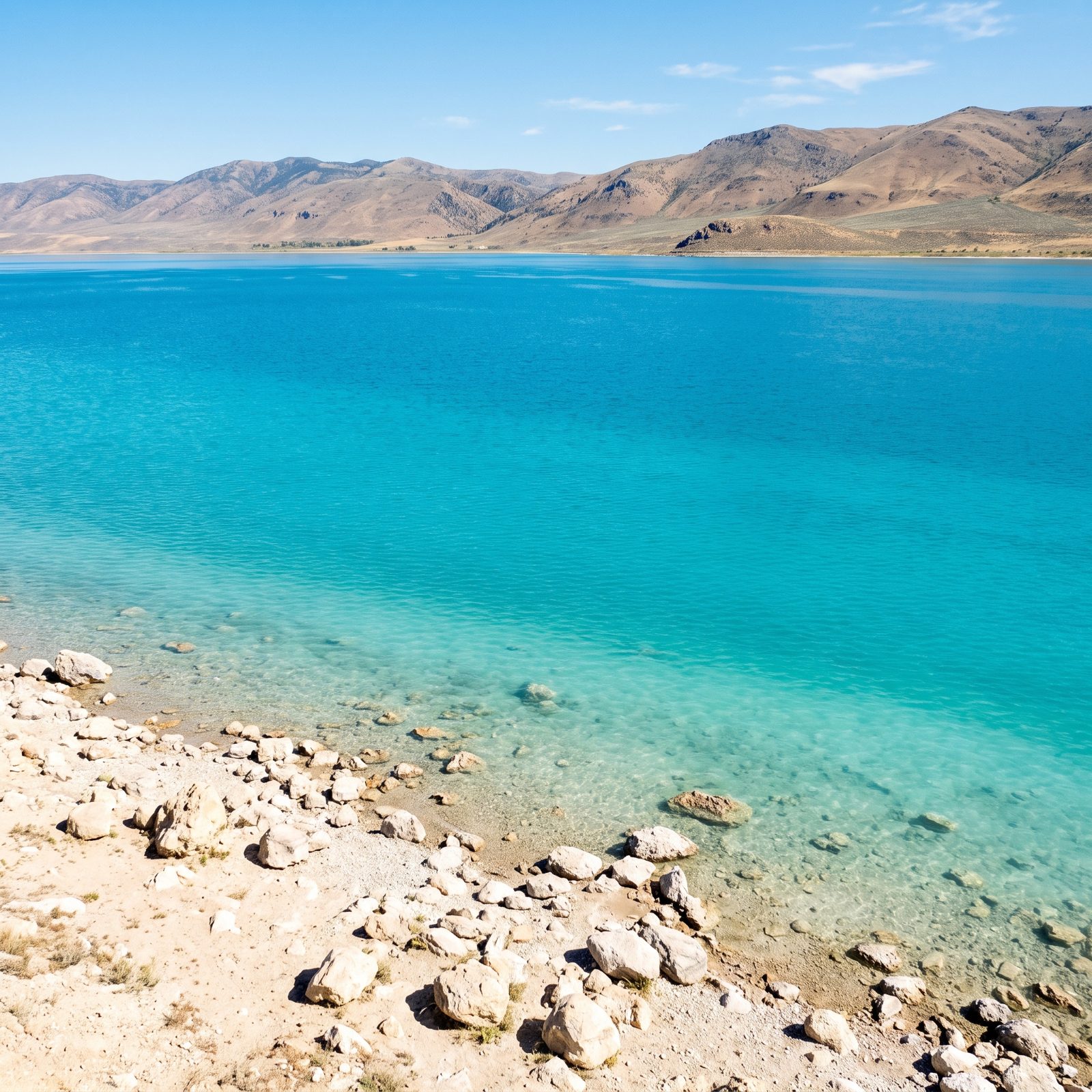
People call it the Caribbean of the Rockies, and the nickname earns its keep. Bear Lake glows turquoise in the middle of dry Utah-Idaho mountain country where you’d never expect it.
The secret is limestone. The water carries suspended calcium carbonate, and those fine particles scatter light into that pale, improbable blue. Pull up a photo and nobody guesses it’s a long, high mountain lake rather than some tropical bay.
The raspberry stands here are a whole separate tradition, by the way. Bear Lake raspberry shakes have a following that rivals the water.
9. Torch Lake, Michigan, Long Bands of Aqua Over Pale Sandbars
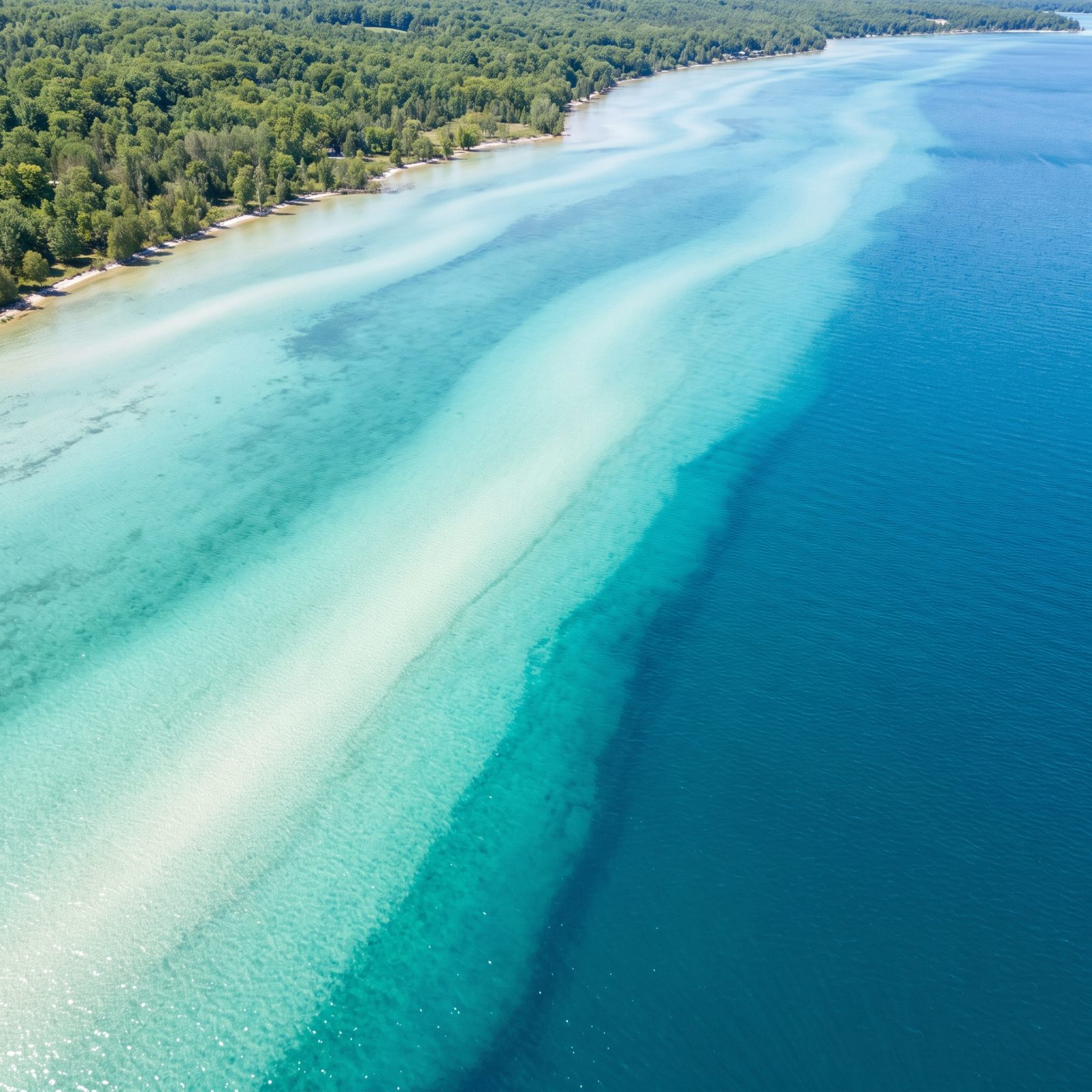
Michigan has a lake that looks airlifted from the Bahamas. Torch Lake, long and narrow, famous for the sandbar where the water turns the kind of aqua that makes people argue about whether the photo got doctored.
The color comes from pale sand and marl sitting just under clear, shallow water. Light hits that white bottom and bounces back aqua. Wade out from shore and the band shifts from near-white to turquoise to deep blue as the floor drops.
8. Lake McDonald, Montana, Transparent Water Over Multicolored Pebbles
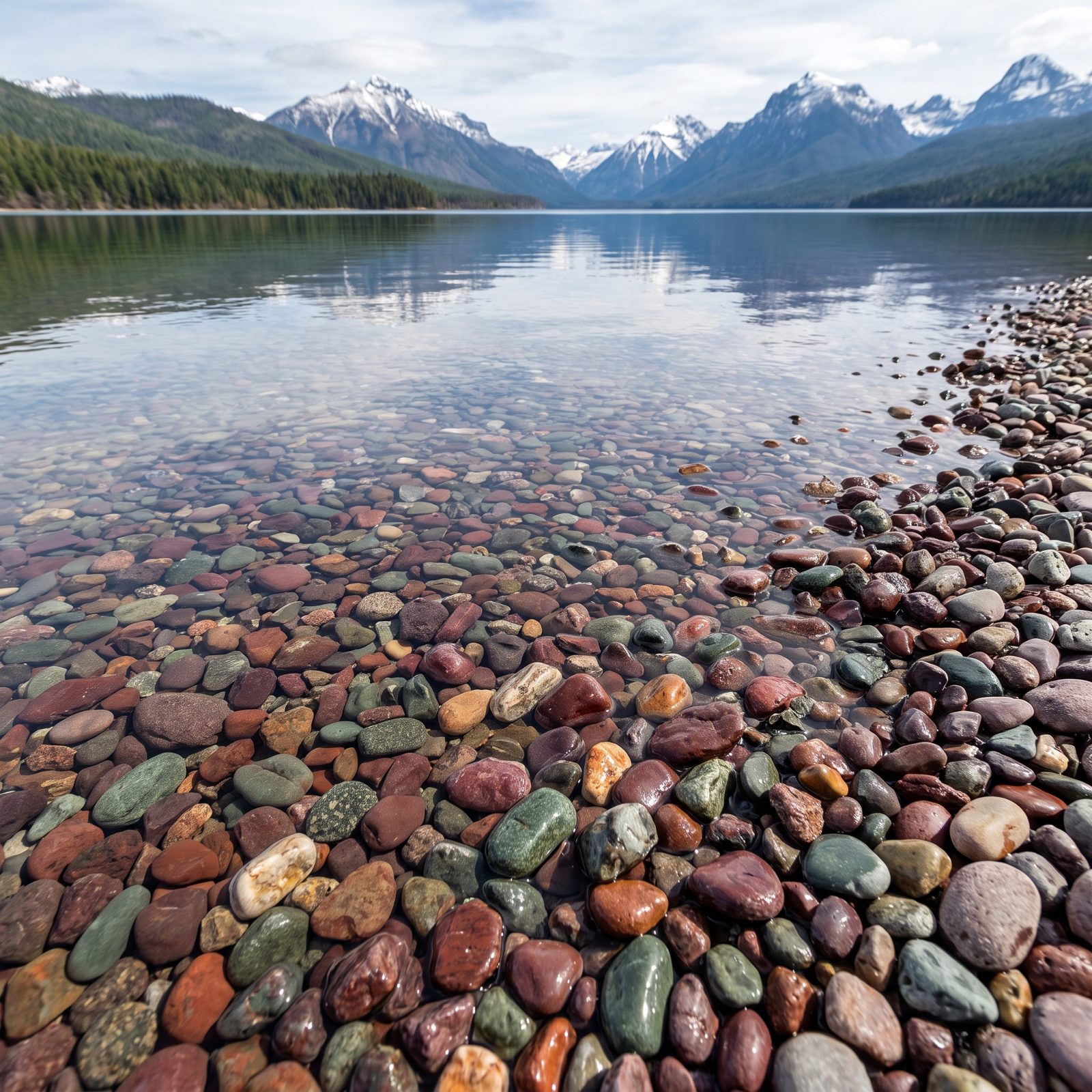
Lake McDonald’s trick isn’t the surface, it’s the floor. The shallows are paved with smooth pebbles in red, maroon, green and rust, and the water runs so clear they look painted.
Those colors come from the stones themselves. The red ones carry iron that oxidized above the waterline long ago; the green ones held their iron under water instead. The lake just happens to be clear enough to show it all off, which is the whole reason to stop here.
The water barely registers. You’re really looking at a mosaic someone spent a few hundred million years assembling.
7. String Lake, Wyoming, Shallow Aquamarine Water Between Mountain Lakes
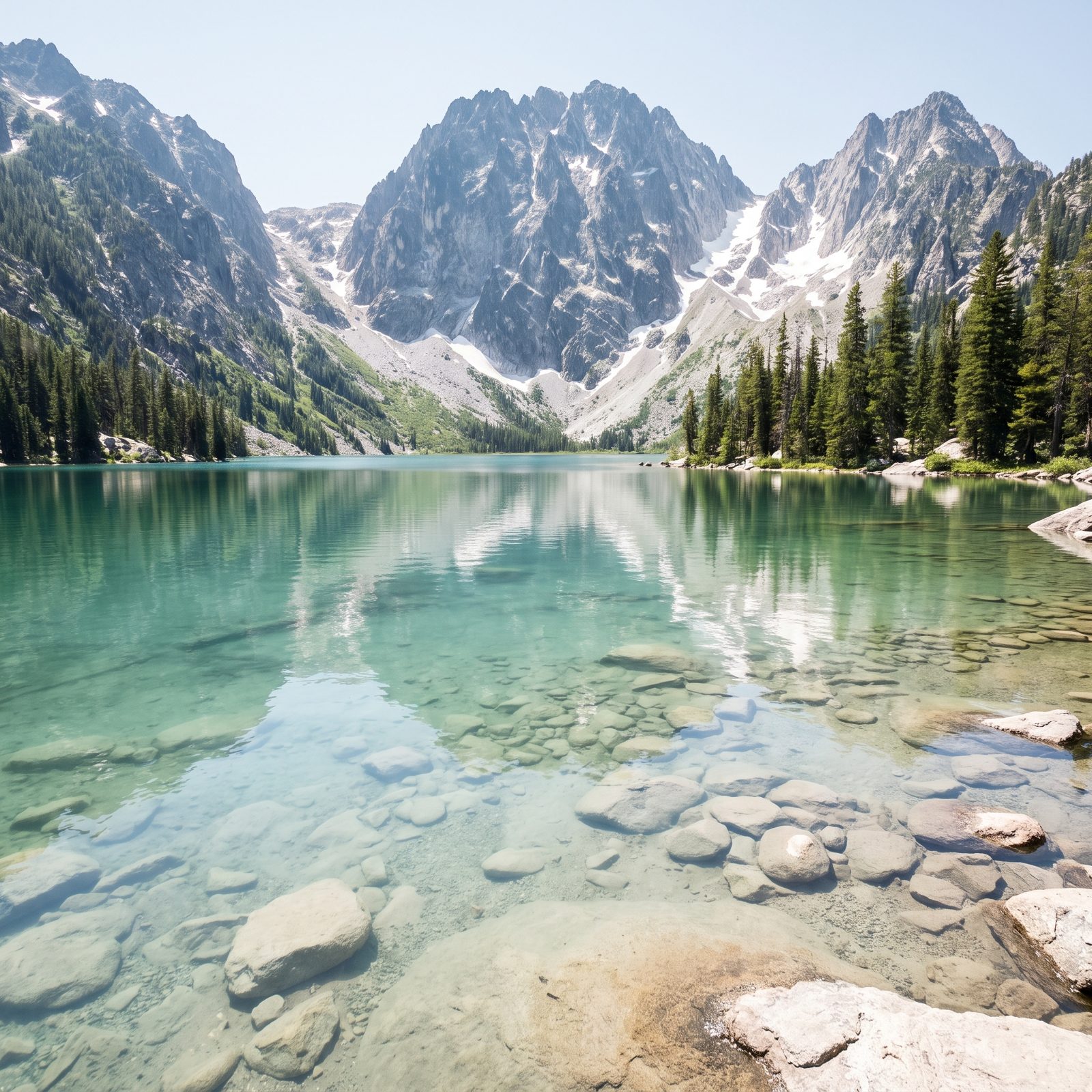
String Lake is the shallow ribbon connecting Leigh and Jenny Lakes, and because it’s so shallow it warms up and goes a clear aquamarine you can wade straight into.
That’s rare in the Tetons, where most water runs ice-cold and deep blue. Here the bottom sits right under your feet, pale sand and stone glowing up through the surface, with the granite peaks stacked behind it. Honestly it’s the swimming lake of the three. Locals know it, which is why the small parking lot fills by mid-morning on a July weekend.
6. Lake Crescent, Washington, Deep Blue Water in Olympic National Park
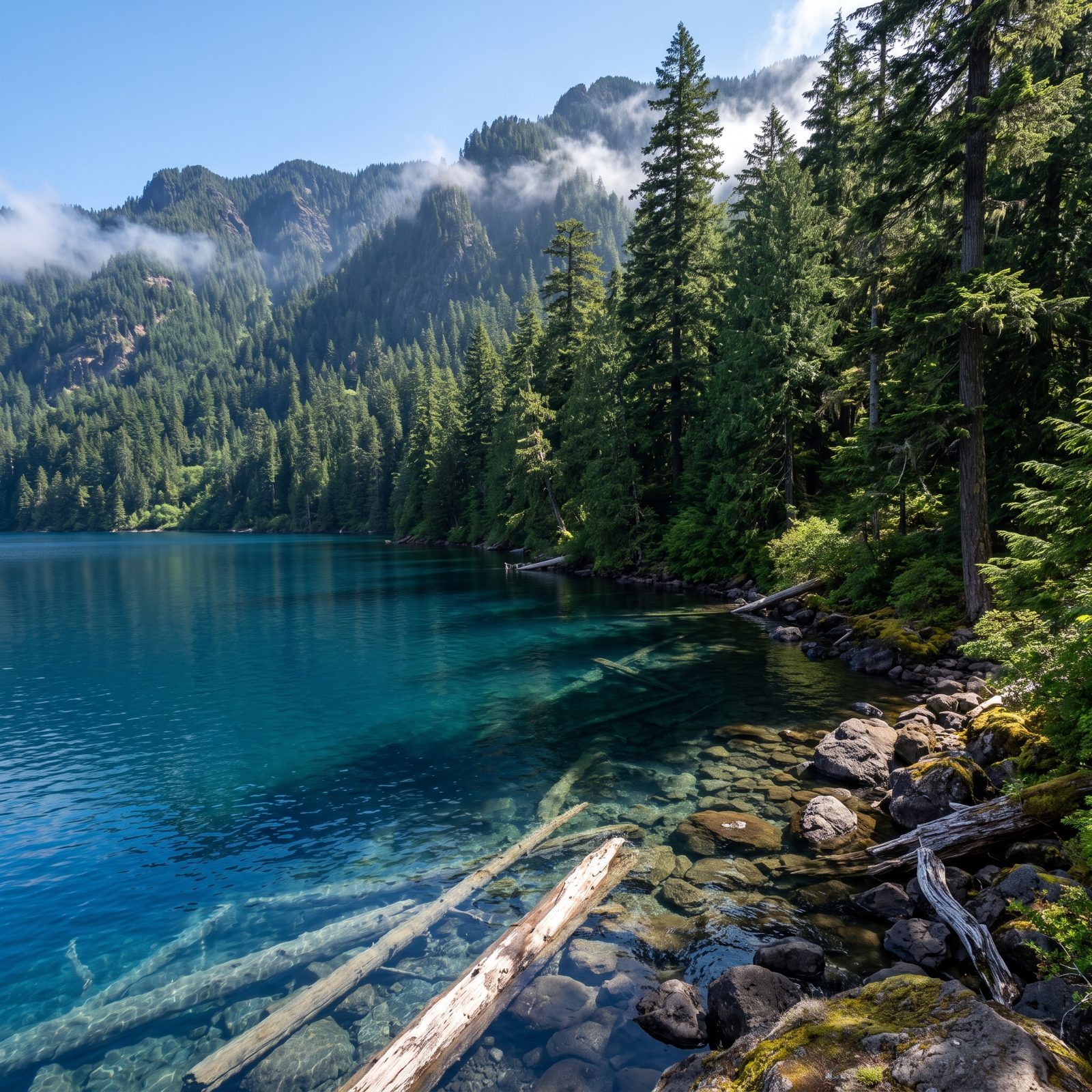
Crescent is a different kind of clear. Not shallow-turquoise but deep-blue clear, the sort where you stare straight down and keep seeing for ages.
Blame a lack of nitrogen. The surrounding geology keeps nitrogen out of the water, so almost no algae grows, and algae is what usually clouds a lake green. Divers here report visibility most lakes can only envy, and the blue gets deeper and more saturated the farther out you look.
5. Lake Superior at Pictured Rocks, Michigan, Turquoise Coves Below Sandstone Cliffs
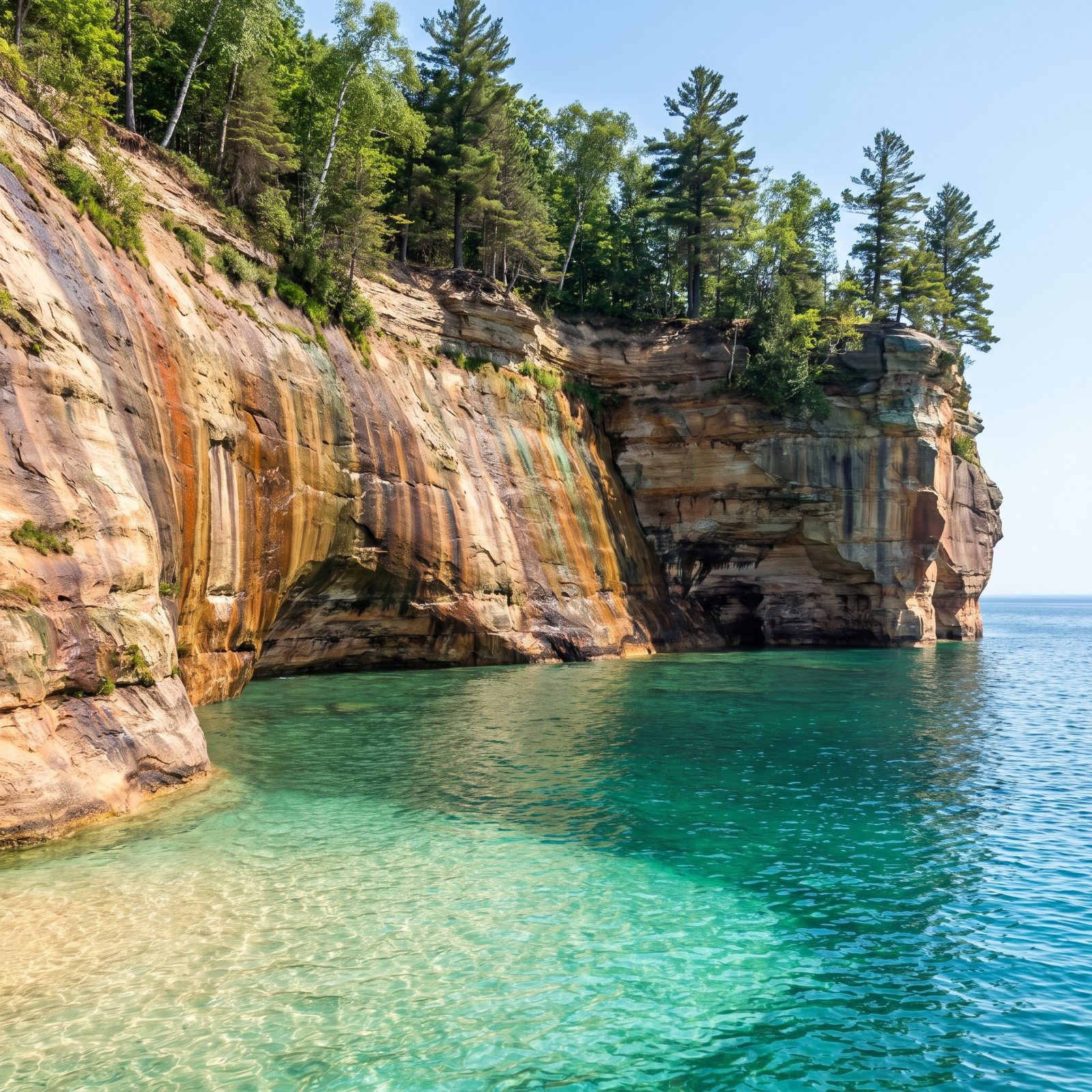
Everyone pictures Superior as cold grey steel, and from a distance it is. Slide into the coves along Pictured Rocks and it goes turquoise, pale sandy bottoms lighting up the water right at the base of the cliffs.
Then there are the walls. Those sandstone cliffs tower overhead, streaked rust, tan and green where mineral-rich groundwater seeps out and stains the rock. The streaks are literally how the place got its name.
4. Georgian Bay, Lake Huron, Canada, Azure Water Over Pink Granite Islands
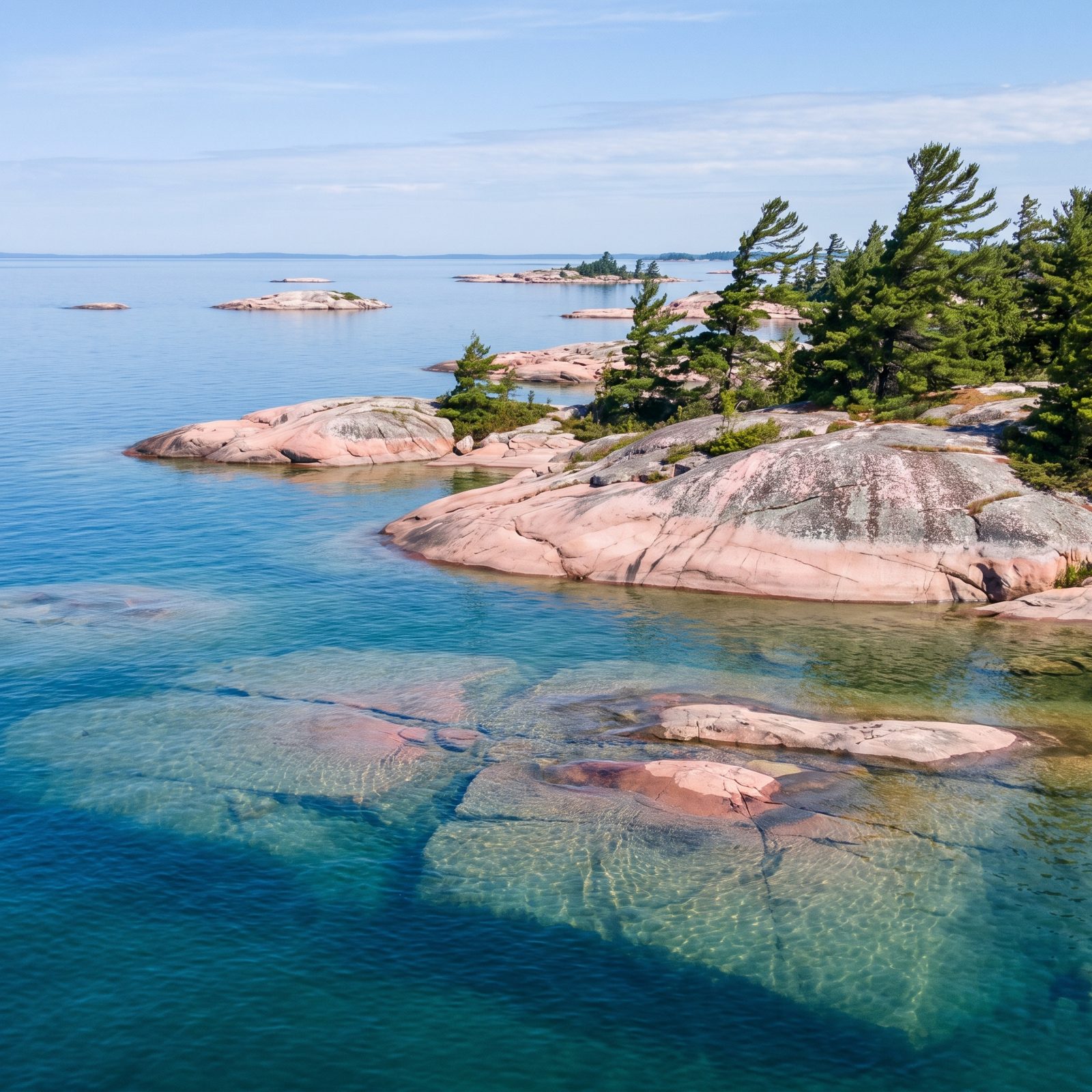
Most people picture the Caribbean when they see that turquoise. They’re looking at the eastern edge of Lake Huron, about three hours north of Toronto, where the Canadian Shield meets the water in a maze of thirty thousand islands.
The color trick is the granite. These pink rock shelves sit just under the surface, and shallow water over pale stone reads as aquamarine before it deepens to azure where the bottom falls off. Same optical business that makes tropical reefs glow, except the floor is billion-year-old rock instead of coral.
Swim here in August and the shallows are bathtub-warm, bracing twenty feet out. The windswept pines leaning off bare islands are pure Group of Seven. That’s no accident — they painted this exact bay.
3. Lake Tahoe, California and Nevada, Granite Coves Beneath Brilliant Blue
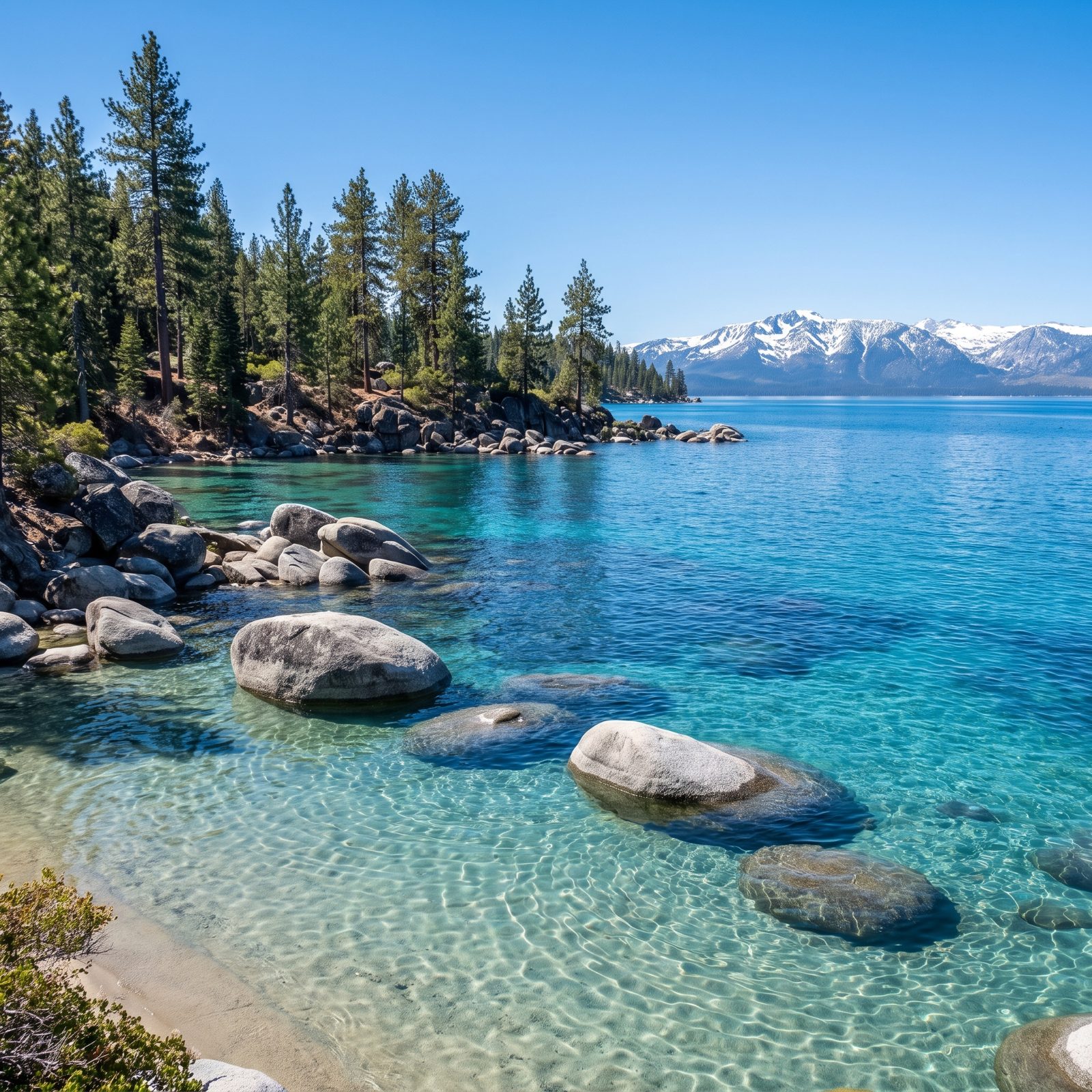
Clarity is the whole story here. On a good day you can track a dinner plate sinking a long way down, and that transparency is what gives Tahoe its reputation.
What makes the coves look tropical is the pale granite floor. Over clean sand and rounded boulders, shallow water glows turquoise, then drops into a sapphire so saturated it looks like somebody messed with the photo. Nobody did. Tahoe sits above 6,200 feet, and thin alpine air plus deep cold water does the rest.
The water is cold enough that even in August most people get in to the knees, take a photo, and get out.
Emerald Bay on the southwest side is the postcard spot. But half the sandy coves on the east Nevada shore hand you the same color with a fraction of the crowd, which is where we’d point you.
2. Lake Baikal, Russia, Endless Blue Over Pale Pebble Shores
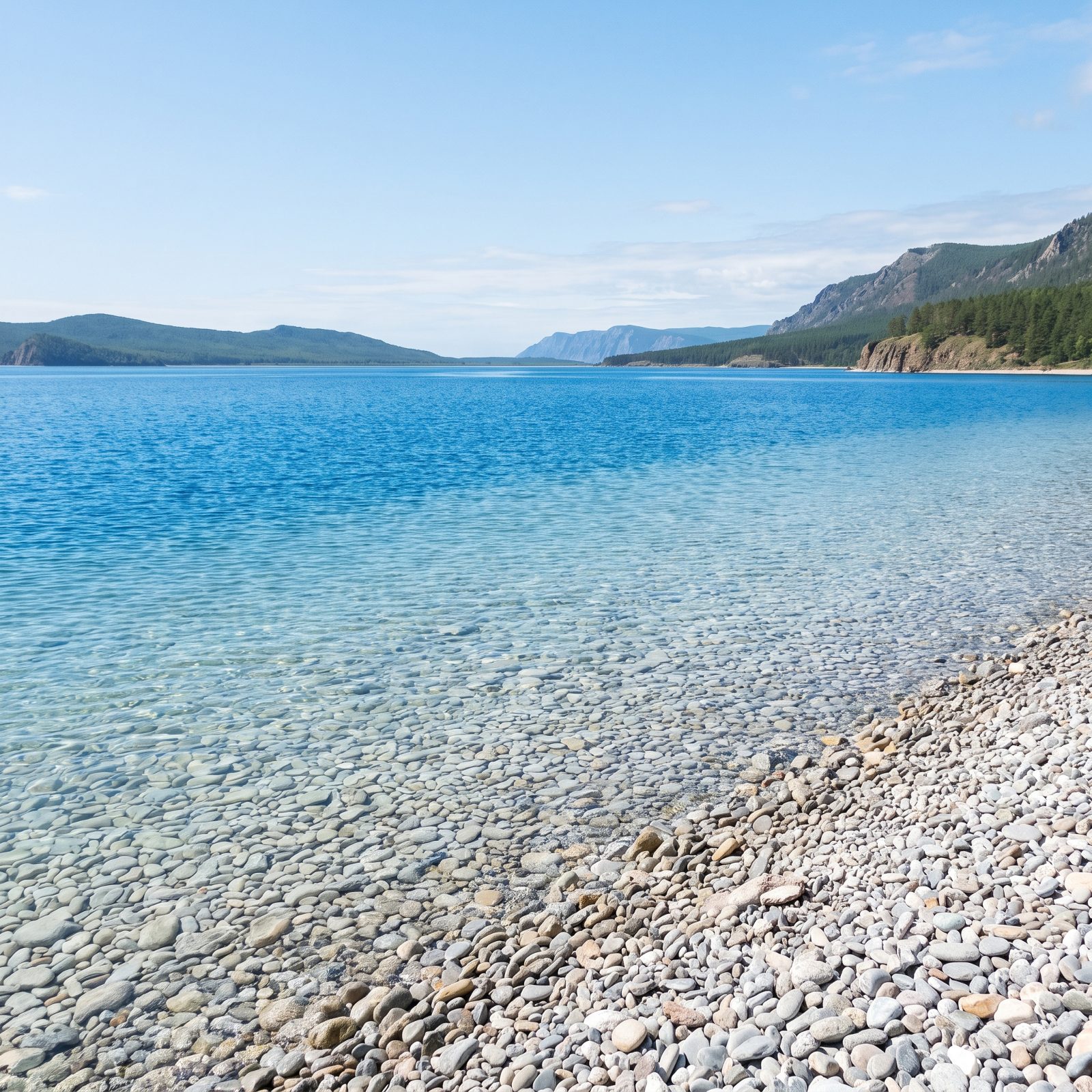
The deepest and oldest freshwater lake on Earth, and clean enough that you can often see a good forty feet down through it.
The pebbles sell the tropical illusion. Baikal’s shores are lined with smooth pale stones, so the water reads glassy and almost colorless at the edge before turning electric blue heading out. In photos from the right cove it passes for the Mediterranean. In reality it sits in Siberia and holds around a fifth of the world’s unfrozen fresh water.
Come winter it freezes solid into ice you can see straight through. A different kind of beautiful, and a different article.
1. Crater Lake, Oregon, Deep Sapphire Trapped Inside a Collapsed Volcano
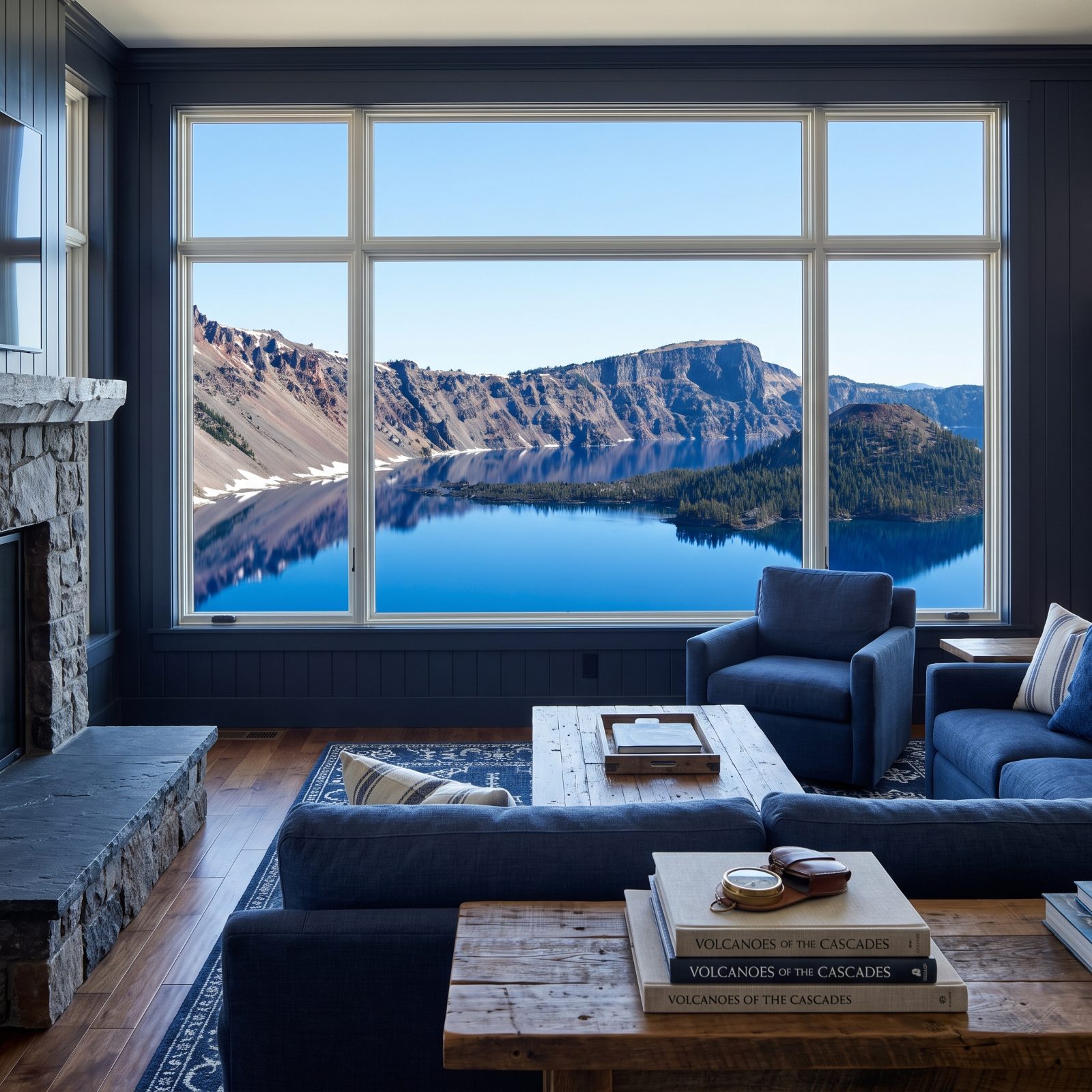
No rivers feed it. No rivers drain it. Crater Lake fills a caldera left behind when a volcano collapsed roughly 7,700 years ago, topped up entirely by rain and snowmelt.
That’s why the blue runs so intense. With almost nothing washing in — no sediment, no runoff — the water stays remarkably clear, and clear deep water absorbs every color except blue and throws that one back at you. The result is a sapphire pure enough to stop people mid-sentence at the rim.
At nearly 1,950 feet it’s the deepest lake in the United States. Reaching the water means the Cleetwood Cove trail, the only legal access, and the hike back up is a lung-burner nobody warns you about properly.