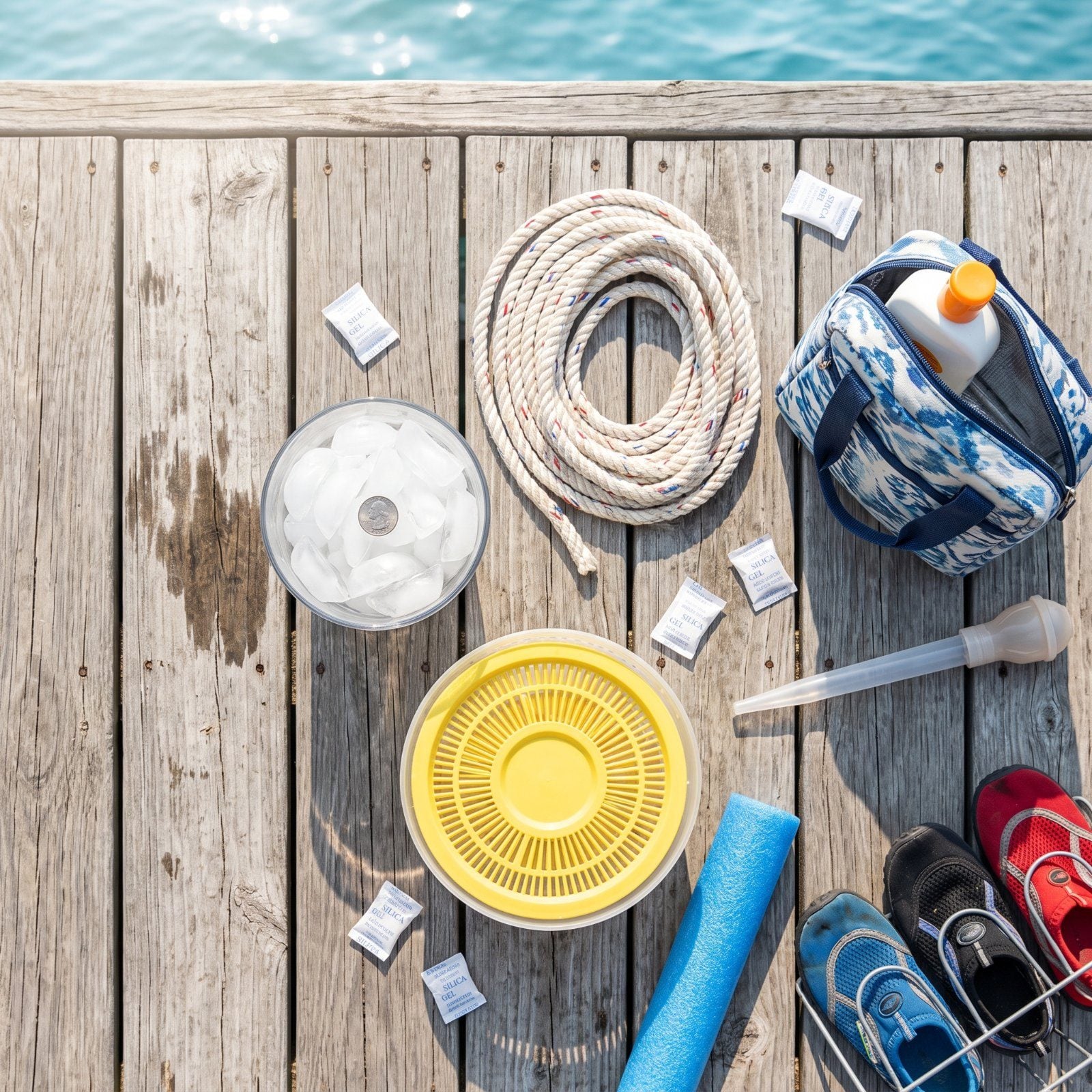
The best tricks at the lake never come from a catalog. They come from the neighbor three docks down who has been doing this for thirty years and mentions, almost by accident, the thing that saves you an entire morning. Half of them sound ridiculous until the first time they work. A frozen coin, a salad spinner full of swimsuits, a turkey baster that never touches a turkey — none of it looks clever on paper, and all of it earns its keep by August. Here are the ones worth stealing before the next long weekend.
Please note that some of the imagery in this article may have been enhanced with the assistance of AI.
46. Freeze a Coin on Top of a Cup of Ice
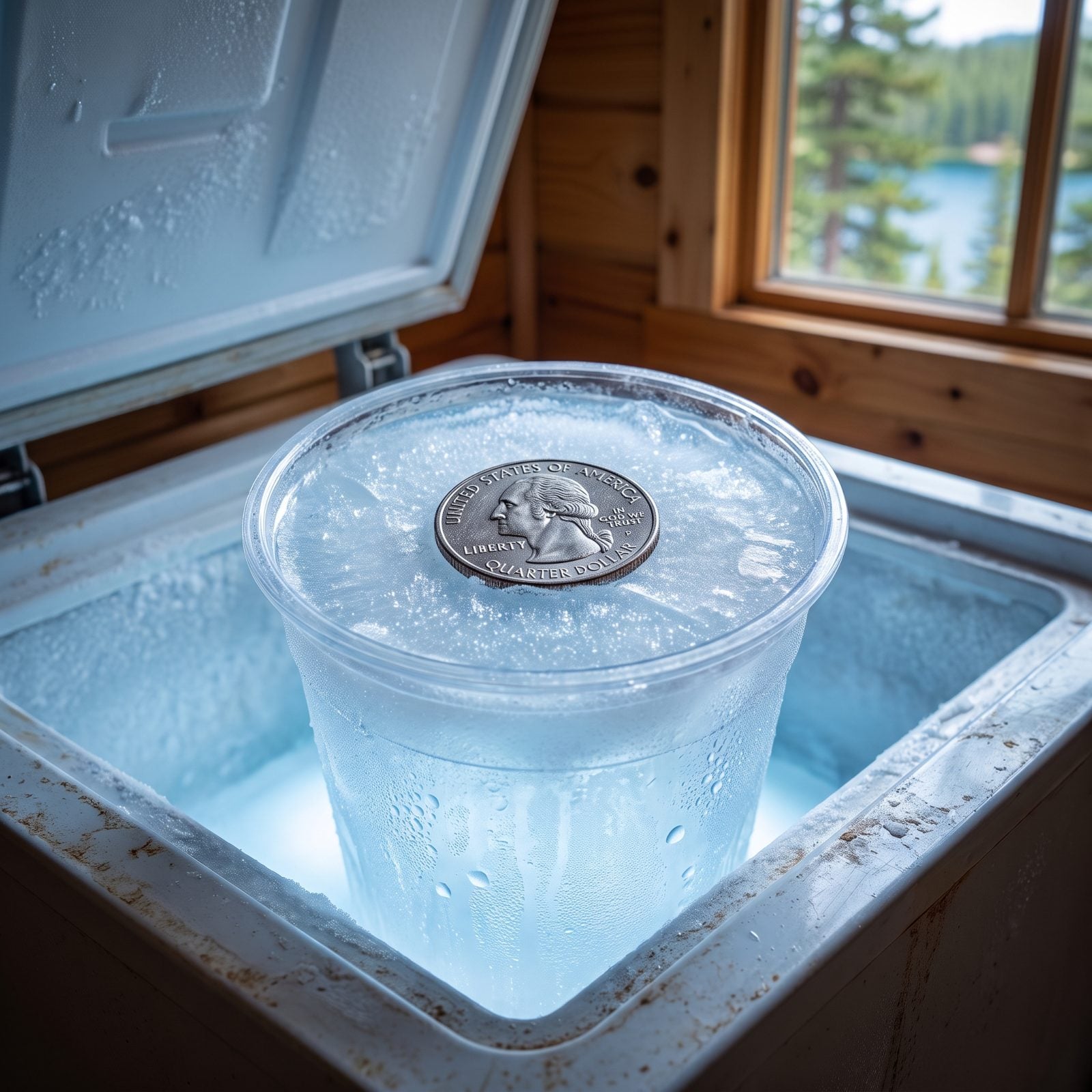
This one tells you whether your freezer quit while you were gone. Fill a cup with water, freeze it solid, set a coin on top, and leave it in the freezer when you close up the cabin.
Come back and the coin’s position is the whole story. Still on top means the power held. Sunk to the middle or sitting on the bottom means the freezer thawed and refroze while you were away, and everything in there spoiled and refroze right along with it. Looks fine. Isn’t.
Nobody wants to find out the hard way with a chicken. The coin does the detective work for free.
45. Stitch Colored Marks Into Every Dock Line
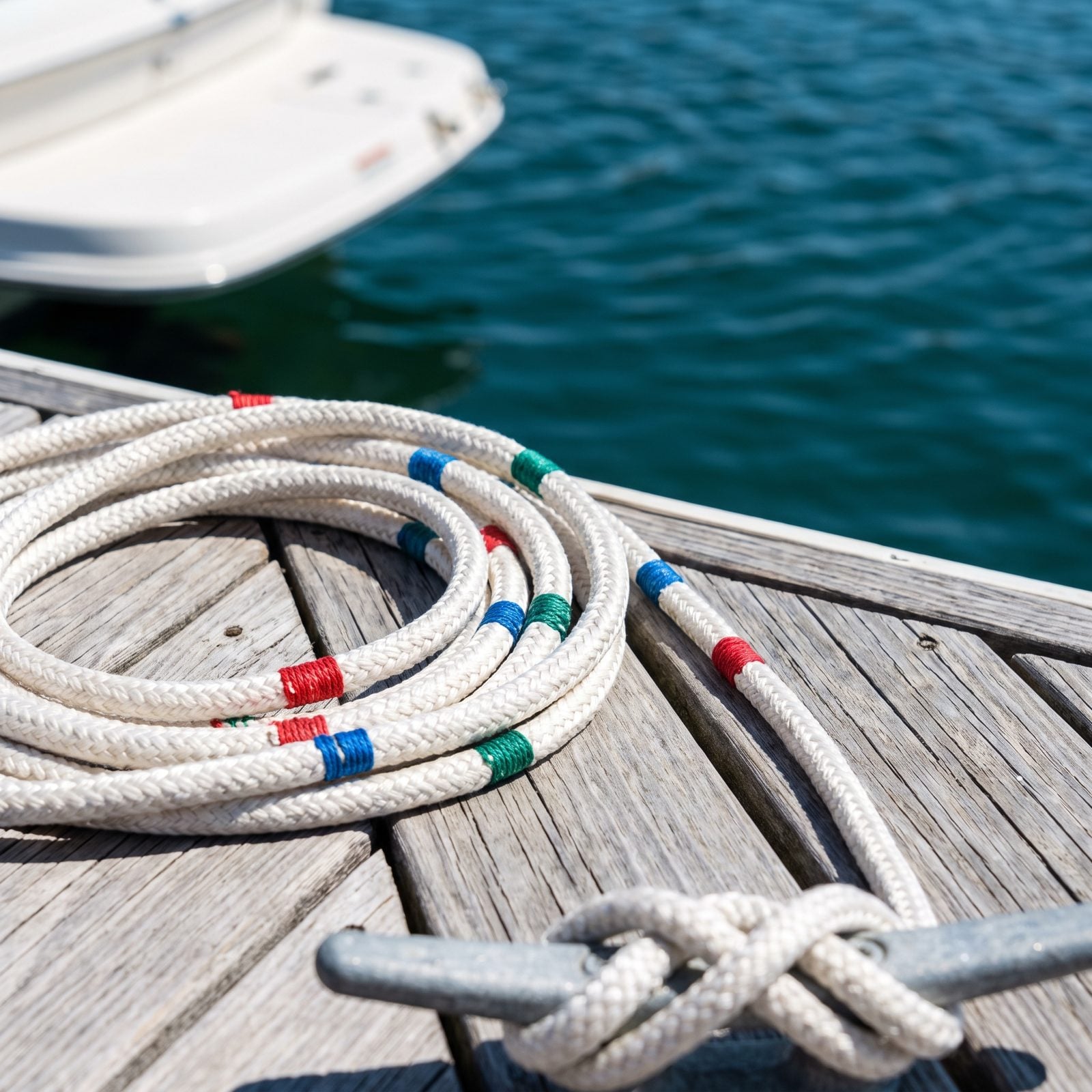
Every line looks the same at dusk when the wind picks up. That’s exactly when you need to grab the right one fast.
Whip a few wraps of colored twine into each dock line at the spot where it should meet the cleat. Now tying up is muscle memory instead of guesswork. Red line, red mark, correct length, done. No more cleating a stern line that’s two feet too short and watching the boat swing into the piling.
And it tells you at a glance when a line has stretched past its mark and needs replacing.
44. Spin Soaked Swimsuits in a Salad Spinner
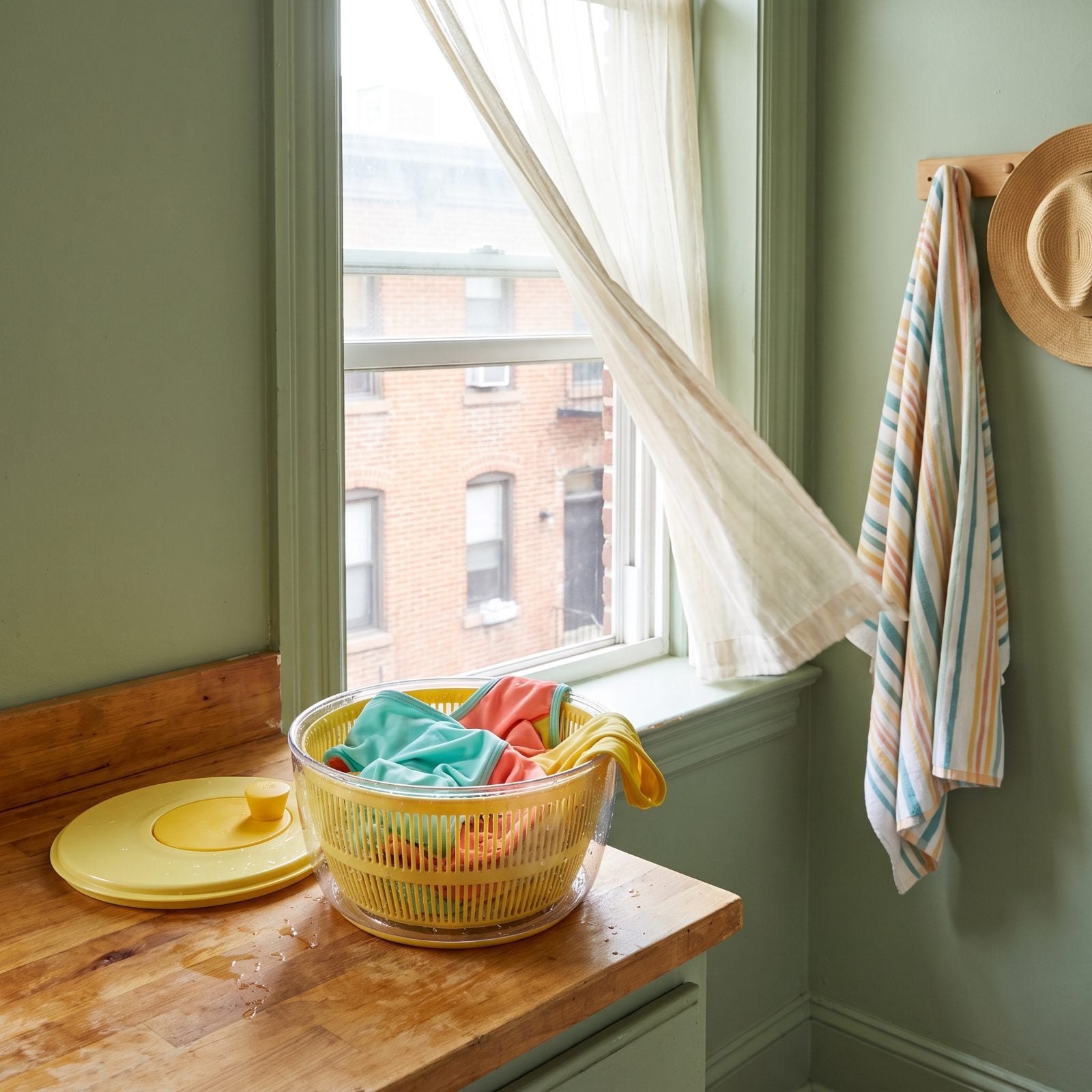
Wet swimsuits never fully wring out by hand. There’s always that cold clammy patch in the lining that takes until the next afternoon to dry on the railing.
Drop the suit in a salad spinner and give it a few cranks. The centrifuge pulls out more water than your hands ever will, gentle enough that the elastic survives, and the suit goes from dripping to barely damp in seconds.
Works on dish towels and small rags too. Keep a cheap spinner by the back door strictly for this and never explain yourself to guests.
43. Keep a Dedicated Turkey Baster for Draining Small Crevices
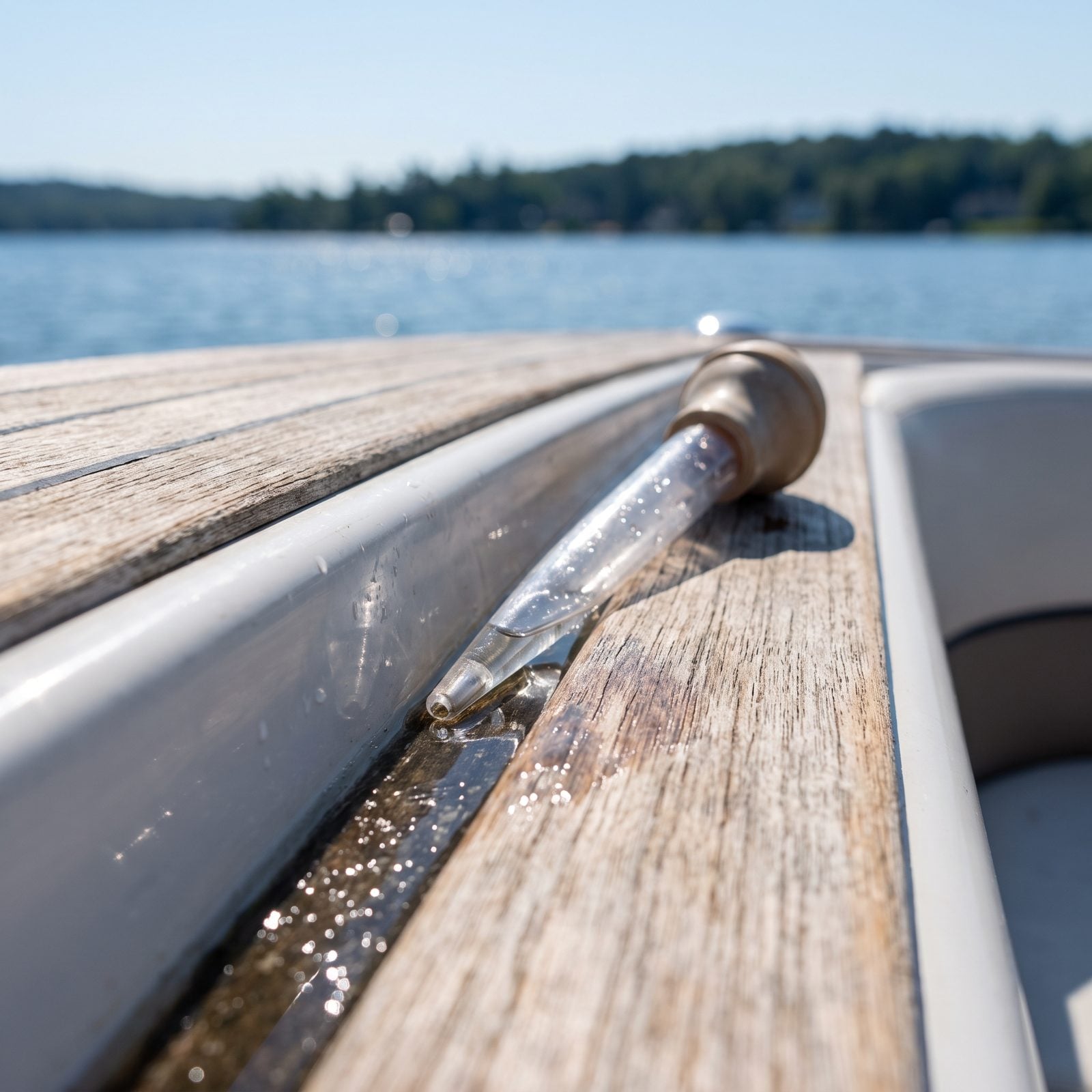
Standing water collects in all the places you can’t reach with a towel. Cupholders. Seat seams. The bottom of a cooler after the ice melts, the little well under a bilge access panel.
A turkey baster sucks it right out. One squeeze and the crevice is dry, which matters because standing water is how you get mildew, mosquito larvae, and that smell nobody can locate.
Buy one that never goes near food and keep it in the boat. Costs almost nothing, does a job a sponge can’t touch.
42. Store Sunscreen in a Small Insulated Lunch Bag
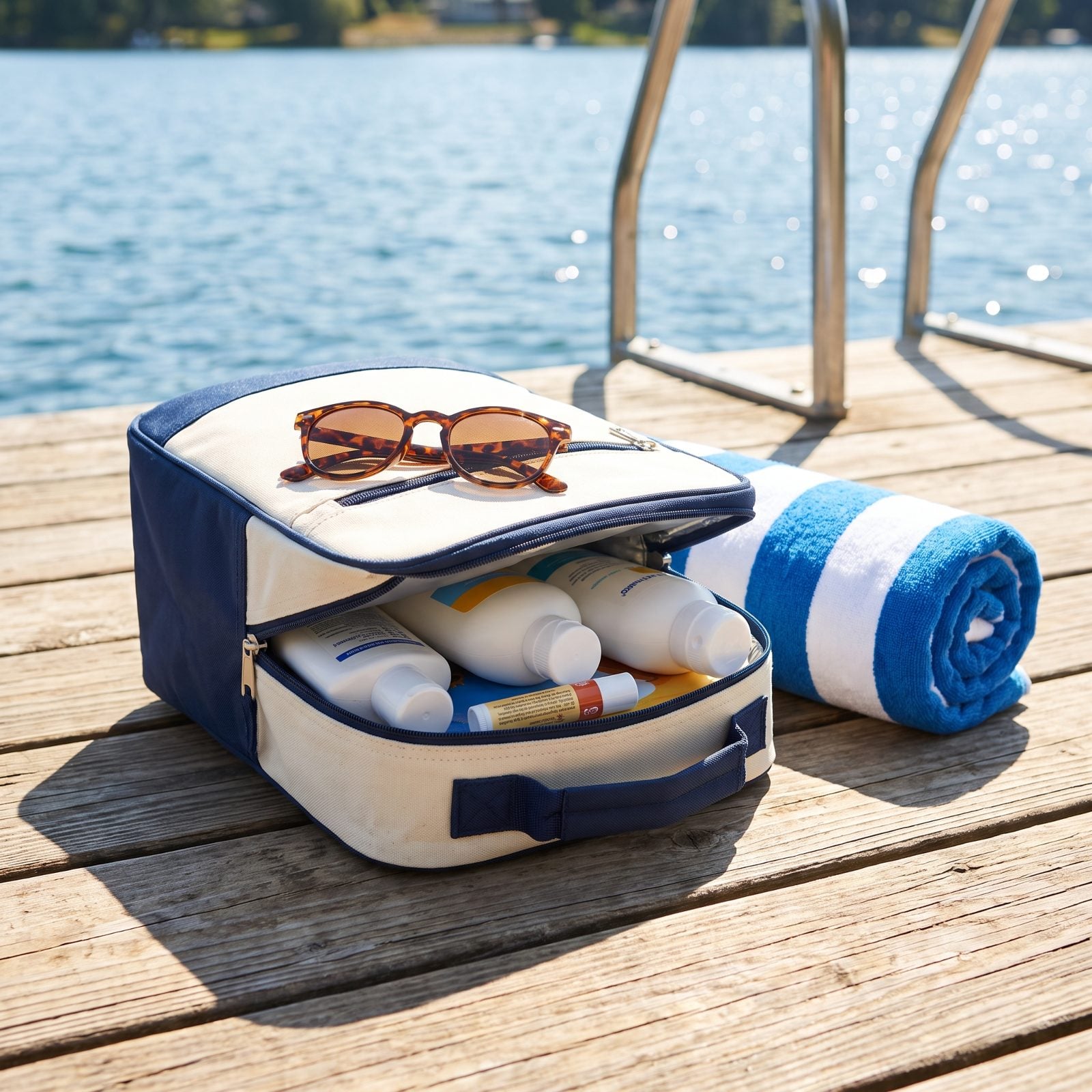
Sunscreen cooks in the heat. Leave a bottle on the dock all afternoon and the formula breaks down, which is part of why it never seems to work as well come late July.
A small insulated lunch bag keeps it in the shade and near cool. Everything lives in one spot instead of scattered across the dock, so you actually reapply instead of deciding it’s too much trouble.
Toss in lip balm and after-sun lotion while you’re at it. Grab the bag, you’ve got the whole kit.
41. Photograph the Breaker Panel With Every Switch Labeled
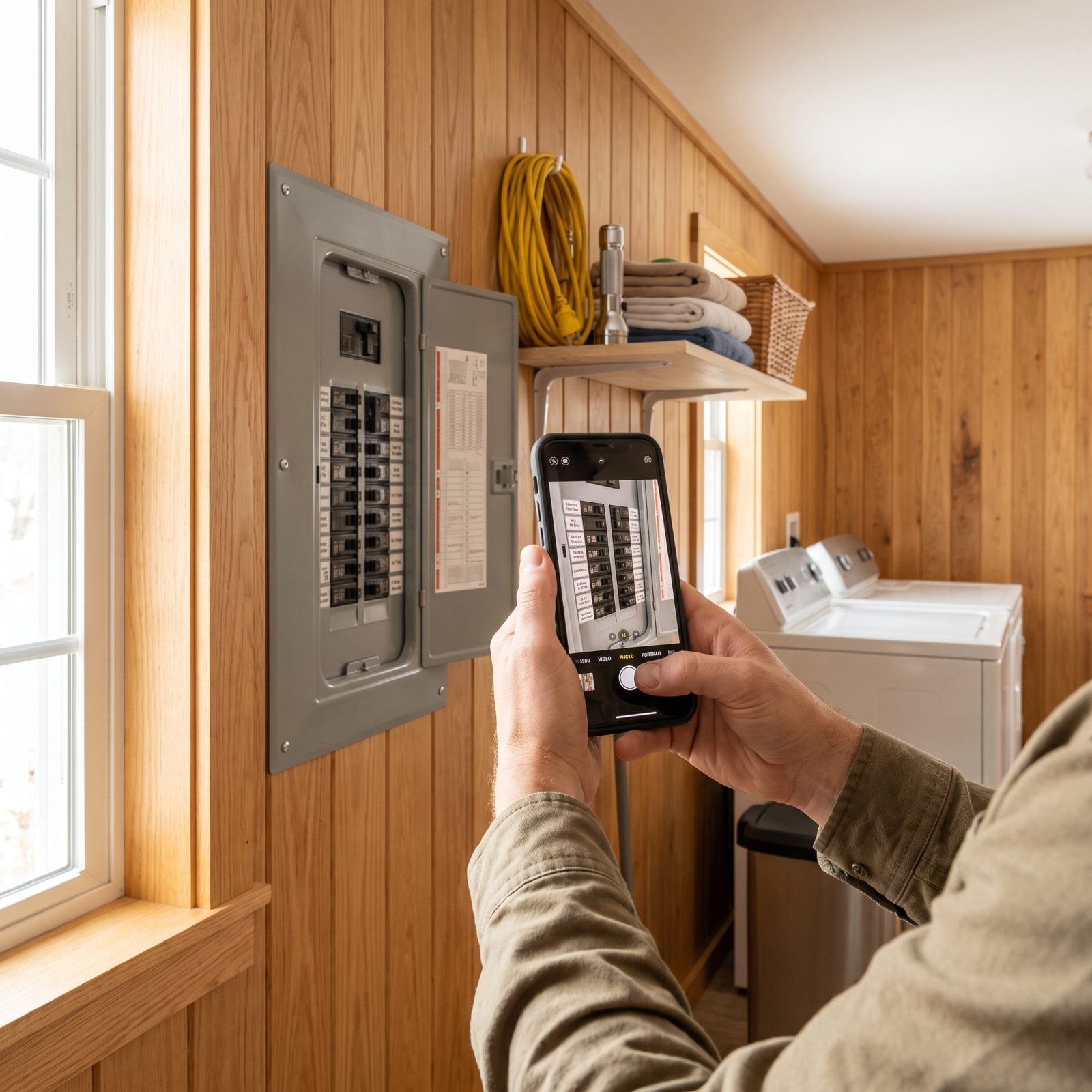
The day the power trips is never the day you remember which breaker runs the well pump.
Label every switch on the panel, then take a clear photo and keep it in your phone. When the lights go out during a storm, or a guest flips the wrong one, the answer is in your pocket instead of up a dark ladder with a flashlight in your teeth.
Share the photo with anyone who uses the place. The caretaker, the kids, the friend borrowing it in September — all of them stop calling to ask which breaker is the dock lights.
40. Slide Pool Noodle Sleeves Over Dock Lines
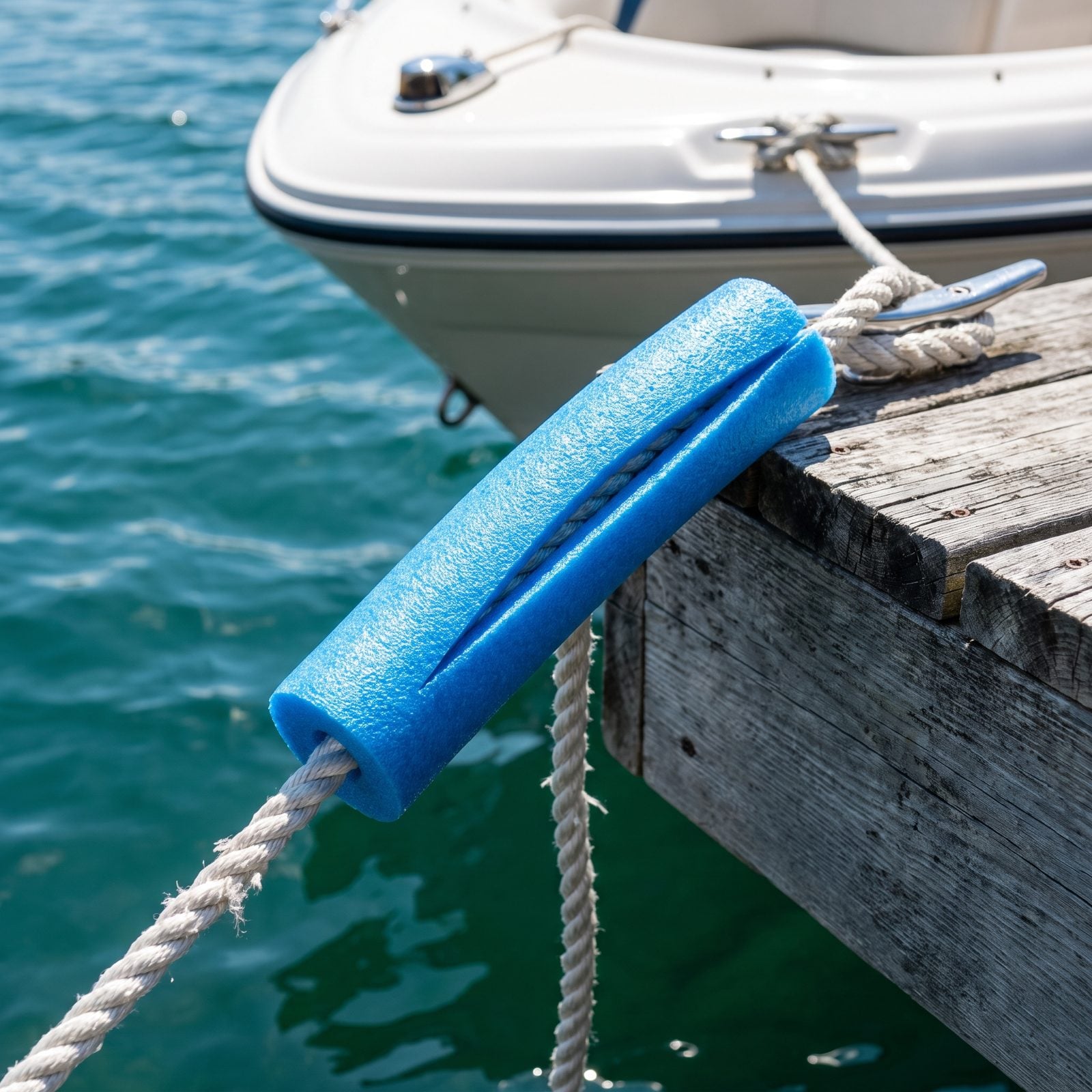
Rope rubbing against a dock edge all season frays right at the bend. You don’t notice until the line lets go in a blow and the boat’s drifting.
Slit a length of pool noodle down the side and slide it over the line where it crosses the dock edge or a rough cleat. The foam takes the chafe instead of the rope. Cheap insurance, and you probably already have three noodles in the shed going chalky in the sun.
Bonus: it keeps a swimmer from catching a shin on a taut line in the dark.
39. Dry Water Shoes on an Upside-Down Bottle Rack
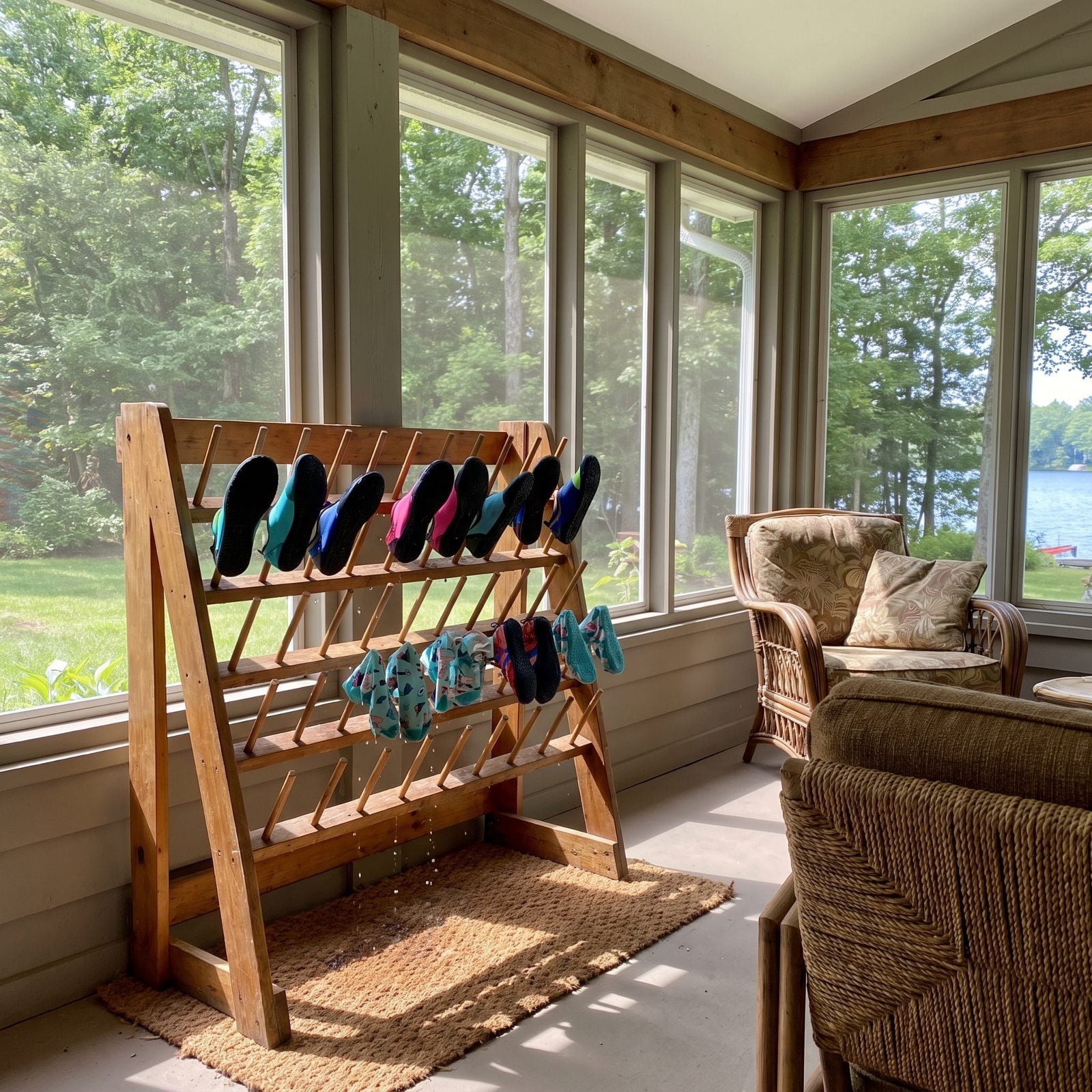
Water shoes dry from the outside in and stay wet inside for days, which is how they end up smelling like a pond.
A bottle-drying rack — the kind with the angled pegs — holds them upside down so air gets to the inside and the water runs out. They dry overnight instead of over a week. Line up the whole family’s pairs and nobody fights over the one dry set in the morning.
38. Place a Boot Tray Beneath the Drink Cooler
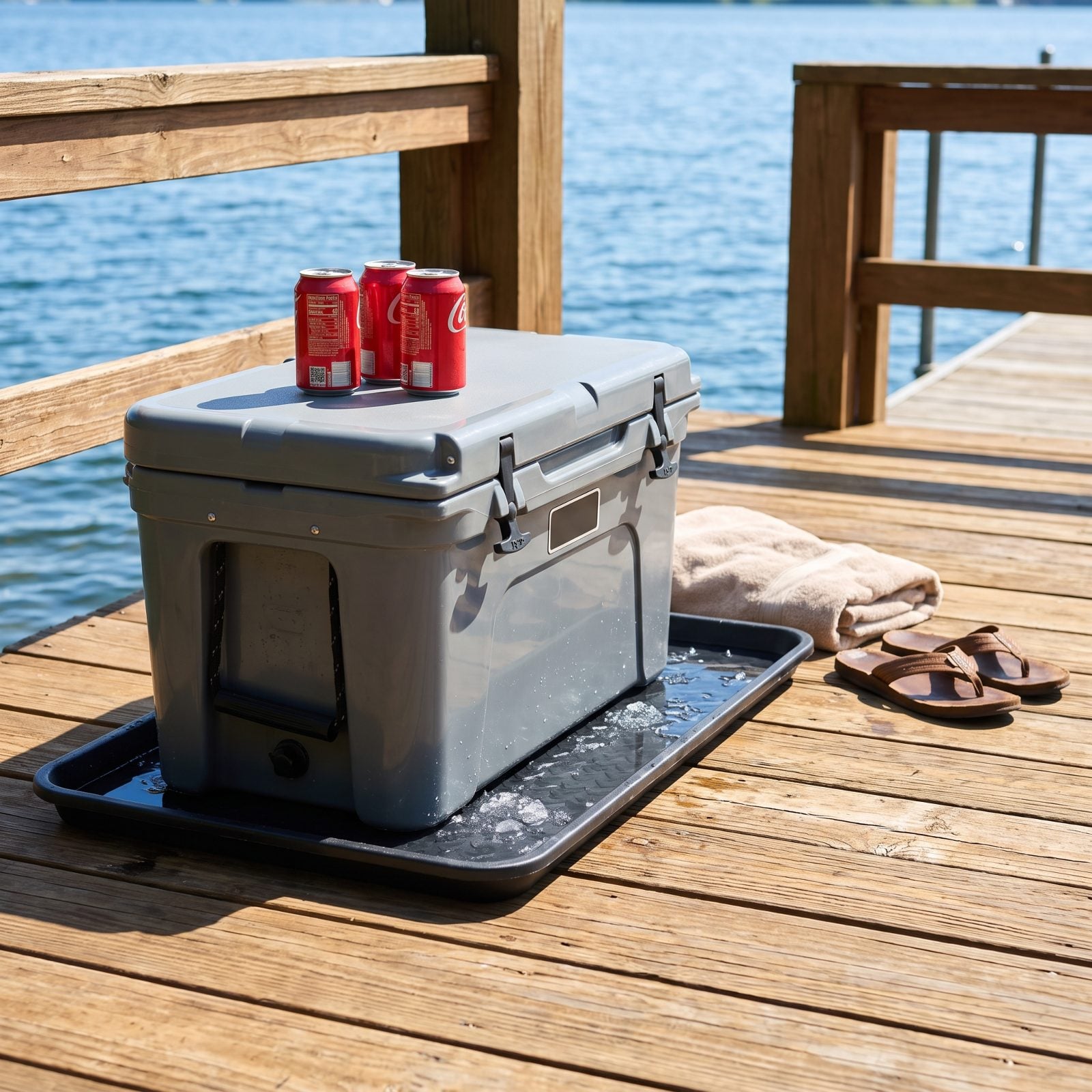
A cooler sweats. All day. That ring of water under it warps the deck boards and leaves a dark stain that never quite scrubs out.
Set the cooler in a plastic boot tray and the tray catches every drop of condensation and melt. Lift it out, pour it over the railing, done. The deck stays dry and the wood lasts longer.
Same move saves a screened porch, where a wet cooler ring would otherwise sit on a rug for a week.
37. Seal Damp Electronics in a Box With Silica Packets
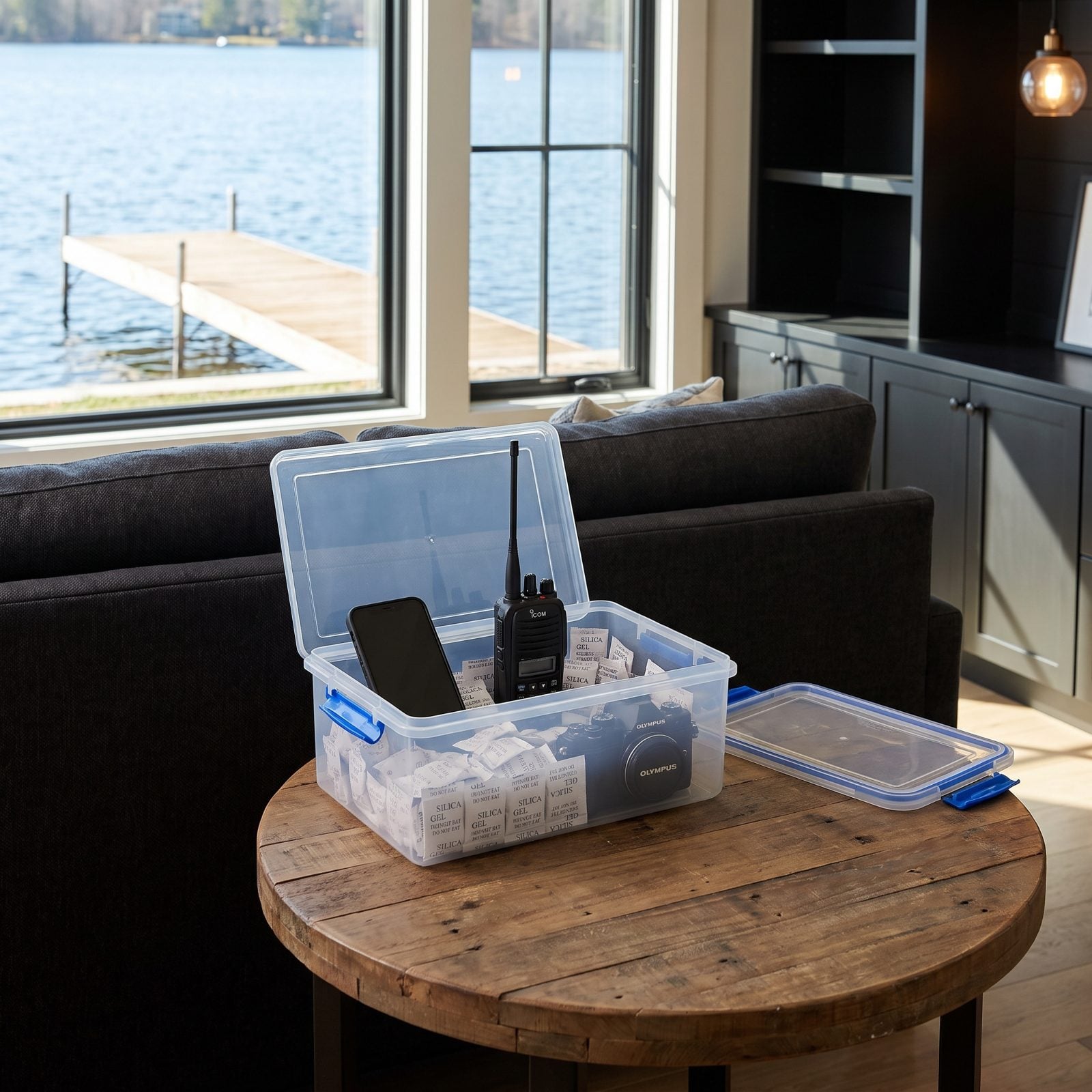
A phone doused by a rogue wave isn’t always done for. The water inside is what kills it, and heat or rice usually isn’t enough.
Drop the device in a sealed container packed with silica gel packets — the ones that come in shoe boxes and vitamin jars. The desiccant pulls moisture out far better than rice, which mostly just gets starch in the charging port.
Keep a stash in a zip bag at the lake for phones, hearing aids, the handheld radio, a camera that got splashed. Give it a day or two sealed up before you decide anything is dead.
36. Rub Candle Wax Along Sticky Screen-Door Tracks
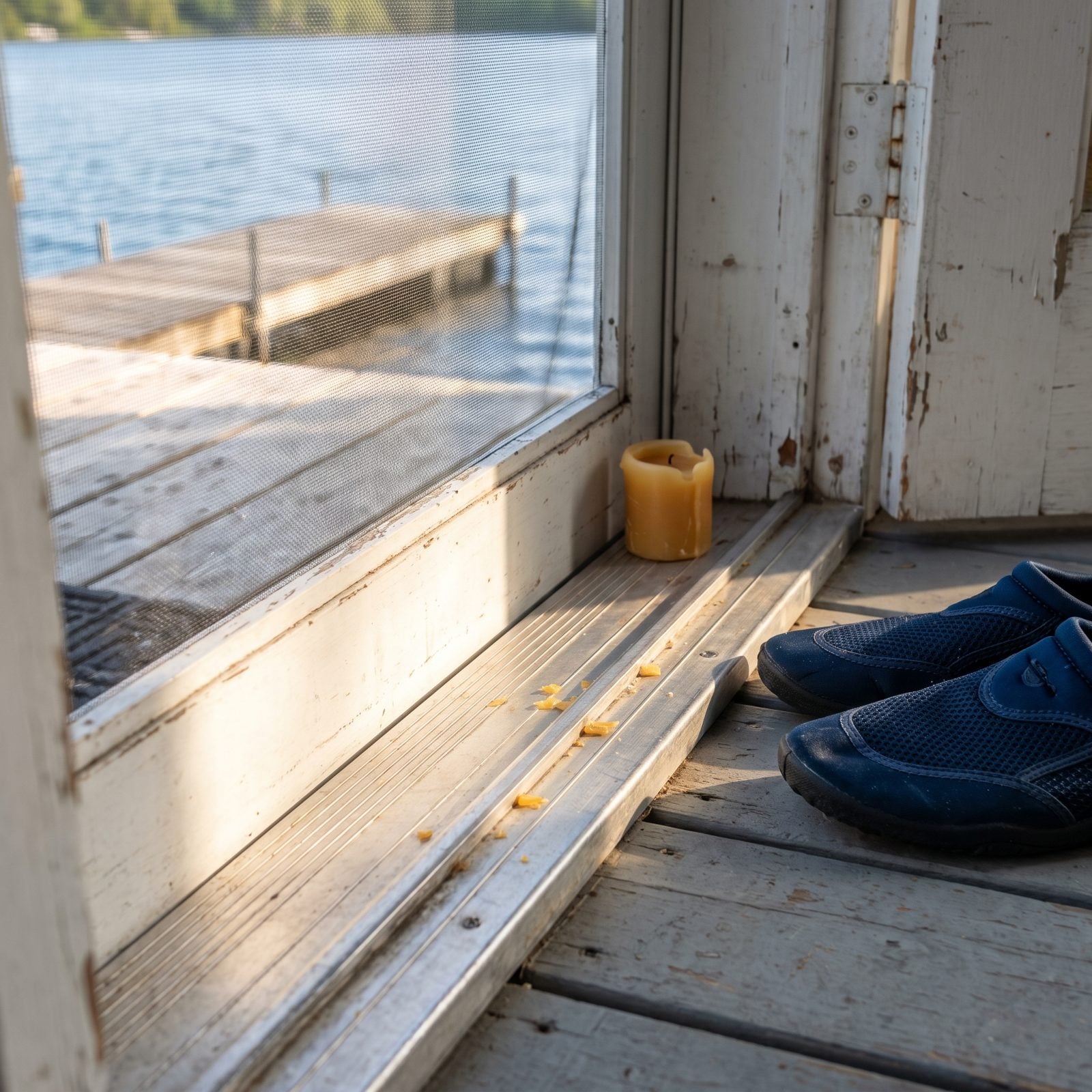
That screech every time the screen door opens isn’t dirt. The track dries out and summer grit welds itself into the groove.
Run a plain candle down the metal track a few passes, then slide the door back and forth. The wax fills the micro-scratches and the door glides again — no oily spray that collects sand, no silicone that washes off in the first rainstorm. A tea light from the junk drawer works fine.
35. Use a Magnetic Bowl for Dock Hardware
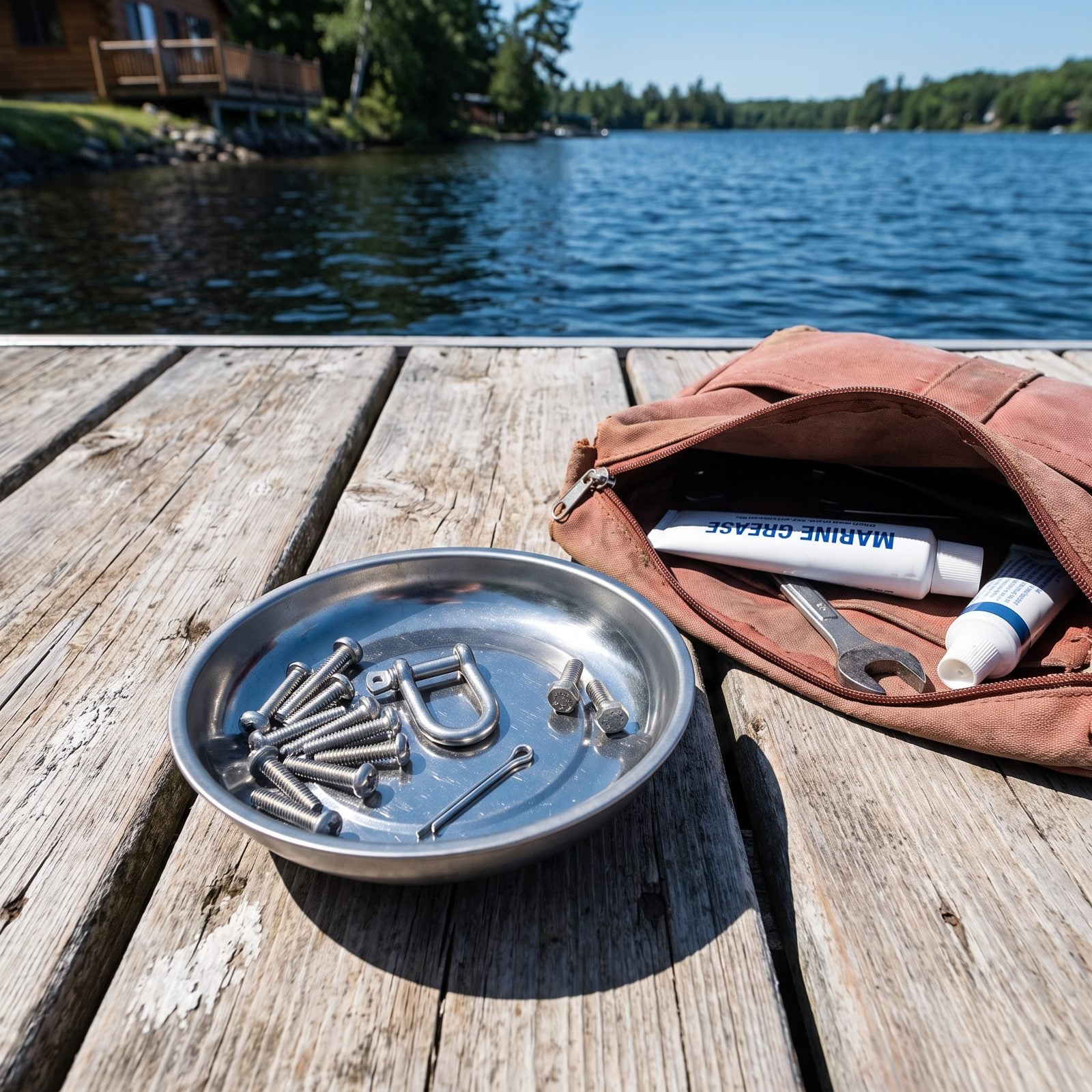
Drop a screw on a dock and it finds a crack in half a second. Then it’s gone — or worse, it’s in the water and in a swimmer’s foot by August.
A cheap magnetic parts bowl, the kind sold in the auto aisle, holds every steel screw and shackle pin while you work. Set it on the boards and the hardware stays put even if you bump it. The magnet’s also a decent way to find the one you already dropped.
34. Mark the Dock Ladder With Reflective Tape
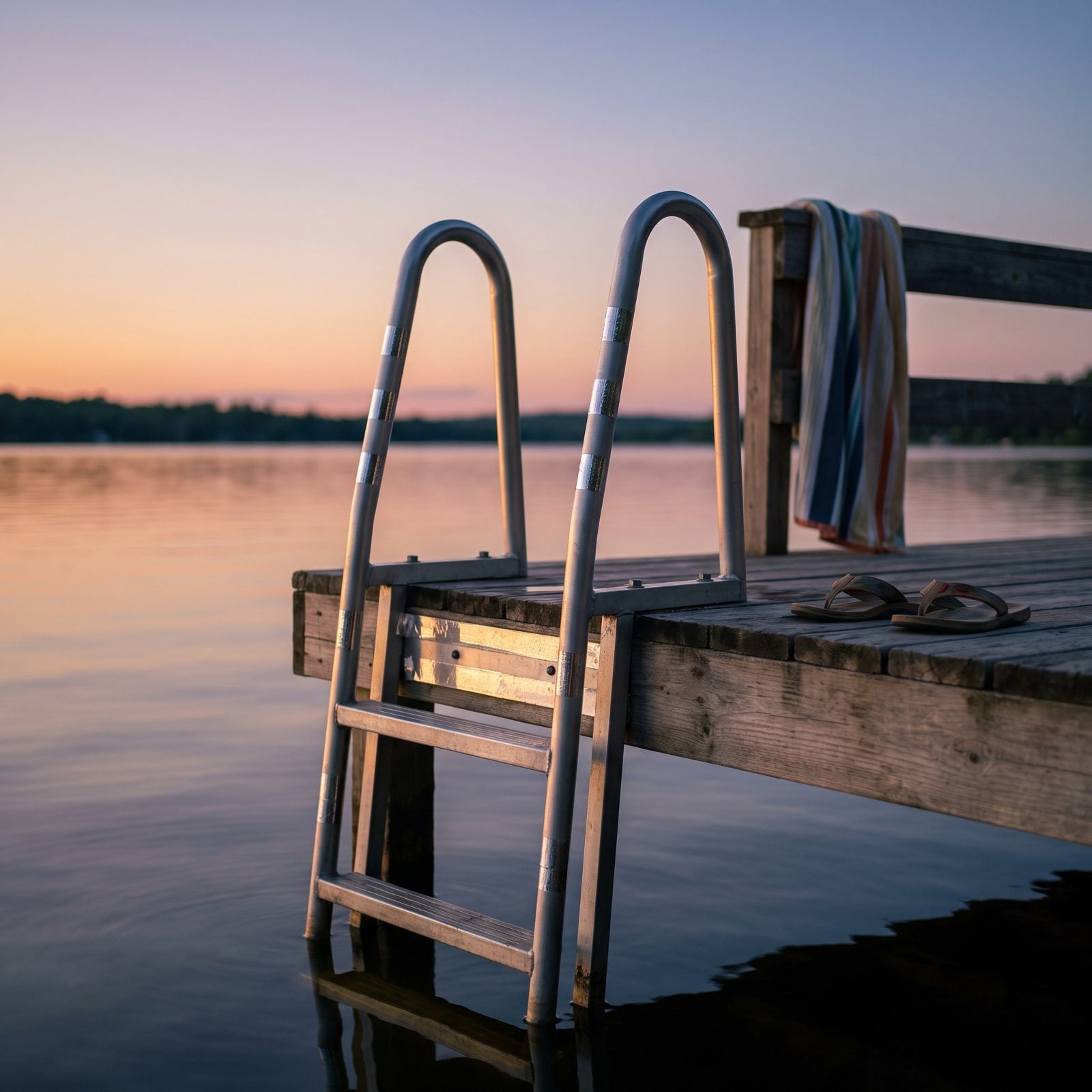
Night swimmers never remember exactly where the ladder is. They remember roughly, which is how shins meet aluminum.
A few strips of marine reflective tape on the handrails and top rung turn the ladder into a beacon the second any flashlight or dock light hits it. Costs a couple of dollars, takes five minutes. The payoff comes on the one night someone swims out farther than they meant to and the dark all looks the same.
33. Aim a Fan Across the Entryway
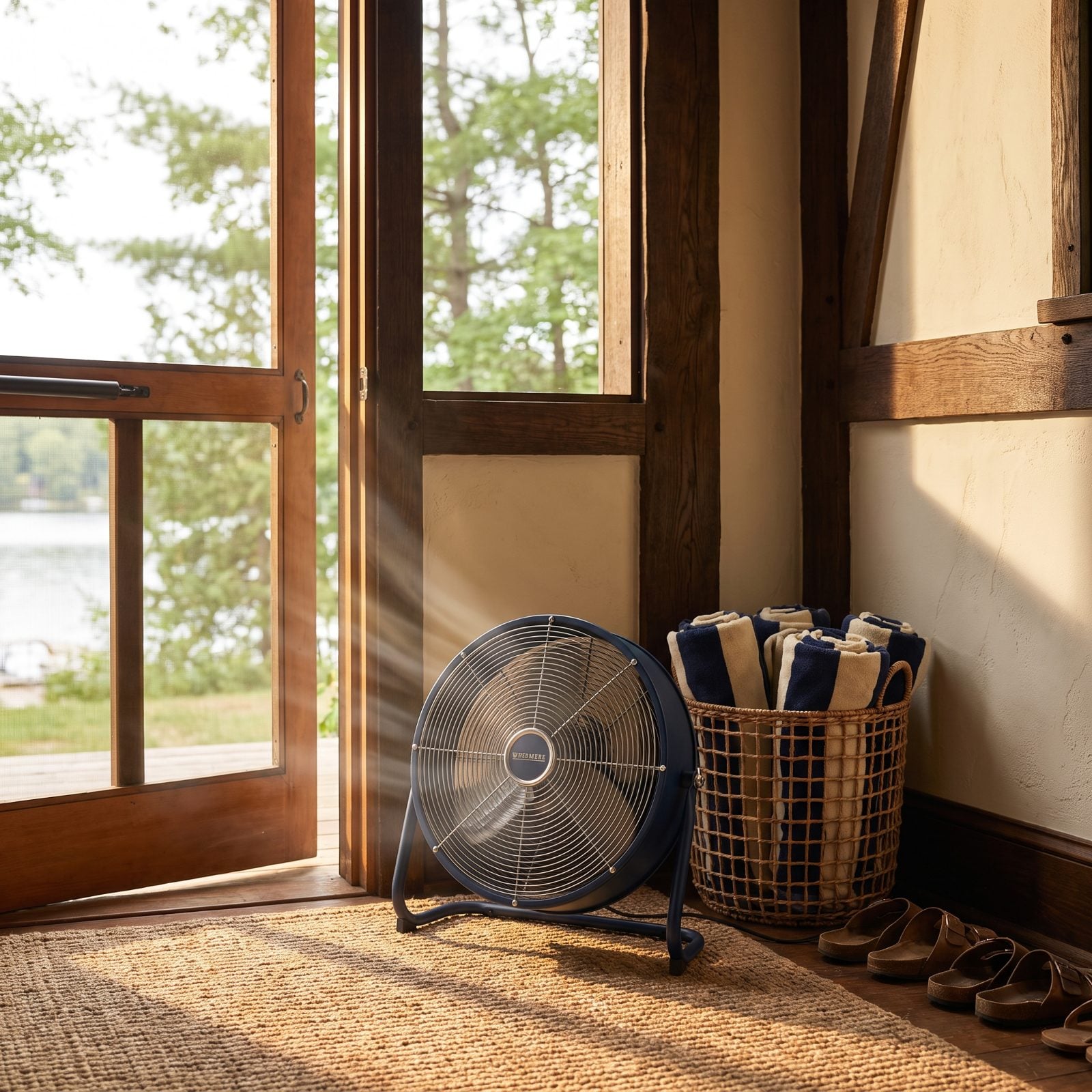
Mosquitoes and flies are weak fliers. A moving wall of air is more than they can push through.
Set a floor fan just inside the doorway, its back to the room and its face blowing out toward the screen door, and most of the bugs that try to follow you inside get caught in the stream before they can get far. It also shifts the warm air that pools in the entry after a hot day. No spray, no citronella haze, no plug-in that smells like a gas station.
32. Hang Flypaper Inside the Garbage Can Lid
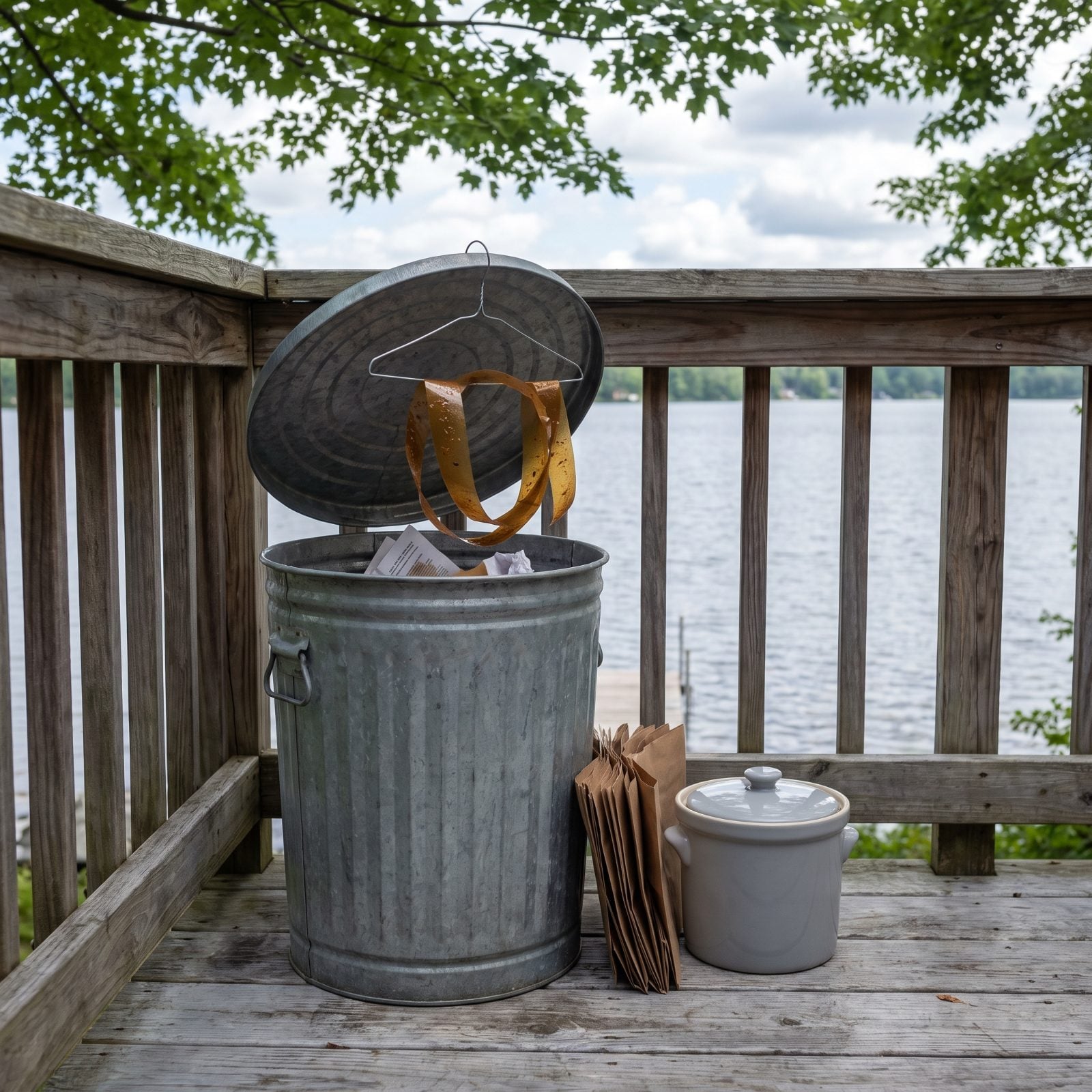
The flies at a lake house aren’t after your food. They’re after the can it goes into after the cookout.
Hook a wire coat hanger over the rim of the lid and drape a strip of flypaper over it so it dangles down over the open can. Every fly that catches the lid’s smell investigates, lands, and stays. It isn’t subtle — the strip hangs right there in plain view — but the flies end up on it instead of on the food, and the kitchen stops being a runway. Swap it when it fills — in July that’s more often than you’d think.
31. Place Cedar Blocks Inside Life Jacket Storage
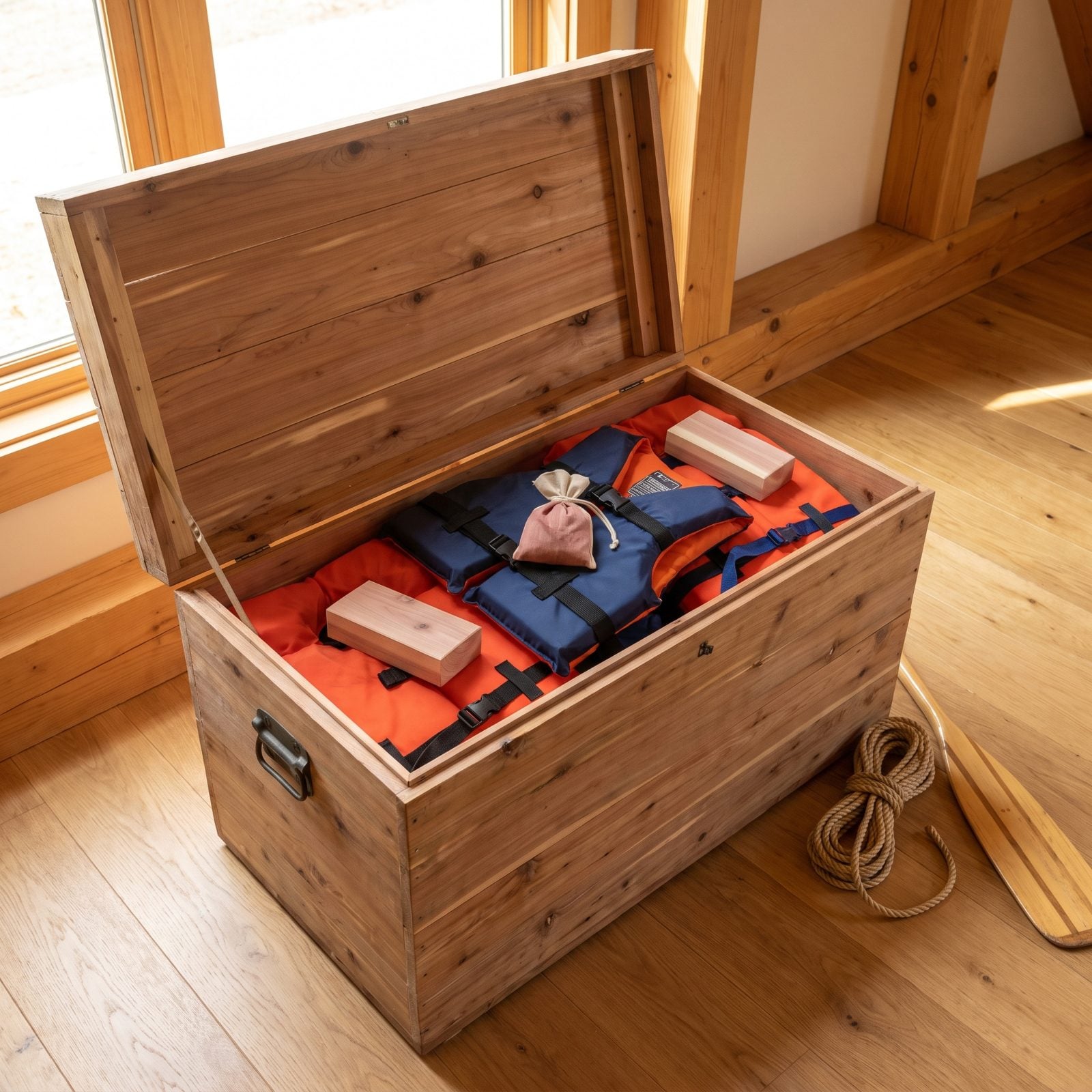
Pull last year’s life jackets out in June and you already know the smell. Damp, mildewed, faintly swampy. Nobody wants to zip into that.
Cedar blocks or a sachet tucked into the storage box pull moisture and hold off the musty funk that settles into packed-away nylon. The vests come out smelling like wood instead of pond. Sand the blocks lightly once a season to wake the scent back up.
30. Keep a Plastic Sled for Hauling Gear to the Dock
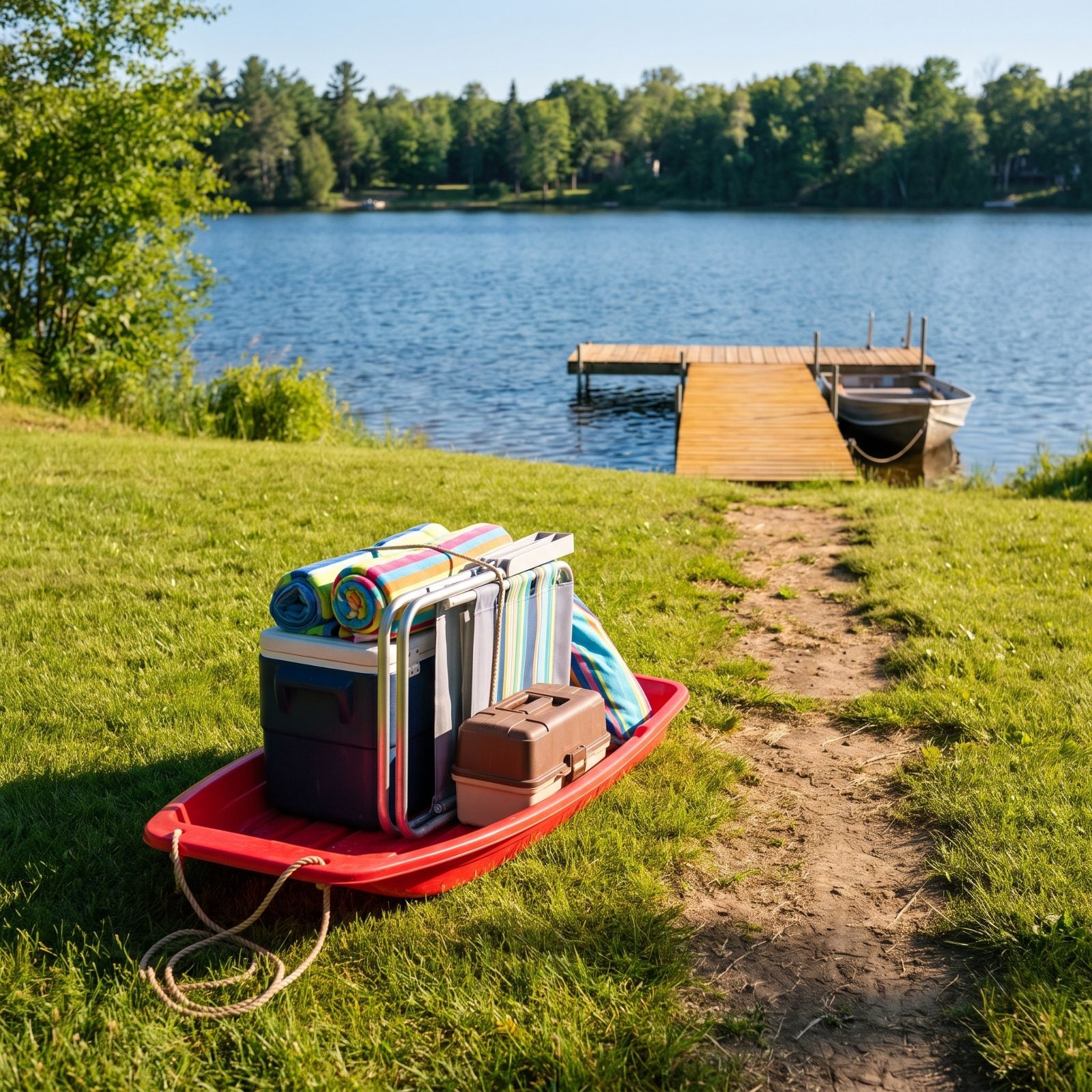
The sled isn’t just for January. At any lake house with a slope between the cabin and the water, a cheap plastic toboggan is the best gear hauler you own.
Load it with the cooler, the chairs, the towels, the tackle box, and drag the whole mess down the grass in one trip instead of five. Over dirt and lawn it slides fine. It stores flat against the shed wall and costs less than any wheeled cart that’ll just bog down in soft ground anyway.
29. Place a Cooling Rack Under Damp Dishcloths
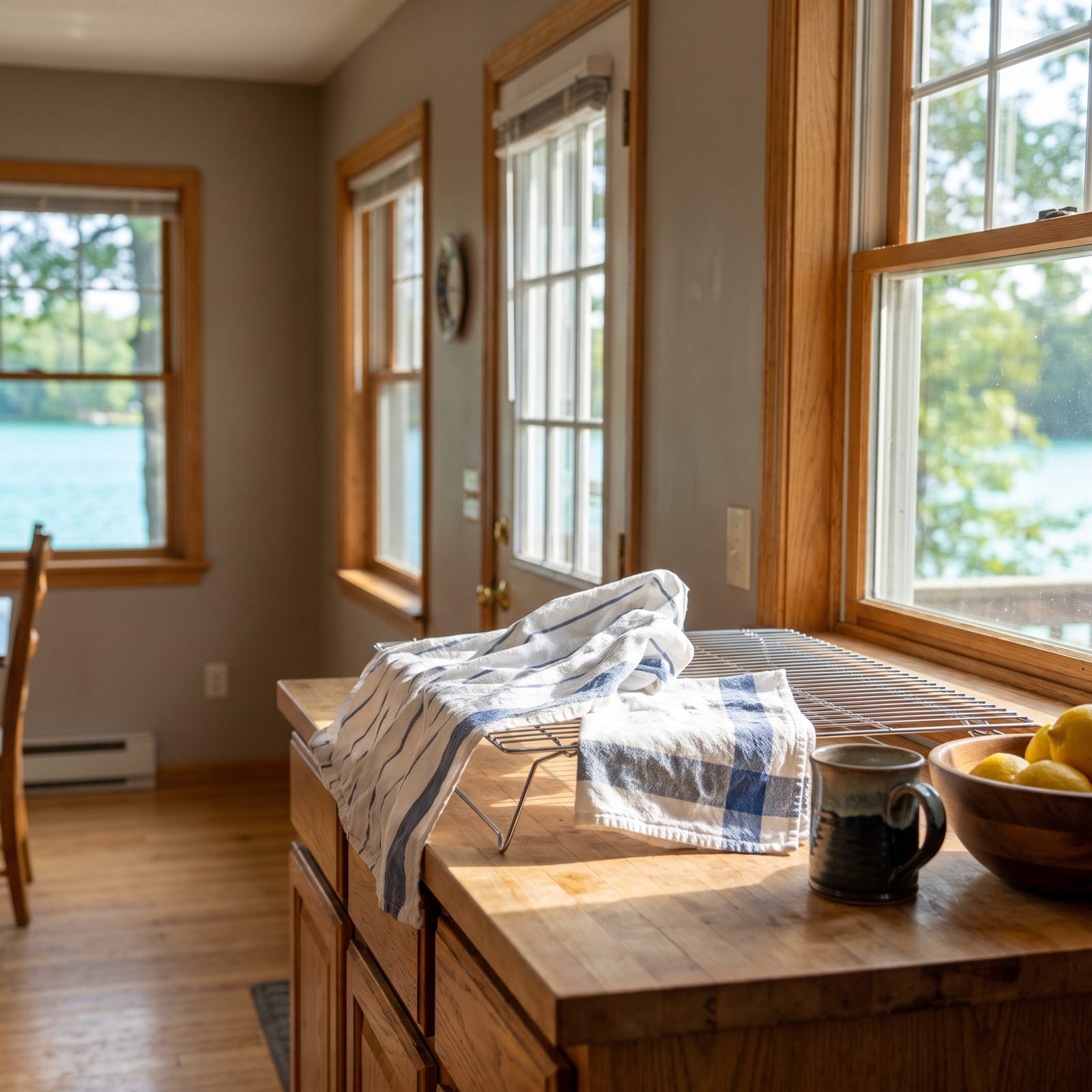
A wet dishcloth folded over the faucet dries from the top down and sours at the bottom. That’s the sour-sponge smell, and lake humidity makes it worse.
Lay a wire cooling rack on the counter and drape the damp cloths over it. Air gets underneath, the whole thing dries evenly, and the mildew never gets a foothold. Works the same for wet swimsuits on a rainy afternoon when the dock railing is already soaked.
28. Use Shower Caps to Cover Leftover Picnic Bowls
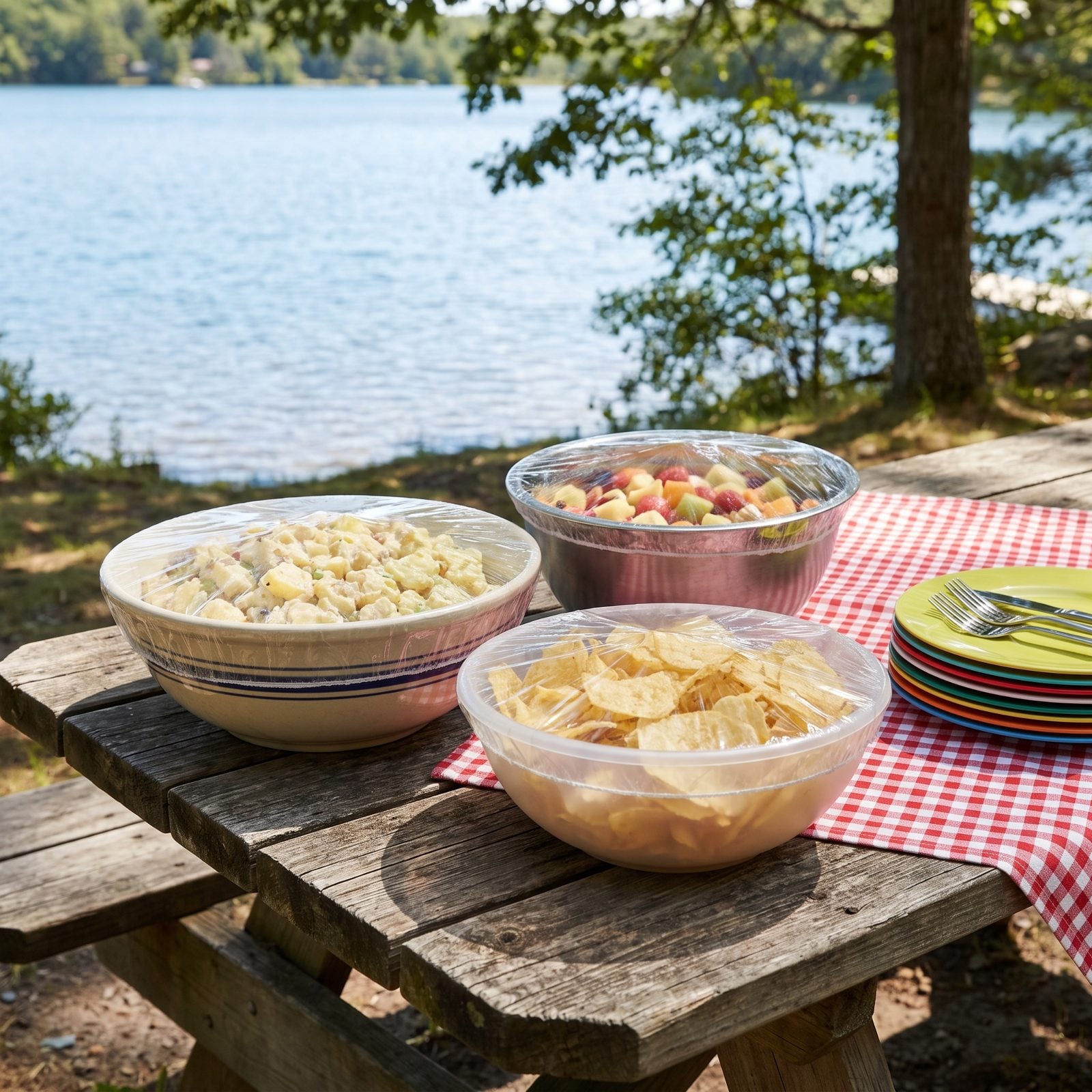
Loose sheets of plastic wrap at an outdoor table are a losing fight. One gust and it’s in the lake.
Clear elastic shower caps, like the ones in hotel toiletry kits, stretch drum-tight over any bowl rim, so snug they look like cling film, with the elastic tucked under the lip, and hold in wind. They keep flies off the fruit salad, rinse clean, and live in a drawer the whole season. A pack of the clear disposable ones costs next to nothing and covers every bowl on the table with caps to spare.
27. Keep a Paintbrush by the Door for Sweeping Screens
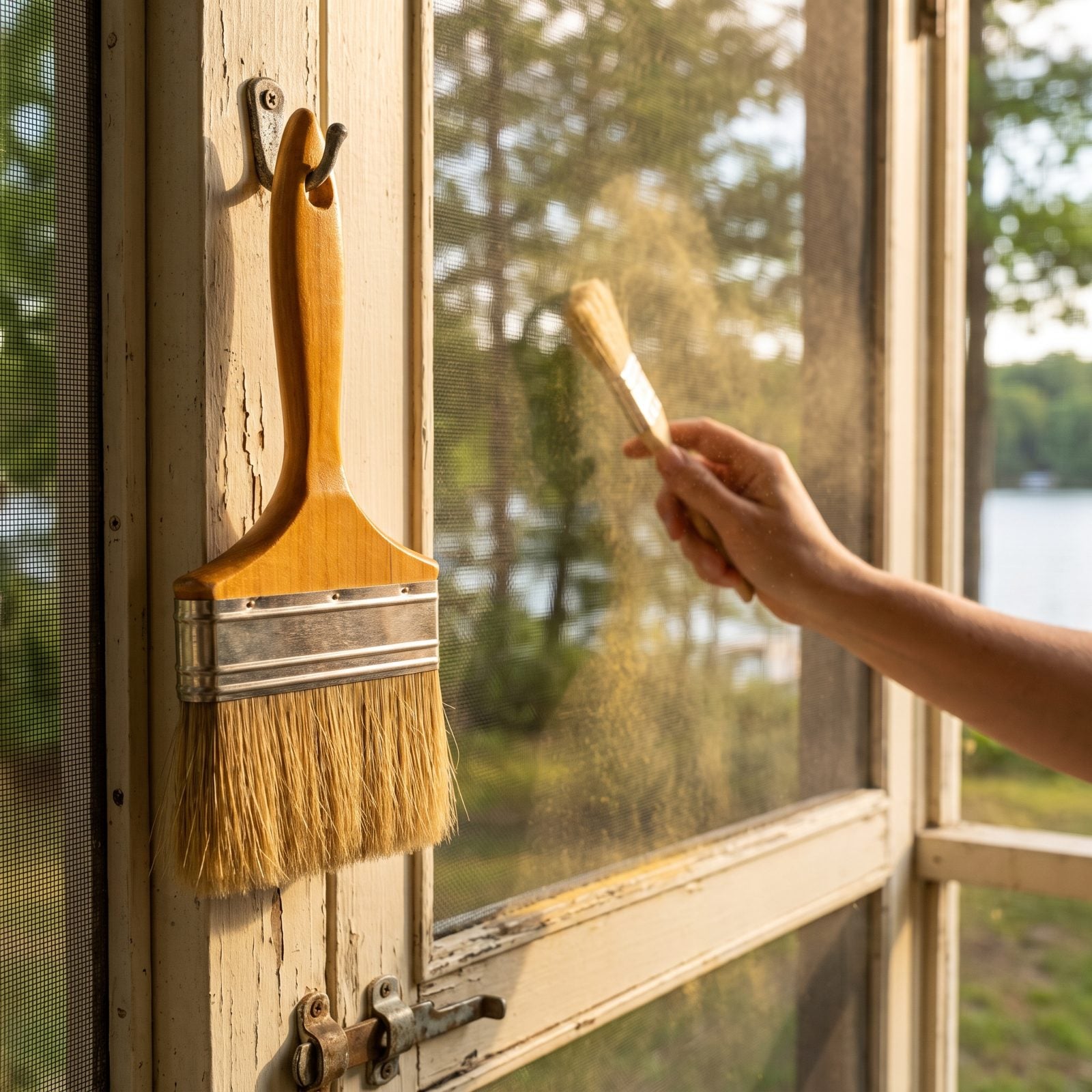
Screens clog with pollen, cottonwood fluff, and dead bugs faster than anything else at a lake house, and a cloth just smears it all into the mesh.
A dry paintbrush, three or four inches wide, sweeps a season of grime off a screen in seconds. The bristles reach into the weave without pushing dust through to the inside. Hang it on a nail by the door and it becomes the thing you grab without thinking.
26. Set a Dishpan by the Door for Sandy Feet
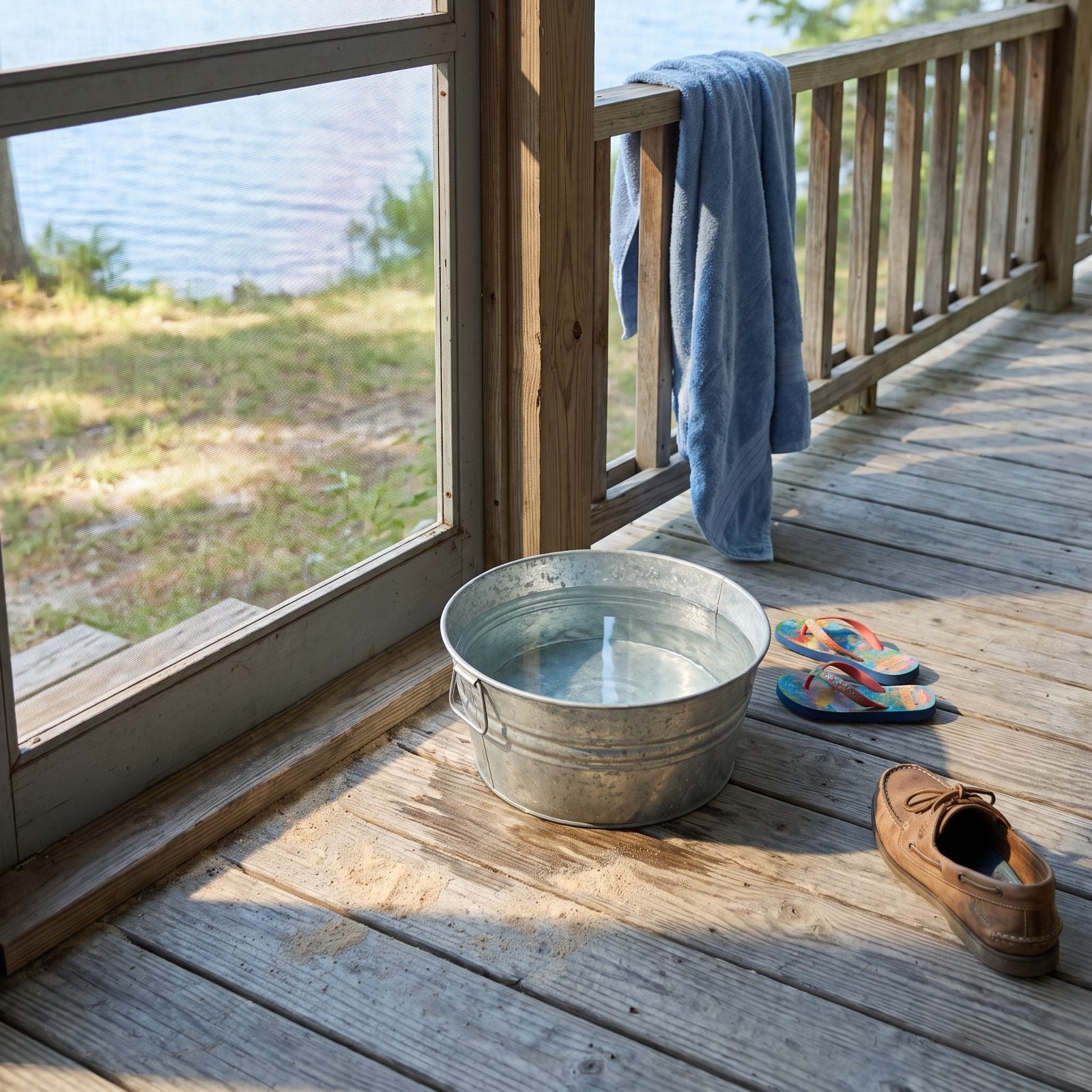
Sand travels. One barefoot trip from the swim dock to the kitchen and the whole floor feels like a beach you didn’t invite in, which is exactly why a shallow dishpan of lake water parked at the door earns its spot. Swish your feet, step in clean, done.
Placement is where most people blow it. The pan has to sit before the threshold — set it after, and the sand’s already inside grinning at you. Refill it twice a day in high season and dump it over the railing. A cheap galvanized pan runs about the price of a sandwich and outlasts every fancy boot-tray you’ll ever buy.
25. Clip the Tablecloth to the Table From Underneath
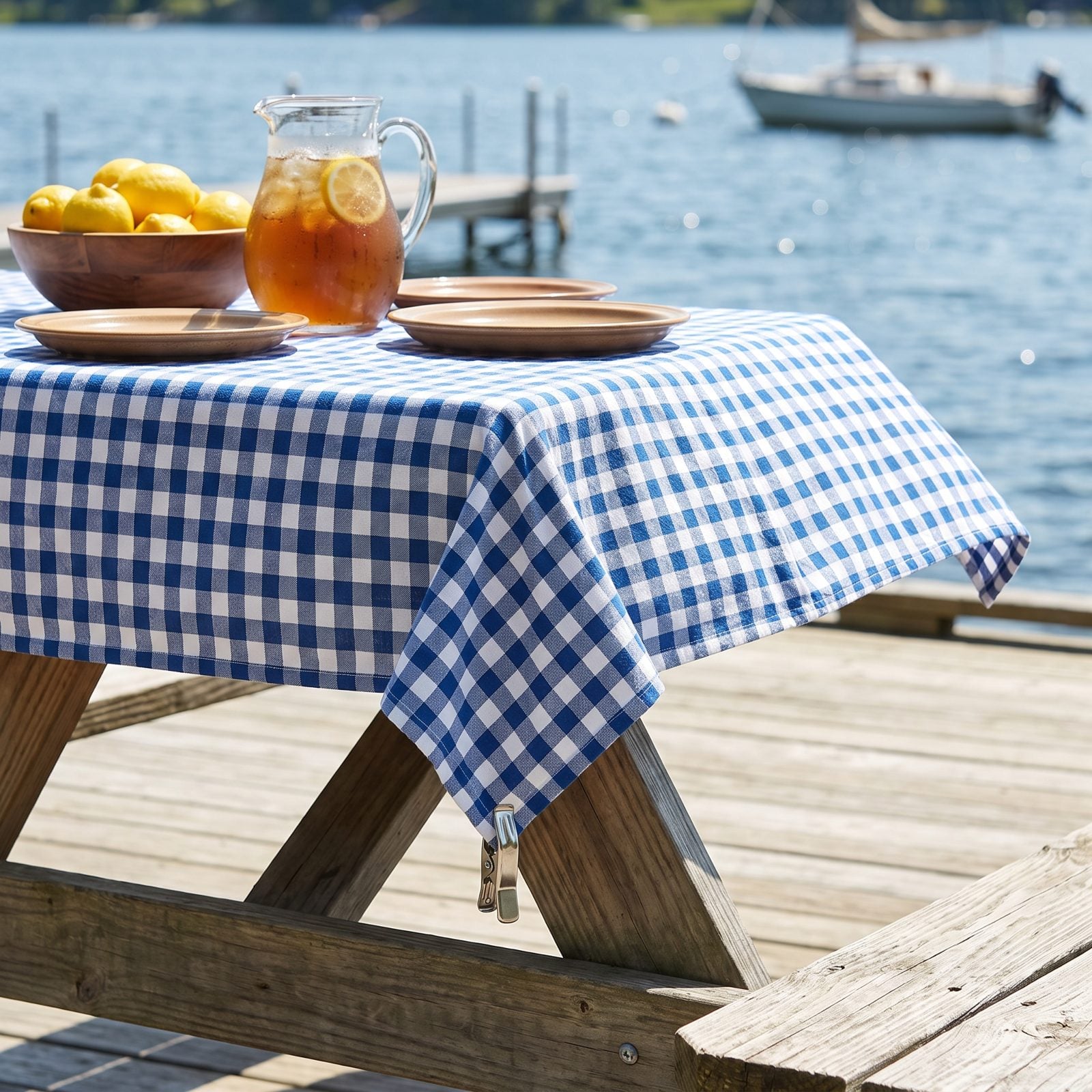
Lake wind has opinions about your tablecloth. It flips it, drags the condiments, and dumps your chip bowl before anyone’s even sat down. Those decorative cloth weights look nice, sure, but they don’t actually hold a thing.
Spring clamps do. The little ones from the hardware aisle, a few bucks for a whole pack. Clip each corner to the edge of the tabletop from underneath and the clamps keep the cloth from flapping up when the afternoon breeze rolls in off the water. Nobody minds a little metal clip hanging there, nobody wrestles a billowing cloth, and dinner stays put.
24. Freeze Drinking Water in Gallon Jugs for Coolers
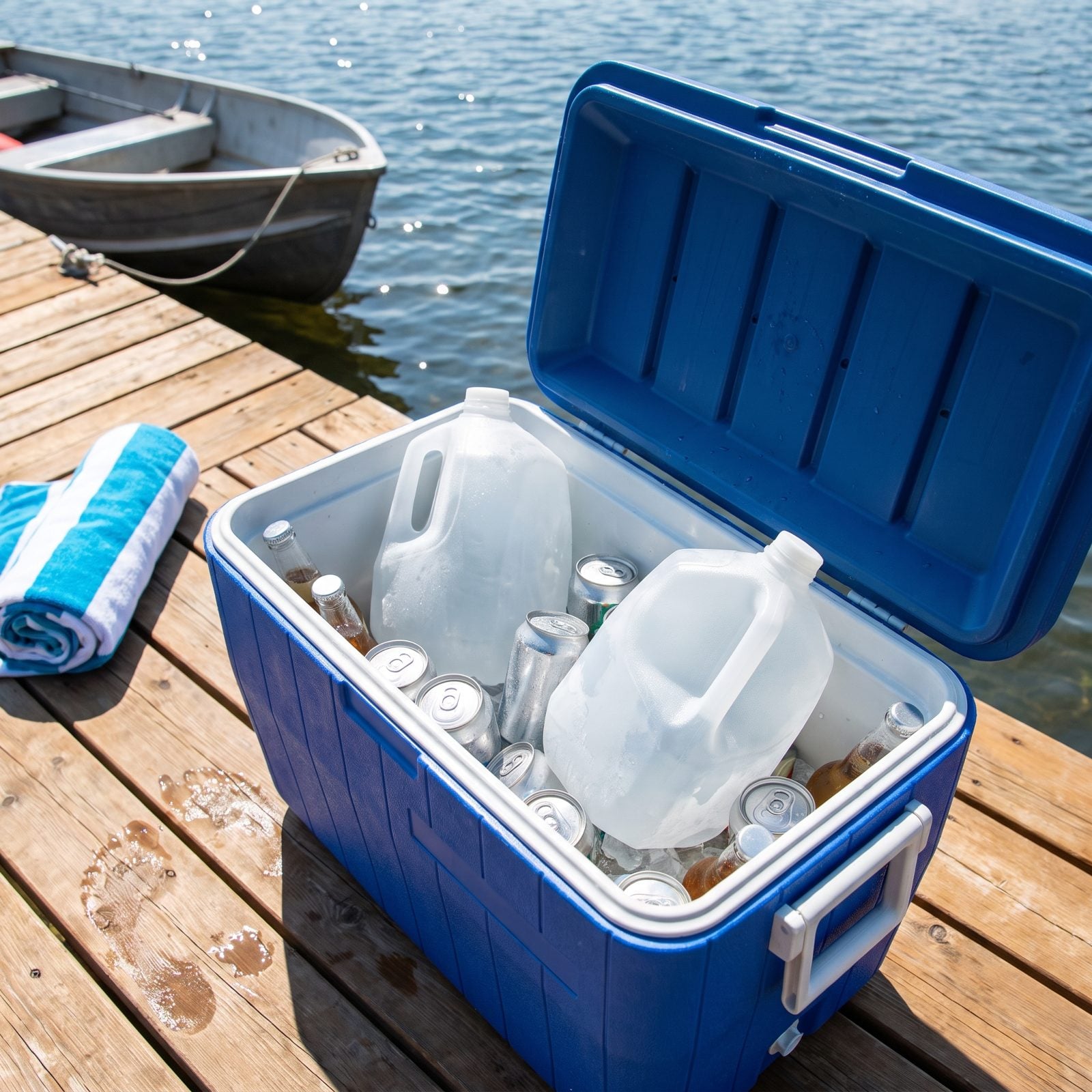
Loose ice is a scam you pay for twice. It melts into a cold soup that soaks your labels, drowns your snacks, and by early afternoon the cubes are gone and you’ve got nothing left to drink.
Freeze a couple of gallon jugs of plain tap water instead. They hold a cooler cold far longer than cubes, they don’t flood everything, and when they finally thaw you’ve got clean, cold drinking water on a hot dock. Same jugs, all summer, over and over.
23. Keep a Mesh Bag Beside the Dock for Wet Gear
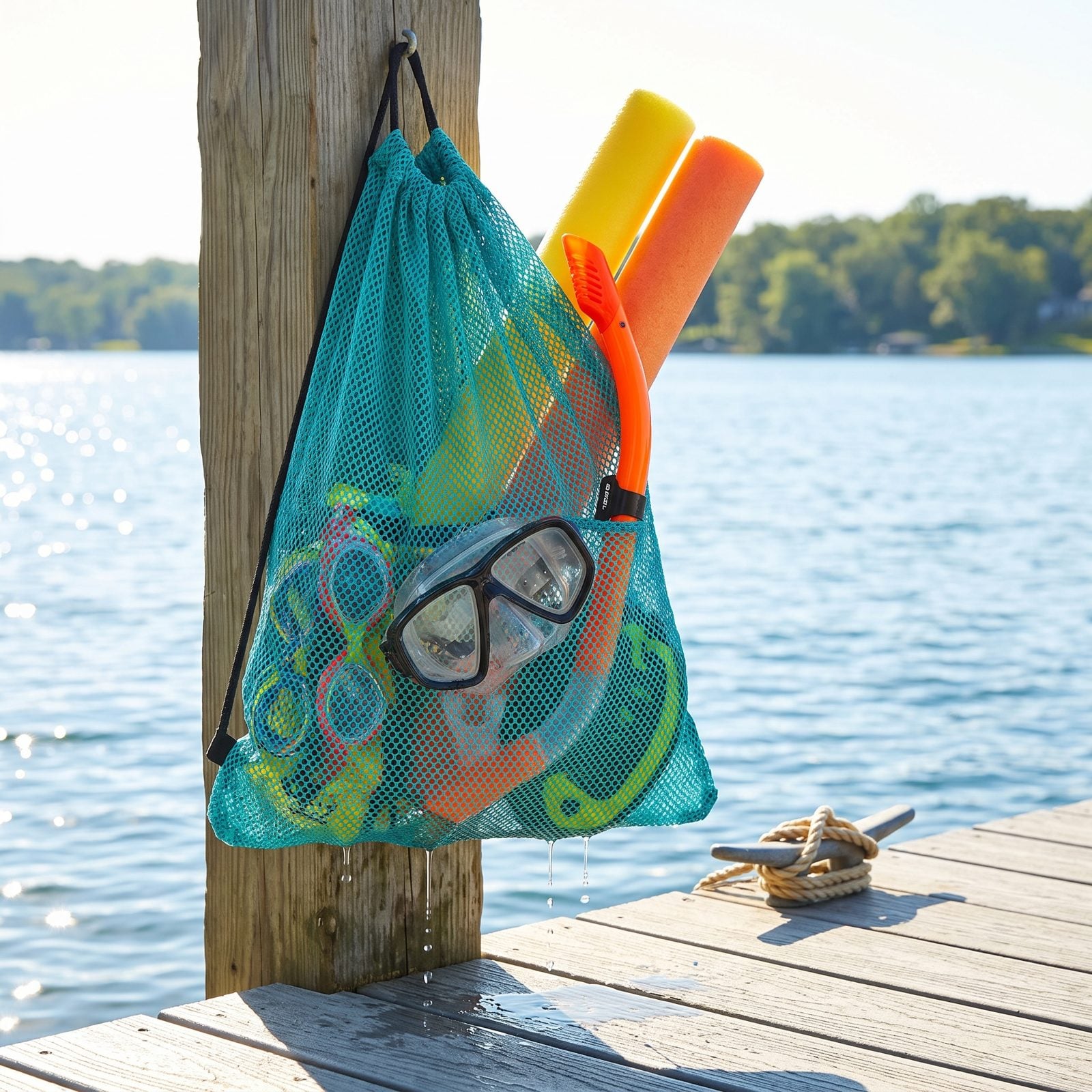
Wet masks, snorkels, and pool toys always end up in a moldy pile under a bench somewhere. A mesh bag hung on a dock post handles two headaches at once: everything drips and dries right where you use it, and nobody drags soggy gear up to the house.
Go with open-weave mesh and nothing else. Those nylon sport bags trap water and go sour by August. The loose weave lets air move through, so masks don’t fog with mildew and the toys aren’t slimy next time a kid grabs them. Hang it high enough that it isn’t sitting in a puddle.
22. Bundle Each Sheet Set Inside Its Pillowcase
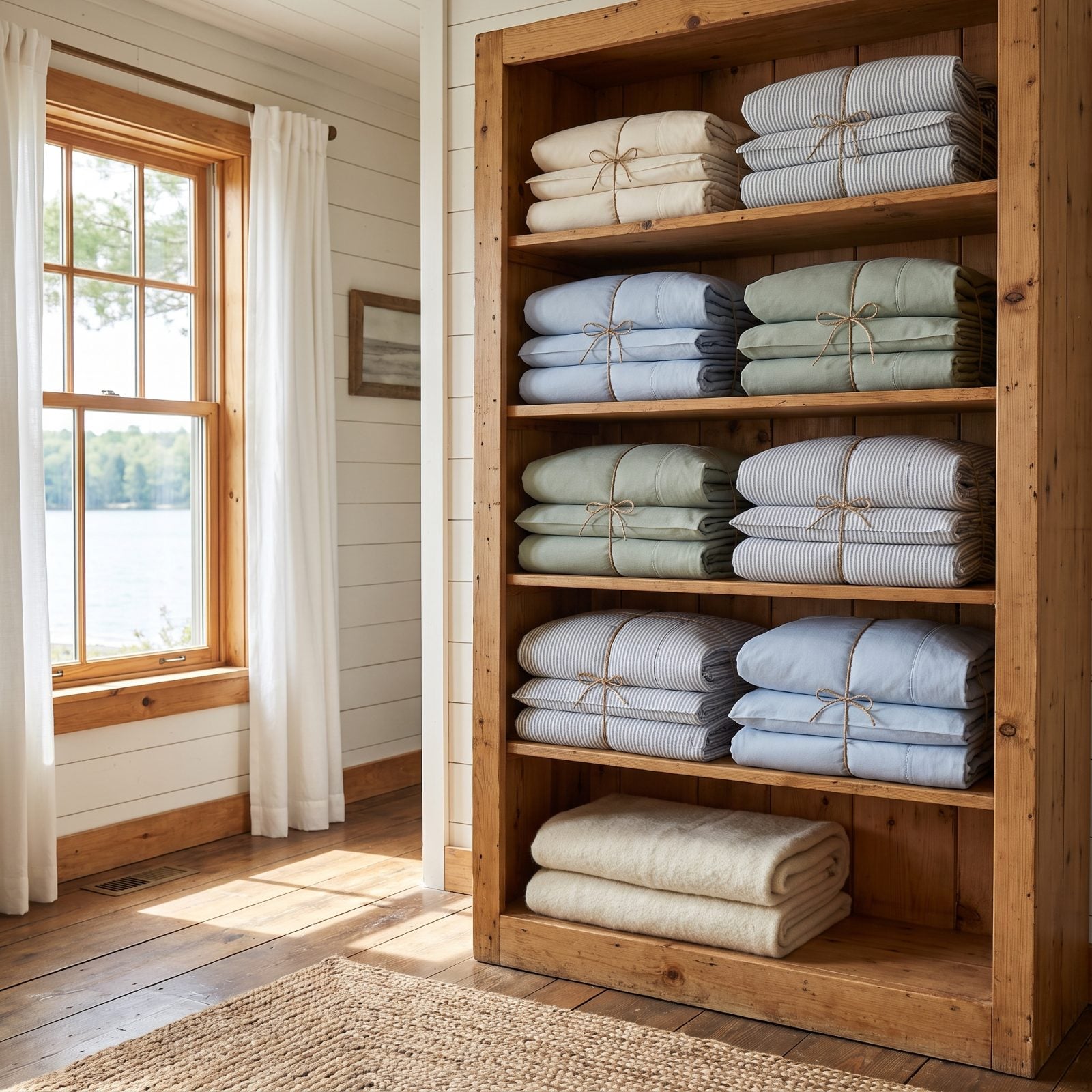
Nobody wants to play matching games at bedtime when the lake’s calling at six a.m. Fold the flat sheet, the fitted sheet, and the pillowcases, then tuck each set inside one of its own pillowcases: white with white, blue with blue, sage with sage, ticking stripe with ticking stripe. One stack, one grab, every set complete.
In a house that sleeps a rotating cast of guests, this saves you real grief — no more digging for a fitted queen that wandered off into the twin pile. And open shelves lined with these tidy, color-sorted stacks just looks calmer, which matters more than you’d think when you’re the one keeping the place running.
21. Assign Every Guest a Towel Color
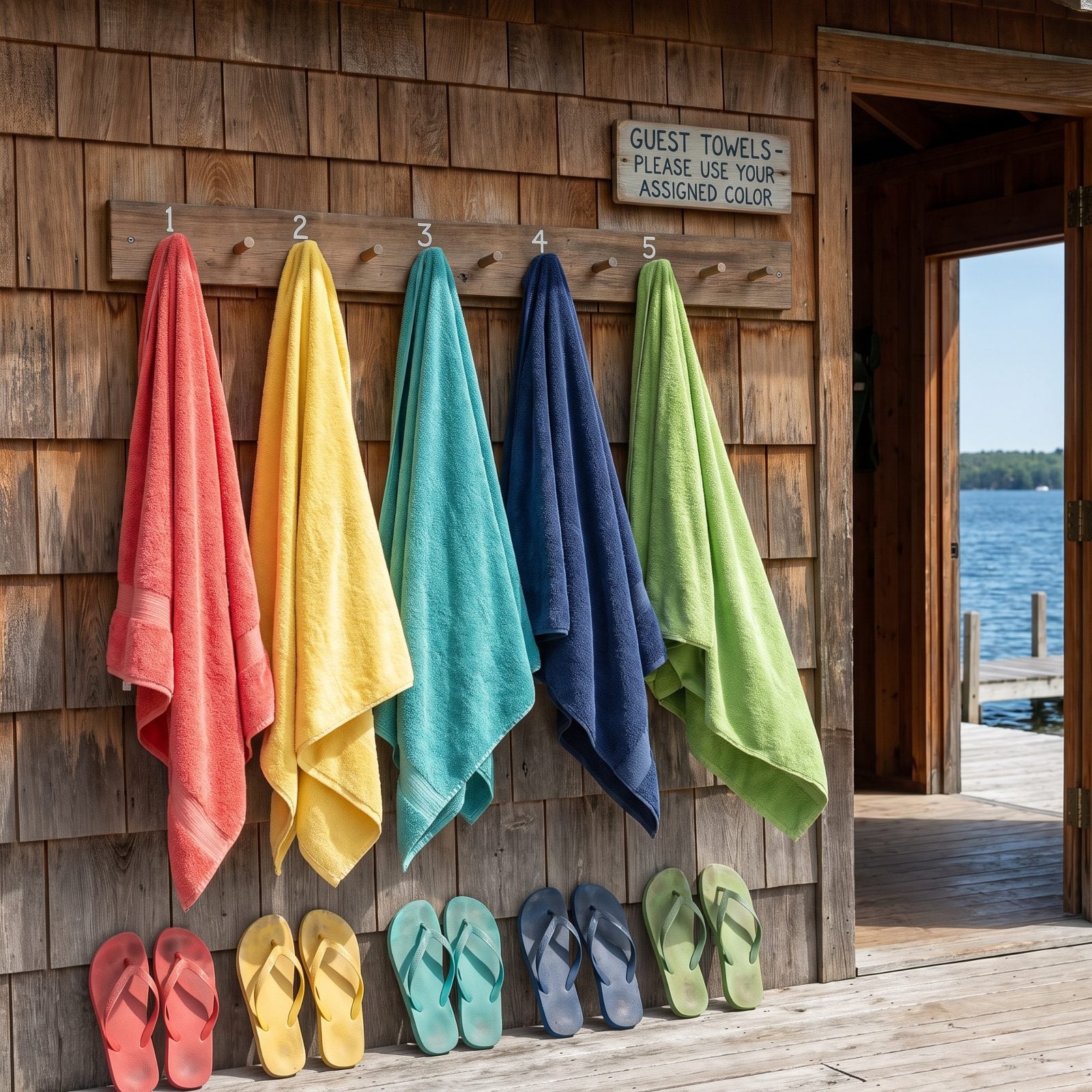
One wet towel on the floor is a mystery. Six wet towels on the floor is a war crime.
Give every guest a single color for the whole stay. Coral is always yours, navy is always his, and just like that nobody burns through four towels a day or abandons a damp heap that no one will claim. Fewer washes, less laundry, zero arguments.
20. Hang Life Jackets on a Freestanding Coat Rack
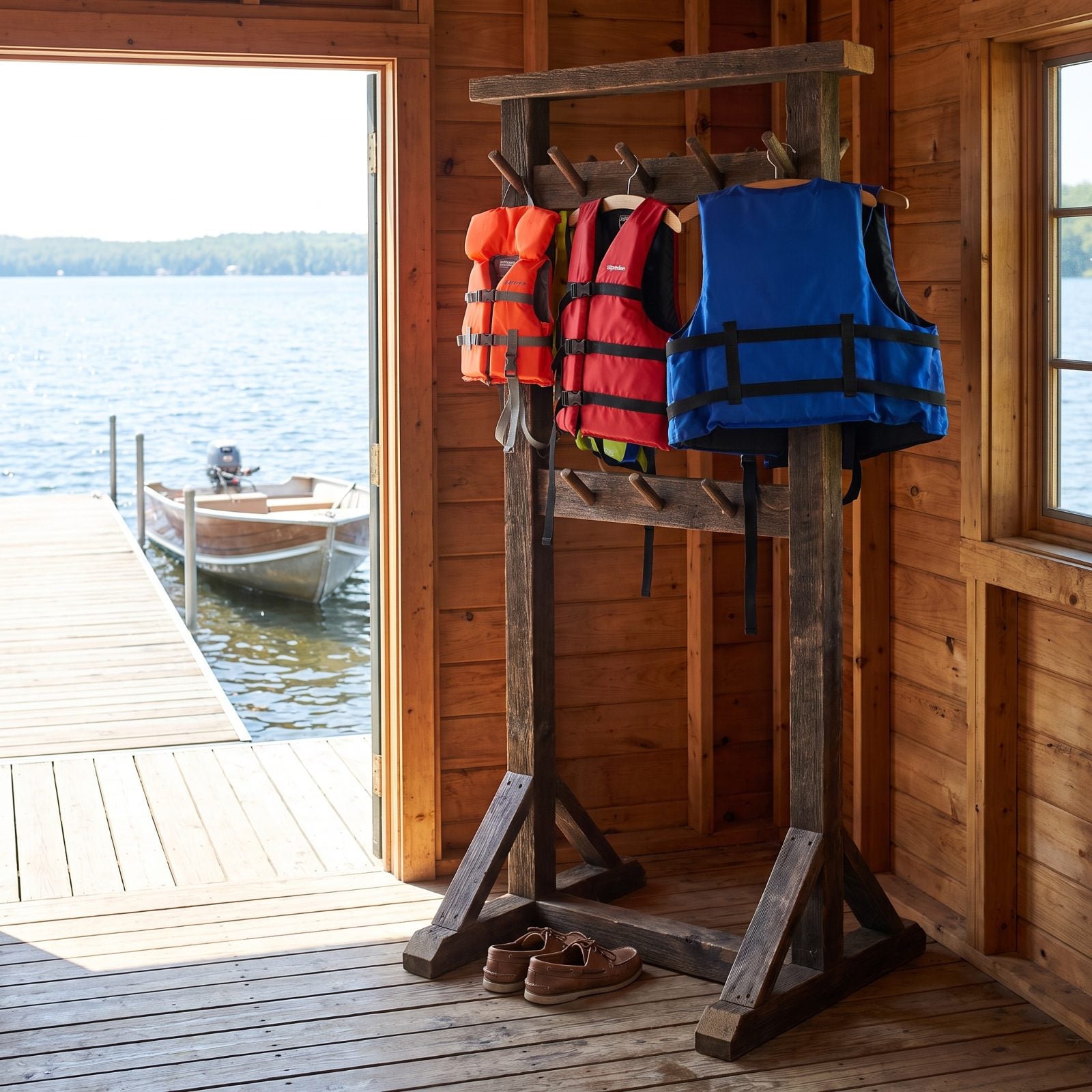
Life jackets crammed in a bin come out damp, musty, and still soggy in the straps from yesterday. Stand up a freestanding coat rack instead. Each vest hangs open, air moves through the foam, and they’re dry and ready by morning.
Hung by size, they sort themselves. Grown-ups grab the top pegs, kids grab the low ones, and you’re not holding up the whole dock trip untangling buckles. Here’s the part people miss: a life jacket that never fully dries slowly loses its float. Keep them aired out and they’ll last you years longer.
19. Hang a Shoe Organizer for Sunscreen and Bug Spray
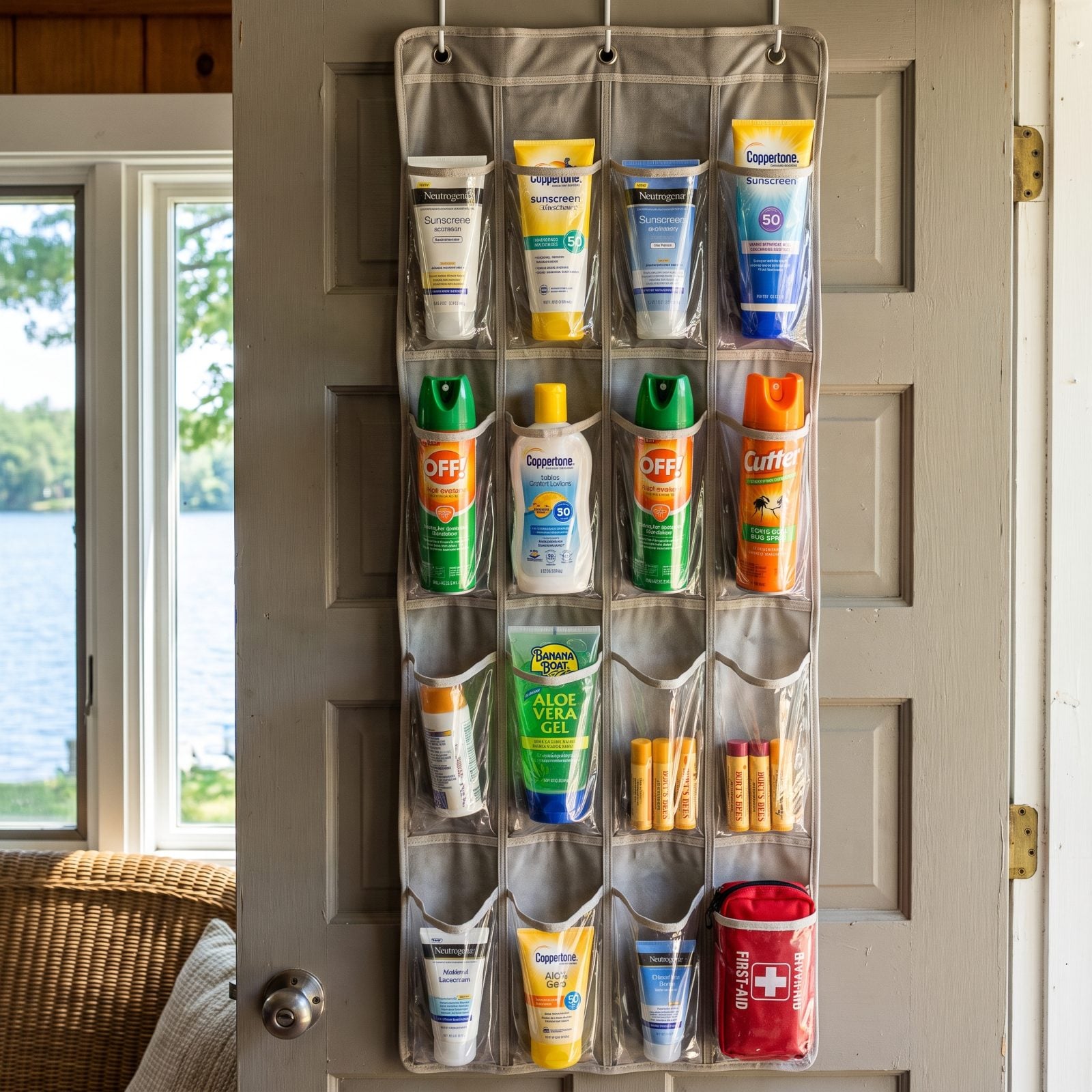
The sunscreen is never where the sunscreen should be. It’s buried in a beach bag, wedged under a car seat, half-melted on a windowsill — anywhere but in your hand when the kids are already turning pink. A hanging shoe organizer by the door rounds up the whole mess.
Clear pockets make it work. You see at a glance what’s running low, the bug spray stops hiding behind the aloe, and grab-and-go actually happens. Hang it low enough that kids can reach their own sunscreen. Those ten saved seconds per application? They add up to your whole afternoon.
18. Store Spare Toilet Paper in Lidded Glass Jars
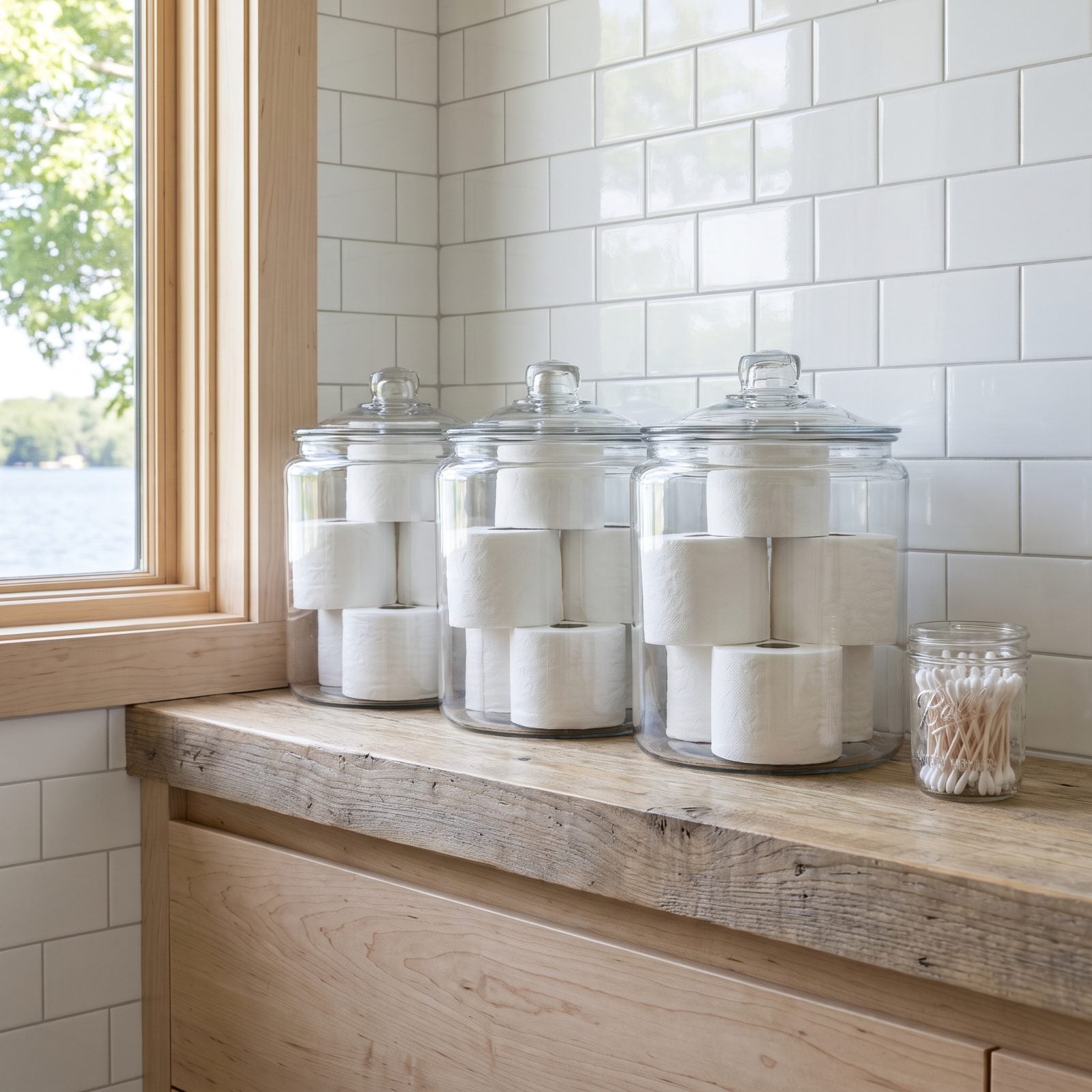
Lake houses have a damp-air problem, and damp air finds toilet paper fast. A spare roll left under the sink goes soft and useless, especially in a cabin that sits shut up between weekends. Lidded glass jars seal all that out.
And there’s a bonus. Guests spot the backup supply at a glance, so nobody’s stranded or roaming the house asking where you hide things. Big apothecary-style jars look clean on an open shelf, hold a few rolls apiece, and keep the whole supply dry straight through a muggy July.
17. Store Board Games in Zippered Mesh Pouches
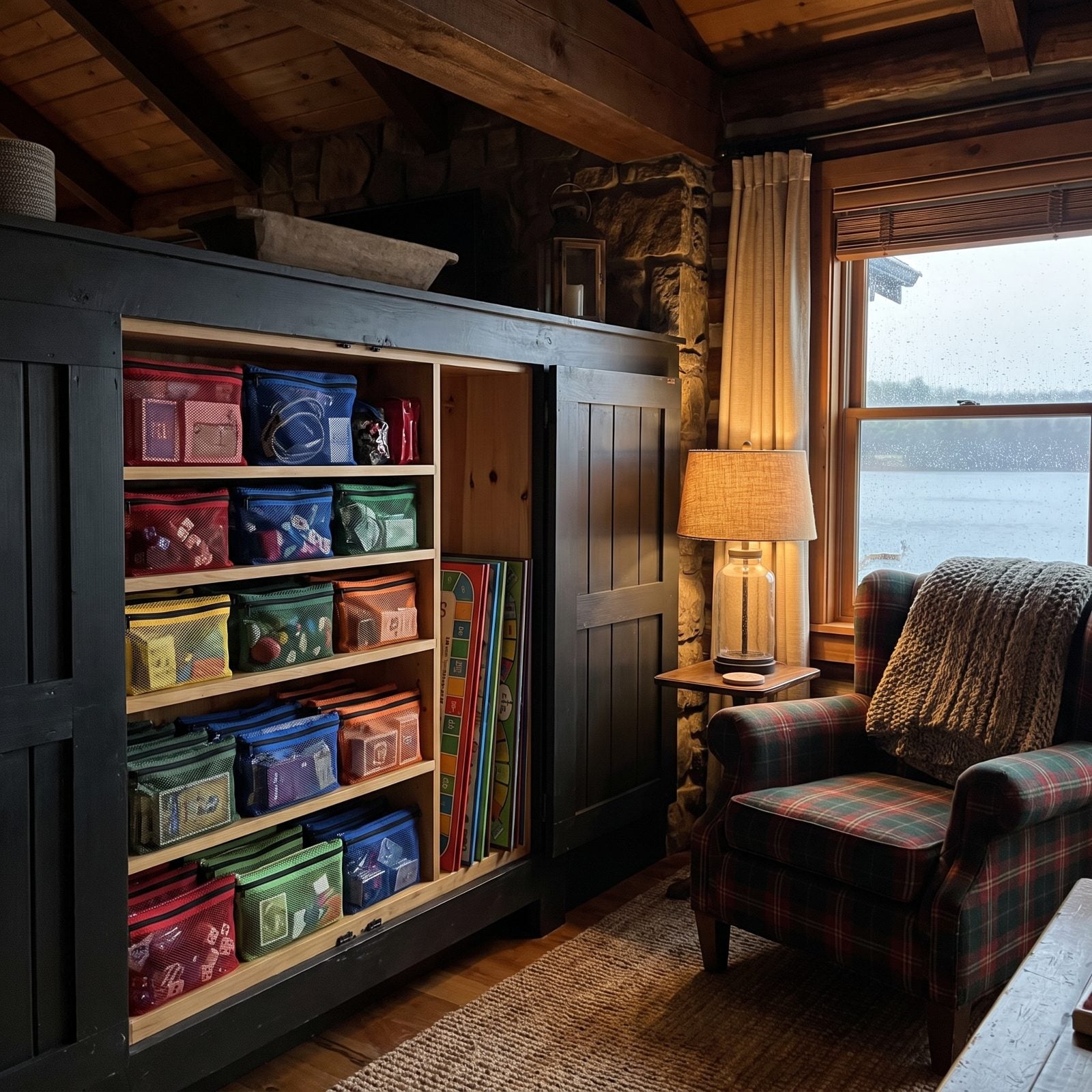
Cardboard game boxes die at the lake. The corners split, the lids warp in the humidity, and half the pieces vanish into couch cushions by the second rainy afternoon. Dump each game into a zippered mesh pouch and the whole headache’s gone.
The pouches stack flat and the boards slide in beside them. You can see every piece through the mesh, so you know before you sit down whether all the Monopoly tokens made it through last summer. They tuck into a cabinet in a fraction of the space. For a house that lives and dies by what you do when the weather turns, that’s a small fix that earns its keep. Now go raid the sock drawer for the dice first.
16. Put Remote Controls in Bright Silicone Sleeves
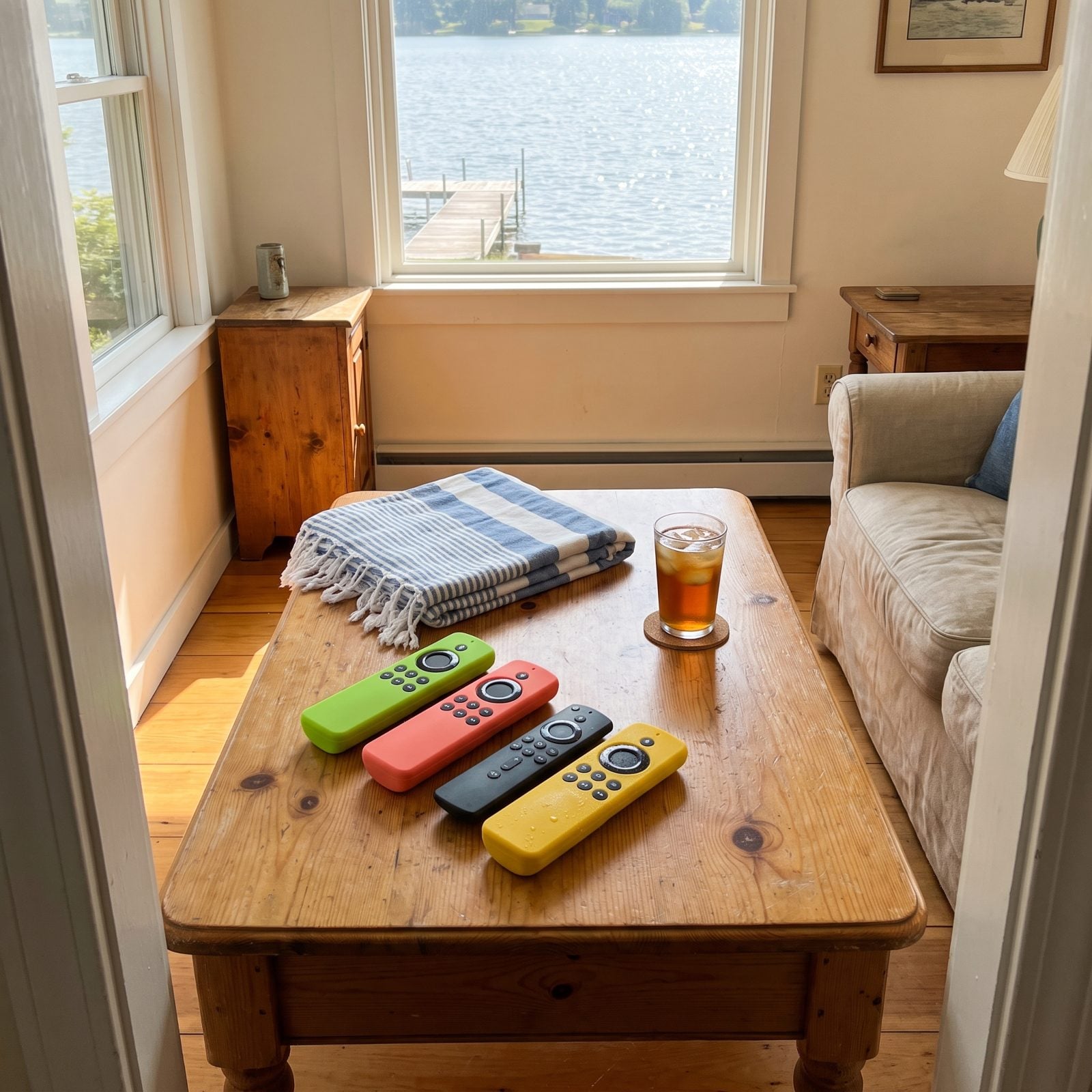
Lake house remotes vanish into couch cushions, under beach towels, behind the cooler. And the second they land in a puddle from a wet swimsuit, they’re done for.
Wrap each one in a cheap silicone sleeve, the kind made for TV remotes, and two problems solve themselves at once. The bright color means you spot the thing from across the room even when it’s half-buried in a pile of pool noodles, and the grippy surface shrugs off splashes and the inevitable slide off a deck railing.
Color-code them while you’re at it. Green for the main TV, yellow for the ceiling fan, coral for the window AC. Nobody argues about which remote does what anymore.
15. Use a Muffin Tin as a Condiment Caddy
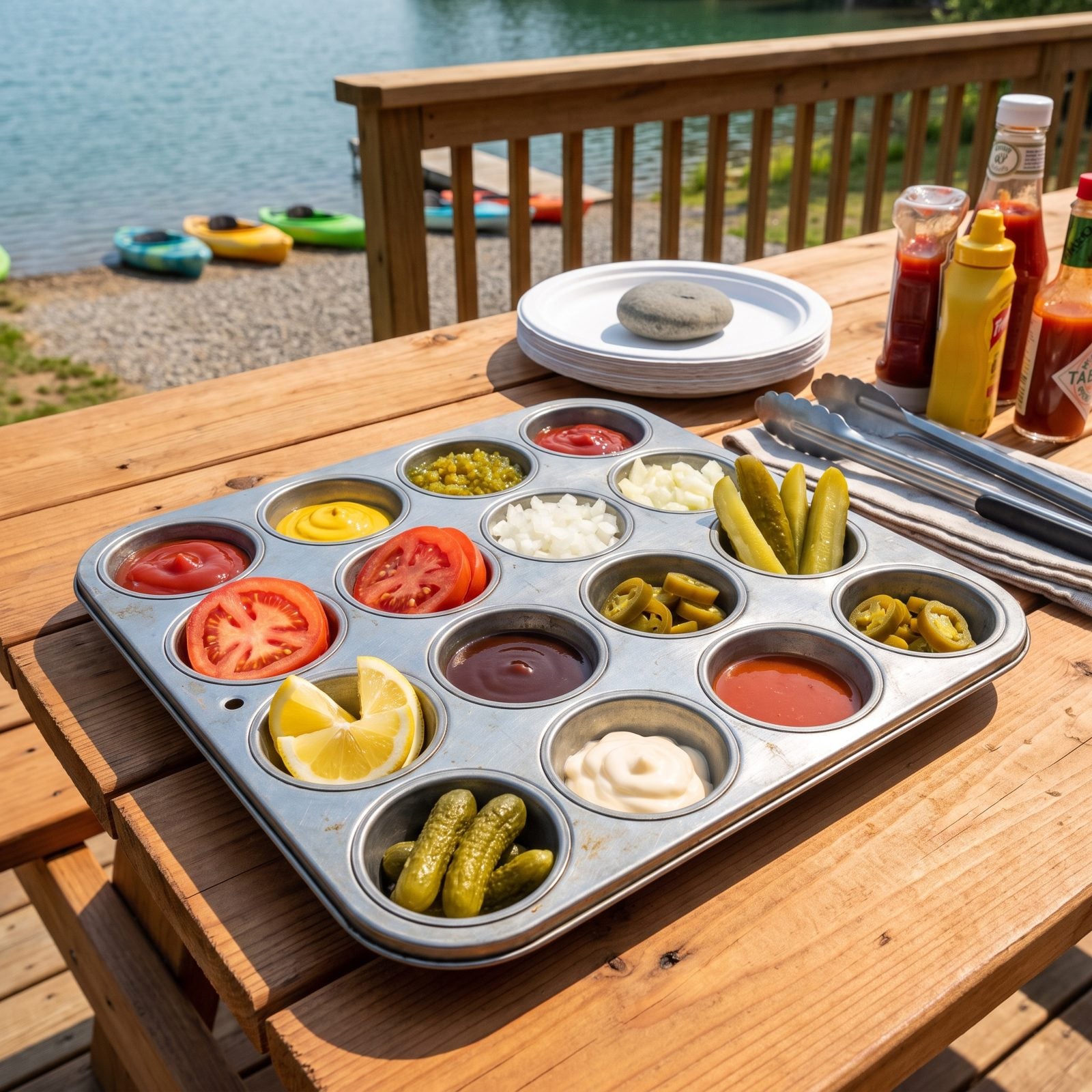
One tin. Twelve condiments. One trip from the kitchen.
A muffin tin turns the whole fiddly condiment shuffle into a single grab. Ketchup, mustard, relish, diced onion, pickles, lemon wedges, each in its own cup, nothing tipping over on the walk out to the grill. When the meal’s done you carry the whole thing back one-handed and rinse it under the tap.
It also heads off that thing where fifteen half-empty bottles colonize the picnic table and the ants find every last one. Small portions, refill as you go, and the breeze stops knocking jars onto the deck boards.
14. Store Matches in a Screw-Top Jar
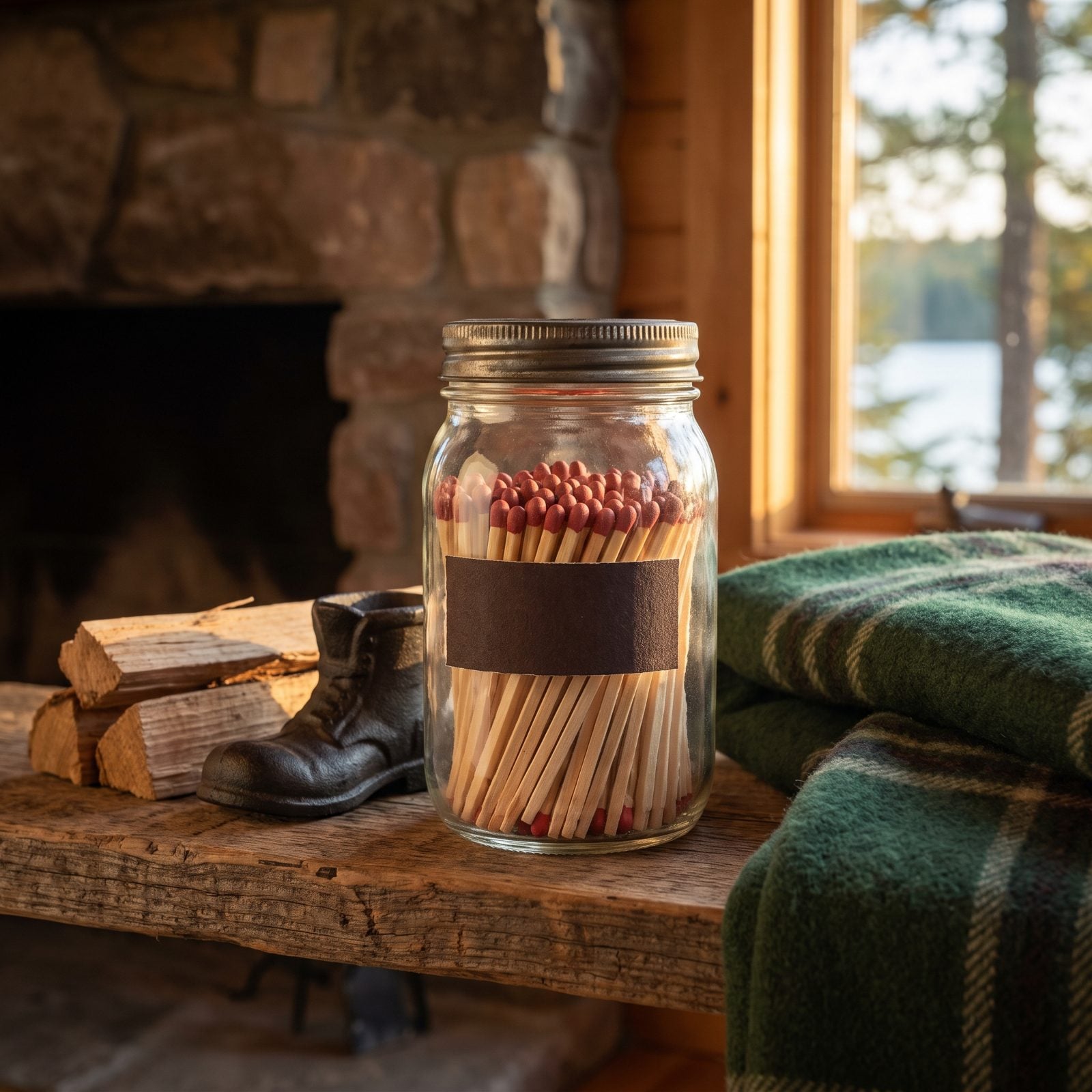
Cardboard matchboxes and lake air are a bad marriage. The humidity creeps in, the striker strip goes soft, and you’re left scraping a dead match while the campfire crowd waits.
A screw-top glass jar fixes it. Dry matches stay dry, even through a muggy August week when everything in the cabin feels faintly damp. Tape a spare striker strip to the outside so the two never get separated, because a jar of perfect matches and no way to light them is its own special frustration.
Clear glass helps too. You see when you’re running low, usually the night before you’d otherwise have found out the hard way.
13. Put Charcoal in a Metal Can With a Tight Lid
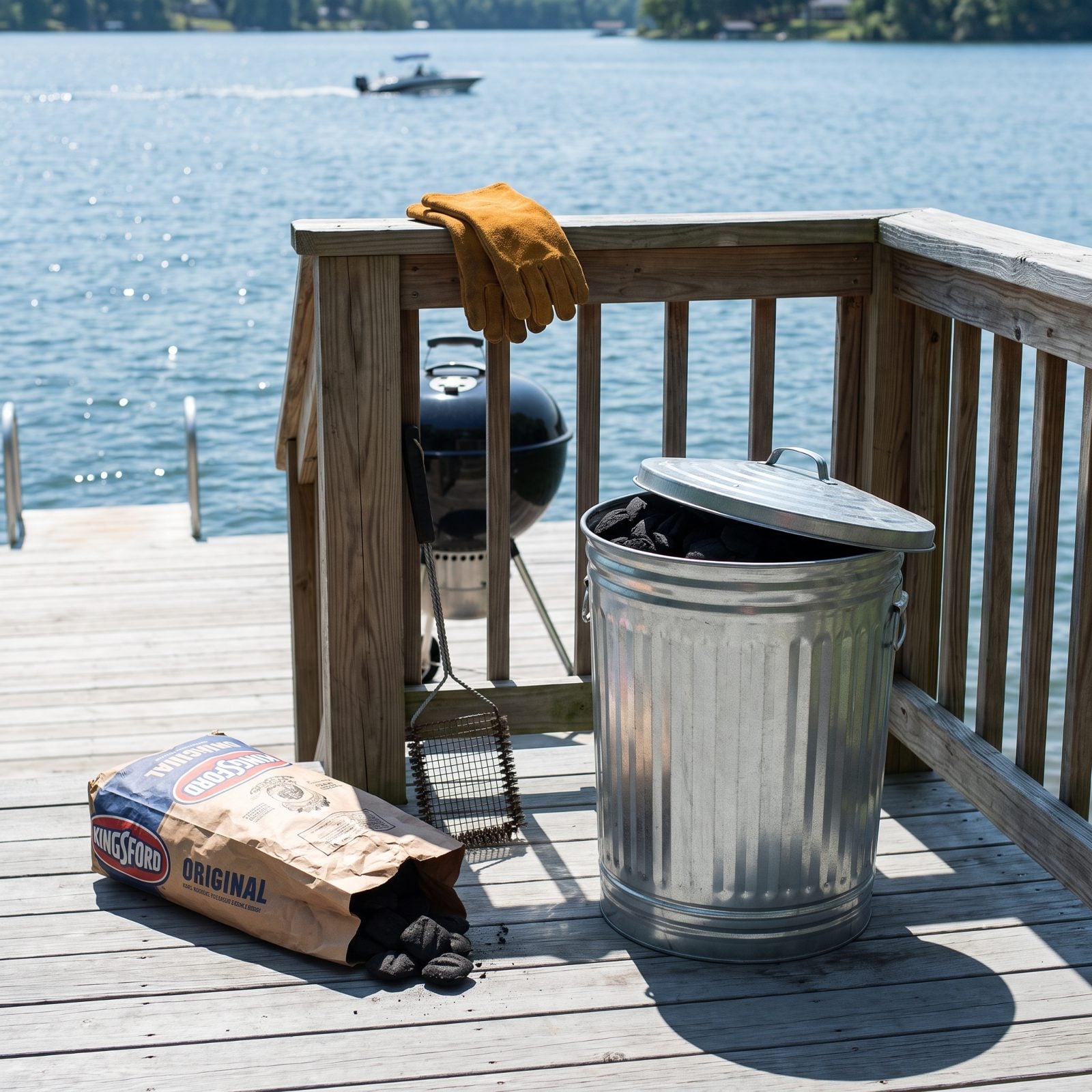
A paper bag of charcoal left out on a lake house deck does two things, and both are bad. It wicks up moisture from the humid air until the briquettes barely light, and if it rains you’re carrying a soggy, disintegrating mess to the trash.
A lidded metal can, the galvanized trash-can kind, keeps briquettes bone dry all season, but only if they actually go inside and the lid goes on tight. A torn bag spilling briquettes onto the boards beside the can, with the lid sitting askew, puts you right back at damp charcoal. Dry charcoal catches fast. That means less lighter fluid, and less of that chemical taste on the first batch of burgers.
Metal matters for a reason people skip past, though. Finished coals can smolder for hours, and a metal can with the lid on is a safe place to dump cooled ashes. A plastic bin? That’s a fire waiting for its moment.
12. Store Cabin Manuals in a Waterproof Map Case
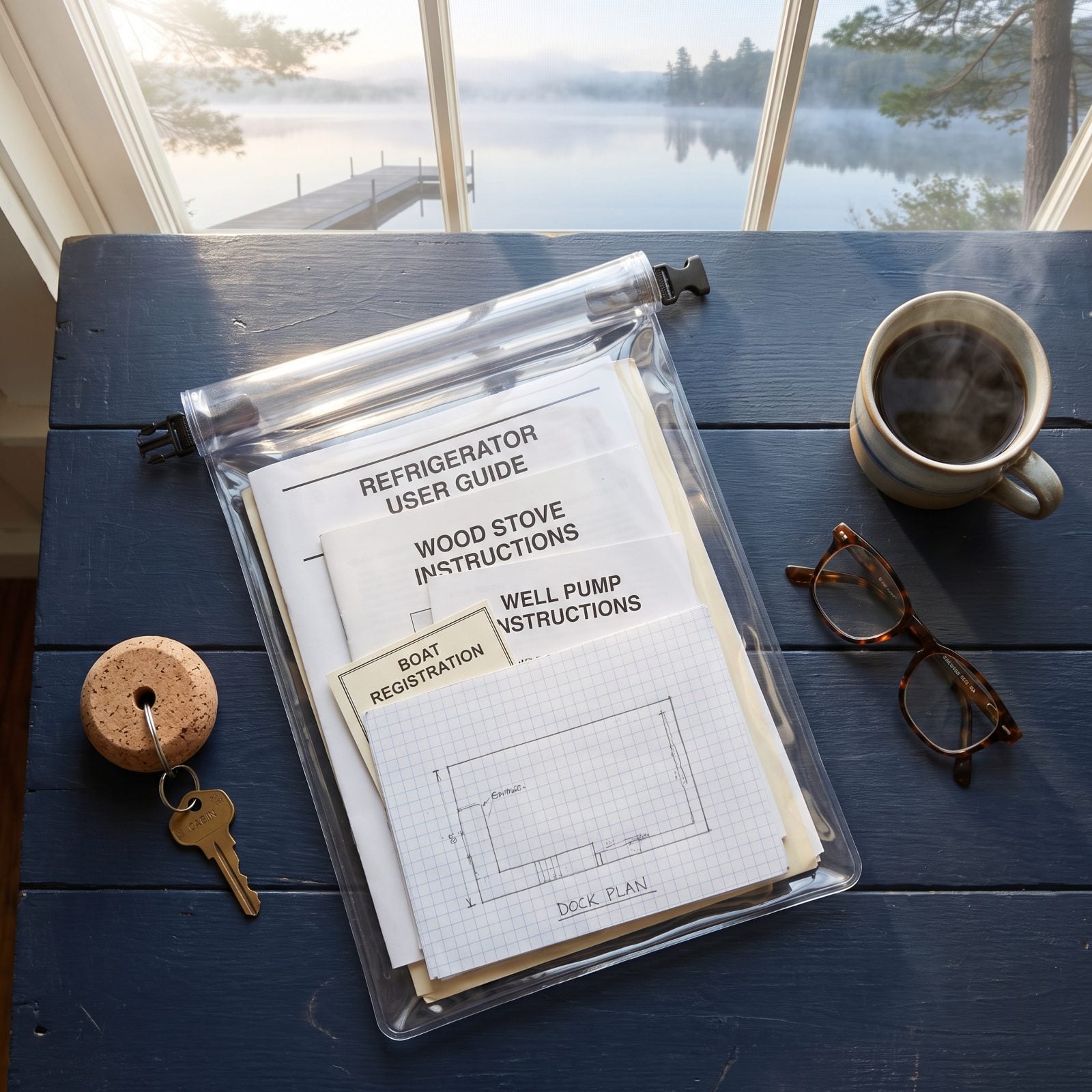
Every lake house generates a pile of paper nobody wants to read until the exact moment they need it. The well pump instructions. The water heater warranty. That scrawled note explaining which breaker runs the dock lights.
Stuff all of it into a clear waterproof map case, the roll-top kayaking kind, and hang it inside a cupboard door or the utility closet. When the pump starts acting up over a holiday weekend and no plumber’s answering, whoever knows where the manual lives becomes the weekend hero.
The waterproof part isn’t paranoia. Basements flood, roofs leak, and spare manuals have a habit of being stored in precisely the spots that get wet first.
11. Keep a Jar of Precut Foil Sheets by the Grill
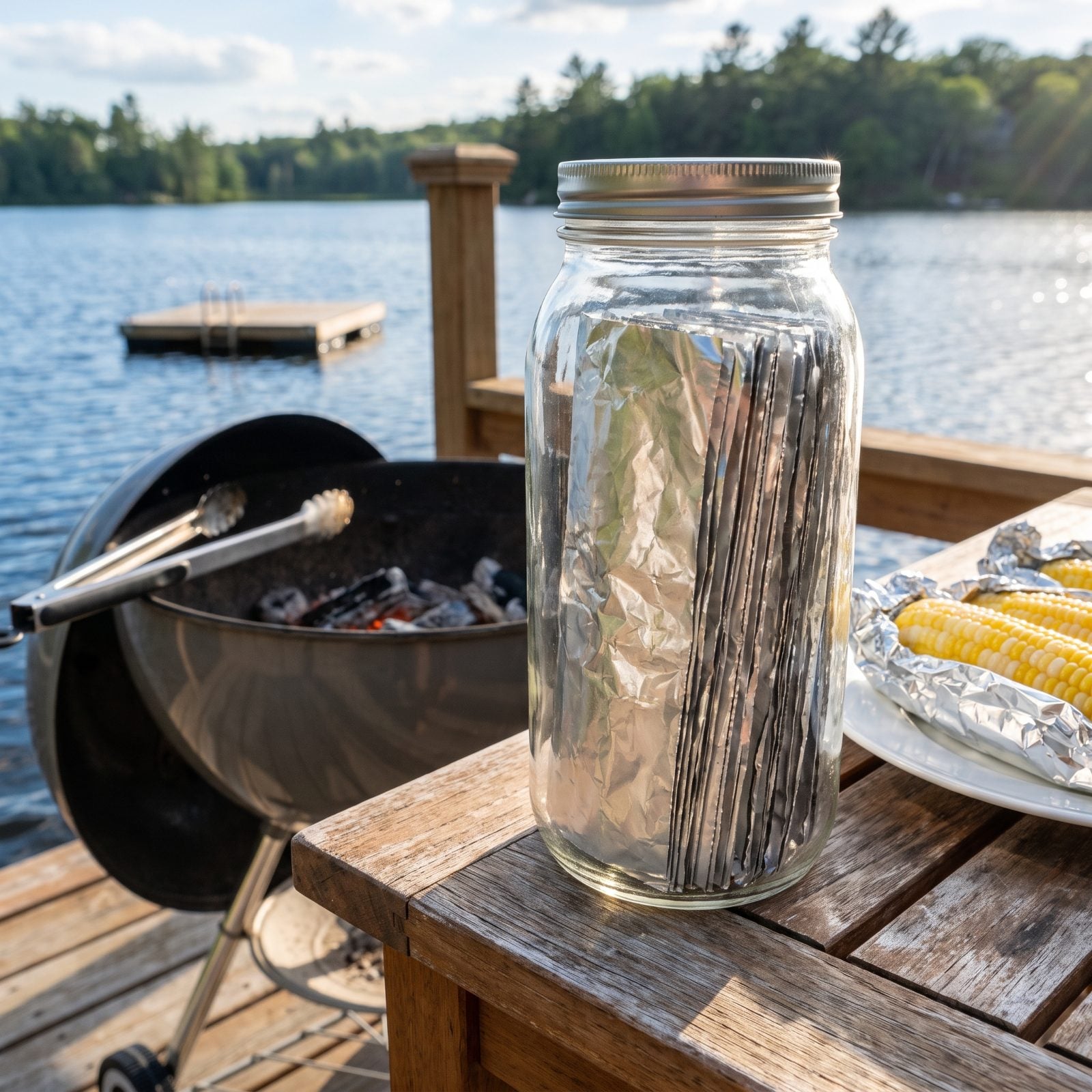
Tearing foil with greasy grill hands is a small misery. The roll skids, the sheet tears crooked, the box’s serrated edge nicks your knuckle, and now there’s lighter fluid on the cardboard.
Spend ten minutes precutting a stack of foil squares and standing them in a wide-mouth jar by the grill. Grab one with two fingers, wrap the corn or the fish, done. No wrestling, no waste.
Fold a few into loose packets ahead of time if you do foil dinners often. The kids can assemble their own, which keeps them busy and buys you a few more minutes off dinner duty.
10. Use a Cake Carrier to Protect Outdoor Snacks
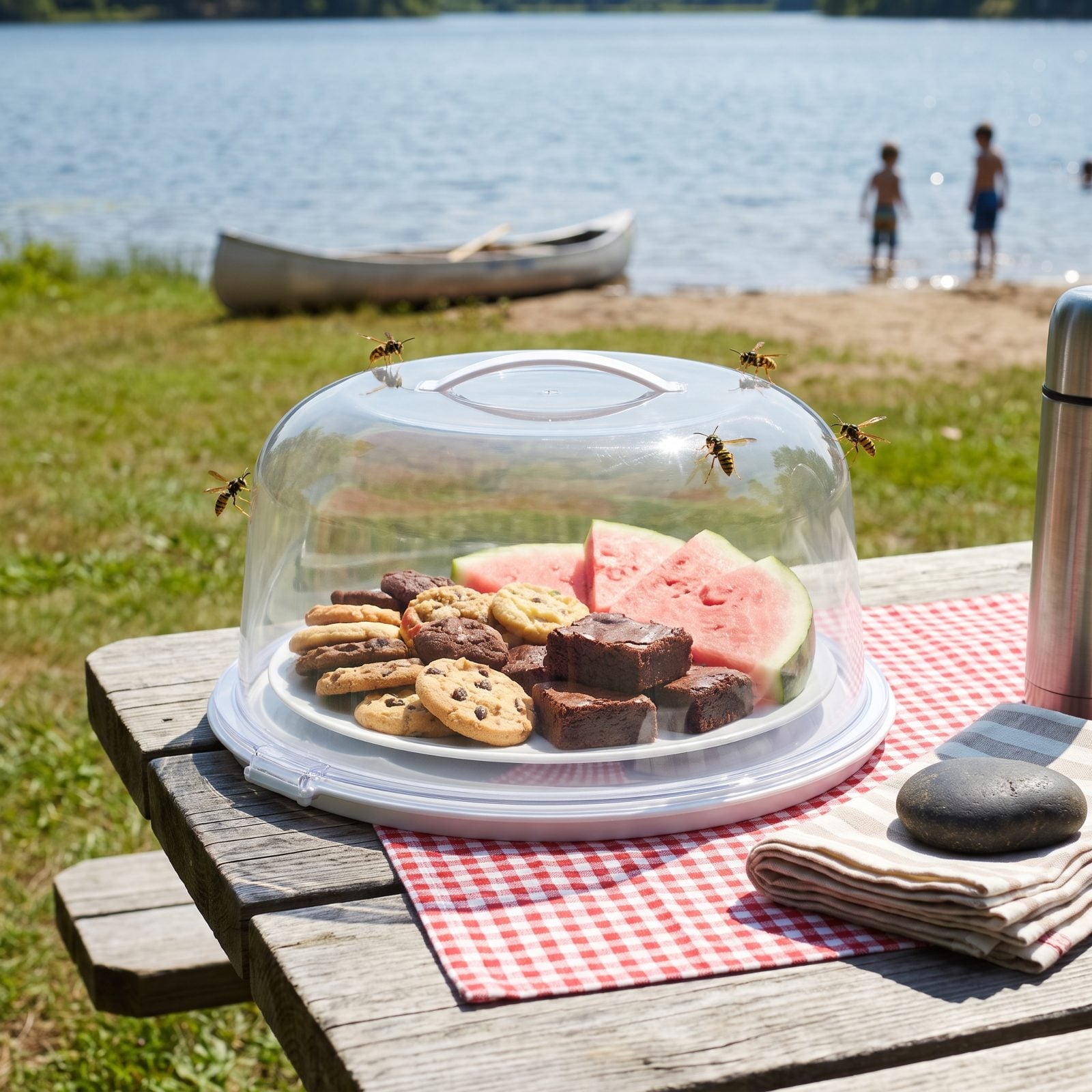
The lake brings the view. It also brings the wasps.
A domed cake carrier with a locking lid turns out to be the best bug shield nobody buys for that purpose. Pile cookies, cut fruit, and deviled eggs under the dome, snap it shut, and the yellowjackets can hover all they want. They’re not getting in.
It handles the wind too. No napkins blowing into the lake, no sand drifting onto the brownies. And when the afternoon shower rolls through, which it always does, you cover the snacks with one hand and keep your drink in the other.
The handle lets you walk the whole dessert spread down to the dock in a single trip. That alone earns its spot in the cabinet.
9. Store First-Aid Supplies in a Bright Tackle Box
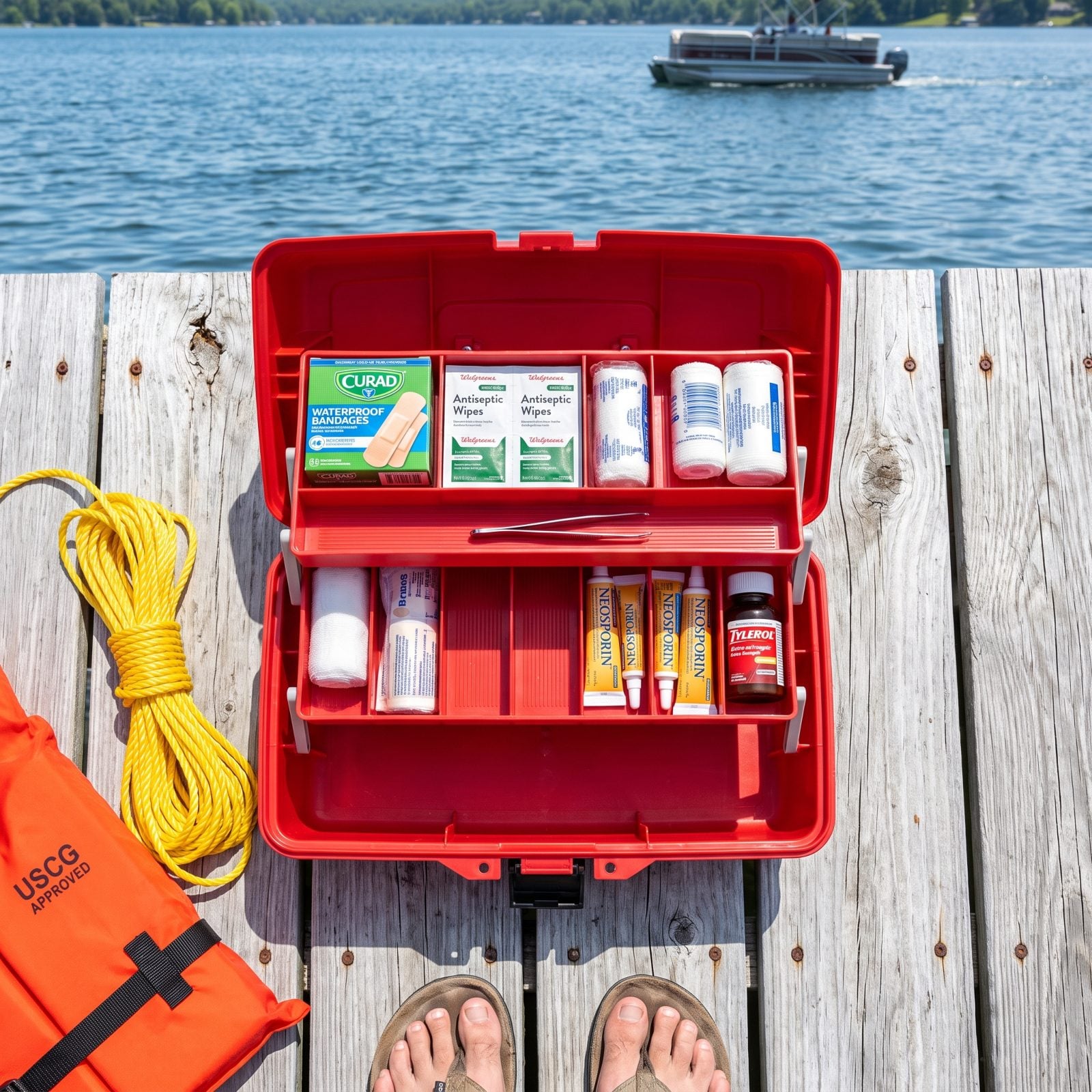
Scraped shins, splinters from the dock, hooks caught where hooks shouldn’t be. A lake house burns through first-aid supplies faster than most homes, and the flimsy drugstore kit in a soft pouch is a disaster to dig through one-handed while someone’s bleeding.
A tackle box in bright red solves it on two fronts. The tiered trays fan open so you see everything at once, bandages here, antiseptic there, tweezers right where you left them. And the loud color means anyone can find it in a panic, even a guest who’s never set foot in the place.
The best emergency kit is the one a stranger can find in ten seconds.
Keep a second, smaller one on the boat. Water and sharp hooks don’t wait for you to get back to shore.
8. Use a Plastic Cereal Dispenser for Pet Food
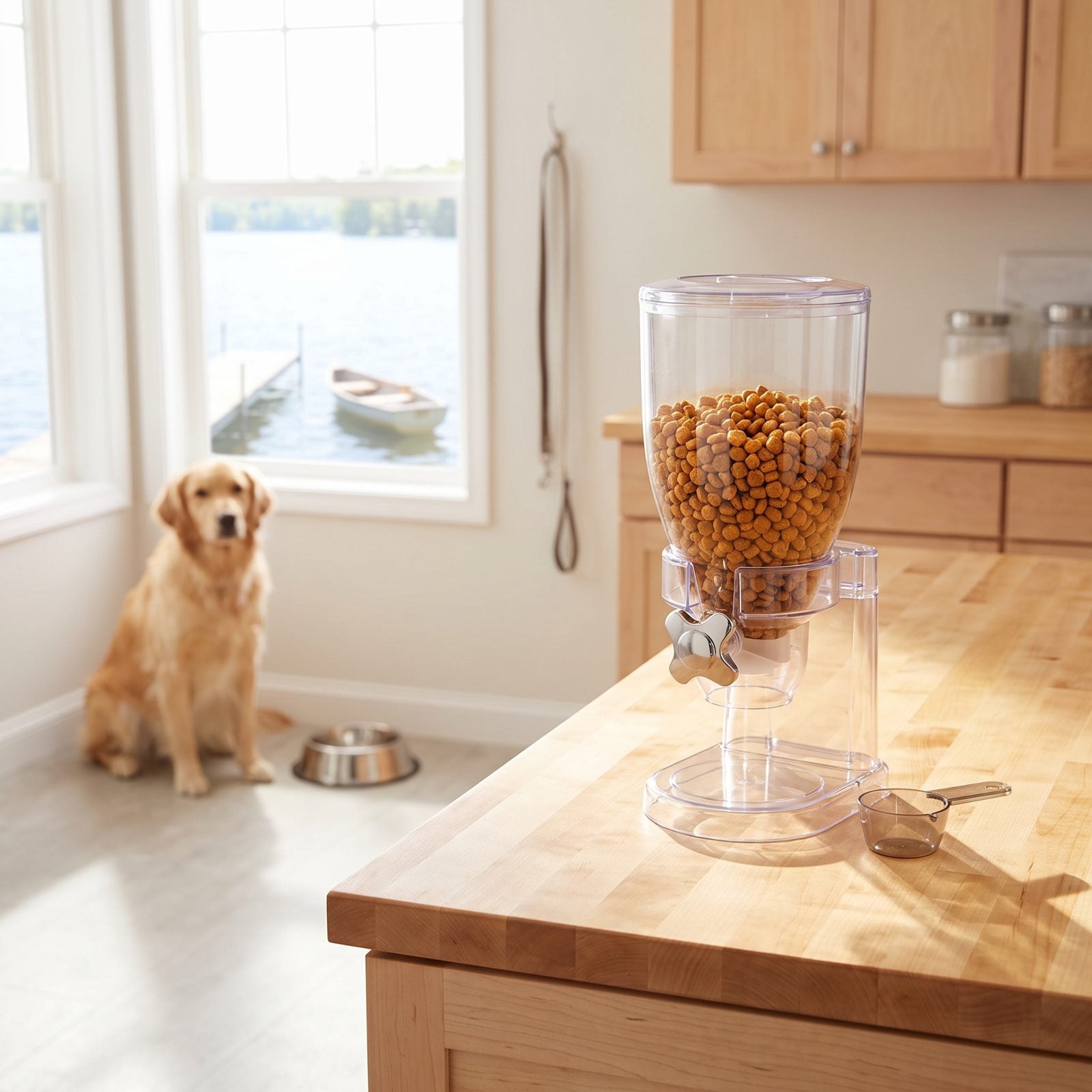
Lake houses have mice. That open bag of dog food under the sink is basically an invitation with a return address.
A clear plastic cereal dispenser, the twist-dial kind people put oats in, seals the kibble away from critters and the damp air both. The twist spout meters out a consistent portion, so whoever’s on dog duty that weekend gives the same amount instead of guessing.
You can see the level right through the plastic, which saves the Friday-night drive to town for a bag you didn’t know you were out of. Works just as well for birdseed, if the cabin’s got feeders.
7. Line Refrigerator Shelves With Washable Trays
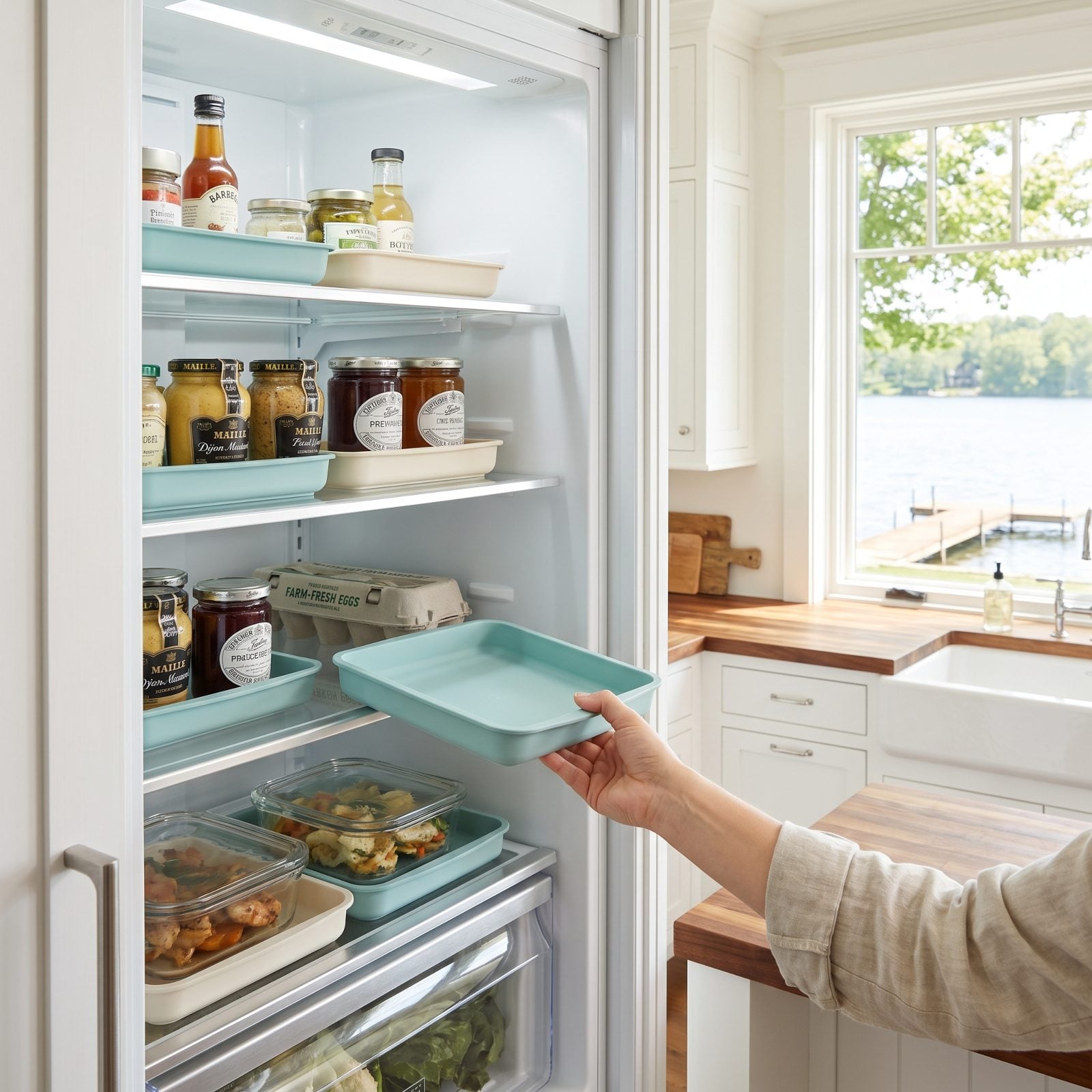
A lake house fridge takes abuse. Watermelon leaks, bait sometimes gets stashed where it shouldn’t, and the kids put the lemonade back without the lid. By September, the shelves are a sticky archaeology of the whole summer.
Line each one with a shallow washable tray, silicone or thin plastic. A spill lands in the tray instead of welding itself into the seams of the glass. Come closing-up time you lift the trays out, run them through the sink, and the fridge resets in ten minutes instead of an hour of hunched-over scrubbing.
Shutting a lake house down for winter is already a long list. Cheap and dull, maybe, but this crosses one more chore off it.
6. Place a Tension Rod Under the Sink for Spray Bottles
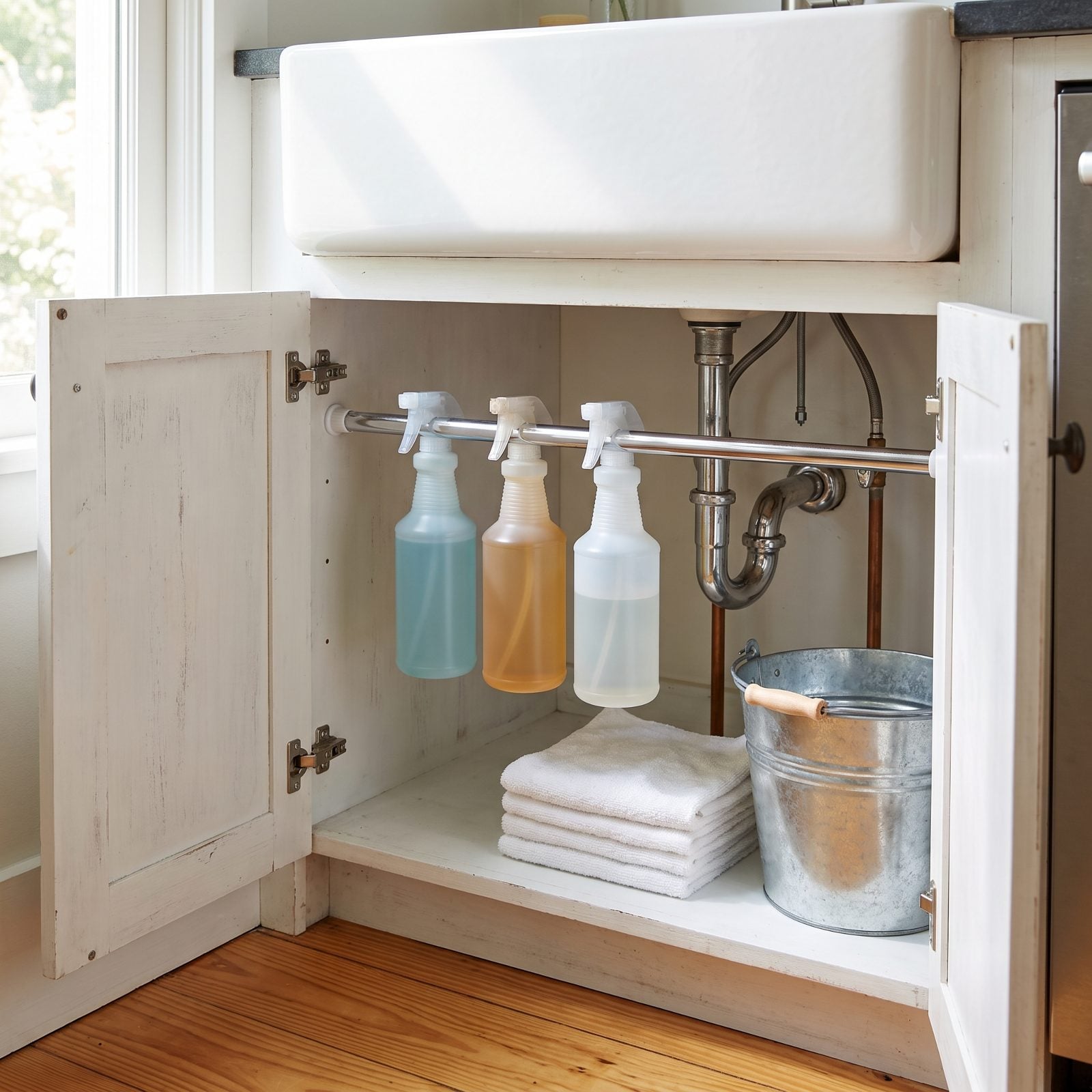
The space under a lake house sink turns into a swamp of leaning bottles faster than any cabinet in the main house, because everybody’s hands are wet, everybody’s in a hurry, and nothing ever gets put back standing up.
Wedge a slim tension rod across the inside of the cabinet, maybe eight inches down from the top, and you’ve fixed it for about four dollars. Spray bottles hang by their trigger necks, nozzles up, and the whole floor opens up for a bucket or a stack of rags. No tipping, no sticky rings, no reaching past a wall of plastic to find the one you want.
5. Use an Ice Scoop Instead of Hands in the Cooler
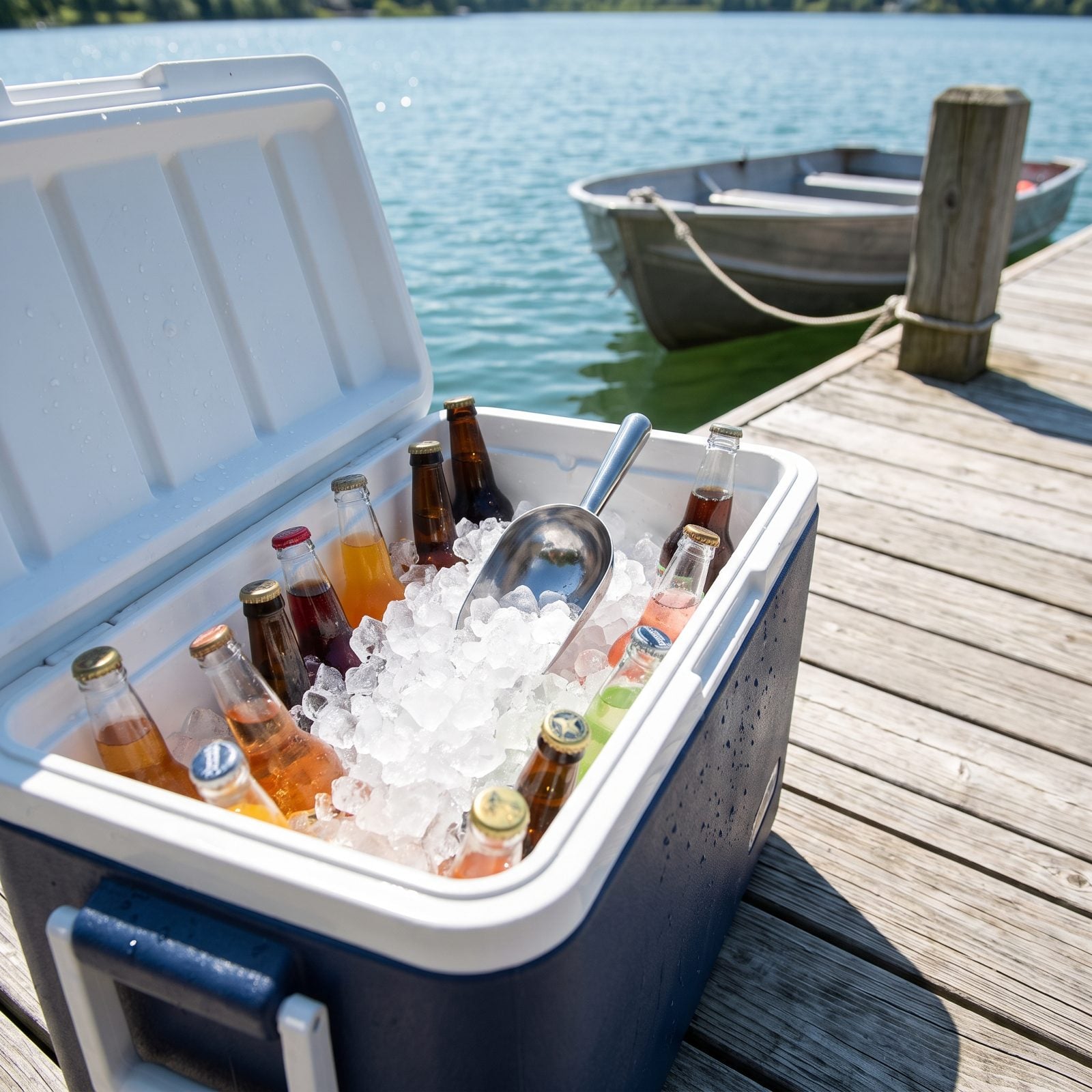
Hands in the cooler is how a nice afternoon on the dock becomes a conversation about where the ice came from.
A cheap stainless or plastic scoop clipped inside the lid changes all of that. Nobody’s dunking a wrist that just handled sunscreen, bug spray, or a fishing worm into the water everyone’s drinks are swimming in. The ice stays cleaner and lasts a touch longer, and the scoop pulls double duty for drinks, bait coolers, and that one relative who insists on a full glass.
Small thing, surprisingly gross problem solved. Tether it with a bit of string so it doesn’t vanish to the bottom by August.
4. Hang a Clipboard for the Running Grocery List
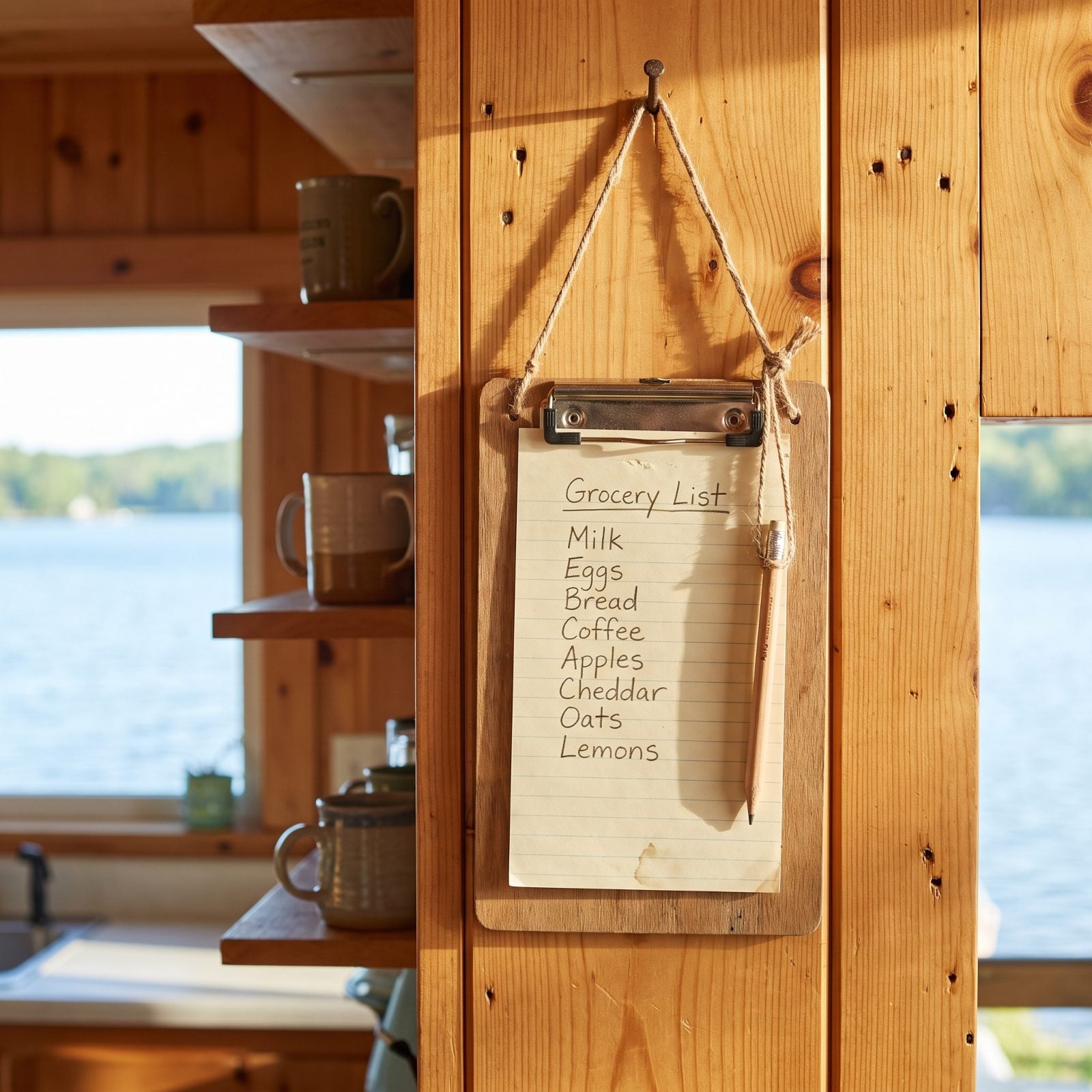
The lake house grocery run is a group effort whether you planned it that way or not. Someone finishes the ketchup Tuesday, someone else burns through the last coffee filter Thursday, and nobody remembers either until they’re forty minutes from town at the one store that closes at six.
A clipboard on a nail by the door, pencil tied on with twine, catches all of it in real time. Empty something, write it down. Drive into town, grab the sheet and go. No phone apps that only one person can edit, no sticky notes falling behind the toaster.
3. Keep a Dedicated Basket for Things Going Home
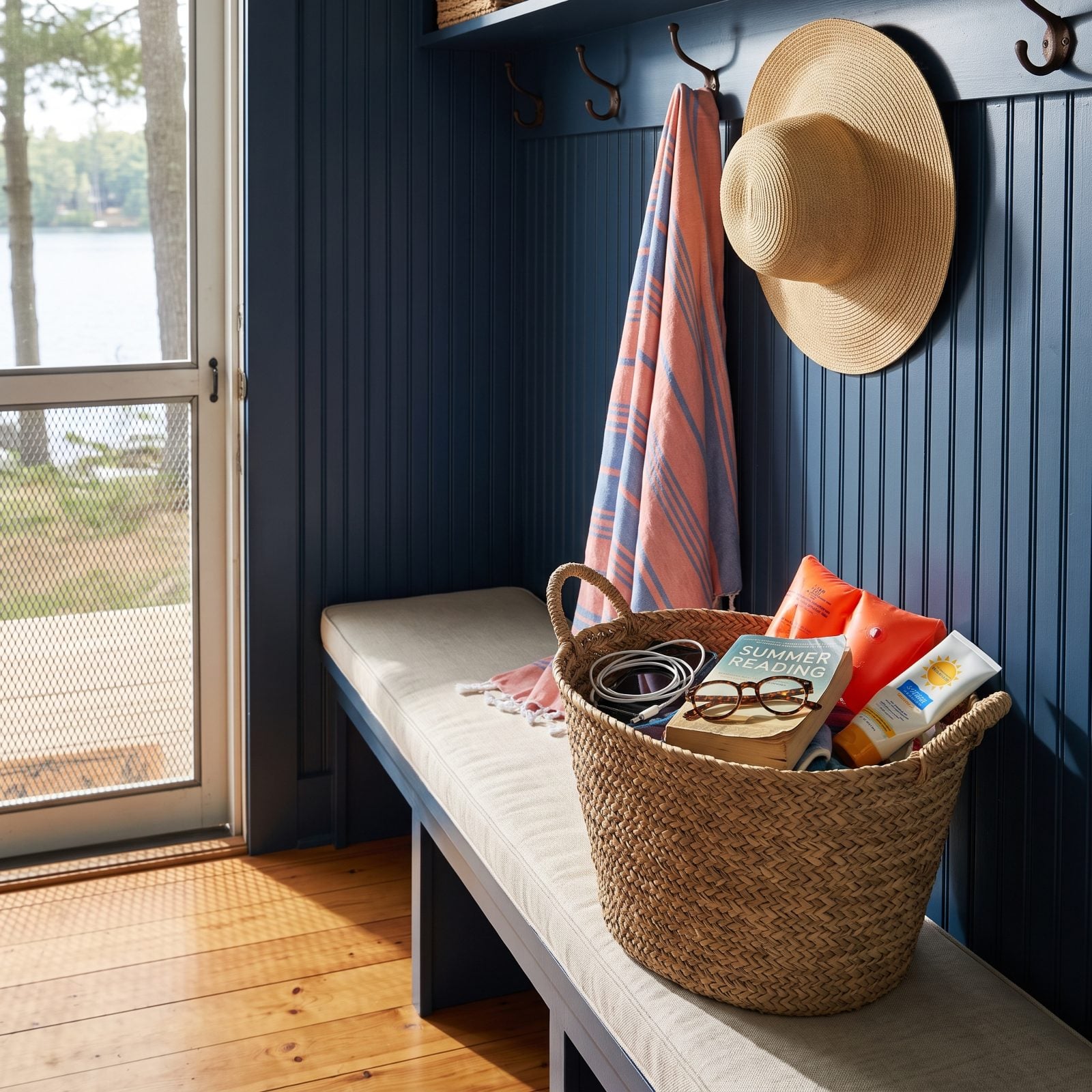
Nothing gets abandoned at a lake house like the small stuff — chargers, a good book, prescription glasses, the one beach toy a kid will mourn for a week.
A single basket by the door, labeled in your head as “going home,” catches all of it as the week winds down. The second something surfaces that shouldn’t stay, it goes in the basket. On departure morning you grab the basket, not your memory, which by then is already half-packed and running on fumes.
Honestly? This is the habit that saves the most phone calls to whoever’s at the cabin next, begging them to mail your charger.
2. Place a Washable Runner Between the Door and Bathroom
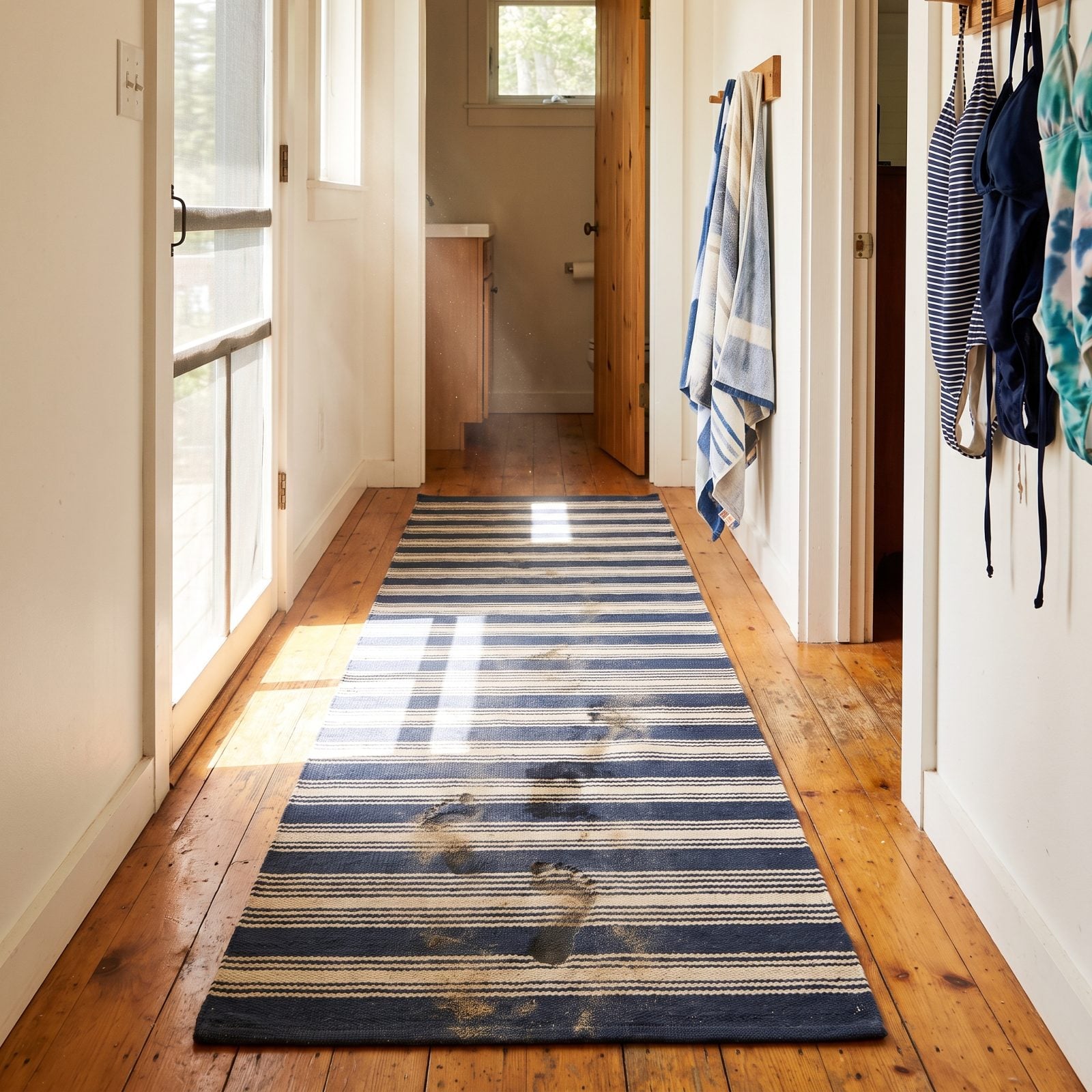
Wet feet travel a very predictable path at a lake house: dock, door, bathroom. That path is where the floor takes its beating — sand ground into the grain, puddles warping old pine over a single season.
Lay a flat-weave cotton runner along that exact route and it takes the hit instead. It catches the water and the sand, balls up and goes in the wash with the towels, and it costs a fraction of what refinishing floorboards costs in money and heartbreak. Go flat-weave over anything plush. Plush holds damp, and damp in a closed-up cabin turns to mildew before you’re back.
1. Use Carabiners to Pair Water Shoes
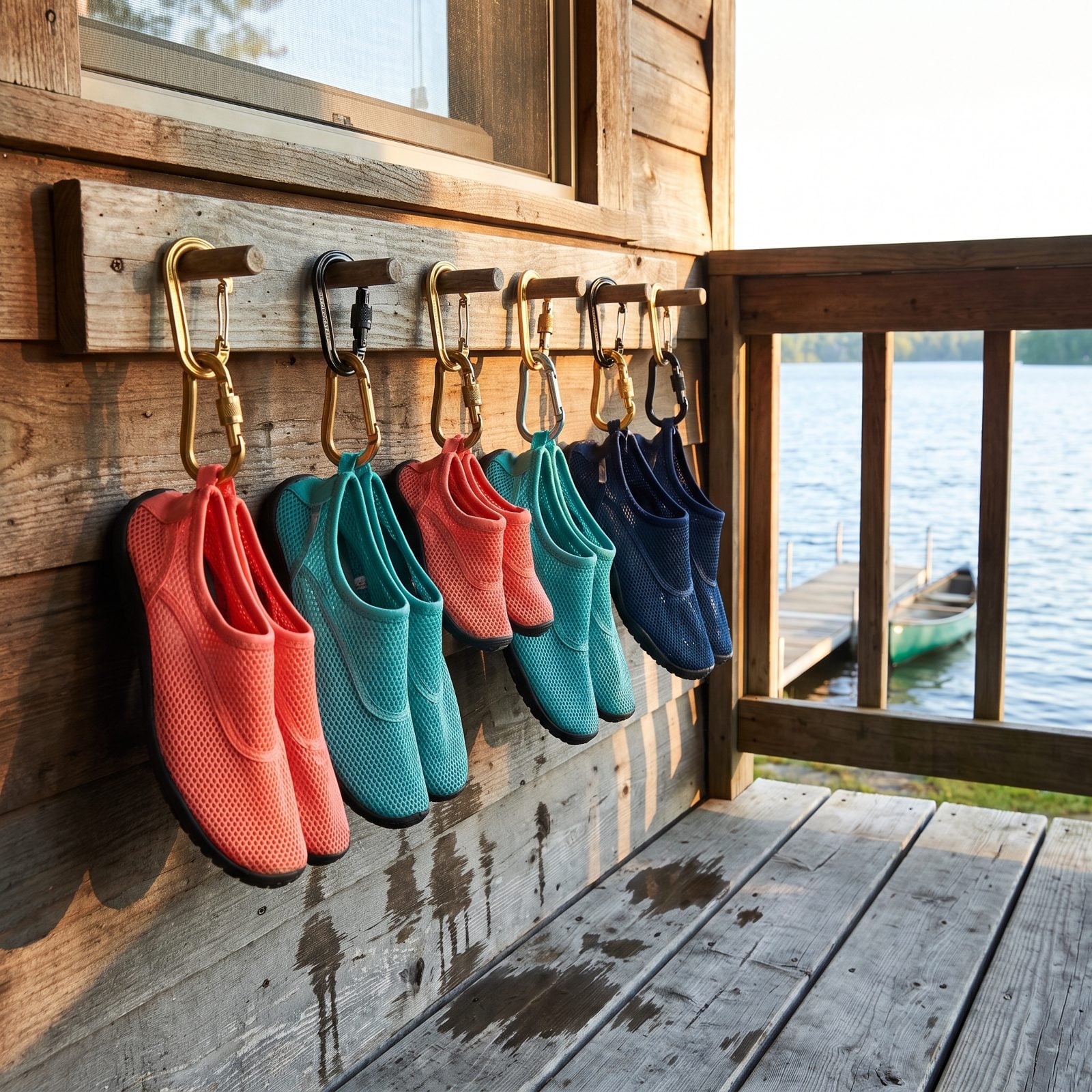
Water shoes are the single most separated item at any lake house. They come off at the dock, by the door, under the picnic table, and they never reunite. By mid-July there’s a mesh graveyard of lonely left shoes and nobody can match a foot to any of it.
A carabiner per pair solves it cold. Clip the two heel loops together the moment they come off, hang the lot on a peg rail, and they drip dry in pairs instead of scattering to the four winds. Kids can manage it too, which matters more than it sounds. The clip keeps them off the floor, so they dry faster and don’t go sour in a damp heap.
Get the cheap aluminum clips, not the climbing-rated ones. A dollar each, and they’re holding a sandal, not a person.