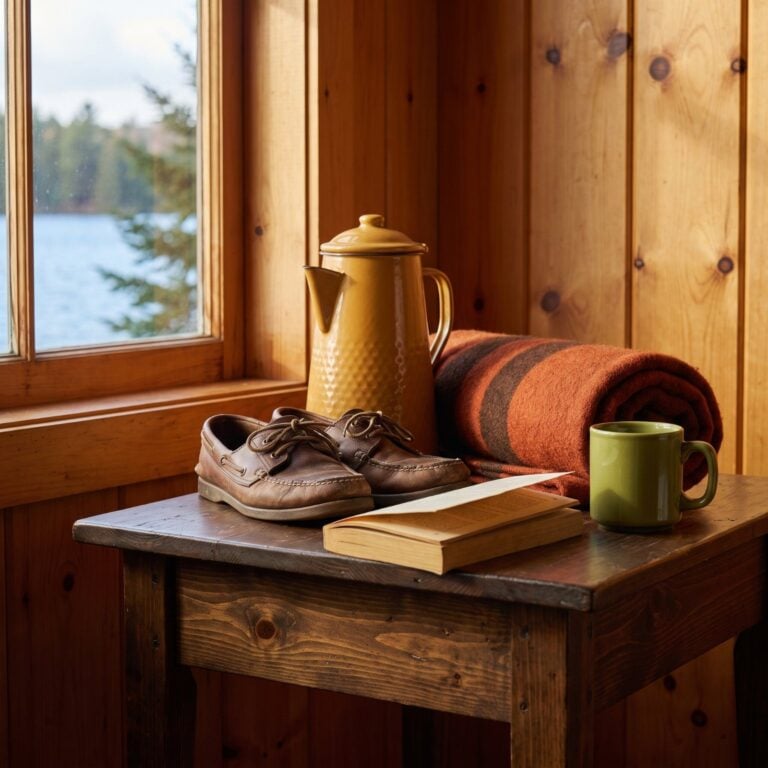
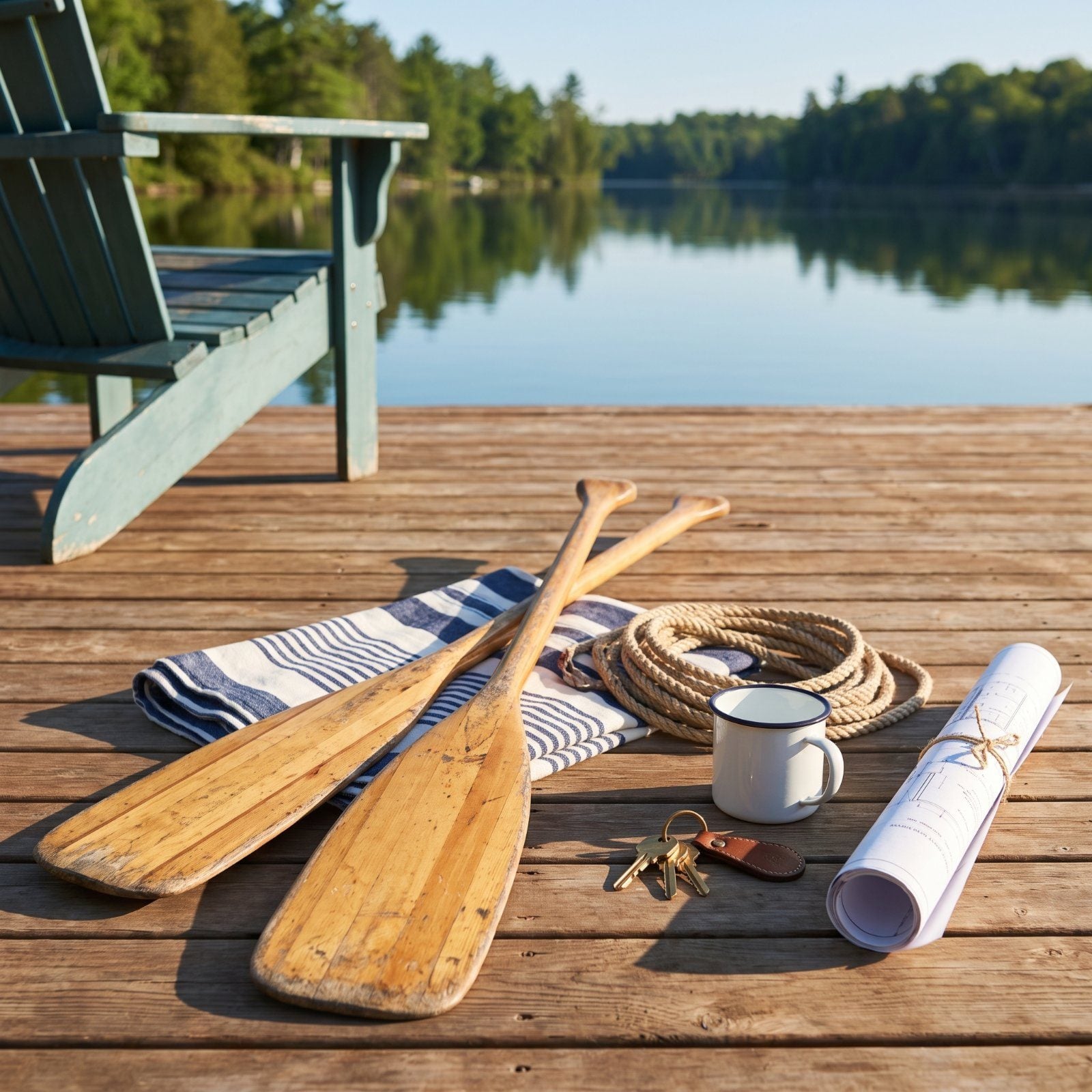
Buyers walk into a lake house and know within ten seconds. Not from the countertops, not from the square footage printed on the listing sheet — from where their eyes land the moment they cross the threshold. See the water first and the sale is half done. See a blank wall, have to go hunting for the lake, and you’ve lost them before they reach the kitchen. The features below are the ones agents keep flagging as deal-makers for the next couple of seasons. Some cost real money. Some just require a builder who thought about the view before pouring the foundation. All of them sell.
Please note that some of the imagery in this article may have been enhanced with the assistance of AI.
38. An Unobstructed View From the Main Living Area
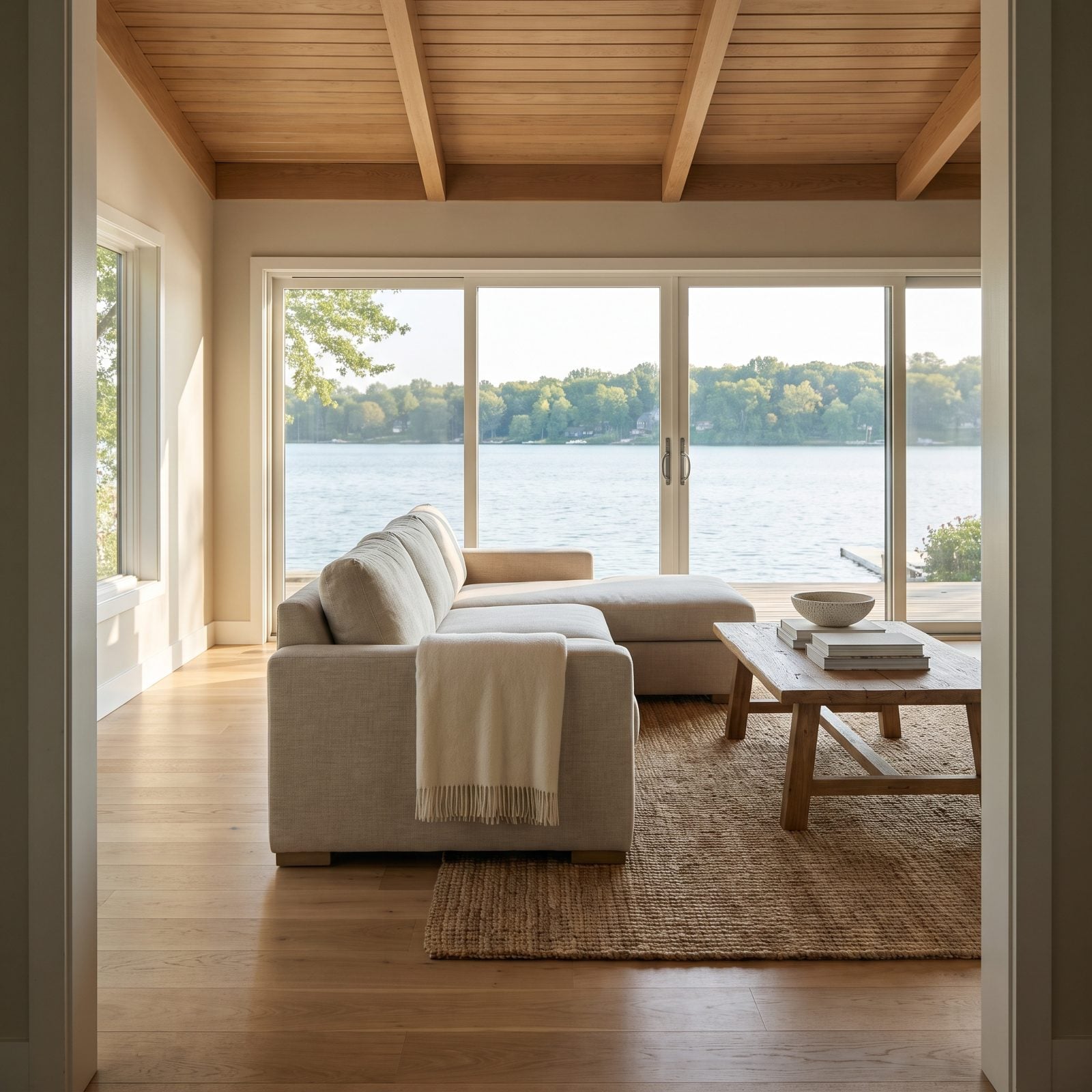
The view is not a bonus. It’s the product. And the single most common mistake in older lake houses is burying it behind a half-wall, a kitchen peninsula, or a staircase that cuts the room in two.
Buyers want to open the front door and see the water — no walking around a corner to find it. The homes that move fastest put the main living area on the lake side and clear everything out of the sightline, which means low furniture, no load-bearing columns parked in the window, and no television mounted where the lake should be.
37. Floor-to-Ceiling Lake-Facing Windows
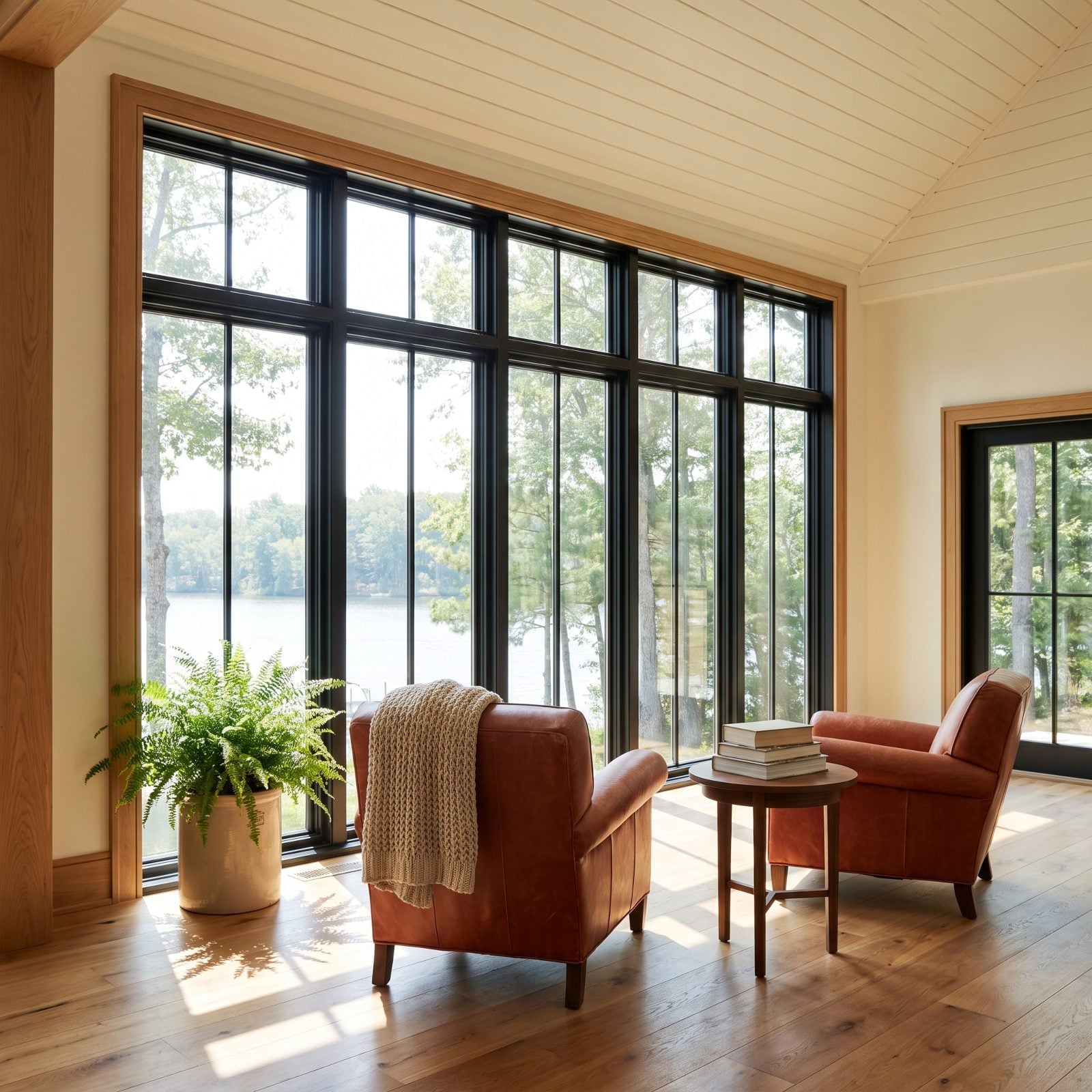
Standard windows show you a slice of the lake. Floor-to-ceiling glass makes the lake part of the room.
Nobody mentions the glare and heat on the listing. A wall of west-facing glass turns into an oven by late afternoon in July, and buyers who’ve suffered through that look for low-E coatings and a decent overhang before they fall in love. So ask about the glass spec, not just the view.
Done right, though, the payoff is hard to beat. Watching a storm roll across the water from a dry chair with a coffee in hand is the whole reason people buy on a lake.
36. Retractable Glass Walls for Indoor-Outdoor Living
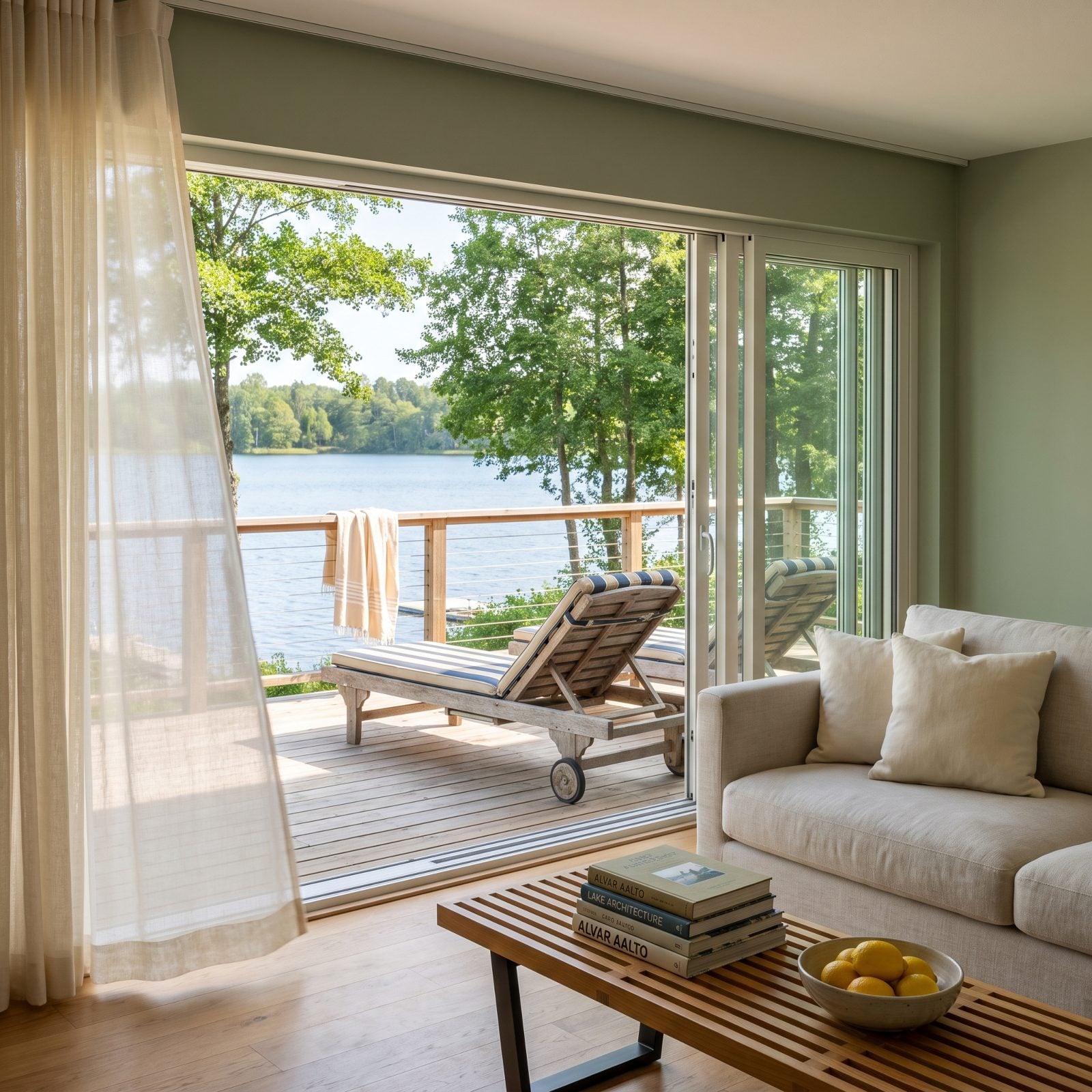
Slide the whole wall open and the deck becomes the living room. That’s the draw, and it’s a genuine want for 2027 buyers who entertain.
Now the real talk. These systems are not cheap, and the budget ones stick, leak, or whistle in the wind within a few seasons. Quality matters more here than almost anywhere else in the house.
35. A Screened Porch Facing the Lake
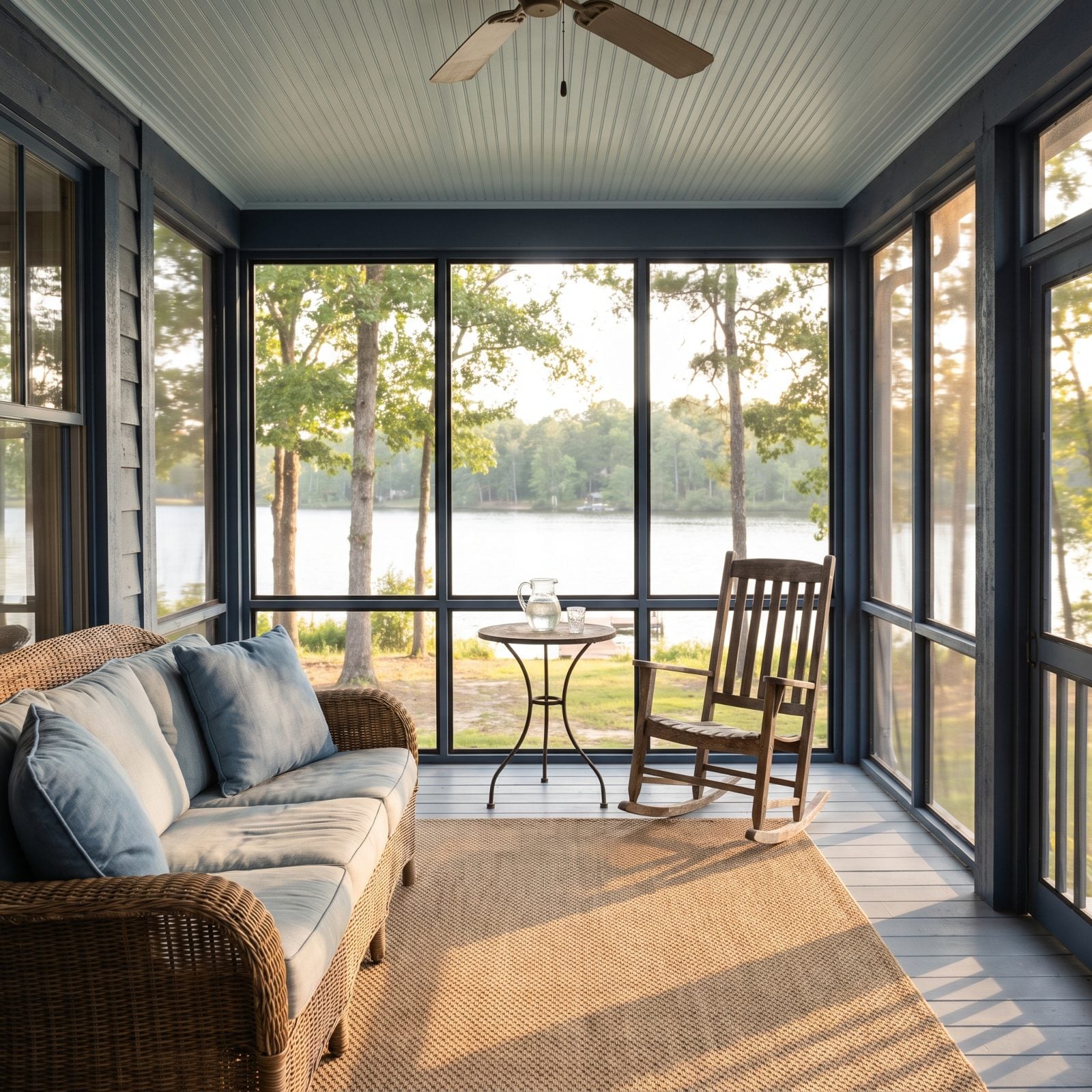
Ask anyone who’s actually lived on a lake what they’d never give up, and the screened porch comes up fast. An open deck is a lovely idea until the mosquitoes find you at dusk — which, on most lakes, is also the best hour to be outside.
A screened porch buys you the whole evening: the breeze off the water, the frog chorus, the fading light, and none of the bites. It stretches the usable day and, in a lot of climates, stretches the season on both ends.
34. A Lake-Facing Primary Suite
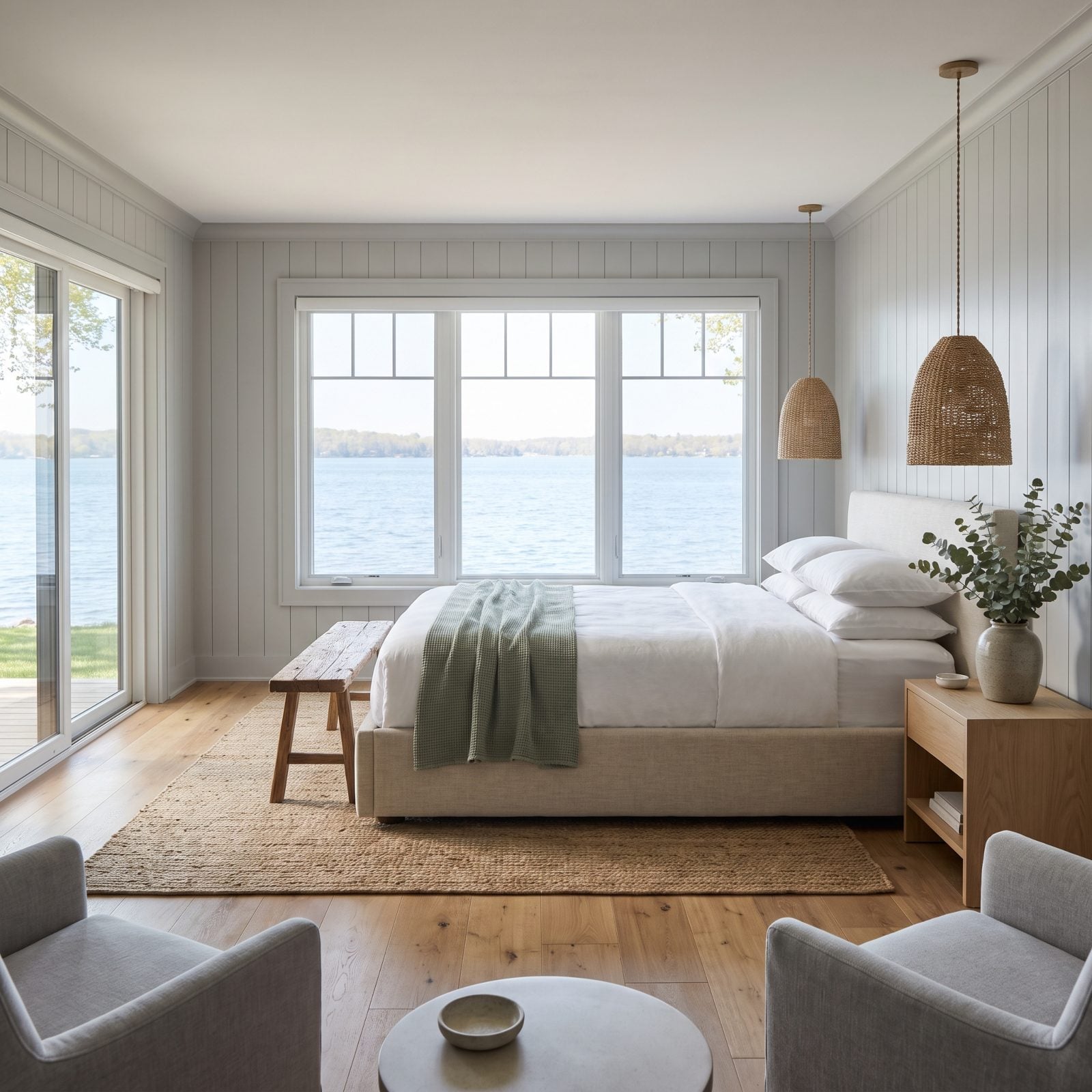
Waking up to the water instead of the driveway. That’s the entire pitch, and it works.
A lot of older lake homes put the big bedroom on the road side and saved the view for the living room, which newer buyers think is backward. They want to open their eyes to mist coming off the lake, not a view of where they parked the truck.
And if the suite has its own door or a small deck onto the water, better still. Morning coffee in a robe, nobody around yet, loons calling somewhere out past the point. People pay for that moment without quite knowing they’re paying for it.
33. A Kitchen Island Oriented Toward the View
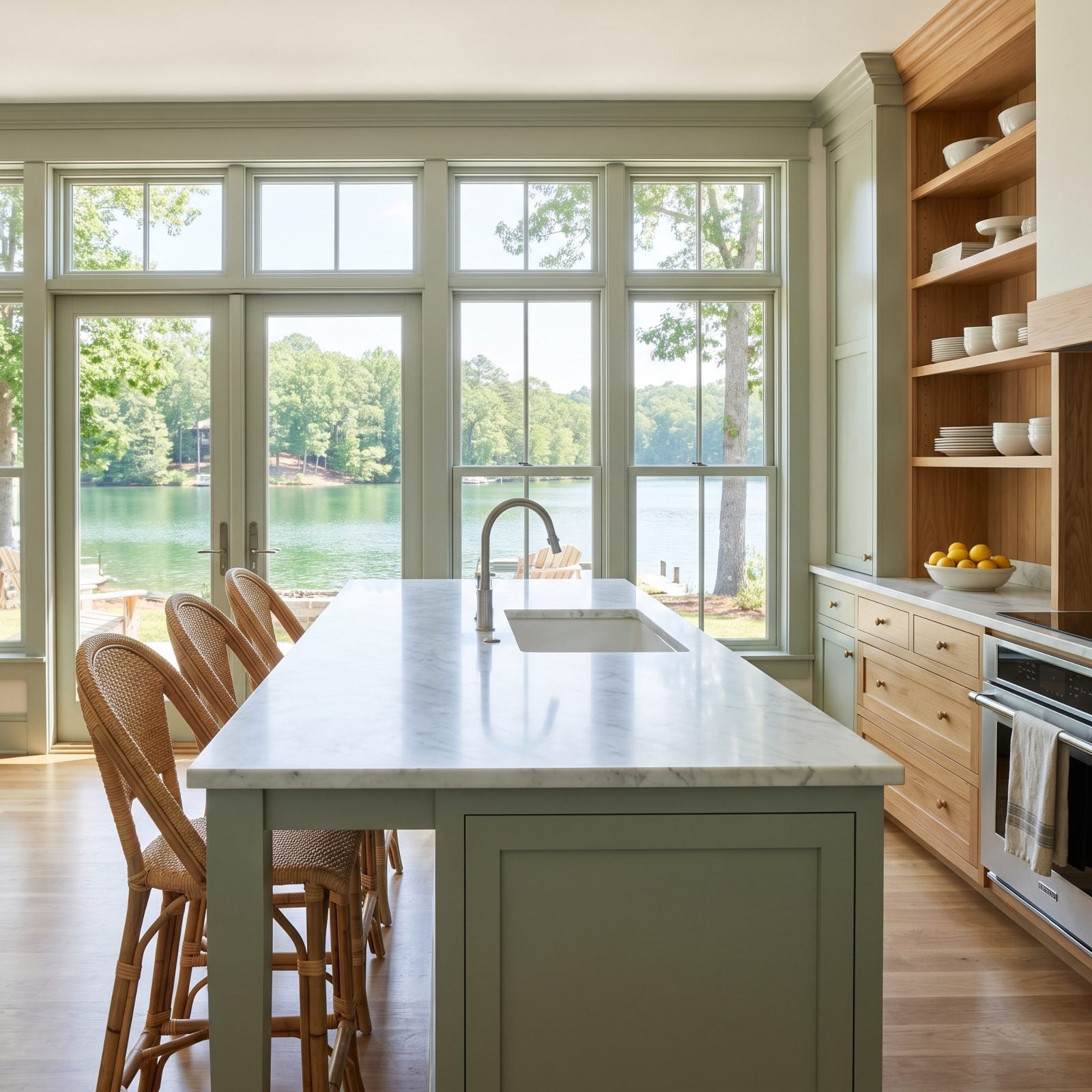
Picture who’s standing at the island. It’s whoever’s cooking, prepping, pouring wine for guests — the person anchored there for half the evening.
In too many kitchens, that person faces a wall or a backsplash while everyone else gets the lake. Flip it. Point the island so the cook faces the water and the guests gather on the other side facing in, and suddenly the busiest spot in the house also has the best seat.
Costs nothing extra at the design stage. It’s purely a decision about which way the counter points — and the kind of thing a buyer notices without being able to name it.
32. A Private Home Office With a Water View
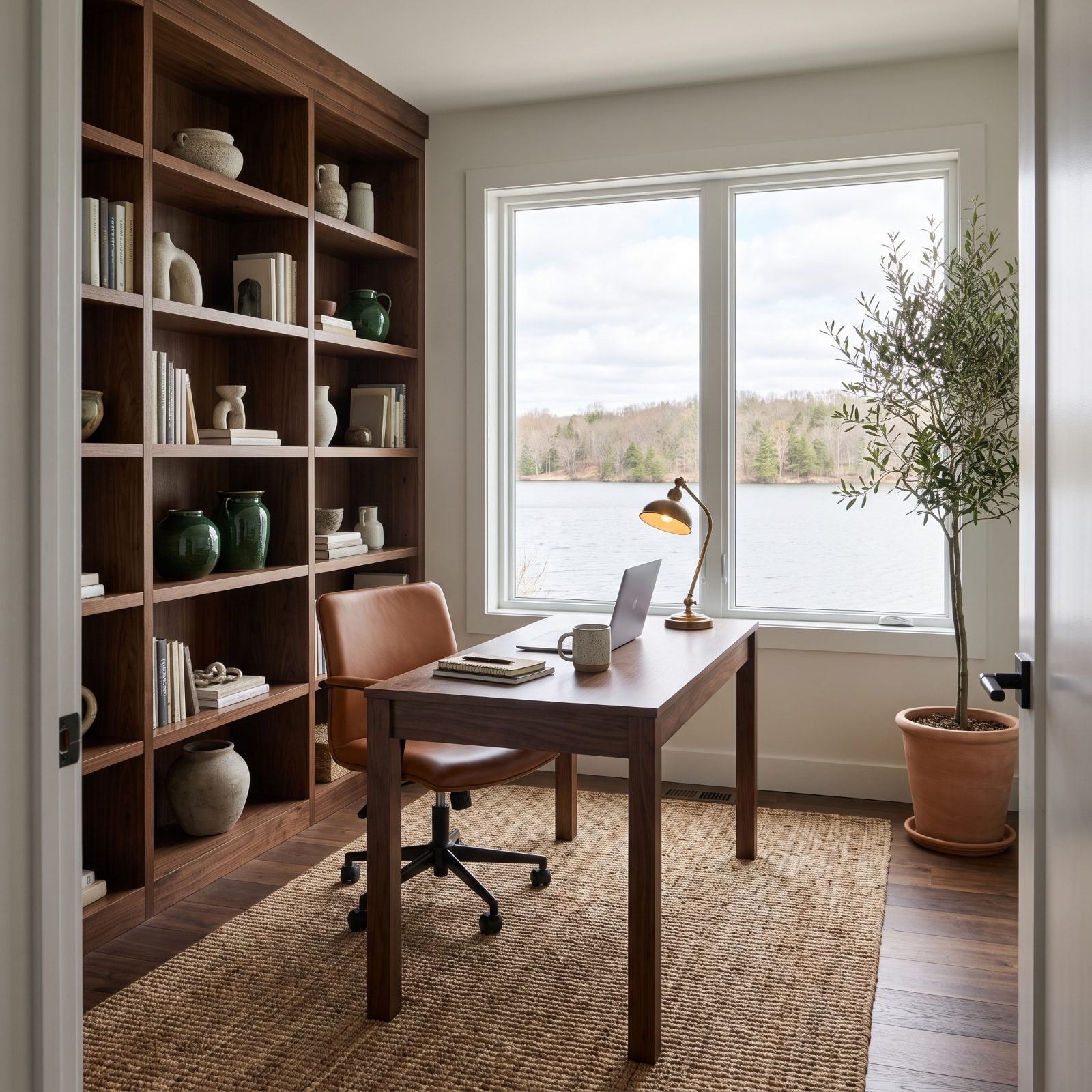
The lake house stopped being a weekend-only place for a lot of people. Now it’s three days of work and four of play, or something close to it.
That changes the floor plan. Buyers want a door that closes and a window onto something better than a cubicle wall. A dedicated office with a water view sells the whole fantasy: log off, walk twenty feet, and you’re on the dock.
31. A Main-Level Guest Suite
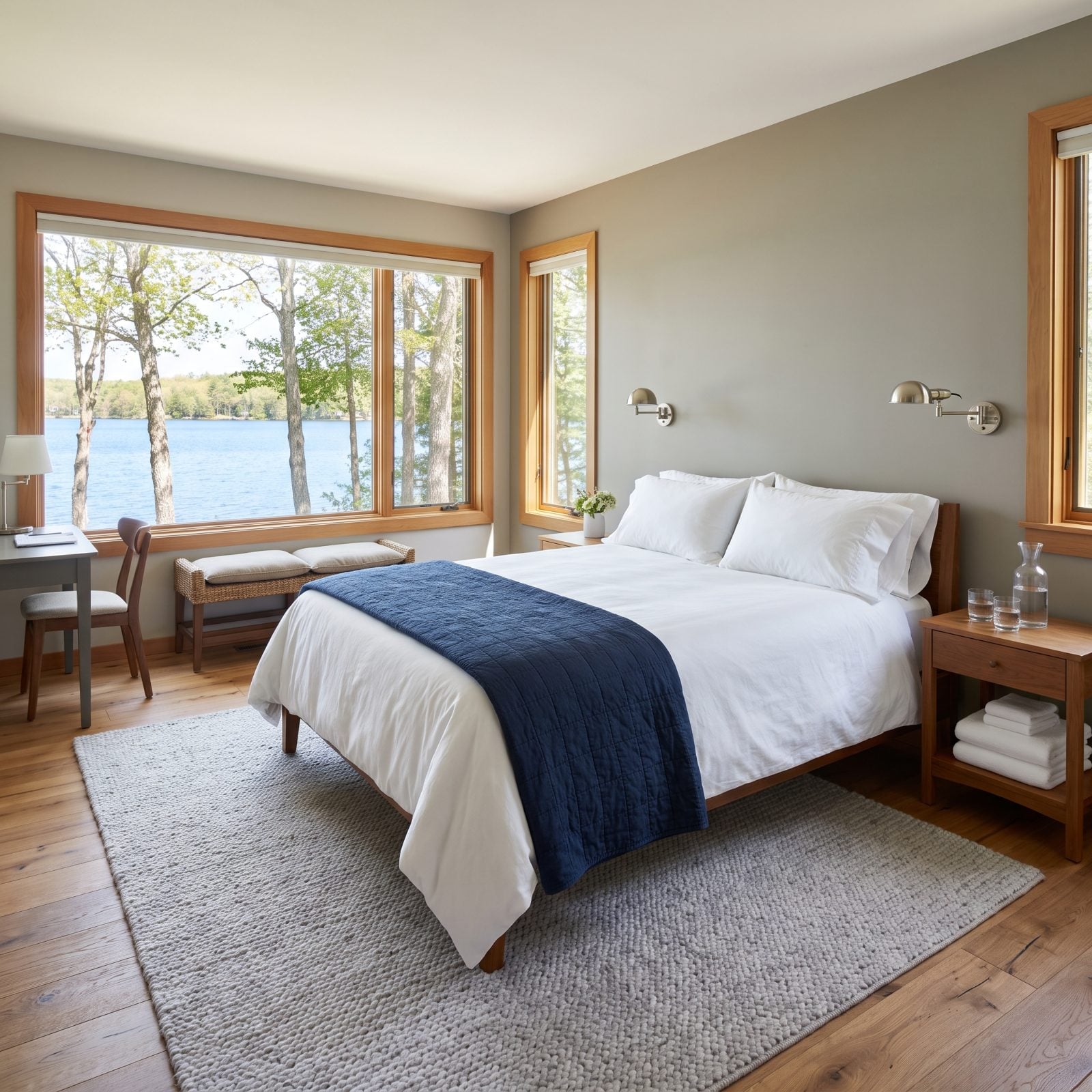
Stairs are the quiet dealbreaker nobody wants to say out loud.
A bedroom and full bath on the main level answers two groups at once — it lets aging parents visit without climbing to the second floor, and it means the owners can stay in the house for decades as their own knees change. That dual appeal is exactly why it’s climbing buyers’ lists.
It also just makes the house flow better. Late-arriving guests don’t thump up a staircase past everyone’s doors. Everybody gets their own floor, their own quiet. On a weekend when the house is packed, that’s worth a lot.
30. A Detached Guest Cottage
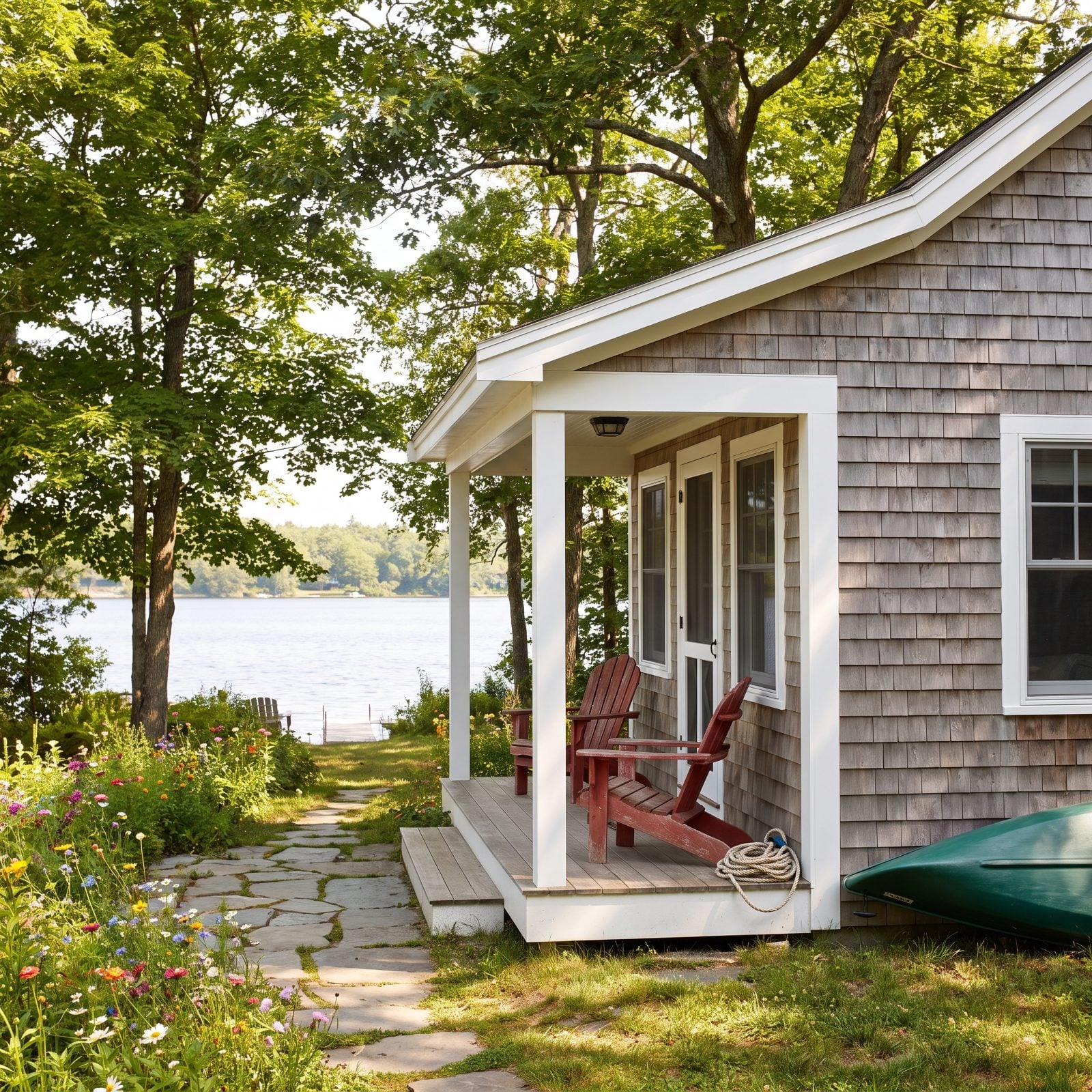
A separate little cottage does something a guest room never can. It gives everybody space.
Grown kids who come back with their own kids get a door that locks and a kitchenette to themselves. Friends can stay a week without anyone getting tired of anyone. And on the practical side, plenty of owners quietly rent the cottage out when they’re not using it, which turns a feature into income.
29. A Mudroom With a Separate Lakeside Entrance
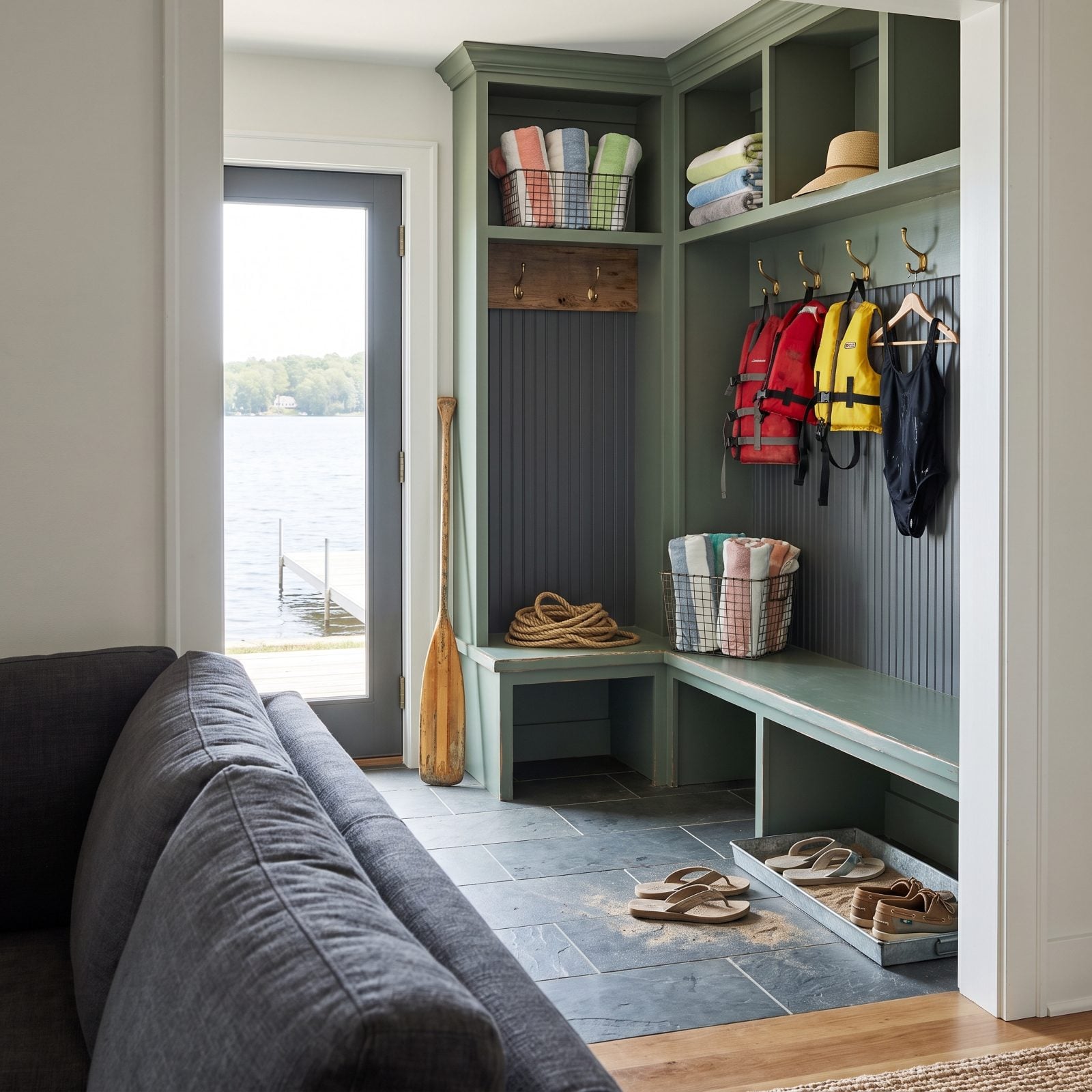
Here’s the unglamorous feature that experienced lake owners fight for.
A dedicated entrance from the water side, with a mudroom that can take a beating, is the difference between a house that stays nice and a house with lake grit ground into every rug. Wet swimsuits, muddy feet, dripping life jackets, a cooler on the way back from the dock — all of it comes in that door and stops there.
Give it a slate or tile floor that laughs at puddles, hooks at kid height, cubbies for towels, and a spot to drop sandy shoes. Owners who have one never go back. The ones who don’t track the whole lake through the kitchen all summer and wonder why the floors never look clean. Go put one in. You’ll thank yourself by the Fourth of July.
28. A Dedicated Drying Room for Wet Gear
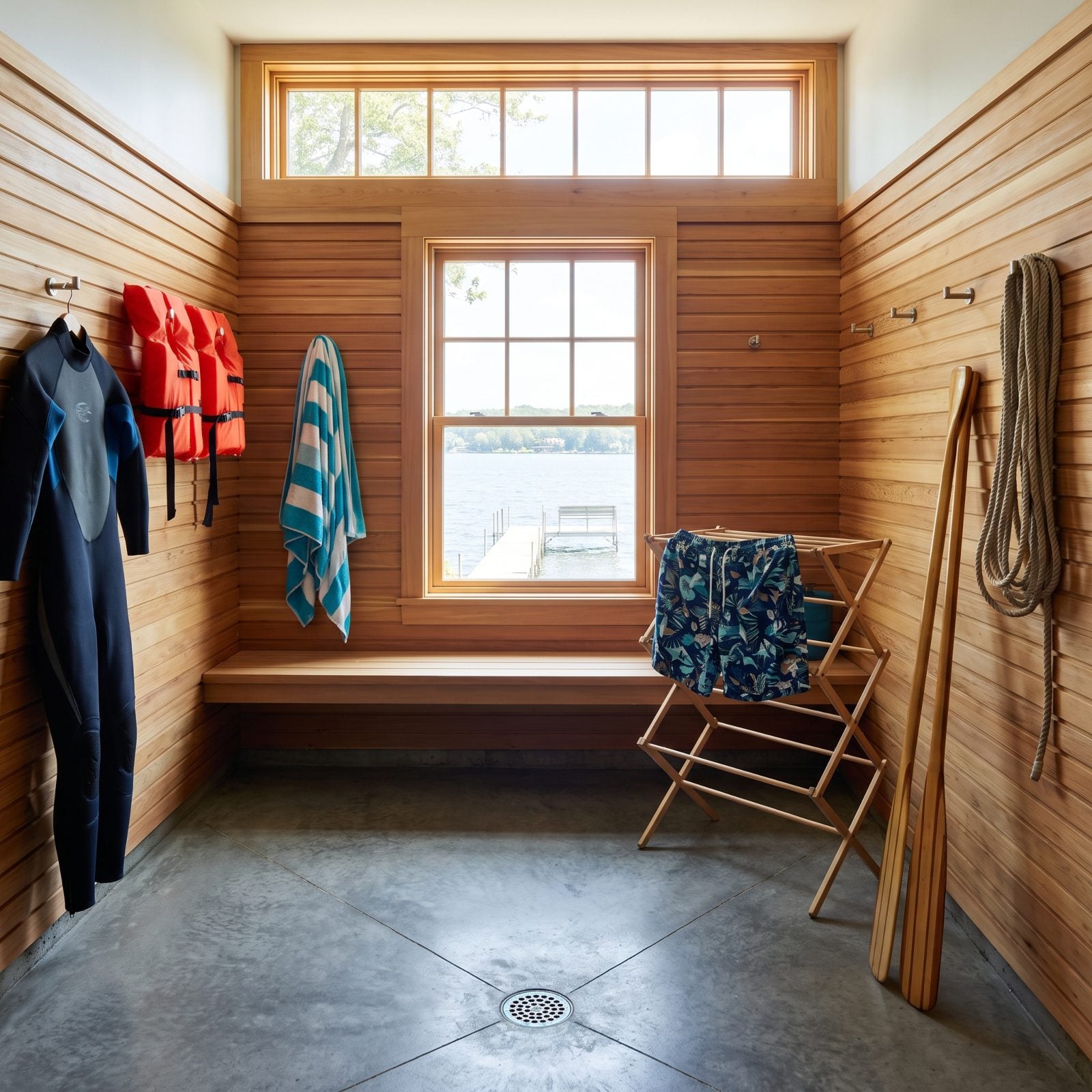
Wet gear ruins a house slowly, one life jacket slung over a kitchen chair and one dripping towel on the hardwood at a time, with swim trunks funking up a closet somewhere nobody checks. You know the smell. It lives in the walls of every lake rental that never planned for water coming back inside.
A proper drying room solves it with a floor drain, moisture-tolerant walls, and air that actually moves. Cedar helps because it shrugs off damp and smells like a sauna instead of a locker. Hang hooks at kid height and adult height both. Spend one summer mopping up after swim day and you’ll read this room in two seconds flat.
27. A Secure Boat and Fishing-Gear Room
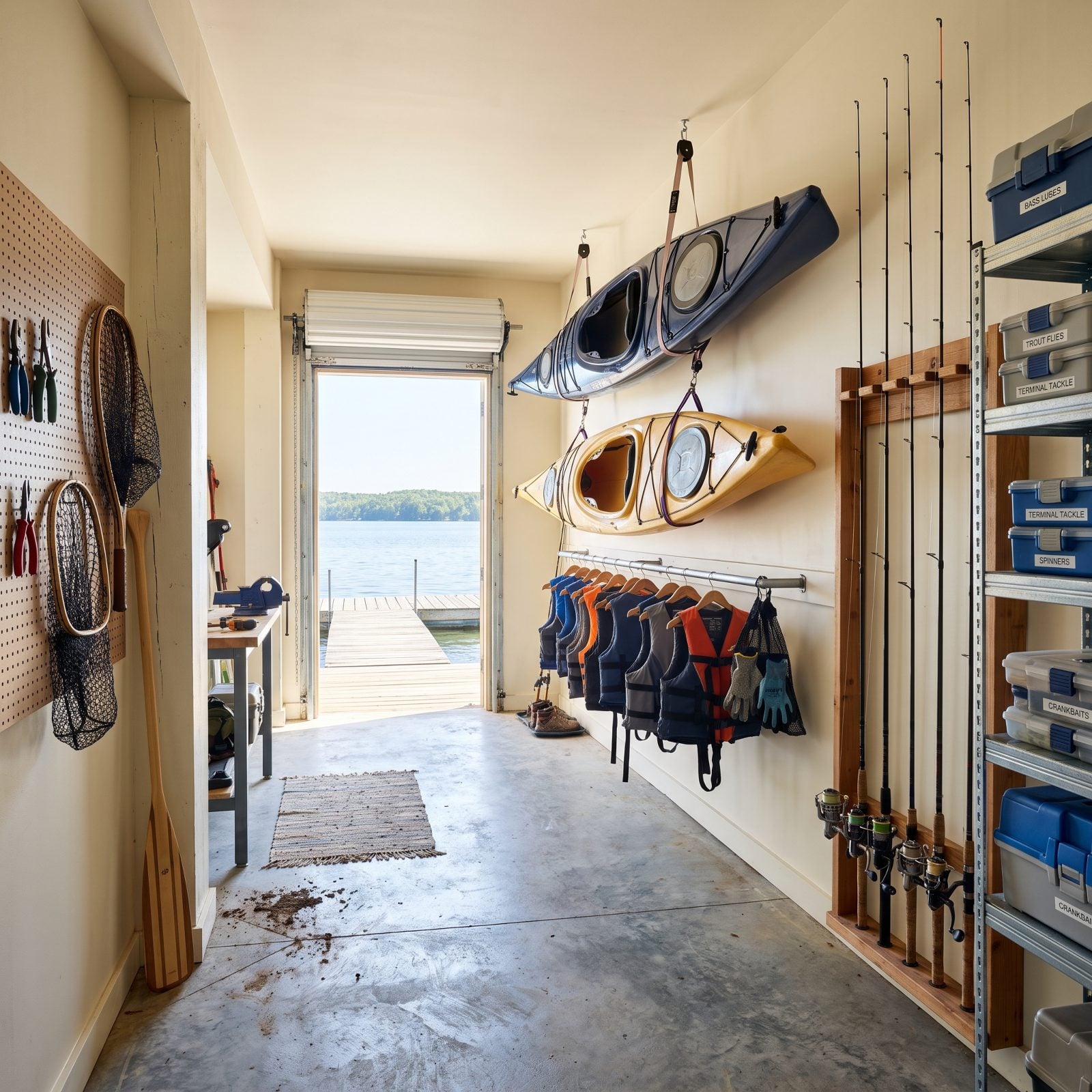
Fishing gear multiplies when you aren’t looking. One rod becomes nine, tackle takes over a whole closet, and a stolen outboard or a swiped kayak off an open dock happens more than people admit.
A dedicated gear room that locks gives buyers a place for rods stored vertical so they don’t warp, tackle off the floor, and paddles that aren’t tripping anybody in the garage. Padded ceiling straps keep kayaks and canoes overhead and out of the way. Lighting matters here too — nobody wants to rummage for a jig head in the dark before dawn. A room like this tells a buyer the house was built by somebody who actually goes out on the water.
26. Reliable High-Speed Internet
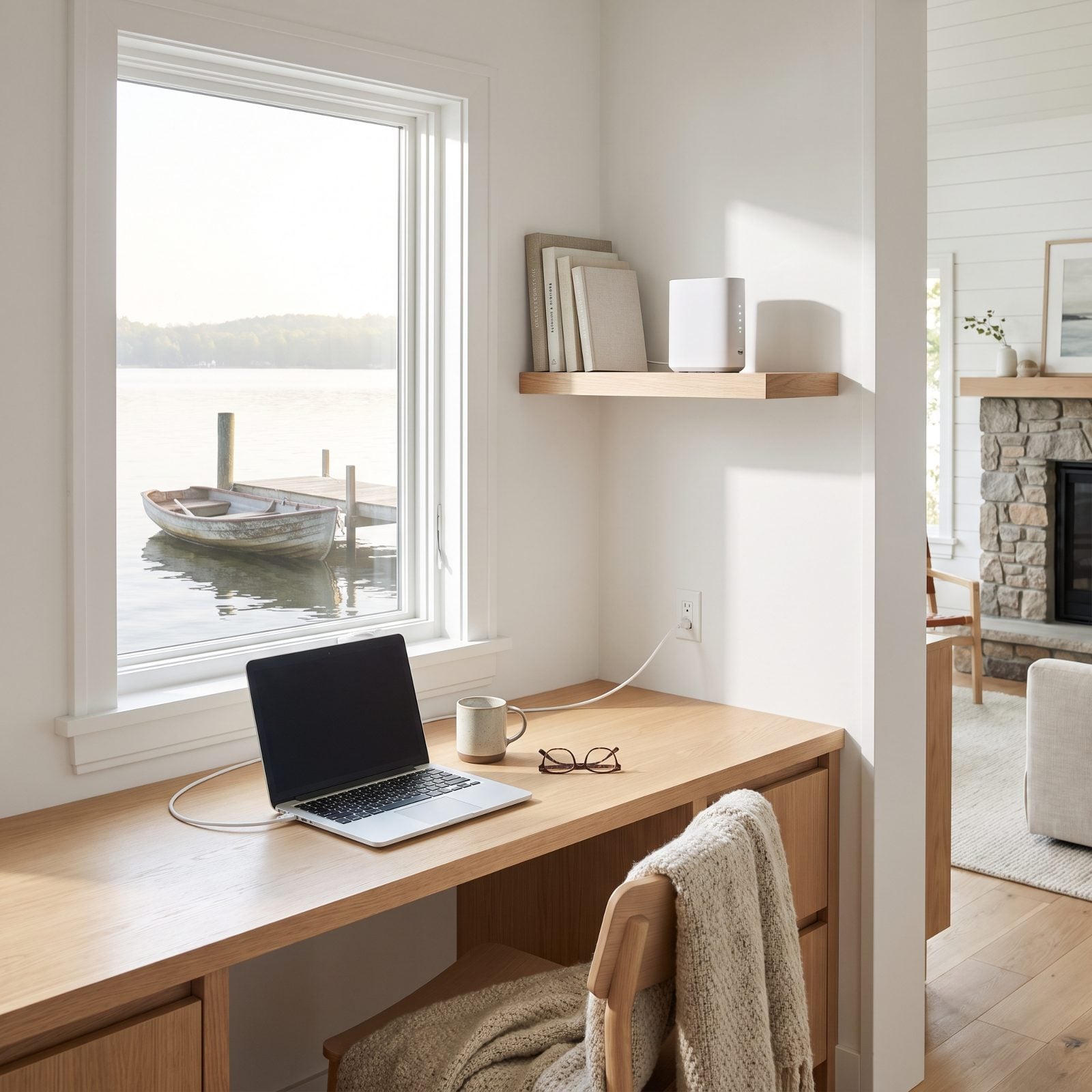
This is the quiet dealbreaker nobody puts in the listing photos. You can have the dock, the sunset, the loons at dusk, and still lose a buyer the moment they ask about download speed and hear “well, there’s a hotspot that mostly works.”
Remote work came to the lake and never left. A hardwired fiber or fixed-wireless connection — or Starlink where cable doesn’t reach — is now as fundamental as a working furnace. Buyers under 60 want to take a video call without the screen freezing their face mid-sentence. Ask about the provider before you ask about the view.
25. A Whole-House Dehumidification System
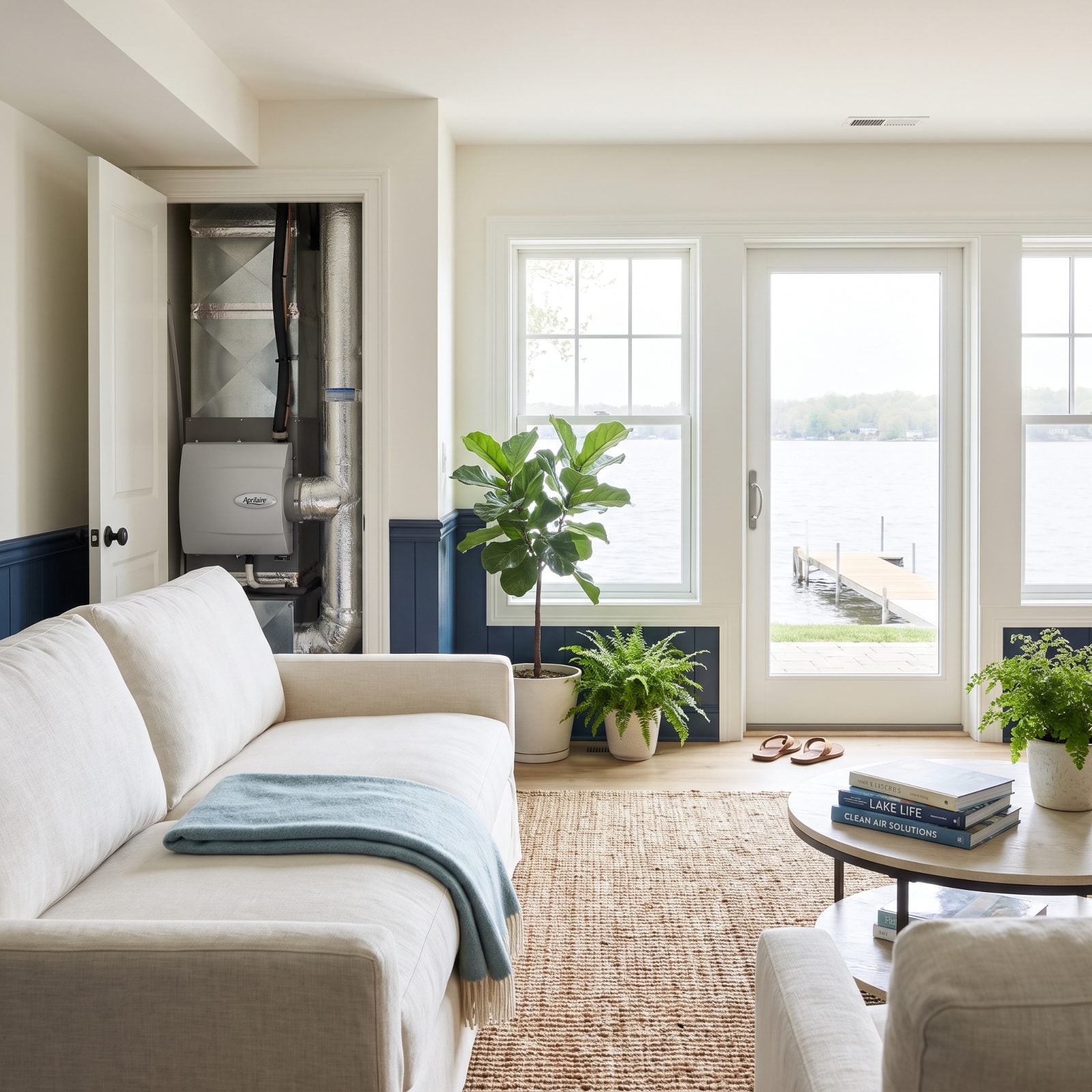
Humidity near water is relentless. It warps doors, curls book pages, and breeds that musty smell that greets you every June when you crack the cabin back open. You’ve walked into it. It’s the first thing that says this house fights the lake instead of living with it.
A whole-house dehumidifier tied into the HVAC helps hold indoor humidity in a sane range year-round, protecting floors, cabinetry, and anything made of wood. Behind a closed closet door it runs quietly and you forget it’s there, which is exactly the point. Buyers notice dry, fresh air the second they walk in, even when they can’t name why the place feels better than the last three they toured.
24. A Smart Leak-Detection and Shutoff System
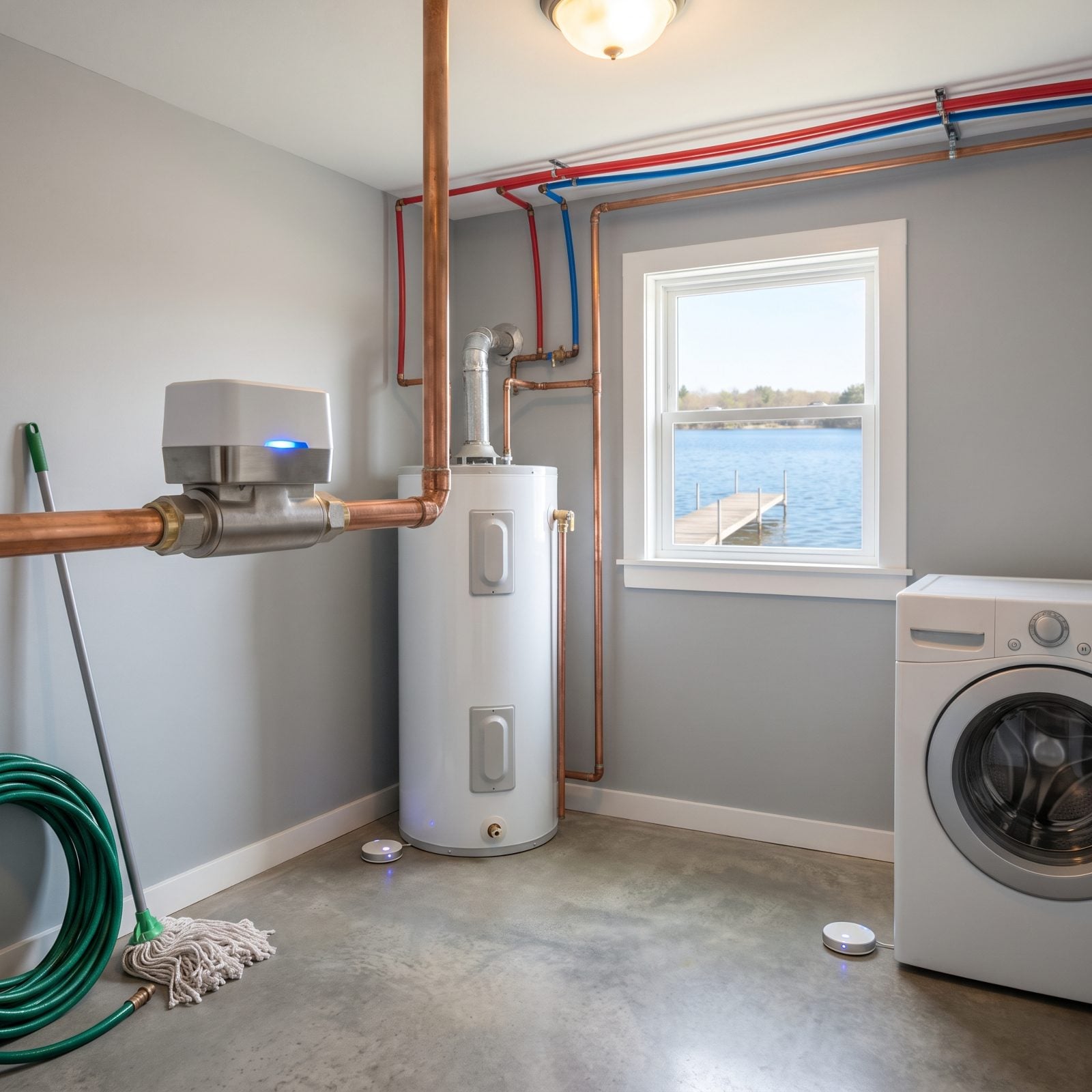
A pipe bursting while you’re back in the city is the lake-house nightmare. By the time a neighbor notices water seeping onto the deck, you’ve got a ruined floor and a five-figure problem.
Smart leak detectors handle the part that matters most: the house shuts its own water off and pings your phone before the damage compounds. Sensors sit near the water heater, the washer, and under sinks, and the main valve closes automatically when something goes sideways. For a second home that sits empty half the year, this isn’t a gadget — it’s insurance you can watch working. Some insurers even knock a little off the premium for one. Ask yours.
23. Whole-Home Water Filtration
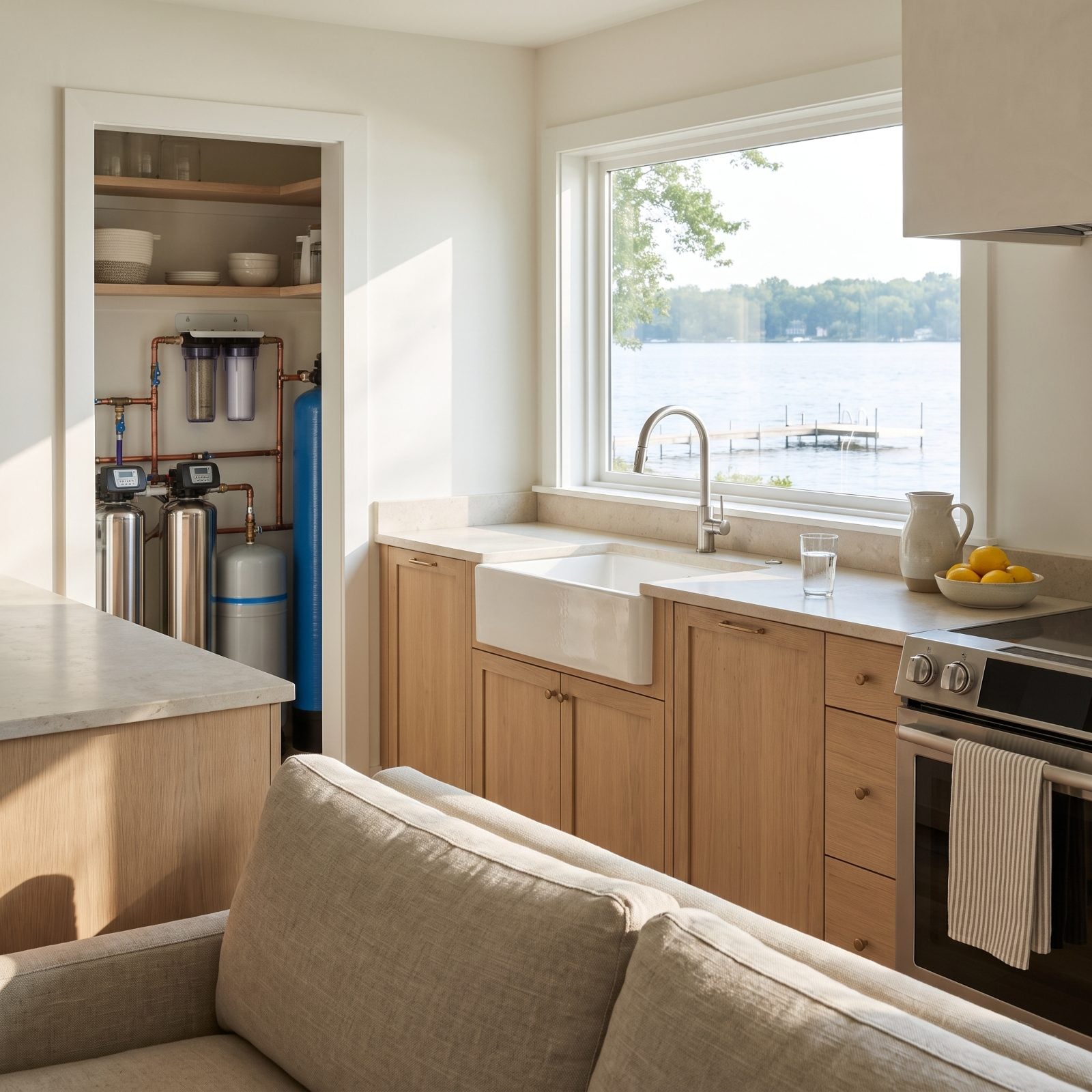
Well water near a lake comes with surprises — iron that stains the tub orange, sulfur that smells like eggs, hardness that chews through appliances and leaves spots on every glass. We’ve tasted well water that sent us straight to the bottled stuff without thinking.
A whole-home filtration and softening setup handles all of it at the source, so every tap in the house runs clean. Buyers pulling from a private well will ask about this directly, and your answer shifts how they feel about the whole place. Cooking, showering, coffee — all of it improves. Even on municipal supply, a carbon filter cuts chlorine taste and that faint pond note that creeps into lake-town tap water come late summer.
22. A Whole-Home Backup Generator
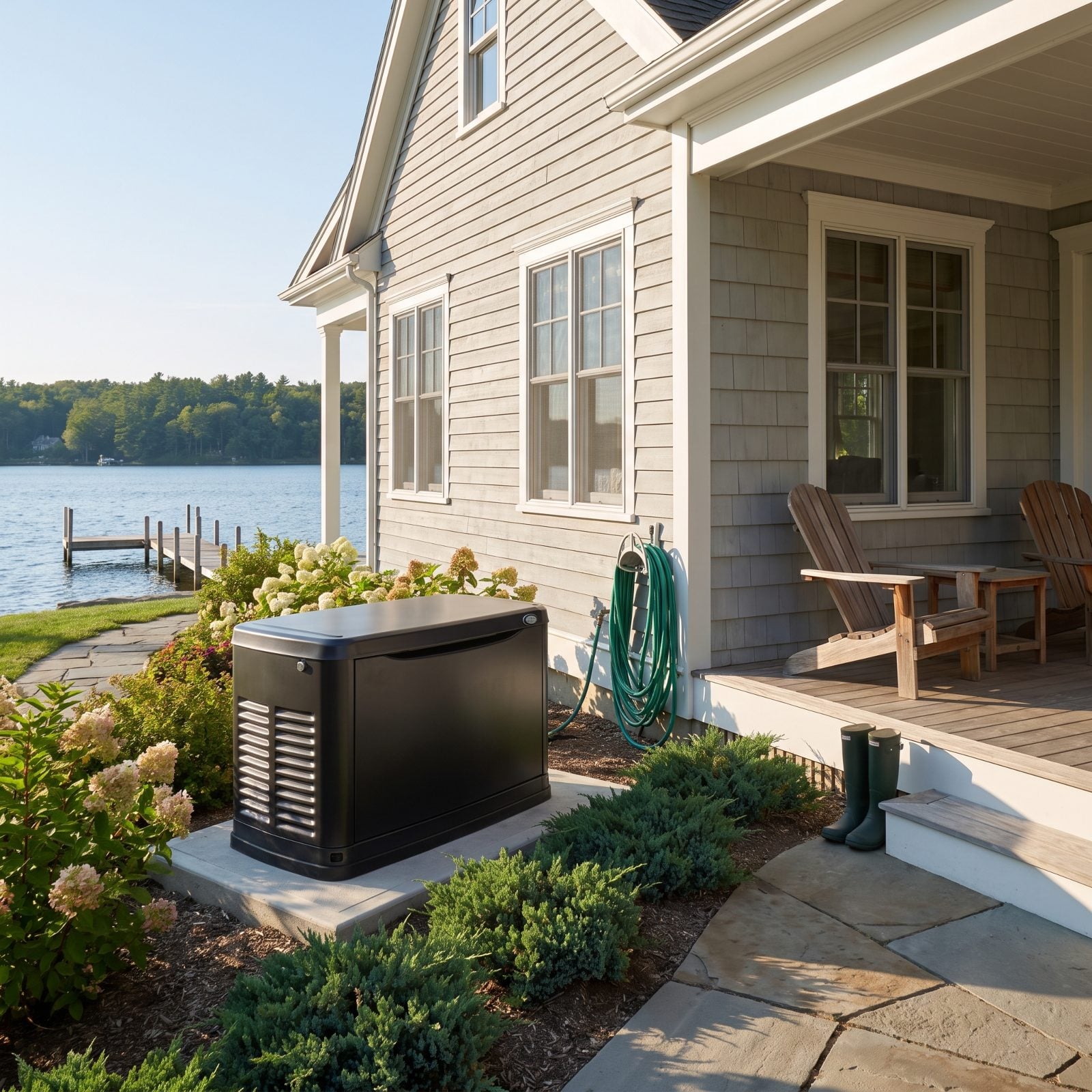
Lake towns lose power. A summer storm rolls through, a tree takes down a line, and suddenly the well pump is dead, the fridge full of a week’s groceries is warming, and your sump pump just quit right as the basement starts to seep.
A standby generator wired to the main panel kicks on in seconds and runs the essentials — or the whole house, if it’s sized for it. Out on rural lakefront, where crews take longer to reach outages, it’s close to essential. Anybody who’s ridden out a three-day outage at a cabin knows exactly what it’s worth. The ones who haven’t will learn, usually the hard way, their first bad storm.
21. Flood-Resistant Lower Levels With Elevated Utilities
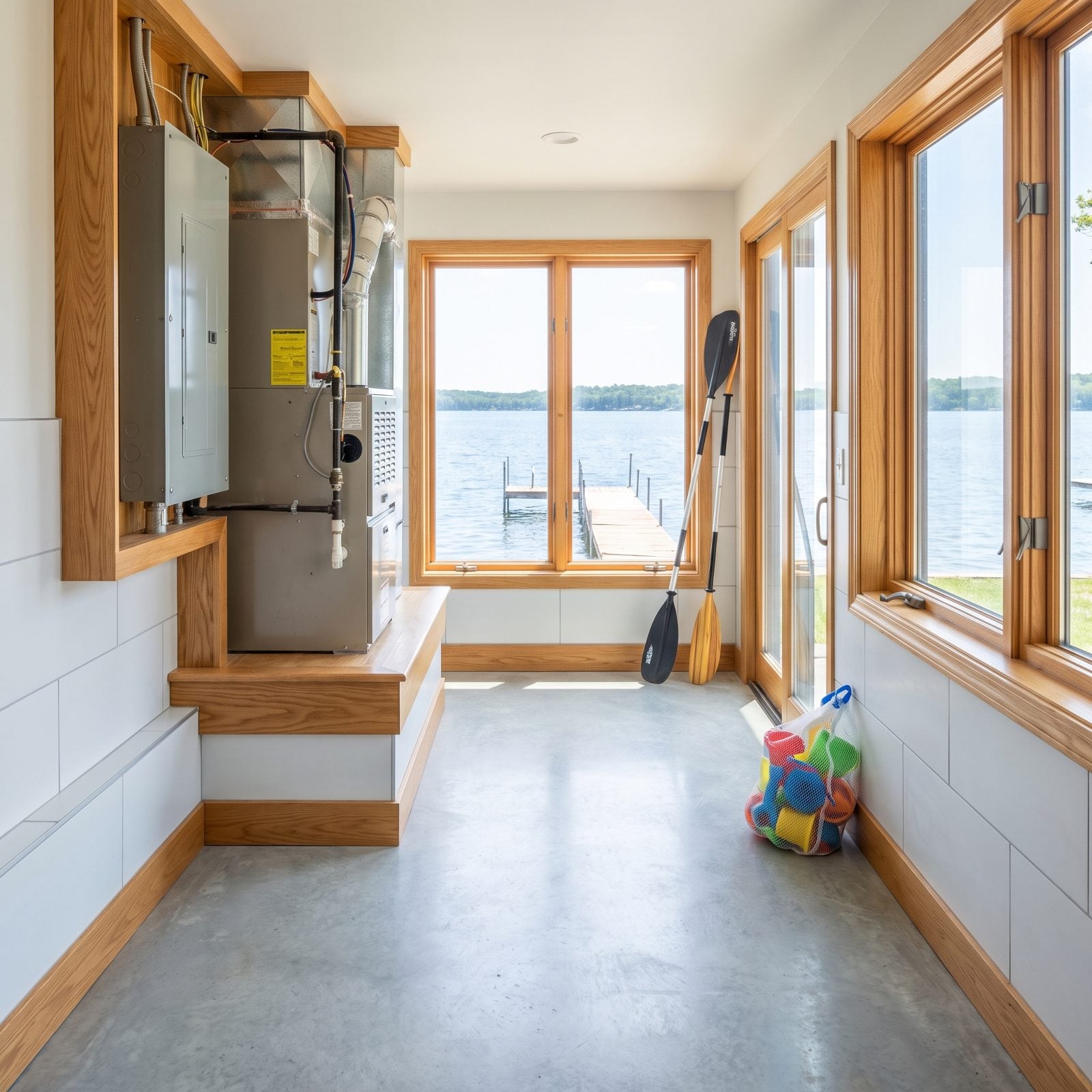
Build right up against water and you’d better plan for the day the water comes up. Not if. When. High-water years happen, and a lower level that’s been thought through is the difference between a mop-up and a gut-renovation.
Flood-smart lower levels use tile and sealed concrete instead of carpet and drywall, so a few inches of water means a wet-vac afternoon, not a tear-out. The real tell for a sharp buyer is where the mechanicals sit — furnace, water heater, and electrical panel all raised on platforms above likely flood height. Costs more at build time. Saves a fortune the first time the lake tests it.
20. A Professionally Engineered Drainage System
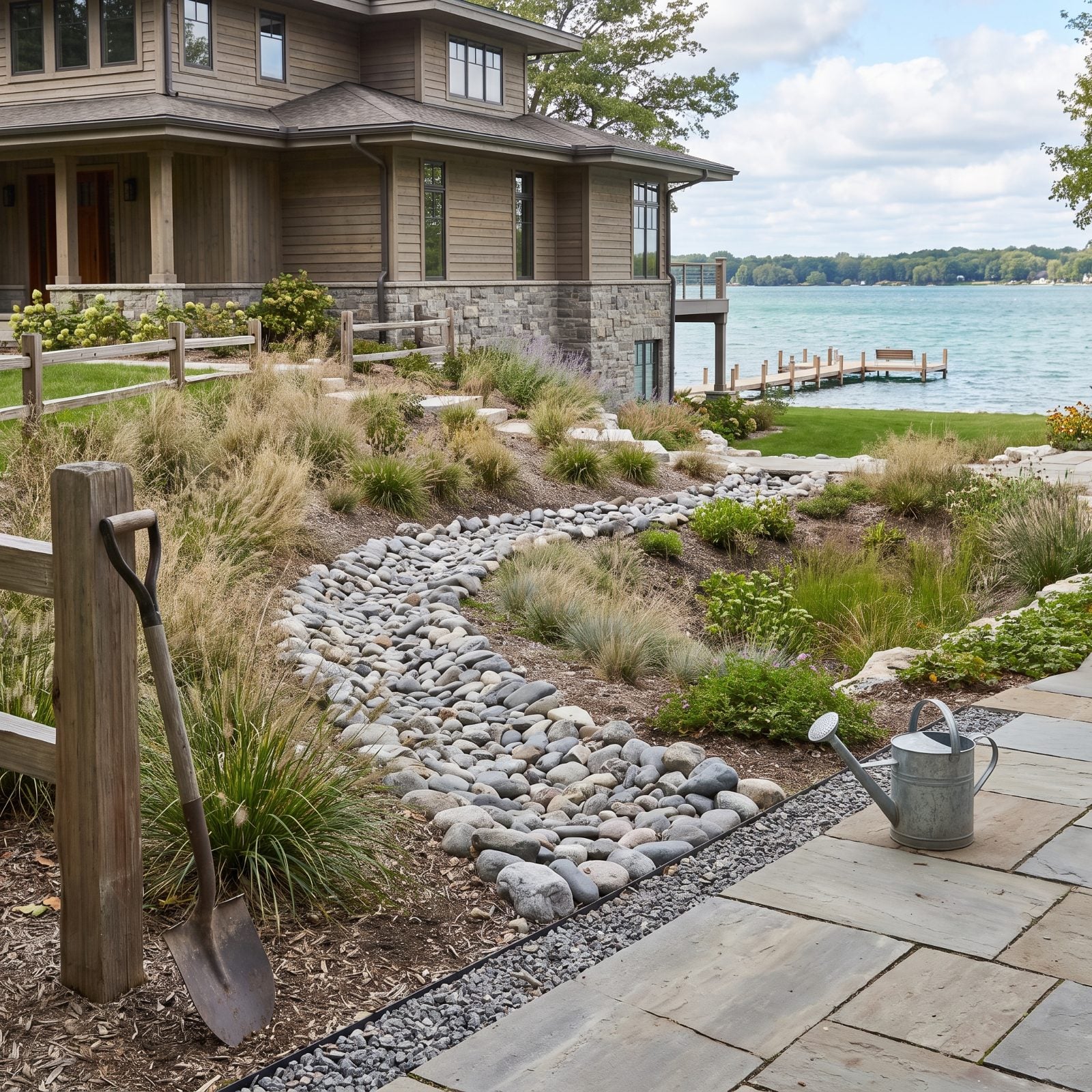
Water always wins the long game. Everything slopes toward the lake eventually, runoff included, and after a hard rain that runoff wants to run straight at your foundation. A yard that dumps into the crawlspace is a problem nobody sees until the mold does.
Engineered drainage sends rain where you want it — French drains, swales lined with river rock, grading that pulls water away from the house before it pools. A rain garden full of native grasses soaks up overflow and looks intentional instead of like a ditch. Nobody’s going to gush over this at the showing. But a buyer who’s fought a soggy yard and a cracked foundation will spot a dry, well-drained lot and relax in a way they can’t quite explain.
19. Impact-Rated Windows and Exterior Doors
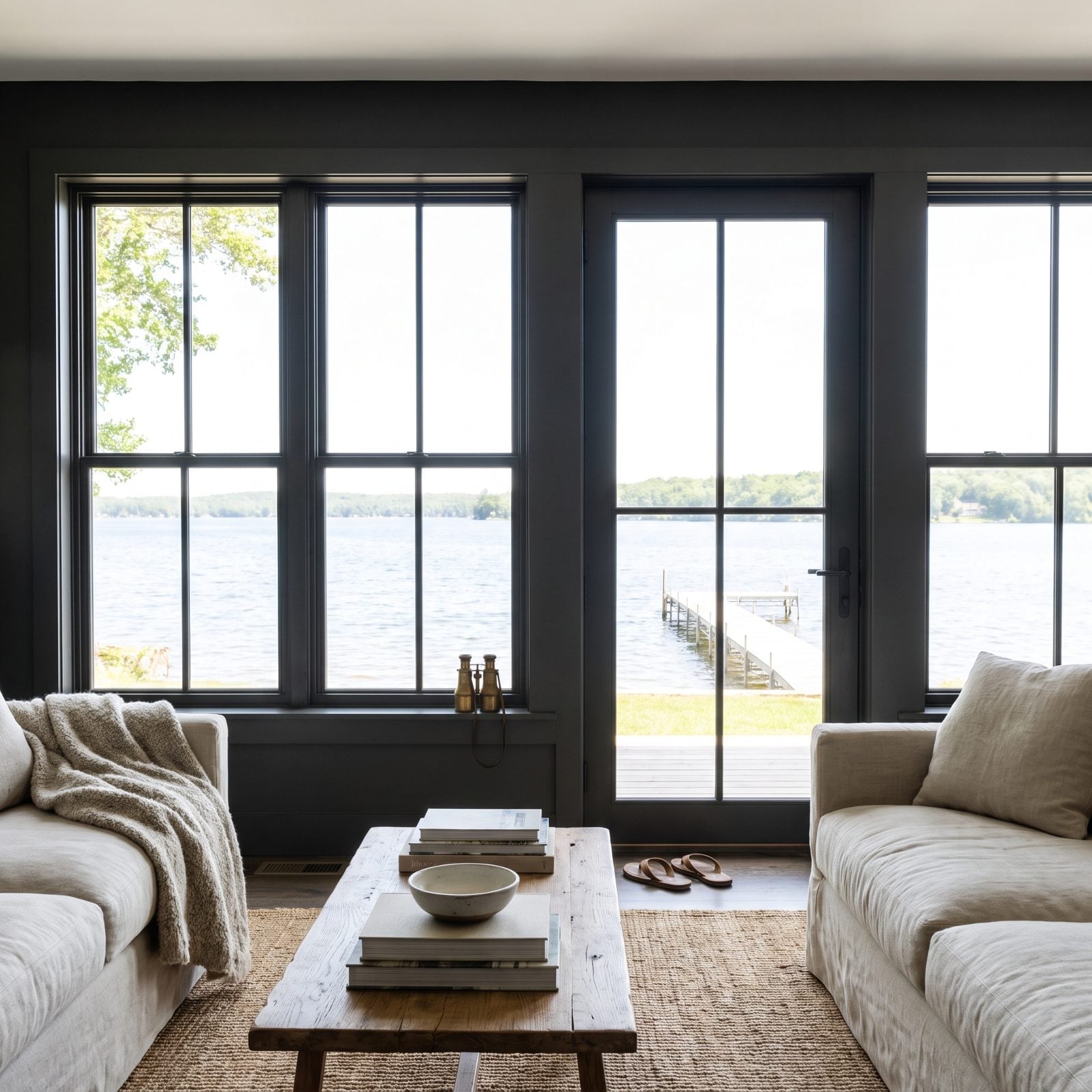
Big water means big weather — wind-driven rain, flying branches, the odd hailstorm that drops out of a blue sky and shreds a screen porch in ten minutes. Standard windows crack and leak. Impact-rated glass takes the hit and keeps the house sealed.
Storms aside, these windows run heavier, quieter, and better insulated, which earns its keep on a house that faces open water and wide temperature swings. They hush the lake-side wind whistle that keeps light sleepers up all night. In coastal and high-wind zones, insurance companies often reward them with lower premiums. To a buyer, impact-rated openings signal a house built to stand up to the water it sits next to, not just gawk at it.
18. A Living Shoreline With Native Plants
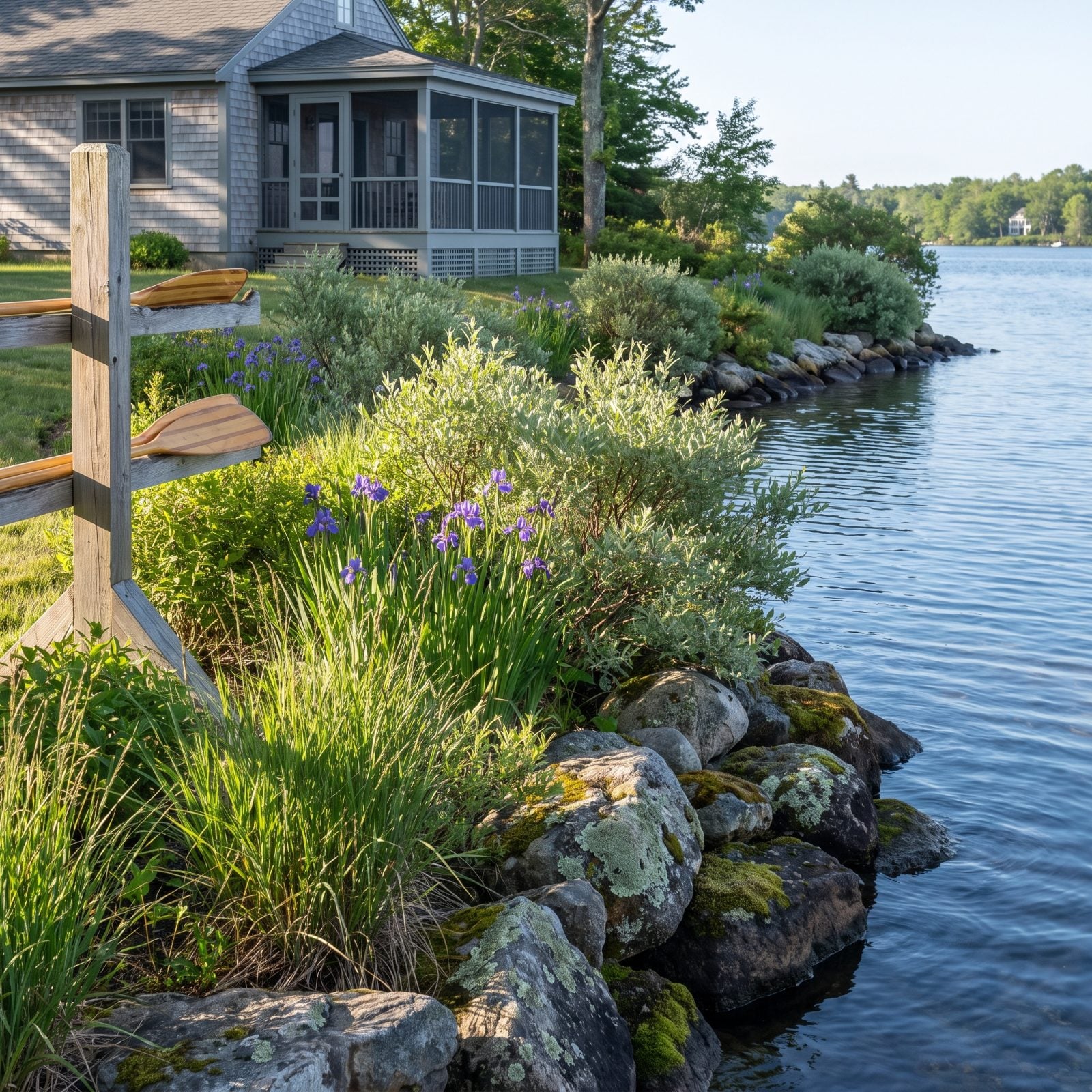
Forget the manicured lawn running straight into the water. Buyers coming to the table by 2027 want the opposite: a shoreline planted with native sedges, iris, and deep-rooted grasses that holds the bank in place when a wake rolls through, filters runoff before it hits the lake, and stops the slow slide of soil that turns clear water murky.
It also does something quieter. The frogs come back, the dragonflies show up, and you get a shoreline that looks alive instead of mowed.
17. Low-Maintenance Composite Decking
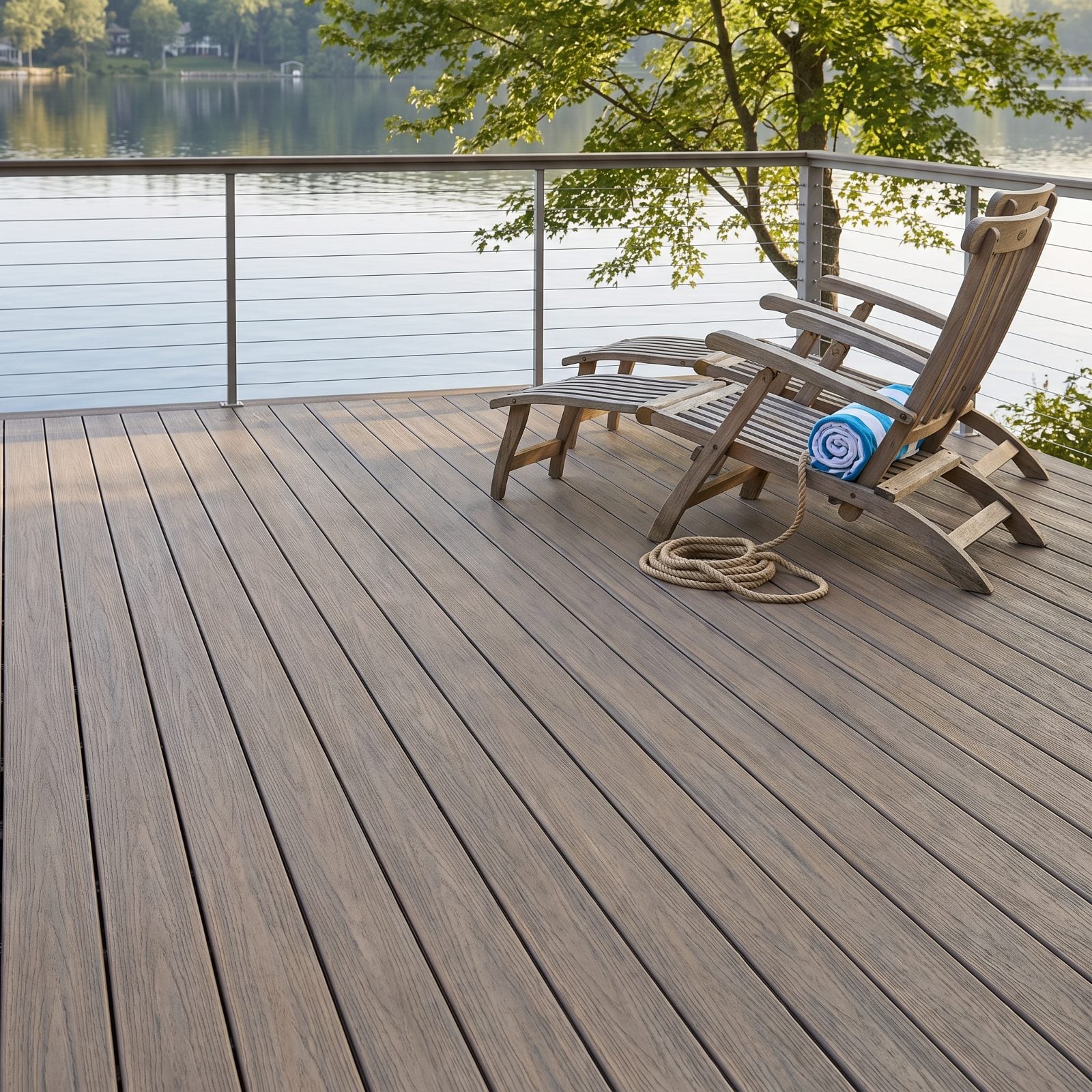
Wood decks by a lake are a second job you didn’t apply for. Sand, stain, reseal, repeat, and the splinters still find bare feet in August.
Composite boards changed the math. No annual refinishing, no stain fumes, no gray splintered patches where the sun hits hardest. You hose it off and sit down. For a house that spends every summer weekend hosting wet kids and dripping dogs, that toughness is worth real money at resale.
One warning, though. The newer capped composites hold their color far better than the first generation did, which faded to a sad chalky pink within a few seasons. Spend on the good stuff.
16. Marine-Grade Exterior Fixtures and Hardware
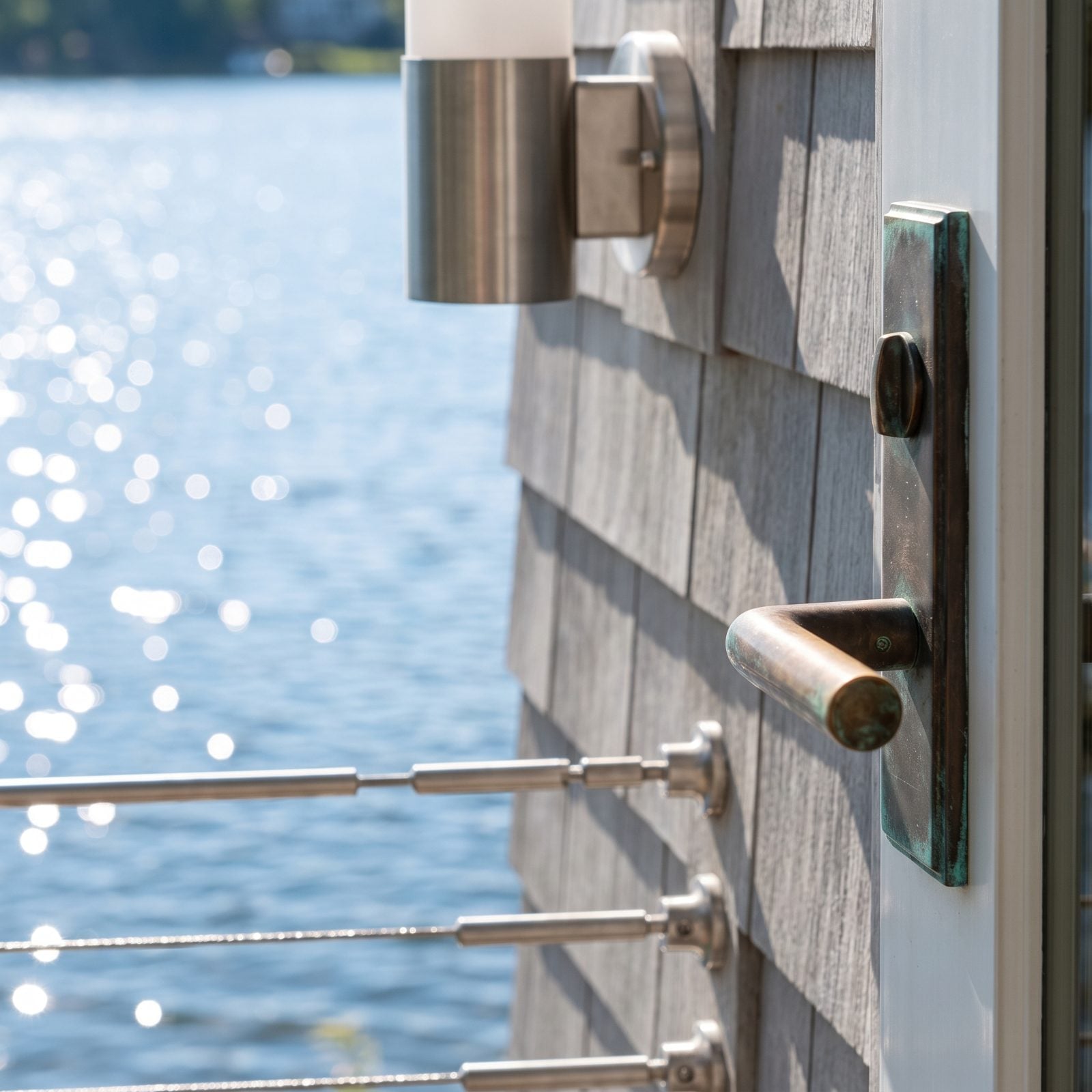
Standard galvanized hardware near water is a countdown clock. The constant damp, the spray off the lake, the humidity that never fully leaves — it all eats cheap metal from the inside. You notice when the hinge seizes and the screw heads bleed rust streaks down your siding.
316 stainless, solid bronze, powder-coated aluminum. These are the fixtures that still look right in year fifteen. Door hardware, railing fittings, light sconces, outdoor outlet covers. A buyer walking a lake house can’t name the alloy, but they can feel a handle that doesn’t wobble.
15. A Level Route From the House to the Shore
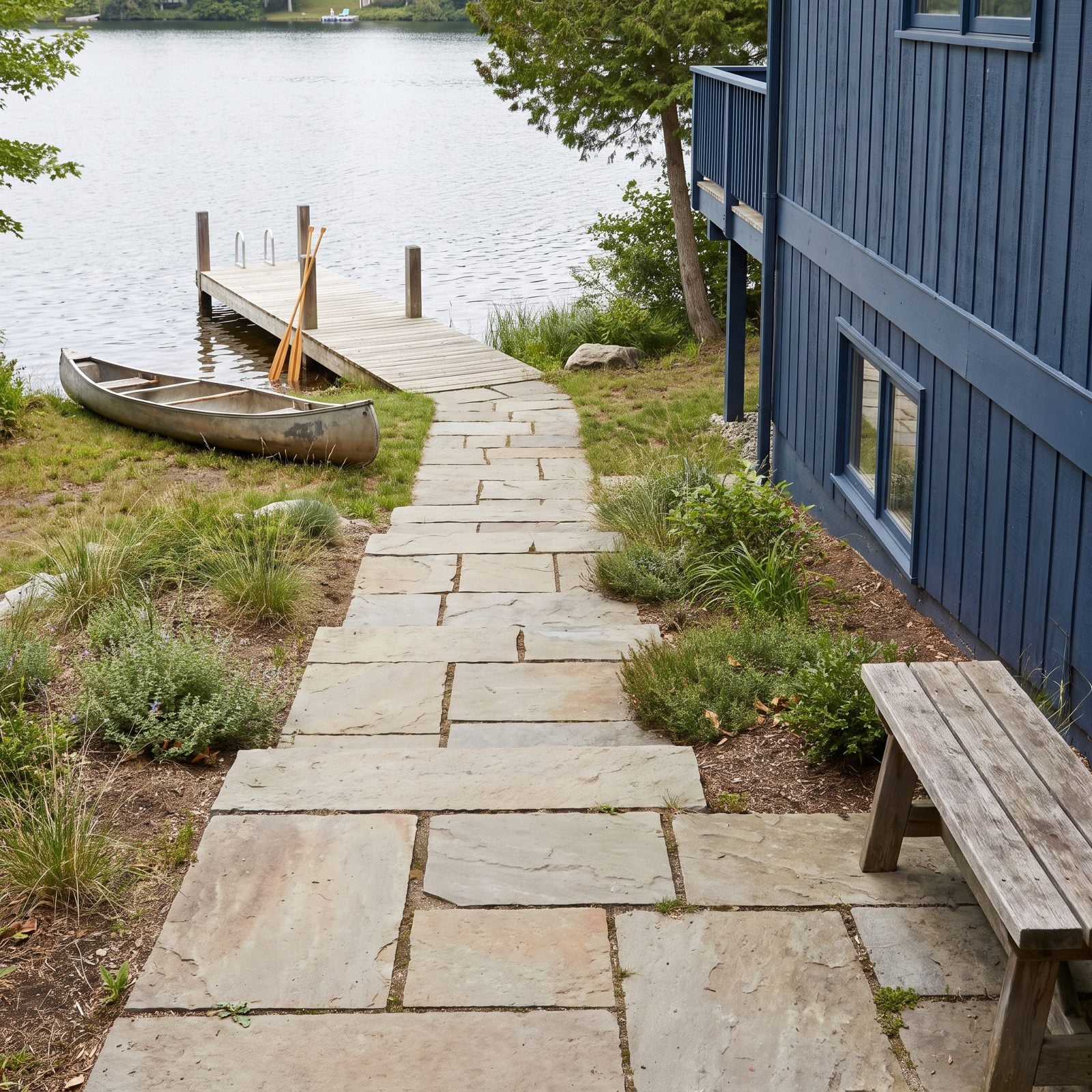
The brutal truth about most waterfront lots: getting to the water is a workout. Steep stairs, slick in the dew, murder on the knees by sixty.
A graded, near-level route changes who can actually use the lake. Grandparents carrying nothing. A wheelbarrow of coolers. Someone with a bad hip who still wants to sit at the end of the dock at dusk.
Where the slope can’t be beaten, a switchback with gentle landings beats a straight staircase every time. And buyers over fifty are doing quiet math on this as they walk the property, even if they never say a word.
14. A No-Step Entrance With Wide Interior Doorways
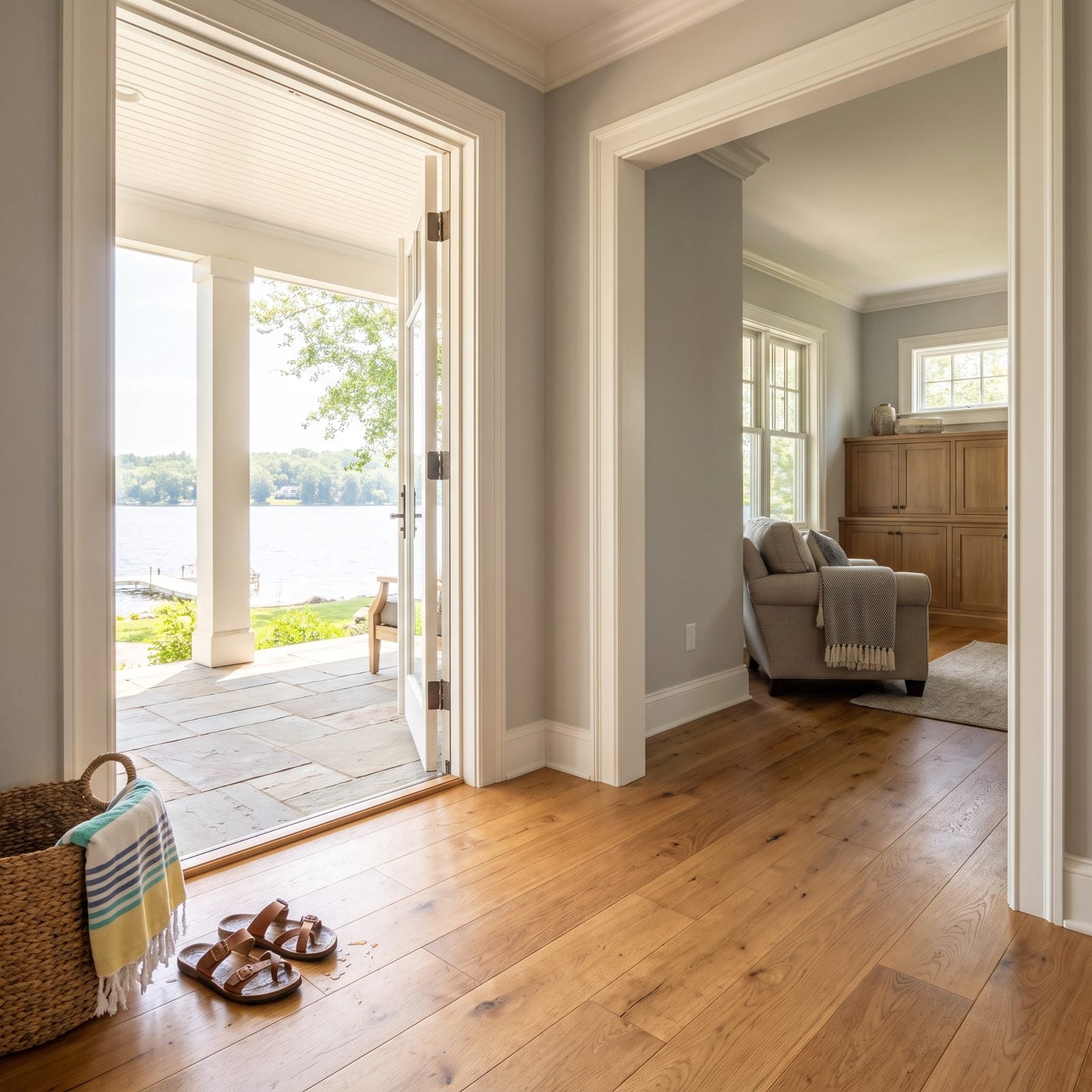
Step-free entries used to read as medical. Now they read as smart.
A flush threshold at the main door and interior doorways wide enough to move through without turning sideways solves problems you haven’t had yet — wheeling in a loaded cooler, a walker someday for you or a parent, a friend on crutches who can still come to the lake.
The resale angle is simple. A house that works for a 75-year-old also works for a stroller and a hand truck. You’re buying flexibility that outlives whoever’s living there now.
13. An Oversized Garage for Boats and Trailers
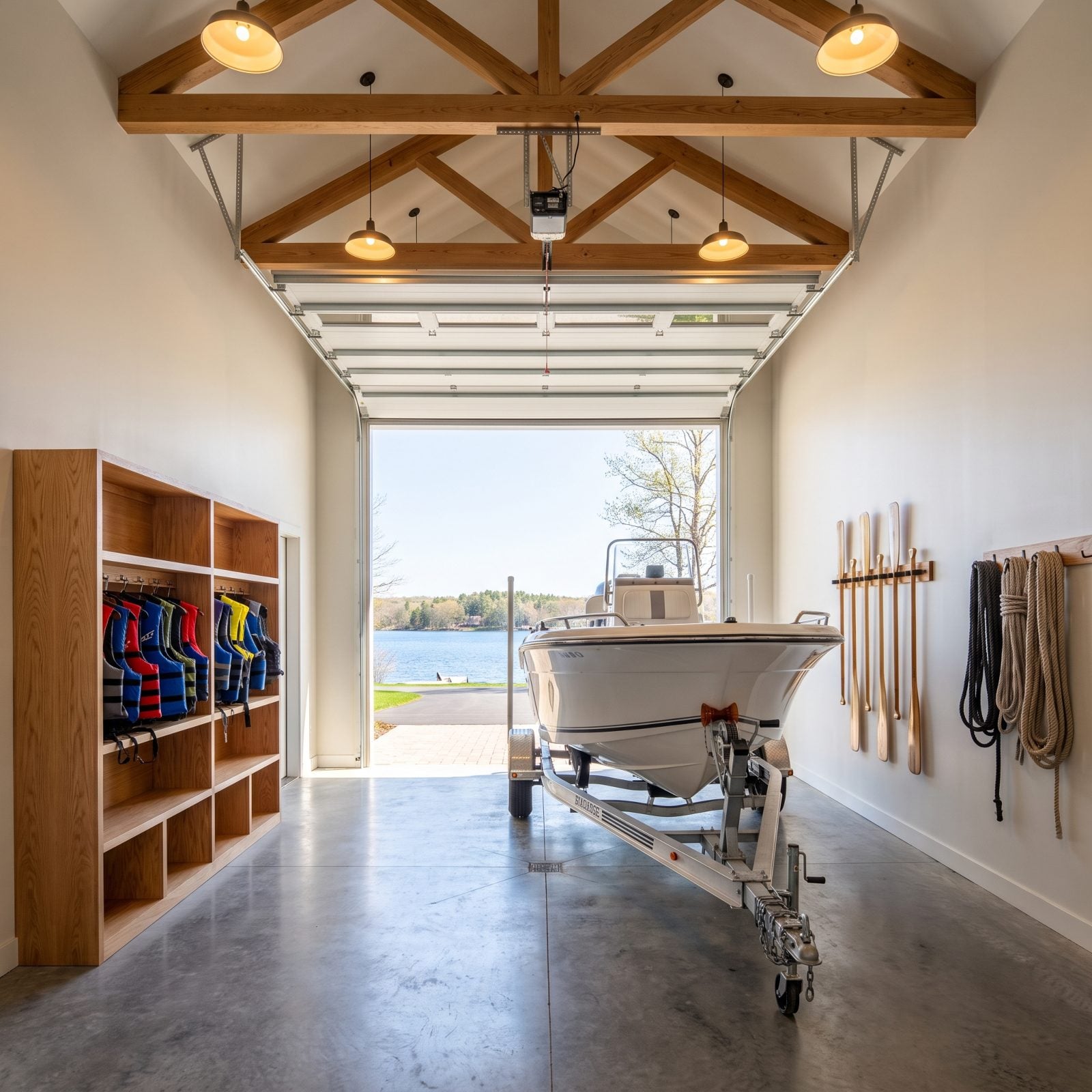
A boat left outside all winter under a flapping tarp ages twice as fast as one tucked under a roof. The gelcoat chalks, the upholstery mildews, and the mice find the engine.
An oversized garage — tall enough to clear a boat on a trailer and deep enough to park it with the tongue inside — is the single piece of storage lake buyers fight over. Heated workshop in winter, dry dock in the off-season, a place to keep the kayaks off the lawn.
Measure before you fall in love with a listing. A standard two-car garage will not swallow a 21-foot bowrider on its trailer, and finding that out after closing is a bad afternoon.
12. A Pull-Through Driveway for Easy Trailer Access
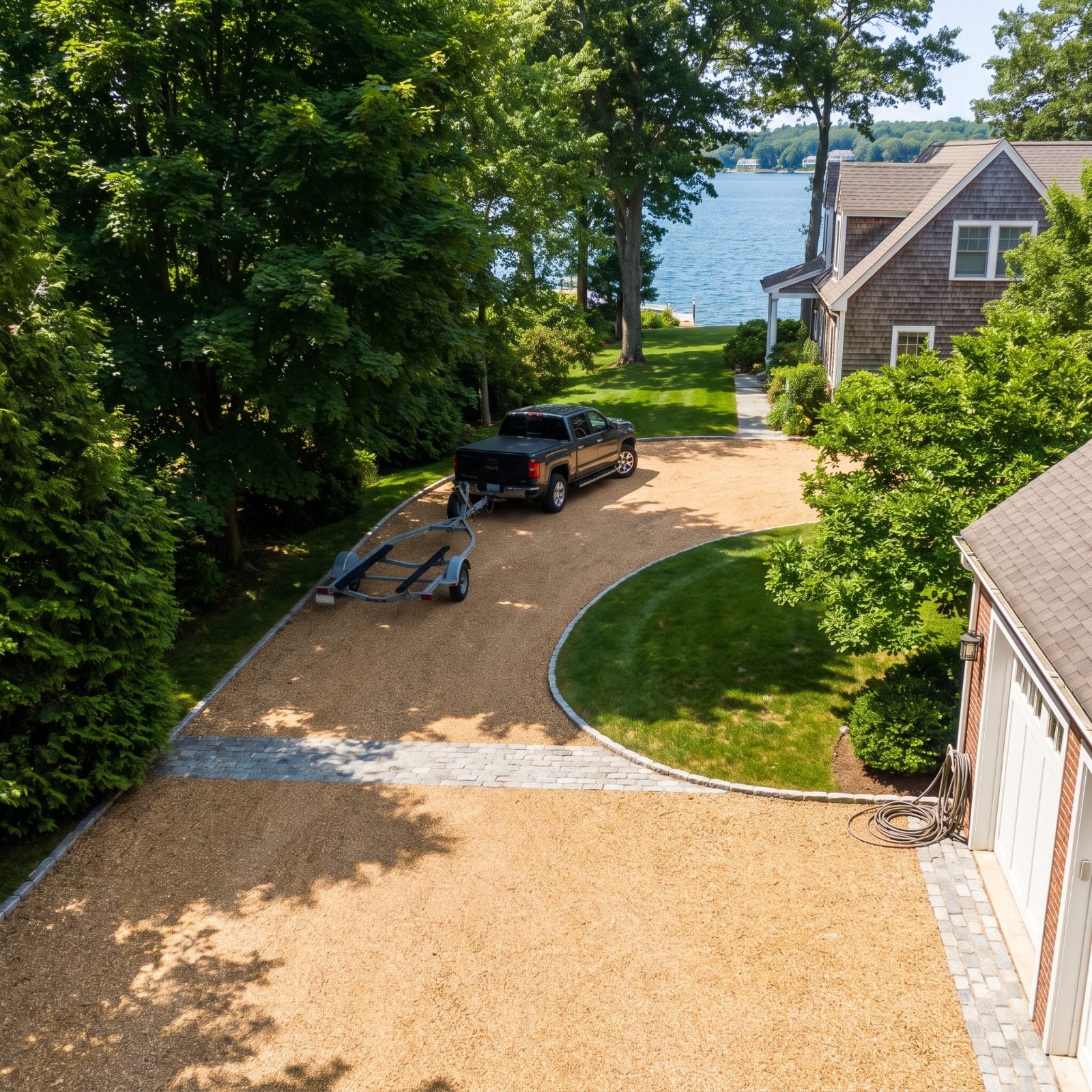
Anyone who has backed a trailer down a tight driveway while a line of cars waits knows the specific flavor of that stress.
A pull-through drive erases it. You arrive, you loop through, you leave the same way, never once reversing a thirty-foot rig between the mailbox and the neighbor’s hedge. At a house where a boat comes and goes all summer, it turns the launch-day ritual from a sweaty argument into a non-event.
We’ll admit it took us years to appreciate this one. Then we spent a July afternoon watching a guy jackknife his trailer four times in a cul-de-sac, and we got religion fast.
11. A Covered Outdoor Kitchen
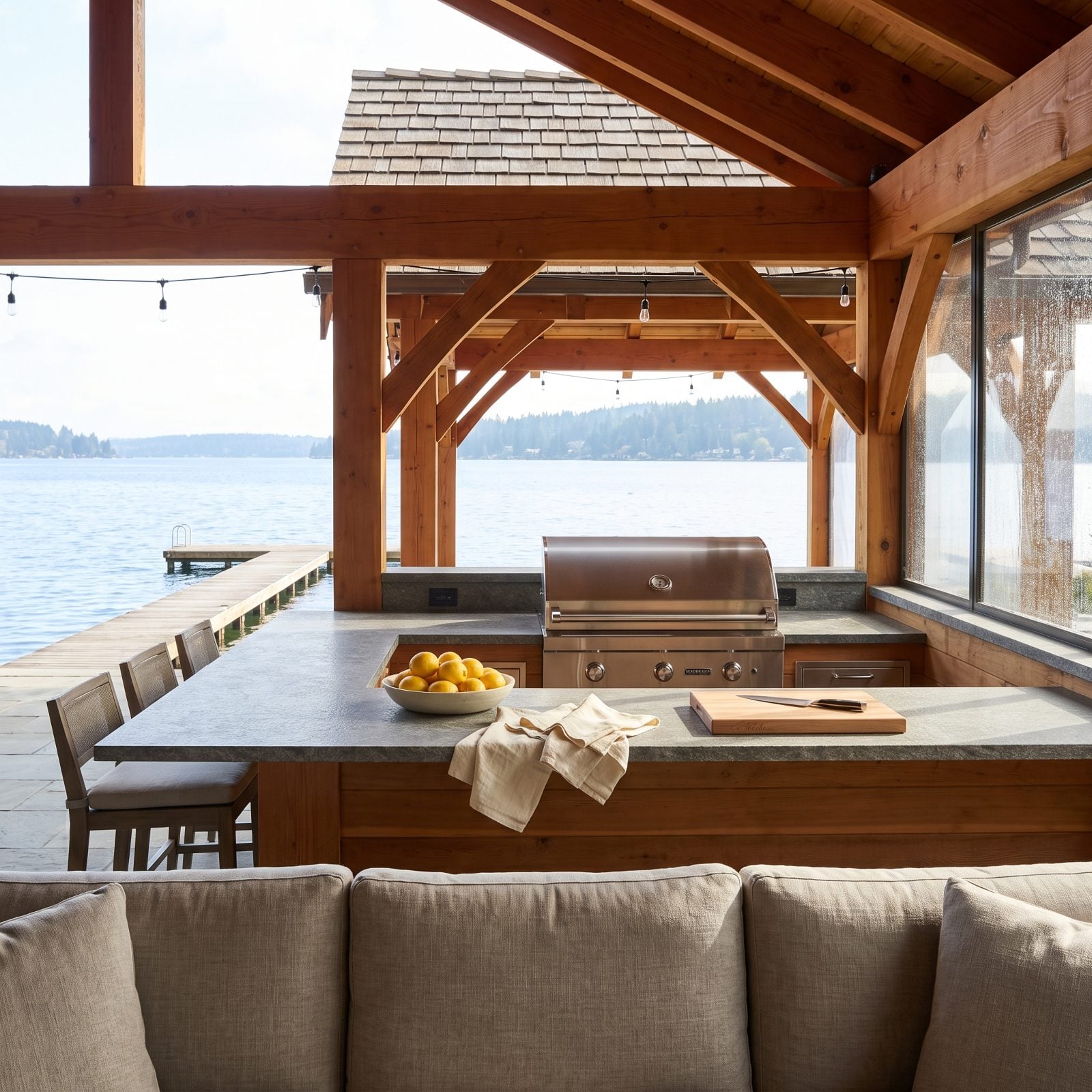
The grill that lives under a roof gets used in October. The one exposed to the sky gets abandoned at the first cloud.
A covered outdoor kitchen — even a modest run of counter, a built-in grill, a sink, and a roof — stretches the season on both ends and keeps the cooking out where the view is. No shuttling plates through a screen door while the burgers burn.
Face the counter toward the water, not the wall. Sounds obvious. Half the outdoor kitchens I’ve seen have the cook staring at siding while everyone else watches the sunset.
10. A Lakeside Patio at the Water’s Edge
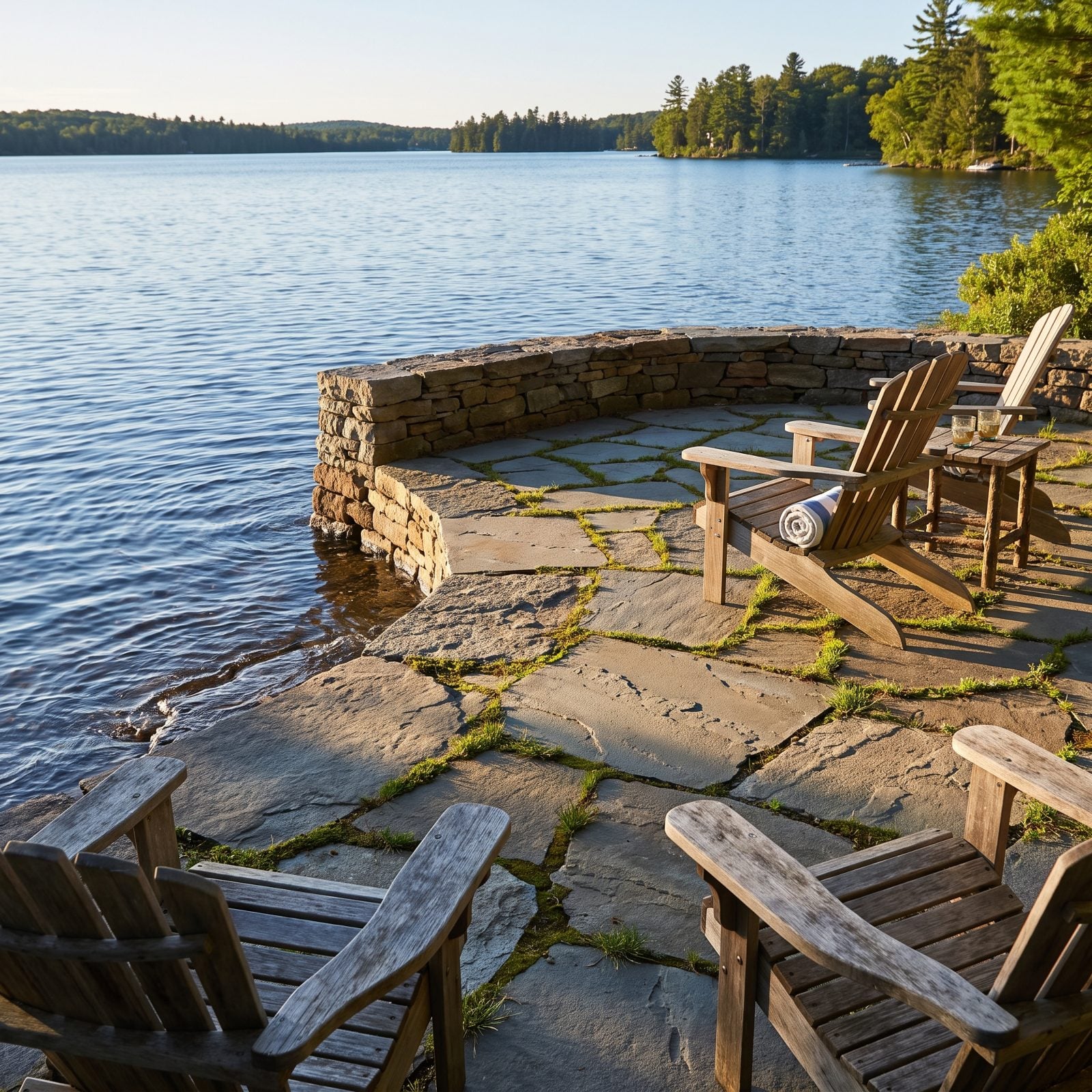
There’s a difference between a patio with a lake view and a patio you can dip your toes off of. Buyers know it the second they step onto it.
Bring the hardscape right down to the water — a stone terrace where the deck chairs sit a few feet from the ripples — and the distance between house and lake just collapses. You’re not looking at the water. You’re on it, basically.
Permeable stone with planted joints handles the splash and the freeze-thaw far better than a poured slab, which cracks and heaves and looks tired in a decade.
9. A Shoreline Fire Pit With Built-In Seating
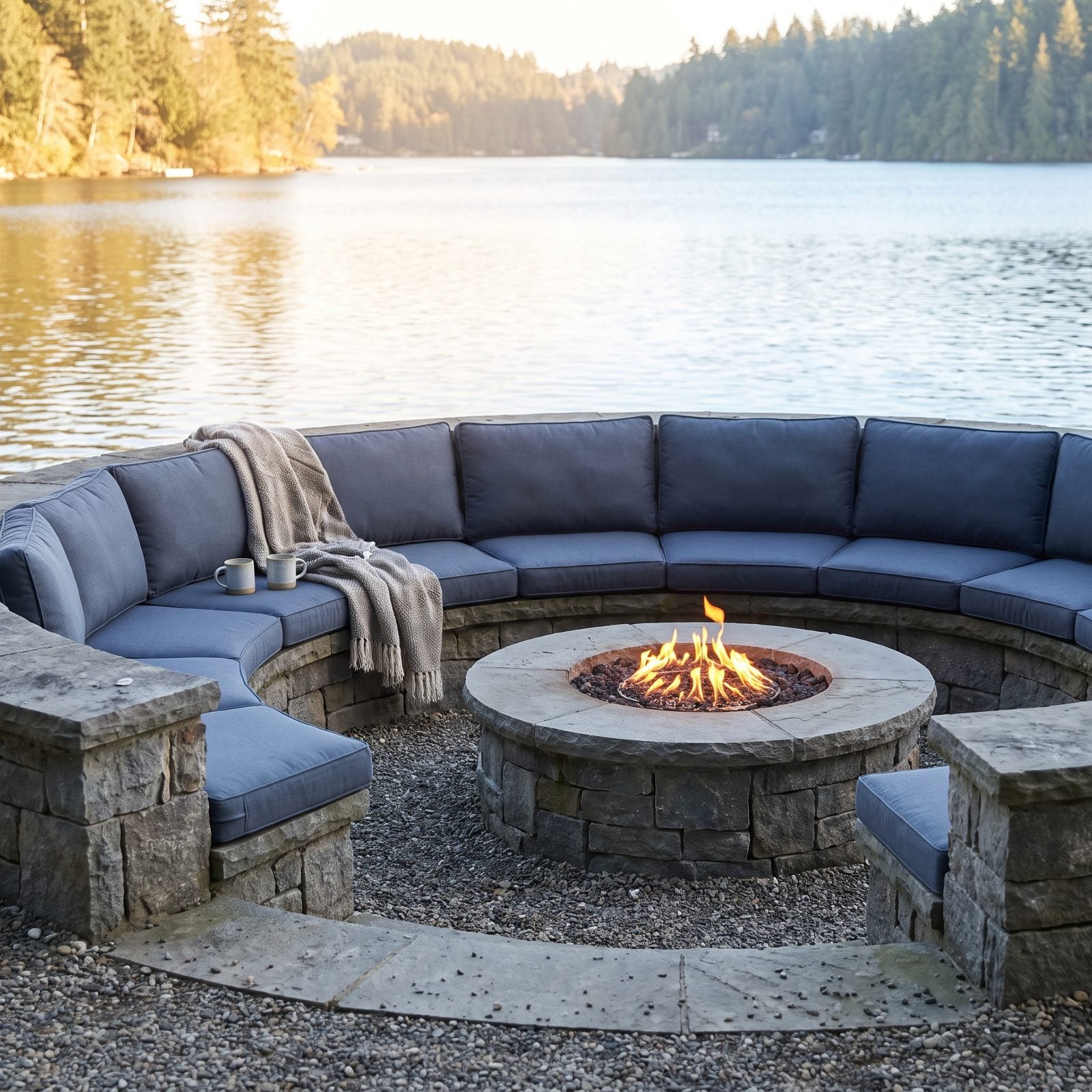
Summer at the lake doesn’t end when the sun goes down. It just moves to the fire.
A built-in fire pit ringed with permanent stone seating is the gathering spot that sells a house on the evening showing. No dragging plastic chairs across the yard, no wondering if there’s room for everyone. The bench is already there, curved toward the flames and the dark water behind them.
Gas over wood is the quiet upgrade buyers appreciate. No hauling logs, no smoke chasing you around the circle, no ember hopping onto the dry grass. Flip a switch and the night starts.
8. An Outdoor Shower Near the Dock
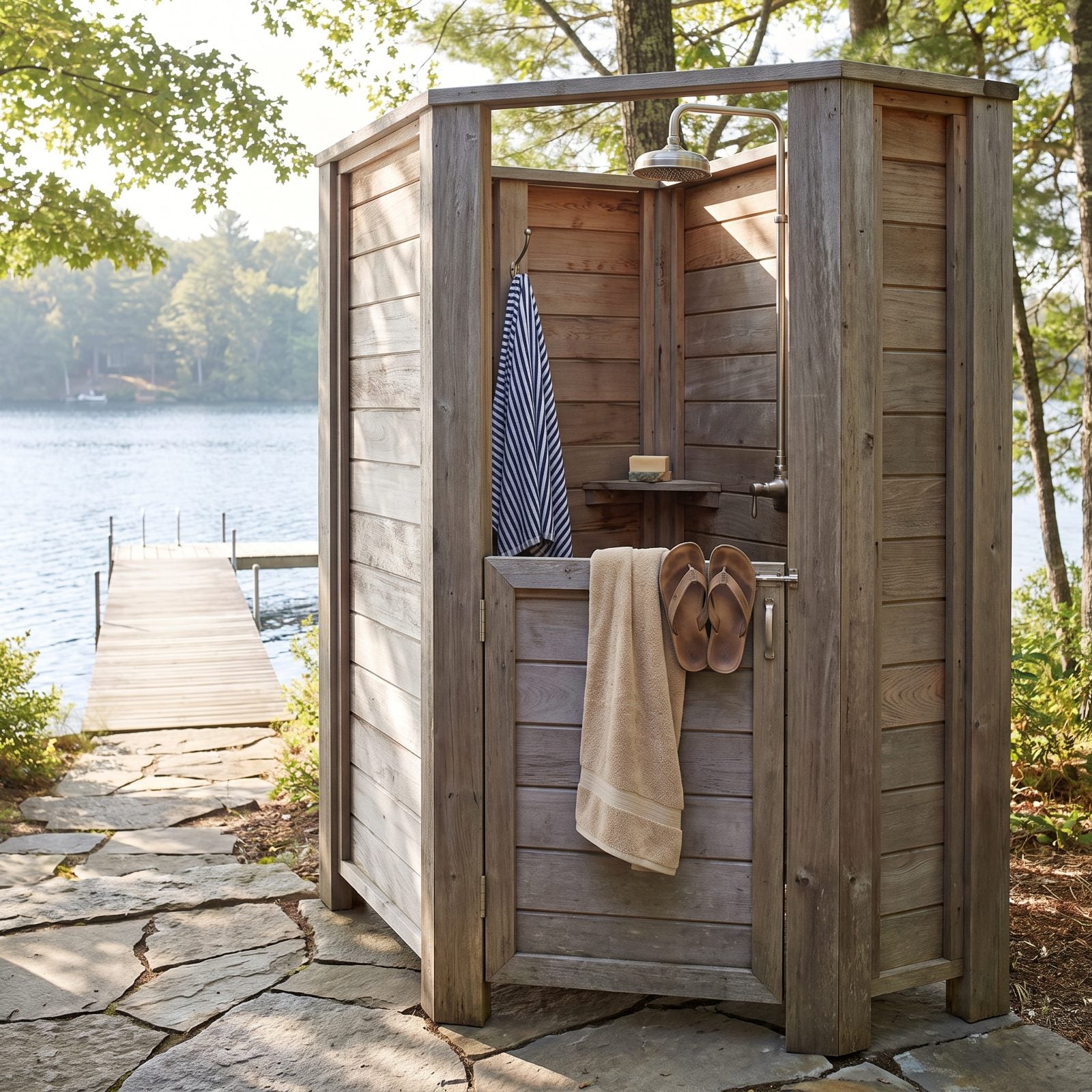
Every lake house owner knows the problem: you track sand and lake water everywhere. One rinse station near the dock keeps it out of the hardwood, off the rugs, and out of the arguments about who left the wet towels.
Buyers notice it because it reads as practical, not fancy. A cedar enclosure, a decent showerhead, a hook for the towel — that’s the whole thing. It costs a fraction of a bathroom remodel, and it solves a problem people don’t realize they have until they’ve mopped the entryway for the fifth time in July.
7. A Gradual Walk-In Swimming Area
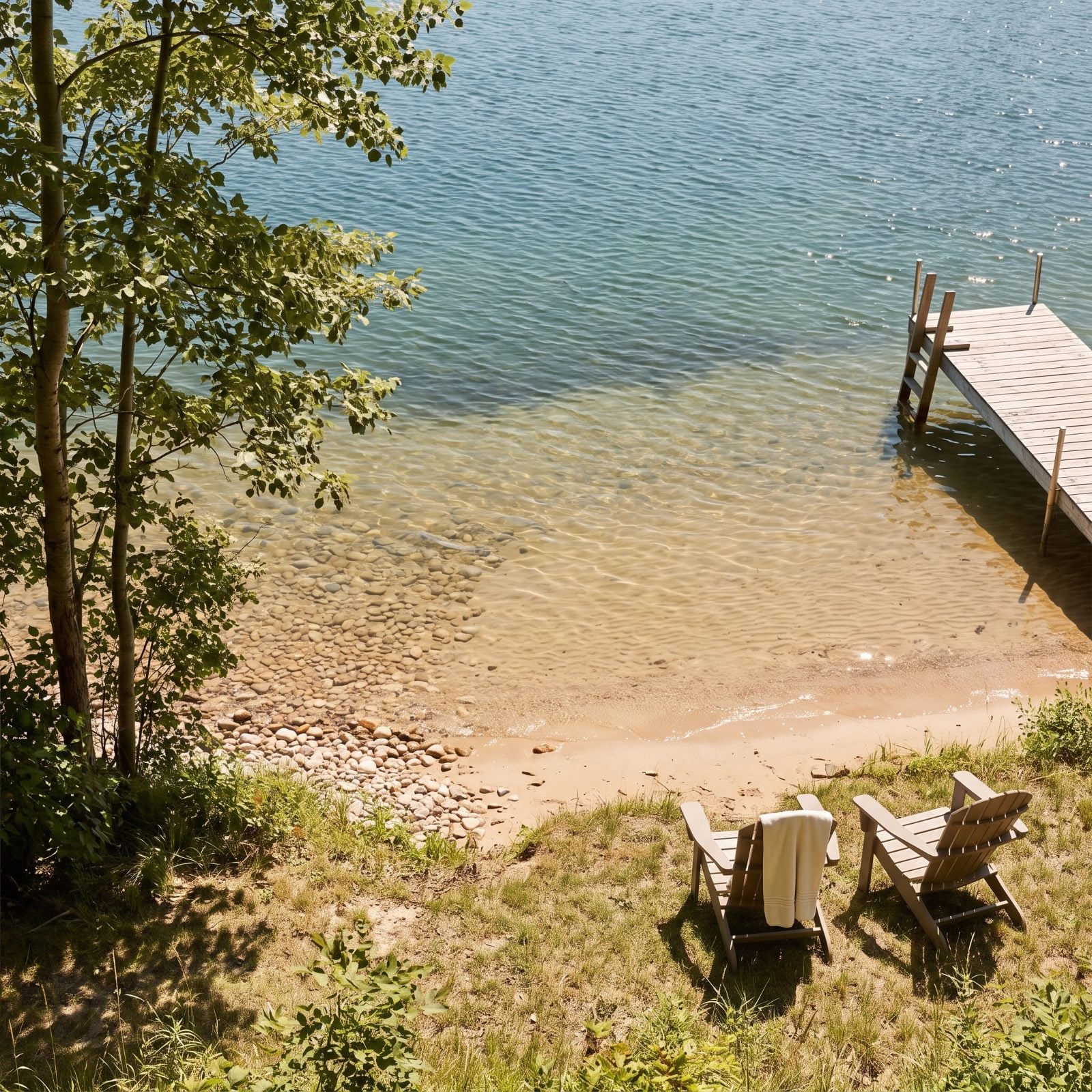
A drop-off shoreline terrifies parents of small kids and anyone who isn’t a strong swimmer. A gradual walk-in does the opposite — you wade in at ankle depth and the bottom falls away slowly, sand under your feet the whole time.
This is the feature grandparents ask about without quite naming it. They’re picturing the grandkids. A firm, sandy, slow-sloping entry turns a lake from something you look at into something three generations actually get into, and buyers in this age bracket feel that difference the moment they walk the shore.
6. A Dedicated Kayak and Paddleboard Launch
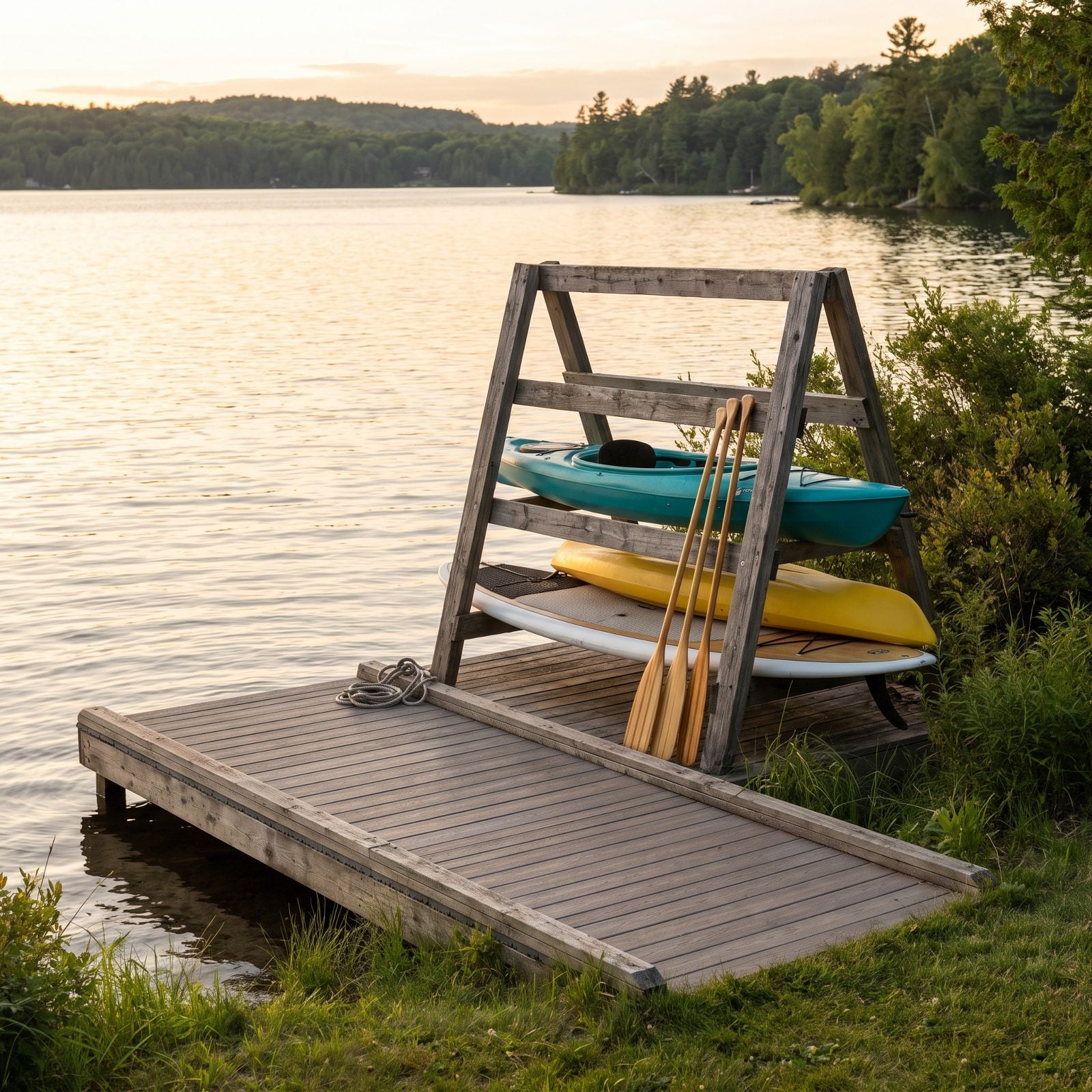
Launching a kayak off a tall dock is a small act of violence against your own back. You know the move. You lower yourself in, something twists, and you spend the whole paddle regretting it.
A proper low launch fixes that. A gentle ramp or a floating section at water level means you slide in and go. Throw in a rack to hold the boards off the ground and your storage problem disappears too.
Paddle sports have taken off with the over-50 crowd for a simple reason — the barrier to entry is low and the knees don’t complain. A home that makes getting on the water easy, rather than a daily wrestling match, keeps getting used. That’s what buyers are really paying for.
5. Low-Glare Dock Lighting
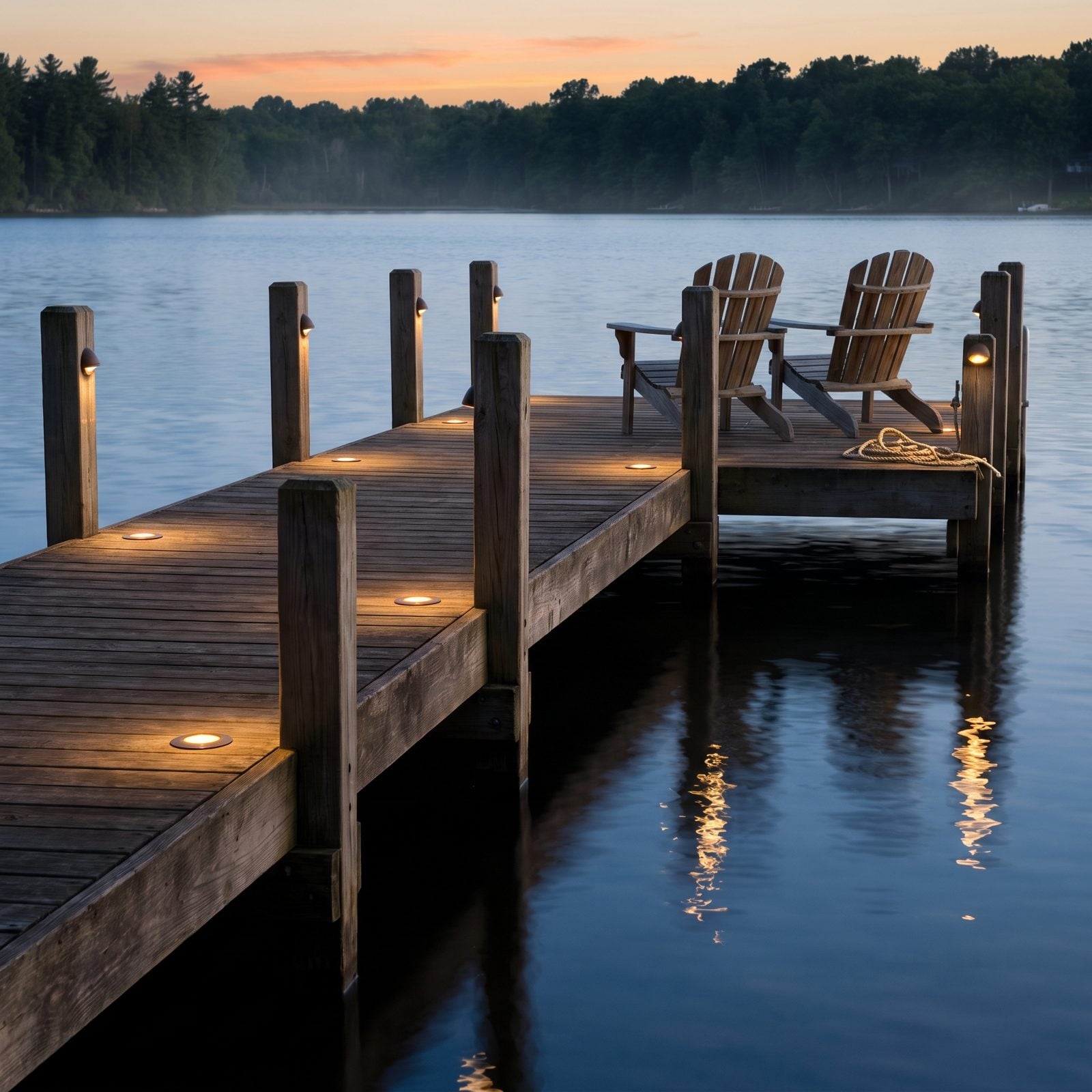
Bright white floodlights on a dock do two things: blind you and announce your bedtime to the whole lake. Low-glare lighting does neither.
Aim the light down at the boards, not out at your eyes or across the water. Recessed deck lights, shielded post caps, warm color temperature — you can see the steps and the cleats, the water stays dark, and the stars still show up.
We’ll admit we underrated this for years. Then we spent an evening somewhere that got it right and realized how much glare we’d been putting up with. Anyone who’s been on a lake a while recognizes good lighting the second they see it.
4. Dockside Power and Fresh Water
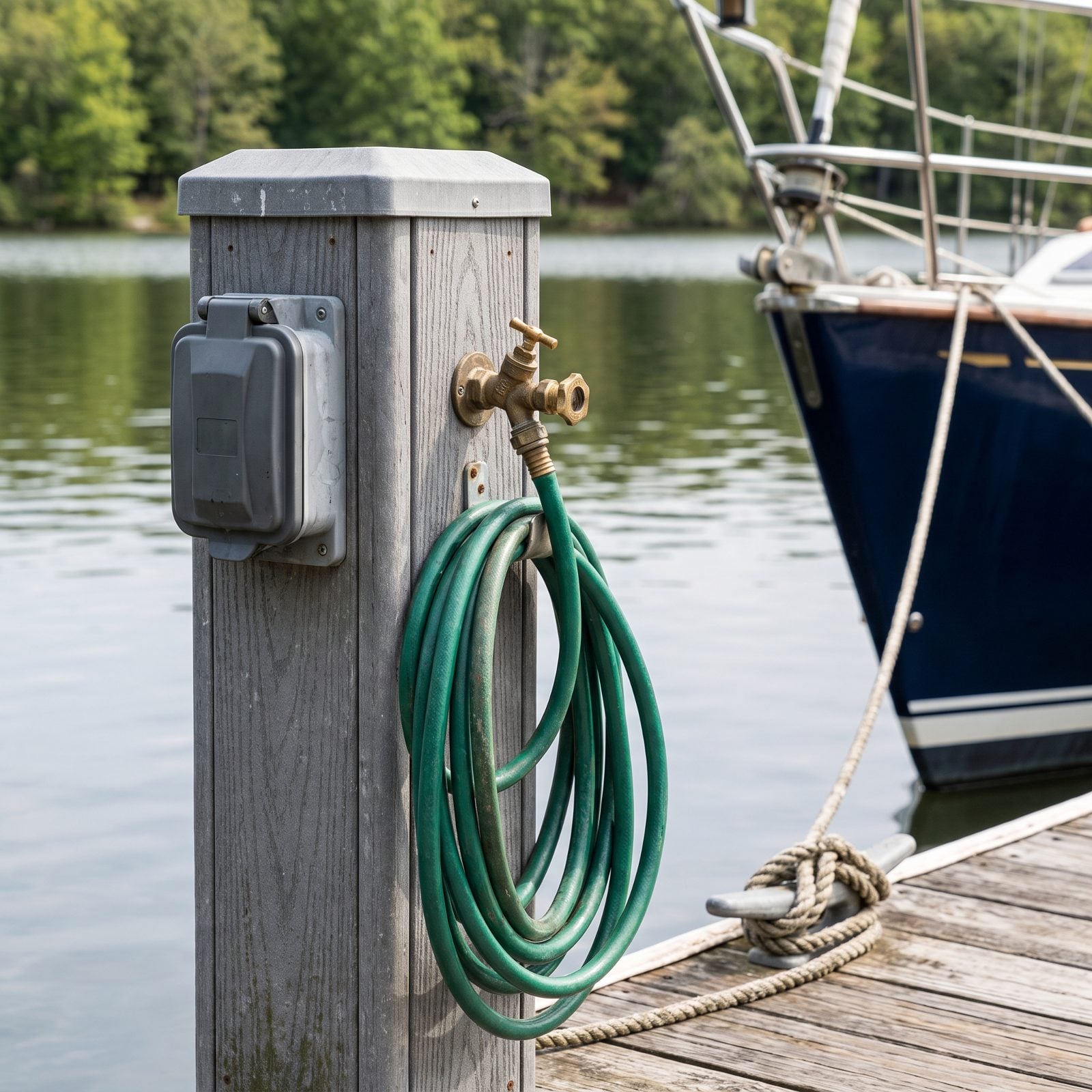
Nobody mentions this one until they don’t have it. A tap and an outlet at the dock change how you use the whole waterfront.
Fresh water means you rinse the boat where it floats instead of hauling buckets. Power means you charge a trolling motor, run a shop light, plug in a pressure washer. Small stuff, sure. But every one of them is a trip you no longer make back and forth to the house.
Running the lines out to the dock is far cheaper during a build or a dock rebuild than retrofitting later, so a home that already has it carries a quiet premium. It tells you the previous owners actually lived on the water, not just near it.
3. A Covered Boat Lift
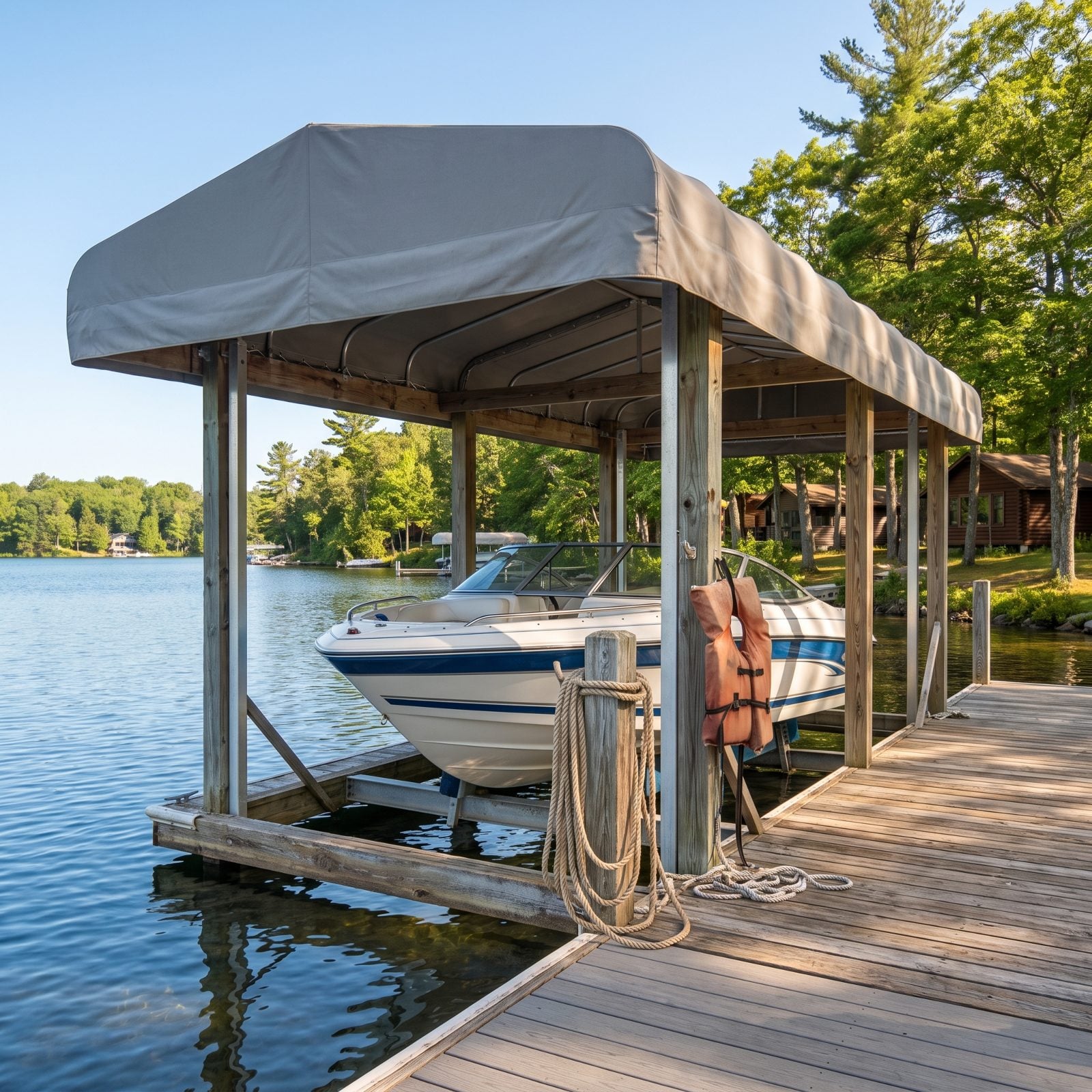
Water is patient and relentless. Leave a boat sitting in it and you’re paying for that patience — hull staining, blistering, a bottom that wants scrubbing every few weeks, and a motor that doesn’t love marinating.
A lift raises the hull out between uses, and the canopy keeps sun and bird mess off the upholstery. Together they stretch the life of the boat and cut the maintenance down to something a weekend owner can actually keep up with.
2. A Lakeside Sauna
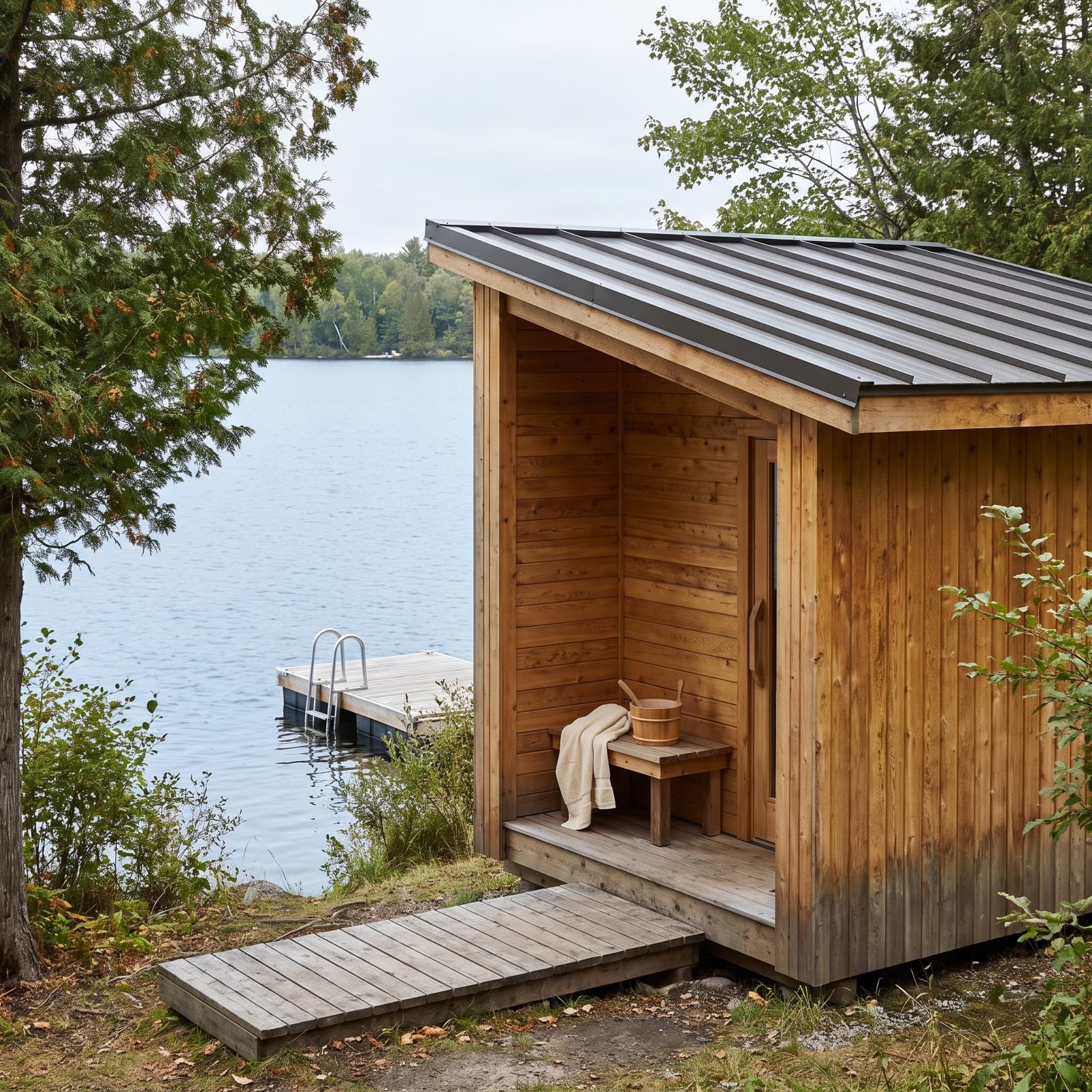
The sauna went from Nordic curiosity to must-have feature faster than almost anything else on the waterfront. On a lake it makes complete sense. Heat up, walk ten steps, plunge into cold water, repeat.
A compact cedar unit, barrel or box style, doesn’t need a mansion to justify it. It needs proximity to the water and a bench to sit on afterward. That’s the whole ritual, and it’s genuinely good for aching joints after a day of paddling or hauling docks around.
Buyers read it as a reason to use the lake in shoulder season — when the air is sharp and the water’s cold enough to make the whole plunge feel earned.
1. A Private Deep-Water Dock
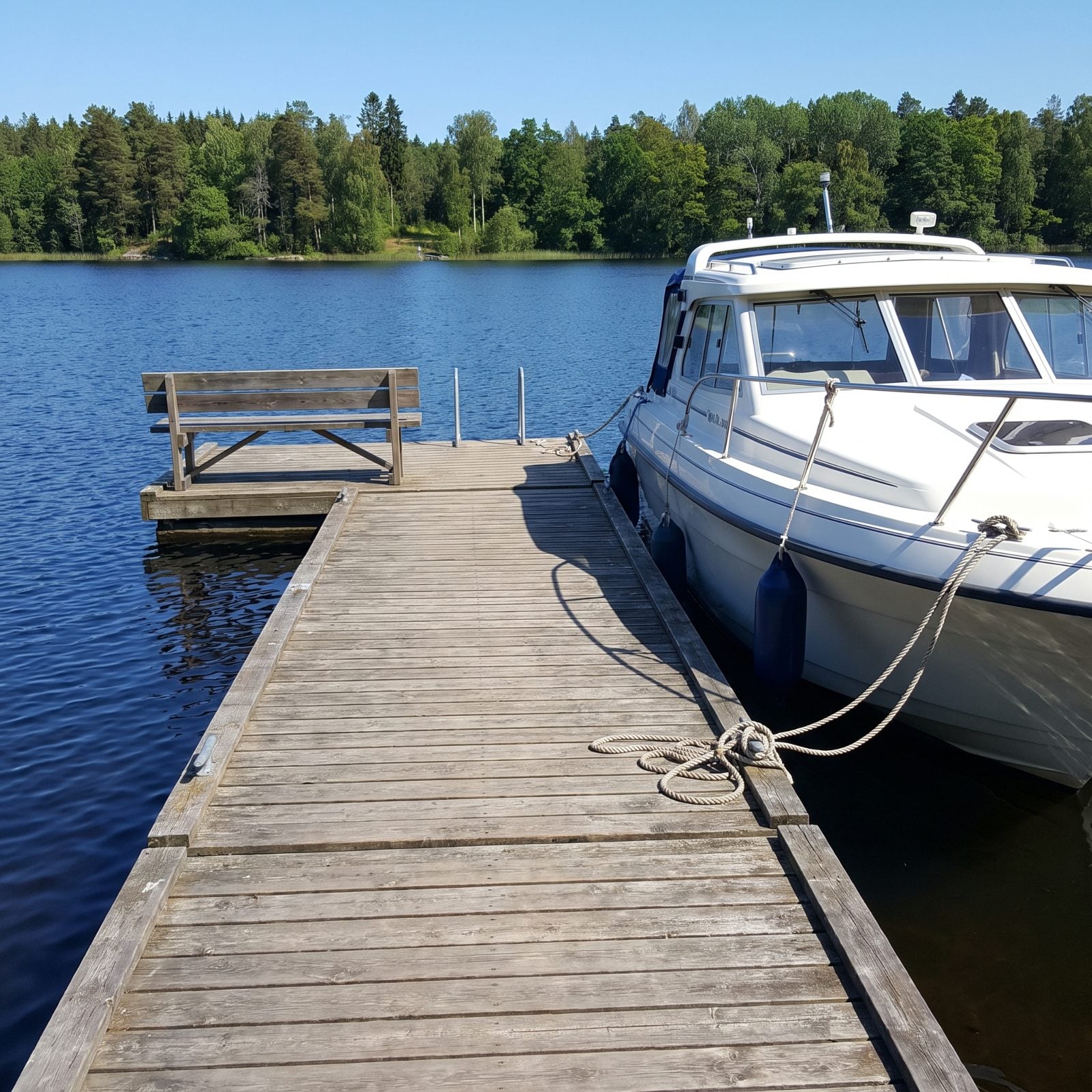
Depth is the one thing you can’t add later. Not easily, not cheaply, and usually not at all.
A shallow dock limits what you can own. You’re stuck with small craft, or dragging a prop through muck every launch, or you can’t moor at the house at all and you’re renting a slip somewhere down the shore. A deep-water dock knocks out every one of those ceilings in a single move.
That’s why it anchors so many waterfront listings. Buyers who want a real boat — the kind you sleep on or ski behind — ask about water depth before they ask about the kitchen. A dock with enough draft is worth more than square footage, and everybody who’s shopped a lake knows it.