
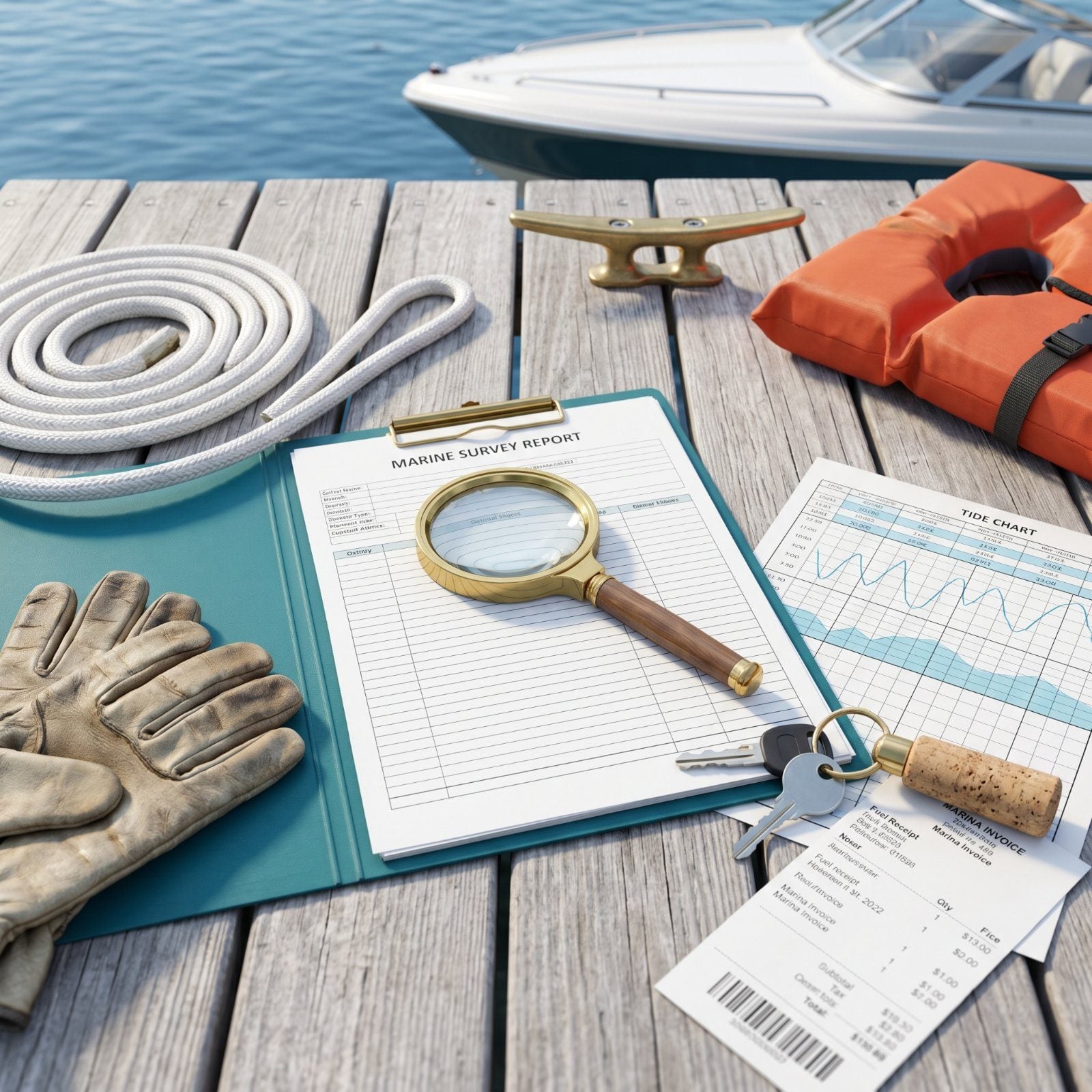
The sticker price is the cheapest honest number you’ll see all year. Everything after it arrives quietly, on invoices you never expected, for things you didn’t know a boat needed. Most first-year owners don’t overspend because they were reckless — they overspend because nobody walked them through the parts that hide behind the shiny gelcoat and the test ride. The fixes below cost nothing but attention. Read them before you sign.
Please note that some of the imagery in this article may have been enhanced with the assistance of AI.
49. Budgeting for the Payment but Not the Full Cost of Ownership
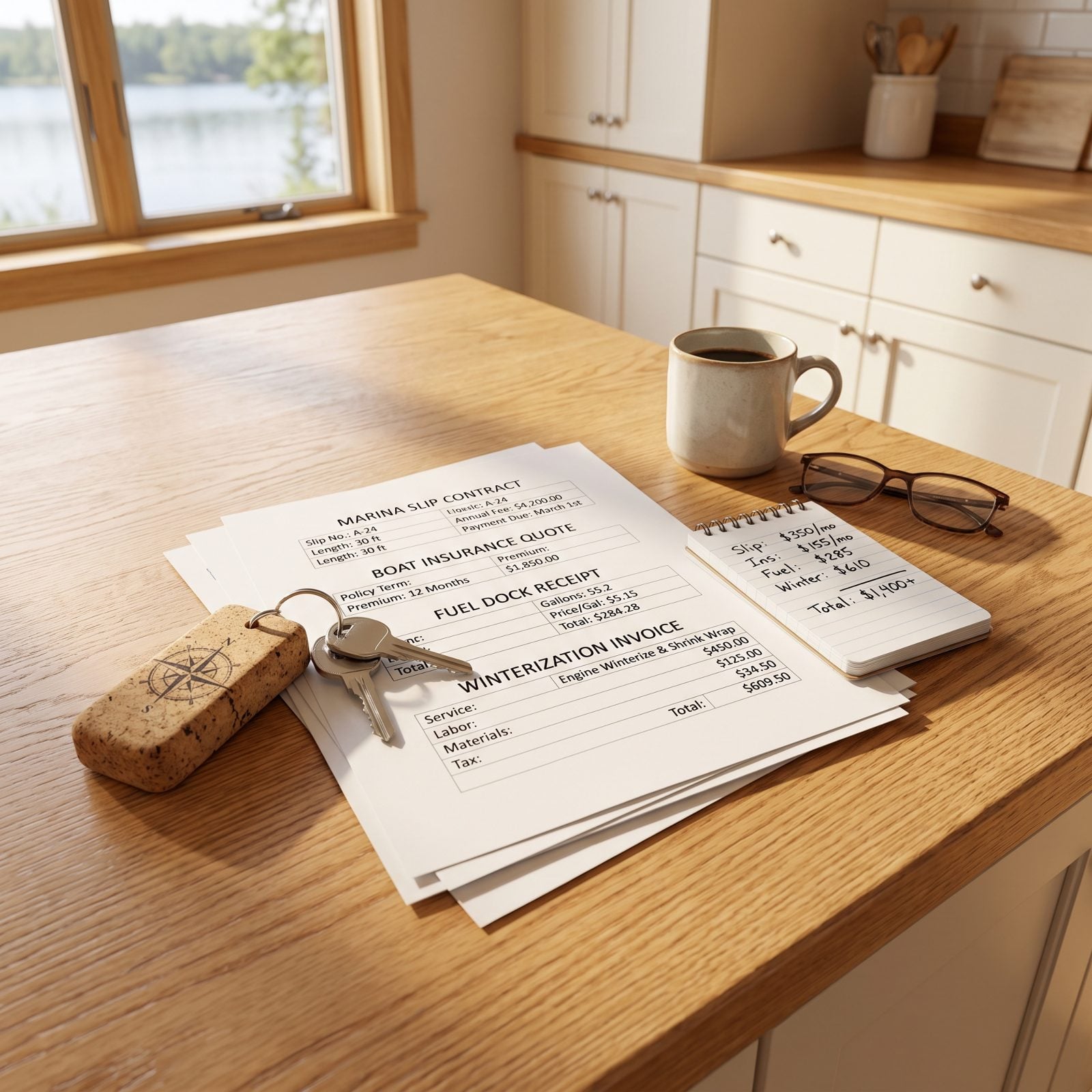
You sign for the boat the way you’d sign for a car. Monthly payment, done, see you on the water. Then the slip fee shows up, and the first fuel fill, and then insurance, registration, a battery, bottom paint, and the bill to haul it out before winter.
The payment is often the smallest line on the list. Insurance, moorage, fuel, winterizing, and routine service can run thousands a year before anything breaks. We’ve watched people fall in love with a boat they could buy and couldn’t afford to keep.
Build a real first-year budget before you shop. Add up moorage, insurance, fuel for how you’ll actually use it, and a service cushion. If the total makes you wince, size down. The water doesn’t care how big the boat is.
48. Buying More Boat Than You Can Comfortably Maintain
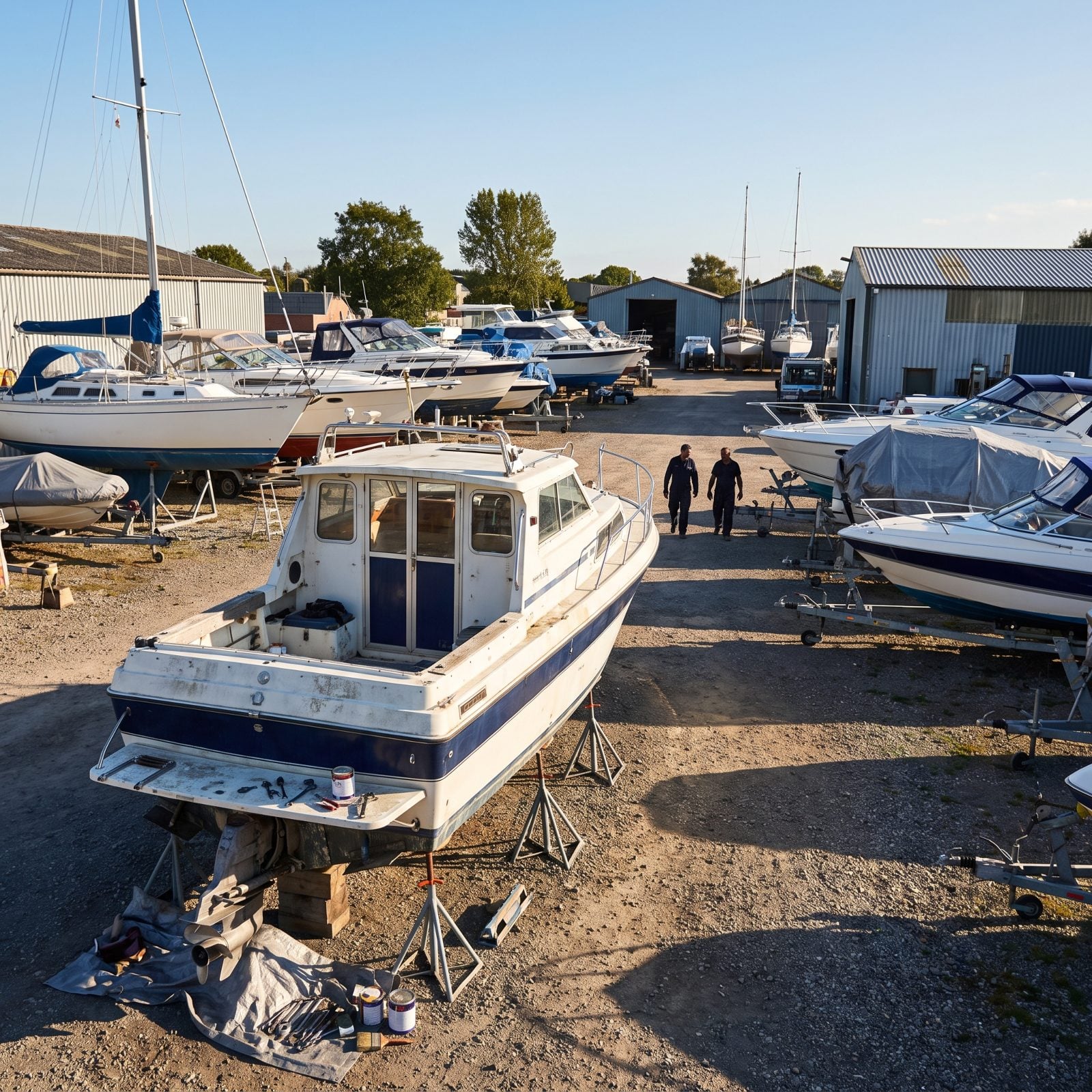
Twin engines, a cabin, a generator, air conditioning, a bigger fuel tank. It all sounds like more fun until the maintenance catches up, and every system on a boat is one more thing that eventually needs money and a mechanic.
A bigger hull costs more to haul, more to store, more to paint, and more to repair. Two engines means two of everything — great right up until you’re paying for two impellers and two sets of plugs.
Be honest about what you’ll keep up with. A simple outboard runabout you can service yourself beats a complicated cruiser you have to pay someone to touch every time something hiccups.
47. Choosing the Wrong Boat for Your Actual Waters

A deep-V offshore hull is wasted on a skinny inland lake, and a flat-bottom jon boat is terrifying in open chop. People buy the boat they saw in a magazine, then find out their home water needs something completely different.
Wrong hull for your conditions means a boat you don’t enjoy, can’t launch where you want, or won’t take out when it’s rough. That’s a boat that sits, and a boat that sits still costs you every month.
Start with the water. Shallow and calm, big and open, rivers with current, saltwater. Match the hull and draft to that first, then worry about color and cupholders.
46. Choosing the Cheapest Listing Instead of the Best-Kept Boat
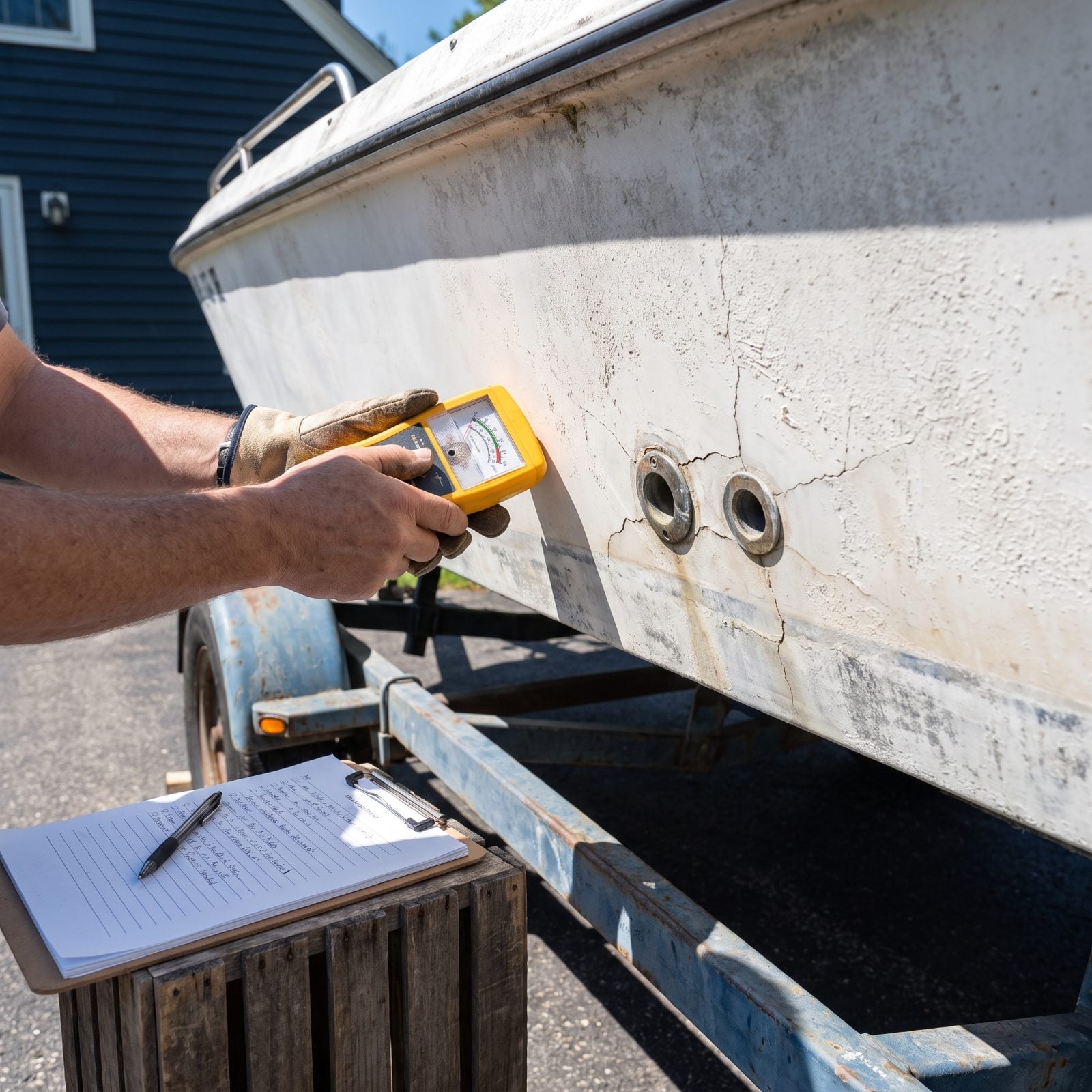
The cheapest boat in the listings is almost never the best deal. It’s usually the one that was run hard, stored outside, and sold the moment something expensive loomed. Price is a signal, and a rock-bottom price is often a warning.
A well-kept boat that costs more up front saves you in year one. The bargain hull can need an impeller, a battery, bellows, fuel-system work, and upholstery before it’s reliable, and those bills add up fast past the asking price.
Pay a marine surveyor to look at anything over a few thousand dollars. A few hundred for an inspection is the best money you’ll spend — especially the time it talks you out of a boat.
45. Falling for a Fresh Detail That Hides Neglect
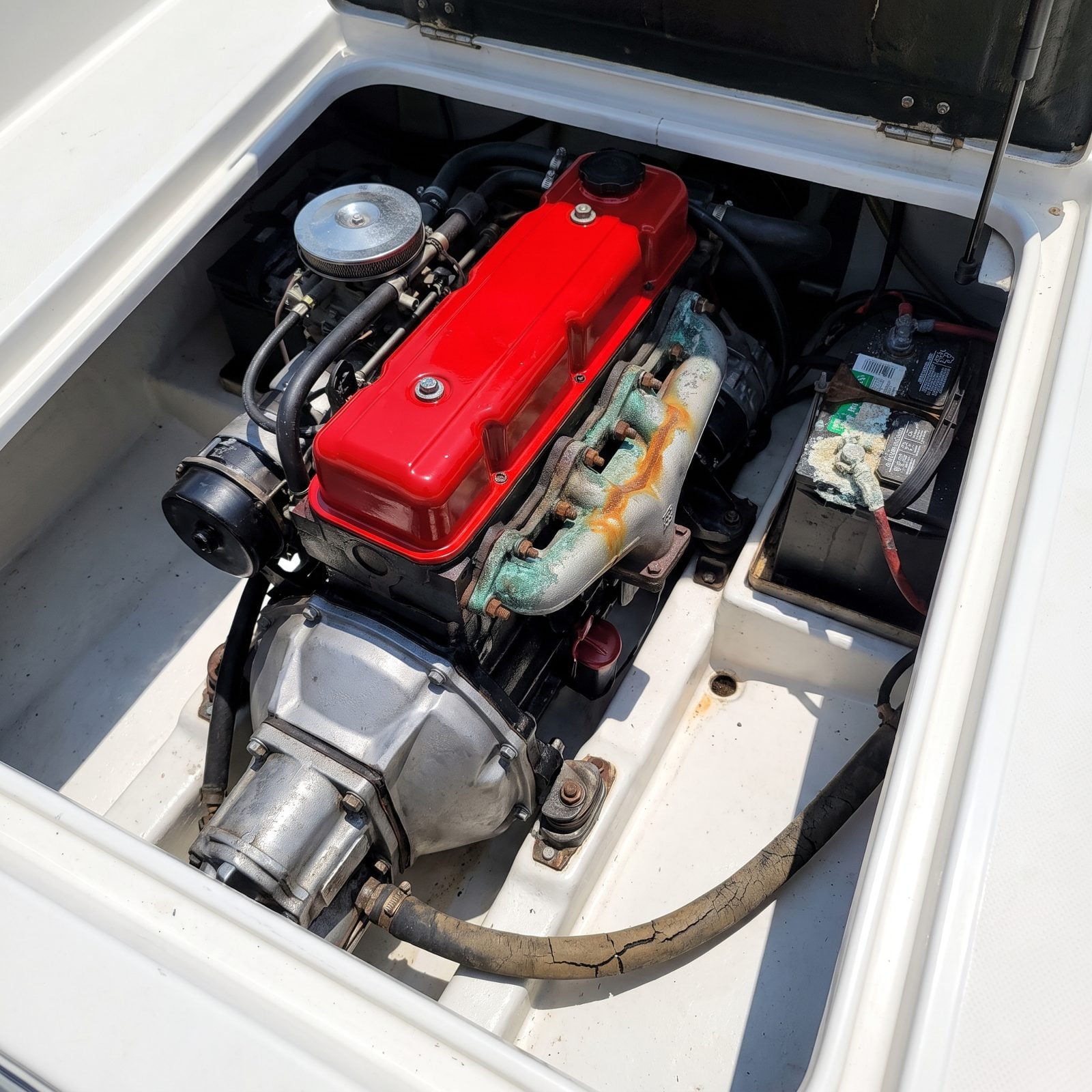
A gleaming engine and a buffed hull feel like proof of care. Sometimes they are. Sometimes they’re a coat of spray paint and an afternoon of polish applied the week the boat went up for sale.
A shiny valve cover means nothing if the manifold bolts are corroded and the bellows are cracked. Cosmetic prep sells boats and hides the stuff that actually drains your wallet.
Look past the shine. Check the bilge for oil, the hoses for cracks, the wiring for green corrosion, and the service history for gaps. A seller who details the engine but can’t produce receipts is telling you something. Listen.
44. Buying New Without Comparing Late-Model Used Boats
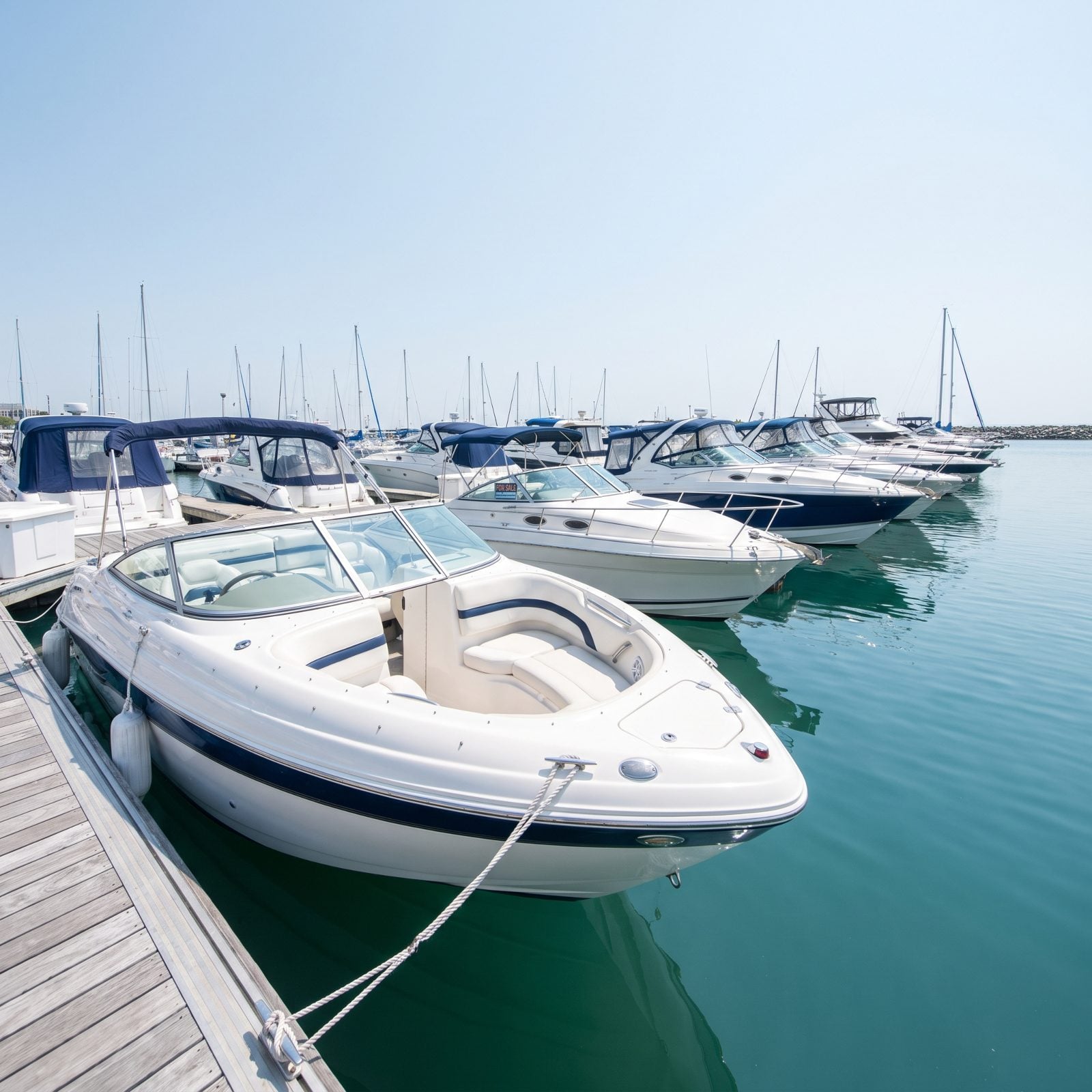
New boats lose a big chunk of value the moment they leave the dealer, same as cars. That first owner ate the steepest drop, and you can let them.
A two or three year old boat with low hours often costs far less than new while giving you most of the same boat. The break-in headaches are behind it, and the previous owner already added the cover, the electronics, and the trailer you’d otherwise pay extra for.
Shop both before you commit. Price the new boat you want, then find the same model a couple years used. If the gap is thousands, let someone else’s depreciation work for you.
43. Paying Extra for Features You Will Never Use
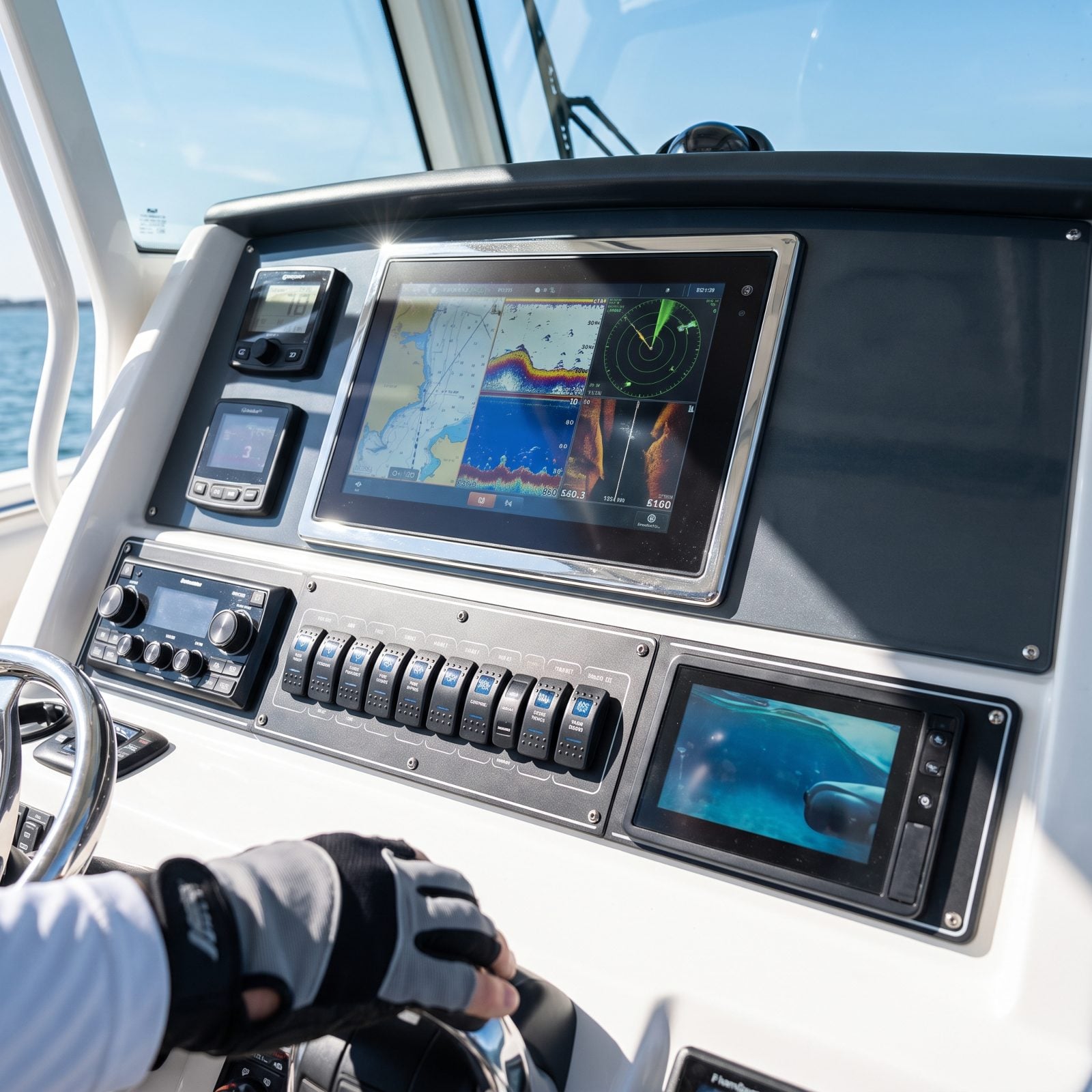
The upgraded package is where dealers make their margin. Premium sound, a giant chartplotter, underwater lighting, a wakeboard tower you’ll use twice — each one feels small on the order sheet.
Added together, they inflate the price, the insurance, and the amount you finance. Worse, electronics age out and break, so you’re paying a premium now to repair it later.
Buy for how you actually boat. A fishing family needs a decent fishfinder, not a tower. A sunset-cruise couple doesn’t need tournament sonar. Skip the features that match someone else’s weekend, not yours.
42. Ignoring Dealer Freight and Preparation Charges
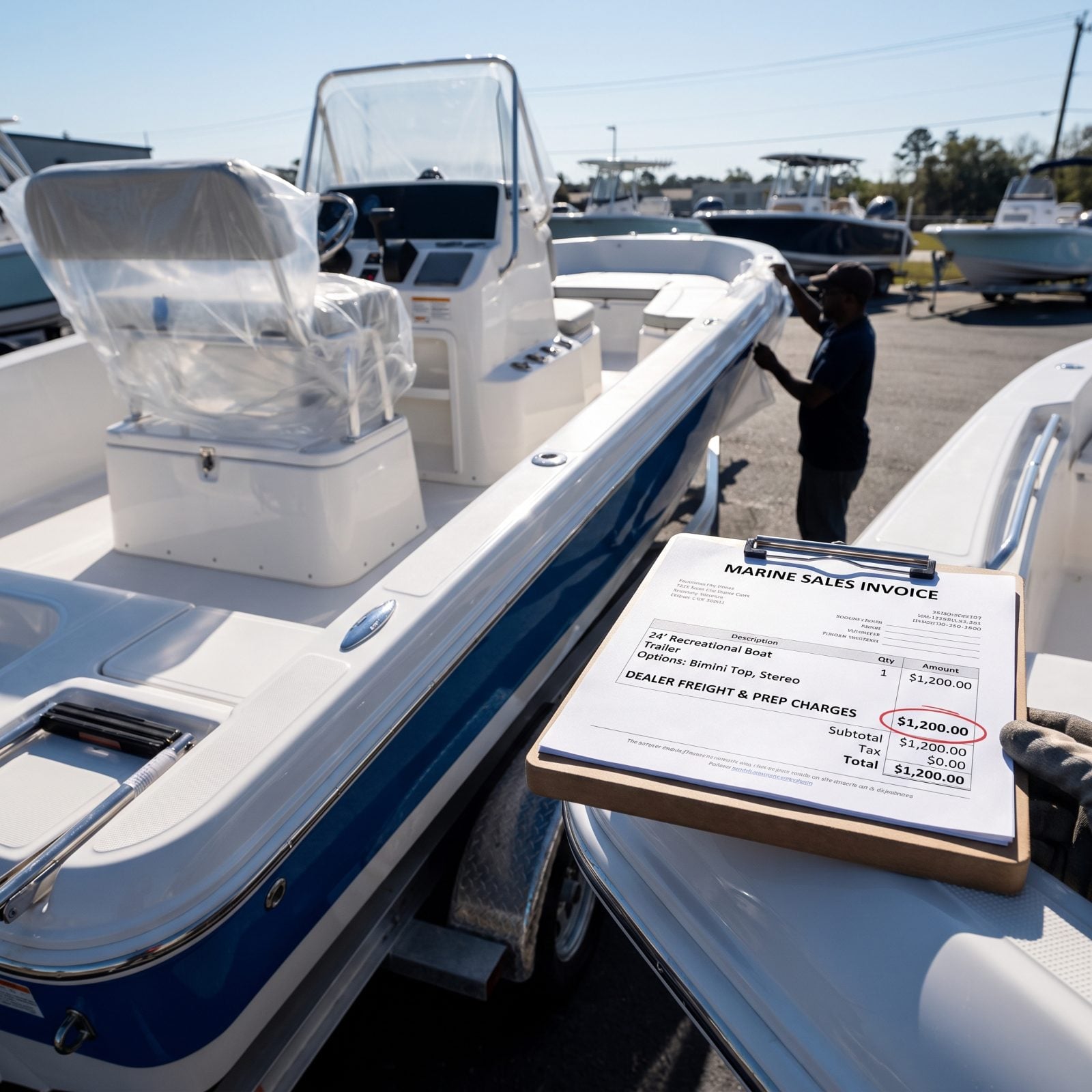
The advertised price gets you excited. Then the paperwork adds freight, prep, and dealer fees, and a single freight-and-prep line circled at $1,200 lands on the invoice before you’ve even talked tax.
Freight is the cost to ship the boat to the dealer. Prep is uncrating it, rigging it, and getting it water-ready. Both are real, both negotiable, and sometimes padded.
Ask for an out-the-door price in writing before you fall in love. Line by line. Question anything vague. A reputable dealer will walk you through every charge. One that won’t is showing you how year one will go.
41. Overlooking Sales Tax and Registration Fees
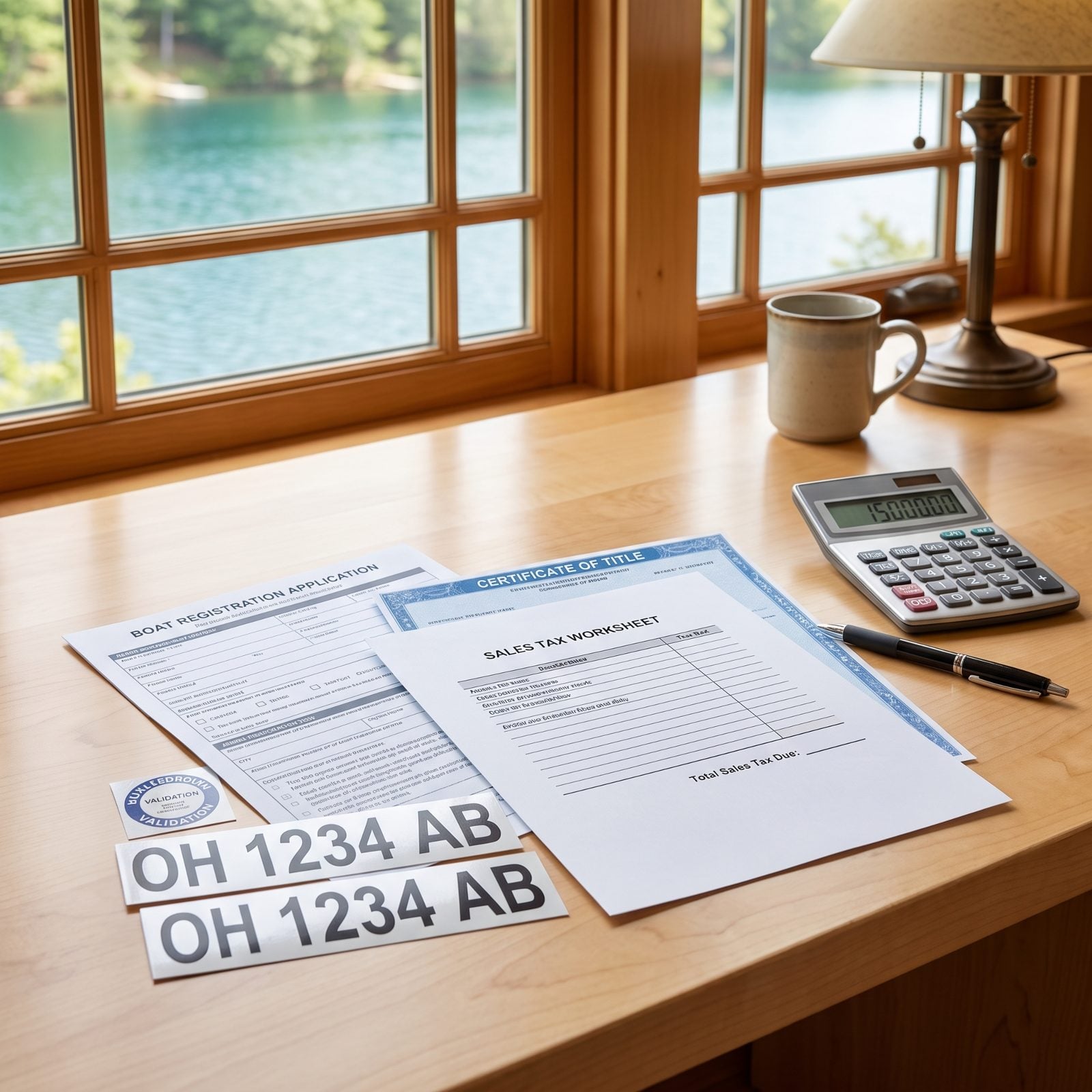
Sales tax on a boat is not small. On a bigger purchase it can run into real money, and it’s due whether you budgeted for it or not. Registration, titling, and the trailer tags pile on behind it.
First-timers lock in a price, feel good, then get blindsided at the counter. A boat that fit the budget suddenly doesn’t once the state takes its cut.
Look up your state’s marine sales tax and registration costs before you negotiate. Add them to your real purchase number. Some states tax trailers separately, so check that too.
40. Financing the Boat for Too Many Years
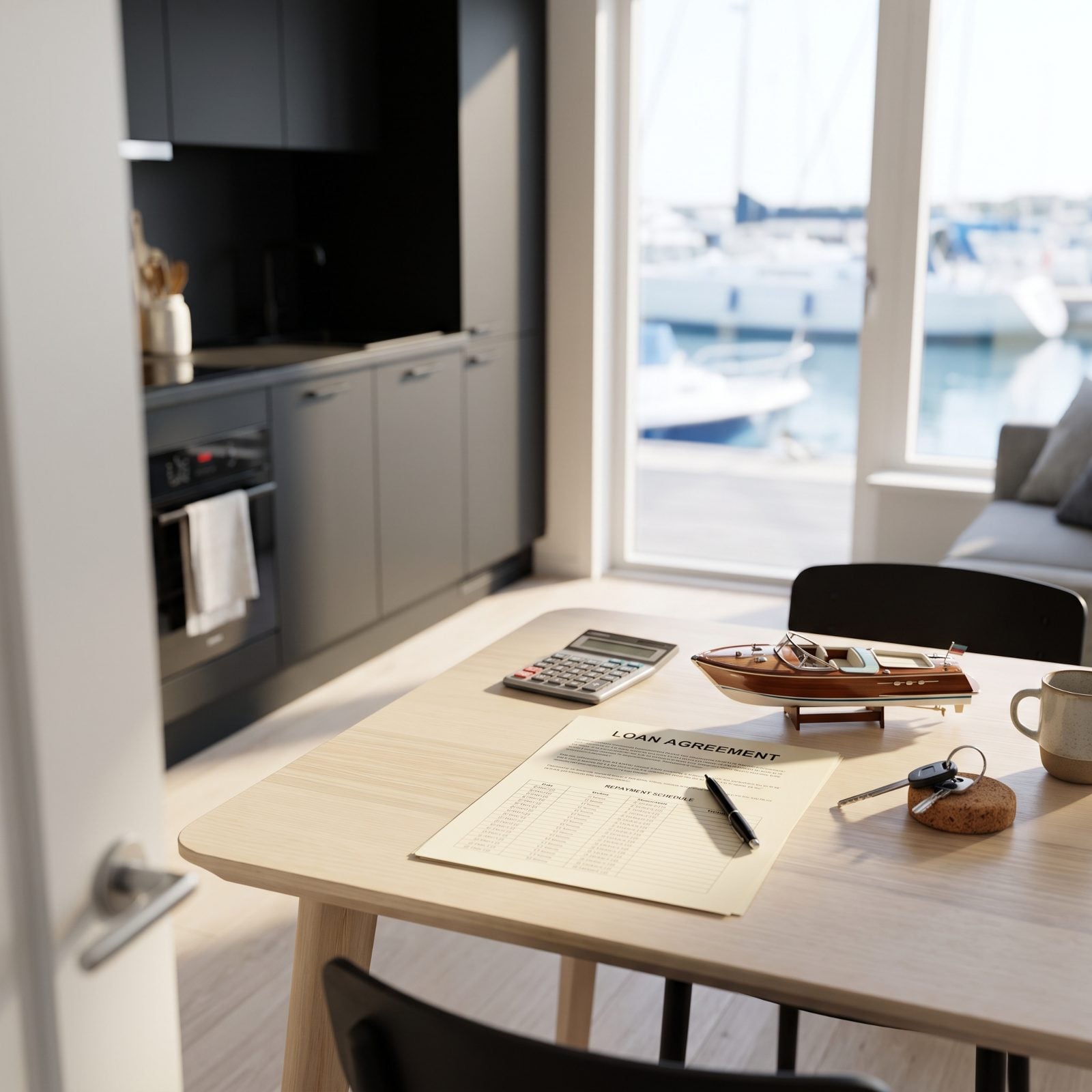
Stretch a boat loan to fifteen or twenty years and the monthly payment shrinks to something comfortable. That comfort is the trap.
Boats depreciate while the balance barely moves in the early years. Go to sell in year three and you can owe more than the boat is worth — underwater on something that floats. The interest you pay over two decades can rival a chunk of the purchase price.
Keep the term short enough that you’re building equity, not just renting the boat from the bank. If the only way you can afford it is a twenty-year note, that’s the boat telling you to buy a smaller one. Listen, and enjoy actually owning the thing.
39. Accepting the First Marine Loan Offer
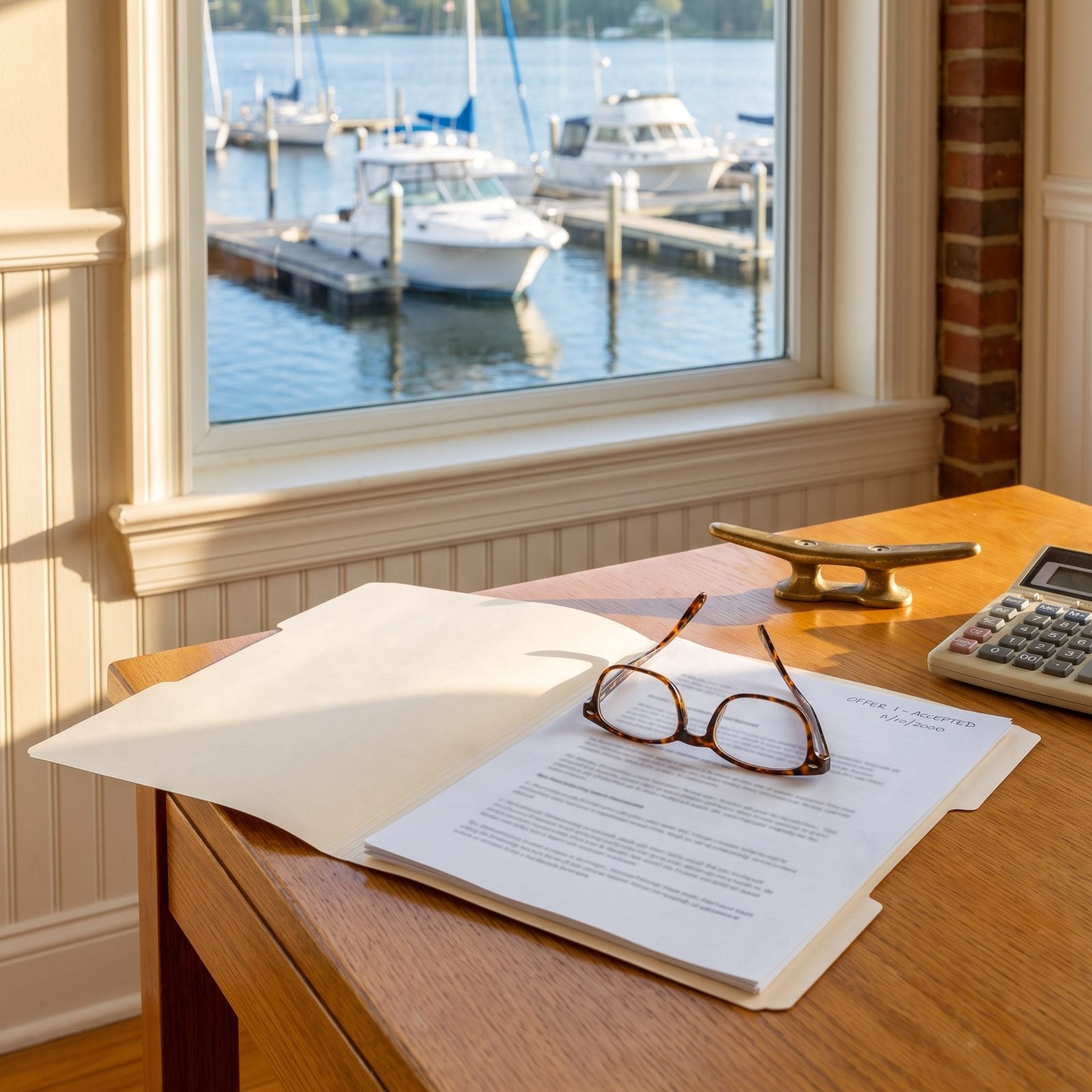
The dealer slides a financing sheet across the counter while you’re already picturing the first sunset cruise, and you sign. That rate is almost never the best one out there. Marine loans run longer than car loans and the interest piles up, so a point or two you never bothered to shop for turns into thousands over the term.
Get a quote from a credit union and a dedicated marine lender before you ever walk in. Bring the better number with you. Dealers suddenly find room to move once they know you’ve done your homework, and one afternoon of phone calls pays for a whole season of fuel.
38. Skipping a Marine Survey to Save Money
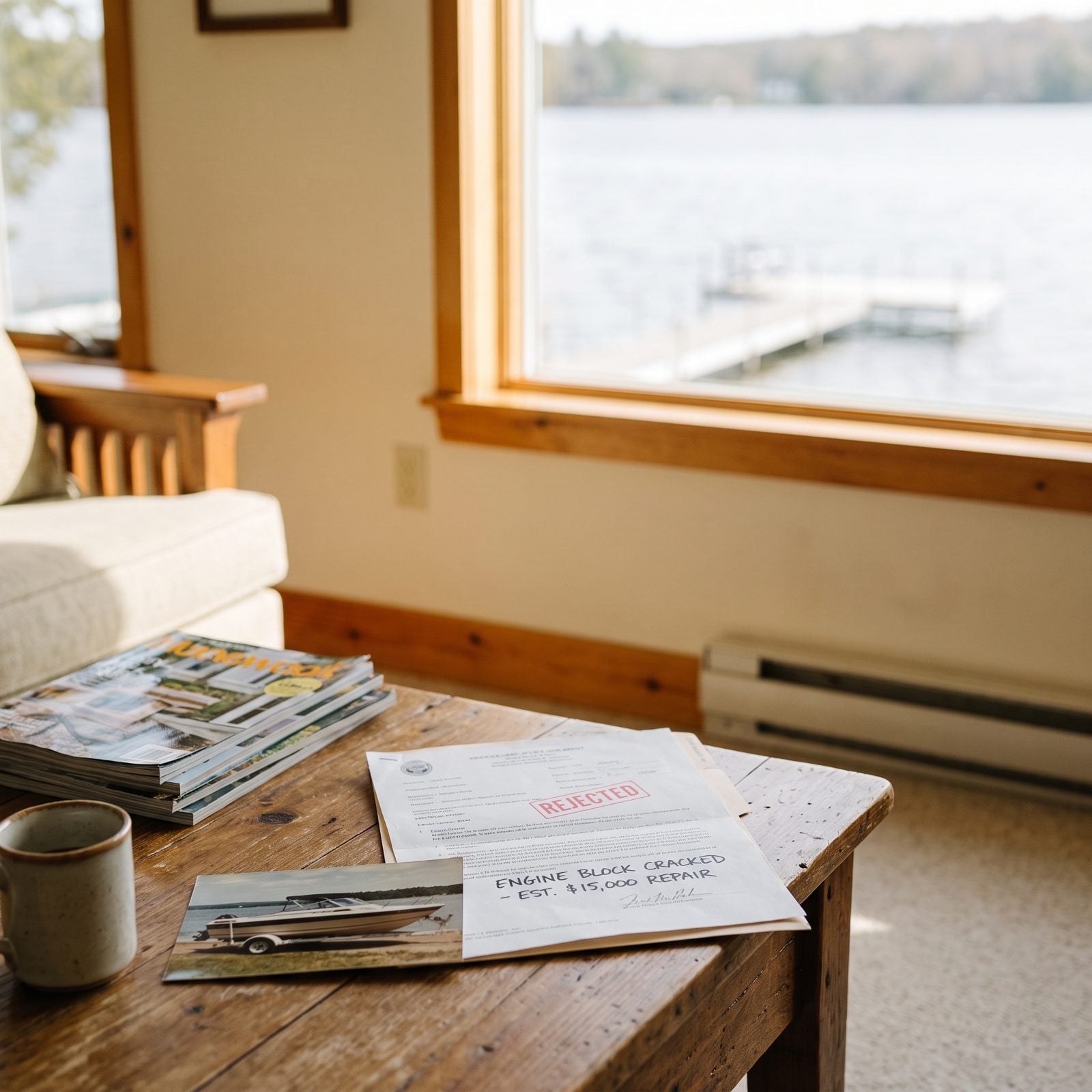
A survey costs a few hundred bucks. Skipping it to pocket that few hundred is exactly how people end up with a hull that needs ten grand of work nobody saw coming.
A good surveyor taps the hull, reads moisture, checks the stringers, the through-hulls, the wiring — all the stuff most buyers would never think to look at. They hand you a report you can take to the bank and to the seller. Pay for one on any used boat you’re serious about. It’s the cheapest insurance you’ll ever buy, and buyers almost never regret it.
37. Skipping a Separate Engine Inspection
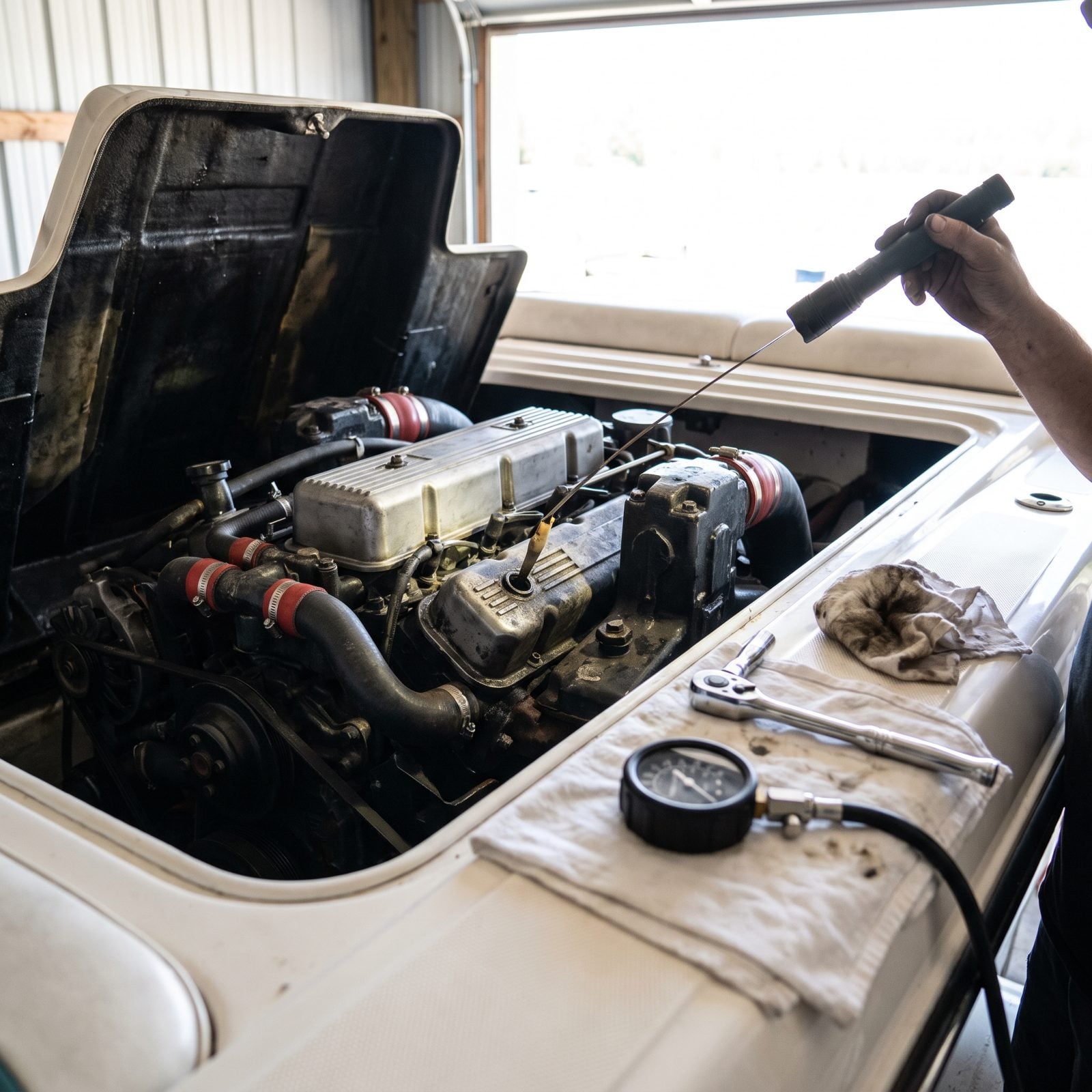
A hull survey and an engine inspection are two different jobs. Plenty of first-time buyers assume the surveyor covers it all. Most don’t go deep on the motor, and the motor is where the big money lives.
An engine that looks fine on the surface can be hiding worn impellers, low compression, or corrosion that’ll cost you a rebuild by August. Bring in a marine mechanic to run a compression test and pull the drives. On a sterndrive or inboard? Non-negotiable. The engine is half the value of the boat, so treat it that way.
36. Buying Without a Proper Sea Trial

Buying a boat you’ve only seen tied to a dock is like buying a car you’ve never started. It might look flawless sitting still and then shake itself apart at cruising speed.
A sea trial tells you how the engine runs under load, whether the steering wanders, if the bilge pump cycles, how she sits at full throttle. Push it to the top of the RPM range, listen for knocks, watch the gauges, feel for vibration. And any seller who won’t let you run the boat on the water is telling you something, trust me — it isn’t good.
35. Ignoring Cold-Start Engine Behavior
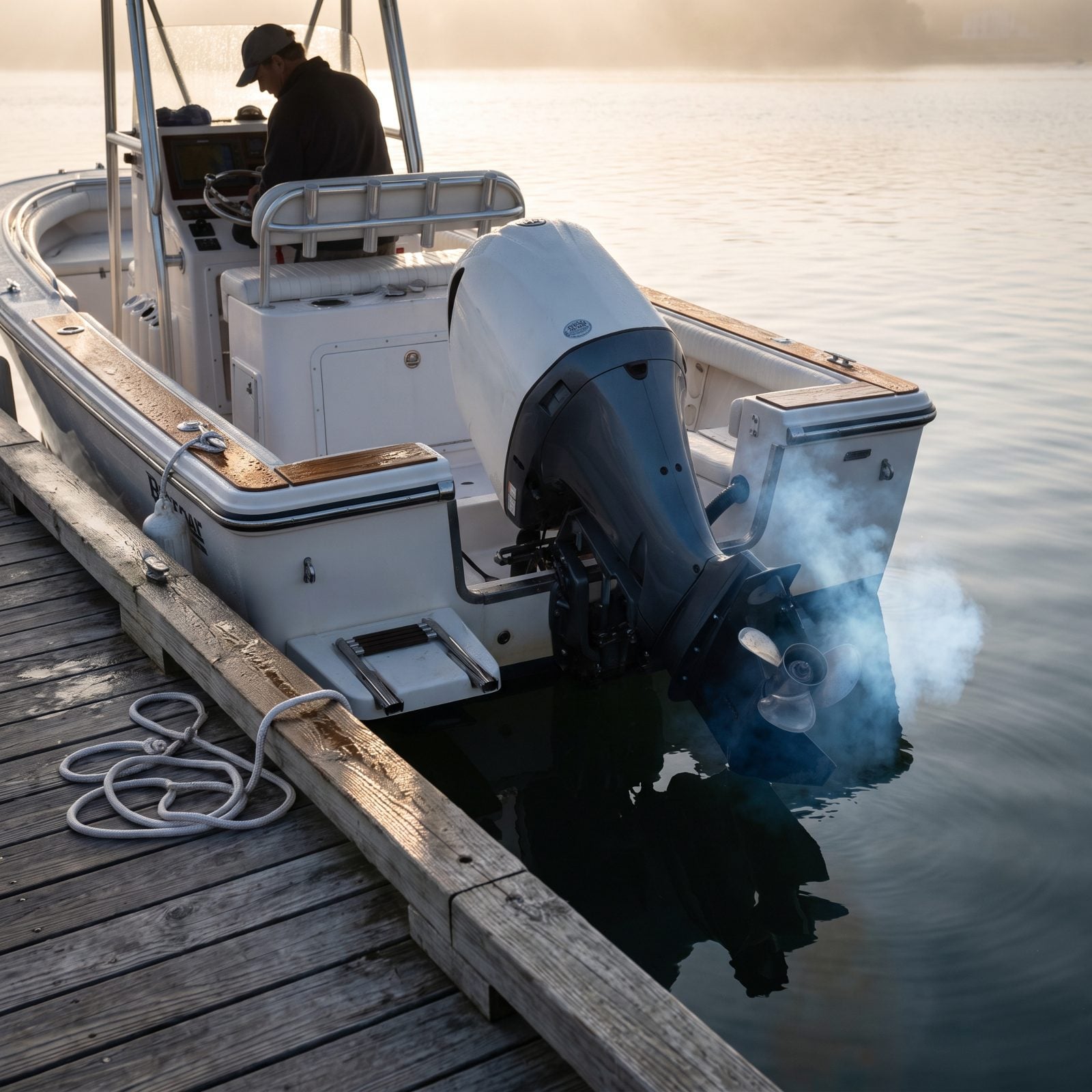
Sellers love to warm the engine up before you arrive. A motor that’s already hot starts easy and hides its worst habits.
So insist on a cold start. Show up early, or ask them not to run it before you get there. Watch how long it cranks, listen for a rough idle, look at the exhaust. Blue smoke means oil burning. White smoke that won’t clear means coolant. A hard cold start points to weak compression or ignition trouble, and those are repair bills, not quirks. Plenty of buyers get burned on a cold start they never thought to ask for. Don’t be one of them.
34. Failing to Pull Engine Diagnostic Records
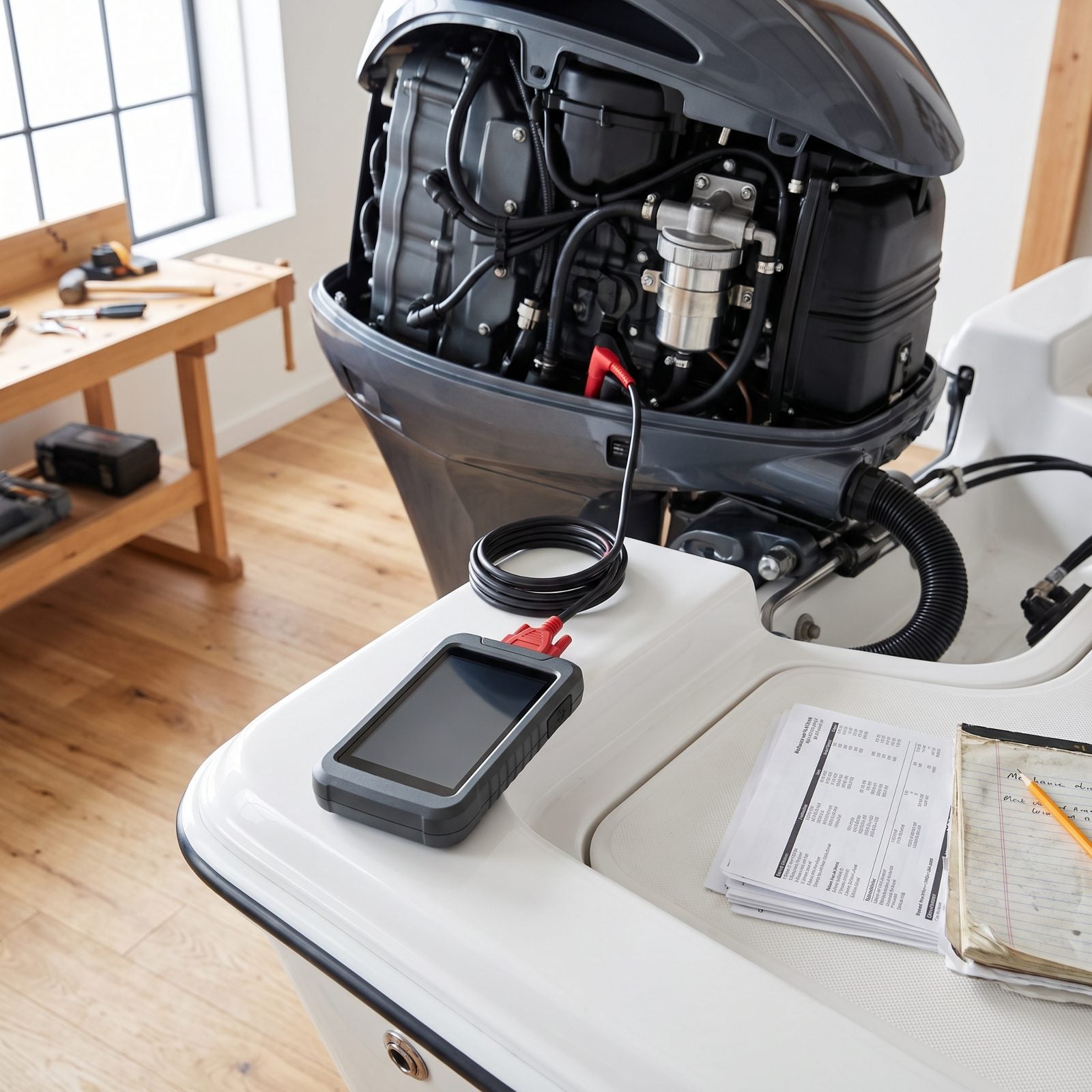
Modern outboards and sterndrives keep a log. That little engine computer knows things the seller might conveniently forget to mention — how many times it got over-revved, whether it ran hot.
A dealer with the right scan tool can pull fault codes, true engine hours, and operating history in about ten minutes. That readout beats anyone’s word. If the stated hours don’t match the computer, or there’s a string of overheat events buried in the log, you’ve just dodged a problem engine. Ask for the scan. If they refuse, walk.
33. Buying a Boat With Missing Maintenance Records
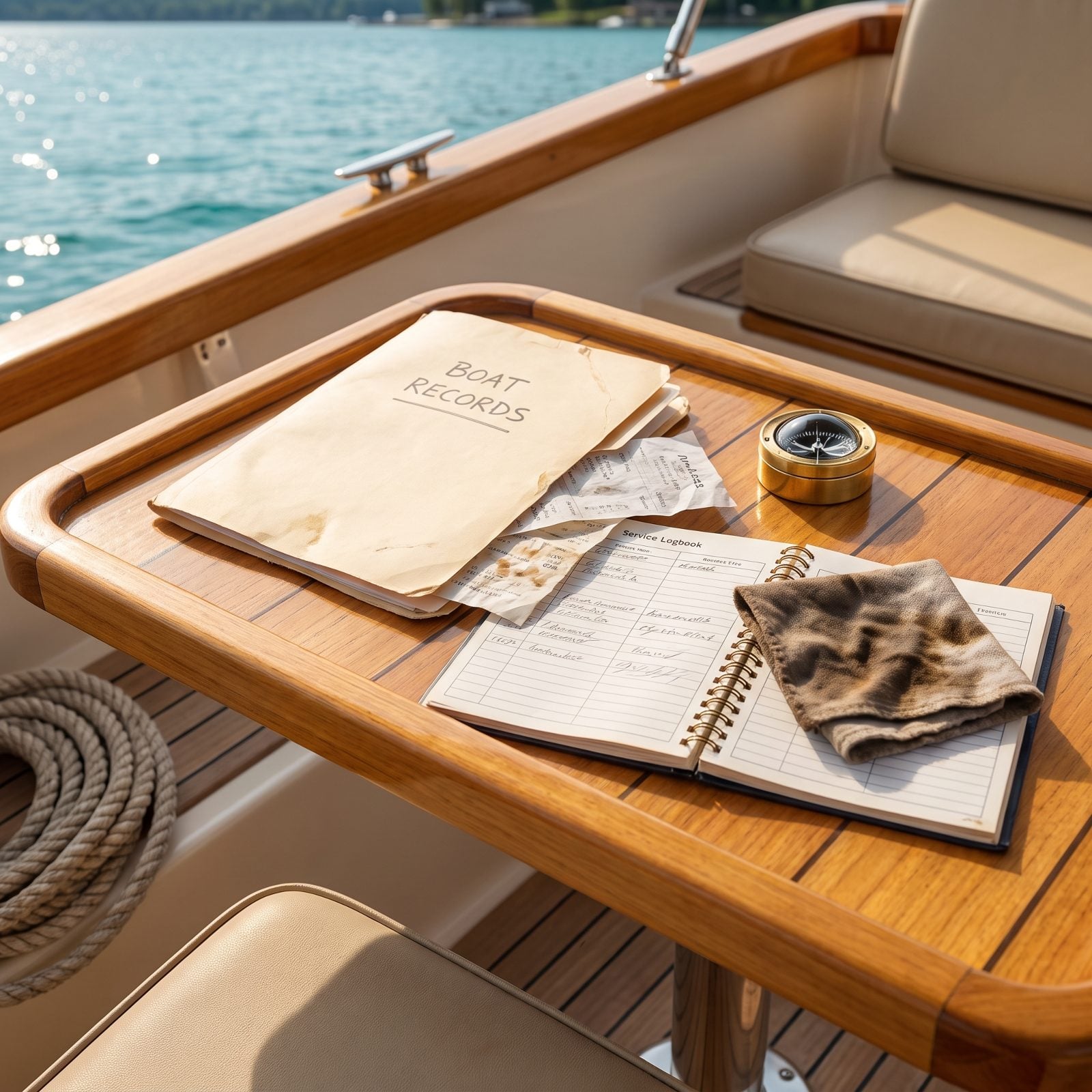
Gaps in the records aren’t automatically a dealbreaker, but they change the math. A thick folder of receipts and a filled-in service logbook can look like proof the boat was loved, so read every page. Missing entries tell you to assume the worst and budget for it.
Records show when the impeller was last changed, whether the lower-unit oil ever got swapped, if the fuel system saw any attention at all. If any of that is missing, you’re starting every maintenance clock at zero on day one. So factor a full service into your offer, or ask the seller to knock it off the price. A boat with a story beats a boat that forgot its own.
32. Overlooking an Expensive Service Due Immediately
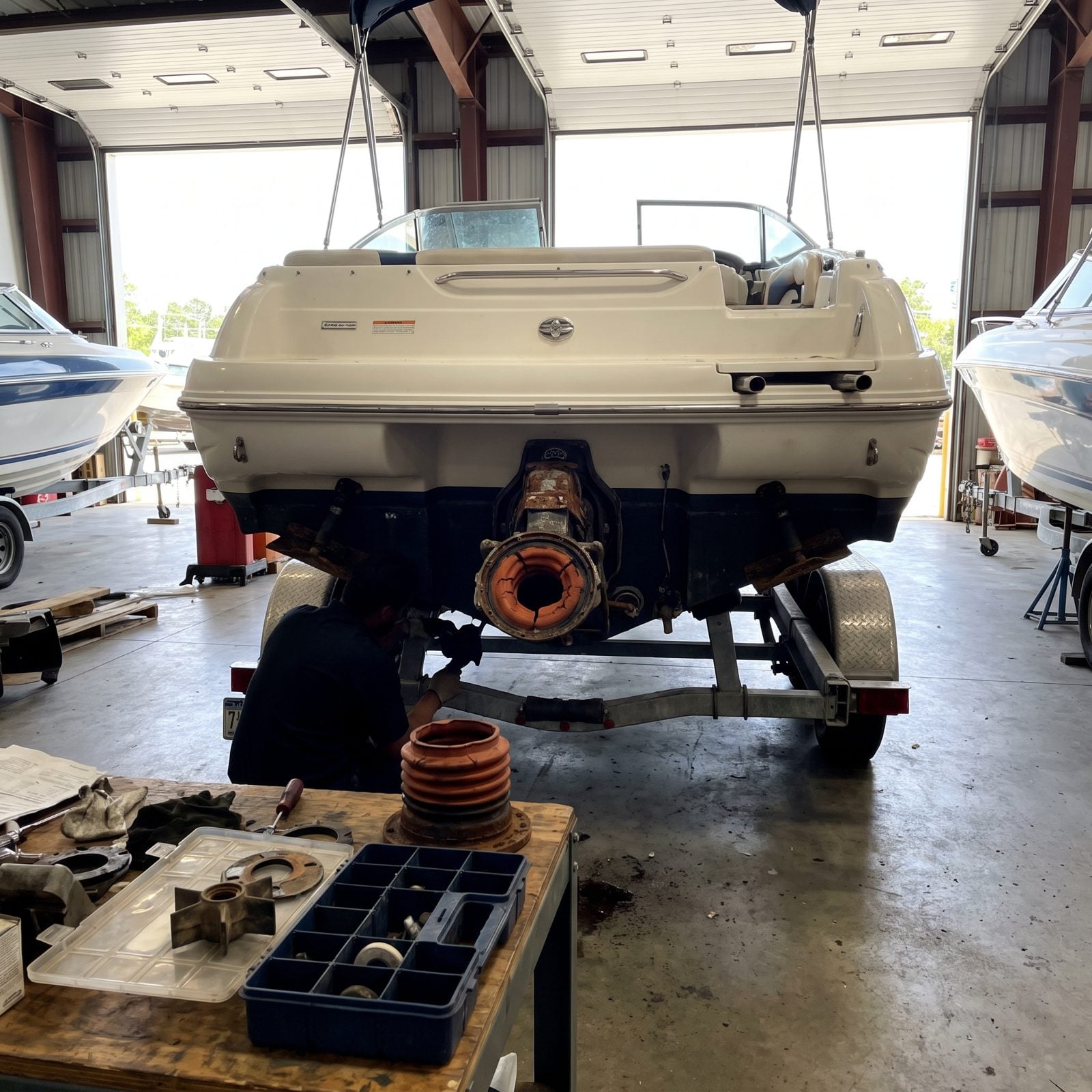
Some boats come due for a big-ticket service right at the moment you buy them, and the seller knows it. Sterndrive bellows, a timing belt, a transom assembly. None of these are small jobs.
Say you buy a sterndrive that’s a year past its bellows replacement. You save nothing on the purchase, then hand a shop a four-figure bill the first spring. The service was always coming — you just inherited the timing.
Before you close, ask the mechanic what’s due now and what’s due within a year. Price those jobs. Then decide whether the boat is still the deal it looked like.
31. Ignoring Soft Spots in the Deck
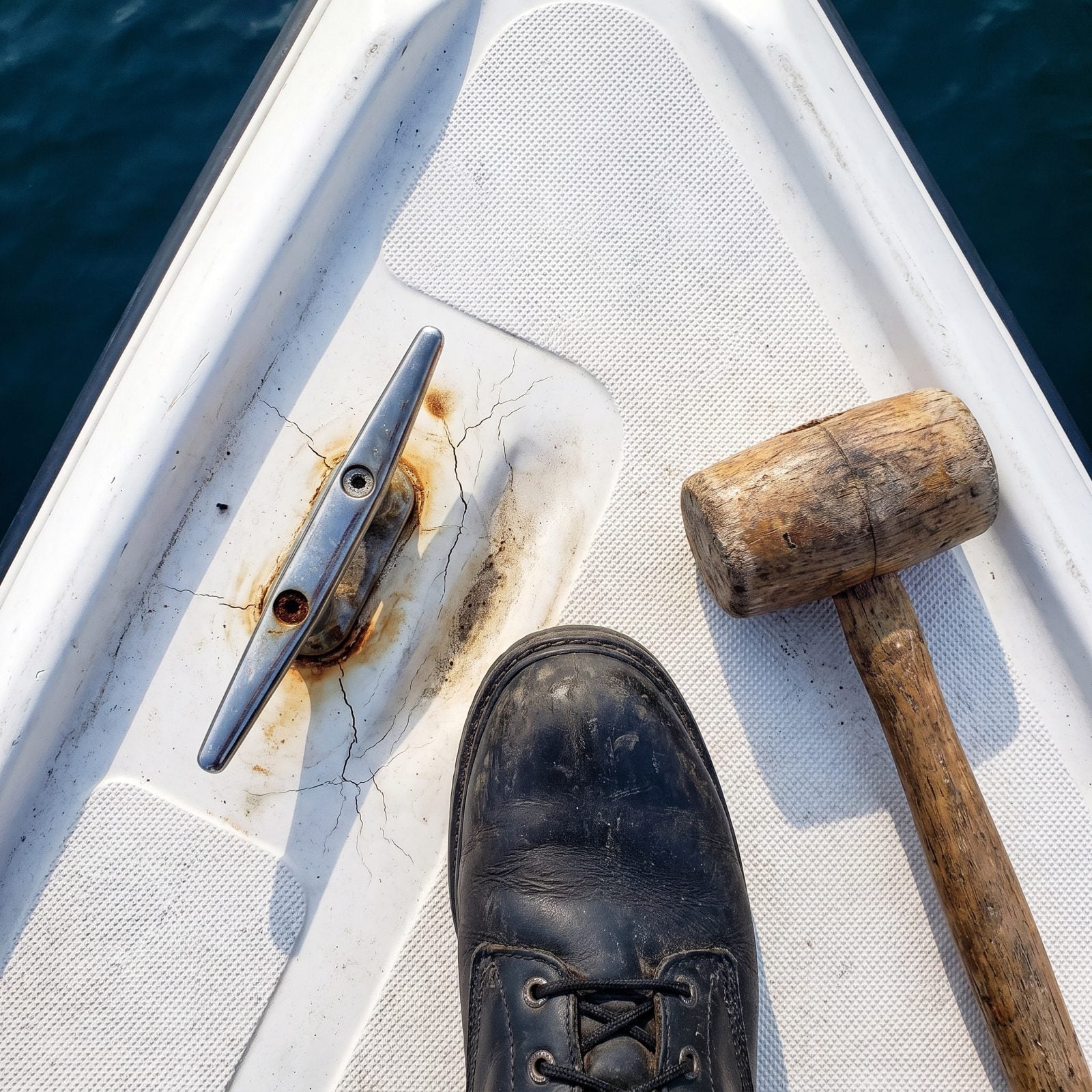
You’ve walked a deck that felt a little spongy underfoot and told yourself it was nothing. It’s almost never nothing. A soft spot means the core under the fiberglass has drunk up water and started to rot.
Deck recoring is one of the ugliest repairs in boating. Cut the skin open, scoop out the saturated core, lay in new material, refinish the whole mess. Shops charge a lot, and it drags on for weeks.
Walk every inch of the deck during your inspection. Press near fittings, stanchions, and the cockpit sole. Any give, any crunch, any bounce — flag it for the surveyor. That squish is the sound of your repair budget walking out the door.
30. Missing Water Intrusion Around Fittings
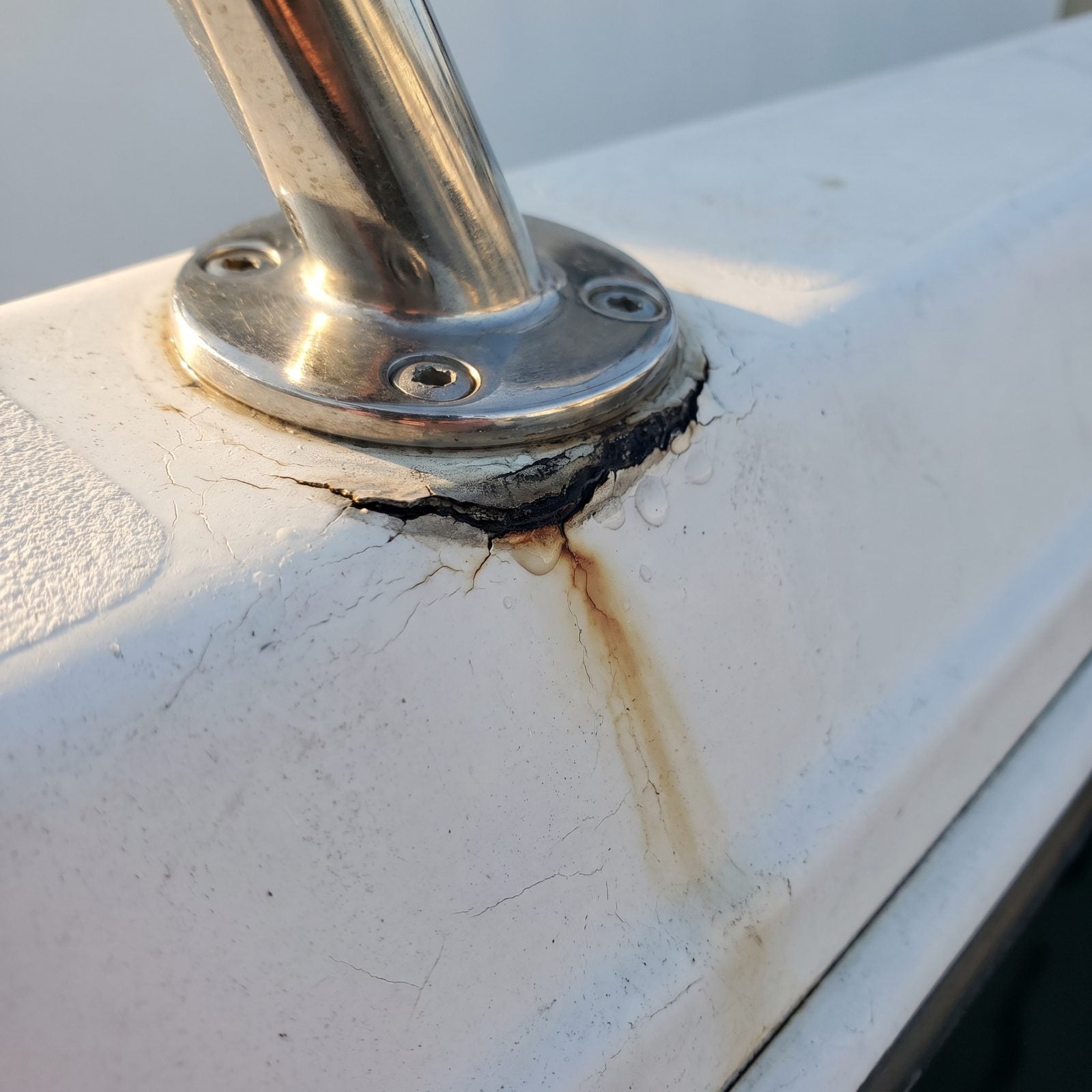
The smallest leaks do the most expensive damage. A failed bead of sealant around a cleat or a stanchion lets water creep into the core, quietly, for years, before you ever see a symptom.
Look for staining around every through-deck fitting — rust streaks, crazed gelcoat, a dark line where the sealant pulled away. Lift the floorboards and check the bilge for standing water that has no business being there. Open the lockers and sniff for that musty, wet-wood smell.
Catch intrusion early and you’re rebedding a fitting for the cost of a tube of sealant and an afternoon. Miss it and you’re right back to recoring. Small money now or big money later. That’s the whole game.
29. Dismissing Hull Blisters as Cosmetic
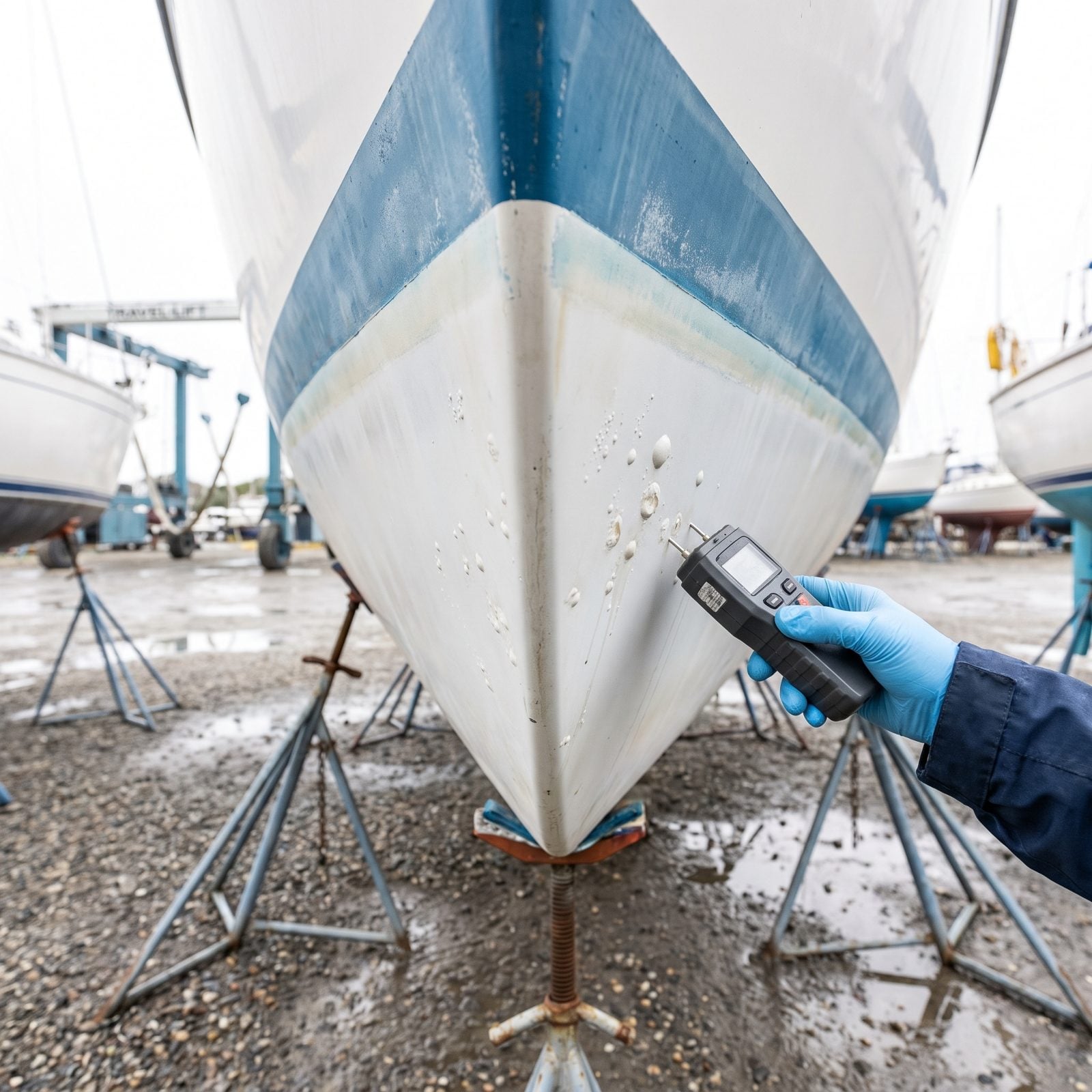
Those little bubbles under the waterline look harmless on a nice afternoon, and a seller will wave them off as a cosmetic thing. They aren’t always. Blisters mean water has worked its way into the laminate, and once it’s in there it keeps going.
The cost shows up the first time you haul out. A proper blister repair can mean grinding, drying the hull for weeks, and a full barrier coat — a four-figure job, easy, and it lands on you rather than the previous owner.
Before you sign anything, pay for a moisture meter reading during the survey. Twenty minutes, and it tells you whether you’re buying a boat or a long drying project.
28. Ignoring Corrosion on Wiring and Terminals
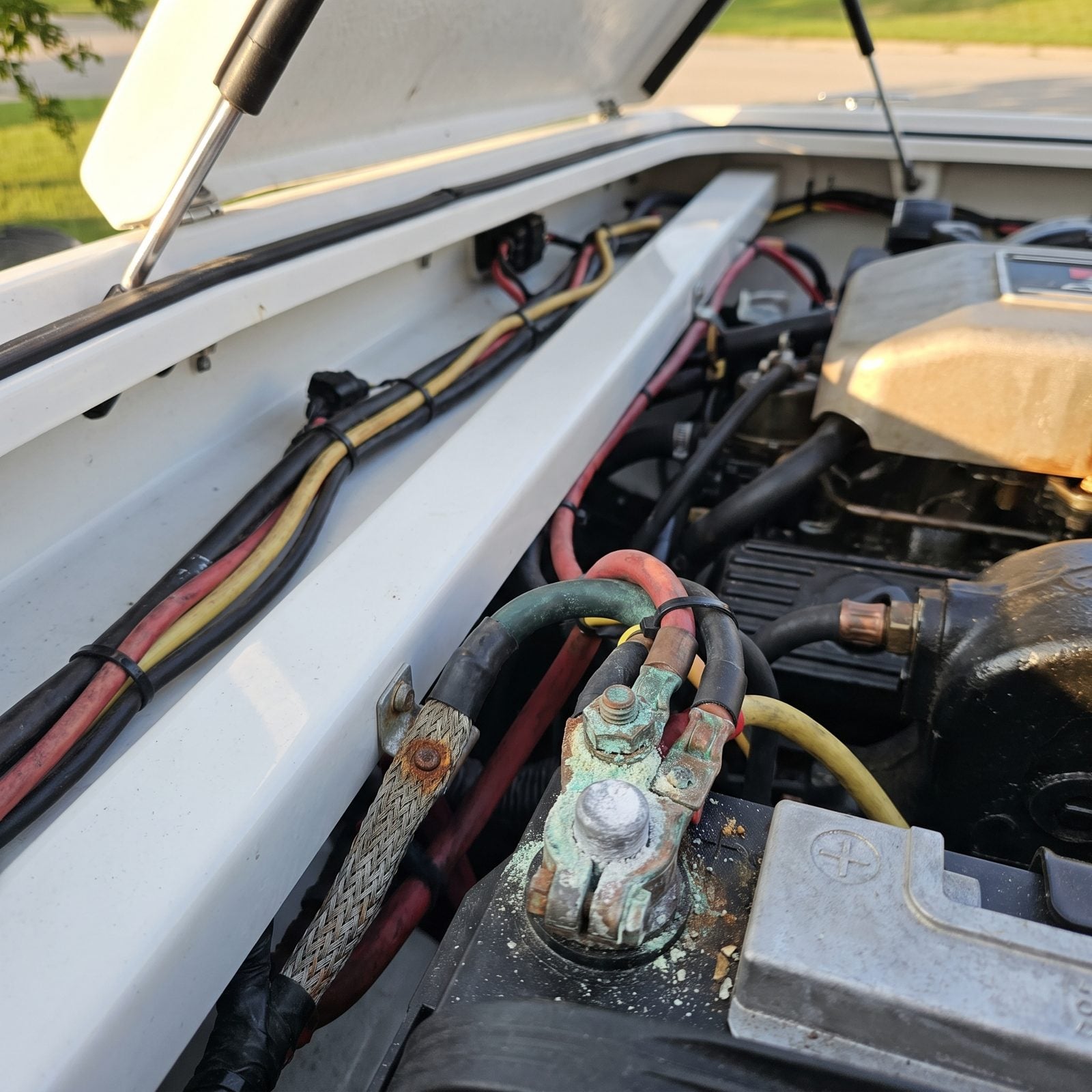
Green fuzz on a battery terminal doesn’t look like a crisis. It looks like something you’ll wipe off someday. But corrosion on marine wiring isn’t dirt — it’s the connection slowly eating itself, and it never gets better on its own.
Chase enough intermittent gremlins and a lot of them trace back to bad grounds and corroded terminals: a bilge pump that quits, nav lights that flicker, an engine that cranks slow. Electrical troubleshooting by the hour is one of the priciest things you can hand a mechanic, because the fault hides.
During a sea trial, open every access panel and actually look. Green crust, crumbling insulation, rust-streaked lugs — those are your bargaining chips and your warning signs both.
27. Accepting a Fuel Tank With an Unknown Condition

A fuel tank is the one thing you can’t really see. It sits under the deck, out of reach, and most buyers never give it a thought until the engine starts coughing offshore.
Old aluminum tanks pit from the bottom up where water collects, and old gas turns to varnish that gums every injector it touches. Replacing an under-deck tank sometimes means cutting the deck to get it out, which turns a tank job into a structural job in a hurry.
Pull a fuel sample before you commit. Cloudy, sour-smelling, or gritty at the bottom? You’ve just learned something worth thousands. Ask when the tank was last replaced, and if nobody knows, treat that as its own answer.
26. Underestimating the Cost of Tired Upholstery
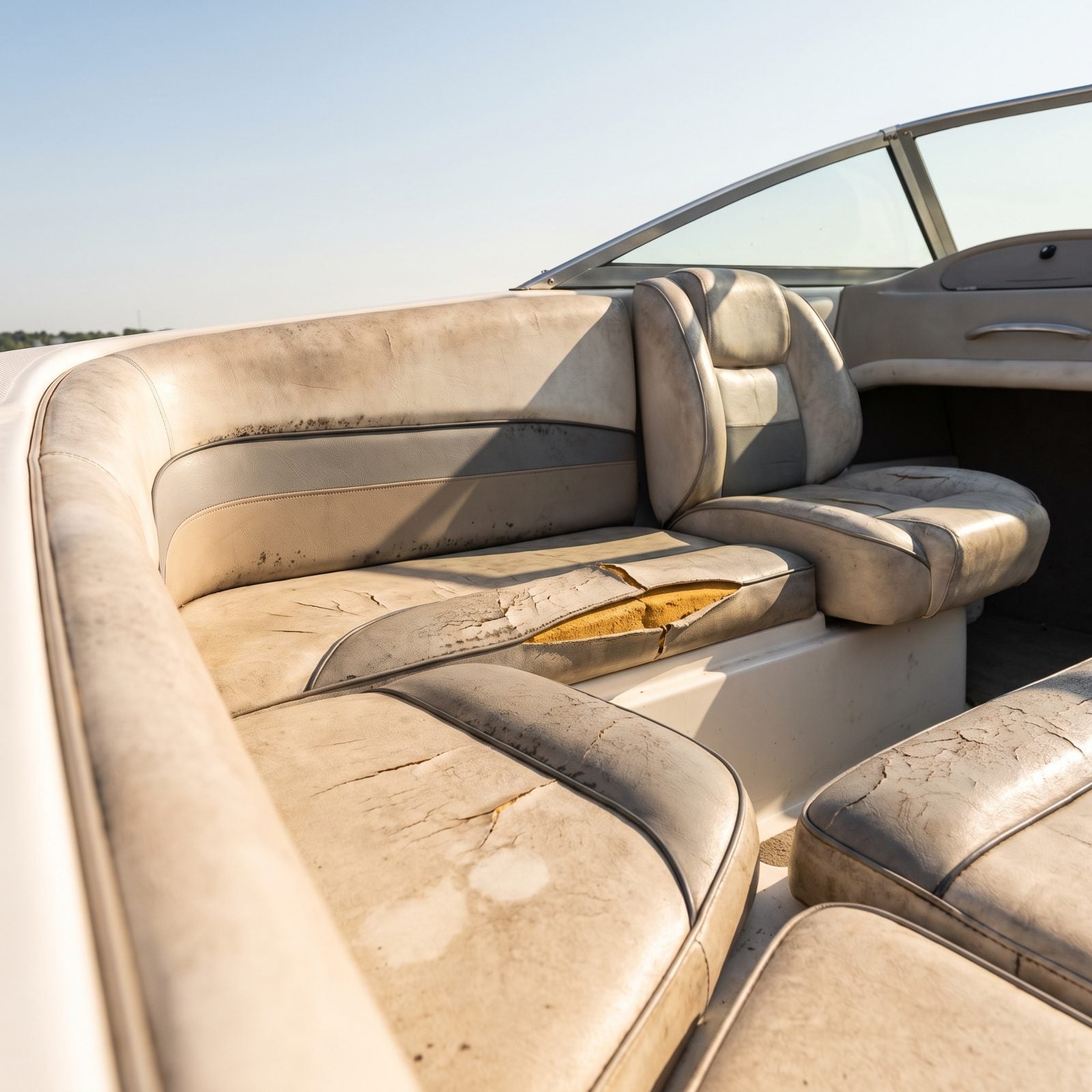
Faded seats read as a small thing. A little elbow grease, maybe a cover. Then you price out marine upholstery and the number knocks the wind out of you.
Good marine vinyl, closed-cell foam, UV thread, and skilled labor add up fast, and redoing the cushions on a modest cockpit can run well into the thousands. It’s rarely a weekend DIY unless you happen to own a sewing machine built for heavy vinyl.
Factor it into your offer. Cracked, sun-rotted, mildew-stained upholstery isn’t a cosmetic shrug — it’s a renovation line item nobody warns a first-time buyer about.
25. Buying a Boat With Obsolete Electronics
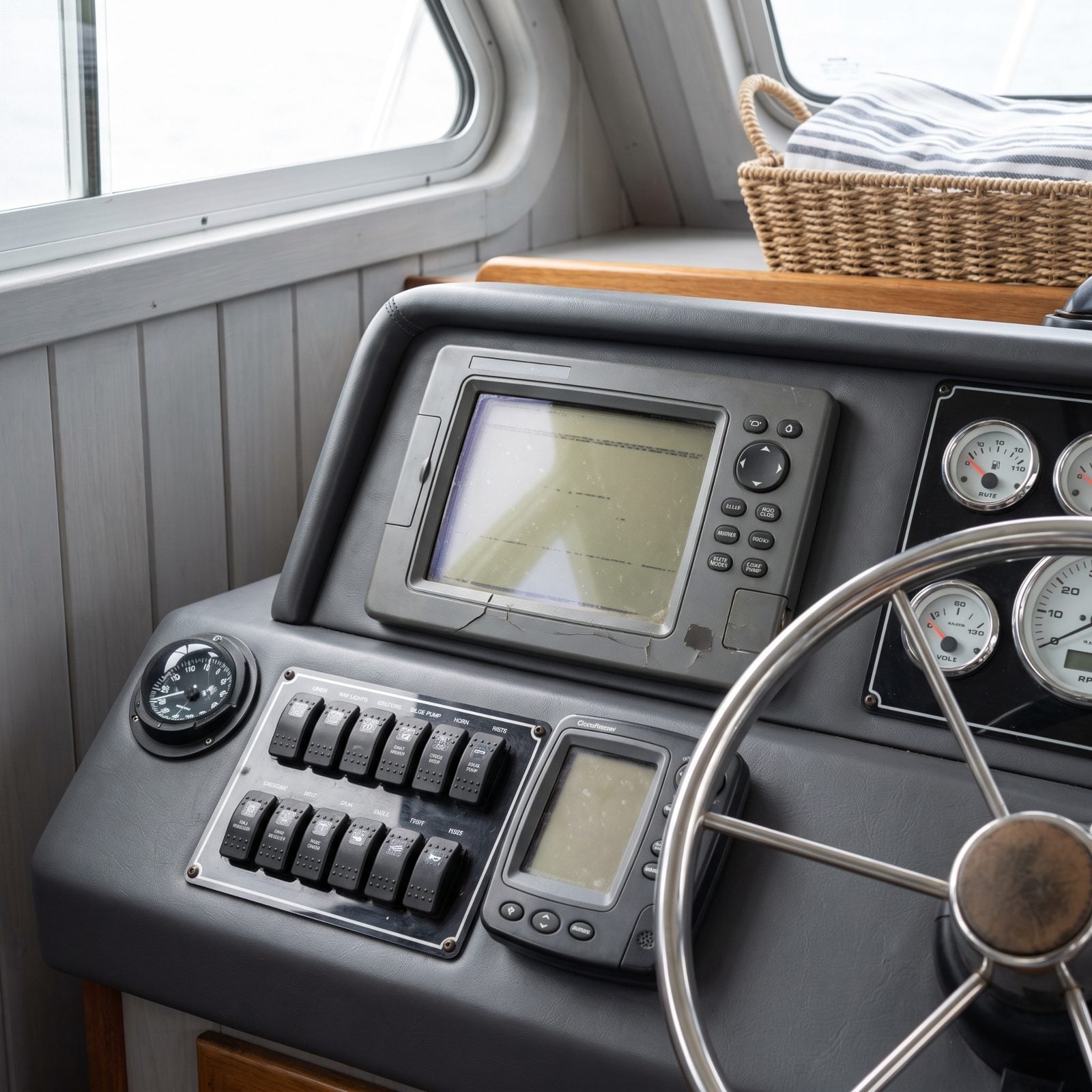
The old chartplotter still turns on, so it counts, right? Sort of. A dim screen from fifteen years ago, loaded with charts nobody updates anymore, is a paperweight that happens to glow.
And here’s the trap. Replacing a single legacy unit usually means rewiring, new transducers, new mounts, and often a whole networked system because the old gear won’t talk to anything modern. One screen becomes a project.
Price a current plotter, radio, and sounder before you buy. Then decide whether the boat is priced like it already has them — or priced like you’re about to spend another chunk making the helm usable.
24. Treating an Old Battery Bank as a Minor Expense
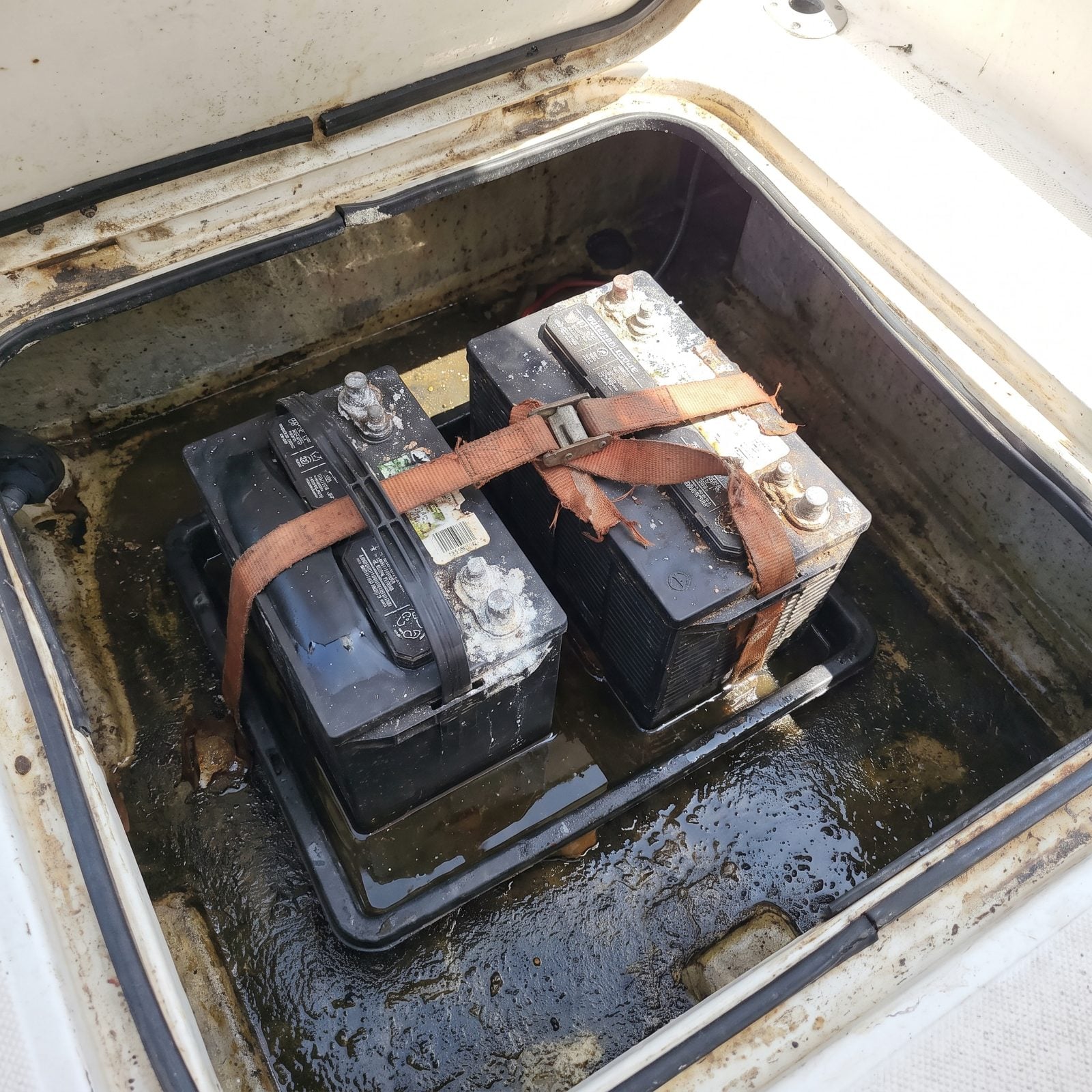
A battery is cheap at the auto parts store, so how bad can it be? On a boat, that math falls apart quick.
Marine batteries cost more, boats often carry two or three or four of them, and a cranking battery is a different animal from a deep cycle house battery. Buy the wrong type and it dies early. Discover the bank is shot on launch day and you’re paying marina prices plus the sting of a ruined weekend.
Test every battery under load, not just voltage. Check the dates stamped on the cases. A swollen case, or a battery that won’t hold a charge, is budgeting information — write it down.
23. Ignoring a Weak Bilge Pump System
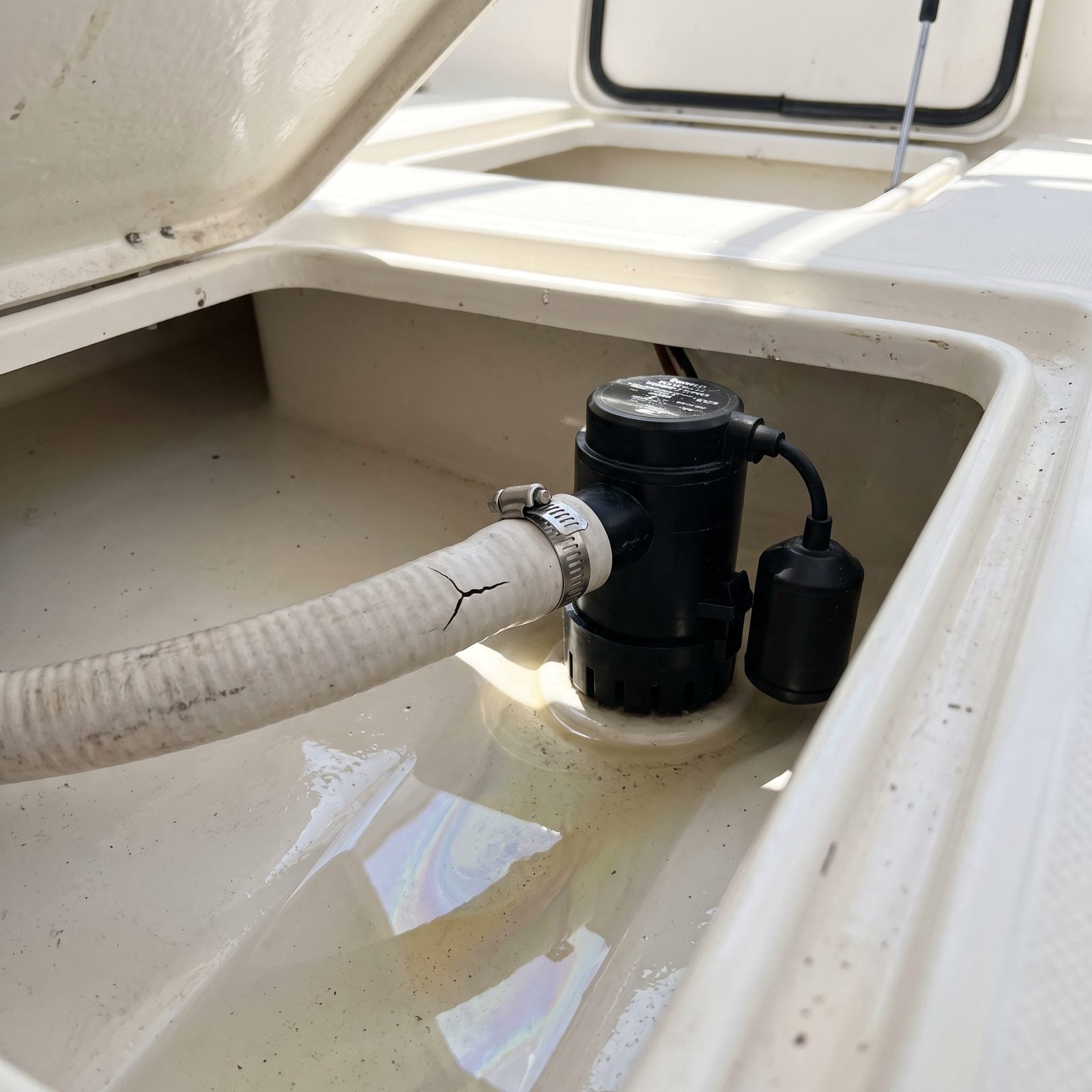
The bilge pump is the cheapest part on the boat and the one nobody checks. A tiny pump, a float switch, a hose. Easy to overlook — right up until it matters.
Then it matters a lot. A clogged pump, a float switch that sticks, a cracked discharge hose, and a boat left on a mooring in a rainstorm can take on water while you’re home asleep. People lose boats this way, and no insurer loves that conversation.
Test it on the sea trial. Lift the float by hand and listen for the pump to kick on and actually move water. Carry a spare pump and a float switch while you’re at it — a small drawer’s worth of parts that quietly protects the whole thing.
22. Overlooking a Failing Steering System
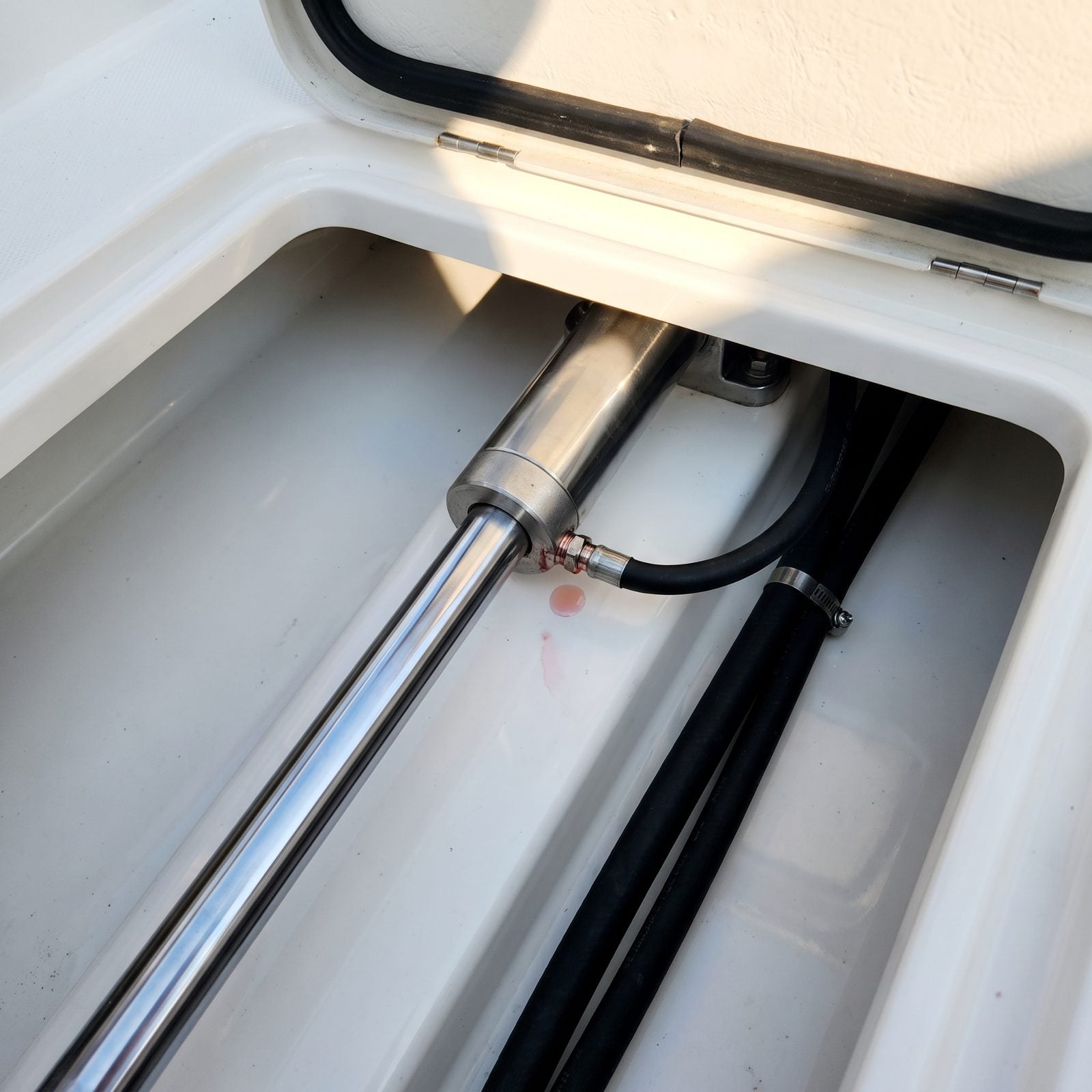
Steering either works or it doesn’t, so buyers tend to wiggle the wheel once and move on. A failing system doesn’t announce itself at the dock. It announces itself at speed in a chop — which is exactly when you want it behaving.
Hydraulic setups lose fluid through weeping seals and tired hoses. Cable systems seize and stiffen. Both get expensive, and steering is not the component to limp along on.
Turn the wheel lock to lock on the trial and feel for stiffness, slop, or play. Look behind the helm and at the cylinder for pink fluid residue. A leak you spot now is a repair you can negotiate; a leak you find later is a scare.
21. Ignoring Stern-Drive Bellows and Gimbal Bearings
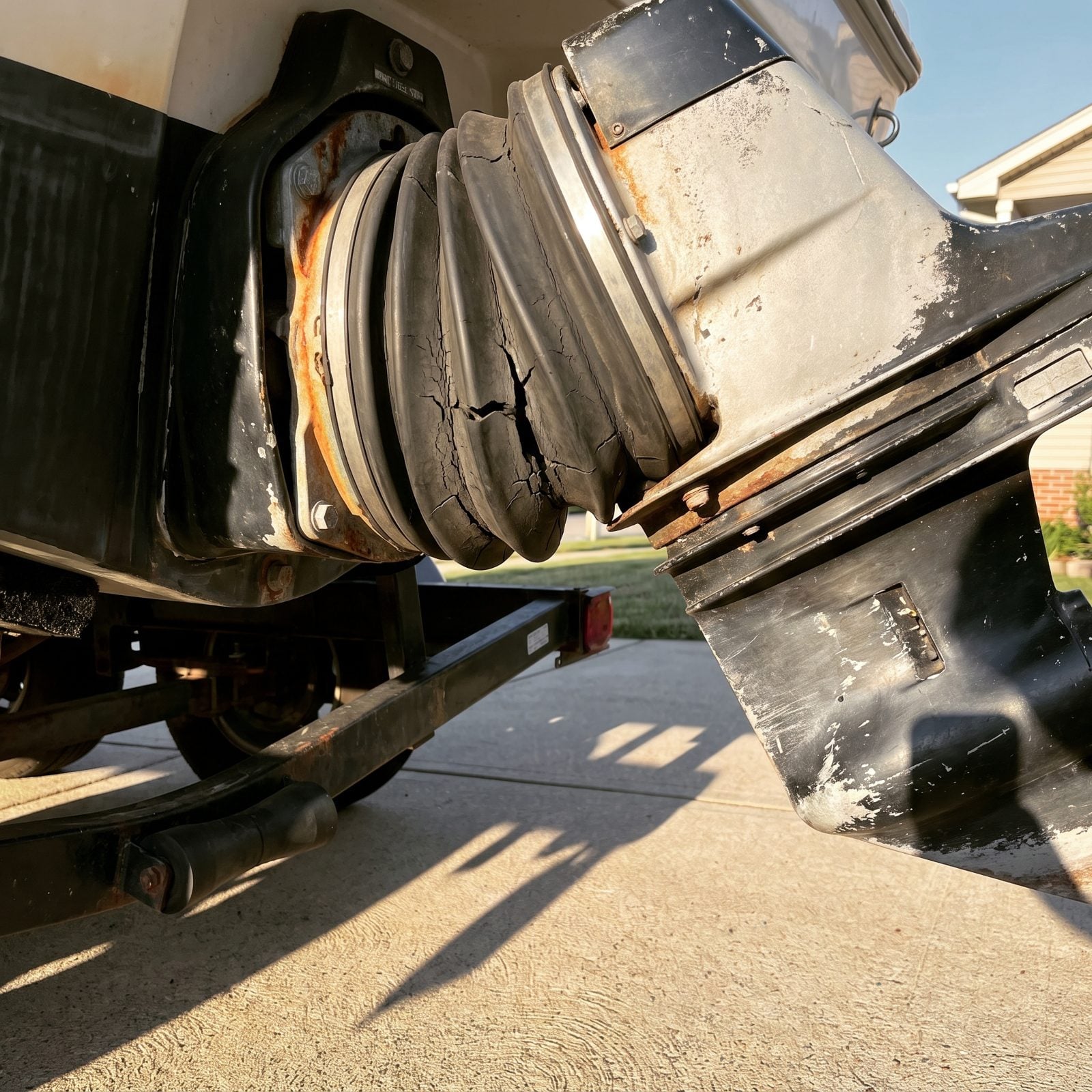
Ask a first-time buyer about bellows and you’ll usually get a blank look. Fair enough. They’re folded rubber boots behind the transom that nobody thinks about, which is exactly why they bite so hard.
A cracked bellows lets water into places water should never go, and a chewed-up gimbal bearing can end in a drive pulled apart on a lift. Dropping the outdrive is labor-heavy, so the bill climbs fast even when the parts themselves are cheap.
On a stern-drive, inspect the bellows for cracks in the folds and spin the drive to listen for a growling bearing. Find out when they were last replaced. Rubber has a shelf life whether the boat runs or not.
20. Overlooking Outboard-Mount and Transom Damage
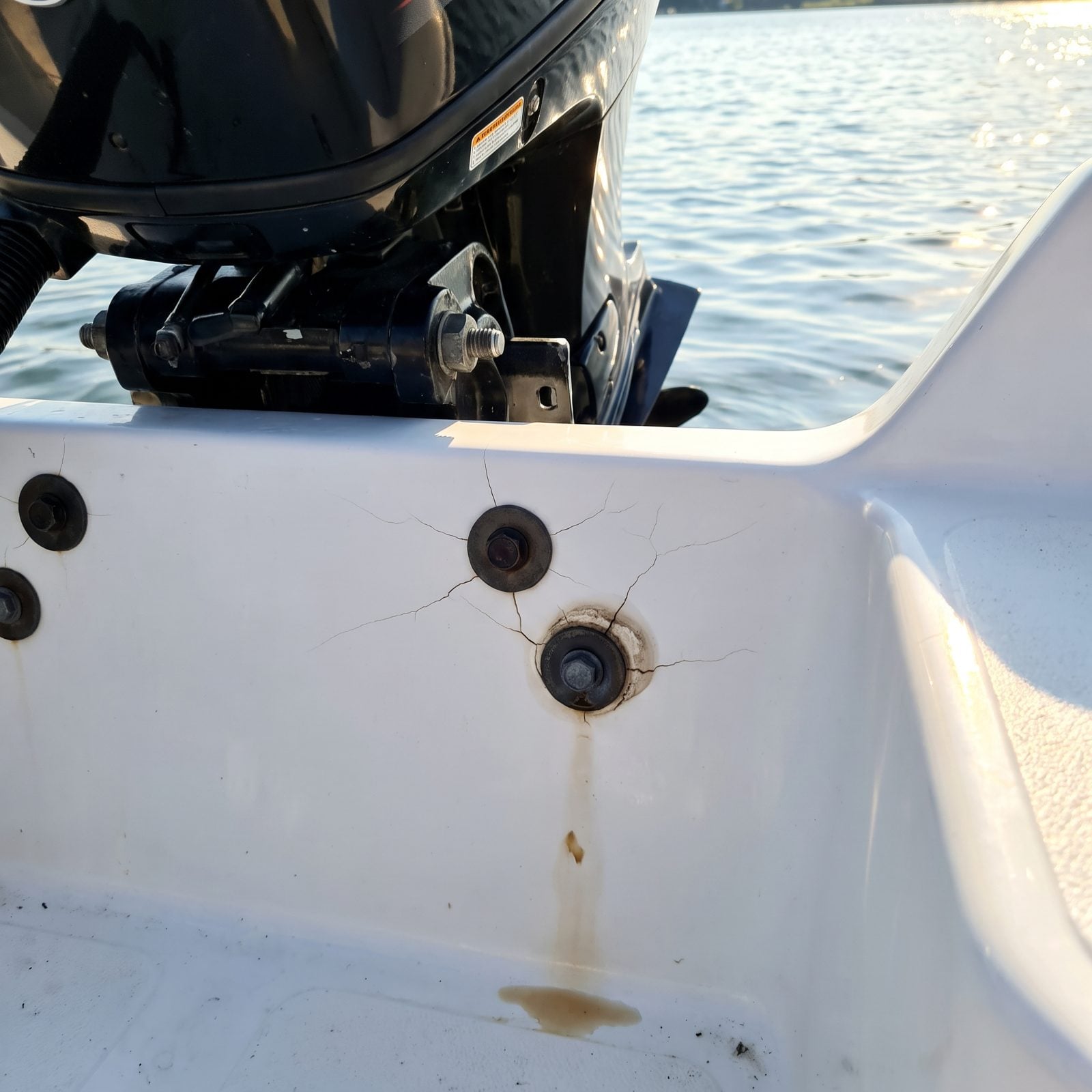
The outboard looks solid because it’s bolted on tight. But the question isn’t the motor — it’s what the motor is bolted to. A transom can rot from the inside while the gelcoat out front still looks fine.
Water gets into the core through old bolt holes and sits there, turning the wood to mush. A soft transom with a heavy outboard hanging off it is a real safety problem, and recoring a transom is one of the biggest jobs you can take on with a small boat.
Push hard on the mounted outboard and feel for flex. Tap around the mounting bolts and listen for a dull, dead thud instead of a sharp knock. Hairline cracks fanning from the bolt holes, or a stain weeping below them, tell you to walk — or at least to call in a surveyor before you spend another dime.
19. Buying a Trailer With the Wrong Weight Rating
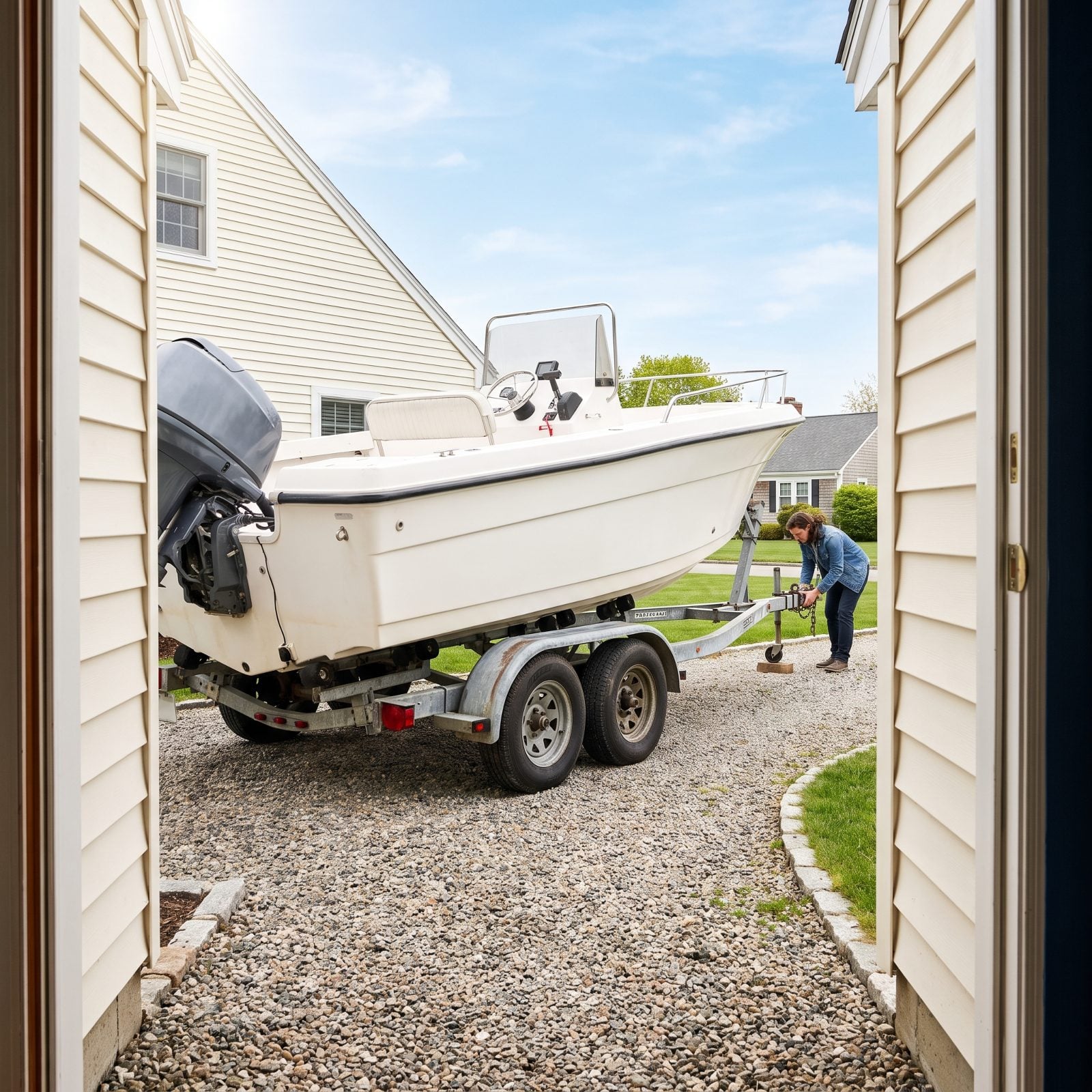
The weight on the trailer sticker and the weight of your loaded boat are two different numbers, and nobody tells you that at the lot. A trailer rated for the dry hull is already too small once you add fuel, batteries, coolers, two kayaks, and a week of gear. Overload it and you’ll chew through tires, warp the frame, and void the warranty the first time something bends under you.
Add it all up before you sign — full fuel tank, full water, every battery, gear and bodies loaded like a real Saturday. Then buy a trailer rated comfortably above that number, not right at it. That cushion is what saves you.
18. Ignoring Rusted Trailer Brakes
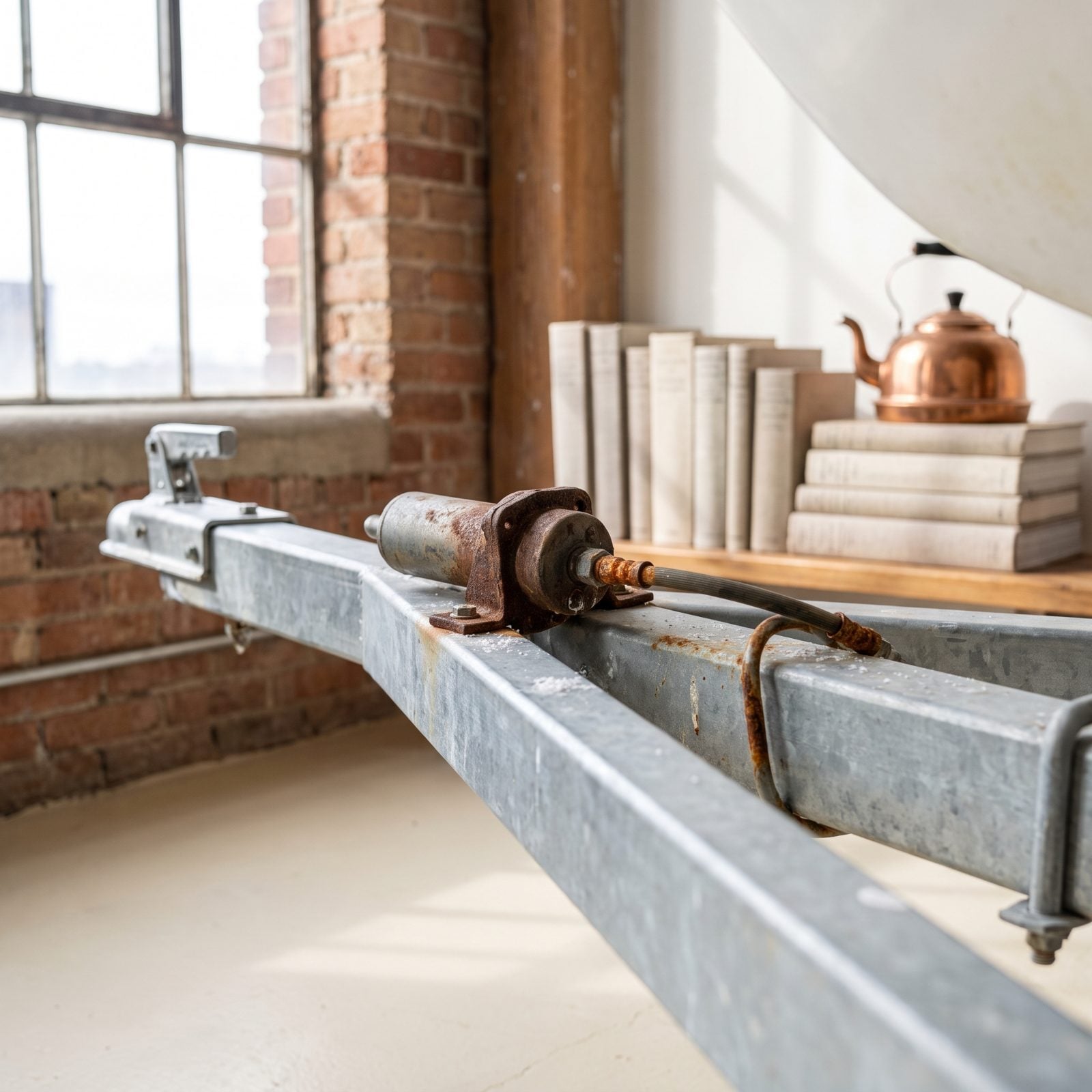
Trailer brakes live underwater half their life, dunked at every launch and then baked dry in the sun. Rust loves that cycle. Surge actuators seize, brake lines flake, and drums turn to powder — usually right when you’re easing down a ramp with a couple tons behind you.
At that point it’s not a maintenance item. It’s a safety failure and a tow-truck bill. So flush the brakes with fresh water after every saltwater dunk, inspect the lines each spring, and budget for a flush-and-replace long before the first grinding noise shows up.
17. Missing Cracked Trailer Tires Because the Tread Looks Good
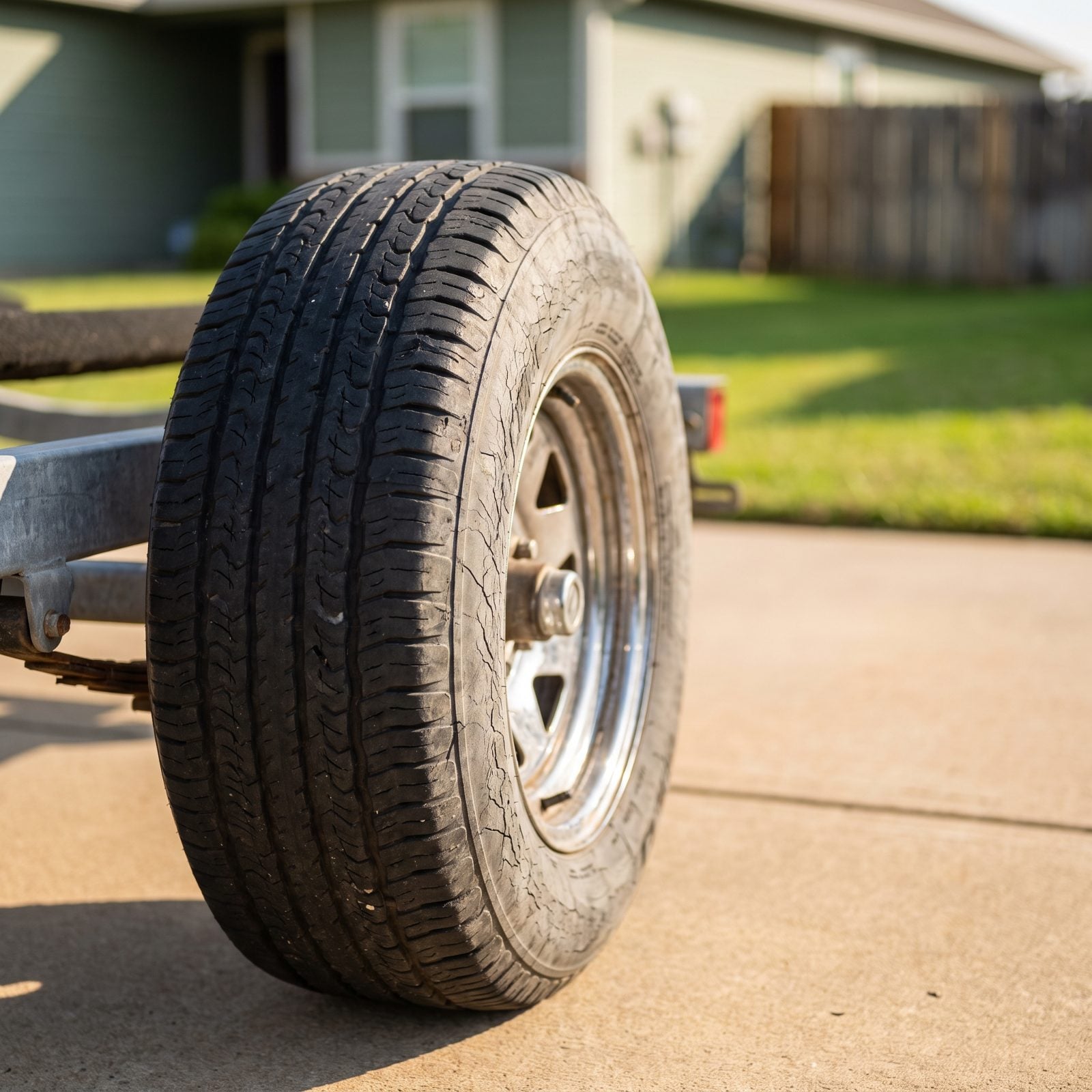
Here’s the trap. Trailer tires almost never wear out their tread — they just sit. A boat parked nine months a year rots its tires from the inside while the tread stays showroom fresh, so you read the tread, feel reassured, and hit the highway on rubber that’s quietly turning to crackers.
Flip the inspection. Ignore the tread and go straight to the sidewalls, hunting for that fine spiderweb cracking, then check the date code stamped on the tire. Most trailer tires age out around five or six years no matter the miles. Replace on the calendar, not the odometer.
16. Failing to Inspect Trailer Bearings and Hubs
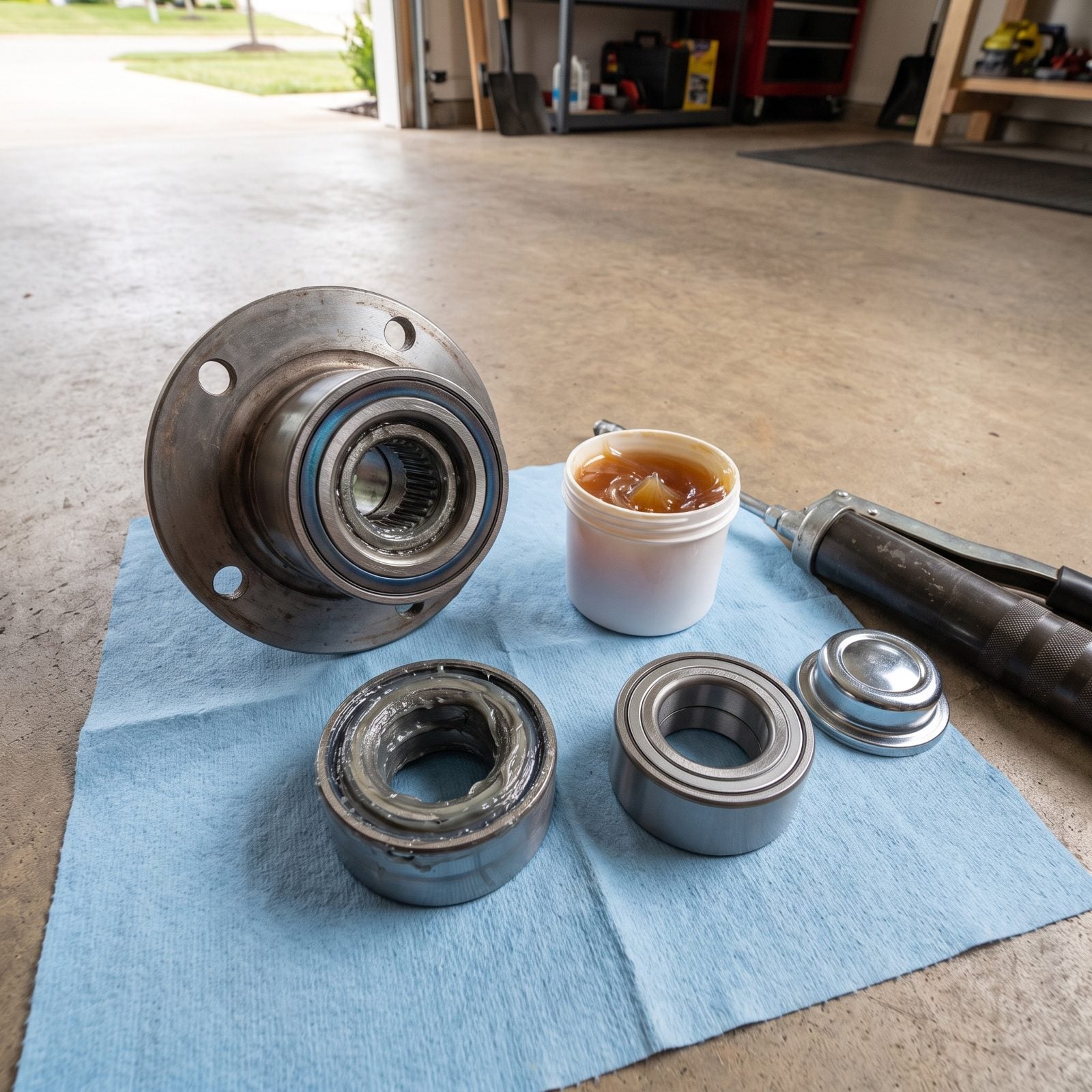
Wheel bearings are the cheapest part on your trailer and the one most likely to strand you. Water sneaks past worn seals, washes out the grease, and then the bearing runs dry, overheats, and welds itself to the spindle. Smoking wheel on the shoulder, flatbed ride home.
Spin each wheel before a trip and feel for grind or wobble. Repack the bearings yearly — more if you launch in salt — and fit spring-loaded bearing protectors to keep water out. A grease gun and twenty minutes beats a roadside spindle replacement every single time.
15. Ignoring Towing Capacity Until It Forces a Tow-Vehicle Upgrade

You fall for the boat, then discover your truck can’t legally pull it. Tongue weight, gross trailer weight, and the hidden cost of a hitch, brake controller, and heavier suspension all show up after the deposit clears. Suddenly the boat budget has a second vehicle bolted onto it.
Check your tow vehicle’s rated capacity first — the real number in the manual, not the optimistic one in the ad — then weigh the loaded trailer and leave yourself a comfortable margin. A boat that pushes your truck to its limit will nudge you toward an upgrade you never planned to buy.
The cheapest boat is the one your driveway, your truck, and your ramp already fit.
14. Buying Before Pricing Local Marina Slips
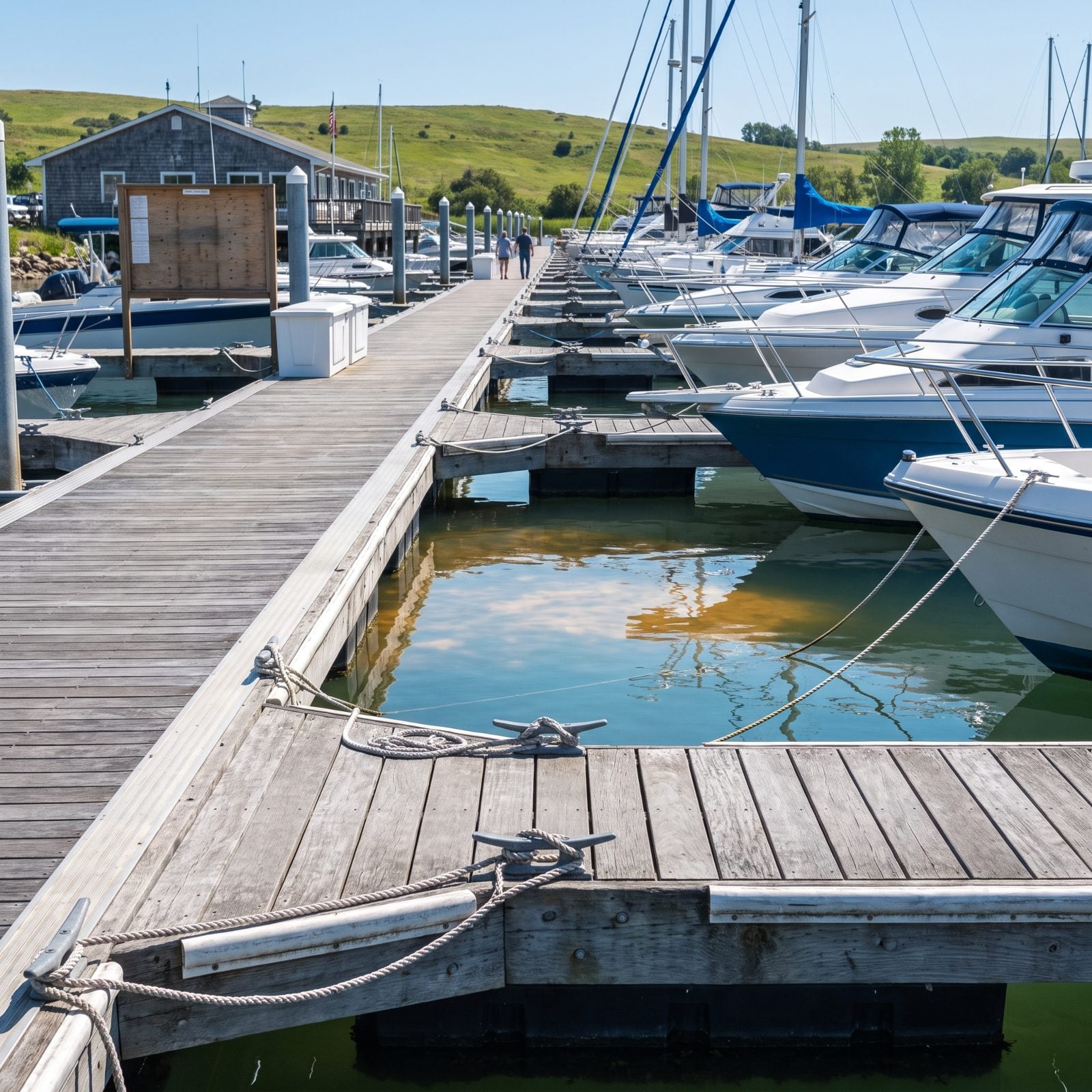
A slip is a boat’s rent, and in a tight harbor the waiting list can run two seasons deep. People buy the boat, then learn the nearest open slip is an hour away or priced like a studio apartment — so the boat sits on the trailer, launched and retrieved every single outing, which gets old by July.
Call three marinas before you buy. Ask the annual rate, the waitlist, and whether your boat’s length even fits an available slip. Knowing you’ve got a home for the boat changes which boat you should buy in the first place.
13. Assuming the Slip Price Includes Utilities and Access Fees
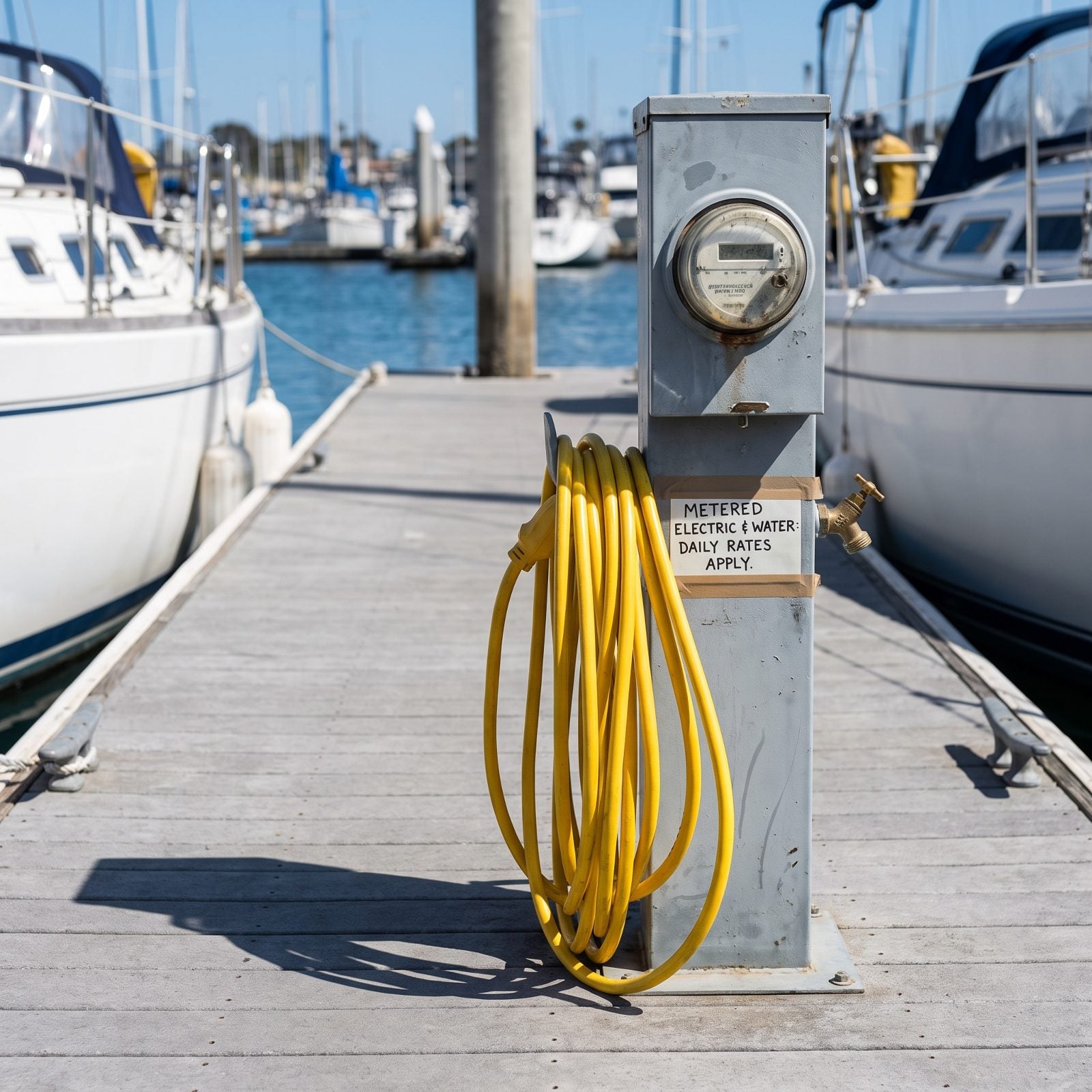
The quoted slip rate is the opening bid, not the total. Shore power often meters separately, the water hookup carries a fee, and then come the extras — gate card deposits, parking passes, pump-out charges, launch-ramp access, winter haul reservations. Each line looks small until the first invoice lands with every one of them stacked up.
Get the fee schedule in writing before you commit, and ask flat out what’s bundled and what bills separately. The marina that looks cheaper per foot can finish the year more expensive once the pedestal meter and the gate card and the parking pass all have their hands out.
12. Choosing the Cheapest Marina Despite a Long Fuel-Burning Run
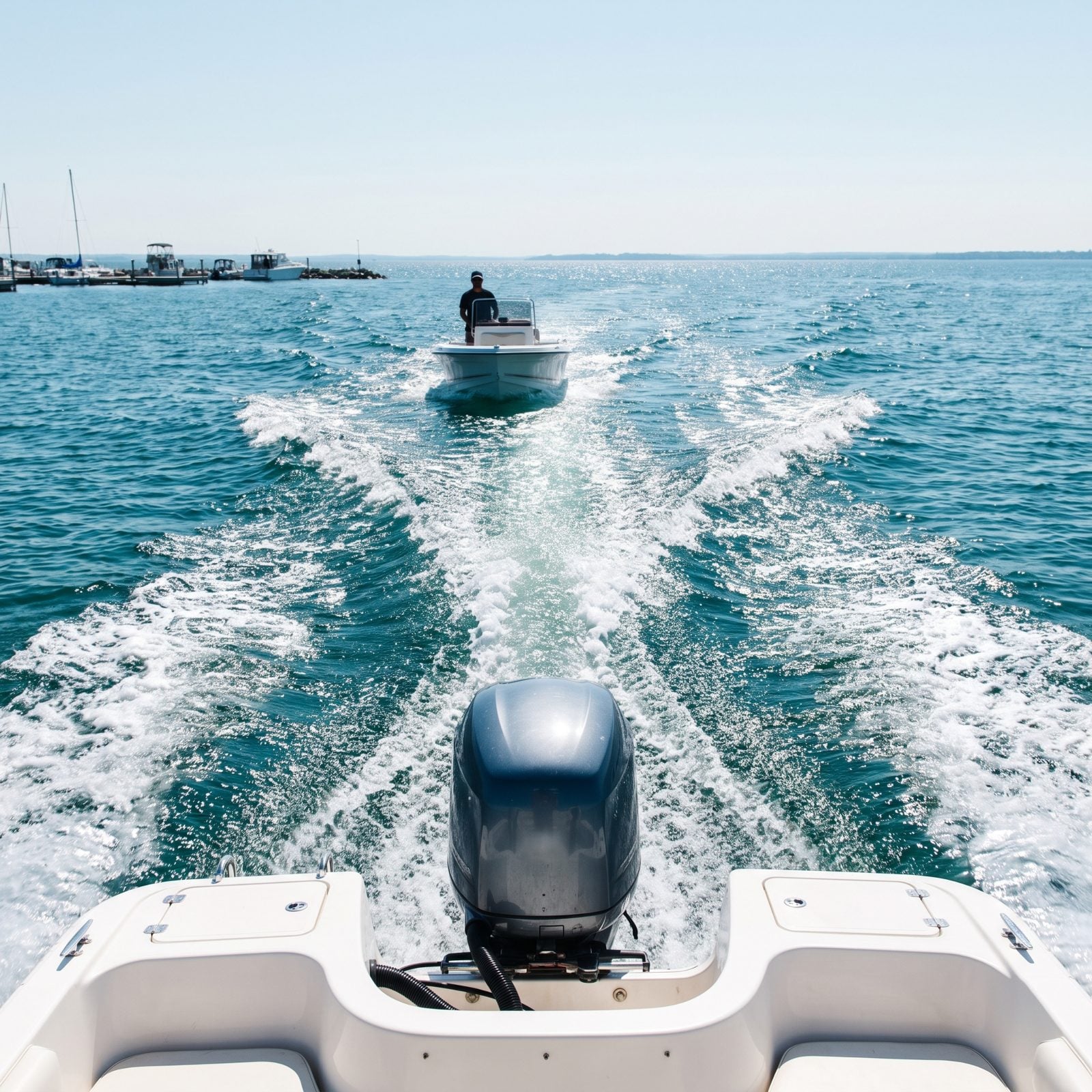
Save money on a slip across the bay and you pay it right back at the fuel dock. A long run to the good water burns gas on both ends of the day, every outing, all season — and that cheaper slip quietly becomes the expensive one.
So run the math on location, not just rate. Figure the round-trip distance to where you actually want to boat, estimate the fuel per trip, and multiply by a summer’s worth of weekends. A slip that costs a little more but sits near your favorite water can save a tank of gas most Saturdays.
11. Waiting Until After Purchase to Research Winter Storage
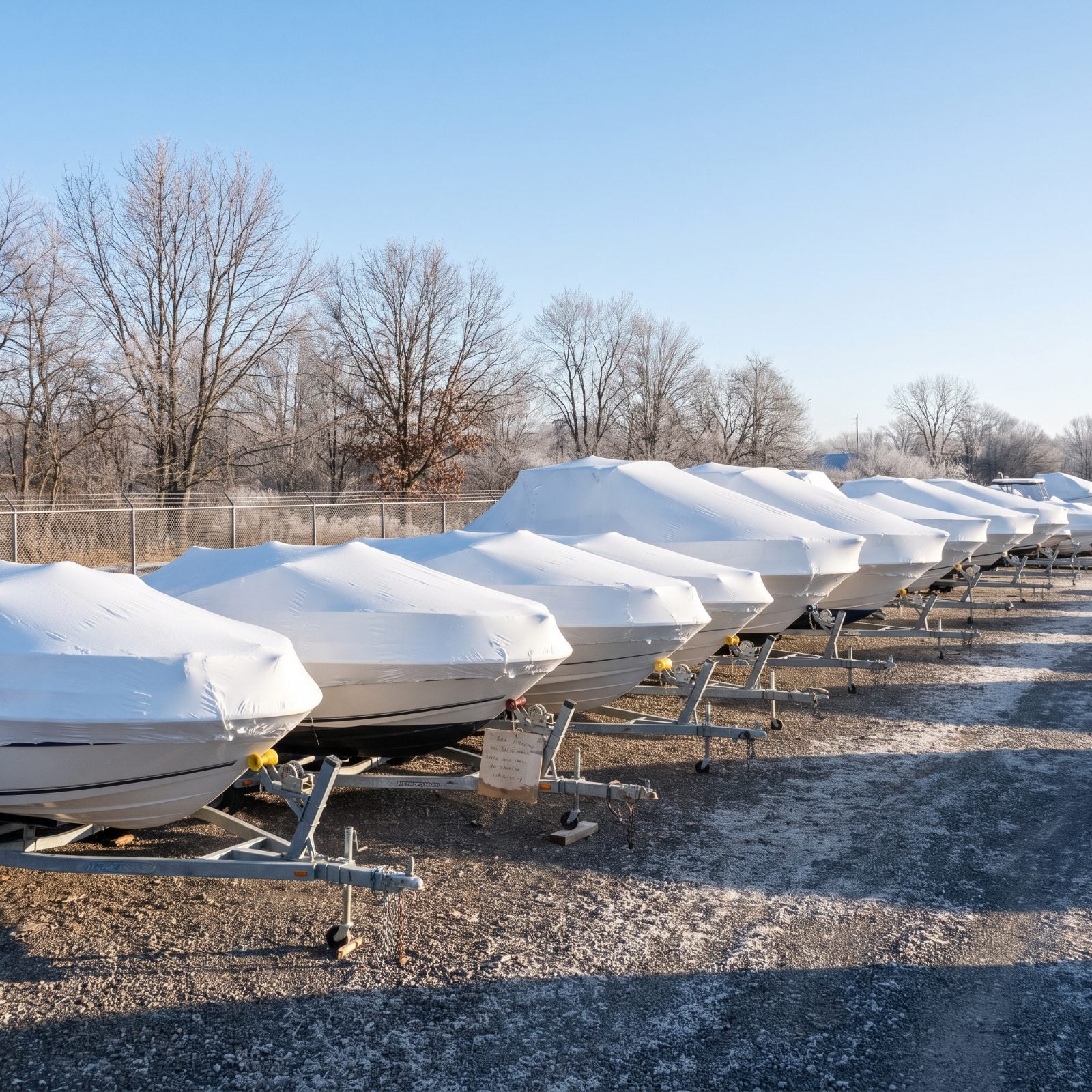
The season ends and the question lands like a bill you forgot: where does the boat go for five months? Indoor heated storage, outdoor lot, shrink-wrap, or home in the driveway — each option carries a different price and a different fight over space. Leave it to October and you take whatever’s left at whatever it costs.
Price winter storage before you buy. Indoor rack space fills early and books a season ahead in some towns. Know that off-season cost upfront and the boat stays affordable through the five months you can’t even use it.
10. Underestimating Haul-Out and Launch Fees
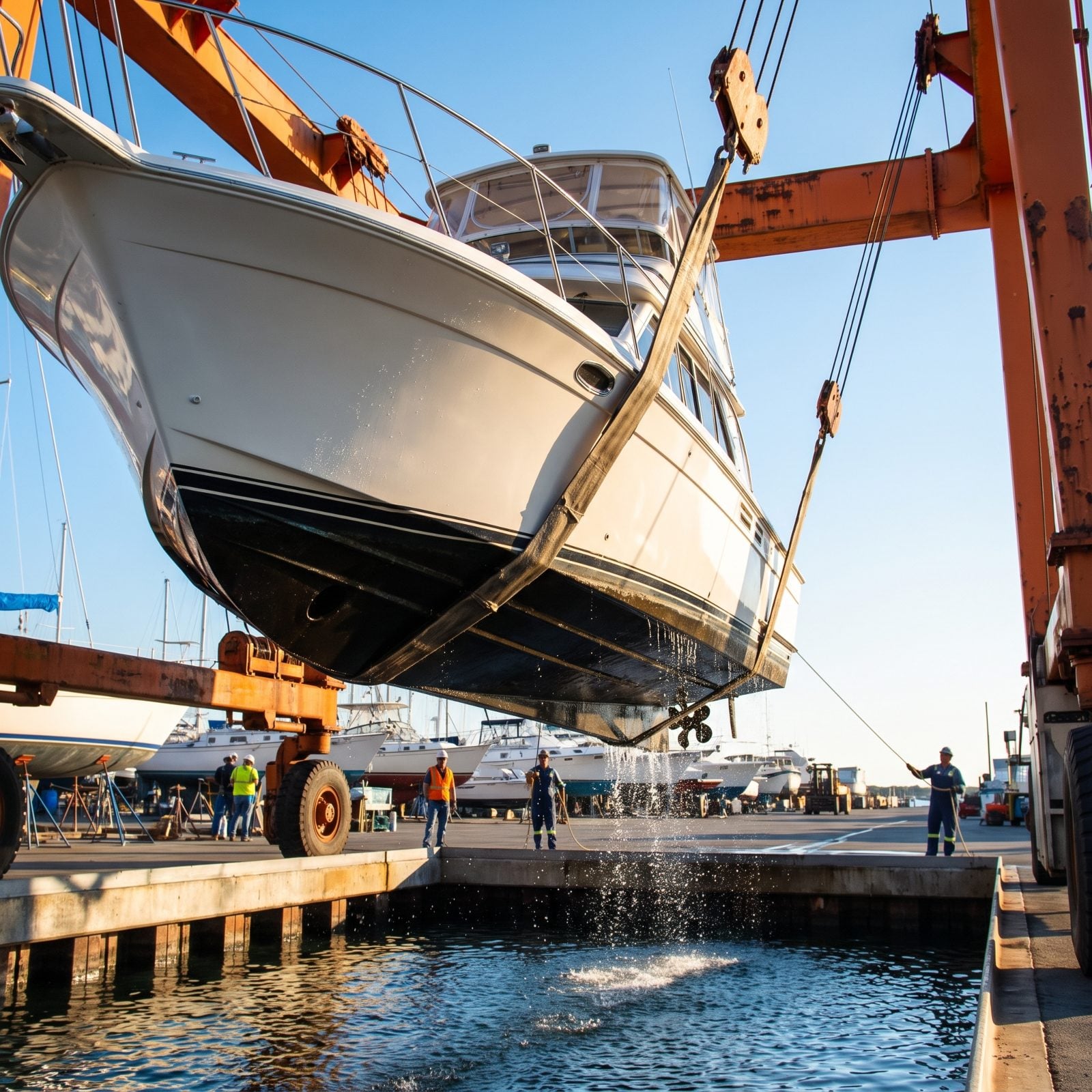
That giant travel-lift straddling the boatyard doesn’t run for free. Every haul-out and every splash carries a fee, usually charged by the foot, and the big boats pay for all the patience and horsepower it takes to lift them. Two trips a year, spring and fall — and that’s before anyone touches the bottom paint.
Ask the per-foot haul rate and the launch rate before you buy, then fold both into the real cost of owning this specific size of boat. A longer hull you can’t trailer means you’re paying the yard to pick it up and set it down twice a year, for as long as you own it.
9. Ignoring HOA and Municipal Boat-Storage Rules
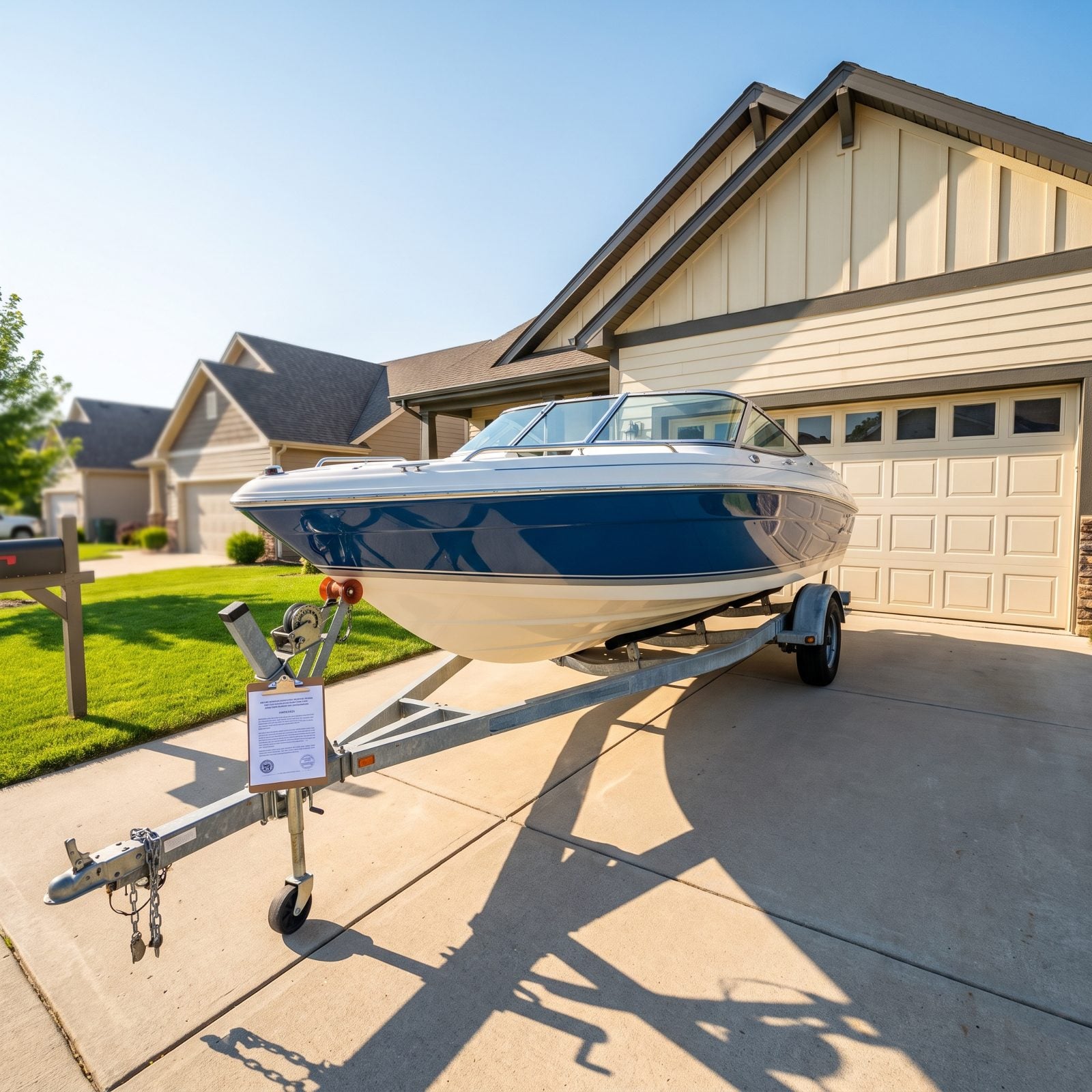
You close on the boat Friday, and by Saturday morning there’s a folded notice tucked under your wiper that is very much not a welcome card. Plenty of neighborhoods flat out ban a trailered boat in the driveway, and a lot of towns have setback rules about where it can sit on the street.
The cost shows up fast. Fines stack weekly, and once you’re forced into a storage lot you didn’t plan for, there’s a monthly bill nobody budgeted. So call your HOA and your municipality before you sign anything — ask about driveway storage, street parking, and screening rules, then price a slip or dry rack so the number is real before the boat is yours, not after.
8. Buying a Cover That Cannot Survive Local Weather
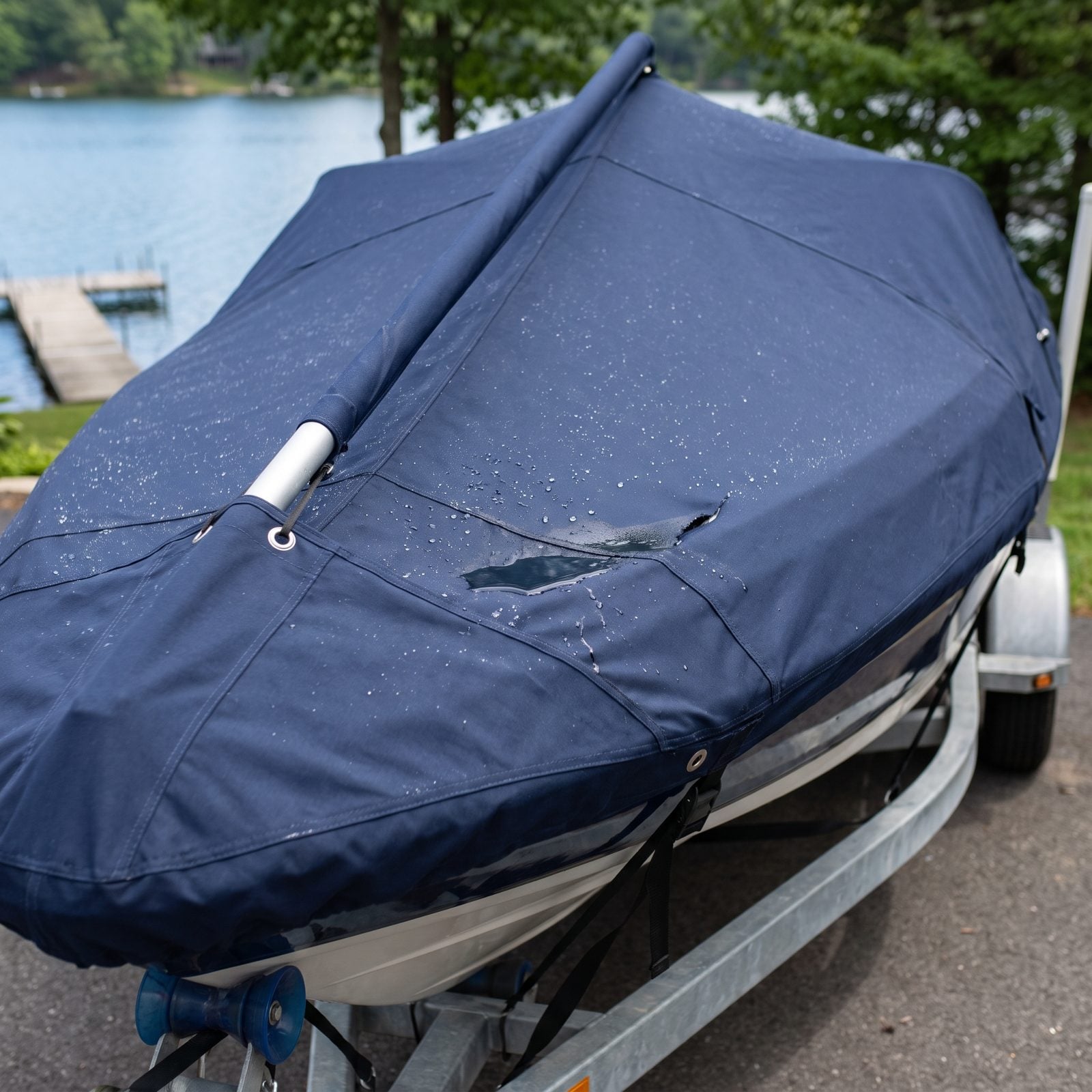
A thin polyester cover looks fine folded in the box. Then the first real storm pools water in the middle of it, the fabric sags, the seams split, and one season later you’ve got mildew blooming on your seats and sun-bleached vinyl.
Cheap covers are cheap twice — once at purchase, again when you replace the upholstery they failed to protect. Match the cover to your actual climate. Heavy marine canvas or solution-dyed acrylic for strong sun, a support pole to shed water and snow, tie-downs rated for the wind your area really gets. And remember trailerable covers need a tighter fit than mooring covers. Buy the one built for your weather, not the one sitting on the clearance rack because nobody else wanted it either.
7. Skipping Insurance Quotes Until After Closing
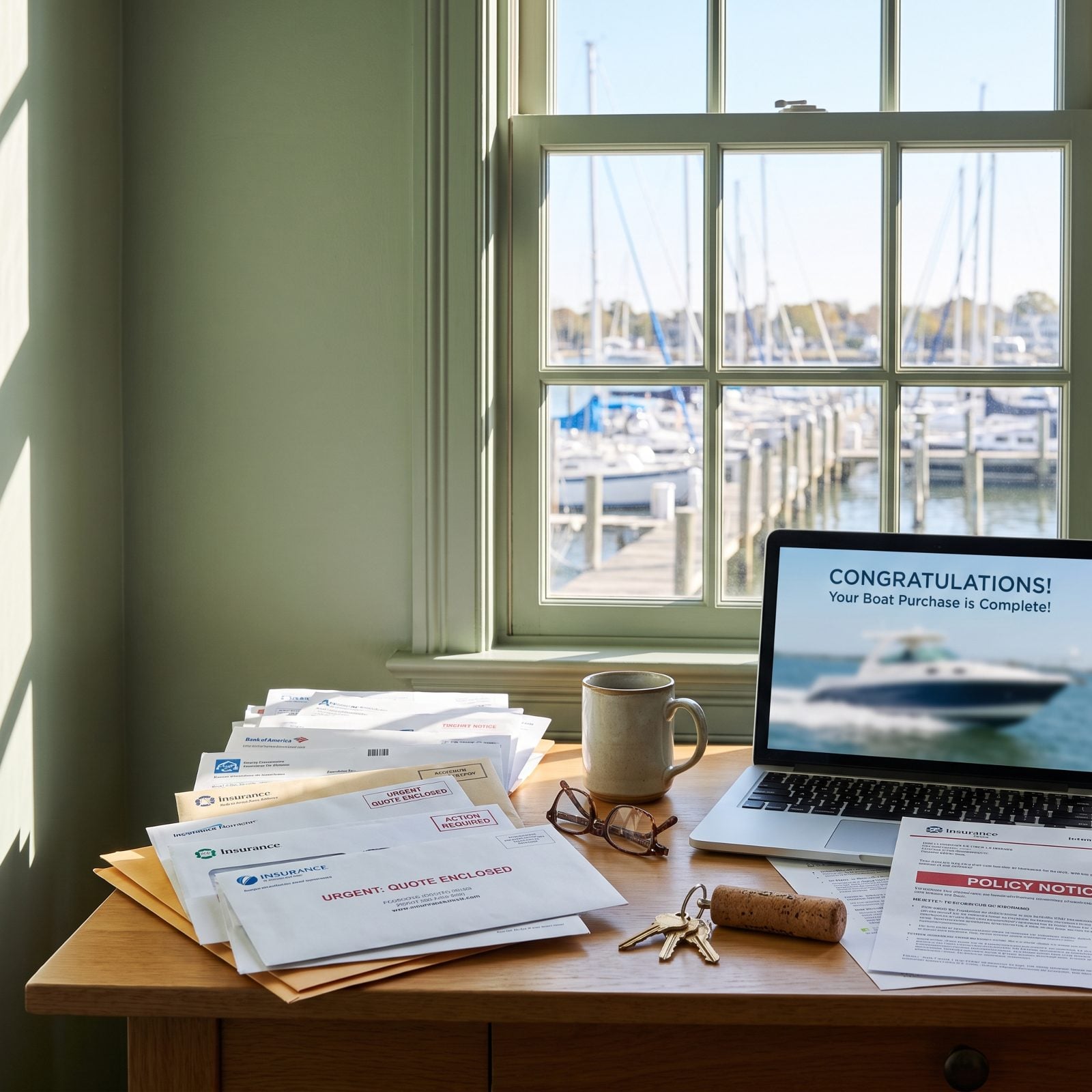
Buyers love to treat insurance as a Monday problem. Get the boat home first, sort the paperwork later. Then the quote comes back double what you assumed, or the insurer won’t cover a hull that old, or they demand a survey you never scheduled.
What nobody tells you: insurability affects price. A boat that’s hard to insure is worth less, and knowing that before closing is leverage you can use. Get real quotes while you’re still negotiating. Hand the underwriter the hull ID, year, length, engine hours, and your own experience on the water. If the premium is ugly, you want that information while you can still walk away or talk the seller down.
6. Choosing Insurance Based Only on the Lowest Premium
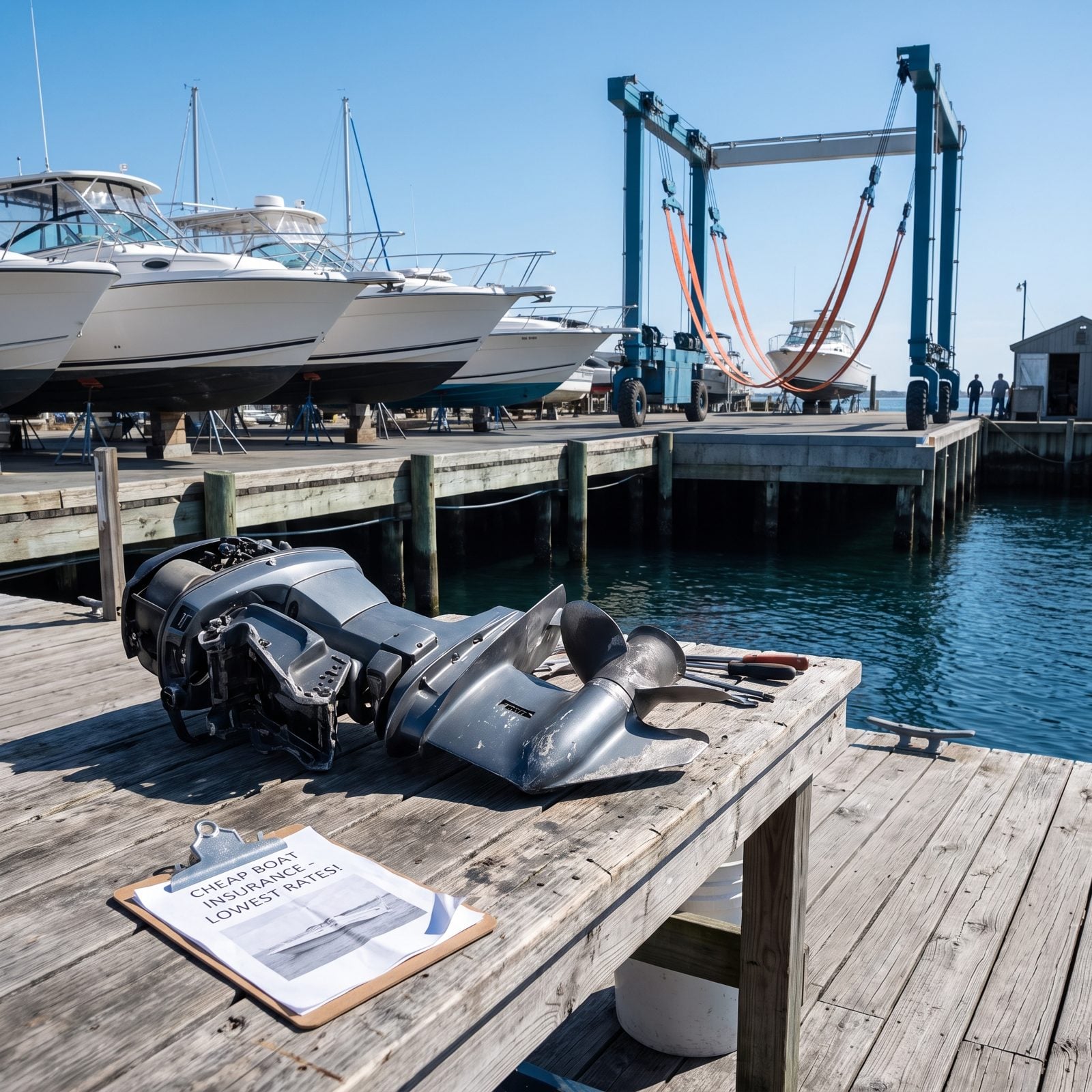
The cheapest premium almost always hides something — actual cash value instead of agreed value, a low liability cap, an exclusion carved out for your exact use. You find out which one on the worst possible day.
Picture totaling the boat in year two. Agreed value pays the number on the policy. Actual cash value pays depreciated market price, and that gap can run into the thousands. A policy that costs a bit more but covers salvage, fuel-spill liability, and on-water towing earns its keep the first time the water doesn’t cooperate. Read the coverage, not the price line. The quote everyone brags about saving on is the one that leaves them stranded when something breaks.
5. Overlooking Named-Storm Deductibles
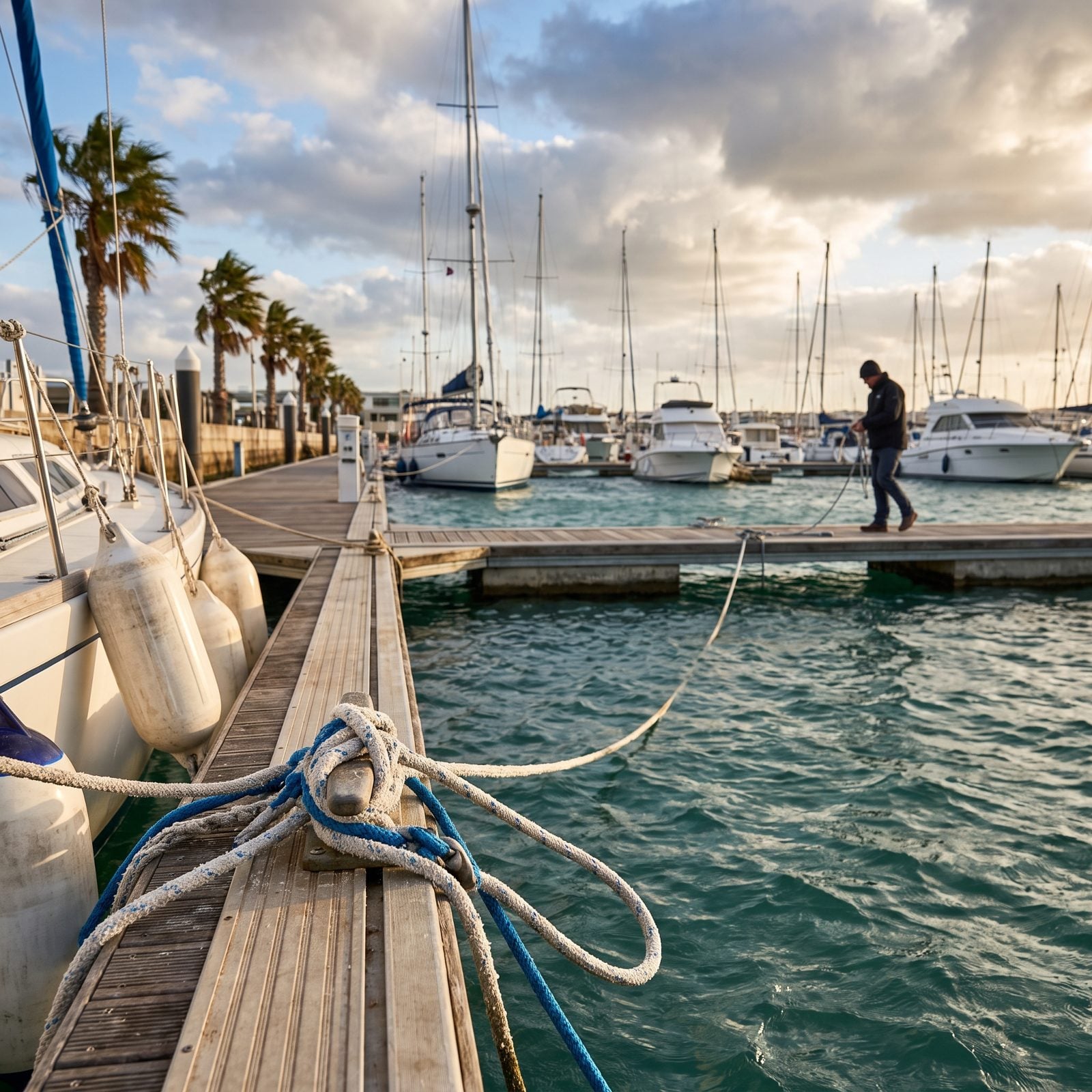
Your standard deductible might be a few hundred bucks. But the named-storm deductible buried on page four is often a percentage of the insured value, which on a coastal policy can mean thousands out of pocket before a dime of coverage ever kicks in.
New owners near the coast skim right past this line and meet it for the first time during a hurricane warning. Ask your agent flat out: what’s my deductible if the damage happens during a named storm? Get the dollar figure, not the percentage, so it actually lands. Then build it into your hurricane plan. Hauling out and storing inland can cost less than that deductible — which completely changes how you’d react to a forecast.
4. Failing to Budget for Required Safety Equipment

The sticker price buys the boat. It does not buy the gear the Coast Guard requires before you legally leave the dock.
Wearable life jackets for everyone aboard, a throwable device, the right fire extinguishers, visual distress signals, something to make noise with, and nav lights that actually work. Buy it piecemeal in a panic and you’ll overpay at the marina store, where a flare kit costs about what a flare kit should never cost. Build the list before you buy the boat and shop it all in one go. And check your state’s rules, because they stack right on top of the federal ones — a fine for a missing whistle is an insult layered onto an injury.
3. Running the Wrong Fuel or Oil
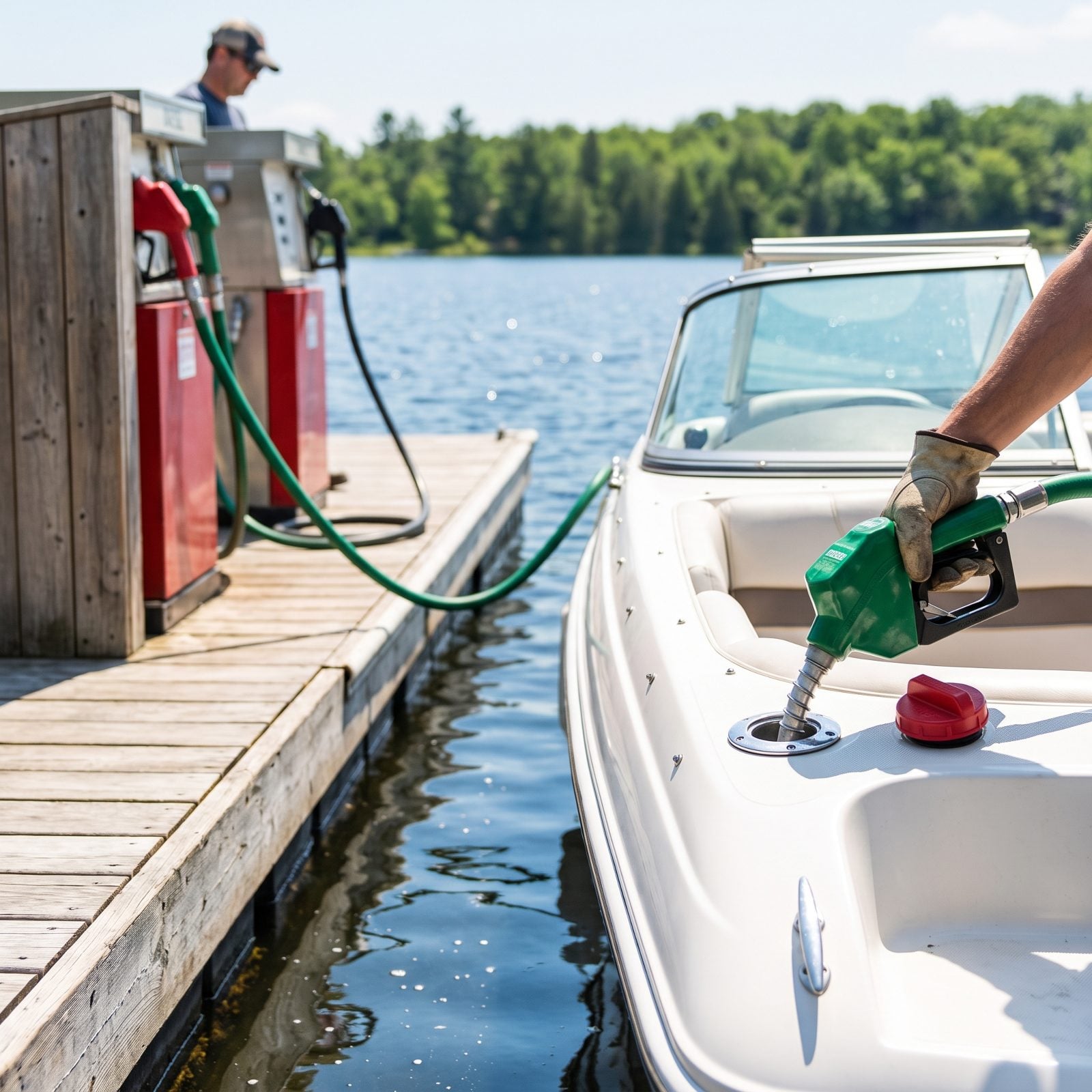
An outboard that calls for premium and a two-stroke mix is unforgiving when you guess. Pour in regular because it’s cheaper, or fudge the oil ratio, and you’re not saving money. You’re buying a rebuild.
Modern engines are picky for a reason. Wrong octane causes knock, wrong oil or the wrong two-stroke ratio scores cylinders and seizes pistons. Read the owner’s manual, write the exact fuel and oil spec on a label inside your console, and match it every single time. That twenty bucks you’d save at the pump is nothing against a powerhead rebuild that costs more than some used boats.
2. Ignoring Ethanol Fuel Problems During Storage
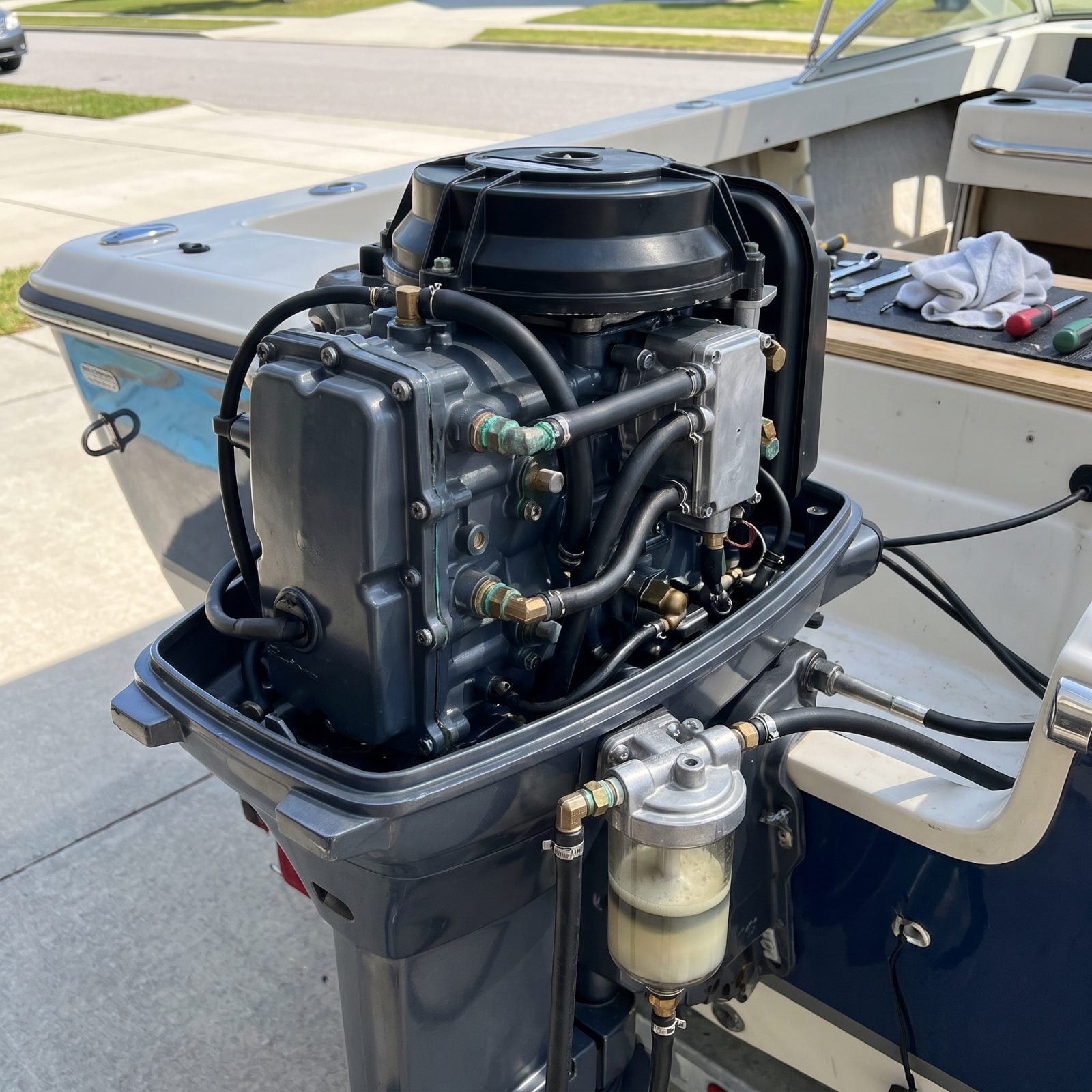
You park the boat in October with half a tank and forget about it. Come spring, the ethanol in that gas has pulled in water, separated, gummed the carburetor, and maybe chewed through a fuel line. The boat that ran perfectly won’t start.
Ethanol-blended fuel is rough on marine engines sitting still — it draws moisture and goes stale fast. Before storage, add a marine stabilizer, fill the tank to shrink the air space that breeds condensation, run the engine so the treated fuel reaches the carburetor, and install a fuel-water separator if you don’t already have one. Ethanol-free fuel, where you can find it, is worth the extra cost for a boat that mostly sits. A spring tune-up to undo all this neglect costs real money you could’ve skipped entirely.
1. Deferring Small Repairs Until They Become Major Failures
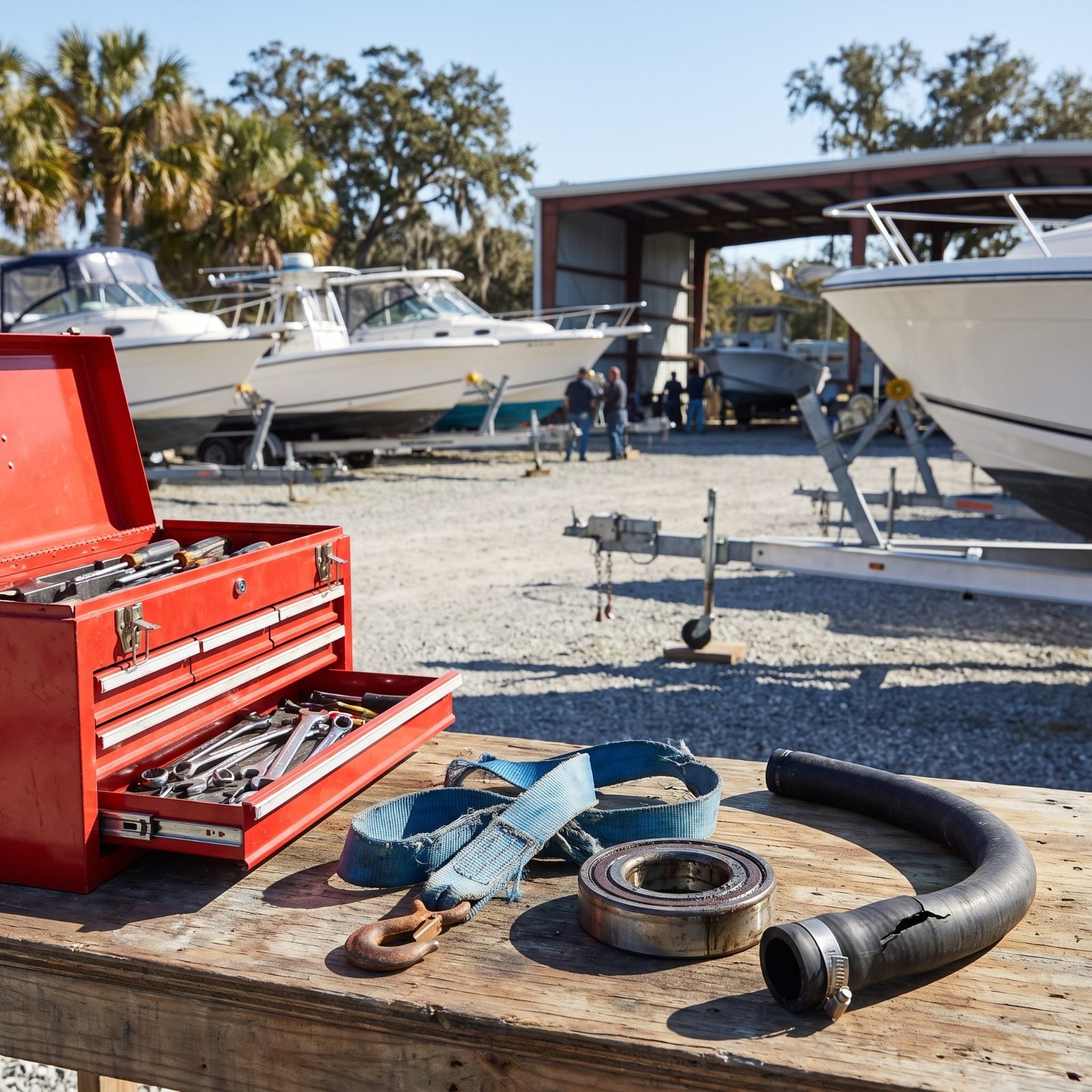
A frayed trailer strap. A bilge pump that cycles slow. A trim motor that groans. Each one feels like a someday problem, so it waits.
Boats don’t do someday. That strap lets go on the highway and suddenly you’re explaining a dented hull to your insurer, or the slow bilge pump quits the night it rains and you come back to water over the floorboards. Small marine problems compound faster than almost anything else, because salt, vibration, and heat are grinding away at the thing around the clock. Keep a running list, and knock out the cheap fixes the same week you spot them. A ten-dollar hose clamp is the best money you’ll ever spend on a boat. The repair you put off is the one that eats the weekend you’d been planning since March.